
Translated material
Genis magic
On February 11, he turns 70 years old to a famous writer, culturalist, journalist, many years and beloved employee of Novaya Gazeta
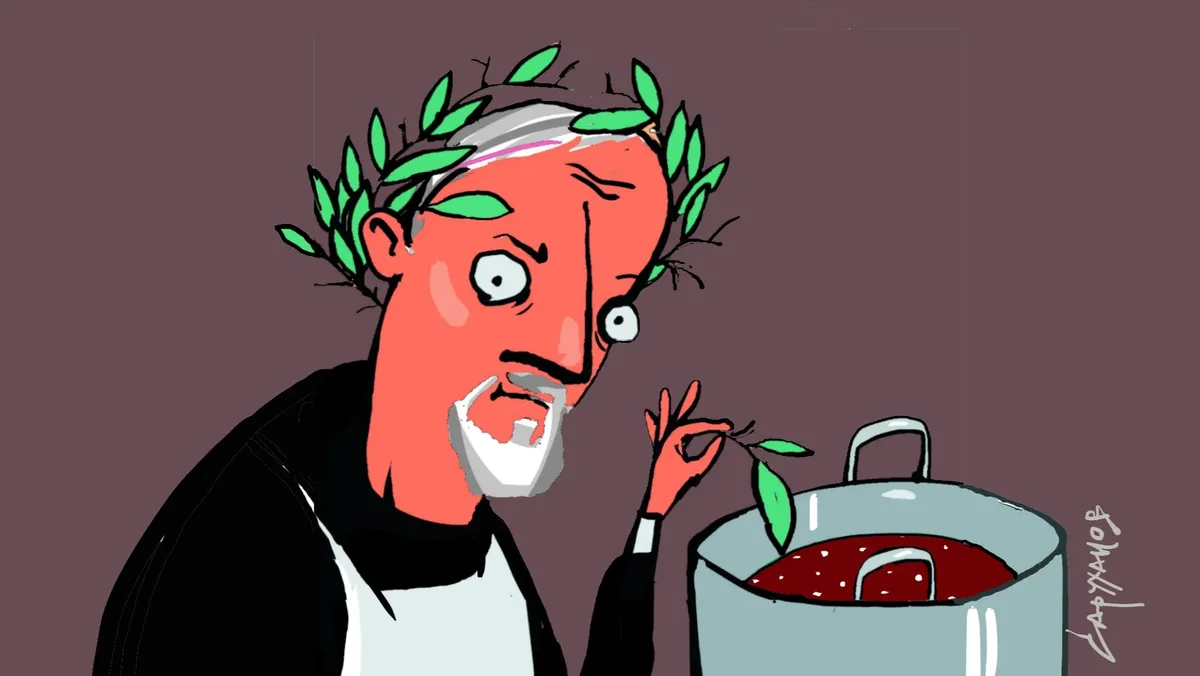
Genis is not only its own name, but also a household name: the name of a certain genre, verbal gesture, being in culture. This is a prism for a brighter and more embossed perception of reality, which, under the gaze of Genis, begins to play, shimmer, as if a dull film is ripping off from it, and there are translated pictures that fascinated us in childhood in all its splendor. Genis is a master of a bright vision of the world, as if spraying on it with living water: the grass becomes greener, and the sky is bluer, and people are bizarre and more human. The quirk is not a miracle yet, and Genis carefully avoids everything that can be like a direct breakthrough into a different world, otherworldly. Genis loves routine - but the one you can talk about jokes about.
In student youth, he worked as a firefighter. And during the duty he read books that he brought bags to his depot, while his partners played dominoes. A year later, he sharpened the abundance of books, he wanted a more electoral and lean diet. The same fire comes to the rescue, the fighters with whom they indulged in binge, including the book. “There are too many books. From hatred to them, I saved the cleansing fire that absorbed our plant when I was on vacation, and the outfit was off. ” ("Kamasutra of the scribes. Reading lessons"). Here's how many quirks are in one small turn of fate!
Poprazing Mandelstam, Genis's essay is a key walk all over the horizons of culture. Here is one proposal: “Bringing soft water to the white key and brewing in the Chinese kettle the Ceylon morning with a high -mountain plantation,
I drink tea from a centenary of a British cup of green porcelain with a quote of Burns. ” In this phrase-a small encyclopedia of tea-wise culture.
Genis, of course, is the master of the game that is described in his favorite novel “Game of Beads”. The subject of this game can be any sign, formula, symbol, pattern, myth, ritual, reception - the main thing, to find the resonance, an echo that will voice them. And with the echo of Genis, a particularly deep relationship, like Pushkin’s (“echo”). “Echo is a product of cooperation between the voice with the landscape, for example, mountain. In the canyons of Utah, I heard the echo talk to each other for so long that it begins to seem that they have consciousness, will ... "
Such a rolled -up, multi -stage echo sounds in the prose of Genis, rolling through many cultures, eras, professions, cities, ages. And also in his oral prose as a radio and TV presenter: I have been repeatedly witness and a participant in these dialogues with a genis, where he acts as a master of echoolocation, supporting a sensitive resonance with the interlocutor.
Genis calls reading a “magic procedure” - but such is his own letter.
Genis is close to magical realism-not so much in Latin American, folk-mythological as in a more analytical European head: G. Gesse, M. Pavich, V. Pelevin ... I would define the genis method as magical essays , where autobiography, research, artistic literature, parables and jokes are fused. The essay is absolutely omnivorously, much more than a novel, sung by Bakhtin; It lives the speed of its movements from the genre to the genre, from one conceptual series to another. Once all the genres-artistic, historical, scientific-were fused in the myth and gradually busted from it; But essays re -connects these ingredients, adding another one, which was absent in the myth, is an author’s personality with its self -reflection. This is the genis as the creator of modern author's myths. In each of his essays there is a self-portrait, self-ironic enough, so that, in a prisoner, “not to stick”, to leave freedom to change roles.
The irony of Genis is never derogatory, it recognizes the value of objects, even considering them at a distance. This is not so much irony as fun - a rare quality among modern writers. Whatever they are - realists, science fiction writers, utopians or anti -utopphyrs, householders, historical novelists - almost all are united by a certain gloom and even a misanthropy, for which our age, no less than the previous one, gives many reasons. Genis stands out with his cheerful world perch, which does not prevent him from seeing all the fears and horrors of what is happening, but he manages to fascinate them with a word (by the way, this word itself comes from the same root as a voyage , enemy ).
Yes, life is a sad thing, but you have to live it fun - so I would determine the motto of Genis.
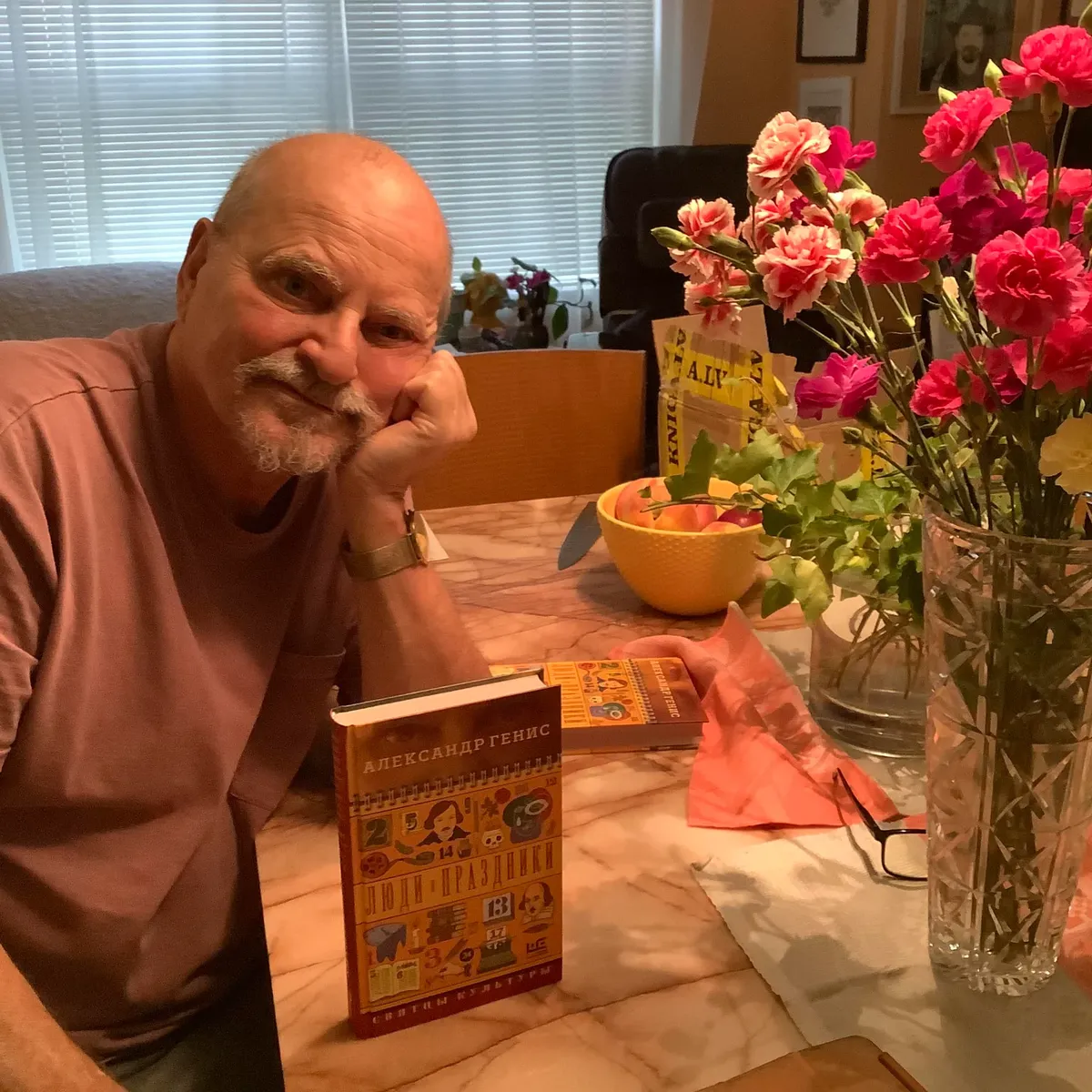
Almost every phrase at Genis Drink, carries in itself the final semantic accent - and from the first word is ready to become aphorism. The Genisov essay is dozens of aphorisms strung on one topic; They can easily be represented by the vertically placed, as in the collection of sayings. This is how Genis writes about the Greek geographer and the historian of Pausanias:
“He found Greece in an excellent season: it was already a museum, there were no ruins ... The art described by the Pausanias is plot, as a television series ... Time was chopped by marble in cabbage. Whatever frieze, then a landfill of the flesh. Each museum is like an anatomical theater. ”
There are almost no explanatory and conclusive connections between the phrases, but each gives a finished metaphorical image to its theme, common to this paragraph. This is the thinking “in the present tense”, without logical-temporary stretching between the cause and the consequence, premise and conclusion, past and future.
You can compare the movement of thoughts in Genis with dance. If walking is aimed at its goal, then the dance is only the form of expediency, in accordance with the Kantian definition of art as expediency in the absence of a goal . The dance, in principle, does not seek anywhere and has no arrival. In this sense, Genis’s forerunner is a French poet and essayist Paul Valerie, who wrote a lot about the dance, likening him to the whole culture. The thought moves, explains something, proves-and suddenly at some point we understand that these are gestures in the dance of dance, which returns to itself in order to once and once again demonstrate the same principles of the universe: symmetry, frequency, repayment, grace, self-reflexivity. Wherever Genis’s thought moves, it ultimately goes into dance, and she needs direct moves only to expand her circle, to engage in the dance movement of all eras, styles, art, science.
There is no more urgent task for our time than to realize the self -worth of the mind just on the threshold of creating artificial intelligence, which will take care of the practical results of thinking, its technical applications - and leave a person a choreography of thought.
There are no too small or unworthy topics for genis, since its whole lives in each particle of culture. Such is the happy redundancy of the gift, which, like Chekhov in his youth, tries himself in everything - and proves his possession of any topic. Chekhov showed the interlocutor an arbitrary item, for example, an ashtray, and promised: tomorrow there would be a story about it, called the "Ash". Only the “American alphabet”, perhaps the thinnest of Genis’s books, includes forty-two such items that, as they accumulate, turn into a Poinitilist, from the Metaphor Points, a picture of America. In this readiness of Genis, collecting his thought on the road from anywhere in the cultural space I see the dignity and skill of an intellectual soldier: he is always on a campaign, on movement and takes responsibility for those crumbs and fragments of the existence with which fate faces him. This is a rare gift of intellectual improvisation - inspired by the arbitrariness, unpredictability of its subject.
If Genis has a supervision, then this is precisely the significance of the insignificant. Hence his orientation to oriental wisdom (Orient, in fact, means the East)-and above all, Taoism, which is more fun than Hinduism, Buddhism, Confucianism, Zen Buddhism.
“Being and non -being create each other. Difficult and easy support each other. Long and short describe each other. High and low depend on each other. Before and after they follow each other. Therefore, the master does without doing and teaches not teaching. ”
I quote Lao Tzu here in the translation of Genis himself, who devoted a lot of time to the study of Chinese hieroglyphics with its “fundamental inaccuracy”.

Genis writes about politics, religion, science, cinema, painting, gastronomy, not claiming to be a specialist in any of these areas, because for him it is primarily stylistic phenomena, time signs, types of worldview. What Genis does is, in fact, not cultural studies, but cultural plastry . Culture represents for Genis a certain superior, the elements of which are Christmas, Halloween, and Independence Day. As Genis notes, “the ritual is selfless, for it is self -sufficient. His goal is himself. ” For example, a quote is a ritual of repeating a word, once said for the first time. Genis is interested in the secular ritual, that is, such an excuse for life that is completely immanent to her. It is pointless to ask why people celebrate the New Year, raise the glasses and pronounce toasts - only the termination of the ritual (as meaningless) or its continuation, because it is higher than the meaning. Fun is the function of this doubling, intensity. Life lives and is played at the same time, but not theatrically, but ritually - without point to the public, without double in the face and mask. The ritual is seriously the game, here all the participants are not actors, but the characters.
Usually the concept of ritual is associated with religion, but Genis is perhaps the most secular of the modern writers. His secularism is deprived of the slightest signs of blasphemy, disrespect-all that could give out some secret religious doctrine.
One of the cultural heroes of Genis is Yuri Lotman, who until the last minute remained a man of culture and at the same time - an atheist. Genis is a post (a) theist, he accepts and honors a variety of religions, but they are all the essence of the form of culture, in which, in addition to many rites, there is a rite of execution of rites . This metauliva is a secular culture itself, as wide as possible, tolerant of all possible religions.
In Russia, it is customary to discuss each action, as if it had been performed for the first time. Hence the damned questions: "What to do?", "Who is to blame?" And "Do you respect me?" - alien to both eastern and Western societies, which are based either on unconscious or conscious rituals. On the rituals of sacred or profane, religious or secular ... The ritual allows you to save a lot of efforts aimed at the solution of each individual incident - that which constantly distracts people from the main business, swirling with squabbles, scandal, clarification of relationships or conversation for their souls. In this sense, Western society is much more ritual, developing self -acting rules for all occasions, and the vast majority voluntarily follow them, which is the power of democracy. Genis's texts are an attempt to establish the codes and passwords of different areas of culture, to convey to the consciousness of contemporaries, in which rite they freely or involuntarily participate, and thereby extend the extremely wide sphere of their conscious being in culture.