
Translated material
When the soil breathes ...
Against the background of the tragedy in Turkey, we remind of disasters in our country
Crimea
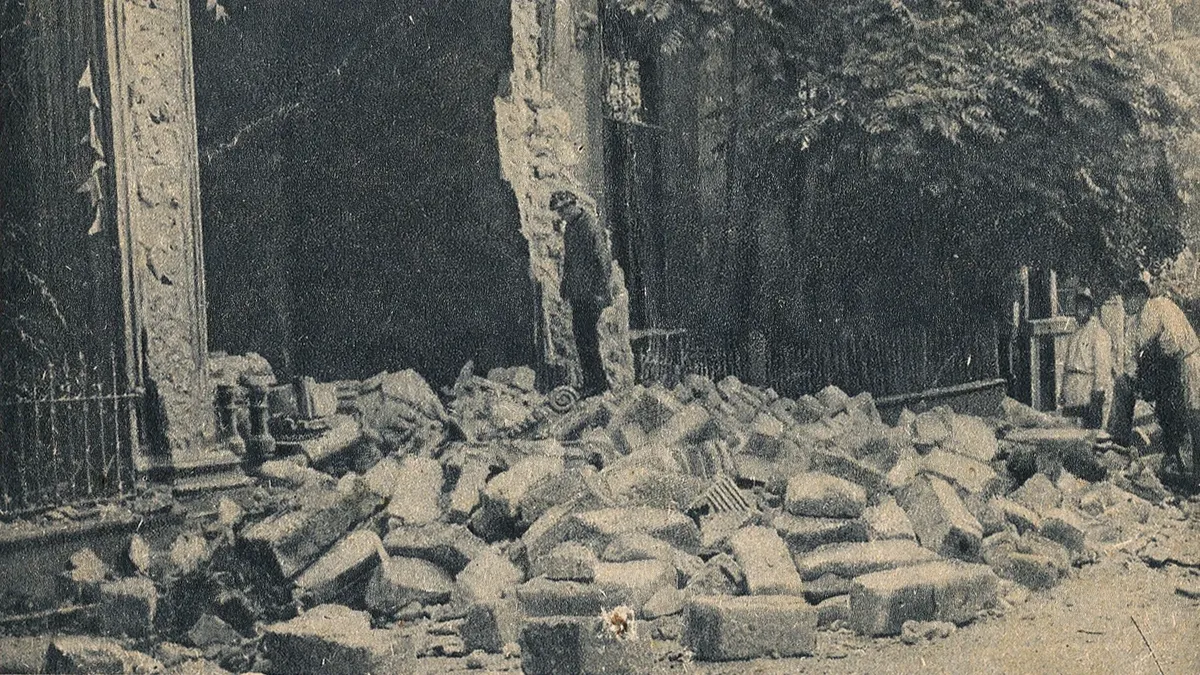
Probably the most famous earthquake in the territory of the former USSR is, of course, Crimean, in September 1927. The most destructive shocks lasted until noon, and in total, in four days, there were more than two hundred of them. The shocks were felt almost throughout the Crimea, but the segment of the southern coast from Alushta to Sevastopol suffered most of all. Many old villages were completely erased from the face of the earth, in Bolshaya Yalta half of the population was without housing, and those whose houses were miraculously intact for many weeks after the earthquake lived on the street, afraid to go into the crack of the dwelling.
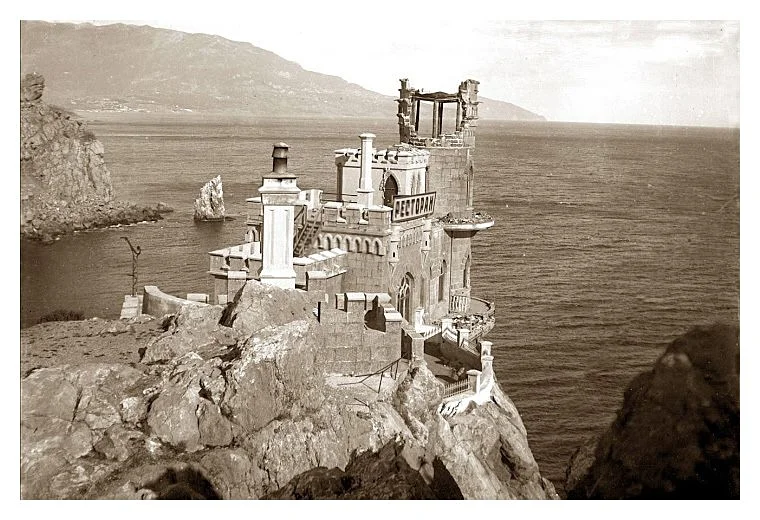
The famous “Lastochkin's nest” suffered; Not only the castle, but also the rock itself. A huge part of it fell out from under the balcony and fell into the sea. Until the end of the 70s, the building was closed to visiting, waiting for restoration. Only in 1971 the restaurant began to accept visitors again.
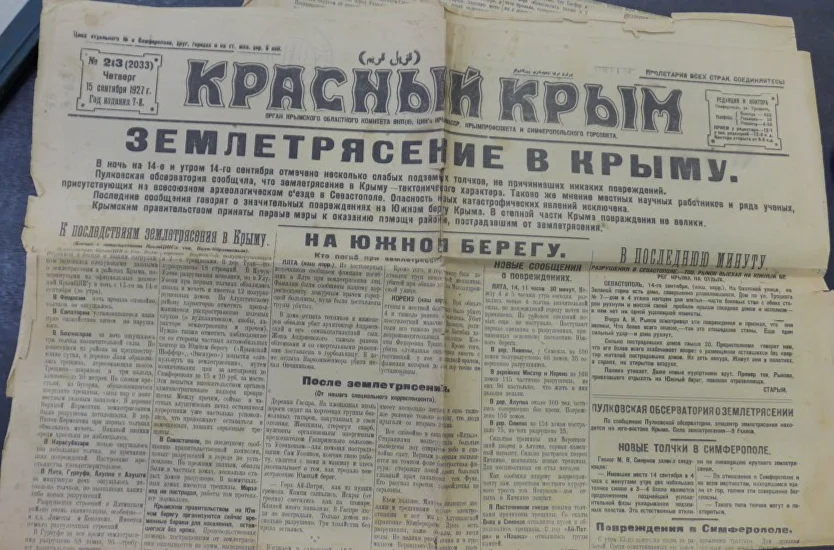
“All to help the Crimea! The earthquake, which began on the night of September 12, was enormous destruction. These destruction are especially great on the southern coast of Crimea ” - such headlines in the first lanes were full of newspapers of the country after the disaster. The Red Cross released a series of postcards with a request to help the victims, and in order to strengthen the effect, the types of destroyed buildings were published on them.
The state was established a special “All -Krym Tower Lottery” to raise funds to eliminate the consequences of the elements. “Crimea is our pearl, the area of fabulous natural beauties ... How not to come to the aid of this noble land in the days of its misfortune? Crimea should be restored as soon as possible! " - wrote in his appeal to citizens the first People's Commissar of Health Nikolai Semashko.
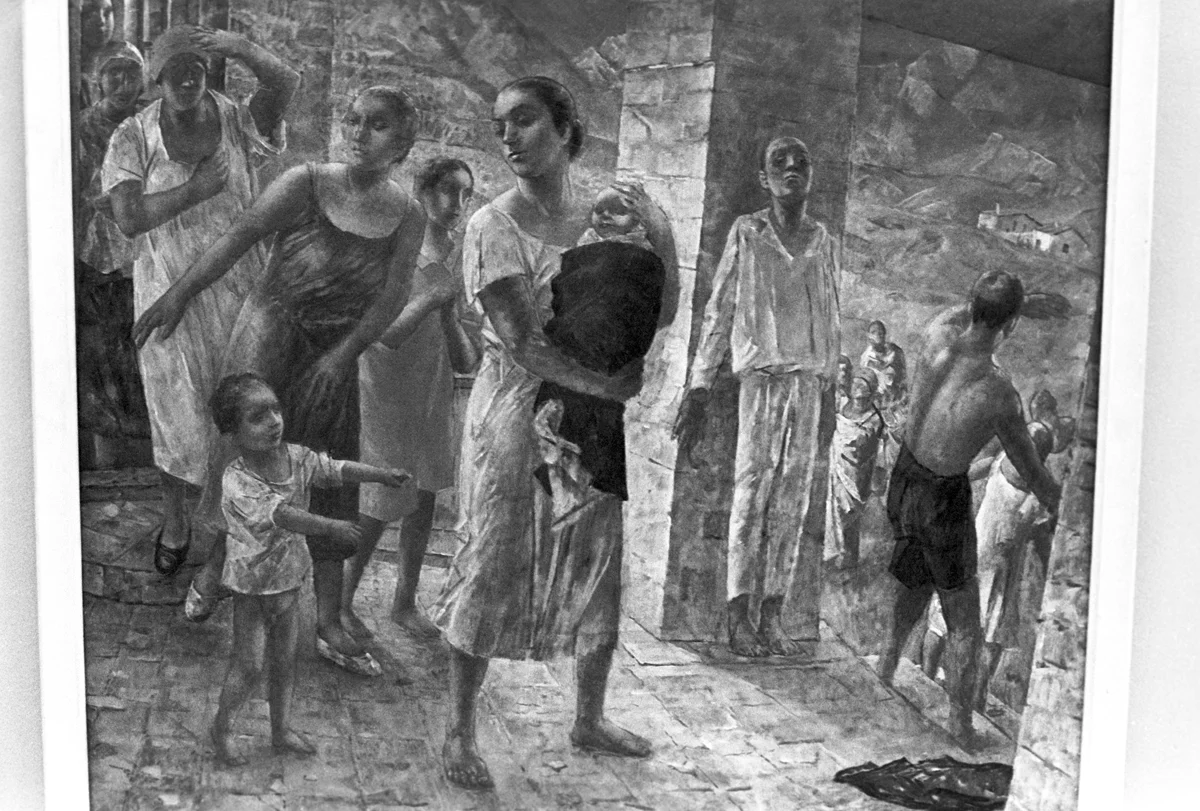
One can only imagine what a panic was in the Crimea. There were not enough transport, and long columns of refugees stretched along the roads. At the stations - crowds, crush, hysteria and fainting occurred, any money was offered for a train ticket.
Among the departing came the wounded and those who lost all their things under the rubble. The Crimeans remaining on the peninsula were afraid to go into their dilapidated houses and lived on the street, up to the coldest, building temporary dwellings from plywood ... Sevastopol residents transmitted information to each other: Crimea was about to go under water.
“In its geological structure, the Crimea is similar to a mushroom standing on a thin leg, and as a result of the effects of further underground shocks, this“ leg ”must certainly“ break off ” - such a prophecy sounded literally on every corner. The authorities ordered to read in clubs, cinemas, and explanatory lectures on propaganda, in order to suppress panic moods.
And gradually the people calmed down.
The very next day after the tragedy, a special commission was created, which took on obligations to calculate the damage caused by the elements, to draw up a register of buildings that are about to collapse, as well as plan the work necessary to restore the city.
“Over the incomplete four weeks in the city, all preserved buildings were mobilized, institutions were transferred to retail premises, the strictest ban on their unauthorized expansion at the expense of the living space entered into force, a massive check was carried out to identify the“ hidden living space ”. In total, the commission had at the disposal of those who lost the shelter on October 4, 1927 there were 20 retail premises for 200 people, 20 tents per 80 people, 6 hotel rooms, 182 rooms for 520 people.
When considering applications for the provision of housing, the statements of citizens who lost housing due to an earthquake, demobilized from the ranks of the Red Army and Navy, sent to Sevastopol to the service, as well as persons evicted from their apartments in court due to the movement of organizations and institutions there, were primarily satisfied.
Of the 100 applications for the provision of apartments, the commission considered only 70 justified.
“... A citizen of Up, a participant in the civil war, whose room was injured and was not suitable for living, which presented additionally and a“ certificate from a doctor for nervous diseases ”of Nielsen, a warrant was issued for another apartment. However, the board of housing rental cooperative partnership refused the owner of the warrant in the right to introduce the apartment provided on the grounds that “he is a merchant (which was confirmed)”, informed the Extraordinary Commission to eliminate the consequences of the earthquake, after which the commission made a decision: “Gr-well to abandon the apartment”.
In the first 11 hours, 27 of the most powerful shocks were registered.
As a result, according to official figures, three people died - one died under the wreckage, one woman died of a break of her heart and another man hanged himself with horror.
However, unofficial data indicate noticeably more serious victims: 16 people died under the wreckage, 830 - were injured.
In the minutes of the meetings of the Sevastopol Extraordinary Commission, which considered issues about the allocation of funds for departure from the city and Crimea, not only the loss of housing, injuries, but also “nervous disorders due to the earthquake” were accepted as a good reason.
Spitak
I myself fell under the earthquake once in my life.
On March 4, 1977, he was on duty according to the editorial office of Komsomolskaya Pravda. He sat on the sixth floor in an official elevator, I go down to the printing house. Suddenly - a push, the elevator became, the light went out ... It turned out later - the most powerful earthquake in Moscow in the entire history of observations.
In the morning, a journalist, a poet and my friend - Sasha Aronov calls. Says: That's it, I quit drinking. I woke up at night, I look, the cabinet in the room is swinging ...
I reassured him: it's okay. He was delighted.
The episode of 1977 was an echo of the powerful Wranch earthquake in Romania. There, under the small mountain range, there is a zone, which in geology is called the "hearth of deep -fiber lies of earthquakes." This deep -fiber hearth in Europe caused Romania a lot of troubles.
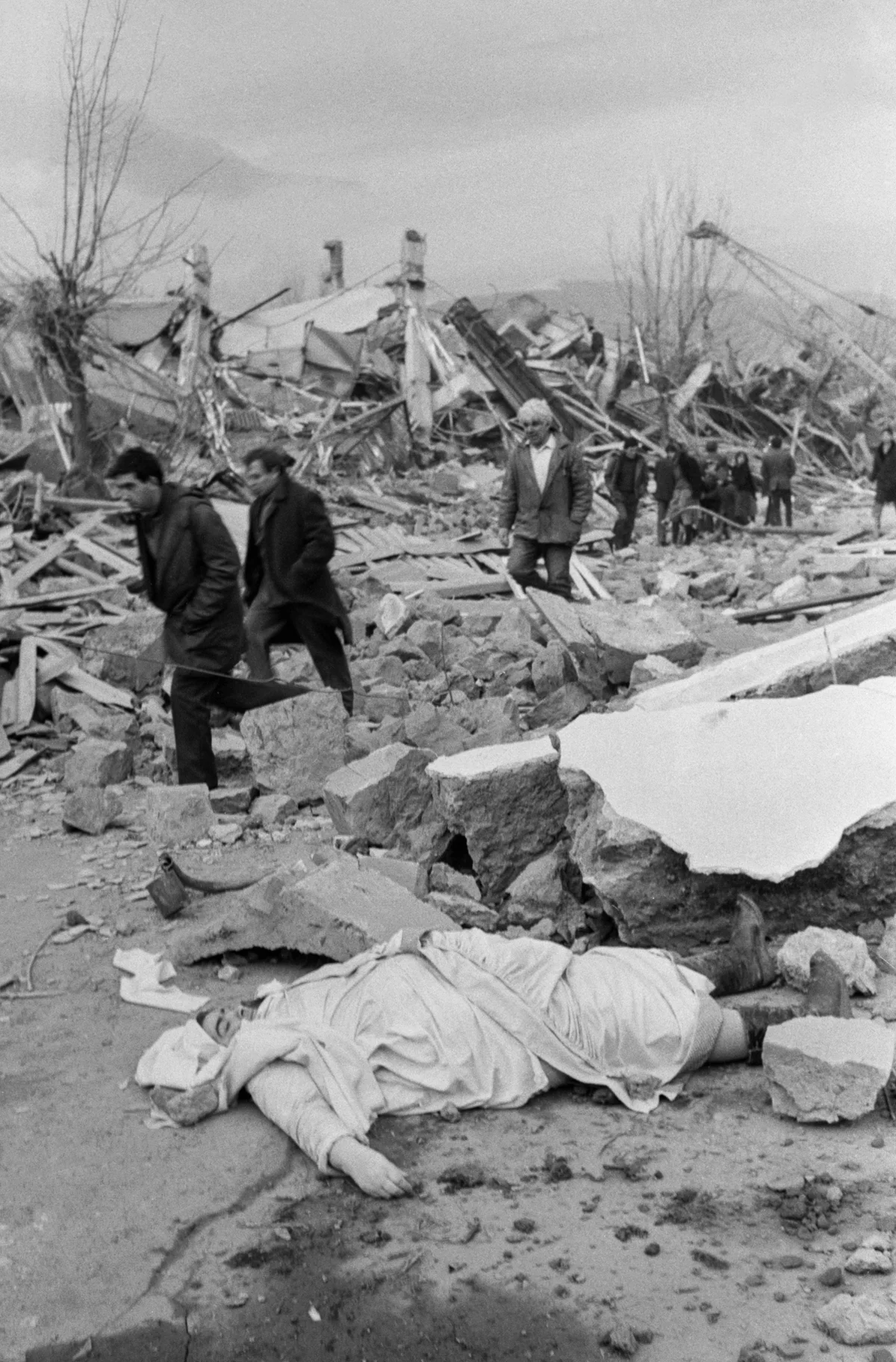
The next time (in December 1988) was not up to jokes: the tragedy in Spitaka claimed tens of thousands of lives. In Armenia, then they just introduced a state of emergency due to events around the Nagorno-Karabakh; I had to fly there (my “zone of responsibility”), but I ended up on a different business trip. Two days later - a push ...
Powerful underground strokes in half a minute destroyed almost the entire northern part of the republic, covering the territory with a population of about one million people. In the epicenter of the earthquake-Spitak-the intensity of the shocks reached 10 points, in Leninakan-9, in Kirovakan-8 (on a 12-point scale). A significant part of the republic covered 6 points, underground shocks were felt in Yerevan and Tbilisi. A wave caused by an earthquake bypassed the planet 2 times and was registered with scientific laboratories in Europe, Asia, America and Australia.
As a result of the earthquake, at least 25 thousand people died (according to other sources - 45 thousand), 140 thousand became disabled, 514 thousand were left without shelter.
Complex schools for 210 thousand student places, kindergartens - for 42 thousand seats, 416 health facilities, 2 theater, 14 museums, 391 library, 42 cinemas, 349 clubs and cultural houses were destroyed. 600 kilometers of roads, 10 kilometers of railway tracks were disabled, 230 industrial enterprises were fully or partially destroyed ...
In total, the earthquake covered about 40% of the territory of Armenia.
Charles Aznavour, together with composer Georges Garvaren, created a fund called “Aznavour for Armenia” and wrote a song - a call for help to the Armenians. 6 weeks passed from creating a song to the completion of work on the disk, and when almost two million copies were sold, the fund was able to build 47 schools and three orphanages on the land of the disaster.
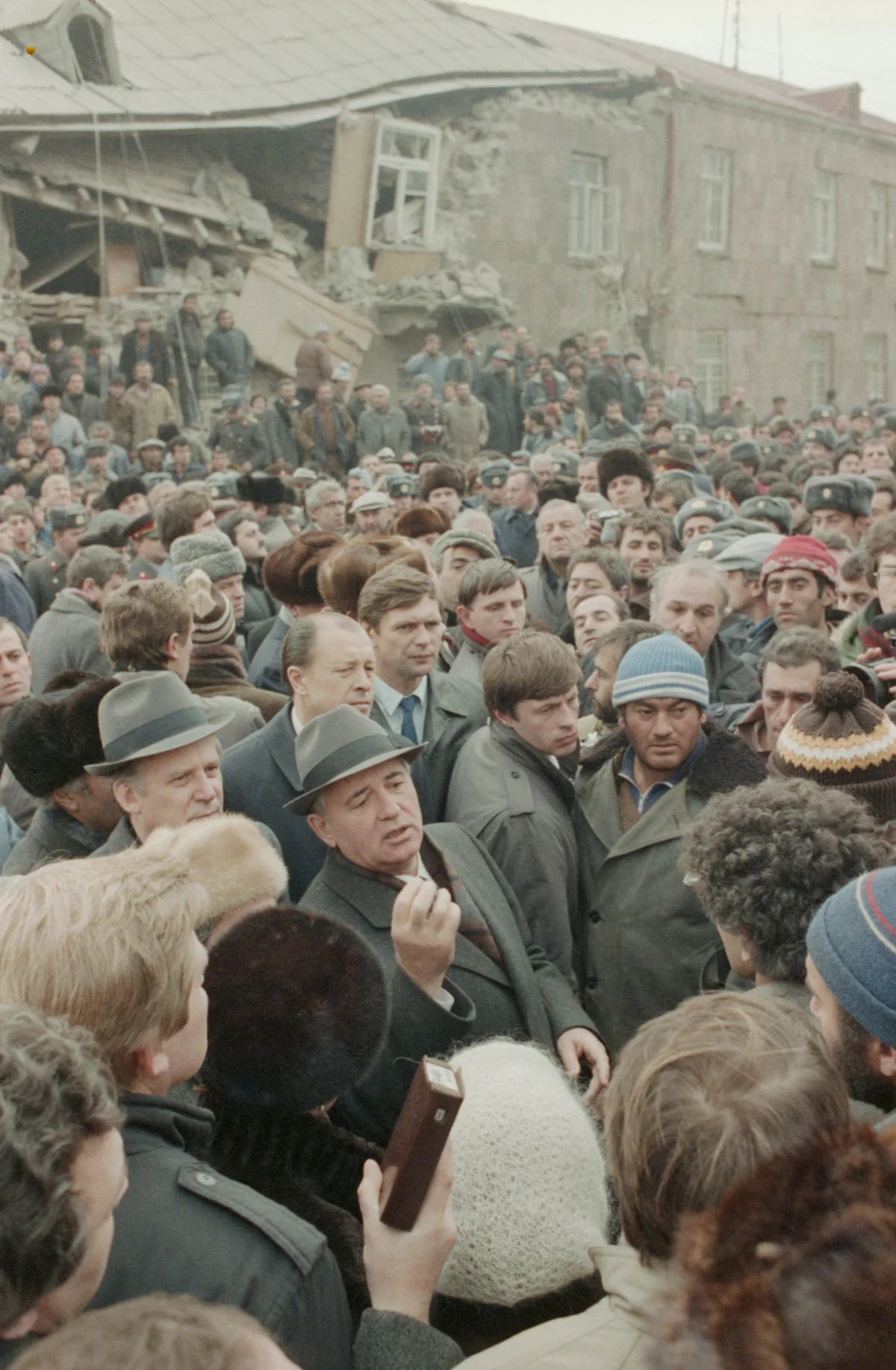
Avangard musician Pierre Sheffer headed the French rescue team of 498 people who were looking for those who survived in Leninakan. The total number of volunteers in the city was 2000 people, including teams from Austria, Canada, Switzerland, USA, Poland and Yugoslavia.
... And in Sverdlovsk (Yekaterinburg now), where I came on a business trip, - my own tragedy: literally the day before - an accidental explosion with chemicals on the railway. Residents of the surrounding houses were settled in hotels, so sent (even from Izvestia) was placed in the corridors, at best ...
In the corridor, I watched the TV: Predarmin Ryzhkov with a overturned face on ruins ... Volunteers-rescuers from different countries ... Urgent grief ... Tears ... Gorbachev’s visit to the United States interrupted ...
I also remember, Ryzhkov in the television camera: if someone has excavators ... It then struck me: the head of government asks!
Grateful Armenia will then erect a monument to Ryzhkov.
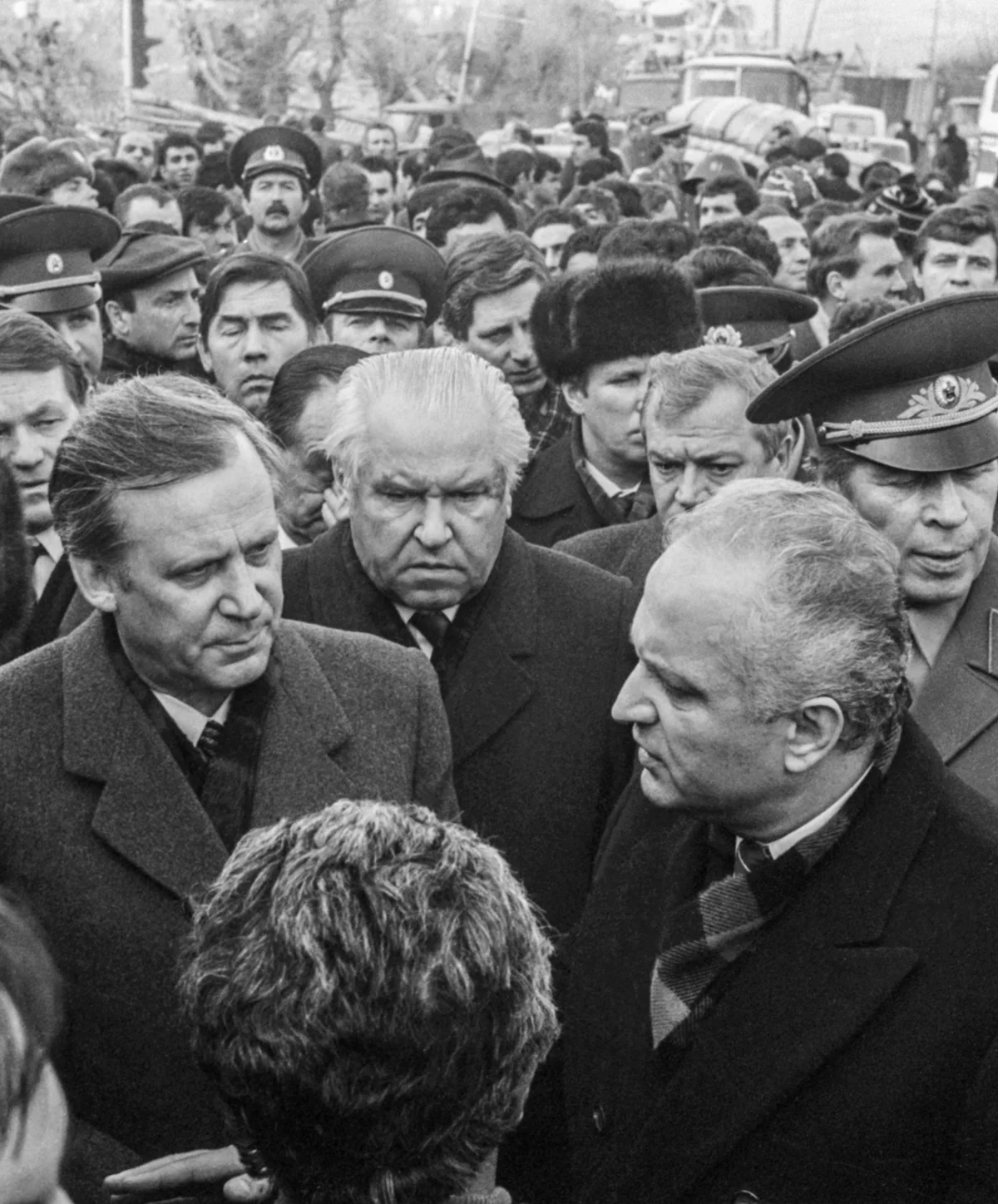
And six months later, I became the only newspaper man who wrote from the meeting of the Politburo Commission to eliminate the consequences of the earthquake. The main question, the most bitter from all that we asked ourselves and each other after December 7: did the element cause the tragedy? Why, during the first shocks, like card houses, modern buildings were crushed, built - and this must be emphasized - in the seismic zone? What else, according to Ryzhkov, “collapsed” on us besides the blind nature of nature?
Yes, everywhere the power of the underground elements exceeded the one on the resistance of which the buildings in the destroyed cities were designed. But, according to all norms and GOSTs, this excess should not lead to destruction.
The commission collected 26 volumes of documents.
Experts reported: the main cause of the catastrophic consequences of the earthquake was not so much the “specifics of the shocks, multiplied by the hydrogeological conditions of the distress zone, however, unacceptable deviations from design norms, egregious shortcomings of the projects themselves and unusually low construction of construction.”
The minimum requirements of 73 percent of the considered projects did not meet the minimum requirements. The builders continued to drive the worthless series, people instilled in the houses of "increased danger".
In the laying of many stone buildings, the solution contained only a fifth of the cement set in terms of the norm - houses were literally built on the sand. Yes, and he was suitable for anything, but not for construction: the percentage of “sand dustiness” (there is such a term) was, as established, 60–70 - with a norm of not more than ten. In panel houses there remained unrealistic reinforcement, and its section was arbitrarily reduced first in projects, and then in kind, in factories ...
At a meeting of the commission, a brutal conclusion was made: “We went to this disaster. This is not an ordinary case. The price paid by us paid for dishonesty, slack and sloppiness ... ”is too high ...”
I wrote that the only newspaper was made at the meeting - from Izvestia. But the report, much more voluminous, was printed in another newspaper. And the feeling that journalists wrote about various events: not a word about what sounded with us, in Izvestia, - the colleague shifted the guilt exclusively to the element. We even had to make excuses. Freed up ...
The old friend of Novaya Gazeta, Evgeny Savostyanov, unexpectedly for himself, became the head of the Moscow KGB department and spent three whole years in this position. But in the "main specialty" he is a mining engineer, he traveled the country from Chukotka to Pamir. This is what he says now, “after” Turkey and Syria:
- There are still no effective ways of accurate (up to hours and hundreds of square kilometers) prediction of earthquakes. A person better sees billions of kilometers up than a single one. There is only one salvation from the serious consequences today: the statistical and geodynamic zoning of the territories and construction in compliance with the relevant standards of seismic resistance. A very high level of security is ensured, although it is very expensive. But where there are many old buildings or where they steal on the construction of new ones, tragedies, alas, are inevitable.
The number of those killed during the earthquake in Turkey and Syria (data for February 11) already exceeded 20 thousand people. Rescuers continue to search for survivors under the rubble. In the affected areas of Turkey - frosty weather, up to –6 ° C.
The world is in a hurry to help. Moscow collects warm things.
In the latest issue of the “New Story Gazeta” (its registration has been canceled), Tassov photographs from Ukraine were placed: Mariupol, Krivoy Rog ... It is very similar to the ruins of Turkish cities. Although the difference in the origin of the tragedies is obvious ...