
Translated material
The Chelyabinsk meteorite (remember him?) Exactly 10 years. We answer the shameful questions about him, other meteorites, asteroids and even car
Where do they fly from? What sizes are there? And can all humanity kill?
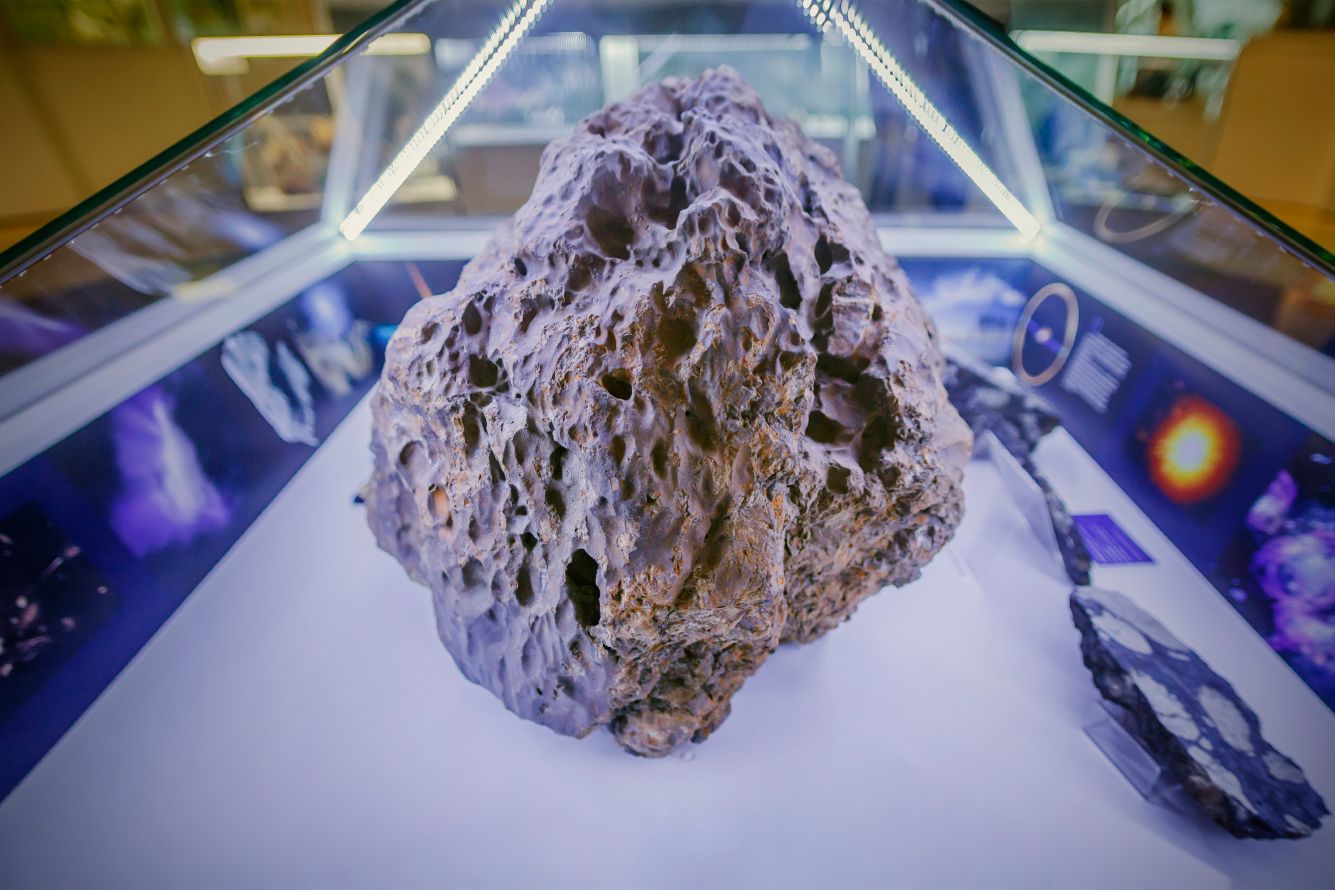
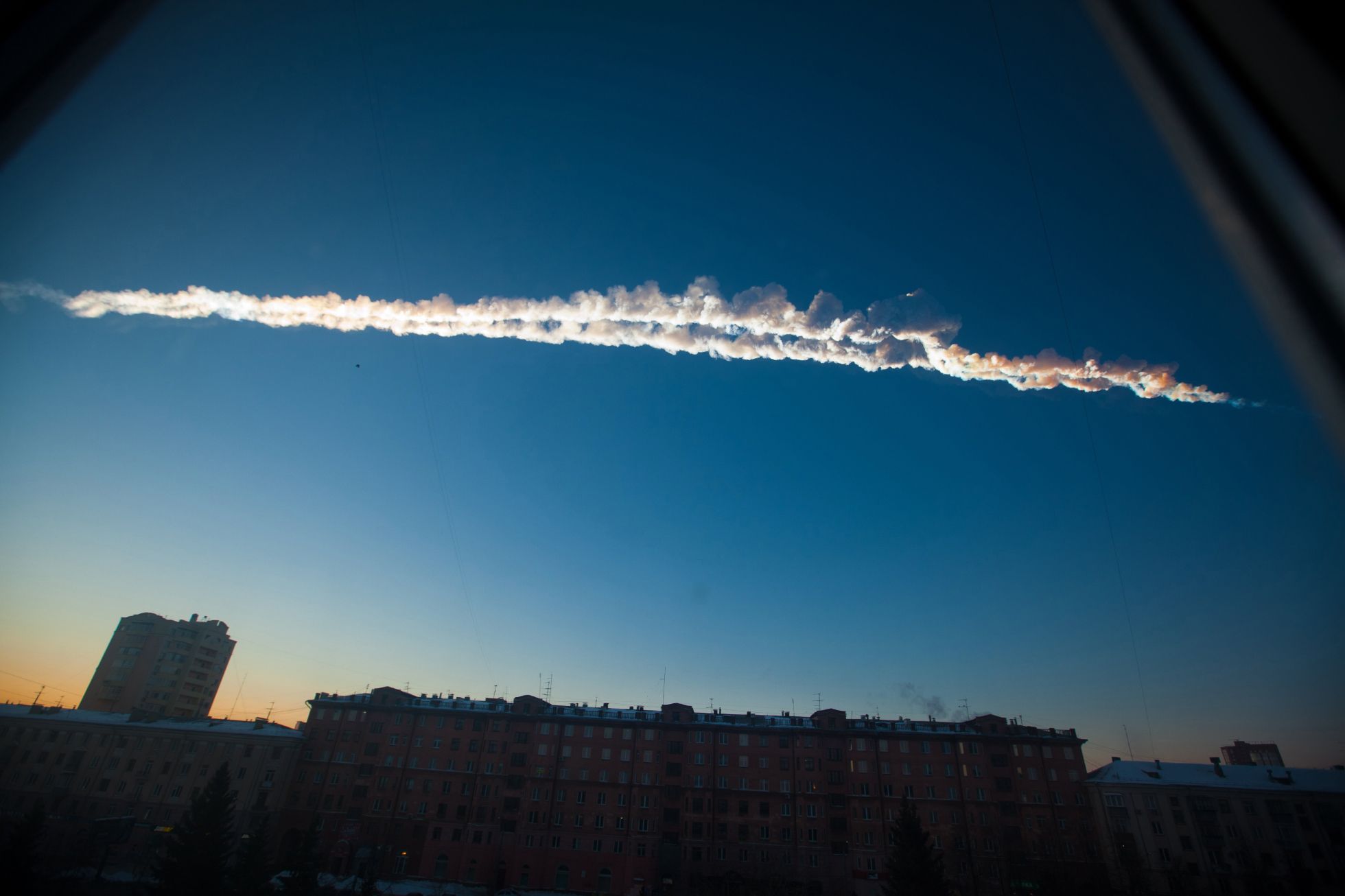
Exactly ten years ago, on February 15, 2013, a bright flash lit up the sky over the Chelyabinsk region - and thousands of people witnessed the last moments of the meteorite fall, the fragments of which were later discovered near Lake Chebarkul. Thanks to numerous records from the DVR, the fall of the Chelyabinsk meteorite has become the most documented in history. The reaction of some eyewitnesses was especially impressed - sometimes unperturbed to detachment . As a result of the fall, no one died (although there were destruction and injured people), and this also contributed to the fact that the meteorite flying over Chelyabinsk is usually remembered as something good. Especially against the background of the next years. In honor of the anniversary of Medusa, he answers a shameful question about Chelyabinsk and other meteorites (as well as about asteroids and even carriers!)
What fell under Chelyabinsk? Meteorite, an asteroid or something else?
A meteorite fell on Chelyabinsk. In general, what about meteorite, asteroid, or, say, about the meteor, depends on where the object of interest is.
If it rotates around the sun, this is an asteroid (or “small planet”, although astronomers do not use this term after 2006 ). If we are talking about an object that burning in an atmosphere - a meteor. They are also called “falling stars”, although they actually have nothing to do with the stars: usually these are fragments of asteroids or comets, although they can even be an unurient cosmic garbage. There are still pains - these are just very bright meteors.
Finally, meteors that did not burn in the atmosphere completely and fell to the ground are called meteorites. One of them was Chelyabinsk. It turns out that he should be called differently at different stages of the life path. He was an asteroid until he entered the earthly atmosphere. He remained a car - a bright meteor - while burning in the atmosphere. And became a meteorite after landing.
Why do asteroids turn into meteorites and fall to Earth?
Meteorites fall to Earth because they are attracted by the gravitational field of our planet. More precisely, the planet and asteroids attract each other, but since the strength of gravity is proportional to the mass of the object, meteorites fall to the Earth, and not vice versa.
In order for the Earth to “pull” the asteroid, several conditions must coincide: suitable mass, distance, speed and trajectory. For different objects, the values will be different. Quite large asteroids are considered potentially dangerous, which approach a distance of 7.5 million kilometers.
But why then does the moon fall to the ground? She is also attracted too
In fact, the Moon (like any Earth's satellite, including the International Space Station) constantly “falls” to Earth, but cannot achieve it, because it is influenced by two factors that compensate each other. On the one hand, the gravity of the Earth pulls its "down". On the other hand, the moon all the time moves “forward” in orbit.
Astrona Dmitry Vibe offers such a comparison with a stone thrown forward:
If you push it at a speed of 8 km/s , the earth will “leave” from under it exactly with the same “speed” with which he will fall on it. That is, the stone will still fall to the ground, only the fall will never end. The same thing happens with the moon: it not only falls to the ground, but also rotates around it, so the fall turns out to be endless.
Where did the Chelyabinsk meteorite fly to Earth?
Scientists believe that the “parental” asteroid of the Chelyabinsk meteorite belongs to the Apollo - a group of near -earth asteroids, which regularly cross the orbit of our planet and therefore are potentially dangerous.
Why did they write so much about him? Was he somehow special?
The Chelyabinsk meteorite became a global superstar due to the fact that, firstly, he flew over relatively densely populated areas, which occurs infrequently, and secondly, met with land precisely in 2013, when many residents of Russia had video recorders (which in itself attracted the attention of even the Western press ).
He fall ten years earlier, the excitement would probably be less. In addition, the meteorite was lucky with the weather: if that morning in Chelyabinsk it were cloudy, people could not immediately understand that the shock wave that knocked out the glass was caused by the fall of the space object.
Additional attention to the meteorite was attracted by the destruction caused by him. Damage - mainly broken glass - received 7320 buildings. 1613 people turned to medical help. At the same time, fortunately, no one died, thanks to which his reputation was not spoiled.
Finally, the mass of the asteroid, which entered the atmosphere over the Chelyabinsk region, was about 11 thousand tons, and its diameter was about 18 meters. This is a rather large object - meteorites of this size fall to Earth an average of once every hundred years.
The Chelyabinsk meteorite was more or less than the Tunguska, which fell about a hundred years before?
Less. Scientific consensus against the Tunguska meteorite, if it was a meteorite at all , has not yet been achieved. Among the last hypotheses put forward by scientists, there is an iron meteorite with a size of 100-200 meters, flying along the tangent and created a powerful explosive wave, or a stone meteorite with a diameter of 50-60 meters, exploded in the atmosphere. In any case, the size of that object was several times larger than the Chelyabinsk meteorite.
But the records are far from the records. For example, in the Canadian province of Ontario is one of the largest shock craters on the planet. It appeared about 1.8 billion years ago as a result of a meteorite fall, the diameter of which could reach 15 kilometers. An even more impressive crater was formed in South Africa after a meteorite with a diameter of 20–25 kilometers two billion years ago.
The largest impact crater in Russia is much younger - Popigai located in the north of Siberia only 35 million years, and left its meteorite with a diameter of about five kilometers.
What remains of the Chelyabinsk meteorite after landing?
What will ultimately fall to Earth depends on the size and composition of the asteroid entering the atmosphere. Small objects usually burn completely, not having time to reach the surface. Stone bodies are most often destroyed in the atmosphere, although their largest fragments can land. Finally, iron meteorites are more resistant to atmosphere and have more chances to reach the surface.
The Chelyabinsk meteorite was stone , so it collapsed on many fragments. The largest of the found is a few percent of the initial weight of the body.
Did scientists learn something new thanks to his fall?
Thanks to the huge array of collected data, researchers were able to study the Chelyabinsk meteorite, perhaps better than any other in history. Here are some of the most unexpected discoveries:
- A meteorite drop can cause burns . 180 eyewitnesses of the fall noted pain in the eyes, and 70 people were temporarily blinded. 20 residents of the Chelyabinsk region reported solar burns. Scientists believe that this was facilitated by the fact that the snow reflected the ultraviolet radiation of the meteor, which was brighter than the sun.
- The stormy past of the meteorite saved people . Researchers noticed in the fragments of cracks that fell on the surface, filled with molten metal. This indicates that the asteroid survived several clashes before he became close to the ground. Which, in turn, contributed to its destruction in the atmosphere and allowed people to avoid the fall of large fragments that could cause great damage.
- A meteorite could witness the formation of the moon . One of the clashes in the fate of the parental asteroid of the Chelyabinsk meteorite occurred 4.5 billion years ago - about the same time that the moon was formed. Perhaps he participated in large -scale and often destructive processes that went in that era in the young solar system.
Have meteorites ever fell right into people?
At least once a meteorite really got into a person. In November 1954, a meteorite fell in the American state of Alabama, one of the fragments of which pierced the roof of the house and landed on the 34-year-old Anne Hodges, who was dozing on the couch. The meteorite touched her side and hand, leaving a big bruise. The woman survived this clash with a “alien from space” and died in 1972.
How often do meteorites fall to the ground and can it be predicted when this happens?
Very often. The astronomer Gonzalo Tancrede calculated that every year about 6100 meteorites fall on Earth, that is, large objects to reach the surface. It turns out about 17 meteorites per day. True, the vast majority of them land in hard -to -reach places or even over the ocean, so no one notices their fall.
To predict the appearance of some meteors is quite easy. The fact is that several times a year the Earth crosses the places of accumulation of metroids (that is, tiny asteroids) - meteor streams occur at such moments. Most of these meteors burn in the atmosphere and do not reach the surface of the earth. Among the most famous flows are summer Perseids and November Leonids . In contrast, the Apollo, from which the Chelyabinsk meteorite occurs, cross the orbit of the Earth only from time to time, and these clusters themselves are much less; They differ in origin .
To calculate when larger asteroids come closer to the ground (and evaluate the chances of a clash), astronomers monitor their orbits. For example, the Catalina Sky Survey project set its goal to catalog at least 90% of near -earth objects with a diameter of more than 140 meters. Now it has more than 30 thousand asteroids. All of them are several times more than the Chelyabinsk meteorite.
This explains why the fall of the Chelyabinsk meteorite turned out to be a loud media event, but remained in fact not noticed by astronomers. He was too small so that scientists could notice him in time-after all, they spend their main efforts on tracking larger objects. In addition, he flew from the side of the sun shortly after dawn, which, for example, prevented amateur astronomers to find it in advance.
As a result, the Chelyabinsk meteorite was a surprise for everyone: people whose work consists in studying space bodies read about it literally on the Internet. For example, scientific laboratories of the NASA reactive movement for the first time learned about the fall of a meteorite in Russia from Twitter - and only because the organization’s PR manager checked her tape during non -working hours.
According to scientists , in order to learn in advance about the approach of asteroids the size of the one that fell near Chelyabinsk, it is necessary to carry out regular (almost daily) shooting of the entire sky using ground telescopes.
In 2028, NASA was going to launch the NEO Surveyor space telescope to search for potentially dangerous objects. And although its main goal is to search for large (more than 140 meters) asteroids, the telescope will be able to find smaller objects. The project initiators plan to determine the frequency with which potentially dangerous objects (any size) will collide with the ground in the next 100 years.
“Medusa” in Russia is now not only “foreign”, but also an “undesirable” organization. This status is much worse than the previous one. Nevertheless, we continue to work. We can still read us. It is safe. Here are all answers to anxious questions.
Is it true that it was the fall of the meteorite that killed dinosaurs?
It looks like that. In recent decades, a scientific consensus has developed that it was the fall of a meteorite with a diameter of about 10 kilometers that led to the fact that almost all dinosaurs (except for the ancestors of modern birds) were massively extinct 66 million years ago.
Among the main arguments in favor of this version are a giant stressing crater of a suitable age on the Yukatan Peninsula in Mexico, as well as a thin layer of metal of Iridia, which is found in deposits of that time. If Irididius is rare on Earth, then it is full of it in space. In addition, the shock hypothesis confirms the modeling of the ancient climate.
By the way, last year, scientists first found direct evidence of the mass deaths of living creatures as a result of the fall of the Chikshulubsky meteorite: the remains of fish with small fragments stuck in the gills, a turtle, an egg with a pterosaur embryo, a dinosaur’s leg with the preserved skin, as well as fragments of the meteorite itself .
What is the likelihood that in the future a giant asteroid will crash into the ground, which this time will kill humanity? How in "Do not look up" or in "Melancholy"?
At the dawn of its existence, the Earth was already encountered with a protoplanet (that is, the "embryo" of the planet) the size of Mars. According to one hypotheses, as a result of this catastrophic collision, the moon was formed .
But now there are no asteroids the size of the Earth in the solar system. And the probability that our planet in the next centuries will threaten a very large asteroid is not very high: scientists have studied well the solar systems that are closest to us and potentially dangerous cosmic bodies know “in person”. All of them are in stable orbits and are not going to leave them yet.
However, danger can come not only from the solar system. From time to time, scientists open interstellar objects - for example, an asteroid Oumuamua . Theoretically, very large objects can also be among them.
But a meteorite with a 20-storey house can destroy all buildings within a radius of eight kilometers from the place of fall. The good news is that astronomers are unknown asteroids and this size near the Earth, so so far we are in relative security.
But there is also bad: even small meteorites like Chelyabinsky are able to cause much more damage than in February 2013. Then he entered the atmosphere at an acute angle - the meteor flew for a long time almost parallel to the horizon, wasting most of the energy along the way. If he fell from a different angle to the surface (say, 45 degrees), damage on the ground would be more serious .
If scientists have time to notice a large meteor rushing towards the earth, how much time will be to collect things and run away?
The project of the Astronomy Institute of Hawaii University Atlas , which tracks potentially dangerous asteroids, is able to detect an object of 140 meters in a three weeks before its arrival, and a 50-meter asteroid can be found about a week before the collision. So there should be enough time for evacuation of the largest city.
The good news is that officials have already begun to prepare for a clash with a hypothetical asteroid. In 2016, NASA and the US Federal Emergency Agency conducted joint exercises, in which a asteroid of 100-250 meters was simulated, which should collide with the ground in four years.
According to the scenario to launch a mission to reject the asteroid, there were no more time, so the participants in the exercises focused on determining the ways of reporting accurate and timely information to the public, as well as the fight against fakes.
The problem is that perhaps the most realistic part of the asteroid films concerns universal distrust of experts. What is especially well shown in “Do not look up” . Pandemia demonstrated that the rational arguments of scientists can not convince everyone.
Is it possible to bring down an asteroid to protect the Earth? Like in Armageddon?
The methods of combating an asteroid danger described in science fiction, such as the use of nuclear weapons, do not look especially effective, taking into account the modern level of technology development. But scientists do not sit back, and in 2022 NASA experts sent a Dart apparatus to the asteroid to encounter it and transfer to a new orbit - in fact, change the course. Perhaps in the future such devices will protect the Earth from an asteroid danger.
With that unlikely scenarios that the meteorite will still destroy life on Earth, what will happen to the ISS crew?
To destroy life on the planet or at least all of humanity, the asteroid should be very large - exactly more than that fell 66 million ago and led to the extinction of most types of dinosaurs. Blows of this scale throw a huge amount of molten rock into the near -Earth space - part of it immediately returns to the ground by meteorite rain, and part remains in space for millions of years.
Considering that the ISS makes one revolution around the Earth in an hour and a half, already during the first day after the blow it can fly up to 16 times through a cloud of particles of different sizes - from small to rather large ones. A clash with them will lead to the depressurization of the station and, probably, the death of crew members. If they are lucky and the ISS does not encounter fragments thrown into space, without support from the ground, they will be able to live for about six months .
Uh, enough about the terrible. Is there anything useful for science or economics in meteorites?
Независимо от того, какой именно тип метеорита удалось обнаружить ученым — каменный или железный, — химический анализ его состава позволяет как понять историю этого конкретного объекта, так и лучше изучить эволюцию Солнечной системы в целом. Изучая метеориты, исследователи могут выяснить, какие процессы шли в эпоху, когда образовывалась Земля и другие планеты.
С точки зрения экономики метеориты тоже могут быть полезны, поскольку содержат редкие минералы и металлы. Исследуя их состав, ученые могут планировать миссии по добыче полезных ископаемых на астероидах. По оценке аналитиков, разработка только 10 ближайших к Земле астероидов может принести 1,5 триллиона долларов.
Могут ли метеориты доказать существование внеземной жизни? Или принести на Землю инопланетный вирус?
Микроорганизмы неплохо переносят негостеприимные условия открытого космоса, так что вполне могут пережить межпланетный полет на поверхности астероида или внутри него. Ученые уже находили органические соединения внутри метеоритов, но о доказательствах существования внеземной жизни речь пока не идет. Инопланетные вирусы людям тоже не попадались, хотя некоторые вирусы вполне комфортно себя чувствуют во время экспериментов с симуляцией марсианской атмосферы.
Ilya Kabanov