
Translated material
Ivan Aivazovsky, Ilya Repin and Arkhip Kuindzhi - Ukrainians. So thinks the Metro-Museum
In Ukraine, the "decolonization of art" was welcomed. In Russia and Armenia, do not agree with this
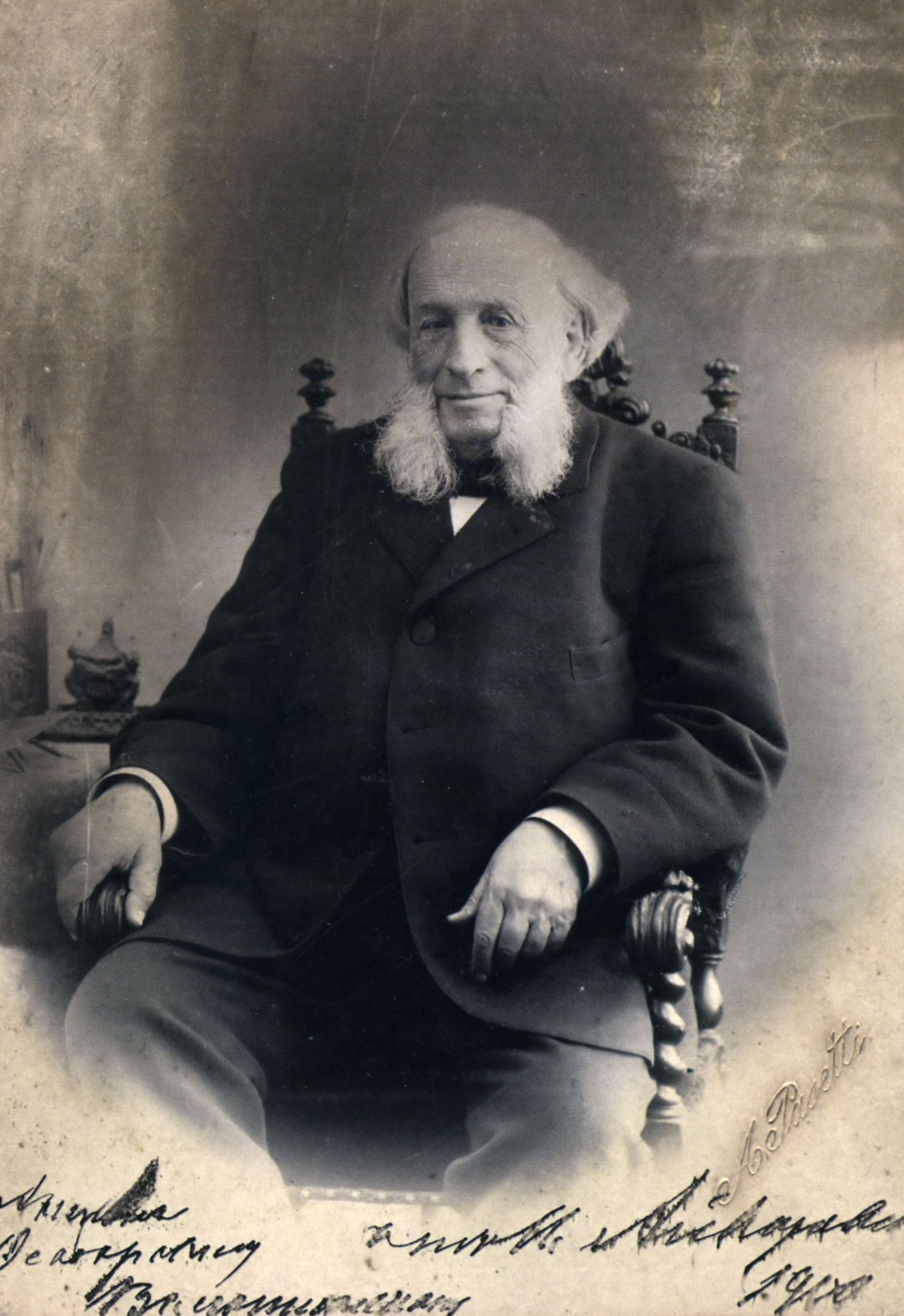
The New York Metropolitan Museum changed the signatures to the paintings of Ivan Aivazovsky, Ilya Repin and Arkhip Kuindzhi, who are in the museum collection. Now next to the names of artists it is noted that they are Ukrainians. Earlier, the museum called them Russian painters.
The signatures changed to the paintings “Portrait of the Boy” and “Shepherd with a herd of sheep ”, the portrait of the writer Vsevolod Garshin Repin, the miniature “Ship in the Stormy Sea” and the “Ship in the Moonlight” of Aivazovsky (as well as its photo portrait ) and to the landscape of the Kuinji Red Sunser . The description of the last picture states that in March 2022 the Kuindzhi Art Museum in Mariupol was destroyed as a result of the Russian airstrike.
Full descriptions
Ivan Aivazovsky (description for the picture "Ship in the Moonlight")
"Ukrainian. Aivazovsky (in the baptism of Ovannes Aivazyan) was a famous and prolific artist-marinist. Among its many sea landscapes - images of modern steamboats, like this [in the picture], are quite rare. The artist was born in an Armenian family in the Crimean port city of Theodosius on the Black Sea. Like many ambitious artists of the Russian Empire, he studied at the Academy of Arts in the cultural capital of St. Petersburg. He traveled a lot and achieved great success in both the empire and abroad, and also enjoyed the protection of the Russian aristocracy, the Sultan of the Ottoman Empire and wealthy Americans. ”
In the description of the photograph of Aivazovsky there are also such words: “Russian Romantic artist Ivan Konstantinovich Aivazovsky (1817–1900) was widely known for his paintings by sea battles, shipwrecks and sea storms.”
Ilya Repin (description for the portrait of Vsevolod Garshin)
"Ukrainian. Repin was born in the Ukrainian city of Chuguev [modern Kharkov region], when he was part of the Russian Empire. He became the largest progressive artist. In the early 1880s, he met the famous writer Garshin, who shared his interest in political and social problems. At that time, Repin wrote several portraits of people from his environment in Moscow and St. Petersburg. The letter [artist] owes his manner of art that I saw while studying in Paris. Four years after this portrait was written, Garshin, shocked by the suicide of his father and brother, as well as suffering from a mental disorder, committed suicide, rushing into the flight of stairs. ”
Arkhip Kuindzhi (description for the landscape "Red sunset")
"Ukrainian. This is one of the favorite plots of Kuindzhi - a river that is called Dnipro in Ukrainian (Dnieper in Russian and Day in Belarusian). It flows through three countries and flows into the Black Sea. Kuindzhi was born in Primorsky Mariupol when this Ukrainian city was part of the Russian Empire. The minimalist composition, dramatic light, color and clouds are a vivid example of the artist style. In the late 1860s, Kuindzhi moved to the Cultural Center [Empire] Petersburg, where he joined the Wanderers-an innovative independent group of artists. In the 1890s, he taught landscape painting at the Academy of Arts. After he was fired for supporting student protests, he founded his own society of artists.
In March 2022, the Kuindzhi Art Museum in Mariupol was destroyed by the Russian airstrike. ”
The first on the changes on the website of the Metro - Museum in early February , the Ukrainian journalist, art historian and the author of Twitter “Ukranian Art History” Oksana Semenik, who sought to rename the drawing of the French impressionist Edgar Degas (as a result, the name of the Russian dancer in the Ukrainian dress , drew attention. The collections are another similar work of Degas , which was left the previous name) and changes in the description for the work of Kuindzhi in the metro-museum. Semenik called the “victory” the change in the name of the picture of the French artist and the recognition of Kuindzhi Ukrainian.
“The Metro-Museum constantly explores and checks objects from its collection to determine the most suitable and accurate way of cataloging and exhibiting them. The description of these works was updated after collecting information carried out in cooperation with specialized researchers, ”the museum representative told ArtNews.
“Medusa” in Russia is now not only “foreign”, but also an “undesirable” organization. This status is much worse than the previous one. Nevertheless, we continue to work. We can still read us. It is safe. Here are all answers to anxious questions.
In Ukraine, changes were welcomed on the website of the New York Museum. Thus, the Minister of Culture of Ukraine Alexander Tkachenko called the incident "decolonizing Ukrainian art" and promised "to return what is historically belonging to Ukraine."
The Russian propaganda media called the recognition of Aivazovsky, Repin and Kuindzhi by the Ukrainians "Ukrainians of the brain" and "re -melting Russians to Ukrainians." The newspaper “Arguments and Facts” issued an article about the origins of the idea of “artificial transformation of creators who considered themselves representatives of Russian culture into Ukrainians.”
The Russian 24 channel accused the New York Museum of Rusophobia and the Politicization of Art, and the “Air Stuna militants” in the shelling of the Kuindzhi Museum in Mariupol. At the same time, the plot says that the paintings from the Mariupol Museum were transported for storage to annexed Donetsk. At the same time, the head of the annexed Crimea Sergey Aksenov, commenting on the situation, accused Kiev and his “Western patrons” of “theft of someone else”.
Tatyana Gaiduk, director of the Feodosia art gallery named after Aivazovsky, called the Metropolitan Museum of the Metropolitan Museum to recognize the Marinist artist. She recalled the Armenian origin of Aivazovsky , but attributed him to the "representatives of the great Russian world."
“Aivazovsky was an Armenian, he was a bearer of Armenian and Russian culture. Armenian traditions reigned in the house, in everyday life, but for all Aivazovsky is a representative of the great Russian world. All over the world, he became known as a Russian artist, one of those who glorified Russian art, ”said Gaiduk.
The recognition of Aivazovsky by a Ukrainian was also criticized by some Twitter users from Armenia. They considered that Aivazovsky should be attributed to the Armenian artists, and also recalled the Greek origin of Kuindzhi.
Among others, criticizing the decision of the New York Museum was made by the Russian-Armenian eco-activist and a participant in protests against Russia's invasion of Ukraine Arshak Makichyan . “The Metro-Museum recognized the most famous Armenian artist Aivazovsky by a Ukrainian. Western decolonization is colonization, ”he wrote.
Makichyan later noted that his tweet of Aivazovsky attracted more attention than reports of repressions. “It seems that many people prefer to argue about the dead, and not help those who are alive and need support,” he added.