
Translated material
To strew "guard dogs"
As the law on foreign agents will affect the foreign policy of Georgia, says the opposition deputy of the country's parliament

The opposition deputy of the Georgian Parliament, the head of the Reform group, Khatun Samnidze believes that the authorities were not accidentally chosen by their targets and journalists. In an interview with Novaya Gazeta Europe, the deputy explained how this can affect the foreign policy of Georgia, before which this year the task is finally facing the status of a candidate country in the EU.
Hatun Samnidze
Opposition deputy of the Georgian Parliament, head of the Reform group.
- In Georgia, at each government, steps were taken to strengthen civil society, and our Western partners play a decisive role in this. We have to carry out many more reforms, and an examination of how this process is carried out, NGOs and civil society are engaged in. The Georgian Agreement on Association with the EU provides for the strengthening of civil society, in the 12 recommendations received by the country to obtain the status of the Candidate country in the EU, this is also given great attention.
Civil society in Georgia has always been independent of the government and the opposition. He always had a very serious role. NGOs and journalists affect political processes, the formation of moods in society and the conclusions made by international partners and organizations, that is, on the assessment of reforms. Therefore, they became a target for the Georgian Dream.
The government is very upset due to the fact that NPOs constitute an objective, often critical certificate on various issues.
NGOs write about the state of courts, elections, corruption, human rights, about the situation of women, minorities, about the role of the Church - about everything that happens in public life.
For example, the government says that everything is fine in the fight against corruption, we are ahead of European countries, and NGOs give specific facts of elitist corruption. All this annoys the authorities.
According to the project entered the parliament, the organization that is more than 20% financed from abroad is already a “foreign agent”. In fact, the Georgian Dream does not fight foreign money. The party is fighting specific NGOs. Because if not for foreign money, for example, during the pandemic period, the country would simply not survive.
In 2021, 26.5% of the Georgian state budget amounted to such funds. And in 2020, when in Georgia there was a drop in the economy by 6.1%, the budget consisted of foreign financing by more than 40%. For example, the EU during the Pandemia allocated to Georgia assistance for salaries to employees of civil service, pensions and social benefits.
- That is, we have the whole state, it turns out, a “foreign agent”?
- Therefore, they wrote that the bill applies only to NGOs and the media. They do not fight foreign money that the Georgian Dream receives, because we get grants in the field of defense, loans, loans in different areas at the state level. And only media and NGOs were recorded in the law. This is a confession of what is actually interfering.
Georgian NGOs receive financing from taxpayers in the United States and Europe. These are state -owned funds of the United States and the EU - USAID, the State Department, the US Embassy and EU countries, UNDP, Britain Foreign Ministry and many others. These state structures finance both funds and state programs, the purpose of which is the development of democracy in different countries, including Georgia.
The authorities know well that our NGOs depend on donors. It is only in developed countries that such organizations are financed by citizens themselves, who are interested in this or that topic. That is, in the long run, the authorities want NGOs to disappear, so that they do not control the power, cease to fulfill the function of the so -called Watch Dogs - “guard dogs” that monitor the work of the government.
-NGOs somehow are going to resist what is happening?
- Of course. The Government of the "Georgian Dream" is very annoying that our large NGOs have cooperation and coordination with each other. Civil society in Georgia is very close -knit, since they have a common goal - European integration, the development of democracy. They will definitely not be silent. Moreover, everyone knows that all their financing and expenses are absolutely transparent. This is public information, open.
In this country, only one thing is opaque - it is “dirty money” that Bidzina Ivanishvili gives the “Georgian dream” during the election period. <...> And, apparently, he decided that it was time to create a separate pro -Russian party. And one of the methods of strengthening this party is the initiative of such a bill.
- And what do diplomats say, representatives of the European Union? How do they evaluate the prospect when the Georgian organizations funded by them will be declared “agents”?
- As soon as this topic appeared, the opposition, of course, “turned on the alarm” and began to discuss this with ambassadors, diplomats. We asked them to explain the Georgian Dream that this is the “Putin’s path”, along which Georgia should not go in any case.
I will not call the names, but the ambassadors of the Western countries important for Georgia told us that even the formulation of the question in this way, not to mention the registration of the bill, is a problem and the “red line” on the path of obtaining the status of the European Member Country. For them, the adoption of such a law will mean that the Georgian government simply turned their back to the issue of obtaining status.
This law has nothing to do with the American. This is a direct tracing paper of Russian law. “Dream” can deceive its voter, but it will not work Americans and Europeans.
Therefore, there is an opinion that this law will not be adopted - the bets are too high, and Ivanishvili will not go to such a risk, since you will have to answer to the West.
- Why should Russian laws be copied, especially at a time when war is in Ukraine, and the Kremlin became the object of unprecedented criticism and sanctions from the West?
- Because the policy of Ivanishvili is a game. The Georgian Dream looks at the Russian side, then at Europe. The authorities say that Georgia needs the status of a member of the European Union, and at the same time they send messages to the Kremlin that they are here, next to Moscow, that they do not go far. This is confirmed by government propaganda in the spirit of "Why annoy Russia, do you want war?" The "dream" says that in Georgia there is no war only due to the fact that Ivanishvili pursues such a careful policy.
Recently, in Tbilisi, they started talking about the fact that they were welcoming the restoration of direct aviation communication with Moscow. This means that they have direct support in the Kremlin, there are some guarantees.
At the same time, we know that the European Union, the USA, Canada and a number of other countries closed the sky for the aircraft of the Russian Federation.
-If Georgia discovering the air traffic, will there be some direct response of the European Union?
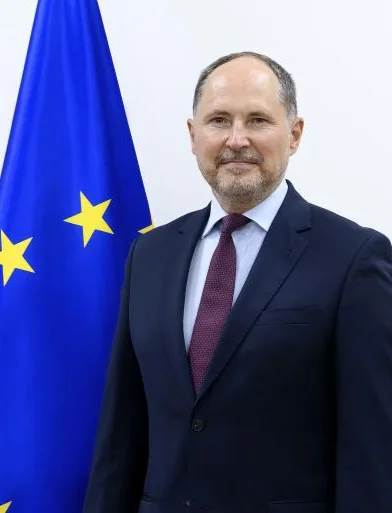
- The European Union’s ambassador to Georgia Pavel Gerychinsky recently said that we do not intervene in this issue, but leave the hope that Georgia will correspond to the EU position in this matter. It is possible that if Tbilisi does not abandon this idea, sanctions can be applied against Georgia.
- Is there a hope that the adoption of this law will really become the final “red line”?
- On the eve of the European parliament again adopted a resolution in which it speaks of sanctions against Ivanishvili. I understand that the decisions are made not by the parliament, but by the European Commission, but the political statement sounded. I am sure that warnings are already being made behind closed doors, and if there is no reaction to them, they will become public.
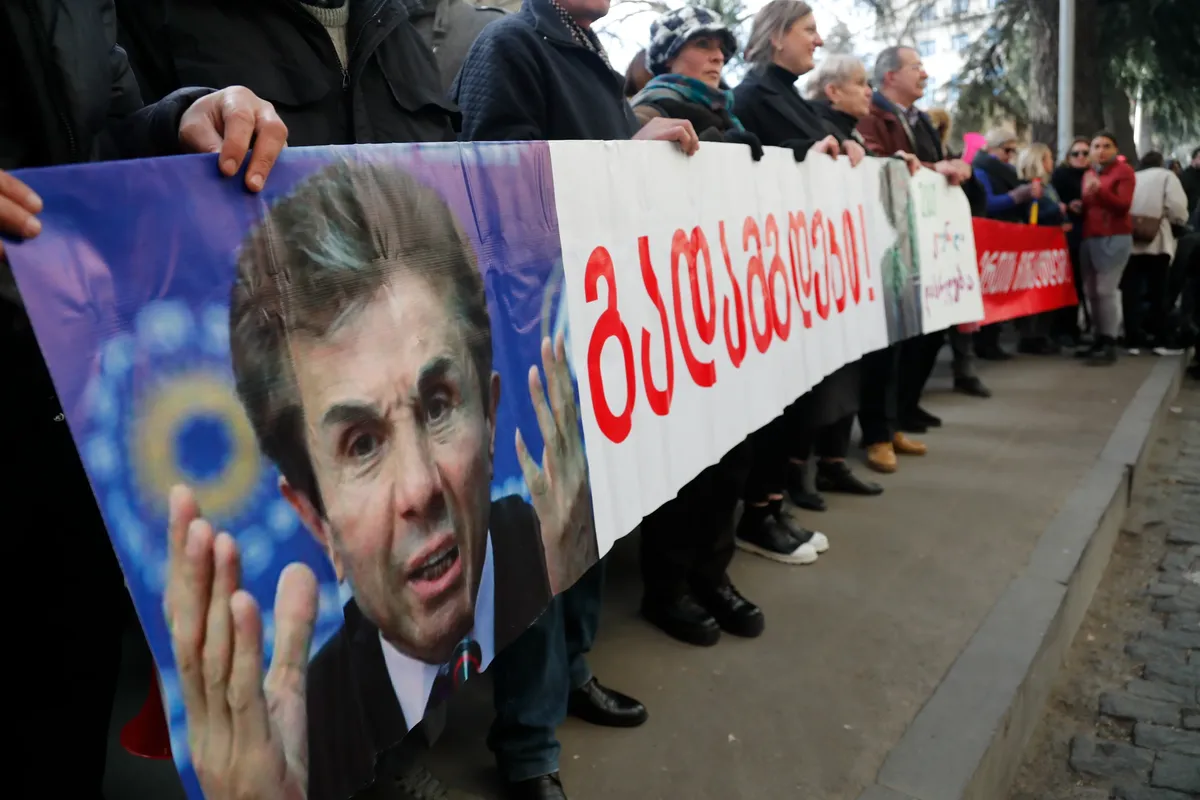
It cannot be ruled out that Bidzina Ivanishvili is “bargaining” with the West and at some point will “sell” his abandonment of all these anti-Western initiatives very expensive.
I consider the same topic for bargaining the topic of sending to the treatment of ex-president of Georgia Mikhail Saakashvili. Ivanishvili can release Saakashvili in exchange for defrosting his assets in the Swiss bank, as well as on security guarantees in case of a change in power.