Date
Author
Текст Алексей Семенов; Ася Сотникова
Source

Preserved copy
Translated material
"The imposition of a certain product." The authorities threatened criminal cases for the use of foreign vegetables without a label in Russian
Rosselkhoznadzor announced criminal liability for the use of "counterfeit" veterinary drugs. We are talking about all medicines and vaccines for animals without a factory label in Russian, that is, imported into Russia through the third countries. The deficiency of imported vaccines in Russia can provoke an increase in the number of homeless animals and epidemics of viruses, including dangerous to humans. Manufacturers of domestic drugs cannot yet provide the necessary volume and quality, experts explained.
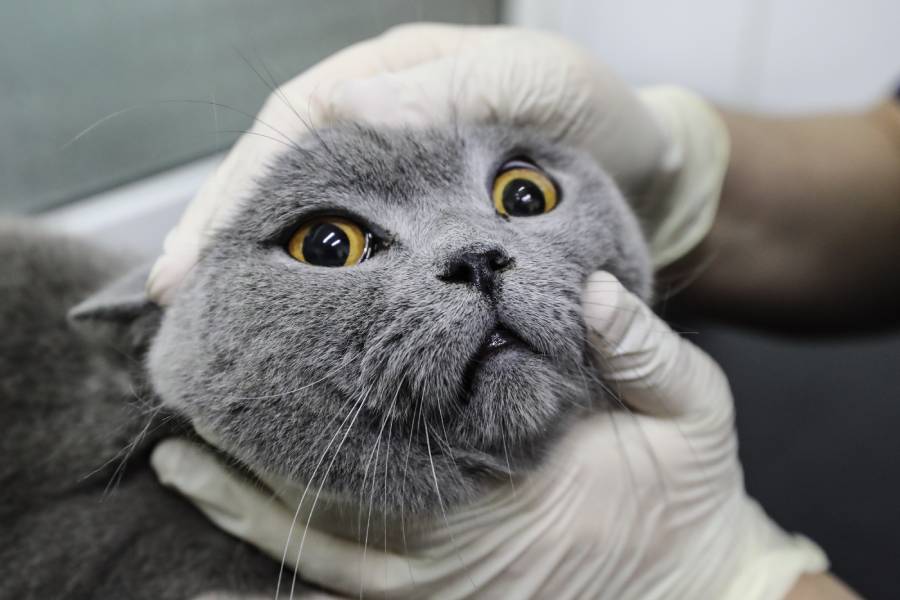 Veterinary clinic in Moscow photo: Sergey Savostyanov / TASS
Nonfactive counterfeit
At the beginning of the week, Rosselkhoznadzor extended a warning of criminal liability for the use of counterfeit veterinary drugs. The department recalled that the rules of parallel imports do not apply to them.
“The service warns the market participants about the illegality of the turnover of drugs with packaging in a foreign language or those containing information containing information in Russian in the primary packaging. The use of such products can be unsafe for domestic and agricultural animals. Also, vaccination with counterfeit vaccines will be the reason for the refusal to execute a veterinary cover of the accompanying document for movement, ”it was said.
That is, the Rosselkhoznadzor calls all the drugs and vaccines imported within the framework of parallel imports, but not approved by the department, counterfeit (in fact, this is not necessarily the case) and for their use threatens criminal prosecution. Prior to this, in early February, the Rosselkhoznadzor said that in Russia there is a counterfeit vaccine against rabies “Nobivak Rabies” with a labeling in a foreign language. At the same time, there are no high -quality domestic counterparts of this vaccine in Russia, Anna and practitioner veterinarian Nikolai Landyshev say a zoopoloner from Moscow.
"It is not clear what to vaccinate"
Owners of animals will continue to use the usual proven drugs, not necessarily imported into Russia legally, suggests Landyshev.
“ Registration of the drug in Russia is a very long and expensive process, and the veterinary market is modest. At the same time, there are a number of diseases against which a single medicine is effective, otherwise-100% death. So the practice of transporting the necessary preparations “in a suitcase” has not existed for not the first year, ”the veterinarian explains.
“For example, someone is going abroad, and he is ordered to bring a vaccine from there, although this enterprise is dubious, as special transportation conditions are needed,” says Mikhail Shelyakov, the founder and head of the March Cat Veterinary Clinic.
In 2022, in Russia, veterinarians and animal owners announced the deficiency of Nobivak Rabies. “ Russian vaccines also disappeared for some time and, and it was not clear what to vaccinate at all,” says Shelyakov .
According to the analytical company RNC Pharma, the import of vaccines for pets in 2022 decreased by 31.6%. The reduction occurred mainly at the expense of the Nobivak line - the company's deliveries to Russia halved, explains Nikolai Bespalov, Development Director of RNC Pharma.
 Photo: karsten Winegeart / Unsplash.com
Post -vaccination complications
The transition to unusual Russian -made vaccines is stress for the body, according to Natalya Tsvetkova, coordinator of the Ray homeless animal fund.
“We have used foreign vaccines for many years. We gained our experience, and it was positive. Naturally, sometimes we observed unwanted adverse reactions in animals, but there were very few such cases. We have experience in using domestic vaccines, it just is not so big. Perhaps, in some cases, they showed themselves as less effective, animals did not form sufficient immunity to viruses, infection more often occurred, ”says Tsvetkova.
In addition, domestic vaccines for pets are not recognized in all countries. Therefore, Russians who would like to leave the country with animals will have additional difficulties, adds Tsvetkova.
"You can once again expect an increase in the number of homeless animals" “Unfortunately, not all owners of pets are ready for difficulties with the search for the necessary vaccines and finding out the nuances of the export. In case of problems arising, these people are likely to abandon their pets and put them out into the street or pass into shelters, ”concludes the fund coordinator.
Veterinarians also fear that the use of Russian vaccines is fraught with complications. “The issue of post -vaccination complications in our country has not been normally investigated . We need money, people and a desire to compare the frequency of allergic reactions or, for example, post -injection sarcoma of cats in the forehead. Unfortunately, there is no resources for this, ”says Landyshev.
Redistribution of the market
His colleague Mikhail Shelyakov does not share such fears, but I am sure that the situation with vaccines in Russia " resembles the redistribution of market spheres and imposition of a certain product."
In October 2022, the head of the Rosselkhoznadzor Sergey Dankvert spoke about the department’s plans to five times to reduce supplies from abroad “some living vaccines for animals”. By 2030, about 90% of the veterinary meter market in Russia should be occupied by domestic manufacturers.
At the same time, it is not clear how Russian manufacturers are ready to satisfy demand, Nikolay Bespalov from RNC Pharma notes. “Reliable production volumes of these products are unknown. Judging by some estimates, they are still multiplying lower than the existing need, ”the expert says.
Despite this, the prospects for real criminal cases against those who will use the “gray” veterinary prescriptions are very foggy, Shelyakov believes. “ We have no licensing in veterinary medicine, and each doctor does what he considers necessary. Therefore, something cannot be banned, ”the specialist is sure.
Bespalov clarifies that criminal liability can threaten only sellers of “gray” drugs and only “with a very“ successful ”set of circumstances.”
“And Rosselkhoznadzor would be useful not to warn, but to be puzzled by solving the problem of accessibility of the relevant products or developing a mechanism for issuing the necessary documents so that consumers do not have to look for outputs in the field of the gray segment of the market,” the expert concludes.
His words are confirmed by Anna Zoovolonter: “I do not want to risk the health of my animals, so I will use the“ Nobivak ”where I will find it. If I have the opportunity to buy it with a Serbian label, I will do it. ”