
Translated material
Wanting the received
February 25, 2023
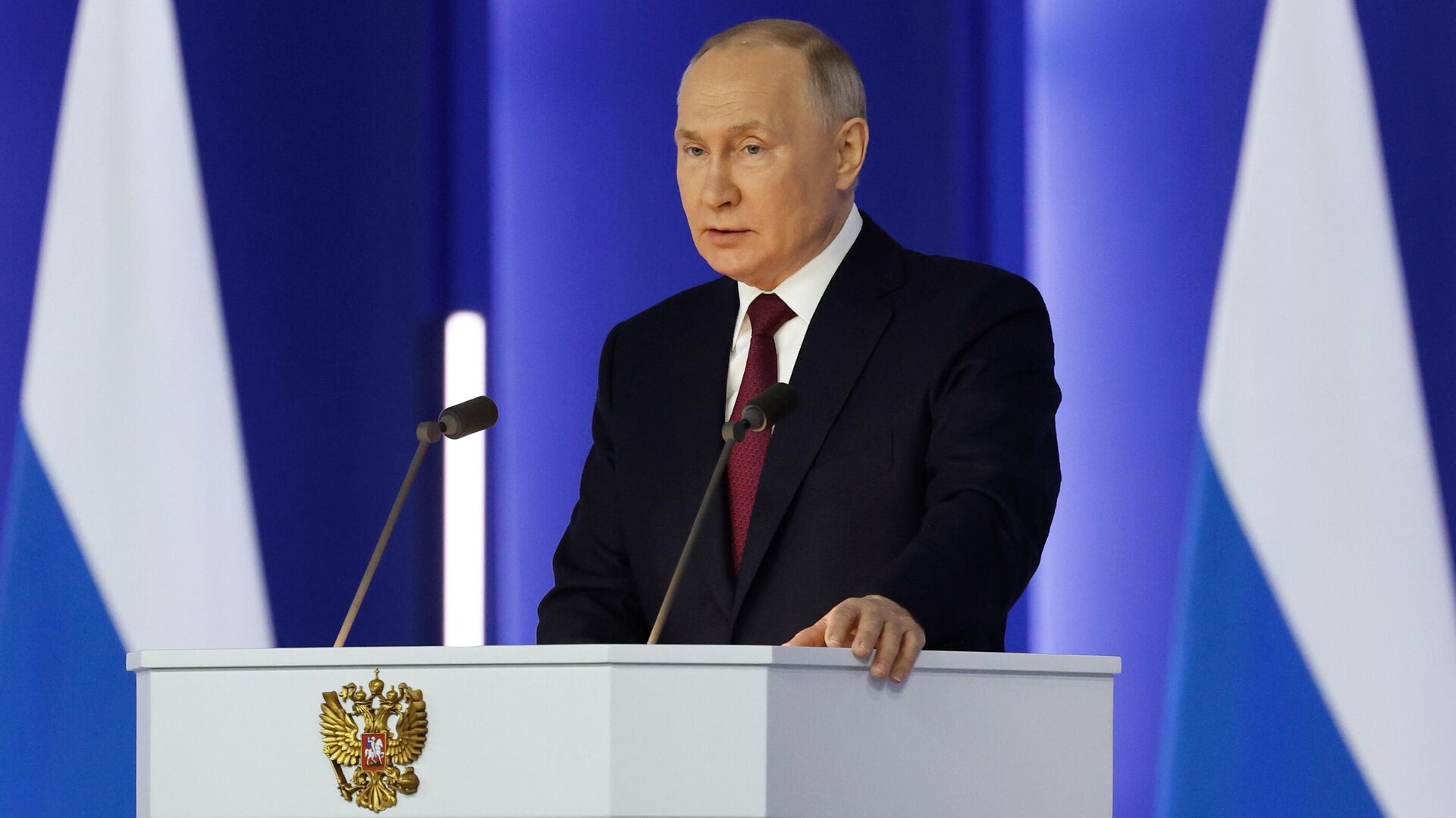
For a year now, Putin started the war in Ukraine. Now many no longer remember how this war began, and how it developed. Many of our fellow citizens are sure that everything goes according to plan, and the victory of Russia is close. But what exactly is this plan? What did Russia start with, and what did it come to a year later? In this article, we will consider what goals the Putin's “special operation” pursues and how the rhetoric of officials has changed for its length.
February
On February 24, 2022, Vladimir Putin announced the beginning of the so -called “special military operation”. As her goals, he called “demilitarization” and “denazification” of Ukraine. Other officials, like Lavrov, picked up the same rhetoric. Unfortunately, Putin did not explain what these words mean, but he repeated many times that he was not going to fight with the people of Ukraine, and only certain neo -Nazis battalions show the resistance of the RF Armed Forces. A lot of signs then indicated that Putin’s plan was to quickly take control of the main cities of Ukraine, taking advantage of the effect of surprise and hoping that Ukrainians would not resist. For example, propaganda, which in the first hours of the war talked about the capture of Kyiv in 3 days and the flight of Zelensky. Here it is worth recalling about the column of the Russian Guard, which brought helmets and plastic batons with it, to disperse potential rallies of local in occupied cities. All this indicates that the war was conceived as a blitzkrieg. But something went wrong.
March
In less than a month, a month has passed since the tone of officials has changed. Already in March of the Armed Forces of the Russian Federation they retreated from Northern Ukraine, calling it a "gesture of goodwill" (it is strange that not a negative offensive). In the same month, some kind of negotiations took place, which, however, did not lead to anything. It was at this time that the Kremlin began to actively talk about negotiations, and it almost did almost. Apparently by this time Putin decided that all the Nazis had won and carried out demilitarization, not otherwise. However, then a massacre occurred in Buch - an event that made any negotiations impossible.
April - June
When the military crimes of the Putin army were revealed, the Ukrainians unequivocally understood that any city under the occupation of the RF Armed Forces can become a new buch. It is from this moment that propaganda and officials begin to work out a new agenda - the battle for the Donbass. Having finally discarded the topic of demilitarization and denazification, the entire focus of Z-publicity fell on the "protection" of Donbass. This topic was even picked up by many Western media, dispersing the topic of the upcoming battle for the Donbass.
July - August
As a result, the battle for the Donbass limited itself to the slow offensive of the RF Armed Forces, which were weakly similar to what the propagandists told about. At the same time, Ukraine and Russia came to the first agreement from the beginning of the war - Russia promised to allow Ukrainian ships to export grain from the ports of Ukraine. In addition to Russia and Ukraine, Türkiye and the UN took part in the agreement.
September
This month became successful for the Armed Forces of Ukraine - as a result of a counterattack, they managed to free essential territories in the Kharkov region, forcing the RF Armed Forces to retreat. The Ministry of Defense, in the best traditions of the Putin New Law, called this retreat “regrouping”. Very soon, another event occurred, which shocked all the Putin’s military commissars - the Russian side exchanged captured fighters of the Azov regiment for Kuma Putin Medvedchuk. It is worth recalling that propaganda without interruption was trumpeted, that the Azovites will judge, and in no case will not be exchanged. But, as often happens, life made its own adjustments, and Kum Putin was more important than the Ukrainian “Nazis”. Well, at the end of September, Putin made what turned the life of many Russians upside down - he announced mobilization. He called it “partial”, however, the decree did not have (and are still absent) criteria by which one could understand who would be called and who is not. A few days after that, referendums about accession to Russia took place in the occupied regions of Ukraine. The most ironic thing is that the boundaries of these “new regions” passed literally along the front line, and Dmitry Peskov said that where the border will be determined by the people living in these territories.
October
With the advent of General Surovikin, the commander of the group of the Armed Forces of the Russian Federation in Ukraine, the Kremlin’s goals have again undergone changes. After the shameful for Russia and Putin of the explosion on the Crimean bridge, the goal was to deprive Ukraine of vital infrastructure. Without any hesitation, Russian artillery began to strike at power plants, leaving many civilians without light and heat. Many Western countries called this act a war crime and a crime against humanity. In parallel, Putin said that the mobilization was over, but the corresponding order refused to sign. Russian military registration and enlistment office secretly pick up Russian men to this day.
November - December
At this time, success came to the Armed Forces again - the Russian army left Kherson. But this time, ashamed of talking about the “regrouping”, the Ministry of Defense called this “a difficult decision”. And all this under the incessant stories that Russia “does not throw its own.” At the same time, Putin resorted to blackmail tactics. On the one hand, he threatened not to extend the grain transaction, which we talked about earlier. On the other hand, he had rushed to the threats that had already filled his soreness that Europe would freeze without Russian gas. As we already know, both tactics did not lead to anything - the grain transaction remained in force, and the West did not refuse sanctions against Russian gas.
January - February
Closer to the anniversary of the invasion of infrastructure strikes, Russian officials moved to a new (or not) rhetoric - the protection of the state borders of Russia. This point of view was voiced by Lavrov. Only now where exactly these borders go, he did not specify. This rhetoric has received climax during Putin’s message to the Federal Assembly. In addition to dubious promises, Putin complained to the Kyiv regime, the lawlessness of the West and the injustice in relation to Russia. The most absurd thing is that hand in hand with these complaints was brave speeches that Russia would not be able to defeat the battlefield, as well as threats with nuclear weapons. Many expected that within the framework of this message, Putin would declare martial law, the second wave of mobilization and would begin to call the “special operation” of the war. However, as we know, none of this happened.
Results
Putin got into the adventure, hoping to crush Ukraine with a quick blow, but everything went not according to plan. From his rhetoric, we see that he did not even think that it could be, and therefore invented new goals and excuses for the war on the go, if only to at least a little to extend her legitimacy in the eyes of some Russians and win a little time. This war has no goals, but the only thing that is needed for is to extend the life of the Putin regime. Having referred to the heading of this article, Putin wanted to get what he wanted, but in the end he had to be desired.