
Translated material
Kyiv and Tbilisi - two February
The war in Ukraine forced Georgians to once again think about the Soviet occupation that occurred more than a hundred years ago and whether the current Georgian government was evaluating both of these events correctly
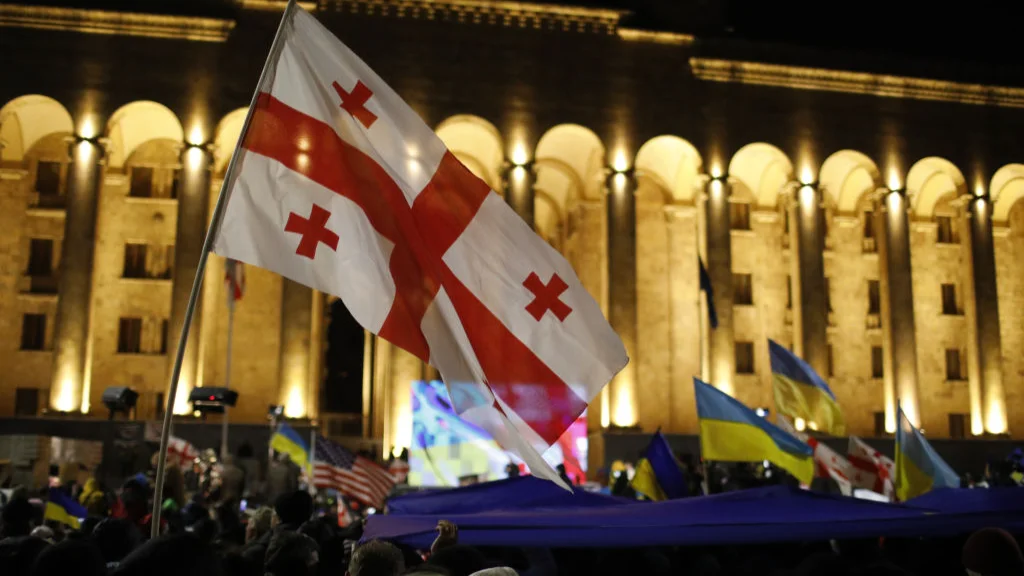
This is Georgia
“I do not like February: on February 24, 2022, the war in Ukraine began, and on February 25, 1921 the Red Army entered Tbilisi,” one of the speakers began his performance, opening a rally of solidarity with Ukraine on Friday.
At seven in the evening it was sharply dark, and the ice wind flying from the mountains threw prickly snow into the air. The weather clearly did not have to walk. “How many people are already? There are a lot of you? " - those who were late for the action were worried in messengers. Gradually, social networks were filled with photographs of the procession of Ukrainians and Belarusians to the square where Georgians were already standing. And finally, a video from drones appeared - about ten thousand people stood in front of the parliament. “This is Georgia. Now we are not so ashamed of our government - everyone will be convinced that the Georgian people supports Ukraine, ”the woman who had gone to the bench announced to me, looking around the size of the action.
By the way, the action was called: "This is Georgia - glory to the heroes."
The presenters spoke alternately in Georgian and Ukrainian. Vitaly Klitschko, mayor of Kyiv, turned to the gathered in the square from the monitor. A minute of silence was honored with the memory of Georgian volunteers who died in Ukraine. And almost all speakers said with confidence that Ukraine and Georgia would soon become full members of the European Union.
One of the organizers of the action, the leader of the Girchi - more freedom party, Zurab Japaridze before the rally explained in a television interview why the Georgians are important to the Ukrainian victory: “Right now there is a war in Ukraine, we live on how the country wins the enemy, which is our enemy. How can we not learn this? How can the Georgian military do not be there now and not learn how Ukraine is now winning Russia? Let at the headquarters level, at the level of strategy, tactics ... What weapons they use ... We need all this to protect ourselves! We are now missing this opportunity. ”
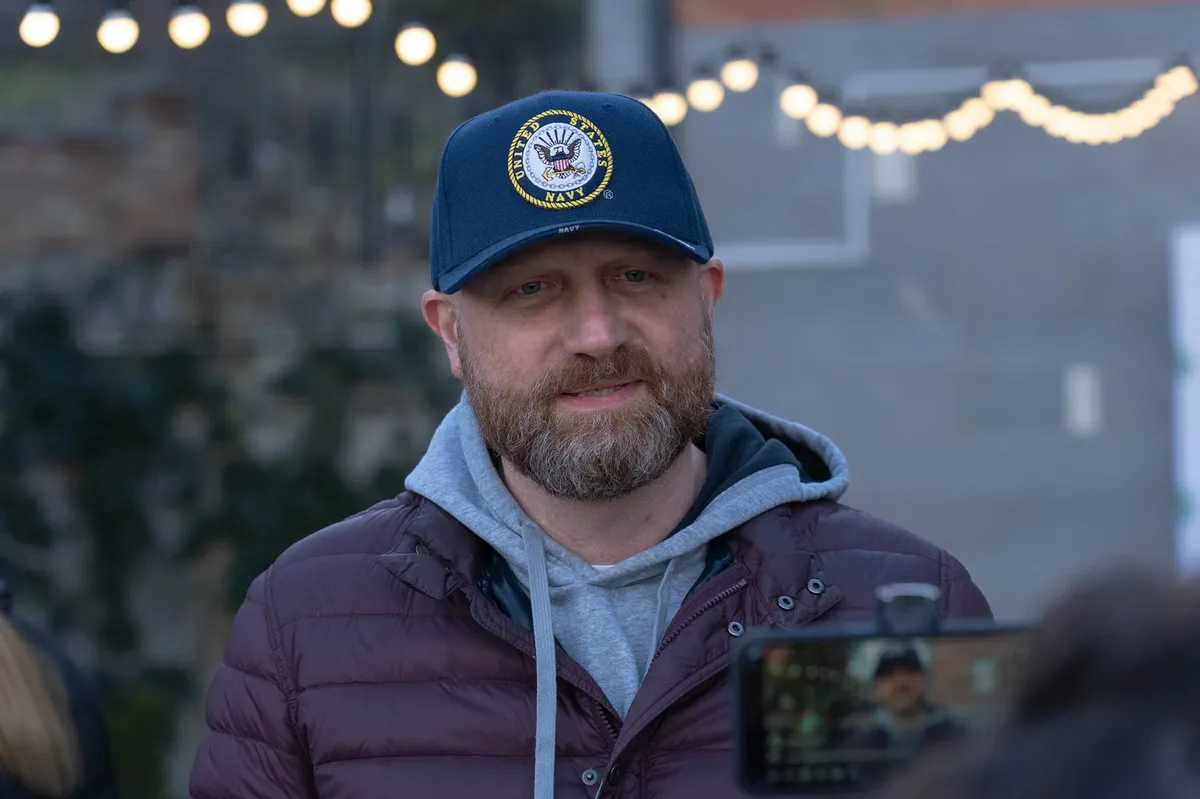
On the thesis of proceeding that the opposition “involves Georgia in the war”, Japaridze replies that there were not many years in Europe for many years. Meanwhile, in Georgia, and in the entire post -Soviet space, armed conflicts constantly arise:
“In the modern world, European space is the only one where the world has been reigns for decades, under the NATO Safety Umbrella. Such a long -term world is needed for us. Such a world is in NATO and in the European Union. People there therefore live well, that there is peace, safety and economic development. So we want to the West, where there really is well -being. ”
The war in Ukraine and the entry into the European Union - over the past year, it became clear that it was (and possibly only) these two topics can unite supporters of disparate opposition parties and even the ruling “Georgian dream”.
The largest rally last year in Tbilisi took place on February 26, after the beginning of the invasion of Ukraine, and then on June 20-as a reaction to the fact that Georgia was denied the status of a candidate country in the EU.
“There are times when citizens are not a government, but better than the government,” this is how the President of Ukraine Volodymyr Zelensky thanked all the Georgians a year ago, who went to the joints of solidarity with Ukraine.
It must be admitted that in a year everything has become even worse: both the reaction of the Georgian authorities to the war in Ukraine, and the prospects for the country's entry into the EU.
Incomprehensible
Pro -government television “Imady” called a rally on Rustaveli “Action of a radical opposition that ignores national interests”. Georgian President Salome Zurabishvili has not yet joined the opposition, but the government openly criticized.
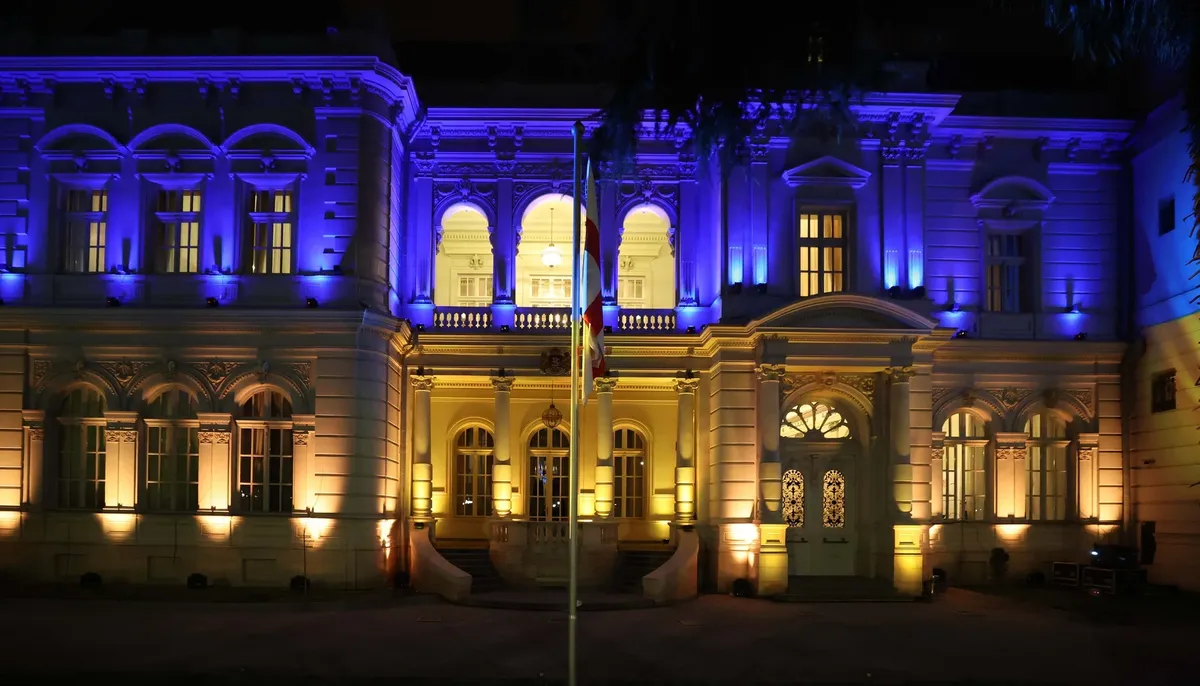
The residence of Zurabishvili on the street atoneli on the eve of February 24 was highlighted in blue and yellow. On the facade of the mansion for a long time, almost a whole year, two giant flags hang - Ukrainian and Georgian. It is appropriate to recall that the position of president in Georgia is almost symbolic. But Salome Zurabishvili clearly hopes and, after completing his authority, traveling to his native Paris, not feeling awkward to European colleagues.
The president expressed a position loudly, at the protocol event: on the anniversary of the invasion of the residence, a special reception for diplomats was arranged.
Zurabishvili called the position of the Georgian government “incomprehensible”, which, according to her, drove herself into international isolation because of Ukraine.
“I can’t help but express the fact that the Georgian government has self -isolated, separated from the democratic community, and is trying to justify its incomprehensible, supposedly neutral or balanced position,” the president said. ”
The President of Georgia itself came to the conclusion that Russia had already lost the war, since " it failed to overthrow the Ukrainian government, failed to weaken international support."
As you know, the position of the Prime Minister is far from so categorical: while at the Munich Security Conference, Irakli Garibashvili said that “no one knows how the war will end”, as well as “where Georgia, Ukraine or Europe will be.” He also said that Tbilisi had his own peaceful initiatives, however, there were no clarifications or presentations of a peaceful plan.
The President also criticized the Georgian parliament - it recently became known that the parliamentary majority responded to the invitation to send an official delegation to Kyiv on the day of the anniversary. Only representatives of the opposition went to Ukraine. The leaders of the Lelo party brought an ambulance as a gift to the City Hall of Kyiv.
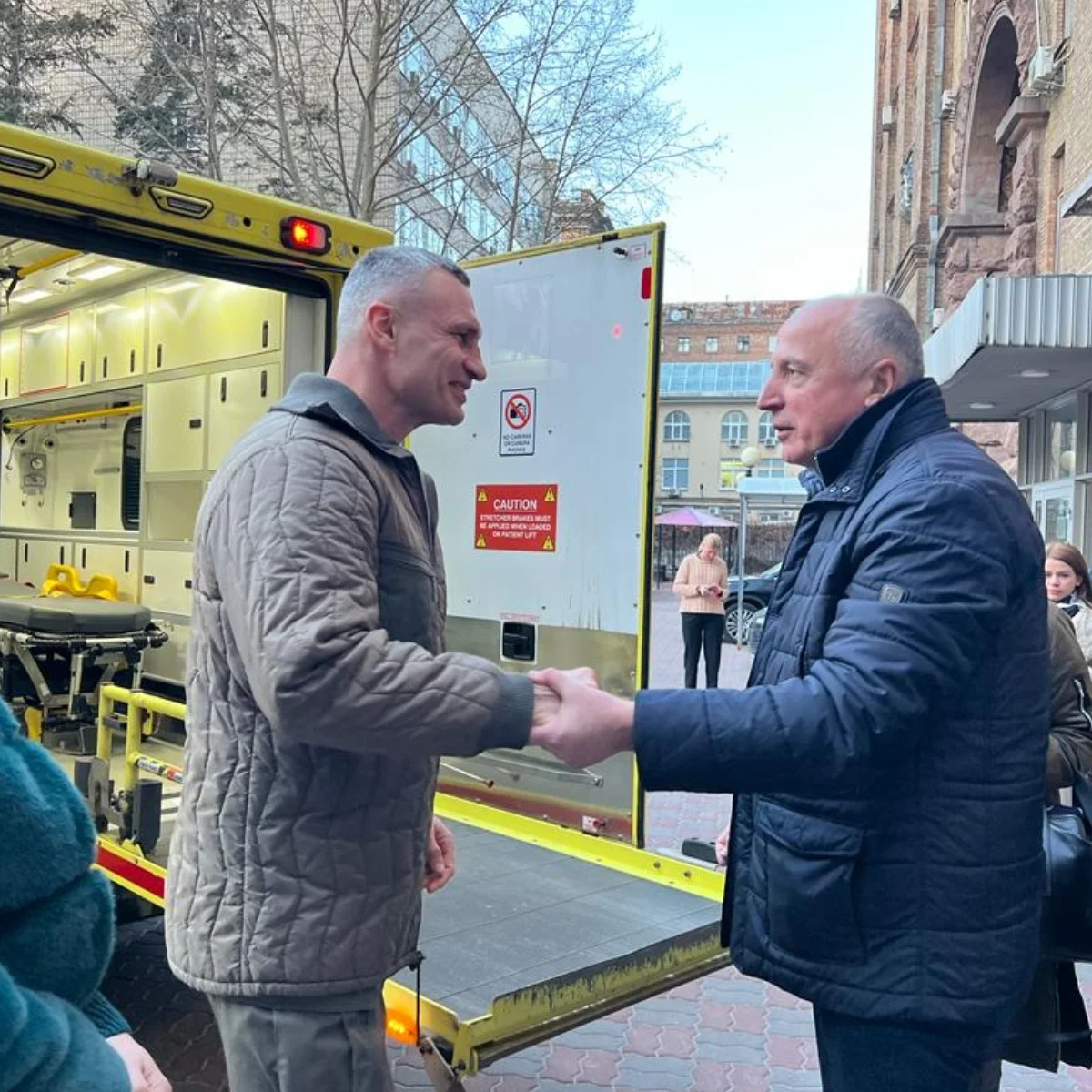
Salome Zurabishvili hinted that she herself would not mind coming to Ukraine, but did not receive an official invitation.
Thus, during the year of the war, only one representative of the first persons of Georgia visited Ukraine - this is the speaker of the parliament Shalva Papuashvili. On the anniversary of the invasion, he sent a letter to his colleague Ruslan Stefanchuk. By the tone of the message, it is noticeable that the buch that the Georgian delegation visited made an indelible impression on him:
“Dear Ruslan, dear friend, has passed the year since the aggression of the Russian Federation brought chaos, destruction and pain to Ukraine and the Ukrainian people. At the same time, it was the year of courage, the inconsistency and heroism of Ukrainians.
A year after aggression, Ukraine, more than ever, is one and unshakable, and shows the future generations an outstanding example of heroism.
During this time, Georgia expressed full solidarity with Ukraine. The Georgian flag was not seen at the Georgian Embassy in Kyiv even in the most difficult period of the war. Before the onset of peace, Georgia became the second homeland for thousands of Ukrainians.
I am sure that the best days will certainly come, and we will have the opportunity to celebrate the Ukrainian victory in Kyiv. Dear colleague, I confirm my deep respect for you, ”wrote Shalva Papuashvili.
Based on national interests
A few hours before the rally, I came to the park near Rustaveli Avenue. There, representatives of the Russian anti -war organization Vesna collected installation from Origami - ducks. According to the organizers, volunteers in Tbilisi prepared 8006 figures, each of which symbolized the peaceful resident of Ukraine who died in the war (according to the UN estimates , the death of 7,155 peace residents of Ukraine is currently confirmed, 438 of them are children).
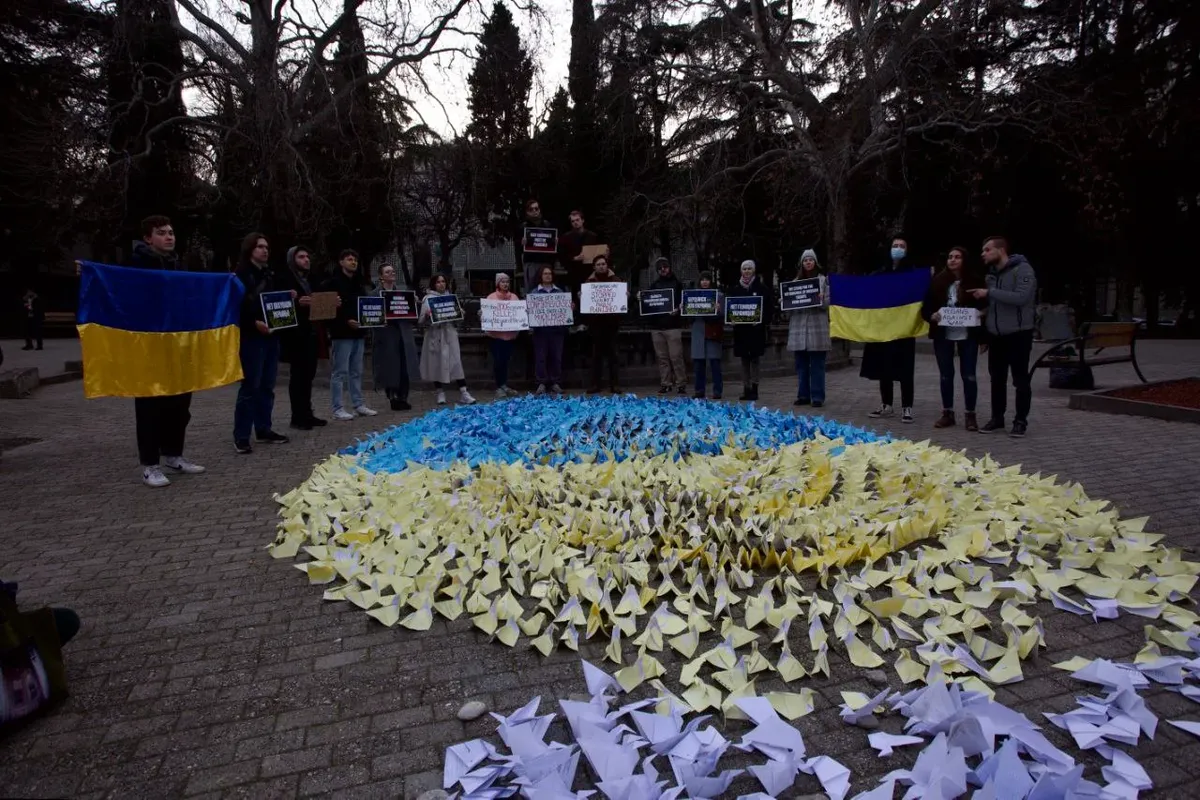
While the installation was cooked, I drank coffee purchased in a museum cafe-it was given in a blue-yellow paper glass. An elderly cleaner approached me, on a uniform costume of which a round icon with a Ukrainian flag was suddenly also discovered.
“Who are these young people?” He asked, nodding towards a lively movement in the park. “I don’t understand, Ukrainians or Russians?”
“Russians,” I confirmed.
- Tell me, isn't it the war that the war was definitely not Ukraine? - continued the dialogue of an uncle with a broom in his hand.
- Exactly.
- I think so too. It is scary that is happening in Ukraine, I am very sorry for the Ukrainians. It’s good that Garibashvili behaves carefully. After all, Russia could start a war with us.
I silently got up and moved to another bench.
Garibashvili in response to the remark of the president did not freeze. He recalled that Georgia is “doing maximum”, supporting Ukraine at the international level.
“And if someone wants to go to Kyiv, everyone is free, and we do not limit anyone. On the other hand, in the light of those statements that sound from the political leadership of Ukraine, any self -respecting power would act as we act, ”Garibashvili said in an interview with reporters.
Nevertheless, the prime minister believes that “if the power in Georgia had the current destructive opposition,” Georgia “would have turned into a training ground”. So the government acts, "based on national interests",
But the opposition holds "absolutely destructive, anti -state, anti -national and anti -Georgian actions."
“The main concern of the government was and is the preservation of the world ... The absolute majority of the population of Georgia supports this course,” Garibashvili emphasized.
“Let's recall once again what the result was this year. To date, Ukraine has lost 20% of its territory, tens of thousands of people have died, damage has not yet been calculated .... Therefore, we have to rule the country without emotions, ”said the Georgian Prime Minister.
Day of Sovietization
In 2010, under the third president Mikhail Saakashvili, on February 25, the day of the Soviet occupation was officially announced in Georgia. This is a mourning day when state flags are being launched in the country. In memory that the victims of the “Red Terror” and Stalinist repressions were not only the young Georgian Republic and the very idea of a sovereign democratic state, but also tens of thousands of living people - including almost the entire aristocracy and the intelligentsia.
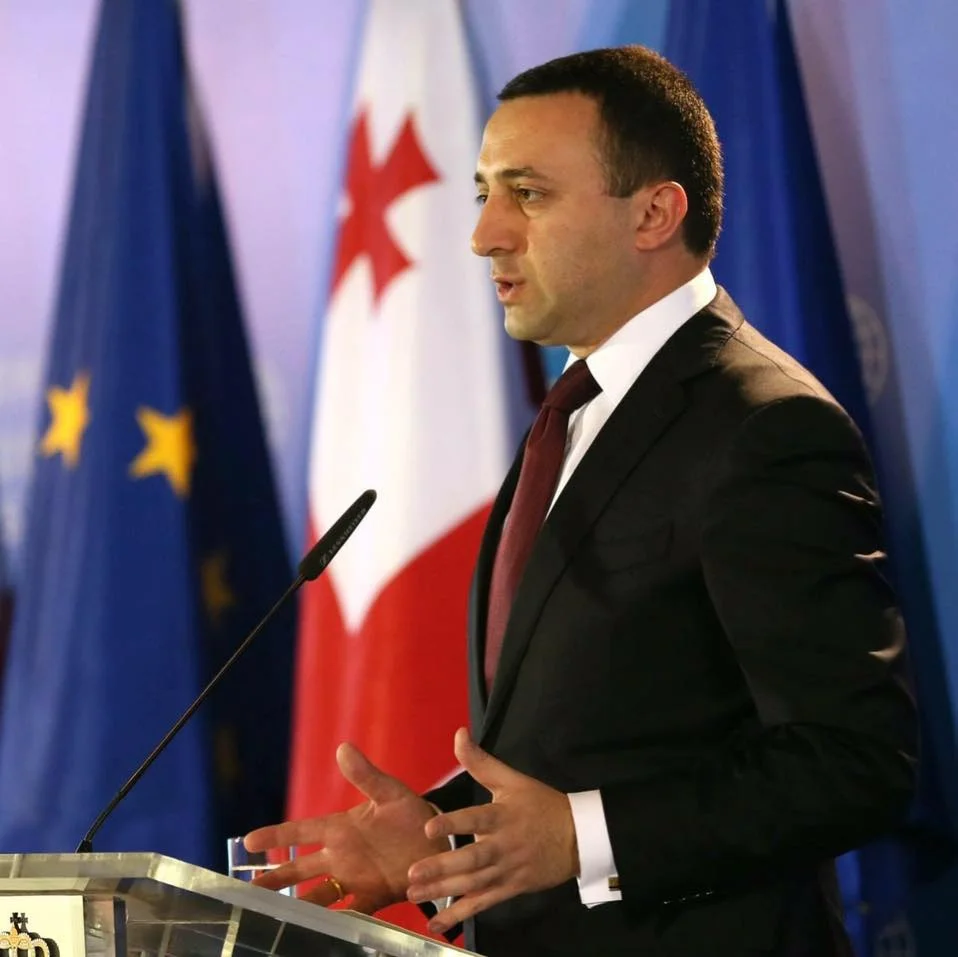
On February 25, Prime Minister Garibashvili did everything, as it should be on such a day - together with the members of the government visited the monument to the cunoers, holding the defense of Tbilisi during the invasion of the Red Army in 1921.
However, the opposition here found a miss - in an official report on the mourning date of Garibashvili, he never once used to use the words “Russia”, “Red Army” or at least “Soviet occupation”. The prime minister wrote about “one of the most tragic events in our history”, “having claimed the lives of many of our compatriots” and “for many decades has changed the development of the country”. Critics of the prime minister in social networks were “guessed” all day, what natural disaster happened to Georgia in 1921 - an earthquake, flood or invasion of locusts.
After the Georgian Republic managed to repel the first attack of the Red Army, Georgia and Russia on May 7, 1920 signed a peace treaty in Moscow. In it, Moscow recognized not only the independence of Georgia, but also its borders, including Sukhumi and Tskhinvali. In response, Georgia legalized the Communist Party.
“The Minister of Foreign Affairs of Georgia E. Gegechkori received a telegram from his trusted man in Moscow, which the latter reports that he signed a peace treaty between Georgia and Russia. The contract determines the boundaries of Georgia within the limits corresponding to the interests of our republic. The Moscow press met the news of the conclusion of peace with great enthusiasm; On the streets of the capital, solemn manifestations were arranged, ”the Georgian newspaper of May 9, 1920 reported on the event.
Lenin was afraid of war in Georgia - against the backdrop of international isolation, I did not want to spoil relations with Great Britain. Historians, citing the Politburo protocols, note that the initiator of the invasion was Stalin, who considered Georgia the “main base of imperialist operations of the UK and France”.
A year after the conclusion of a peace agreement, February 11, 1921, Soviet Russia again invaded Georgia from the territory of the already occupied Armenia.
The 9th and 11th Red Armies also advanced in four more directions.
Despite such a massive invasion, Georgia was stubborn resistance, which lasted six weeks. A month later, the Bolsheviks established power on bayonets - they simply declared themselves by the government instead of the Constituent Assembly chosen in the general election.
Researchers from the Laboratory for the Study of the Soviet Past Research Laboratory indicate that to justify aggression - and to confuse the civilized world - Soviet Russia arranged a “popular uprising” in the Borschalin and Akhalkalak districts of Georgia. According to the same scenario, “armed conflicts” arose in Georgia in the 1990s and 2008, and in Ukraine-in 2014.
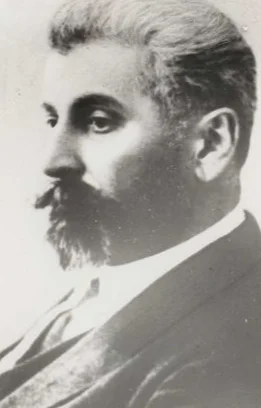
This year, on the 102nd anniversary of the Soviet occupation, SOVLAB researchers told another instructive story-about the Bolshevik Oralashvili.
The chairman of the Revolutionary Committee (Soviet occupation administration) Mamia Oralashvili, whom Georgian's Constituent Assembly declared his homeland, was outraged that the Georgian junkers - young cadets of a military school died during the defense of Tbilisi. He accused the head of the government of the Democratic Republic of Georgia - Noe Jordan of this.
“Due to the thoughtless policy of Zordia, so many healthy young people died! When I saw the corpses of barely operating cadets in the trenches of Kodzhori, my breath caught my breath, ”Oralashvili wrote then.
“Oralashvili at different times was the first person in Georgia and Transcaucasia, a member of the CPSU Central Committee. In 1937, during the years of Soviet terror, Oralashvili was expelled from the party, placed in prison, and then shot. As in many other cases, Soviet Russia, and then Soviet propaganda was accused of an aggressive war that they had begun by themselves, the sacrifice of aggression, in this case - Georgia. And the victim, made during resistance to the aggressor, was declared in a vain victim.
The Soviet regime carefully and systematically destroyed the memory of the heroes who died for the independence of Georgia in 1921, and called the heroes of the traitors of the Motherland and the initiators of the occupation. "
February and May
February in Tbilisi, perhaps, in fact - the most gloomy month of the year. New Year's holidays have already passed, it is still far away to this spring. Those who want more the sun usually go to the mountains - skiing, or at sea - look at evergreen subtropics. The most beautiful month in the capital of Georgia has always been considered May - this is the time of flowering of roses, warm, but non -fire, and the main public holiday - the day of independence.
In the meantime, February has not ended, any promotions on the square in Tbilisi always remind me of the poem of the poet Kolau Nadiradze, written in memory of the invasion of February 25, 1921.
On the Internet, you can find amateur translations into Russian in a poetic form, but I tried to make the Setter of only one passage:
Bending the neck, with a red flag,
On a white horse, in a quiet step
The death of a scythe entered the city!
It was snowing ... Tbilisi was covered with mourning,
Sioni was silent and the people were silent!
These verses are a description of the numbness and horror that the young poet experienced with the whole city. For many Georgians, these lines in recent years have become a symbol, a reminder of the invasion. Perhaps that is why now no one wants to be silent, standing in the square under the snow in February.
The author of the poem during Sovietization was 26 years old. They say that he carried the coffin of Leo Tolstoy and was the last representative of the group of Georgian “Symbolists”. In the 30s, the poet miraculously escaped the execution-it so happened that his investigator was shot.
Nadiradze lived 95 years. He was often accused of conformism - he wrote poetry about Lenin. When Soviet censorship had already loosened the grip, the poet said that he had no doubt that Georgia would be free. Kolau Nadiradze died in 1990, and in 1991 Georgia announced the restoration of its independence on the basis of an act adopted by the First Republic on May 26, 1918.