
Translated material
Was ready to explore the new
The star of the Gogol Center has died Svetlana Bragarnik. She restarted the theater career at 68 and proved that the trust between generations is possible
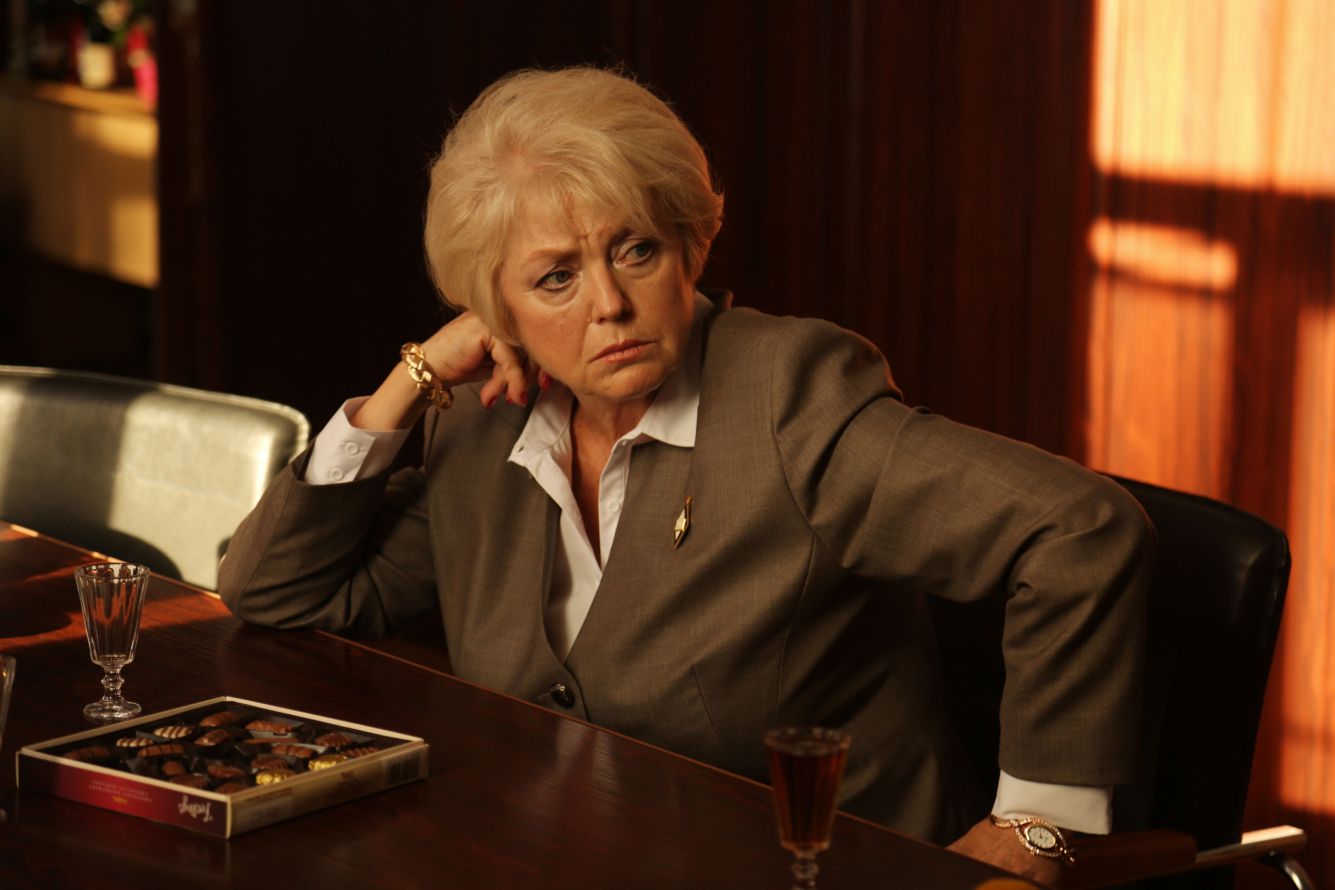
In Moscow, on February 25, the People's Artist of Russia Svetlana Bragarnik died. From 1972 until the end of her life she worked in the theater. Gogol, became his brightest actress. When Kirill Serebrennikov turned this site into Gogol-Center, the Bragarnik accepted the theatrical aesthetics completely unusual for itself and took an important place in the new team. Critic Anton Khitrov tells how she became the star of the new theater.
By 2012, when Kirill Serebrennikov headed the Gogol Theater and began his radical rebranding, Svetlana Bragarnik has been working there for 40 years. She did not have a big career in the cinema, although in the era of perestroika she played the main roles in two films of Viktor Aristov, one of the leaders of the Leningrad school : the military drama "Parish" and the "Satan" thriller, marked by the "Silver Bear" at the Berlin Film Festival. But in his Bragard Theater was the first actress: even those spectators who were generally skeptical to the site as a whole (and then it was a categorically unpopular, unremarkable theater, of which dozens in the capital).
The actress did not accept the plans of the new leader immediately. Serebrennikov did not have a specialized education, he voluntarily interpreted textbook texts, loved Quire aesthetics, did not object to the mat on the stage-in general, he categorically did not fit into the theatrical reality that the Bragarnik knew. But, hesitating, she gave the director a chance and, together with other brave colleagues in the troupe-Irina Vybornova, Oleg Gushchina, Maya Ivashkevich, Olga Naumenko-became part of the Gogol Center.
In the first year of the updated theater, Serebrennikov decided to adapt the plots of famous European films to domestic realities. The playwright Lyubov Strizhak and director Vladislav Ventvshev took the script of Rainer Werner Fassbinder “Fear eats the soul” about the elderly German widow, who, to the horror of relatives and acquaintances, marries the young Moroccan-Gastarbiter. German Emmy became in their play “Fear” by Muscovite Lida, Arab Ali - Tajik Abu.
The artistic director of the theater saw only Bragarnik in the role of Emmy Lida, but admitted that he was nervous when he offered this material to the actress. Nevertheless, she agreed with excitement. Her partner was the former student of Serebrennikov, a 25-year-old native of Kalmykia Yevgeny Sangaggiev.
The bragar man, accustomed to portraying secular ladies on the stage, aristocrats and various exquisite beauties, played an inconspicuous cleaner who suddenly found the strength to resist the whole world. Her first work in the Gogol Center became programmatic: in a sense, it was a performance about herself-a woman ready, contrary to any expectations, to explore the new one. The actress, who restarted his career at the age of 68, is no less amazing and inspiring than a pensioner in love with a young migrant.
After the “fear”, the Bragard participated in six more projects of the Gogol Center-their directors were Maxim Didenko, Semyon Serzin and Serebrennikov himself. Without it, it is impossible to imagine “(m) a student” is the most important performance of this theater, published in a turning point for the country in 2014. Serebrennikov adapted the play of modern German author Marius von Mayenburg about a young Christian fundamentalist who “re -educates” a whole school. The Bragarnik played the director - a systemic person who is deprived of intelligible beliefs, who, without the slightest struggle, gives the ideals of secular education. Two years later, the actress repeated this role in Serebrennikov’s film “Student”, based on the same text.
Elderly actors, even very status, traditionally receive the secondary roles of dads, mothers and mentors in the theater and cinema, since people of this age are generally interested in society less than young people and even in fictional stories are replaced by the periphery. But, since contemporary art questions any established hierarchy and tries to think outside the prejudices, exceptions are more and more often. Dramaturs write plays with elderly protagonists - like, for example, the Father Florian Zeler, for the role in the film adaptation of which Anthony Hopkins received his second Oscar, and the directors, working with the classics, are entrusted with the age artists to embody young heroes, and without any makeup. The Bragard in the Gogol Center played both.
Her Mary in the “little tragedies” of Serebrennikov (for Pushkin this is a young woman) not only one of the best later actress works, but one of the most remarkable images created by this theater over nine years of its existence. The director transferred the plot “Feast during the plague” to the Russian House of the elderly: there was no literal plague in the play - only the indifference surrounding the feasts. In this episode, the Bragart sang “Sadness of the Light”, a sugary Soviet romance from the repertoire of Valentina Tolkunova, but filled it with such a desperate will to life that he sounded like the song of the Pushkin Mary - and the credits on the screen “translated” it that way. The ordinary experiences of a small person were equated with the high feelings of the tragic hero.
Even in the new theater, Bragarnik remained true to the old school. She was not shy about pathetics, stained every word with a special intonation, knew how to look comic-tragic and tragic-high-quality. In the era of theatrical normcor, when restraint was the main artistic virtue, she was an actress of wide gestures. Nevertheless, she organically fit into the performances of the Gogol Center, since her game broadcast the same values as directing Serebrennikov, Ventvshev or Didenko: Gogol-Center, in principle, was the theater that took on a variety of traditions, and the traditions of the Soviet scene, including. See how Braugar reads Pushkin: the approach to acting is conservative, academic, but experiences are very consonant with the site on which she worked.
For the audience of the Gogol Center, the bragar was not only a brilliant actress, but also a lively embodiment of that theatrical utopia that Moscow proposed by Serebrennikov and which can be formulated in three words: "Yes, it is possible." The site created by the director was a sketch of the best society, where equality, diversity, freedom of speech and self -expression is welcomed.
An important detail in this picture of the future was the alliance between the Bragarnik and the new theater team. He argued that the trust between generations is possible that, no matter how different your experience is, this does not exclude mutual interest and mutual respect. Those many who were unlucky to find understanding with older relatives, in the Gogol Center, could finally feel what it was.
Anton Khitrov