
Translated material
Immersion in the capital
The new head of the memoirs of the writer, historian and translator Alexander Goryanin. Personal history of Moscow

How to get around the lock?
Read>Alexander Goryanin: My growing up to Moscow was long and began with a outbreak of children's love in this city. It was a strange flash. I read a fifth grader published in the 20s, a collection of stories by Alexander Green "Window in the Forest", without a cover and very exhausted. The story "Legless" in it was different in that its action did not take place in a fictitious Zurbagan, but in Russia, Green has few of them. The hero is nameless, but Moscow and Tverskaya are mentioned, and most importantly - I came across a "nesting skyscraper", the roof of which the author likes Montblan to. For me it was just a lightning blow.
Of course, at the age of 12, I already seemed to know Moscow at the age of 12. More than once I read the book of Lopatin "Moscow", at the end it was described in detail the Palace of Soviets, which was about to appear. Moscow often flashed in Soviet films and always - in the movie magazines (we are talking about the delivosive era). But the "skyscraper" changed everything for me. It turned out that some important details of the main city of the country are carefully hidden, but something broke through in the Greenovo story. And I immediately decided: as soon as I become an adult, I will move to Moscow.
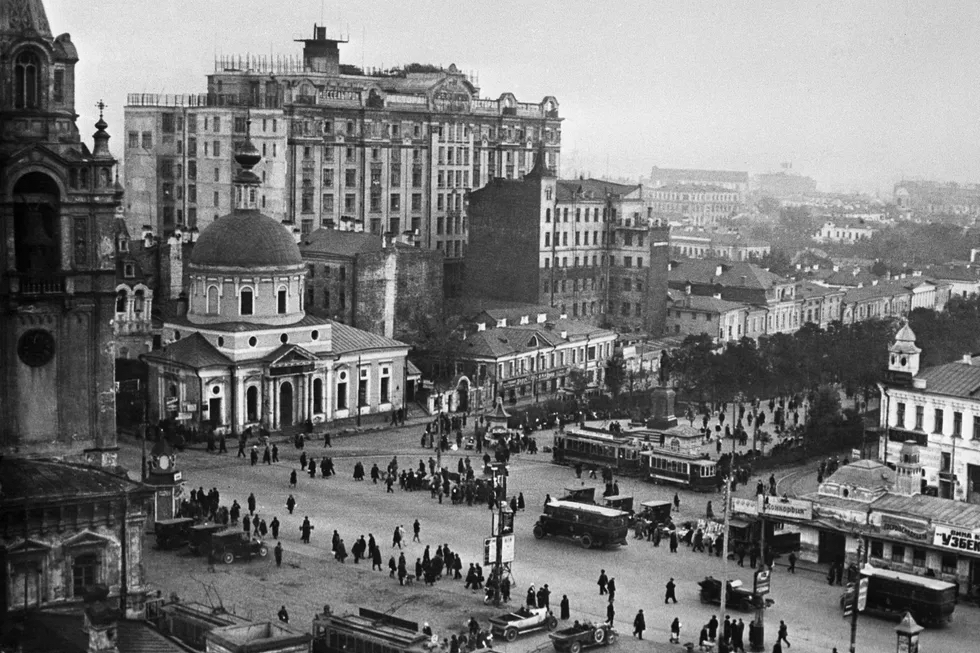
This conviction lasted five years and in the fifty -seventh year gave way to the passion for Leningrad. That year I first saw both of these cities, compared not by books and made the final, as it seemed to me then, the conclusion: yes, Leningrad, only Leningrad. There is nothing to discuss. Moreover, at the same time, at the fifty -seventh, in Moscow I remembered about Gnezdnikovsky Lane, not without difficulty found it, but there was no skyscraper there. There was a hefty house at eleven, it seems, floors, which at the beginning of the century became famous for the skyscraper against the background, apparently, the squat of the then encirclement.
Many years passed before the question of the real change of place of residence and kind of occupation left me the sphere of dreams, becoming a life task. I constantly visited two capitals, overgrown with acquaintances and even friends, but it somehow turned out that hopes to take root poorly flickered only in Moscow. And so, at the age of 36 years, I finally decided on an extremely frivolous, according to loved ones, a step: to leave a locked apartment in Tashkent, rent housing in Moscow and move with my family. Without even with a three -month financial resource!
But I repeat the sign, which often turned out to be true (I already somehow voiced it before this microphone): taking up the difficult task, do not allow the thought that you can’t solve it. And don't listen to others. Just start, and opportunities, with God's help, will open with each new step.
And this is called - did they move to the capital? Any bugs?
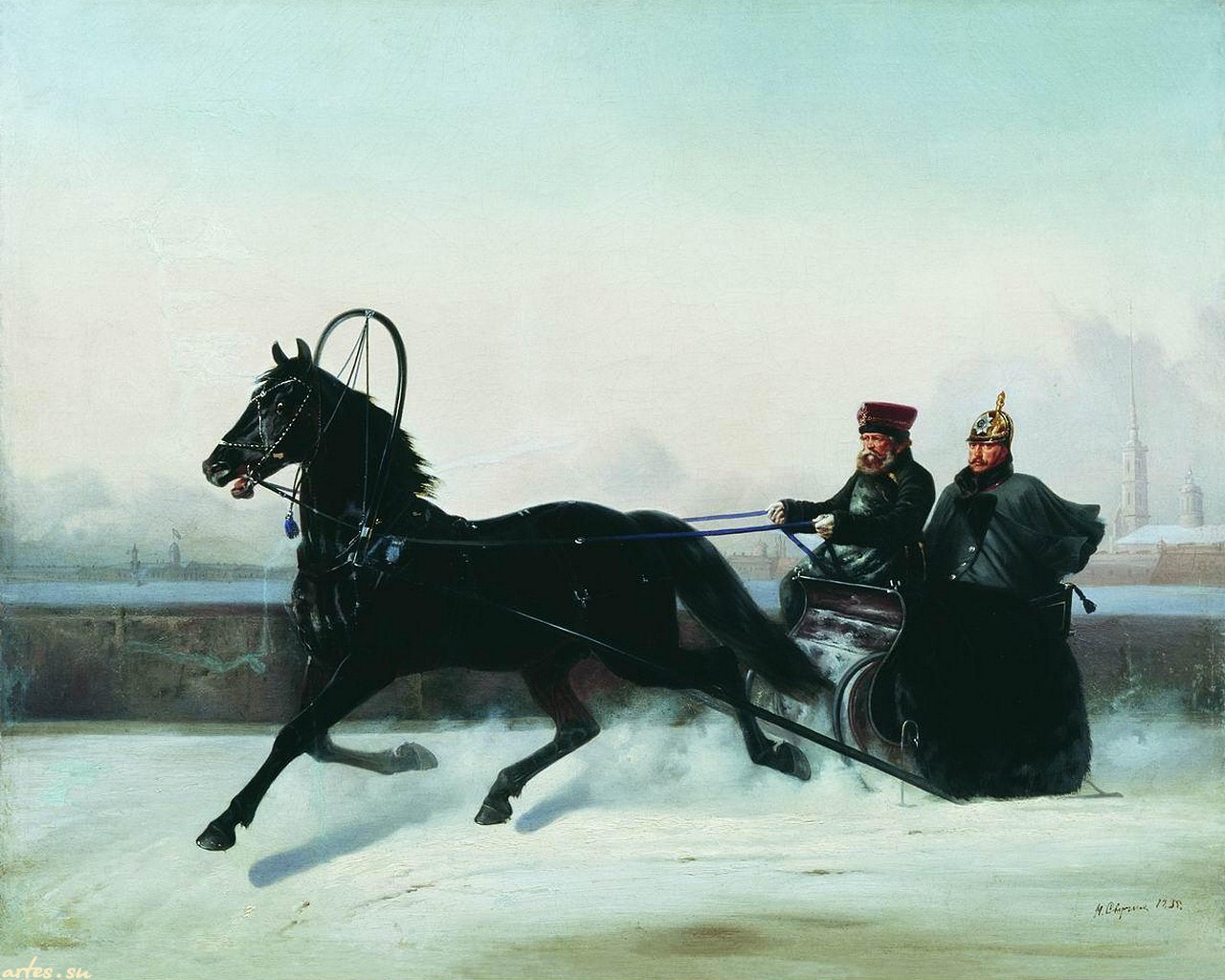
At first, Irina in letters to friends was shy to indicate the return address: Street Likhoborsky Bugrs. And this is called - did they move to the capital? Any bugs? The place was, in fact, wonderful. For twenty years of constant collisions to Moscow, I already began to imagine myself to be her expert, but this part of the city turned out to be completely unknown to me. Nearby, experienced fields of the Timiryazev Academy began, bordered from the south of the alley of venerable larch. Further in the direction of the center, a street of oak tree with a tram line stretched. For her cozy appearance, she fell into some films many times (the tram rolls between the rows of bright autumn trees, the woman in the beret drops a tear at the rear window of the car, a discreetly dressed spy smokes relaxed at a bus stop). There was also a horse breeding museum with a marvelous collection of paintings and sculptures, of course, including my favorites Lanser and Sverchkov - where are horses, like without them? Sverchkov is presented, in particular, by the painting "Nicholas the First in the sleigh." I would add: the tragicomic Nikolay the First.
But the main decoration of the district was the Academy itself and its large park. The main building had a completely palace appearance, this impression was strengthened by unusual convex window glasses. In the pre -revolutionary picture of the "Petrovsky Agricultural and Forest Academy" (as Timiryazevka was called then) it can be seen that a huge palm tree grew right in front of its park facade. As a tree of such a height, it was possible to save in the winter, a riddle. In the park, two dozen educational buildings are scattered, one more beautiful than the other. On the shore of a large pond there was once a grotto of wild stone blocks, here fanatic Sergey Nechaev killed a student Ivan Ivanov in 1869, suspecting him of treason. For Dostoevsky, Nechaev became the embodiment of the revolutionary demon, hence his novel "Demons". That grotto has been gone for a long time, excursionists show another, flatter.
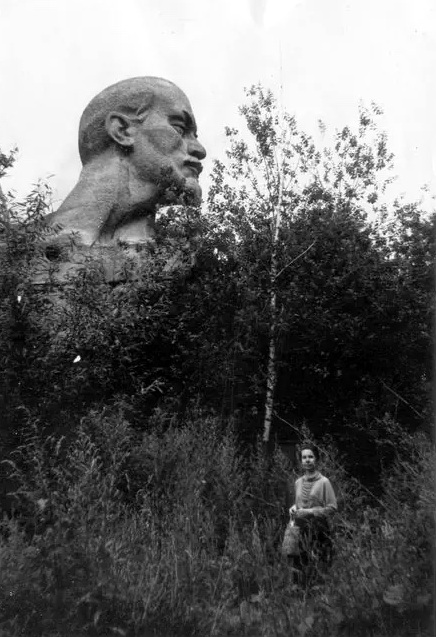
Film Genitic oaks brought me to the streets with funny names: Ambus (Peter I called Amsterdam Astradam) and a straw gatehouse. And to Vuchetich Street, where, due to a huge fence, Lenin V.I. I'm not sure that he is still looking out, I have not been there for a long time. My friend Volodya Kharitonov, who lived nearby, said that a neighbor’s child, walking in this nearby and perceiving the leader’s head as part of the landscape, learning that this was his grandfather Lenin, came into such a hysteria that he was barely brought into his senses. I began my re -development of Moscow, already on the rights of its settled resident, and I began with this walk.
For many years, we have been registered on a variety of streets - on Akademika Pavlov Street, on Veshnyakovskaya, Talalikhin, Baikal, Saratov, Krasnoyarsk, soon renamed Chernenko Street, and after us - to Khabarovsk, on Volgogradsky Prospekt, in the small Levshinsky lanes. And it seems to be somewhere else. They really lived in two of these addresses, one of them is not long. But even where they were not going to live, I definitely examined the surroundings. Everywhere, even in the most hopeless place in sound, I insist, you can find a lot of interesting things.
For 14 years we were lucky to live in a well -rented apartment on Ostrovityanov Street, changing the addresses only in the passport. We hoped to achieve the goal in the form of acceptable housing in the center through a series of exchanges, starting from scratch. In nine years, we produced exactly ten exchanges, including one intercity, Tashkent apartment.
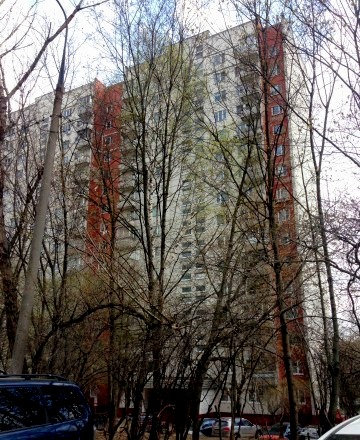
Almost all of them did not go according to the “Square” scheme, but in the form of “chains”: but moves to the apartment B, but he moves not to A, but to D, D, D, C-K-K, and he moves to A., donating several “squares”, I wanted to get closer to the parents, the third is ready to move from the “almost center” to Vykhino, 20 minutes before his dacha, but only an apartment with a large loggia will suit him. In the course of building a chain, every second will definitely change his mind. It seemed to me to compose such a chain and bring to the exchange bureau only the genius of combinatorics and patience.
We had a permanent craftsman for this, and not very expensive, Yuri Petrovich, but the longest chain, out of 11 "squares" for us was built by our friend Vova Artamonov. At the exit, I received a room in a quite intelligent communal apartment on the corner of a small Bronnaya and Garden Ring. But it wasn’t there. At the stage of police inspections, I was refused a residence permit, the passportist in secret informed Vova in a loud whisper: the KGB deleted. In the houses along some streets of Moscow, the candidates of the newly prescribed were approved (or not) with this caring organization. Vova has much respected me since then. In order not to bring down a chain, I agreed to a communal apartment at the end of Talalikhin Street, surrounded by a industrial zone. A cattle -trip street passing nearby transferred to the world of the Karamazov brothers. The street of the Volovka transferred somewhere further. The smells of a meat processing plant and a leather plant were very impressive. But I had no choice: the main thing was the task then to quickly get out of the previous address.
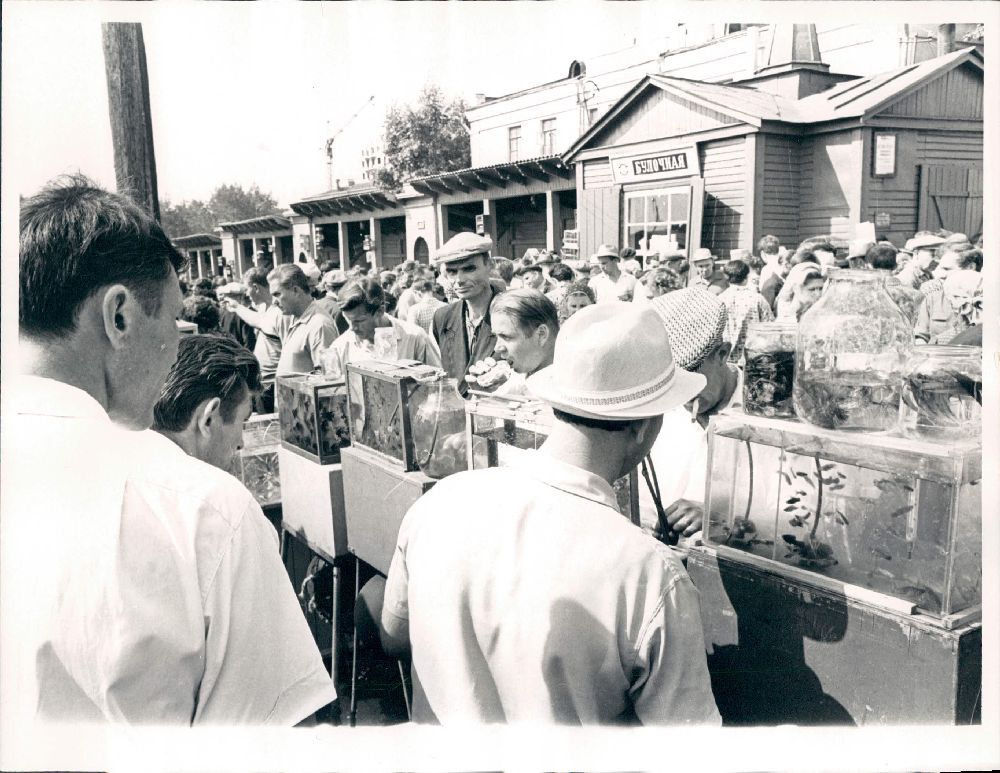
The apartment had a large and hot common hallway, always hung with wet laundry. To get into my room, I diverse under him. At the free wall stood an unusually large illuminated aquarium with peppy fish. The neighbor was friendly and spit on the floor, he was ready to drink with me for a housewarming. I realized that this is a dead end, it was useless to even offer a room, and did not offer a year and a half, but when I did it, the first applicant, looking around everything, said: I take it. Everything turned out, as it turned out, a well -groomed neighboring aquarium. The new tenant, like me, did not think to live here. Having instructed the aquarium in his former room with the abstract of backlight, supply, water, water and top dressing, he received a malking workshop and traded them on Saturdays and Sundays in a bird, the bird market, then it was located in Calnitics, a stone's throw from Talalikhin. Never lose heart, gentlemen!
Migration to another city (even familiar to the smallest detail) requires you to complete reinstall. Then, in the 78th year, and they did not know such words. It is necessary to adapt to another climate, another macrogeography (when, for example, to the Baltic Sea is not 3,500 kilometers, but 650), another city landscape, other opportunities, and other people. Even a transplanted tree is sick for some time.
The 70s already demanded many amendments in my notebook. Ariadna Sergeyevna Efron died, the author of the book “In a foreign land” Lev Dmitrievich Lyubimov died, Nikolai Ivanovich Leonov - Siberian and Ferghana professor, who moved to Moscow, died, I considered him my teacher. I will not list everyone. In early autumn, they told me that the other day the writer Nikolai Pavlovich Smirnov died, I talked with him in previous years.
He was free from general work, had a closet in a camp club, prepared the production of Pushkin "gypsies"
I don’t know if there is in some type of access his camp memories. On the network, I did not even find mention of those, all publications - about nature and hunting, so I will retell the episode heard from it. He read from a typewritten sheet, it was clearly the head of the future book. Apparently, to this day the future. They swept it in 1934, gave him 5 years. He served them in the "light", "for small -halves", as he put it, a camp. In the zone, he found application along the cultural part - to manage the amateur theater of prisoners. He was free from general work, had a closet in a camp club, prepared the production of Pushkin "gypsies". The club served two adjacent camps, male and female.
The 1937th year, the centennial anniversary of Pushkin’s death, by decision, was turned from a sad date from almost jubilee celebrations that did not bypassed the Gulag. Among the convicts for the role of Zemfira, there was no real gypsy, the role went to the 19-year-old beauty from a good family. Fascinated by the great mind with the “romance of the criminal world” in the version of the film “Flooding”, she escaped from the house, became a valuable gunner in a gang, but quickly hit the camp. The role of Aleo, contrary to Pushkin,, on the contrary, went to the gypsy, as it turned out, an innate actor. Zemfira, however, played poorly and constantly ran to rehearse the 35-year-old narrator into the closet, predictably quickly becoming his mistress.
Aleo has already considered Zemfira his "Marukha"
The performance took place on the day of Pushkin's death. The club was filled with prisoners from men's and women's camps. Aleo had already considered Zemfira his "Marukha" (and had every reason), but during the last rehearsal suddenly understood something. He did not give a look, and during the performance, on the stage, he tore off and threw his blond wig, grabbed a Finnish instead of a cardboard knife and killed a traitor. The audience did not immediately realize what had happened and clapped for some time. “I don’t know a more perfect combination of art with life” - it seems that this chapter ended.
Enjoying our life in Moscow as Muscovites, I was mistaken in an important point. I anticipated tons and kilometers of free time in the status of a free writer, unhurried immersion in Moscow local history, new acquaintances and consolidation of old, museums, exhibitions, theaters. Everything turned out differently, especially in what concerned free time. I have never lived in such a continuous manner as in the first one and a half Moscow year.
Most of all, for some reason, I dreamed of seeing a picture of Clement Redko of some Nepovsky years
I really wanted to consolidate my acquaintance with George Dionysievich Kostaki. His collection entailed, three apartments connected together in a cooperative tower on Vernadsky Avenue, Drowned by Zinaida Semenovna and singing the owner under the guitar. But most of all, for some reason, I dreamed of seeing and, if the owner allows, to photograph the picture of Clement Redko of some NEP years. Compositionally, she looked like a picture of the same Redko “rebellion” (which the owner considered the decoration of his meeting, and I would call it “demons”), but in her center a policeman was depicted with a rod of the controller. He conquered me: a lingonberry -colored overcoat, a flirtatious narrow collar of yellow fur, a round hat of red cloth with a penny of the same fur and with a black visor, a pleasant smile. Wasn't I dreamed of this? But no, I remember for sure. Apparently, the Soviet police in the 20s had such a form for a short time. It turned out, however, that Kostaki had just emigrated into Greece, which was not at all, giving the Ministry of Culture of his collection for the right to take the rest.
Ernst Unknown from time to time poured water from a hefty enema with a large bald clay head of Khrushchev on a stand
Soon after the placement in the capital, I walked along Shchepkin Street and suddenly saw an endless fence - the Olympic stadium was built, and the unknown person was clearly demolished. I was in this workshop in the 70s only twice: for the first time I don’t remember who, in another-with Irina and Vanya. Vanya went on for the fourth year, and he loved to make conclusions from what he saw. During the conversation, Ernst from time to time poured water from a hefty enema with a large bald clay head of Khrushchev on a stand. “It is so necessary,” Vanya explained to us, “this is so that the hair grows up.” I was looking for the eyes of the "bandurist", remembered on the first visit, and did not find. It seems that he was supposed to become part of the monument in honor of the 300th anniversary of the reunification of Ukraine with Russia, and for some reason not erected.
As for the monument to Khrushchev, now the well-known, black and white, he was soon installed, but we did not manage to see it soon: the Novodevichy cemetery was closed for the reconstruction for several years. The unknown person did not mention his decision to emigrate, and now I think that he pushed him to this inevitability of loss of the workshop due to the construction of the stadium, and in return he was offered, I suppose, something unacceptable. Well, his Moscow authorities did not like!
One of the main jewelry and trump cards for me for many years was the Russian State Library, then Leninskaya. How to forget the booth immediately after the locker room, before monitoring the input? Ball handles were tucked in it. An elderly uncle in a blue dressing gown extracted a rod from your handle, put a wire into the rod and squeezed out a ball almost on a newspaper. Then he attached the rod to the paste tank, filling the rod with the pressure of the lever, pressed the mouth with the mouth of the rod on the ball, and he settled in place. The whole operation took 10-15 seconds. I don’t remember how much this exotic, now forgotten service cost. Was she not free, the courtesy of the library to her readers? It always seemed to me that the venerable tanker in the evenings composes a treatise "About the smell of everything that things. Part two." In the early eighties, more precisely, I don’t remember, he disappeared along with his booth.
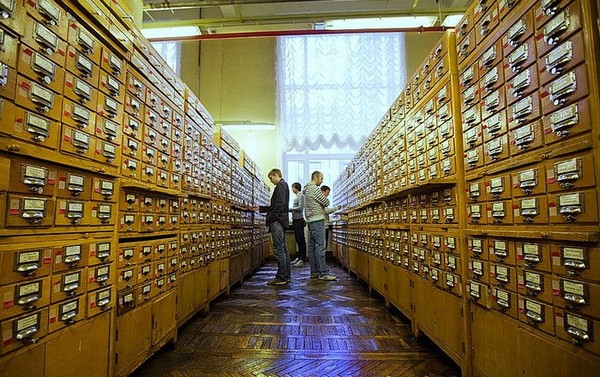
Further, the front staircase led into the catalogs hall - alphabetical and thematic. For many years they were sources of sorrow for me: I often did not find cards in them, which simply could not be there. The explanation is simple: readers (first of all, students and graduate students, but not only) teased cards, firstly, because they were too lazy to rewrite them, and secondly, to harm scientific competitors. I knew about the existence of an official catalog, where this was excluded (or almost excluded), but only the library employees had access to it.
Exactly three months after the instilling in Moscow, having become such an employee himself (senior scientific), I began to constantly disappear either in the official catalog, then in the reference department, and not in my library science across the road. The reference department consisted of encyclopedias, dictionaries and the like from all over the world.
Shocked an American book publication catalog
It was possible to go inside, view books right at the shelves. The American catalog of book publications was shocked (unfortunately, he forgot how it is entitled, and what heroic institution he released it). When I first picked up one of his huge pale green volumes, their total number was approaching sevenists, and the publication continued. I don’t think, however, that for a very long time: the electronic age was nearing.
"Leninka", for so long former for me by the favorite place of Moscow, I have not visited about 15 years now. What to do, I now find everything I need for work on the network, although the "number" has been transferred to the number of less than 3 percent of the main book meetings of the world. But, apparently, the most popular, and the half -empty reading rooms of Leninka, which recently flashed on the television screen, were translated. And it seems that just recently, to get into these halls in the winter, it was necessary to spend a good hour in line in the locker room, and then scan the hall for a long time: whether someone is preparing to exit.
Наше погружение в Москву было полно событиями и лицами. Увы, самые нужные редко приходят на память сразу, толпой – как было бы удобно с точки зрения отбора! Совет всем мемуаристам: очень помогают старые записные книжки, хоть и не сразу. Для начала они могут затянуть вас в такие лабиринты воспоминаний, что покидать их будет безумно жаль. Вас могут поразить также начисто забытые имена.
Раскрыл наугад большую записную книжку, служившую мне лет 15, до нулевых, и попал на имя Селена, без фамилии, телефон московский. Кто такая? И почему вопреки алфавиту стоит сразу после Трошина Леонида, а сбоку два полустертых слова: "на мели"? Промучившись впустую, с удовольствием переключился на Трошина.
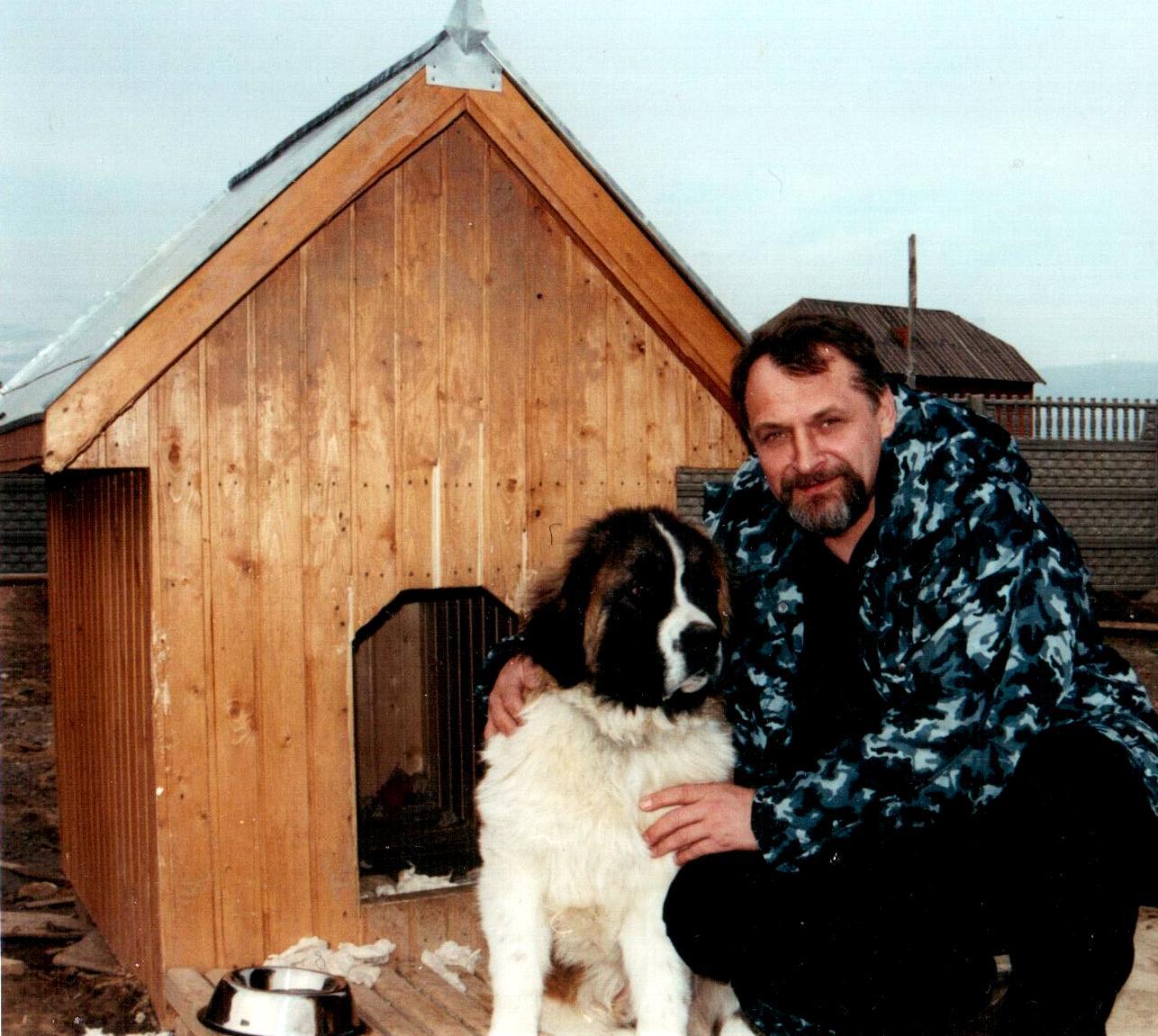
Нас представил друг другу на пороге нового века киножурналист Саша Радов, я о нём как-то рассказывал. "Прошу любить и жаловать, – сказал он, – генерал налоговой полиции Леонид Леонидович Трошин". Что это легендарная личность, я уже от Радова знал. За один год – 1998-й – он добился роста поступлений в бюджет от продажи подакцизных товаров в 14 раз, пресёк лжеэкспорт спирта, разгромил подпольные фабрики поддельной водки, а управление "АТ" (акцизные товары) в налоговом ведомстве стали расшифровывать как "Анти-Теневик". Правда, после этих громких побед управление было почему-то распущено.
Помню, как уже при первом разговоре Трошин сказал: "Радов хвалит ваш стиль. Давайте вместе напишем книгу “Капремонт страны без отселения жильцов”". Оказалось, в 90-е Леонид курировал гайдаровский Центр экономических реформ по вопросам выявления новых экономических практик в условиях нехватки как разрешительных, так и запретительных норм. Эти нормы вырабатывались не за письменным столом, а в гуще жизни. Переход к рынку был, по сути, переделкой дирижабля в самолет прямо в воздухе. Книгу мы не написали, что не помешало нам сдружиться и перейти на "ты". Трошин вскоре после нашего знакомства покинул свой генеральский пост. Этот человек заслуживает отдельной главы, и она, надеюсь, со временем прозвучит.
А что же Селена, которая "на мели"? Селена она была по паспорту, но все звали её Леной. Я не зря когда-то вписал её рядом с Трошиным. Начиная с 2006 года Леонид стал душой ряда антикоррупционных проектов, создал общественное движение "Против коррупции" и сайт Anticorr.Ru, редактировал пособие "Защита прав предпринимателей при проведении проверок", курировал "Рейтинг прозрачности закупок", участвовал в круглых столах "Радио Россия" на темы коррупции с известными журналистами Дмитрием Беловецким и Олегом Вакуловским. Радио любит хорошую дикцию, Трошин своей был недоволен, начал заниматься с вышеупомянутой Селеной, театральной актрисой, и позвал за компанию меня.
И память сразу воскресила, казалось бы, напрочь забытое: "На мели мы лениво налима ловили, на мели мы ловили лениво линя", "Была у Фрола, про Лавра Фролу врала. Пойду к Лавру, про Фрола Лавру навру". Мы с Леонидом занимались честно, но утверждать, что дикция у нас резко улучшилась, я бы не решился.
Увы, в 2008-м Трошина скрутила болезнь, заставив его покинуть все проекты. Правда, финансирование этих проектов и без того как-то загадочно быстро прекращалось, одного за другим. Леонид уехал в Анапу, где занялся пчеловодством и с помощью пчёл почти победил свой недуг. Но в апреле прошлого года свой роковой удар нанёс ковид.
Я благодарю свою записную книжку за эту подсказку о достойнейшем человеке. Он тоже стал для меня частью Москвы.
Несмотря на все цейтноты, я почти всегда выкраивал время для пешего изучения города
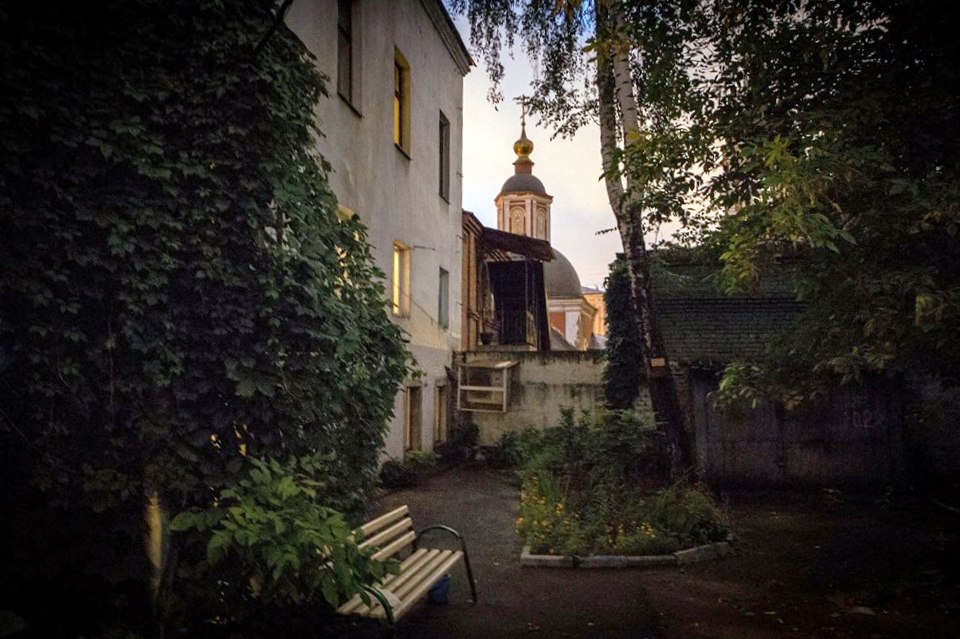
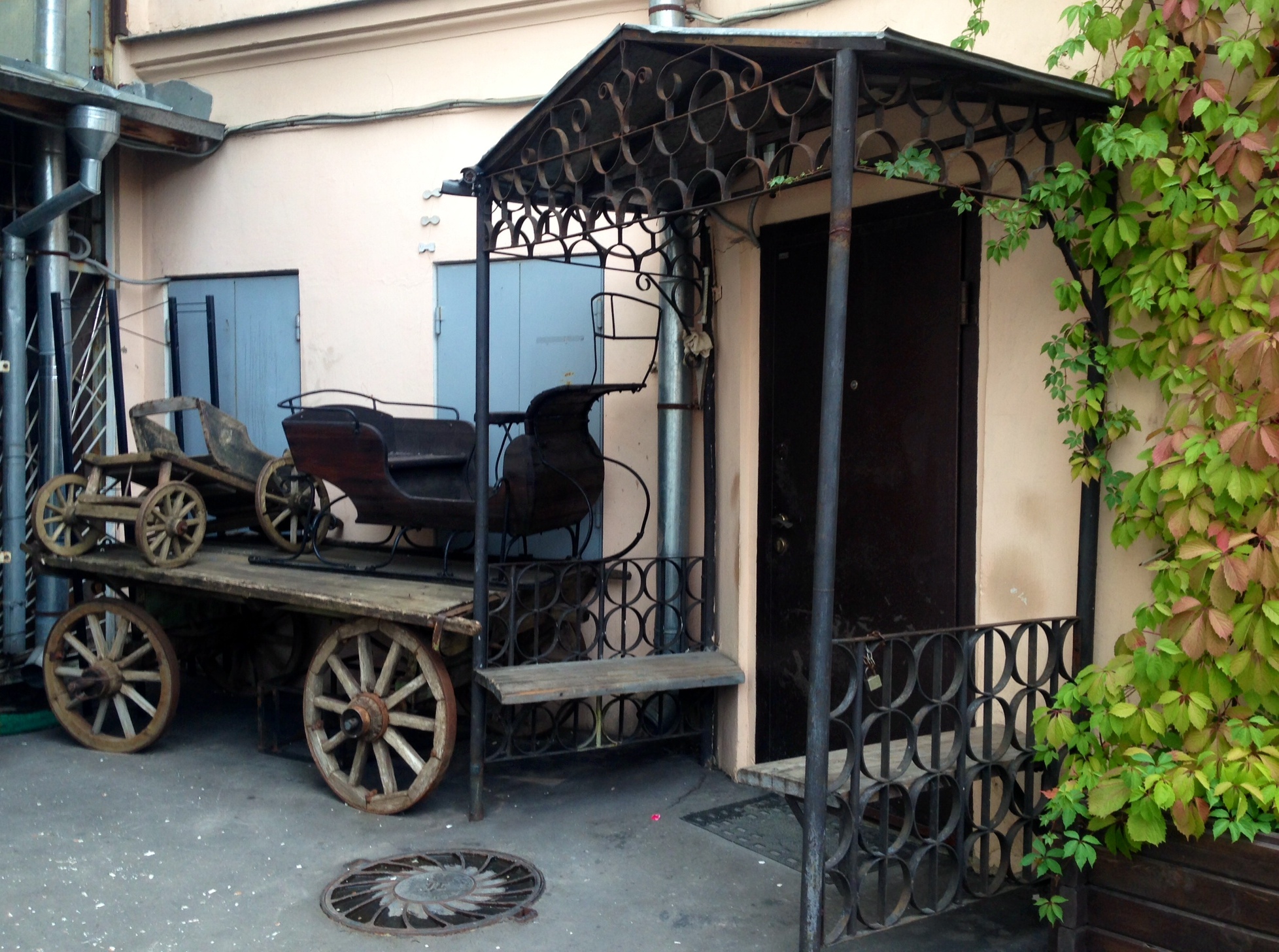
Несмотря на все цейтноты, какими изобилует московская жизнь, я почти всегда выкраивал время для пешего изучения города. Так вышло, что ни одну улицу я не полюбил безоговорочно, а вот переулки, особенно центра, – притом, что условный центр Москвы очень велик – почти все, какие повидал. Каждый интересен по-своему и все непохожи друг на друга. Отдельный жанр – проходные дворы. После массовых приватизаций одни стали недоступны, в других, наоборот, поселилась неведомая ранее жизнь – ресторанчики, маленькие гостиницы, скульптура, затейливые садики, настенная живопись.
В сети полно сообществ любителей старой Москвы вообще или отдельных её периодов, даже десятилетий. Всплывают фото объектов, облик которых ранее вызывал споры и даже взаимные обвинения. Современные небоскребы не любит, кажется, пока никто. По крайней мере, я на таких не набрел.
Кстати, о небоскребах. Недавно сайт "Пикабу" воспроизвёл материал из ноябрьского номера журнала "30 дней" за 1927 год. Несколько видных (по советским меркам того времени, конечно) авторов попытались описать СССР и остальной мир в следующем столетии. То есть, в нашем. Вот что пришло в голову писателя Ефима Зозули:
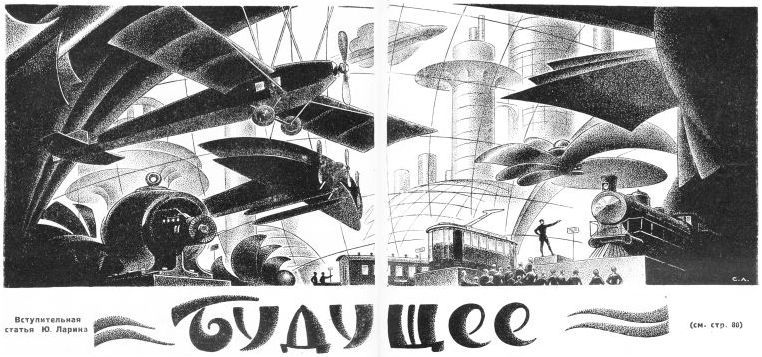
"В 2022 году рухнет бывший дом Нирнзее в Большом Гнездниковском переулке. Руины этого большого дома будут спрессованы, что образует площадку для спуска и подъема аэропланов. С этого момента начнется настоящее развитие туризма в Москве. Каждого туриста будет возить отдельный мягко реющий аэропланчик. Вылетев с дома Нирнзее в сторону бульвара, они тотчас же наткнутся на 50-этажный небоскреб. Легко догадаться, что это будет отстроенный и приспособленный, наконец, к нуждам литературы дом Герцена. В нем будет жить 50.000 (по тысяче на этаж) талантливых писателей. Бездарностей не будет" .
Возможно, тогда, в 1927 году, многим это не показалось такой уж глупостью. И в наши дни многие прогнозы будущего тоже производят впечатление вполне убедительных.