
Translated material
You are a package! Anniversary!
The adoption of the 10th package of sanctions against Russia by the European Union marked the first anniversary of the beginning of the Russian military operation in Ukraine
The EU leadership promised to take this set of new restrictive measures to the anniversary, so that there was a symbolic meaning. The sanctions were prepared for at least a month and a half. But the case was stalled, and even doubts arose that they would be in time. It took three days of tense discussions in the EU Council before on the morning of Saturday, on February 25, the agreed text appeared.
The further the sanctions war comes, the deeper it affects the things through which the national interests of the 27 EU countries differ. But in the Ukrainian question, Europe, in general, is one. Almost all countries of the “conditional West” imposed “for Ukraine”, but traditionally the closest relations of interdependence developed between Russia and Europe, therefore, a series of sanctions packages of the EU against the backdrop of others is the main thing.
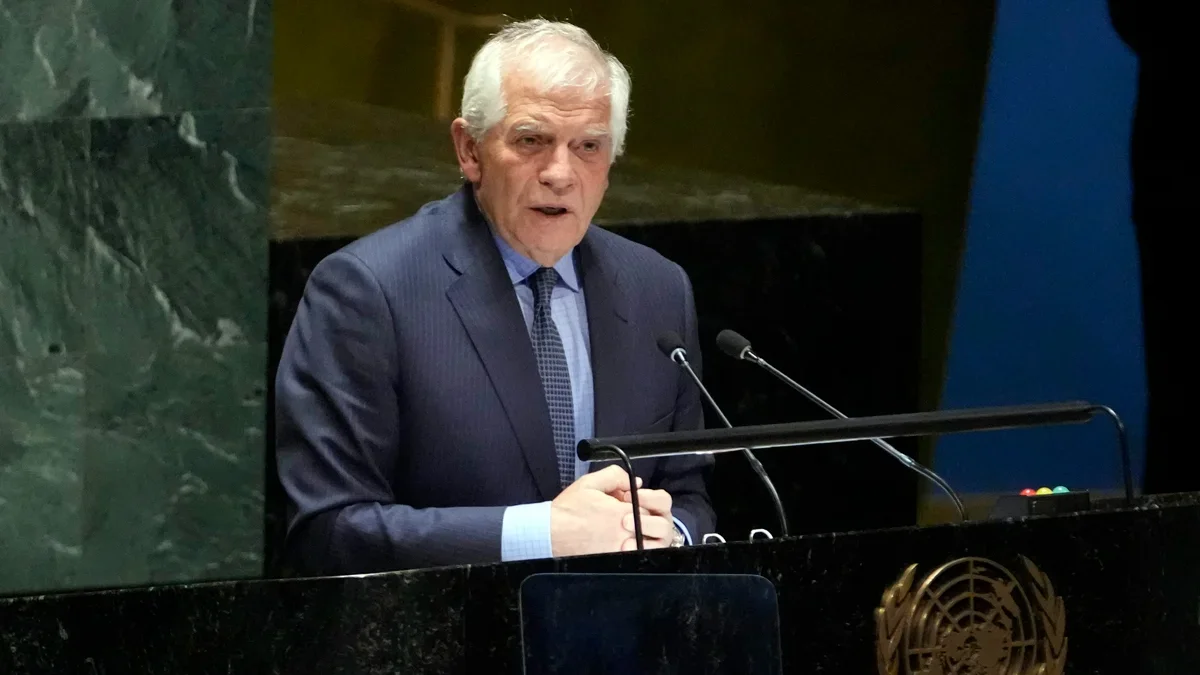
“We will continue to increase pressure on Russia - and we will do it as much as it takes, until Ukraine becomes free ...”
-said the Supreme Representative of the EU on Foreign Affairs and Security Policy Josep Borrel, presenting the decision on the 10th sanctions package.
High -ranking European officials, who spoke on Monday to journalists on the condition of anonymity, went deep into the package details and “rated” it at 11.4 billion euros only in terms of trade. Calculations are based on the figures of trade in 2021. Losses are inevitable on both sides. It all depends on who will be rebuilt and reorient faster and better.
Trade restrictions are only one of the three blocks of the 10th package, along with the sanctions list of individuals and legal entities and ensuring sanctions, the elimination of loopholes for their bypass. The latter for the first time pays such close attention.
Let's start with the third block.
In the field of finance, the EU even narrowed the space of Russia. In addition to the main banks already under sanctions, three more have been added: Alfa-Bank, Rosbank and Tinkoff Bank.
From now on, they are from the time to freeze assets and the ban on the provision of funds and economic resources. Their access to the European debt market is closed.
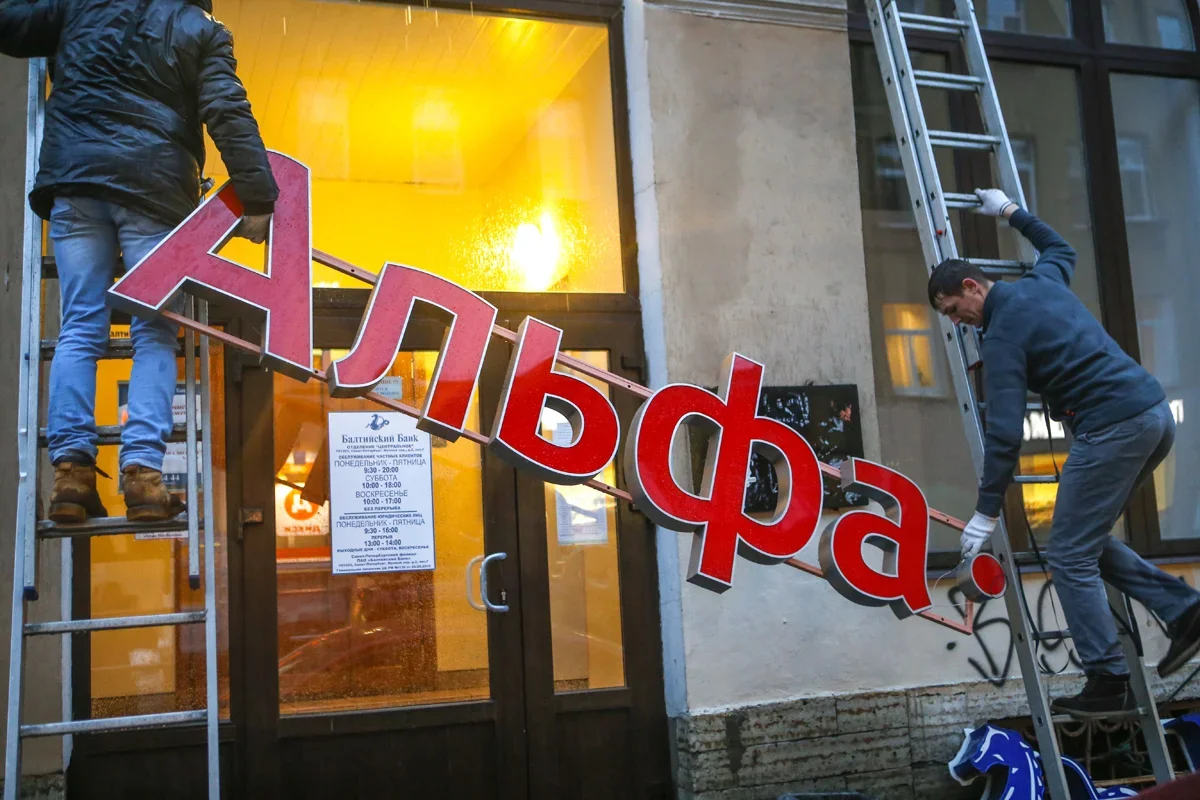
Freezing means that there can be no transactions with these banks. And this is in terms of assets, respectively, the 5th, 11th and 12th banks of Russia. The Russian national reinsurance company and the National Welfare Fund (FNB) also fell under sanctions.
The access of Russians to the critical infrastructure of the EU . From now on, Russian citizens are prohibited from creating such infrastructure facilities in EU members and manage them, occupying leading positions. The decision is explained by the fact that "Russia's influence in these bodies may jeopardize their normal functioning and ultimately create a danger to provide basic services to European citizens." In the last wave of sanctions, Brussels did the same in relation to his citizens in Russia. So almost mirroring.
Gas is our everything. The EU Council imposed a ban on providing citizens of the Russian Federation for gas storage facilities (with the exception of some objects for liquefied natural gas). According to Brussels, in order to protect the safety of gas supplies to the EU, as well as to avoid the “veponization” by Russia of the gas sphere and eliminate the risks of the market manipulation. Previously, Russian firms reserved capacities in European storages and did not use them, thus blocking these containers.
Innovations are also included in the sphere of investment . Brussels wants to ensure that the participants in joint ventures have a silent opportunity to withdraw from them. Like the possibilities for Russian oligarchs, it is easier to leave European enterprises so that they are acquired by European buyers. Integration is backward.
Seeing that the introduction of new sanctions and the strengthening of the already adopted has limits, the EU focused on the currently carried out, and there were fewer opportunities to go around them .
For this, the rules of reporting on the means and resources of the defendants of sanctions lists are tightened.
The EU wants to know more about which of the Russians what assets possesses in Europe and where they are exactly.
In several EU countries, criminal cases of confiscation of property of Russian oligarchs have been instituted in order to contribute to the restoration of Ukraine. For the first time, the same reporting obligations apply to state assets. True, in the case of the EU, it is also important to verify the legal side, compliance with international law.
It turns out that many defendants in the sanctions lists tried to sell their European assets immediately before they were included in these lists. Therefore, Brussels charges the obligation to previously report on such sales. And check for a deliberate detour of sanctions. Violation of this new rule can lead to criminal consequences.
Another little -known form of bypassing of sanctions is a violation of the ban on the air offense of Russia with Europe. Many Russians, officials of the European Commission, use charter flights on Romanian and other aircraft registered in the EU to get around the ban.
Therefore, from now on, additional reporting on charters to Russia from the EU countries is introduced to know who hired them and who is on board.
In addition, aircraft operators will have to notify national competent authorities about the flights of the defendants in lists.
One of the forms of bypass is the transit of goods through third countries. In the Russian case, it is, as a rule, Kazakhstan or Central Asian countries. There are doubts where these goods, in fact, are taken to Russia. The 10th package provides for a ban on the transit of dual-purpose goods. If a thing can be used for military purposes, then it, according to the EU, should not have a chance to get to Russia.
We return to the second block - trade. Restrictions on the trade in goods are mainly directed against the Russian military -industrial complex to deprive it of the supply of industrial components. Another important direction -
Put a barrier on the way to the EU Russian goods that serve as significant sources of income for Russia.
In the 10th package, new restrictions cover the “pre-war” (2021) volume of exports from the EU to Russia for 11.4 billion euros. Bans of imports from Russia to the EU will affect, respectively, deliveries of 1.3 billion euros.
The export of dual -use goods and “sensitive” technologies are prohibited. In 2021, 670 million euros were sold to Russia. The new package adds to sanctions electronic components that were found by Ukrainians in Russian weapons used on the battlefield: in helicopters, drones, missiles, vehicles.
In total, 778 items and components fall under the package for sanctions. These are antennas of portable radio devices, memory blocks and programmable devices, controls and controls, etc. In 2021, the EU exported 500 million euros to Russia.
The list of enterprises in Russia, which are associated with its CMC and in respect of which strict restrictive measures are expanded. 89 Russian, as well as 7 Iranian enterprises, were added to it. Thus, for the first time, trade restrictions under this article are introduced against third countries that have been noticed in the supply of Russian components produced in the EU for the manufacture of military equipment used by the Russian army.
Bannies for export of certain categories of industrial goods are introduced, the total cost of the sale of which in Russia in 2021 amounted to 10.7 billion euros.
In the first “basket” - vehicles, including heavy trucks, their components and spare parts, such as engines. And in general, cars that can be used to transport military cargo and personnel.
In the second “basket” -means that can be easily aimed at direct support for hostilities (diesel electric generators, binoculars, navigation devices, radars, compasses, electronic integral circuits, thermal imagers, optical-fiber cables).
In the third “basket” - some building materials (steel and aluminum used for the construction of bridges, towers, cranes), as well as excavators and concrete absorptions.
In the fourth - metalworking machines, electrical equipment, pumps, drilling machines, snowmobiles ... It is noted that in 2021 the EU sold many such goods to Russia.
Finally, some types of raw materials and products that are profitable for the Russian economy are included in the EU prohibited for import into the EU. These are bitumen, asphalt, all types of synthetic rubber and technical carbon used in the production of tires. According to diplomats, consent to this ban was very difficult. Italia and Germany are not yet ready to refuse synthetic rubber from Russia: they need their tire factories. Therefore, the ban comes into force after the transition period of 16 months, required by European enterprises to search for other suppliers.
Judging by the leaks from diplomatic sources, during negotiations on the 10th package, measures were discussed, which in the end did not fall into the document.
Including a decrease in the ceiling of prices for Russian oil, restrictions on the export of diamonds, sanctions against the nuclear industry. For some EU members, they promised too much losses.
As for the sanctions lists, the EU Council decided to add another 87 individuals and 34 legal entities, in his opinion, to one degree or another involved in a special military operation. At the political and institutional level, the lists include key persons making decisions.
Among them are the new members of the Federation Council of the Russian Federation, which included in it from December 20, 2022, including the representative of the LPR, Deputy Secretary of the General Council of the United Russia party, 19 deputy ministers and a number of federal government officials, including heads of federal agencies, four deputies of the State Duma. As the organization included the All -Russian Popular Front (ONF) and five persons associated with it.
Many new names and names from the Russian armed forces and the military -industrial complex appeared on the list, including 12 high -ranking officials of the Russian Ministry of Defense, military leaders and commanders of the Vagner PMC.
Enterlies that produce rockets, drones, aircraft, military equipment, warships and management systems, companies participating in the supply of the Russian Armed Forces are included.
Foreign defendants appeared: four Iranians.
Sanctions were imposed against the persons responsible for the export to the territory of Russia and the transfer of Ukrainian children to Russian families.
The list includes representatives of the Russian authorities in four territories recently joined to Russia.
The sanctions list that covers the propaganda area has been expanded. Under sanctions, now organizations such as the Russian Holding today, the Patriot media group Evgenia Prigozhin, employees of Roskomnadzor, as well as individual propagandists, TV presenters and leaders of large television channels and media groups. A European ban on broadcasting the Arab service of RT and radio "Sputnik" was introduced. Lists with personal data of individuals, the location and profile of organizations are gradually published in the EU official journal.
In total, after the entry into force of the 10th package under the sanctions of the EU, there are 1473 individuals and 205 legal entities. Their assets are subject to freezing, and citizens and EU companies are prohibited from providing them with funds. Personal persons additionally apply to trips that do not allow them to enter the EU or cross it in transit.
A list of Russian propagandists who are prohibited from entering the EU and whose European assets are frozen
Among them are eight people from the academic sphere, writers and journalists who publicly support their: Marina Akhmedova, Evgeny Bekasov, Yakov Kedmi, Alexander Kots, Sergey Kurginyan, Nikolai Ivanov, Vitaly Tretyakov and Maxim Zamshev.
Bekasov , for example, is presented in the list as the editor -in -chief of the Russia 24 television channel, which is “one of the most active and important tools in the spread of the Kremlin narrative in support (...) [SO]”.
Kots writes for Komsomolskaya Pravda, which in the EU document is called the Prochrevsky tabloid.
Kurginyan writes books about politics, "systematically casts doubt on the territorial integrity of Ukraine."
Tretyakov , who is also the dean of the Higher School of Television at Moscow State University named after M.V. Lomonosov, "systematically participates in the pro -Kremlin [television] propaganda programs."
Zamoshev is the editor -in -chief of the Literary Gazeta weekly, which expresses support from political circles.
Among the new names in the 10th package of EU sanctions are three media leaders: Alexander Akopov (Deputy General Director of the National Media Group), Kirill Kleimenov (Deputy Head of Channel One) and Kirill Vyshinsky (Executive Director of the Russia Today).
The EU Council also added to the list of six Russian officials accused specifically of propaganda or censorship.
Among them, Igor Ashmanov , a member of the Presidential Council for the Development of Civil Society and Human Rights, who is also an “expert in the field of information technology and entrepreneur”.
Alexander Brod , represented as a member of the same Presidential Council, who "denies the responsibility of the Armed Forces of the Russian Federation."
Milos Wagner , Deputy Head of Roskomnadzor, whom the EU considers “responsible for decisions that led to the restriction of the access of the Russian
Brussels