
Translated material
Play in the "scoop"
The scandalous game Atomic Heart is a retro technocommunism: with robots, hits of Pugacheva and Soviet soda. Here are just nostalgia for the USSR today is inappropriate
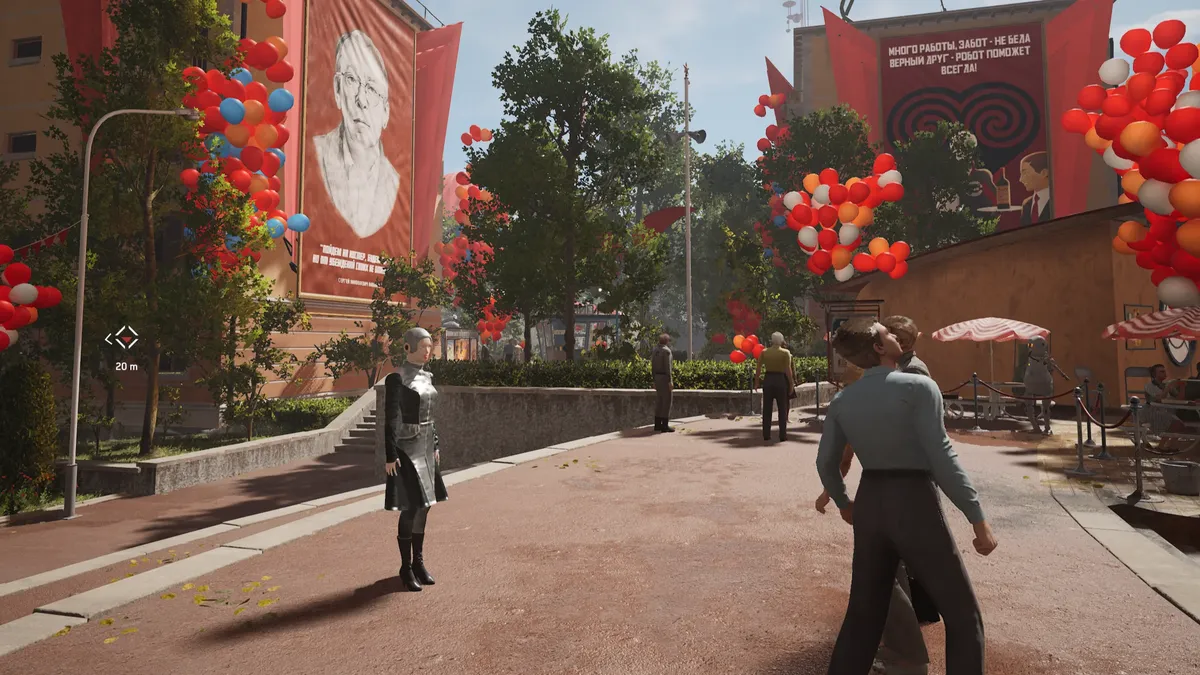
The game Atomic Heart - a role shooter in the scenery of an alternative USSR - was released on February 21. Even before the release, she managed to cause scandals on social networks and specialized media around the world. Claims arose to the "toxicity" of the plot, the romanticization of the USSR and the relations of developers with the Russian special services. The New European Europe was versed in whether Atomic Heart really glorifies the Soviet Union and why its aesthetics found not only opponents, but also ardent fans.
Fully automated luxurious communism
The action of the game takes place in alternative historical reality, where by 1955 the mass production of robots allows the USSR not only to become a leading technological power, but also to create a utopian state, reminiscent of the fact that the British journalist Aaron Bastani in his futuristic book was called Fully Automated Luxury Communism (“fully automated luxurious luxurious luxurious luxurious Communism "), only in retroanture.
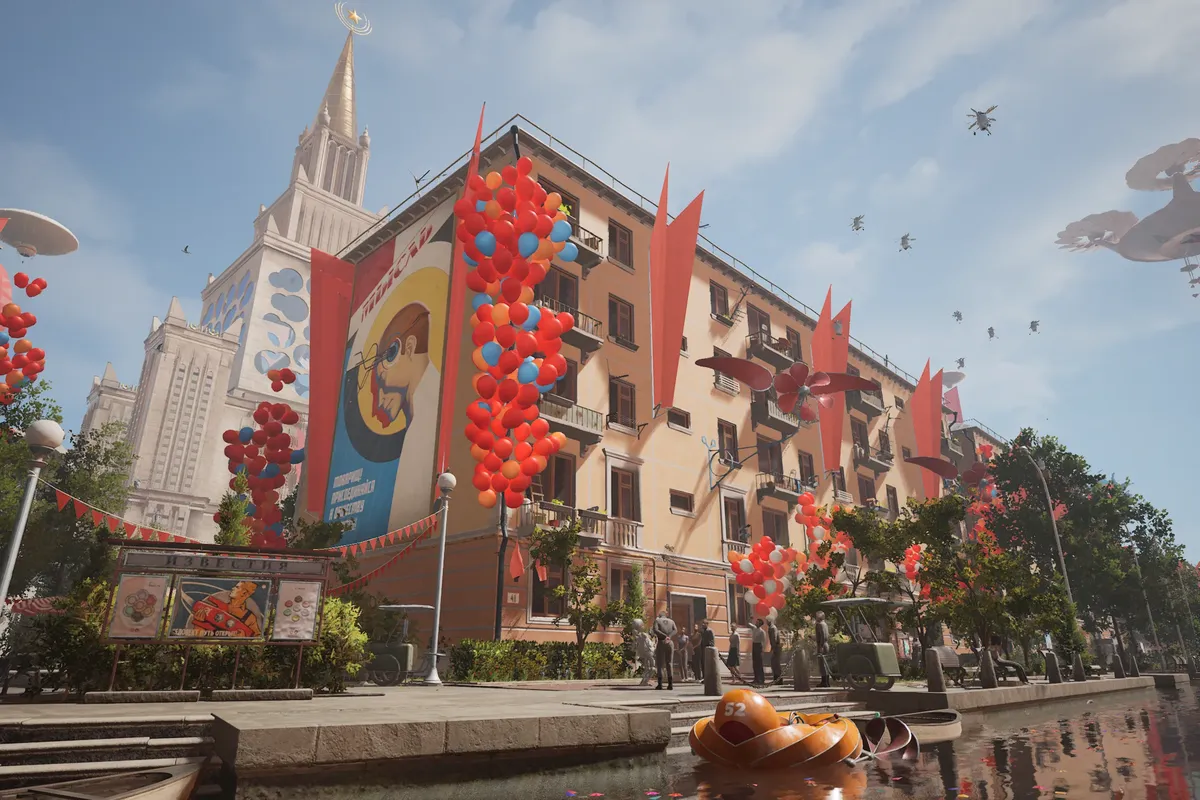
Soviet aesthetics sets the game setting from the first seconds: in the beautiful scene, the hero floats on the catamaran along the river passing through the center of the idyllic city, under the soundtrack of the Star Summer Alla Pugacheva - songs from the 1978 film about childhood in a pioneer camp. Gradually, we learn that the main character of the game is an agent of Soviet intelligence, Major Sergei Nechaev, in the role of which the player is investigated by the incident in the company for the production of robots in the Kazakh SSR: for unknown reasons, robots rebelled against their creators and owners.
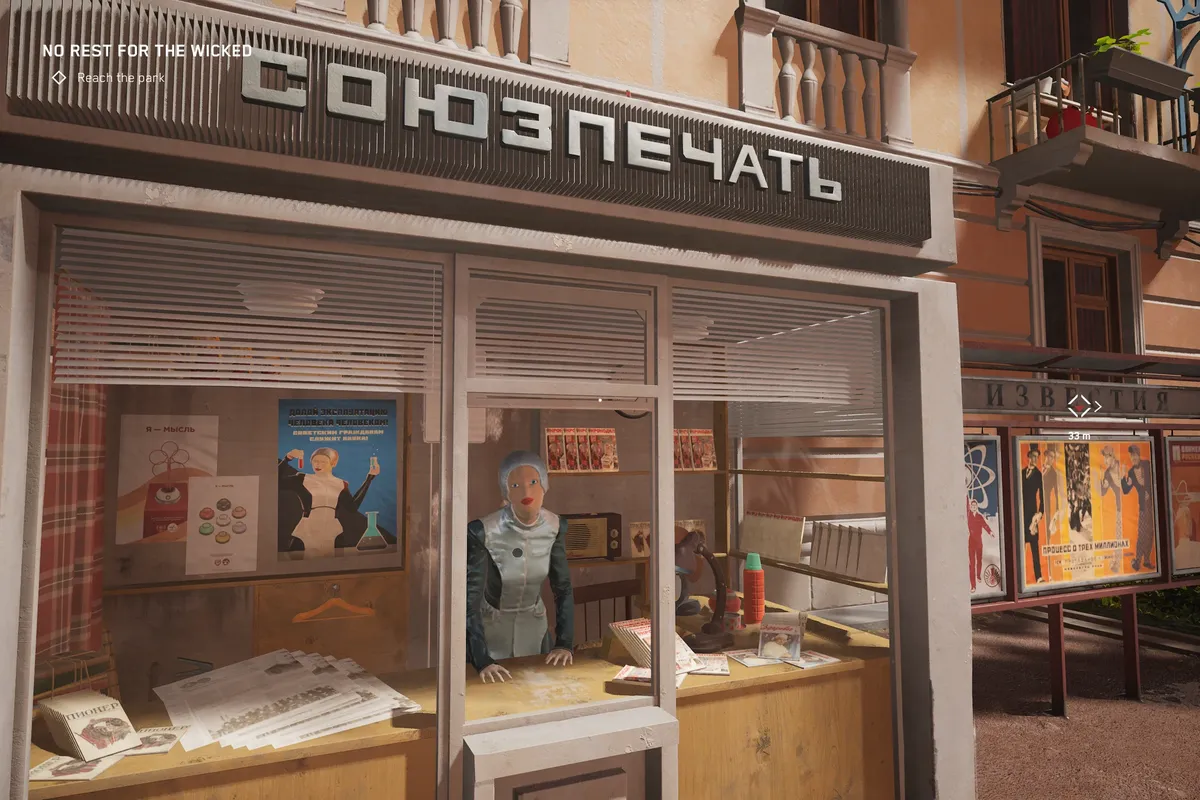
Architecture, signs and elements of industrial design inside the game, up to machine guns with carbonated water, will very accurately recreate the Soviet style and will clearly be recognizable even for generation of gamers, which did not find the Soviet Union, but has grown in its former territories.
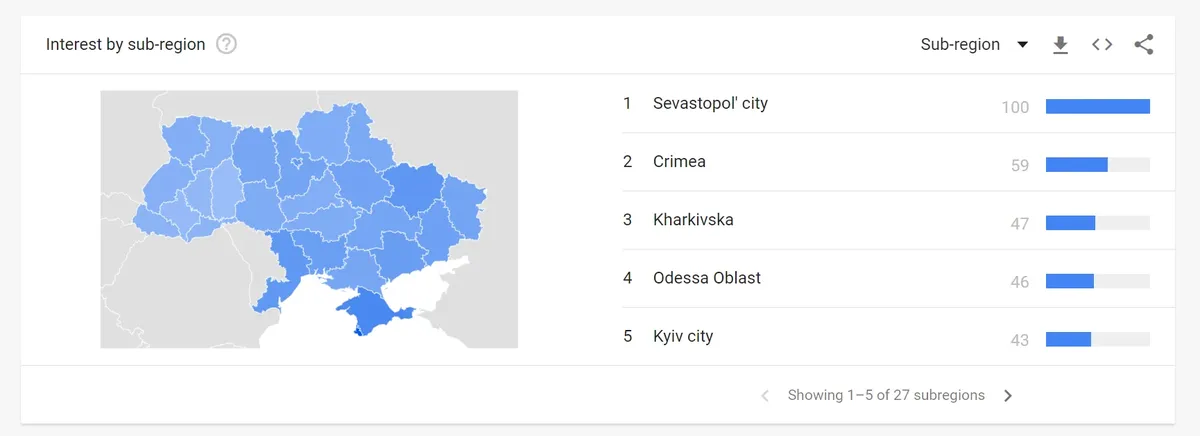
It is in the post -Soviet countries that the interest in the game is the highest, show the data of Google Trends: first of all, this is Russia, Belarus, Moldova, Latvia, Kazakhstan. Ukraine - in seventh place. In the case of Ukraine, it seems that you can even impose a map of interest in Atomic Heart on typical maps of elections in the country: the most nostalgia for Soviet aesthetics felt in the eastern and southern regions, and especially in Crimea, where the positions of pro -Russian candidates were traditionally considered strong.
Steam service data, through which the game is sold on a PC outside the CIS, suggests that Atomic Heart demonstrates good sales, but at the same time, the phenomenon of such an order is unlikely to become a global level in the post -Soviet territories.
According to the Steamdb resource, the game became the sixth sales in the week on February 21–28. At the same time, if about 38.5 thousand people played at the peak of popularity on the release day at Atomic Heart, then as of March 2-only 8-12 thousand, this is a position at the end of the TOP-100 among all games on this day.
For comparison: in the also rather scandalous Hogwarts Legacy according to the works of Joan Rowling, published in early February, 879 thousand people played at the peak, and on March 2 - 120-170 thousand at the same time.
Critics accepted the game without much enthusiasm. The Metacritic assessment aggregator calculated the average rating of the Atomic Heart PC version at 76/100, and the PS5 version is 71/100. These are positive, but relatively low ratings for the popular game. At the same time, for example, such a large publication as Thegamer considered it necessary to separately explain to readers why, in principle, it came to the decision not to ignore the game, despite its obvious problematicity.
In contact with Russia
Atomic Heart has developed Mundfish studio. Now the LinkedIn page of the company indicates Cyprus as the place of its headquarters. However, according to the same page, most of the Mundfish employees are now in Yerevan-a popular city for relocation of Russian IT companies-and the rest are mainly distributed between Russia and Cyprus. The company did not hide the Russian roots before: for example, in an interview with Atomic Heart , the Moscow Office MUNDFISH was shown by the famous American game designer Richard Graha.
The company also attracted Russian investment to the development of Atomic Heart - for example, from GEM Capital , which belongs to the Gazprom Nutoly Paliya (other investors became the Gaijin Entertainment and Chinese Technological Giant Tencenta to Hungary). In an interview with Kommersant's application, Anatoly Paliy even talked about the approximate revenue order of the AAA-IGR (in industrial terminology, the so-quality high-budget games are called), which he was guided by: hundreds of millions of dollars of potential revenue with a budget of $ 10-30 million.
In addition, the Atomic Heart CIS exclusively entered the VK Play digital platform, which is part of the VK group, headed by the son of the first deputy head of the Russian Presidential Administration, Vladimir Kiriyenko (he is under personal sanctions of Great Britain, the USA and Ukraine). Yes, and CEO Mundfish himself Robert Bagratuni worked for several years at Mail.ru Group (in 2021 was renamed VK) by a creative director. The exclusive VK Play was supported even by the largest Russian pirate torrent resource Rutracker, which translates their users who want to download Atomic Heart, to the official page of buying a game-probably in the framework of advertising placement.
In the context of international sanctions, close ties with large business from Russia have obviously become one of the reasons to play with suspicion.
The most stringent position is held in Ukraine. The deputy head of the Ministry of Council of Ukraine Alexander Bornyakov told the Dev.ua publication about plans to contact Sony, Microsoft and Valve (owner of the Steam digital store) with a request to ban the sale of Atomic Heart in the country, and called for limiting the game in other countries. “We urge all users to ignore this game. We also want to note for the Western audience that the developers of the game did not make a public statement about the condemnation of the Putin regime and the bloody war, which Russia unleashed against Ukraine, ”said Bornyakov.
Mundfish really abstained from the direct condemnation of the war, limiting himself to a statement in January 2023 that he “does not comment on politics and religion,” but advocated peace and against violence.
The composer of the game, the Australian Mick Gordon, who donated all his income for the work on the Atomic Heart Australian “Red Cross” for the good of Ukraine, reacted more directly.
In Ukraine, the company was also suspected of transmitting users data to the Russian authorities, including the FSB. But the privacy policy discovered by the Ukrainian media was then removed from the Mundfish website, and the company said that the document was outdated and was in the public domain by mistake.
Ideology, racism and "rule 34"
However, the problematicity of the game consists not only in the connections of developers with Russia, but also in the narrative itself.
Critics and gamers are divided in views on whether the Atomic Heart can be considered an instrument of the glorification of the Soviet Union as an authoritarian state. Yes, at the start, the game really draws a picture of the USSR as a country that - go in technical progress in a different way - could create a utopian society of universal well -being while maintaining a political and ideological dictatorship.
It looks like a really dangerous image, and comparable to how the Bioshock video game, which was published in 2007, painted utopia based on a completely opposite ideological platform - Ain Rand Libertarian “objectivism”.
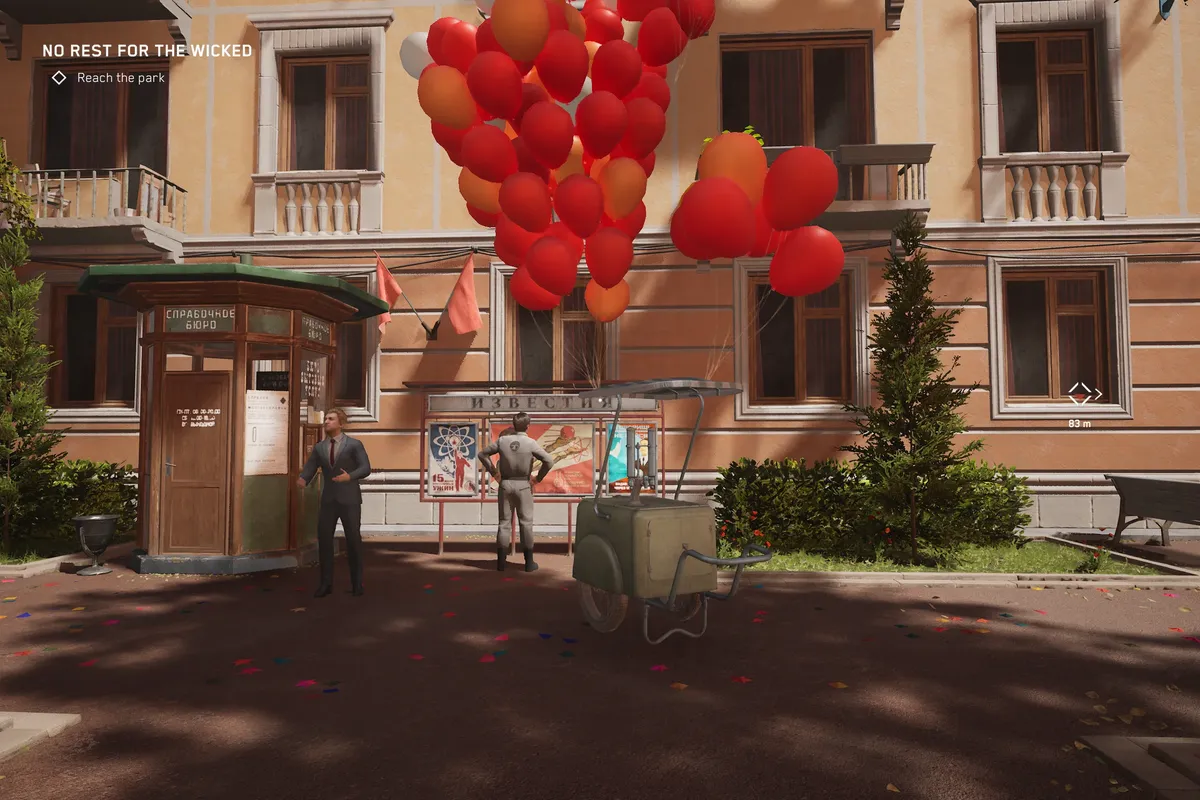
But the general in two games is not only this, but also a relatively simple narrative technique: in the course of the development of the plot, the dark inside out of the original utopia comes out, which breaks up and turns into anti -utopia. The plot of Atomic Heart, for example, indicates both economic inequality and corruption among the highest power of the country. This is evidenced in their explanatory note to the same Thegamer, whose authors as a result saw criticism in the game rather than the romanticization of the USSR and Russian isolationism.
However, the perception of Atomic Heart, like other works polarizing society, depends on the watchman - and on the fact that the game itself seems to seek to switch from the inside of the regime back to romantic aesthetics. According to reviews on social networks, it is impossible not to notice that many Russian gamers saw in the game, first of all, just a beautiful nostalgic picture, reinforcing the image of a great but lost country.
The game also found a lot of other moments, which in the reality of 2023 look at least inappropriate.
For example, in the rooms of preserving the game, gamers found TVs on which you can watch the Soviet cartoon “Well, wait a minute!”. In his 12th series there is a scene with a dark-skinned Aboriginal, depicted as a typical racist caricature-and if back in the 1970s she could not raise questions from a mass audience, now it is definitely perceived as offensive, especially in the West. Here we can recall that back in 2020, in the program “International Pylorama” Tigran Keosayan, a parody of the ex-president of the United States Barack Obama, which also caused bewilderment abroad, was published on NTV.
Mundfish had to apologize for the scene from the Soviet cartoon and remove it from the game. But this is not limited to this.
Thus, twin robots who protect the scientist important for the Soviet state, at least their haircut from the ex-prime minister of Ukraine and the leader of the Fatherland Party Yulia Tymoshenko. And this does not end with this problematicity - the robots are greatly sexualized and embody a typical male view of the proportion of the female body. It is no coincidence that, according to Google Trends, the fastest growing request related to the game sounds like “Atomic Heart 34”. We are talking about the Internet meme “Rule 34” : “If something exists, then there is already porn with this” (and in the case of Atomic Heart it is really in abundance).
Users continue to find other possible anti-Ukrainian attacks: for example, in a drone with a pot of geranium, they saw an analogy with Gerani-2 drones, attacking Ukraine during the Russian invasion. Regardless of whether the appearance of the geranium was intentional in the game, for Russian users, she already began to come up with anti -Ukrainian memes.
Back to a bright future
Games as an element of mass culture freely or involuntarily have long become one of the Soft Power tools. And in the case of the games of Russian developers, this helps to understand the view from Ukraine, where even before Atomic Heart they began to explore the issue of an underlying or obvious ideological propaganda in Russian video games. Its roots can be sought both in abstract and penetrating in all nostalgia, and in the very specific attention of the Russian authorities to the games as an instrument for broadcasting values.
Atomic Heart came out at a good moment to capture the Russian (and wider Russian -speaking) audience nostalgic in the empire, but in very bad - to attract the western one. It is not difficult to imagine that at a more favorable time for Russian culture, the time of Atomic Heart could interest a much wider audience looking for an alternative to global capitalism- and now Western users are discussing with interest at the forums whether the game is obtained by pro- or antisocialist.
Mundfish CEO Robert Bagratuni explained the sources of inspiration for Atomic Heart: “Since some team members were born in the USSR, many ideas came from those times. We drew inspiration in our childhood, in the books on which we grew up: Strugatsky, Lem, Harrison ... ”Here you can draw a direct parallel with one of the most culturally significant video games of recent years - Disco Estonian studio ZA/UM.
But if in the minds of Russian developers the Soviet heritage gave the utopian world at the exit, attracting fans of the USSR and leaving the imperial component of this project, then the key creator of Disco Elysium, Robert Kurvitz, who fundamentally holds the bust of Vladimir Lenin on the working table, drew a completely different picture.
Its faded, tragicomic world, in which an attempt to build communism has already failed, is not permeated with nostalgia, but leads from despair to the hope of a better future.
Demand for the image of socialist utopia will surely be operated more than once - especially considering that the intake of alternative history helps to present a reality that is deprived of (at least for a while) of the most obvious elements of the real USSR: the cruelty of the dictatorship, consumer deficiency, etc. And the line between the glorification and rethinking of the images of the Soviet past will always remain thin. But one thing can be said for sure: 2023 is not the best time to build fictional empires in the post -Soviet space, although it is still possible to monetize them.