
Translated material
“Owl”: “discrediting” materials - not slander, but political criticism
The information and analytical center issued a report on the unlawful application of anti-extremist legislation in Russia in 2022.
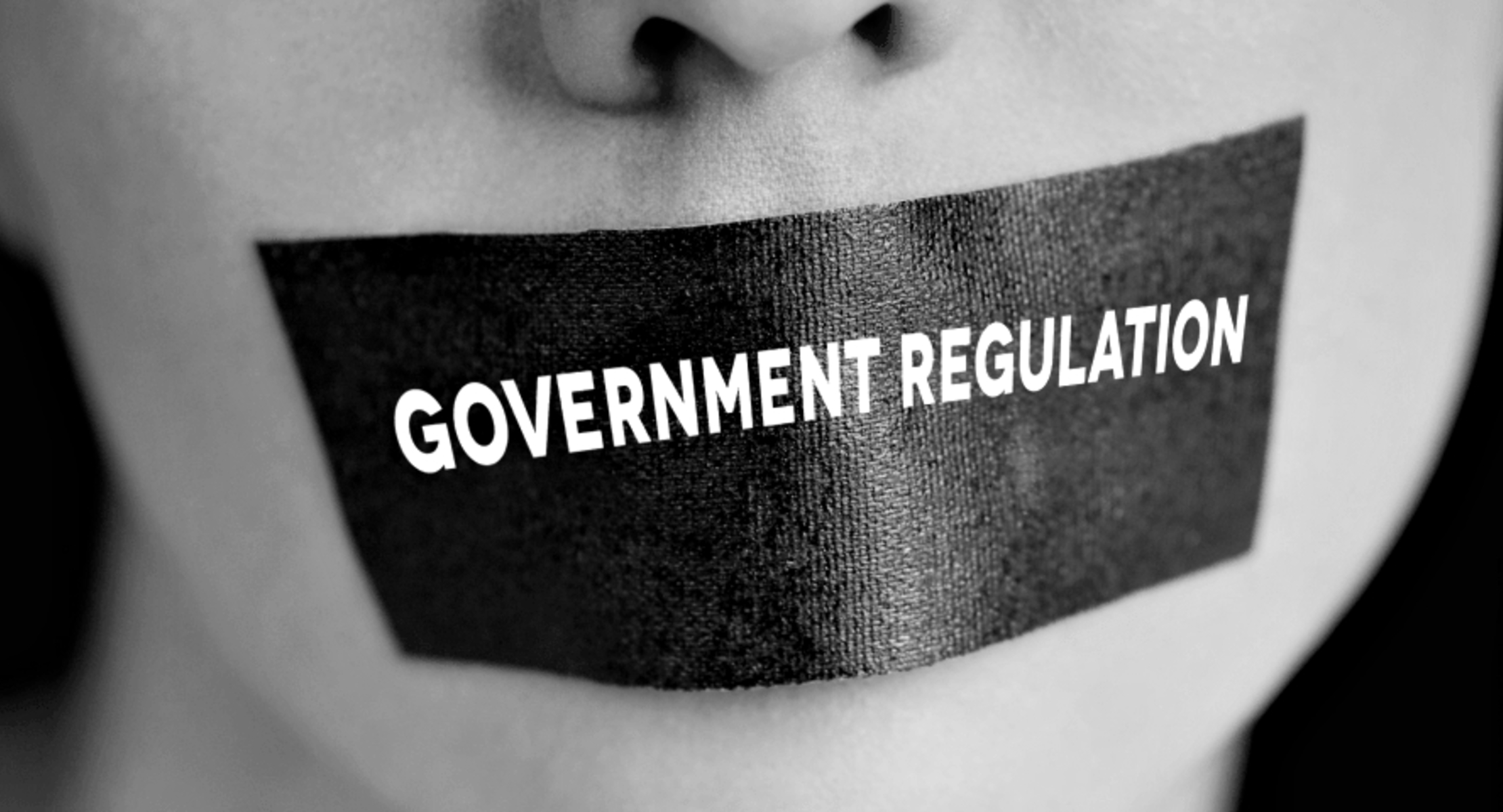
In 2022, the information and analytics center “OVA”recorded 119 illegal sentences against 192 people under articles on extremism . More than 250 people became the defendants in such criminal cases in 2022.
According to the administrative article on the “discredit” of the army and officials, which is used in the first prosecution for the year, about 5.5 thousand people appeared before the court.
To say that Russian society is passively related to the “special operation” is not entirely correct, according to the author of the report Maria Kravchenko :
“The state opposed the protest at the level of all three branches of power. Nevertheless, protests took place daily, and thousands of people became defendants in new affairs. ”
In addition to the article on discrediting, Owl counted about 300 cases of illegal persecution of administrative articles about extremism .
“Basically, citizens and organizations were punished for various anti -government statements in various forms,” - follows from the report.
According to the researcher, the courts do not consider public danger, and therefore punishment is disproportionately strict.
“The fines are often unhealthy for people in the regions, so it cannot be said that fines are mild punishment,” says Kravchenko.
In addition, the targeted persecution of opposition activists continued. Thus, the number of accused in the case of the community of supporters of Alexei Navalny grew, and the Youth Opposition Movement "Vesna" was declared an extremist organization.
Pursuit for anti -government statements
" Extremism " and " terrorism "
The statistics of the Supreme Court indicate an increase in the number of convicts for calls for extremist activity (Article 280 of the Criminal Code) and for calls for terrorism (Article 205 of the Criminal Code). So, the number of people convicted under Art. 280 of the Criminal Code, amounted to 113 people in 2016, in 2021 - 255. There is no complete data for 2022 yet.
But the Ministry of Internal Affairs has already unveiled its annual statistics, and on it the number of registered crimes of an extremist and terrorist orientation also grew again. The number of extremist crimes was 1566 cases (+48.2 % in relation to the previous year), of which 493 (+8.4 %) were qualified as public calls for extremism committed on the Internet .
A terrorist crimes were recorded 2233 cases (+4.5 % by 2021), of which 4 90 (+55.6 %) were qualified as a public justification for terrorism committed on the Internet.
" Excitement of hatred "
In 2022, 65 cases of unreasonable prosecution under Art. 20.3.1 Code of Administrative Offenses on the excitement of hatred. In the vast majority of cases, we are talking about critical statements of network users to the authorities and law enforcement agencies. Some of them were also associated with coronavirus restrictions, some with the events of recent times, including the “special operation”.
“Apparently, the use of words such as“ garbage ”or“ policemen ”addressed to police officers is a significant marker of negative assessment for the linguists and, accordingly, can be regarded by a court that is usually relied on to the conclusion of experts, as a sign of excitement of hatred or humiliation of dignity. At least, we know more than one similar business, ”the report is illustrated.
Pursuit for other anti -government statements
According to HT. 3-5 tbsp. 20.1 of the Code of Administrative Offenses on the spread of information, expressing in an indecent form disrespect for the state and society on the Internet, according to Owls, in 2022 was held accountable at least 22 times . A year earlier, there were at least 37 such cases, in 2020 - at least 30, and in 2019 - 56.
There are also 5 cases of prosecution under Art. 20.3.4 Code of Administrative Offenses on calls for sanctions against Russia.
Demonstration of "prohibited" symbols
If for the entire 2021 years of sanctions under Art. 20.3 Code of Administrative Offenses were imposed 3183 times, and under Art. 20.3.1 - 936 times, then only in the first half of the year 2022 the total number of sanctions under these two articles, according to the statistics of the Supreme Court, amounted to 2690 . There is no data for the second six months yet.
More often than others, opposition activists came across unreasonable persecution. Thus, 46 cases of persecution took place in Moscow before the municipal elections: it was about the current deputies and those who intended or could intend to run (punished under Article 20.3 of the Code of Administrative Offenses are losing the right to be elected for a year). The basis for their persecution in almost all cases was the logo of the “smart vote”, which appeared in the posts of previous years in social networks: it is regarded as the symbolism of the prohibited structures of Alexei Navalny . The reason for bringing to justice were posts with symbols and other Navalny organizations - its headquarters or FBK.
As before, it was often a question of public demonstration of Nazi symbols not in order to propagate Nazism, but as a means of visual criticism of the authorities , the authors of the report draw a conclusion. Some of these episodes - at least 18 - concerned the spread of images, on which the symbolism of the “special operation” was compared with the swastika or the swastika was imposed on the image of the president.
In 5 cases, citizens were attracted to the use of the slogan “Glory to Ukraine”, which law enforcement agencies are often regarded as the paraphernalia of prohibited Ukrainian nationalist organizations - on a poster, in the comments on the social network and even in the form of cries in a public place. 20.3 Code of Administrative Offenses punishes only visual symbols.
It is also known about the prosecution of the symbolism of the unregistered party “Another Russia E.V. Limonova ”, which law enforcement agencies and courts regard the symbolism of the prohibited National Bolshevik party (NBP), although it is not identical.
"Discredit" of the Russian army and officials
!! “Owl” considers an unjustified restriction of the right to freedom of expressing opinions and the introduction of punishment for “fakes” on the actions of the Russian military and state bodies abroad and their “discrediting”.
“From our point of view, the only basis for the introduction of these sanctions was the desire to limit the spread of independent information about events in Ukraine and criticism of the actions of the government and the Armed Forces of Russia,” the report says.
According to the GAS “Justice” system, which collected the Mediazone, for the second half of December 2022, the total number of cases under Art. 20.3.3 Code of Administrative Offenses, received for consideration by Russian courts, amounted to 5518 . People are pursued for the following:
- demonstration of posters;
- inscriptions on clothes;
- statements made offline and online;
- distribution of printed campaign products;
- Application of inscriptions to various structures, etc.
It is known about 3 sentences issued in 2022 under a criminal article on re -discrediting the actions of the Russian army and officials abroad.
Sentences for at least 39 people held accountable under Art. 280 of the Criminal Code in 2022, have not yet been adopted. Most often, the reason for the criminal prosecution for re -discrediting the actions of the Russian authorities and the Armed Forces were posts in social networks of texts and videos with criticizing the actions of Russian troops in Ukraine. Once - even a private conversation.
Distribution of "fakes" about "special operation" on the motive of hatred
!! “Owl” opposes criminal prosecution for slander and believes that accusations of slander should become a reason for proceedings within the framework of the civil process.
“Nevertheless, it should be noted that in national legislation of different countries this issue is resolved differently. However, it is completely not clear why the dissemination of inaccurate information about the activities of military personnel or officials requires a separate norm that provides for a more - and clearly disproportionate punishment, ”the report says.
Experts also believe that the motive of ideological and political hatred in this case is used unreasonably: people who publish information about military operations in Ukraine, which differ from the official, most often ideologically and politically disagree with the course of the authorities, that is, in most such cases we are talking about one of the forms of political criticism .
Researchers counted 9 sentences issued in 2022 under paragraph “d” of part 2 of Art. 207 of the Criminal Code.
"Excitement of hatred" in literary texts
The federal list of extremist materials indicates that artistic work is too complicated for interpretation by law enforcement agencies and courts.
“Unfortunately, the courts continue to satisfy unreasonable claims about the ban on artistic texts,” - follows from the report.
In September 2022, the Dzerzhinsky District Court of Volgograd recognized the song “Beggars kill!” Punk groups "Porn films" .
“It is strongly impossible to imagine a situation in which it would be perceived by the listeners literally - as a direct call to destroy the poor inhabitants of Russia through a neutron bomb. The song has an obvious satirical character and criticizes the state policy, which the authors consider antisocial, and the calls included in the text for violent actions are language tools designed to strengthen the effect of the work. The satires attributed the song and experts involved in the re -examination of the case, but the court did not heed their arguments, ”the report says.
But there are reverse examples. In August, the same Dzerzhinsky District Court of Volgograd refused the regional prosecutor’s office, which sought to recognize the songs of a song called “about Islam” with extremist material, and in October the Volgograd Regional Court approved this decision.
Blocking information flows
Since the end of February 2022, the media (including previously recognized by “foreign agents”), socio-political Internet resources and a variety of media platforms have massively encountered claims of state bodies .
So, on the basis of the decision of the Prosecutor General’s Office of February 24, hundreds of sites were blocked in the next weeks, among which there were sites of news publications BBC, Deutsche Welle, Bild, Russian Voice, all sites of the Radio Liberty holding, as well as Meduza, Belllingcat, Mediazona, News Izvestia ”,“ Paper ”,“ Echo of the Caucasus ”,“ Caucasian Knot ”,“ Snob ”,“ Lentacel ”,“ 7x7 ”, TJournal, The Village, Republic and many others. The EURONEWS television channel was disconnected.
In the following months, the lock continued, including using new prohibitions on the spread of inaccurate or discrediting information about the use of the armed forces.
At the request of Roskomnadzor, a number of media were forced to shoot or edit materials about events in Ukraine. Under the pressure of the authorities during March, many media outlets had to stop work in one way or another, among them the New Gazeta, which later, in September, was withdrawn by a license (newspaper employees created a new foreign publication, which was immediately blocked in Russia), and the Echo of Moscow, which was deprived of the broadcast and then liquidated by decision of the board of directors, including the site and accounts in social networks. He suspended the work of the Rain TV channel, resuming it already abroad.
The sites of leading international human rights organizations - Amnesty International and Human Rights Watch were also blocked .
Censorship also fell on social networks. On March 4, according to the law on “sanctions” for the unreasonable restriction of the spread of materials of the Russian media, Facebook and Twitter were blocked .
On March 11, the Prosecutor General’s Office appealed to the Supreme Court with a lawsuit to recognize the extremist company Meta Platforms Inc. , owner Facebook, Instagram and WhatsApp.
The blocking of the media platforms continued during the year, were blocked, for example, Wikiar, Depositphotos, Patreon, JoOble, Grammarly, Chess.com and a number of other gaming sites -due to users about events in Ukraine.
In parallel, the websimizers sites were blocked, including the TOR project sites and VPN applications .
Recall that Roskomsvoboda in early February 2023 counted about 10 thousand sites blocked both at the request of the Prosecutor General and on the basis of court decisions. At the same time, Prosecutor General Igor Krasnov in an interview with Izvestia in January stated that Roskomnadzor only in 2022 blocked or deleted publications from more than 190 thousand Internet pages.
Thus, not all blocked resources fall into the Unified Register of Forbidden Sites, in particular, due to the fact that site owners often quickly delete information that caused claims. But in general, the actions of Russian supervisory authorities are becoming less transparent (for example, not only the Prosecutor General’s Office, but also “unknown stateganese”) are now often complicated as the initiators of the blocking of the same resources in the register), therefore, the analysis of statistical data is difficult.
The full text of the report, including the norm -making and persecution of organizations, read thelink . Excerpts from another report - about anti -extremist law enforcement in Russia in 2022 as a whole - you will find here .