
Translated material
Did not leave the barcas
Two more smugglers were arrested in the United States who tried to sell suction electronics to Russia
Last week, the US Ministry of Justice was received about the arrest of two residents of Kansas accused of illegal export of Avionic and other electronic equipment to Russia. 59-year-old Sayryl Gregori Buyanovsky, who lives in Lawrence, and his 55-year-old partner Douglas Robertson, a civil aviation pilot living in Olait, were involved in the court.
Both are American citizens, and Buyanovsky, according to court documents, not from birth, but through naturalization. The indictment indicates that he is also known as Cyril, so it is apparently about the Soviet emigrant. There it is also said that in the past he worked as an engineer at the Avionics Plant.
On January 16, Buyanovsky, according to the investigation, addressed the neighbors to his neighbors in his microdistrict Plezant-Hill, in which he has been living since 2018.
The letter said that
“The political events of the last year forced me to revise the field in which I worked. For more than 20 years I lived due to the export of spare parts for aviation, but now I am not able to supply them with my customers because of (...) in Ukraine. So when I stumbled upon a former colleague at Kansas-City Airport, he kindly introduced me into the uninitiated world of medical insurance and helped me open a case in this area. Tell me if you need our services. ”
The new business that Buyanovsky advertised in a letter to the neighbors was called Truly Affordable Health Insurance - Lawrence ("Really available medical insurance - Lawrence"). It is unclear how things were going on at his new undertaking, but it is clear that the old Canras was covered with a copper basin: Buyansky and Robertson was arrested last Thursday, and already on Friday I could not go to their “Kanrus Tradition Company Inc.” site. On the network there were only offensive comments like “Traitors!”.
Criminal cases of illegal export of technology to Russia (Iran, China, etc.) are opened in the United States regularly and, as a rule, are monotonous, but in the case of our heroes there is one colorful detail that I had not come across before.
Konras not only supplied four Russian firms with spare parts and Avionic, but also received equipment from them, which was required to be repaired in the United States.
Between November 2020 and February 2021, it received equipment from Russia, including a processor called TPU, on which the FSB sticker was flaunted.
Robertson hastily wrote to the customer to Moscow: “On the TPU fsb sticker !!!”. "As for the sticker, you can peel it off and then stick back again?" - the customer answered phlegmatically.
According to the Kansas Federal Prosecutor's Office, the accused lied to the invoices in which country the electronics are exported, who is its final user, and what is its cost. They allegedly sent goods through third countries, such as Germany, the UAE, Cyprus and Armenia, and received payment from the banks of the UAE, Cyprus, Russia and Armenia. The defendants allegedly tried to hide their illegal actions, encoding their owners.
The charges against them include a criminal conspiracy (up to 5 years in prison), the export of licensed goods without a license (up to 20 years for each episode), falsification or non -editing of electronics export (up to 5 years for each episode) and smuggling (up to 10 years for each episode).
Although Buyanovsky assured the neighbors that he had stopped supplying Avionics to Russia after the start of a special operation, the prosecutors claim that he continued to send electronics to Russia and after that, as well as after the introduction of additional American restrictions on its export, without bothering the US Ministry of Education on the issuance of subscribing licenses.
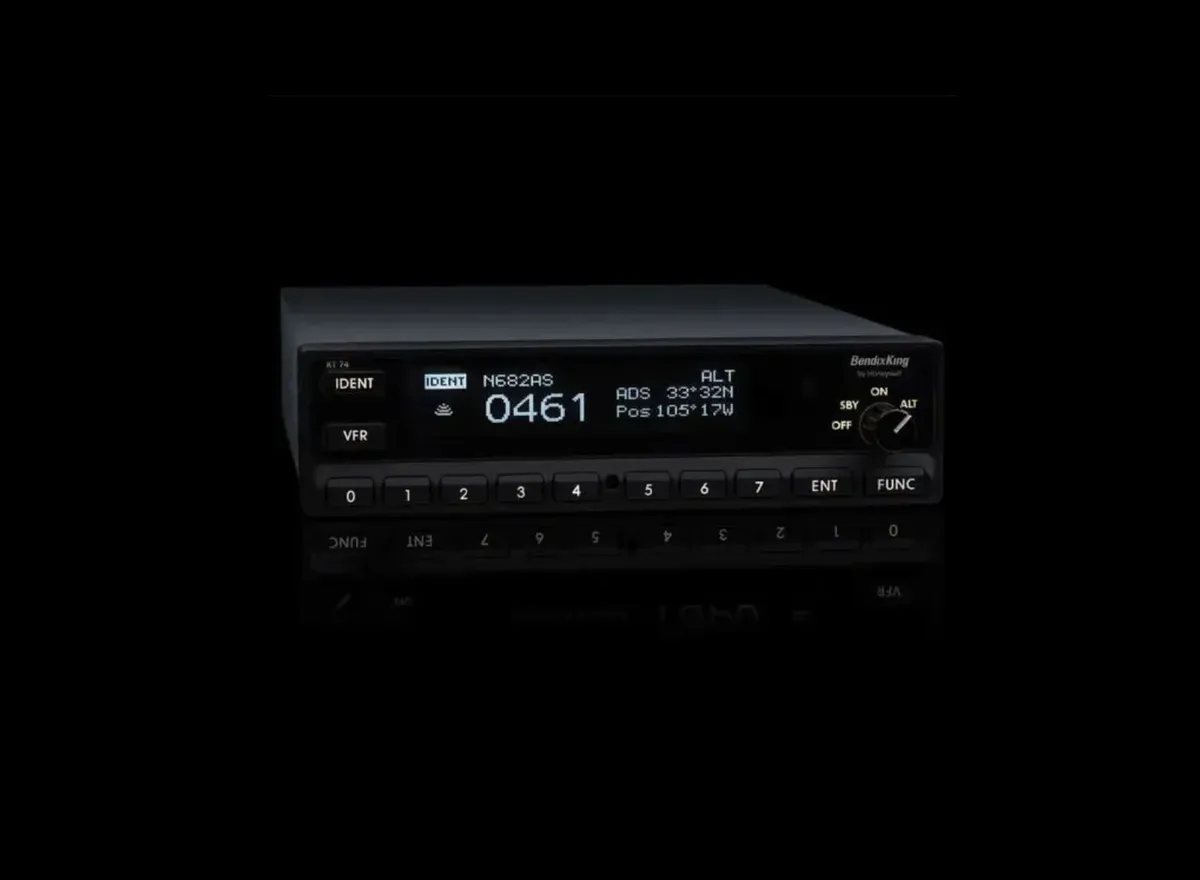
Additional (“Ukrainian”) restrictions were introduced on February 24 last year. A few days before, on February 7, Buyanovsky received from Moscow an order to purchase in the United States transponders KT-74 produced by Honeywellbendixking and send them to Russia. Buyanovsky received goods from an American company, and the Muscovite paid it.
At first he bought 4 transponders, and on February 18 he transferred the money over four.
On February 28, that is, 4 days after the start of hostilities, Robertson made an attempt to send all 8 transponders to Russia, but did not succeed in this. The authorities slowed down the cargo and informed the sender that a license is now required for the KT-74 export in the Russian Federation.
This is bad luck, it would seem, was a unambiguous signal, but the prosecutors assure that the heroes of the criminal case did not calm down and continued in the same spirit. For example, on June 9 last year, they wrote to Buyanovsky from a certain Armenian company and asked if he could put it 8 transponders of the KT-74. These were the products of the same model that the transponders that Robertson and Buyanovsky unsuccessfully tried to send to Moscow in February.
On June 16, Robertson sent 8 transponders to Yerevan. On June 28, the Armenian company sent transponders from Yerevan to Moscow. According to prosecutors, Buyanovsky and Robertson did not ask the US Department of Trade of the laid out a license for re-export of these products, which are officially called in Russian with aircraft radar defendants, who automatically transmit information in response to requests from the ground.