
Translated material
Holodomor: Is it true that Ukrainians suffered more than others
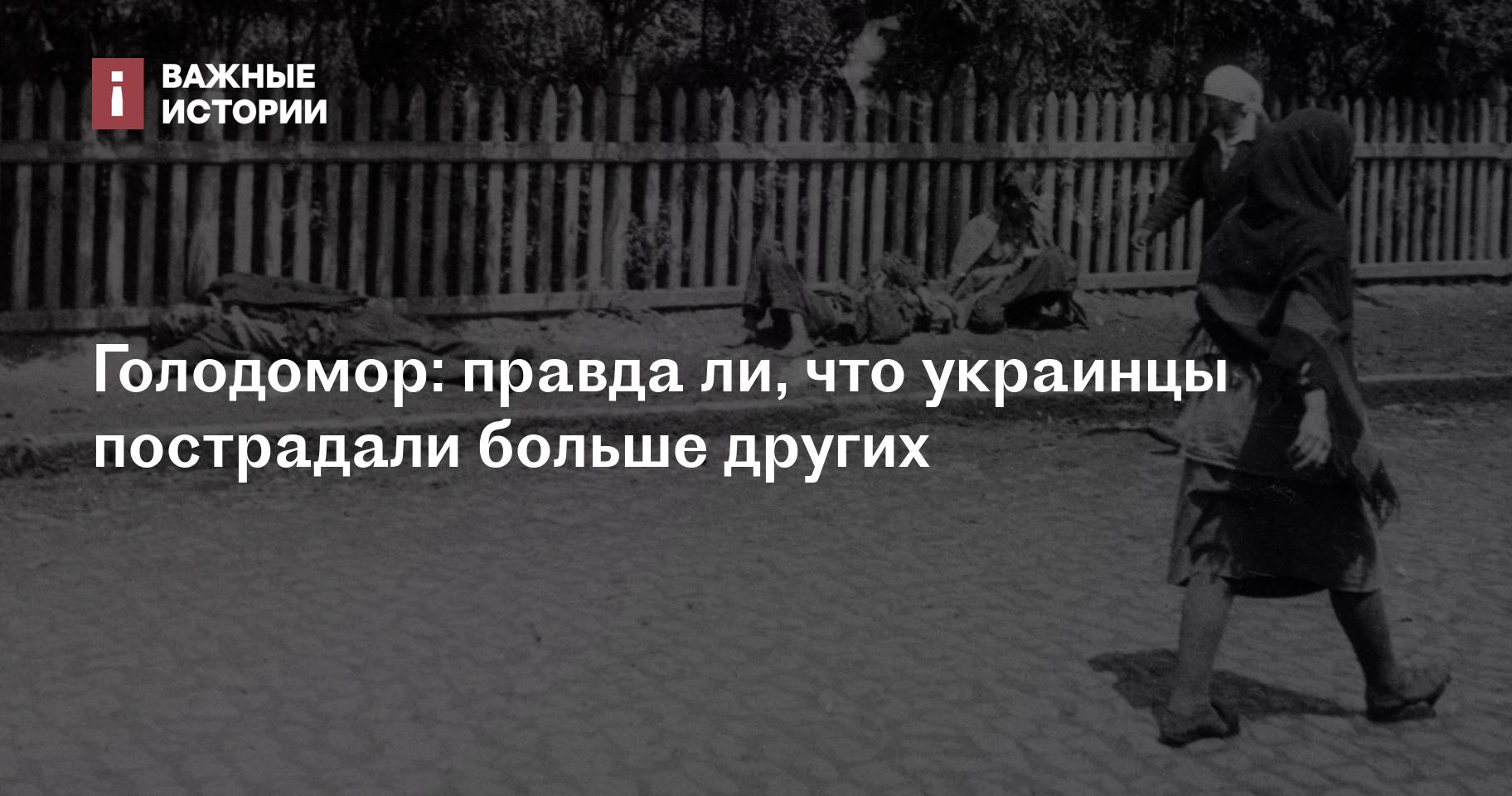
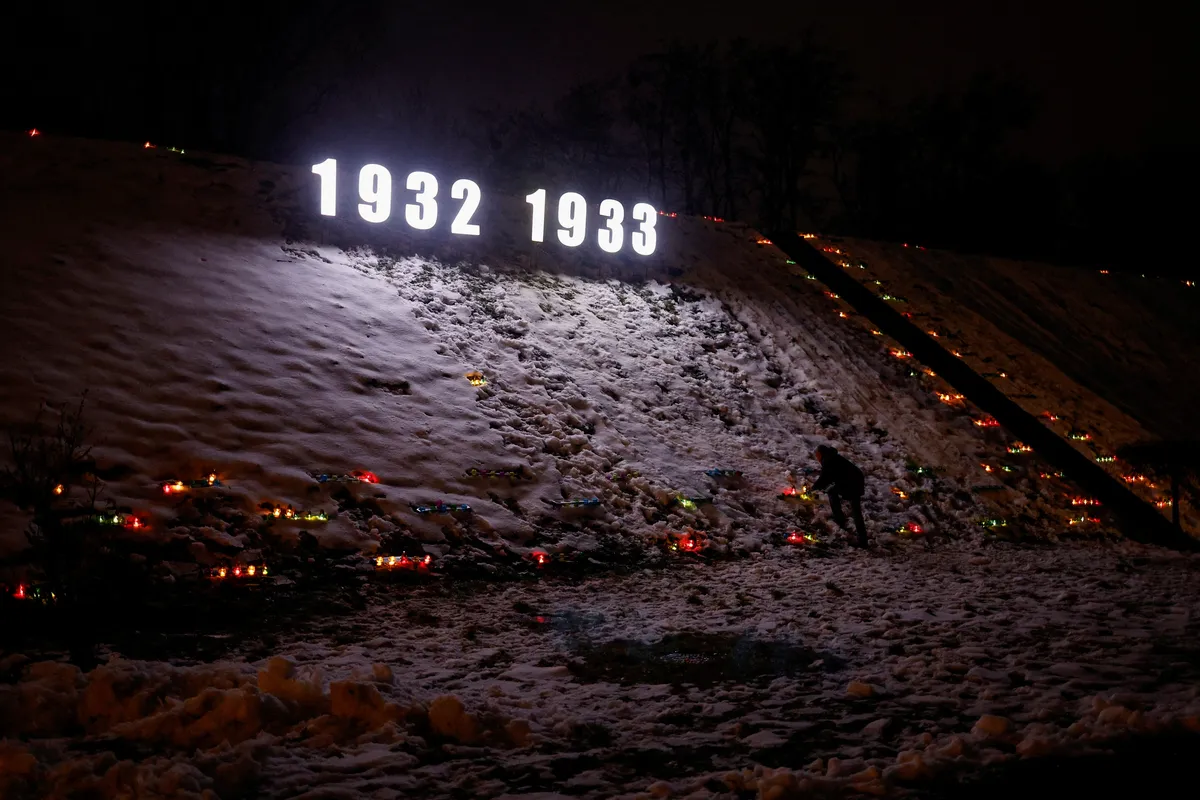
The Holodomor is one of the largest humanitarian disasters of the twentieth century: in just two years-from 1932 to 1933-from hunger from 5.8 million inhabitants of the Soviet Union were killed, of which 2.6–3.9 million were in Ukraine. Until the 1980s in the USSR, this tragedy was denied, but modern Russian historians agree that hunger was artificial: it was not objective reasons, but the economic policy of the Communists-collectivization, “liquidation of the kulaks” and the desire of Stalin to conduct accelerated industrialization at the expense of the village. The unwillingness or inability to give the state Grain Stalin equated to the struggle against the Soviet regime.
However, most Russian historians refuse to consider hunger in Ukraine the genocide of the Ukrainian people, indicating that then many people died in other grain -producing regions. Ukraine and a number of other countries are considered the events of 1932-1933 by the genocide of Ukrainians.
This historical dispute is of important political importance. “Hunger in Ukraine was chosen as a way of pacifying the Ukrainian people ... The goal was to bloodless Ukraine, to undermine its forces and thus eliminate the possibility of restoring Ukrainian statehood,” Viktor Yushchenko said , being the president.
Here are the main arguments in favor of the fact that the Holodomor was the result of a policy directed against ethnic Ukrainians.
Their share among the dead from hunger is very high. Ukrainians then amounted to 21% of the population of the USSR, but they account for about 40% of deaths. In the calculation of the thousand populations, mortality in Ukraine was 4-6 times higher than in Russia (during previous cases of mass hunger, mortality in Ukraine was no higher than in the rest of the Russian Empire and the USSR).
The Soviet government was hostile to Ukraine. During the revolution and civil war, Ukrainians fought for independence. In the following years, there were many peasant uprisings there, the resistance of collectivization was also strong.
The state seized a lot of grain from the Ukrainian peasants, leaving them the opportunity to survive, but in 1932-1933 the USSR continued to export the grain. In 1932, Stalin even repressed party-economic chiefs for a too soft policy of grain procurement in Ukraine.
The injured regions did not receive serious assistance. On the contrary, a ban on leaving the territories covered by a humanitarian catastrophe (military cordons, placement in their former place or a link for the escaped) was introduced. This condemned millions of people to a slow and painful death.
Here are arguments against the anti -Ukrainian character of hunger.
Forced bakeries and continuous collectivization were directed against all regions “lady”. Ukraine was simply the main of them. Hunger at the same time came and ended in Kazakhstan, the Volga region, the Central Chernozemye, the North Caucasus, the South Urals and Siberia. In 1926-1937, the rural population of Ukraine decreased by 20.5%, Kazakhstan - by 30.9% (and the mortality from hunger was the highest there), the Volga region - by 23%, the North Caucasus - by 20.4% (according to the calculations of the historian Viktor Kondrashin, who considers the policy of the time of anti -Cross, rather than anti -Ukrainian).
Then less grain was taken from Ukraine than usual. Its share in the grain surrendered to the state in 1930 was 35%, and in 1932 - only 25%.
The severity of hunger in Ukraine could be caused by its grain specialization, the density of the peasantry in the collectivization zone. Because of this, grain collection could fall strongly, and official data on the crop in 1931-1932 to be high.
This historical dispute is of important political importance. The economists tried to answer the question of whether the bias to ethnic Ukrainians took place in that tragedy.
Ukraine periodically starts talking about repentance and compensation from Russia (as a successor to the USSR) for organizing hunger. Russia considers the talk that the Holodomor was the genocide of Ukrainians, anti-Russian propaganda, agreeing to the point that the hunger of the 1932-1933s was facilitated by Western countries, demanding from the USSR to pay for the supply of equipment with grain. In the occupied cities of Ukraine, Russians dismantle the memorials dedicated to the Holodomor (as it was in Mariupol and Kremennaya ). Any conversations on this topic are considered nationalism , "distorting historical facts."
There was enough grain
To answer the question whether the bias (BIAS) to ethnic Ukrainians took place in that tragedy, economists tried. They operate with dry numbers and mathematical models-and with their help they appreciated the contribution of Soviet economic policy to the high mortality of Ukrainians during the famine of 1932–1933. Results Andrei Markevich (University of Helsinki and Rash), Natalya Mason University and Nancy School of Management at Northwestern University at the annual conference of American Economic Association.
About the authorsAndrei Markevich is a researcher at the economic history of Russia, Eastern Europe and Northern Eurasia. The pioneer work of Markevich and Mark Harrison, which restored the GNP of Russia during the First World and Civil War (1913–1928), received the National Prize in Applied Economics in 2012 (the main turns of the economy of this period described the same authors in this article ). Markevich studied, in particular, the economic consequences of the abolition in the Russian Empire of serfdom, the influence of the Stolypin reform on the migration of peasants to the east and on the productivity of agrarian farms, the reaction of peasant farms to the First World War, and the development of regional economies in the beginning of the 20th century. Markevich has articles about the reasons for the popularity of the Bolsheviks in 1917 (including the influence of industrialization on the polarization of society), the cost of human life and managing the economy under Stalin (see here and here ). Recently written, together with Sergey Guriev and Catherine Zhuravskaya, an extensive article summarizes the research of recent years about the Russian economy of the late XIX - the first half of the 20th century.
Natalya Naumenko was already engaged in the study of the Holodomor: her work “Political economy of hunger: hunger of 1933 in Ukraine” was published in 2021 in The Journal of Economic History. Now she and Markevich are exploring the Soviet hunger of 1922, and with Alexei Makaryin (MIT) - the consequences of nuclear tests conducted in the USSR.
Nancy Cheng is the author of many articles on the economic policy of the USA and China.
Markevich, Naumenko and Cheng collected by archival sources a database of mortality, birth rate, ethnic composition, urbanization, weather, crops and grain harvesting in Ukrainian, Belarusian and Russian agricultural regions in 1922–1940. Unfortunately, there was no sufficient data on Kazakhstan, where the mortality rate from hunger was even higher than in Ukraine, and could not compare the causes of hunger in Ukraine with Kazakhstan. Economists watched how mortality changed in certain territories depending on their ethnic composition, grain production, blanks and other factors.
They begin their study with a well -known thesis: the 1932 crop in Ukraine was fewer yields of previous years, but it would be enough to feed the population of the republic.
The crop in the rest of the USSR was also sufficient to feed people there without taking the grain from Ukraine. This means that the main factor of hunger is not a decrease in grain production, but its excessive withdrawal in Ukraine, whose agriculture was already destroyed due to collectivization.
In 1932, the minimum norm of grain per person was 0.78 kilograms per day. But the authorities of the USSR left Ukraine in 1932 by almost a third (31%) of grains less than this literally a subsistence minimum.
In Kazakhstan and Russian regions that survived hunger, grains are also less necessary. But all other things equal from the Ukrainian regions were taken more, shown in the study.
In ordinary years, mortality in Ukraine at that time amounted to 18 people per 1000 population, in 1932 this figure increased to 22, and in the next 1933 - flew up to 60 per 1000 population, more than three times. In Russia and Belarus, mortality also increased, but much less significantly: from 22 people to 1000 people in 1932-up to 30 people in 1933, 1.4 times.
Holodomor in numbers
Was the increased mortality of Ukrainians a consequence of the biased (BIAS) policies of the Soviet authorities? Markevich, Naumenko and Chan check this hypothesis. To do this, they determine whether there is a connection between mortality and other parameters (this is called regression). If there were no bias, in two regions with the same conditions - weather, grain production and shares of the rural population - mortality would be the same. However, they managed to find out: in the same regions, the mortality was the higher, the higher the share of Ukrainians before collectivization.
Mortality followed not administrative, but national borders. In those years, a quarter of Ukrainians lived outside the republic, in these regions mortality was as high as in Ukraine.
In the same regions, the mortality was the higher the higher there was the share of Ukrainians before the collectivization
According to Markevich, Naumenko and Chen, the higher the share of Ukrainians in the population of individual regions, the higher the share of the grain selected from them and the lower (per person) the amount of grain for consumption. Economists measured this bias: in the region inhabited only by Ukrainians, the state in 1932 would have seized 18.5 p. Grain more than from the same region without Ukrainians. Maybe the fact is that among the Ukrainians there were more wealthy peasants, “fists”, and they could collect more from them? It is unlikely: after the seizures of the Ukrainian region, there would be 1.085 kilograms of grain per person per day less. The less the grains left, the higher the mortality rate.
Already the first five -year plan for the Soviet economy, adopted in 1928, provided for the increased seizure of grain from Ukraine, the study said. He left the region with the Ukrainian population for 0.275 kilograms of grain per day less per person than the region with the same level of blanks where there are no Ukrainians.
If the unrealistic plan of the first five -year plan had been completed, the grains would be enough for the food of the peasants. But by 1931 it turned out that production was very far behind the plan. Nevertheless, the blanks were not reduced, and in 1931–1932 the peasants had to be launched to consumption of grain laid out to the sowing. As a result, in 1932-1933, the crop was even lower, especially in Ukraine.
Support “important stories” your donation will help us to continue to tell the truth - we are not obeying censorship to help “important stories”The local officials could overestimate the crop data in front of the center in order to fulfill the plan and report on successful collectivization. But even if you use not statistics of grain collection, but an assessment of a possible crop, taking into account productivity, weather and geography, conclusions remain the same, the study of economists said. The level of death in Ukraine and the rest of the USSR was influenced by the level of seizures. However, the yield in Ukraine by 1932 could fall more than in other territories, due to “dispossession” and mass slaughter of livestock in 1929–1931. Collectivization was carried out in Ukraine with an accelerated pace: if by the summer of 1932 60% of Soviet peasants worked on collective farms, then in Ukraine there were almost 70%.
The humanitarian disaster in Ukraine has become a result of state policy primarily, show calculations: it explains excess mortality in Ukraine by 92%, and in three republics (Russia, Ukraine and Belarus) - by 77%.
The result, including this disaster, was the decline in the share of Ukrainians in the population of the USSR from 21.3% in 1926 to 16.5% in 1939. There were more Ukrainians in the agrarian regions than Russians (43.8 and 41.9% in 1926), but became less (37.1 and 48.1% in 1939).
Why Ukrainians
Economists cannot answer this question, they only put forward several versions that require a separate study.
During the collectivization and civil war, the Ukrainians stubbornly resisted Soviet politics, the state repressed Ukrainians to control agriculture, which then amounted to half of the country's GDP (the authors reinforce these theses with calculations).
Class and national enemyIn the archival documents of the Soviet period, there is no direct evidence that the leadership of the USSR purposefully destroyed the population of Ukraine. But anti -Ukrainian sentiments among the party elite were widespread. So, having received signals in the summer of 1932 that the crop was extremely low, Stalin ordered not to reduce grain planting in Ukraine. “If we don’t take up the same time for straightening the provisions in Ukraine, we can lose Ukraine,” he wrote in August 1932 to Kaganovich. Stalin had in mind not a threat of hunger, but that party chiefs do not fulfill plans for the seizure of grain and against the background of collectivization in the republic, dissatisfaction with the Soviet regime is growing. Stalin proposed to put at the head of the republic not from Ukraine in order to harder to conduct bakery.
Messages about the lack of grain were interpreted by the leadership as evidence of the struggle against the Soviet regime: the peasants did not deliberate the grain to the state and must be punished. The famous December resolution of the Central Committee of the All -Union Communist Party of Bolsheviks and the Council of People's Commissars of 1932 on bakery actually identified the class and national enemy of Soviet power. Failure to fulfill the grain plan is unambiguously declared by sabotage, a lack of revolutionary vigilance, the penetration of “fists” and other enemies into the authorities. In the midst of hunger in 1933, Stalin wrote to Sholokhov about peasants as sabotageists who "fought a quiet war with the Soviet regime."
The peasants resisted desperately, only in 1930 there were 14 thousand performances in which more than 3.5 million people participated . Group identity, their own language and culture facilitated the organization of collective actions to Ukrainians. In Ukraine, more against collectivization was protested than in other regions with the same agrarian performance, they calculated Markevich, Naumenko and Chen.
Subscribe to our ravykums we will send you only important storiesThe regions of Ukraine and the south of Russia were most agrarianly productive. Collectivization ensured control over the production and distribution of grain that was necessary for industrialization: due to the export of grain, the Communists bought technologies and people for new factories. In 1925, Stalin said : “The basis of the national question, its inner essence is still a peasant question. This is precisely what the peasantry represents the main army of the national movement, that without a peasant army there is no and cannot be a powerful national movement. This is precisely what they say when they say that the national question is essentially a peasant issue. ” “Each Ukrainian is a potential nationalist,” recalls Nikita Khrushchev the words of the Stalinist ally of Lazar Kaganovich, who headed the Communist Party of Ukraine in 1925-1928.
The bias against Ukrainians during the years of collectivization could manifest itself in the idea that it was they who hide most of the crop from power, and therefore they can set higher tasks to supply the state: somewhere there will be hiding places that will allow them not to die from hunger. This could well be true in 1928-1930 - but not in 1932-1933. A similar logic led to hunger in China in 1959-1961: the authorities were sure that the peasants hide part of the harvest, and they were afraid of confiscation and did not inform the government about the crops. But in China, hunger killed, without understanding the nationalities, and in the Soviet Union, as the study by Markevich, Naumenko and Cheng showed the main victims, Ukrainians were - regardless of which republics of the USSR they lived.