
Translated material
She fell apart
March 12, 2023
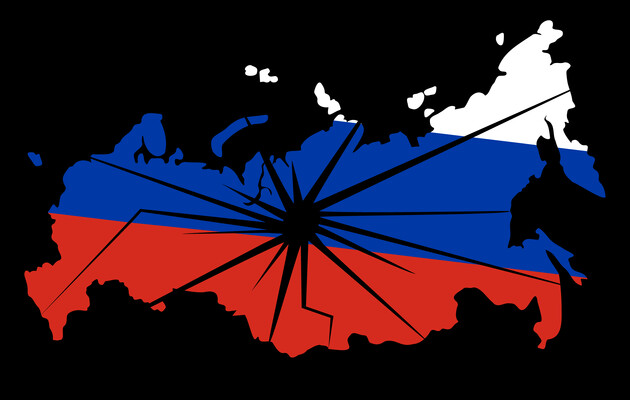
Recently, more and more people have begun to speculate on the topic of the collapse of Russia. The most interesting thing is that both parties do it - both the opposition and the power. Some collect all sorts of forums of free peoples in Warsaw, while others scare people that if Russia loses the war, then the country will fall apart. So can this really happen? In this article we will try to figure it out.
USSR 2.0 (no)
To begin with, it would be nice to figure out where such thoughts come from in principle. As you could guess from the name of the chapter, the legs grow from the collapse of the USSR. A simple parallel - if, after a series of disasters, the USSR fell apart, then Russia will wait for the same thing. But if you look more carefully, it turns out that the Russian Federation and the USSR are fundamentally different things. The USSR consisted of 15 republics, which, although formally, had the right to exit, which means the opportunity to be recognized by the international community. Moreover, many of them had prerequisites for the formation of full -fledged states. Some had a partial, but international subjectivity, like Ukraine and Belarus (the Ukrainian SSR and the BSSR had separate places in the UN). Others had the experience of statehood to the USSR, like Armenia and Georgia. And some had both the Baltic states, the occupation of which the world community did not recognize. In addition, most of the republics of the USSR had one dominant ethnic group inherent in this area, which only strengthened the centrifugal forces. All of the above cannot be applied to Russia. Russian regions have neither international subjectivity nor experience of statehood. In addition, despite the fact that under the Constitution of the Russian Federation there is a multinational state, in practice this is not at all. 80% of the population of Russia make up Russians, and even in the national republics, Russians make up a large share of the population than the titular nation of this republic. In such conditions, no centrifugal forces in Russia simply cannot arise.
But there is one nuance ...
But as in any situation, there are exceptions. Of course, we are talking about the North Caucasus. But even here everything is not so obvious. An example of Chechnya and what happened there is not at all so contagious as it seems. An example of this is Ingushetia. In the days of the USSR, Chechnya and Ingushetia were a single subject-the Chechen-Ingush Autonomous Soviet Socialist Republic, and after their separation of Ingushetia is not at all on the desire to be absorbed in Chechnya. An example of this is a case several years ago, when Kadyrov wanted to clarify the border with Ingushetia in his favor, which caused a protest from the Ingush. Finding in Russia gives Ingushetia a certain protection against the influence of Chechnya, and they do not want to lose this protection. Another Republic of the North Caucasus is North Ossetia. Most of the population of this republic is Christians, and in order to maintain a balance with Muslim neighbors, she also prefers to remain in Russia. The last three republics that are worth mentioning here-Karachay-Cherkessia, Kabardino-Balkaria and Dagestan. Each of them has an extremely complex national composition, and this constantly causes conflicts. And the federal government is engaged in the decision of these conflicts, although not always successful. The department from Russia can cause interethnic conflicts that no one wants. And in general, in addition to the problems of each individual republic, there are also general ones. The first - the republics of the North Caucasus are extremely dependent on subsidies from the center, and their separation may end by the fact that pensions and salaries of state employees will literally cease to be paid. And the second is a negative example of Chechnya. After she declared independence, Islamic radicals came to power in her. And the inhabitants of the North Caucasus still want to live in a secular society, and such a prospect does not attract them at all. Summing up, we can say that the example of Chechnya is far from as contagious to her neighbors as it might seem, and that the prospects of the department of the North Caucasus are very doubtful.
And what about Tatarstan?
Another region to be attributed to the prospect of the department. Unlike Chechnya, after the collapse of the USSR with Tatarstan, he managed to agree - he was provided with a wide autonomy, which is largely observed to this day. In principle, if you have ever been to Tatarstan, you could notice that in general, the standard of living there is higher than the average in Russia, including higher than neighboring regions. But this is not even the main thing. To build successful statehood, an economic base is needed, and it needs foreign trade. Tatarstan does not have access to the sea (like most regions of Russia), so the department will put it in economic dependence either on Russia or on other states. And this, as you know, does not contribute to the construction of an independent state.
And what's next?
We have already mentioned the lack of access to the sea in most regions of Russia, as well as the lack of international recognized borders of these regions, but this is not the most critical. Many regions of Russia are closely intertwined with each other, and collapse can lead to a huge number of problems. For example, power plants located in the same region can serve others, or the road between the villages of the same region can pass through another. Within the framework of one country, this is not a big problem, but if the regions become separate countries, then this will become a problem, and serious. And this is not to mention the problem of reaching the sea, which we mentioned earlier.
Eastern "partner"
In the event of new states in Russia, the question of their foreign policy will inevitably arise. And not everyone was lucky here. If the regions of the European part of Russia in theory could become small states and take a course to join the EU and NATO, as the Baltic countries did, then with the regions on the other side of the Urals it is increasingly complicated. Next to them is China, which is not at all used to ceremony with its neighbors smaller. It’s not just that for a long time there have been talk that China put his eyes on the Russian Far East, and it will not be difficult for him to turn the conditional independent Amur region into a new Xinjiang. And the inhabitants of the Trans -Urals understand this perfectly - having talked with them, you can find out that they do not have a desire to fall into the area of influence of China, namely, this will lead their separation from Russia.
Results
All conversations about the decay of Russia have no soil, and are nothing more than speculation. And this is at best. No matter what views the speaker, speaking of the collapse, he promotes the next narrative - "if Russia loses the war, then it will break up." I think it is not necessary to explain to whom this narrative is beneficial and who has been extinguishing it for a long time.