
Translated material
Protests in Tbilisi: how it was
On March 8 and 9, mass protests were held in Tbilisi against the adoption of the Law on foreign agents. The law was nicknamed “Russian” because of its similarity to similar repressive law in the Russian Federation, which is used to persecute dissent members of civil society and independent press. In addition to negative associations, the adoption of the law would affect a lot of Georgians, since many truly useful projects in various fields of the country are completely or partially funded by the European Union, or other foreign funds and organizations.
The collage of the drone
In protest on March 7 and 8, people seemed to splash out all the accumulated anger at the ruling party "Georgian Dream", Prime Minister Irakli Garibashvili and the oligarch Bidzina Ivanishvili , the creator of the ruling party and the former Prime Minister of Georgia, who is called the "secret ruler" due to his enormous influence on Georgian politics.
The protests ended with the fact that the authorities lost the requirements of civil society and Western officials, and withdrew the law on foreign agents.
March 7
On this day, the parliament took place in the first reading of the bill and small protests, grew into a truly massive manifestation on Rustaveli Avenue. The action was peaceful, different speakers performed. I perceived what was happening as a turning point in the history of Georgia. In my opinion, accept the law on foreign agents, then new repressive laws would follow this. So it works and just like that, even if “hybrid”, but democracy, turns into an authoritarian regime.
By the time of the end of reading the law, my girlfriend and I arrived at the scene. Everything was calm, people talked with each other, because for many Georgians a protest rally is an event where you can express their civic position and meet friends to spend time together.
At one point, everything fell silent, because they made a decision in parliament. The law was adopted in the first reading and an angry crowd, learning about this, headed along the side street to the entrance to the parliament building, carrying a huge Georgian flag on her. There, police officers with shields and batons, behind which stood a vodomet. Seeing this, I realized that the case was taking a serious turn, and began to look for a place where it would be convenient to remove what was happening.
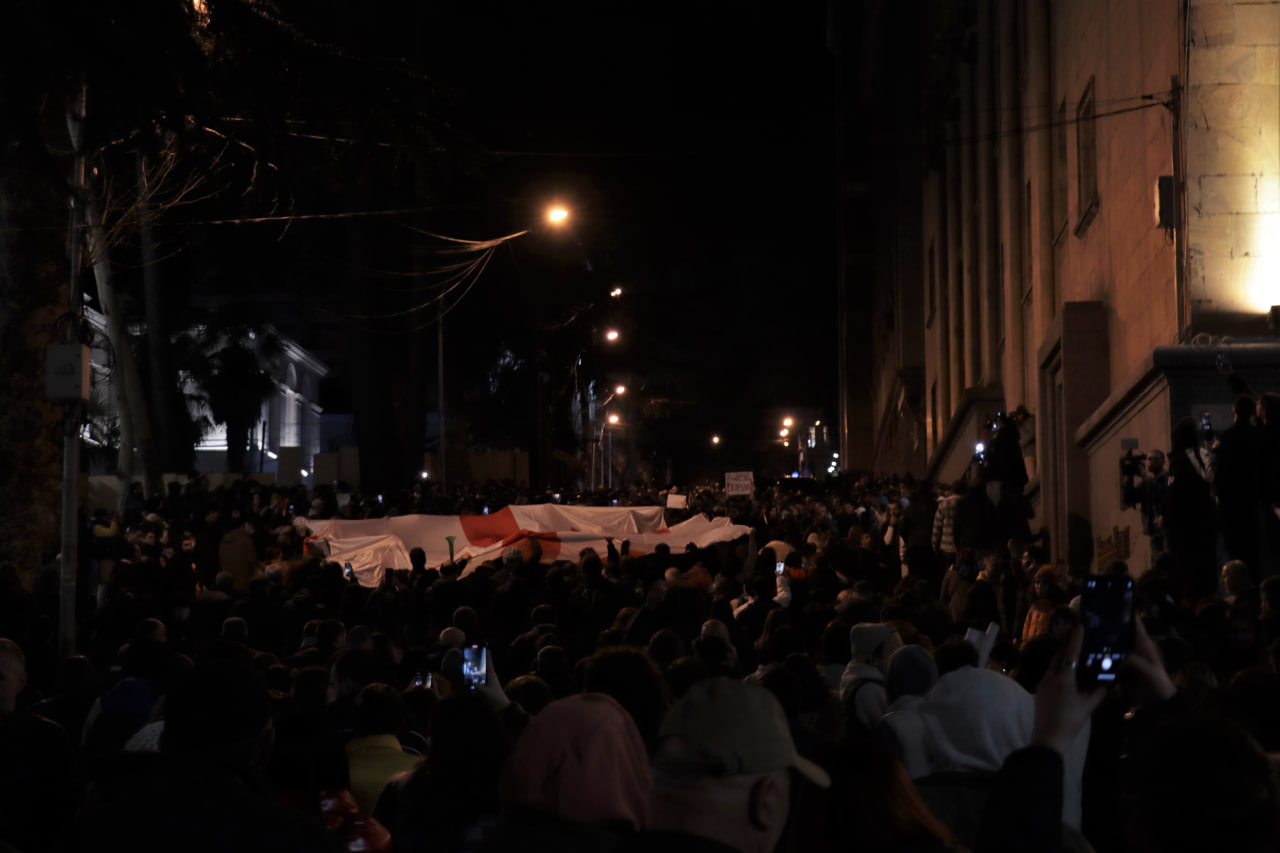
At that moment, I was even a little happy that the protest would not be peaceful. The fact is that the Georgians entered the protest against the ruling party all year-for example, when, due to its decisions and sharp statements, Georgia did not receive the status of the candidate members of the European Union. Each time, people promised powerful protests (almost a revolution!), But the next day, on Rustaveli Avenue, it was calm again.
It seemed to me that the Georgian civil society has come to terms with the fact that the power leads the country into the arms of the Kremlin, instead of the European Union. The same opinion was my girlfriend, who has been living in Georgia for several years. According to her, she never met someone who would sincerely support the "Georgian dream." Either state employees or those who just want stability vote for it.
I also associated the passivity of civil society with the fact that the Georgian memory is still fresh in the memories of the "night of Gavrilov" on June 20, 2019, when the performance in the Georgian parliament of Russian deputy Sergei Gavrilov caused fierce protests on Tbilisi streets and the requirements for the resignation of the "Dreams" government. The police brutally suppressed the action with tear gas and rubber bullets. 160 people were injured. A girl who lost her eyes from behind a rubber bullet became a symbol of those protests. But on the night of March 7 to March 8th, looking at the protesters, boldly carrying the flag on the street, cordoned off by the police, I realized that a long lull (as well as patience) of the Civil Society of Georgia came to an end.
After several warnings voiced by a polite female voice on a loudspeaker (“Dear citizens, please disperse, otherwise a gas will be used that can damage your eyes and respiratory tract!”) The police began to push people away from the side entrance to parliament. I was worried that in the crush to fall and break the camera, but, fortunately, everything worked out.
Then I saw how the police began to spray some kind of spray, from which the crowd ran. I did not immediately understand what it was (the statement on the loudspeaker was translated by my girlfriend much later, and at that time, the crowd shared us).
[Fancy_gallery Gallery = 0]
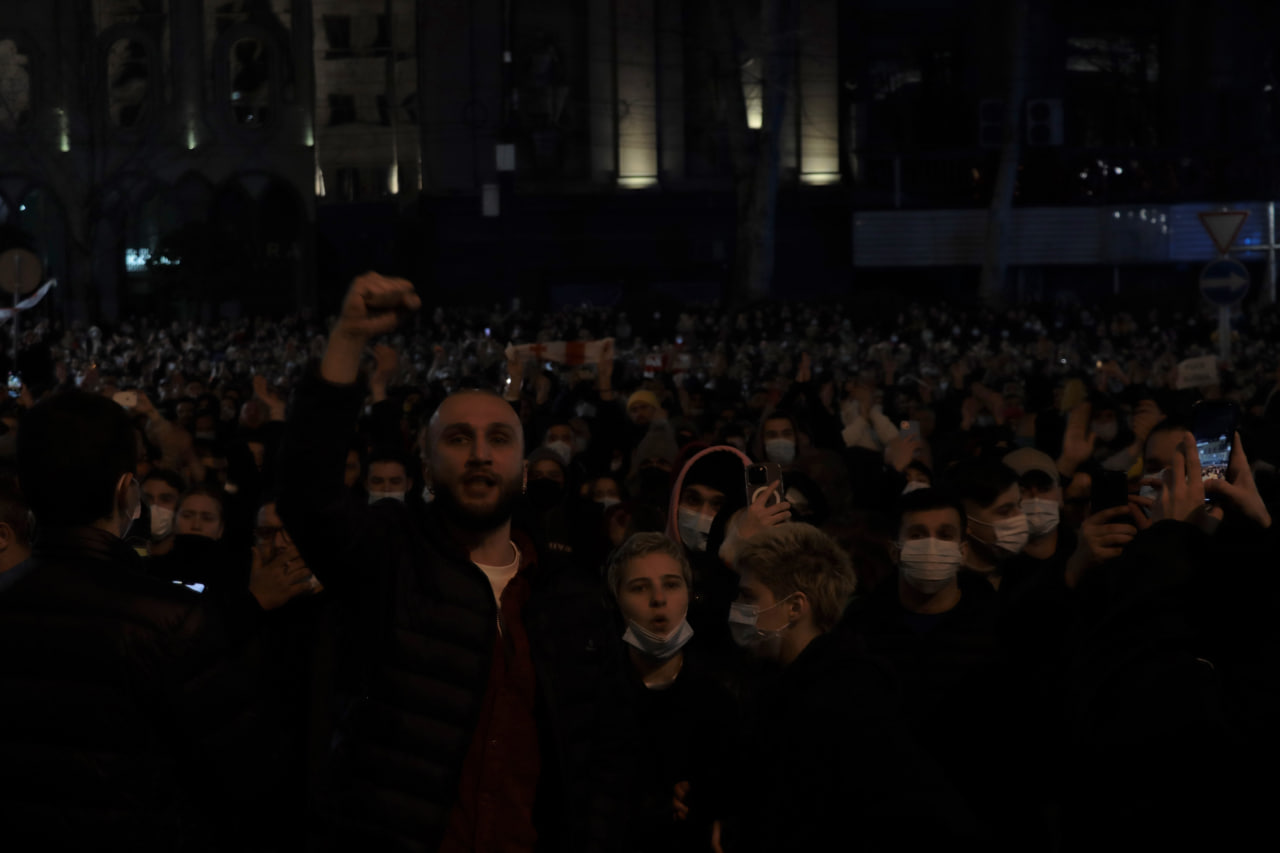
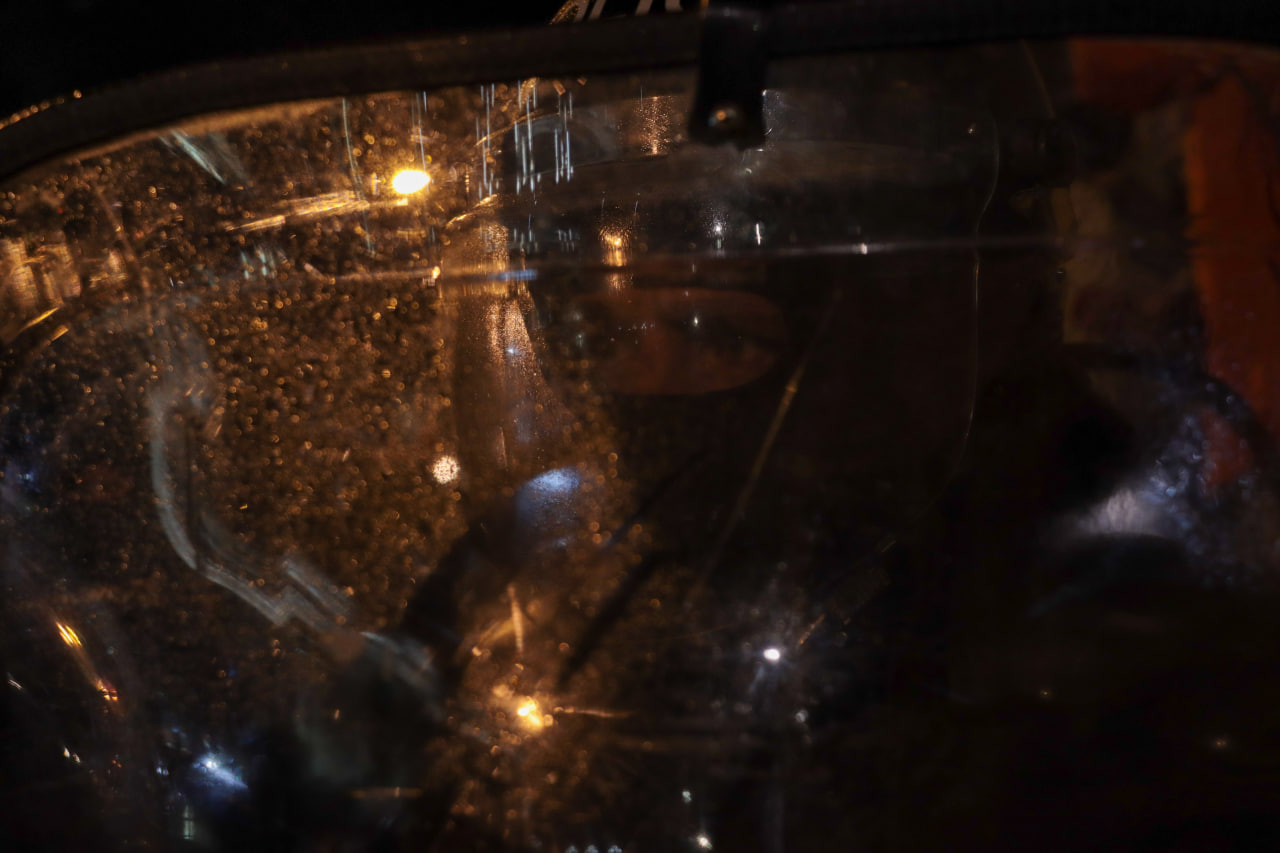
Here it is worth making a reservation that I was not familiar with such instruments of acceleration of the rally. In Azerbaijan, where I came from, due to the small number of opposition and the general depolitization of the population, the protests were not numerous. The only time I saw the waterlets in Baku, they didn’t even have to use them, because the police held up the not very resistant participants with their bare hands.
I suddenly felt my nose and throat cut, I wanted to sneeze, the protesters stood in the front rows, holding on to my eyes, helped some because they did not see anything. Police used pepper gas. People got angry, they shouted insults against the police, accusing them of working in the Kremlin, cursed power and Russia. The bottles flew into the security forces. Those were covered with shields and sprayed pepper gas when the protesters again came too close.
Some stood to the end - even when the system of the police approached them close. For some of these stubborn people, security forces sprayed gas directly in the face, and then delayed. At one point, I was too close to the system of the police and pepper gas fell into my eye and they immediately burned hard. I barely saw where I was going, I wanted to keep my eyes closed. One of the protesters told me that it was necessary to rinse them with water under the street fountain, which was near the parliament. I did this, but it turned out that when contacting water, pepper gas begins to burn harder. Nevertheless, the will of will (and not without the help of a huge number of napkins, which generously shared the protesters with each other), my vision was restored, and I was able to return to the protest.
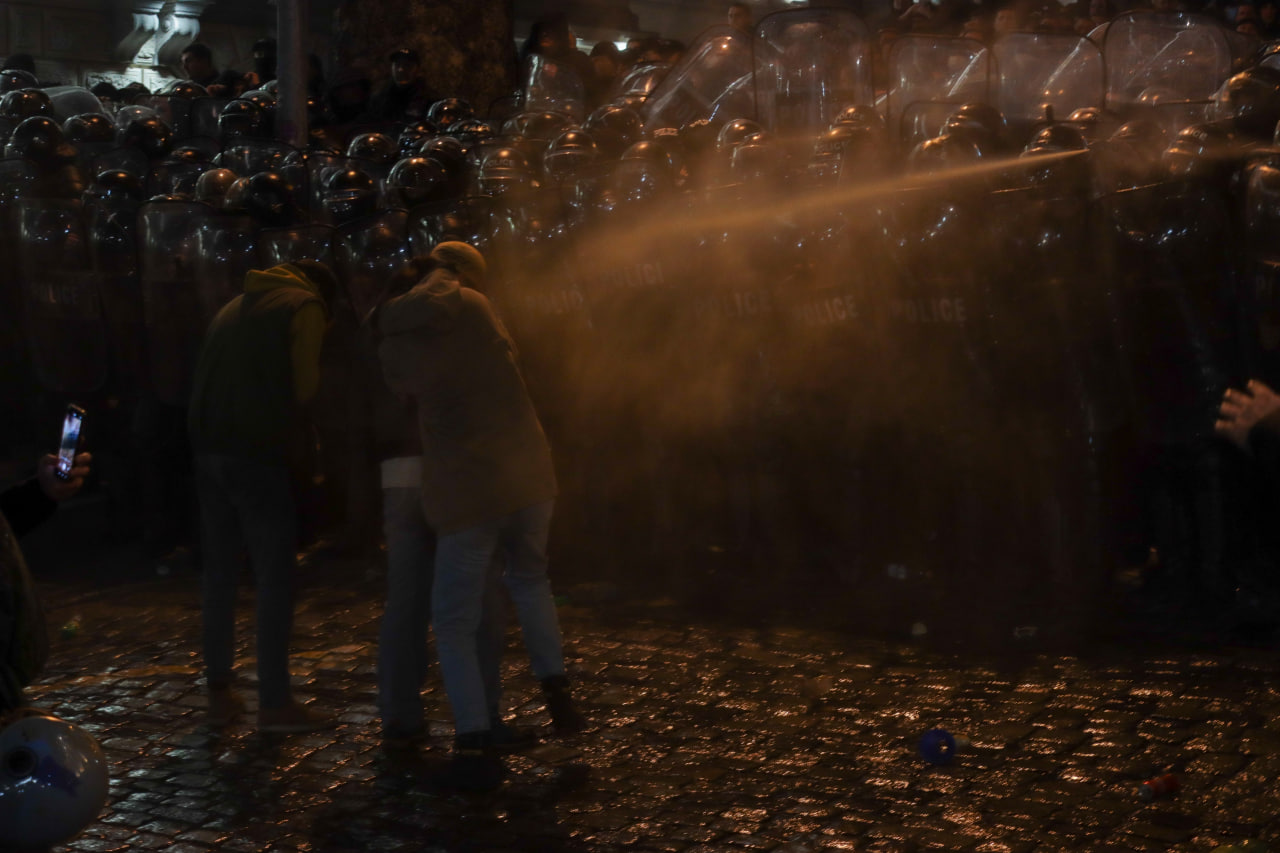
The police squeezed out protesters from the streets adjacent to the parliament on Rustaveli Avenue, but people were not dispersed there. Periodically, the police used waterlets (the water from which, I must say, burned no less than pepper gas - either from the cold, or from the very pepper gas, which, as many participants in the rally said, mixed into the water). Many people scattered, but some stood stubbornly, drunk with curses to the police.
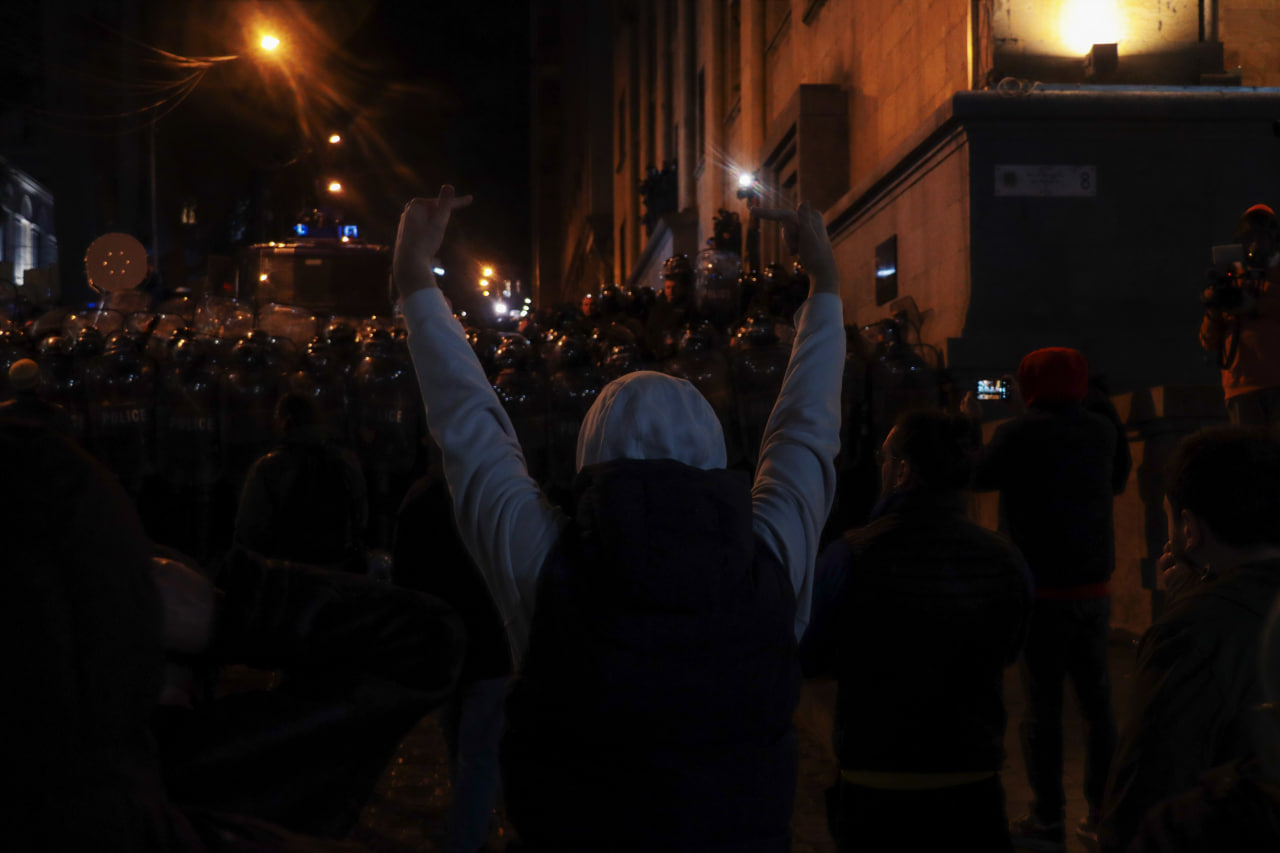
Most of all at these protests I was struck by solidarity and mutual assistance. Protesters helped to leave "to the rear" for those who were breathing gas, people walked around the crowd and handed out medical masks (which, alas, helped little), water and napkins. Ambulance teams were on duty on the avenue, where the victims could turn.
[Fancy_gallery Gallery = 1]
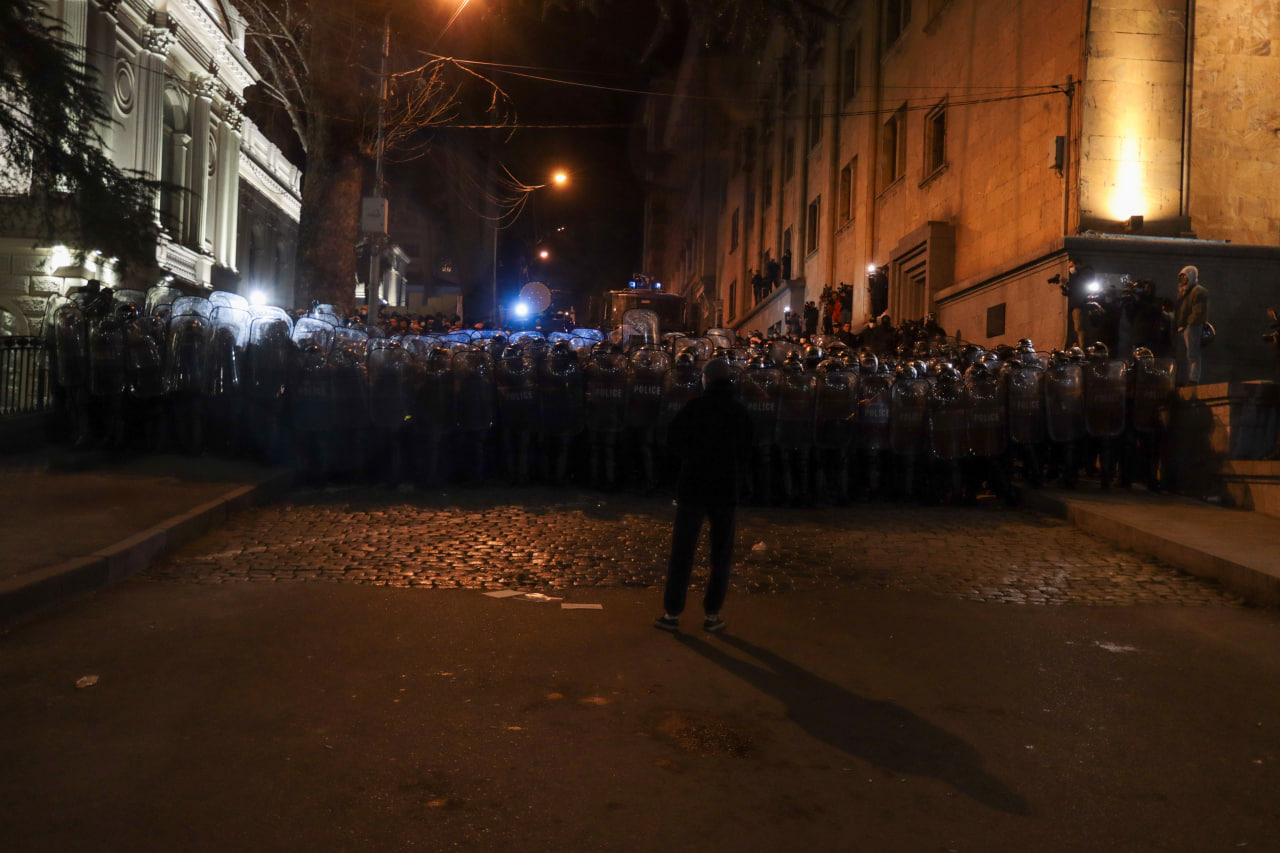
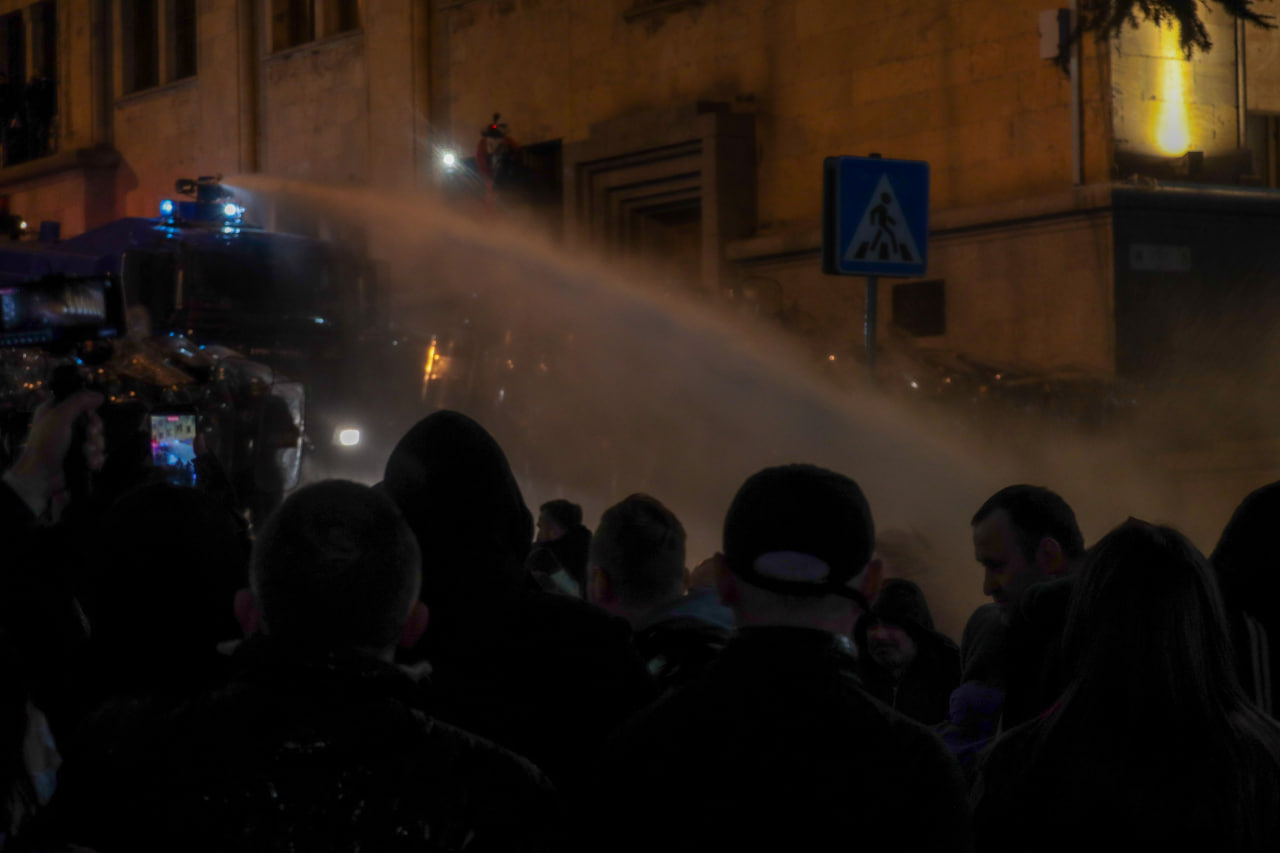
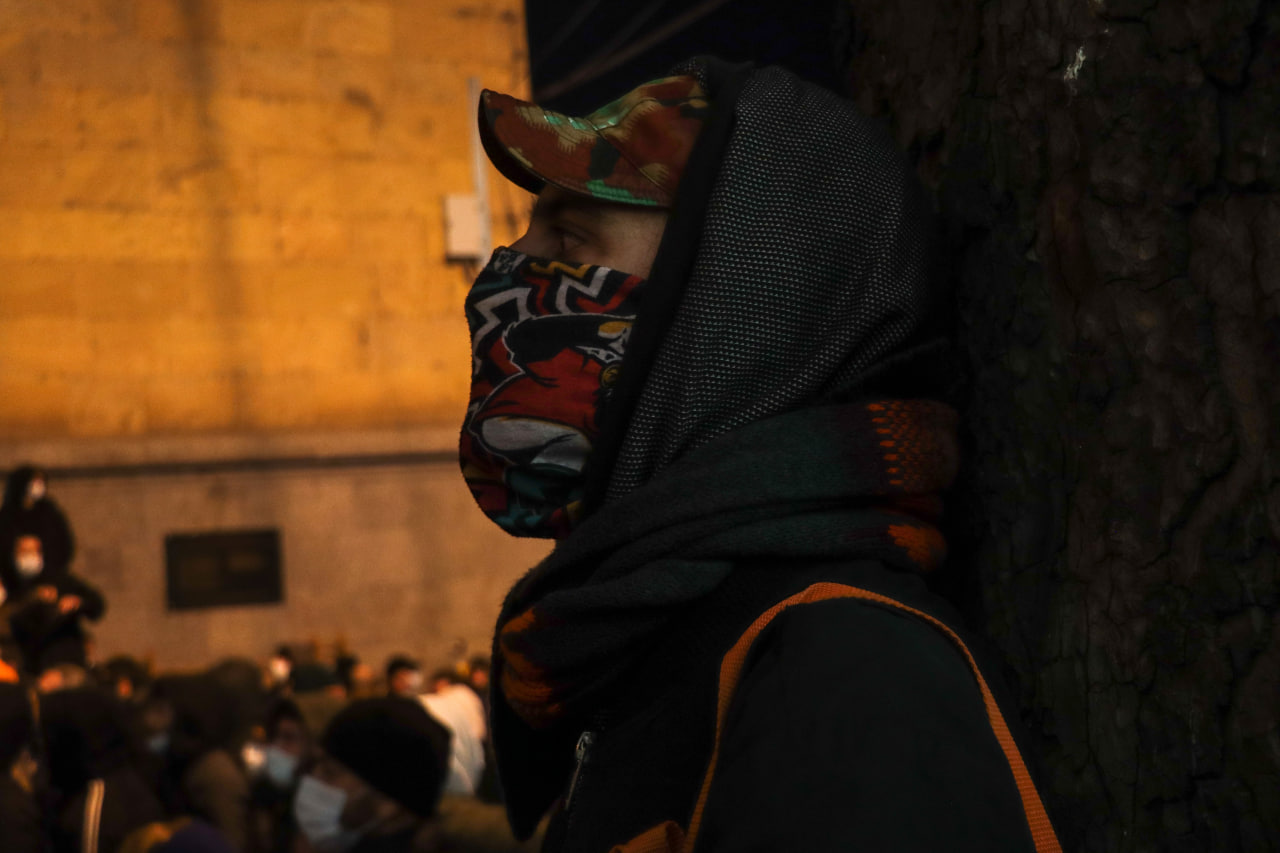
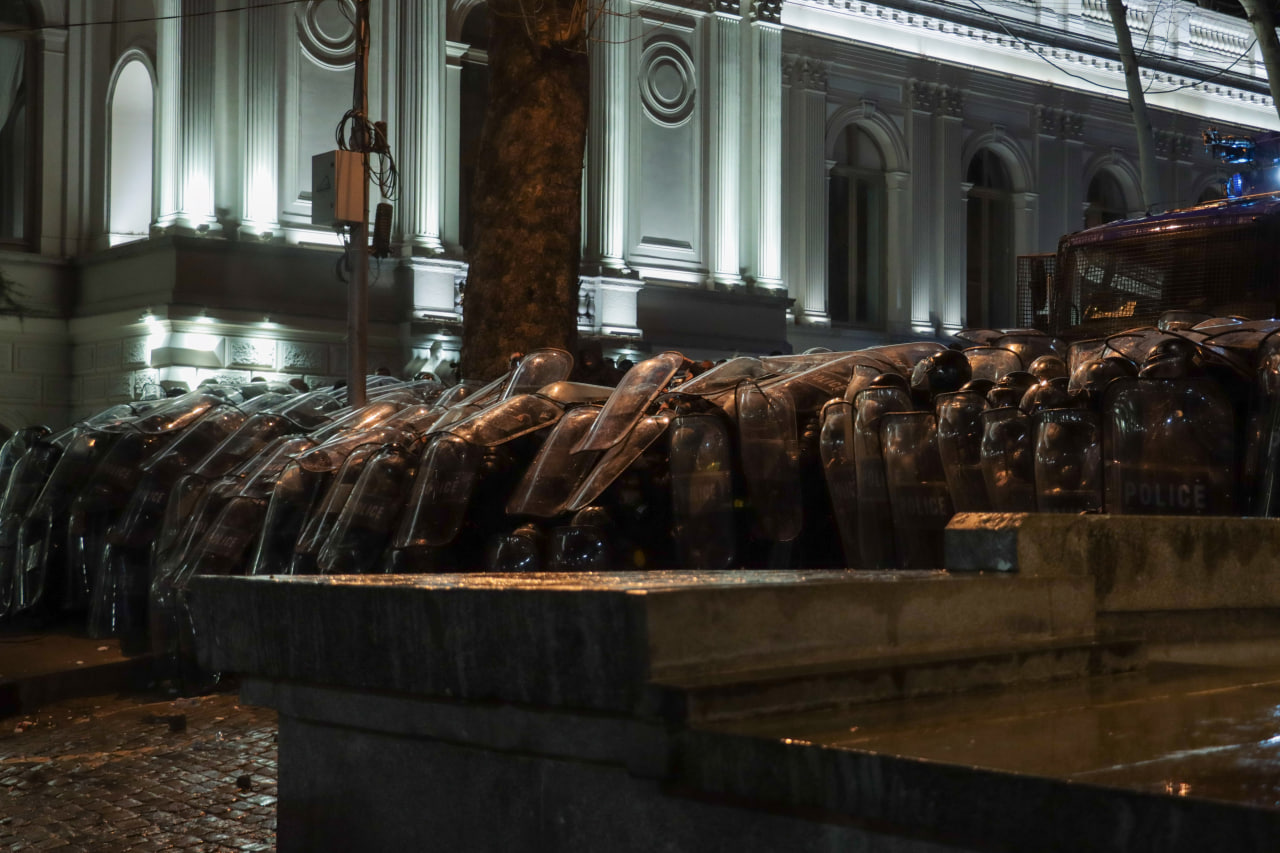
After staying at the protest for some time, we decided to go home. It seemed that nothing would happen else, and people would disperse. The protest ended that people tried to break into the parliament from the main move, but they were met with water from fire hoses. After some time, numerous police detachments arrived on the avenue and, with the help of grenades with tear gas, dispersed the protest. I watched the dispersal in the direct broadcast of the Opposition TV channel "Formula" and thought - "Is it all?"
March 8
For a long time, the opposition, which is represented here by various parties and movements, did not announce new promotions and it seemed that there would be nothing more, but in the morning of March 8, there were reports that a new action was planned at the parliament. Women and girls arranged a march dedicated to both the requirement of gender equality and the new law on "foreign agents". The protesting motorbike was arranged by courier delivery workers. In the future, people in jackets with the symbols of local delivery services often flashed among protesters. All these actions and marches then moved to the general protest at the parliament.
We were not sure that there would be something serious and decided to wait. We went when the opposition presented the Ultimatum to the authorities: if within an hour they do not declare the recall of the Law on Ino -Agents, then the protesters will move on to "radical measures". We arrived at Rustavel when the announced hour was already drawing to an end.
[Fancy_gallery Gallery = 2]
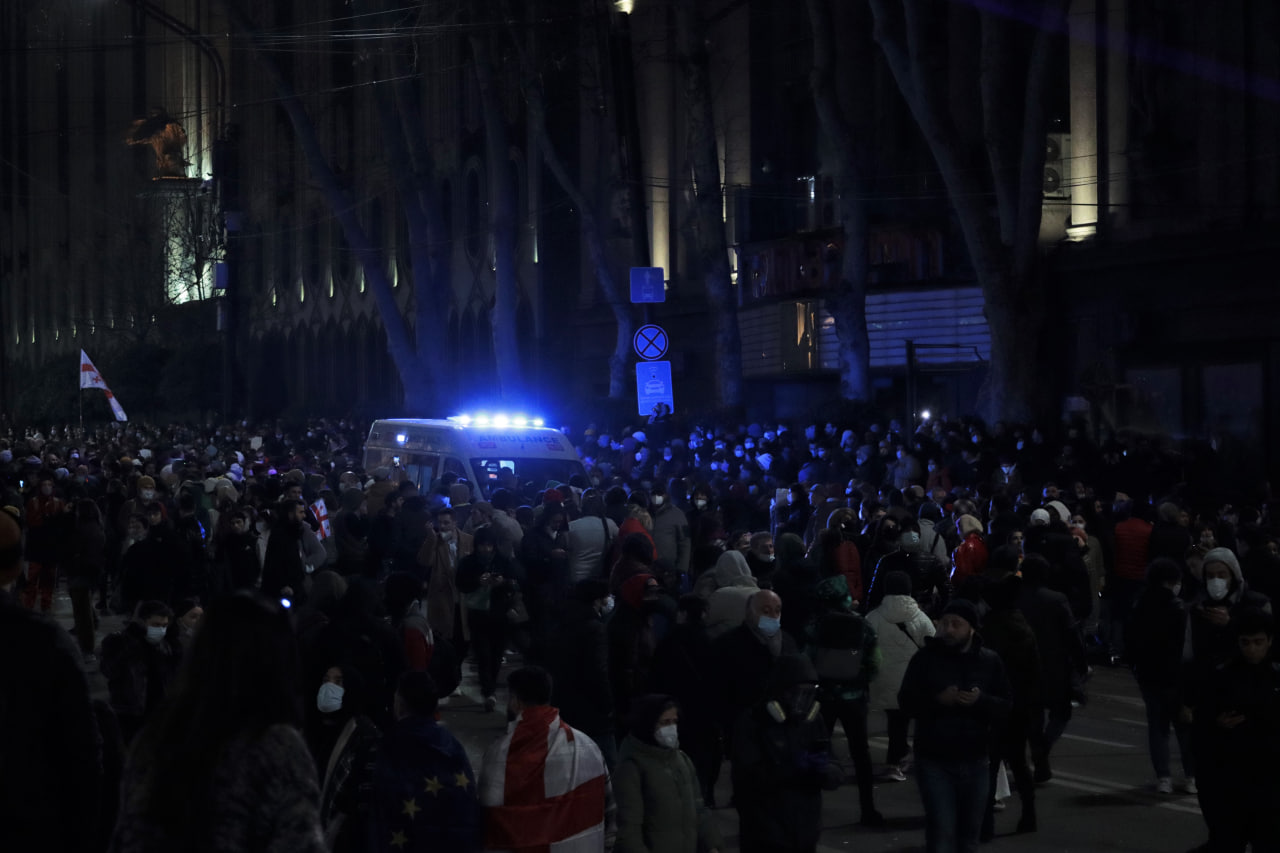
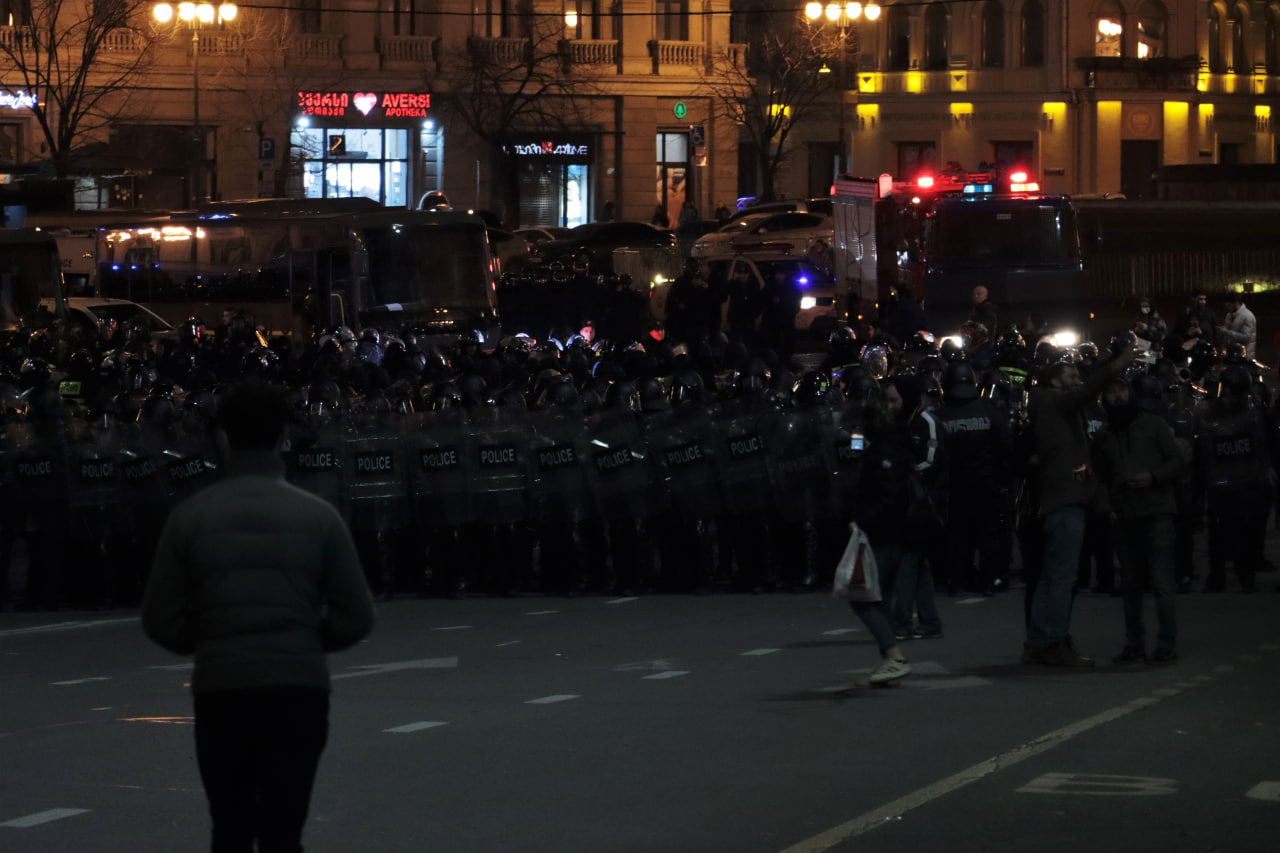
There were much more people at the protest-more than two to three tens of thousands, as the media wrote. The authorities responded to the ultimatum of the opposition: I saw how a large number of police officers in helmets with gas masks and shields arrived at the end of the street.
My girlfriend needed to write down the plot about the protest for the Israeli television channel, so we settled down at some distance from the parliament - right in the center of the blocked Rustaveli Prospekt. Far in front, protesters tried to break into the parliament, to which the police responded with grenades with tear gas. Against the background of the smoke swirling in front of the smoke and crowds of protesters, we decided to record the video.
While we were shooting, the police moved to the acceleration of the rally. Grenades spraying thick smoke began to fall next to us and the crowd ran. It became impossible to breathe sharply, his eyes began to burn. We stopped shooting and almost to the touch ran with the crowd. So we met with tear gas. A very unpleasant thing in comparison with which even pepper gas, which was used the day before, began to recall with some warmth.
One of the protesters stopped and began to water our faces to help rinse his eyes. Seeing that we continue to stand among the smoke, he told us that we need to leave this place as soon as possible. Together with the crowd, we went to the adjacent street.
[Fancy_gallery Gallery = 3]
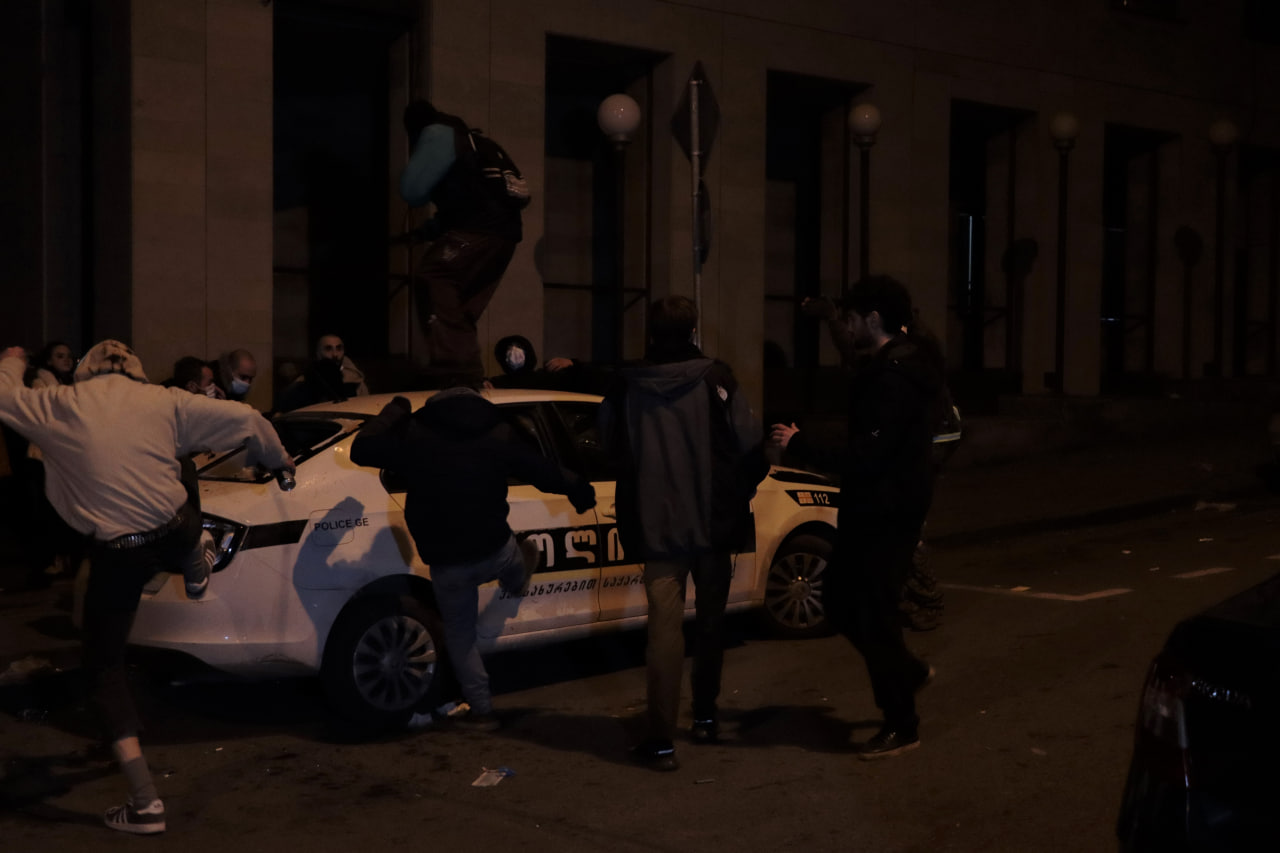
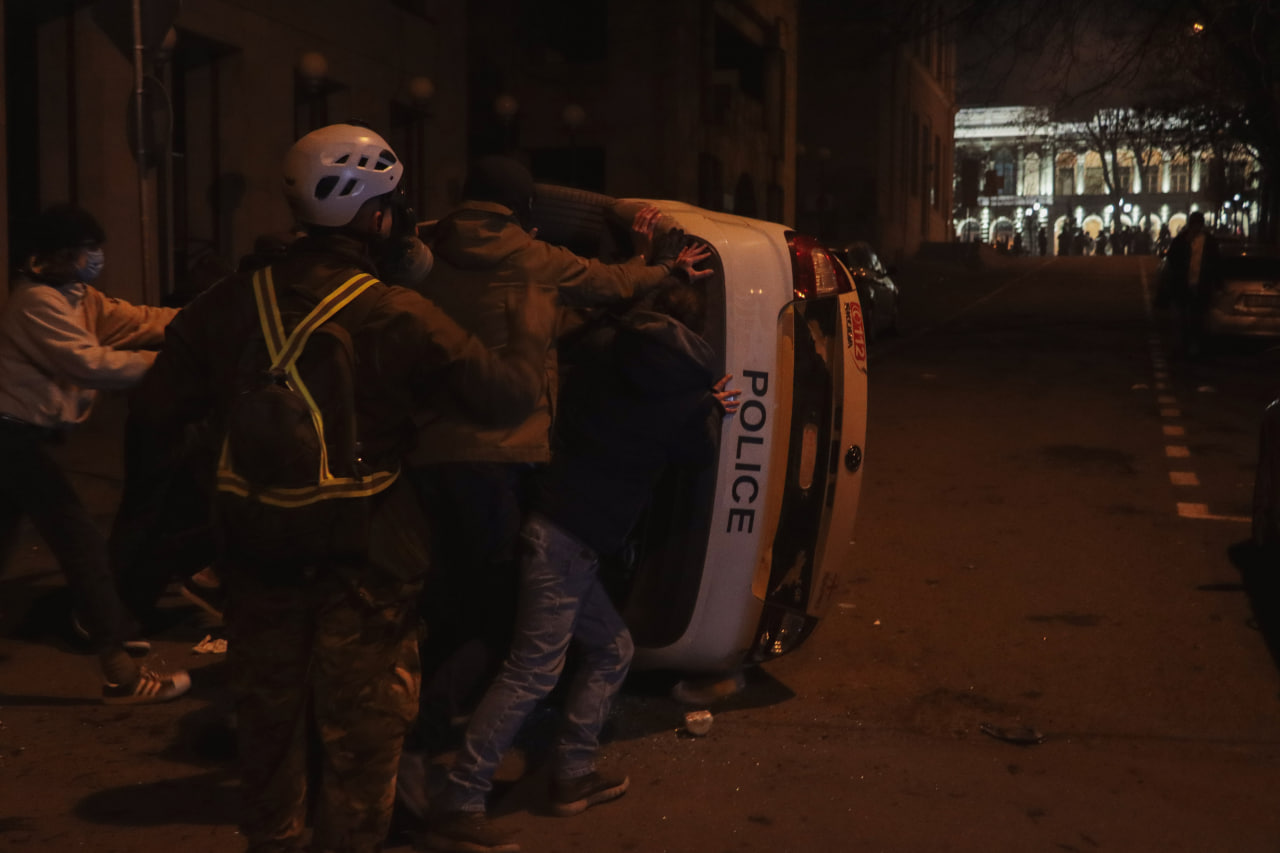
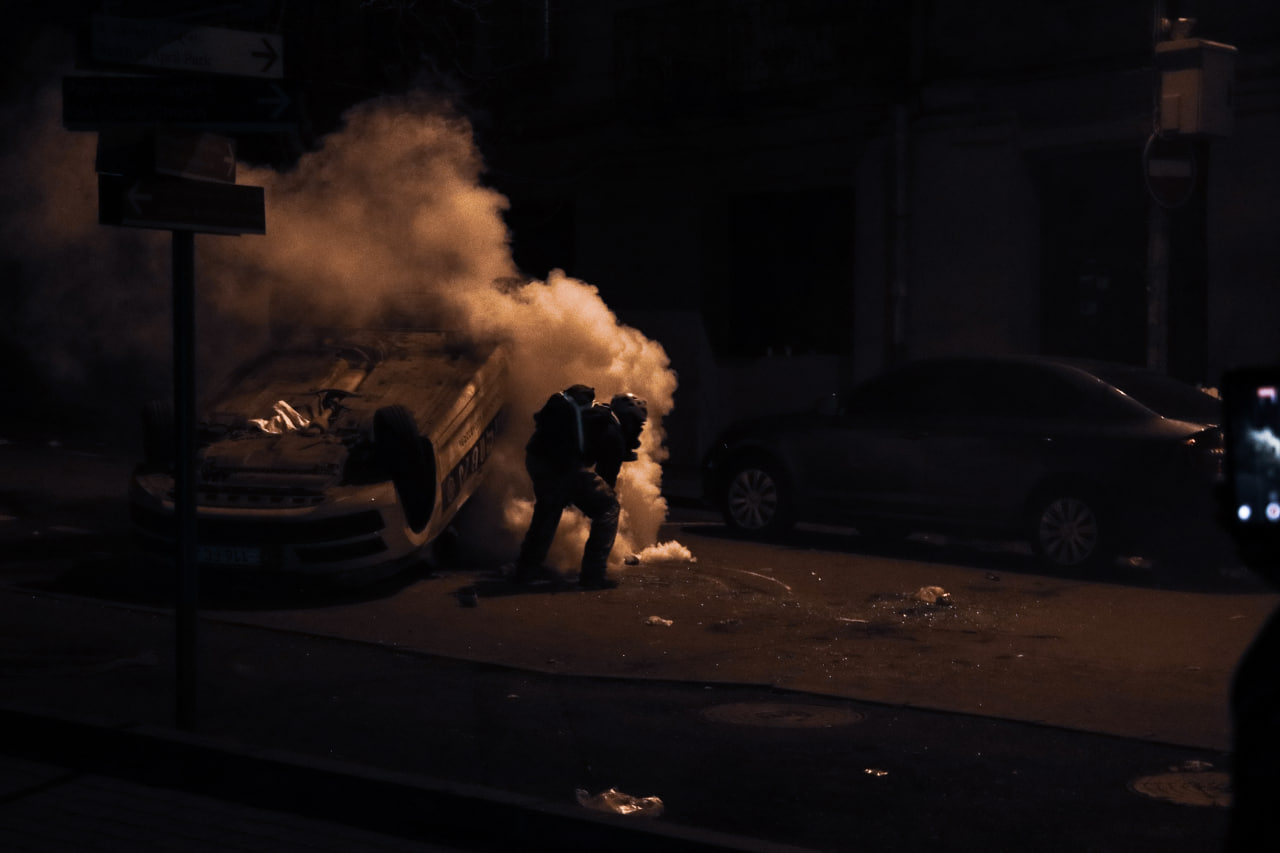
Having come to our senses, we went to see what is happening. The protesters found a police car, began to smash it, and then turned her over before the security of the security forces at the end of the street. The police waited for the car to gather more angry protesters who continued to pour curses to them, and then began to shoot grenades with gas. One of these grenades with a deafening ringing hit the wall of the house next to my head.
One of the protesters shouted something to me that probably meant "run." I ran. This day was again marked by widespread support and mutual assistance. People shared with each other napkins, water, helped to lead the victims from the smoke, pumped out those who became ill, gave phones to communicate with friends and relatives. Some bars, tattoos and other establishments announced on their pages that they were ready to cover the protesters and provide them with necessary.
We took comments from people in protest, asked why they were here. The protesters were worried that the law adopted by the authorities affects their life. Someone was connected with work, someone was afraid to lose the opportunity to study at a university. At the protest in general, there were people of all generations - from the elderly residents of Tbilisi to young people, many representatives of which, it would seem, are only interested in the raves. All our interlocutors thanked us very much for covering the protest, although there were a lot of journalists.
Meanwhile, I got the impression that the protest was over. There were few people left on the street, and the square in front of the parliament was under the control of the police.
In the news telegram channels, I learned that some of the protesters are still on Rustaveli, and part-I blocked the track near the house of justice. Here, people blocked the road with garbage tanks and everything that fell by the arm. Protesters periodically climbed into the tanks and read speeches. In general, the people were inspired and was firmly intended to fight to the end. Most motorists, stumbled upon the blockade, not only did not show discontent, but also signed in support of the protesters and calmly unfolded.
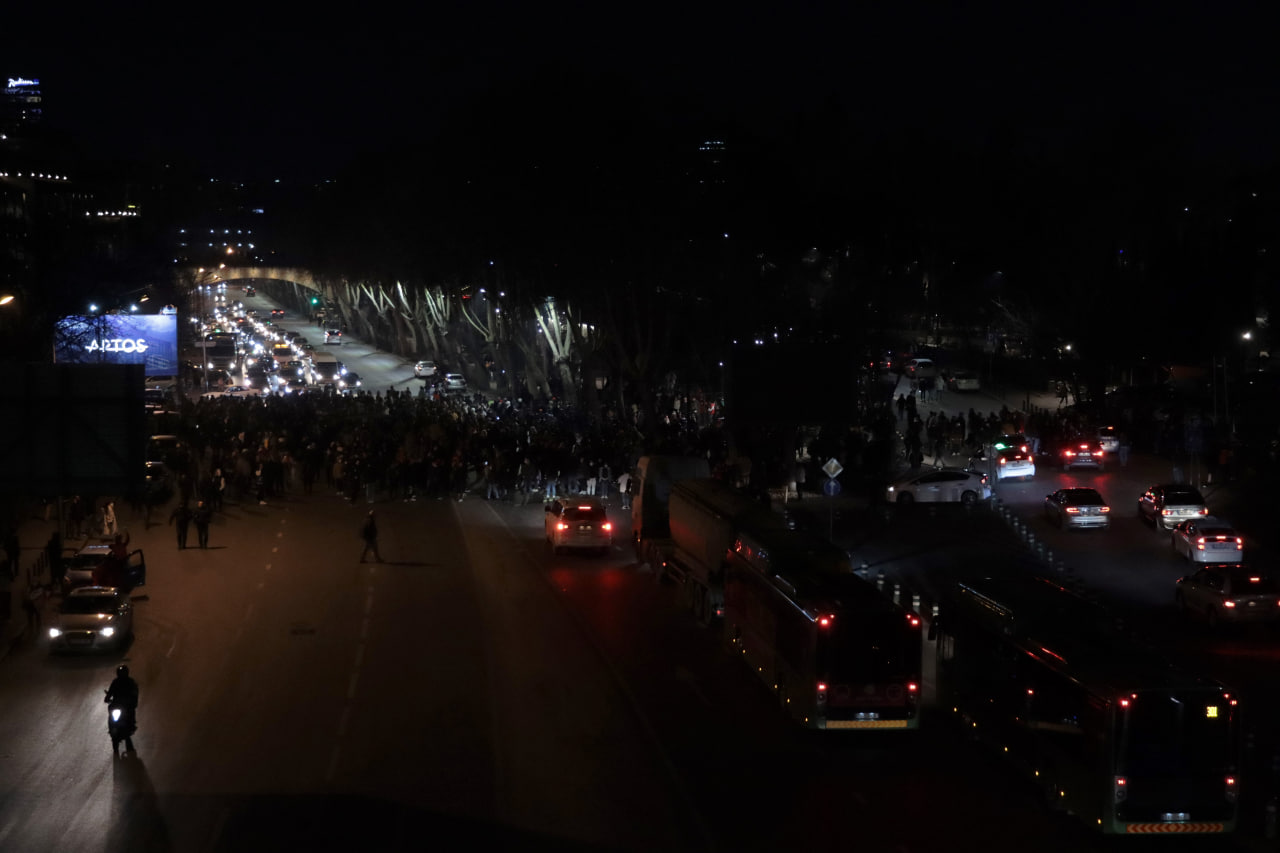
Then, not knowing the exact number of protesters in Rustaveli, I thought that it was good tactics - to get into groups and paralyze the movement in the city, because logistics is in this way. I remembered that they tried to do such protesters in Belarus and at first it even worked, but there, in the conditions of an established dictatorship, an exceptionally peaceful protest was doomed to failure.
In Tbilisi, such difficulties were not needed. Most of the protesters (mainly young people) were still on Rustaveli and blocked the avenue of barricades from benches and tanks with garbage. Passing by the police "Skoda" one of the young people began to beat her with his feet, but the other protester stopped him.
I must say that the assembled people tried to refrain from unnecessary vandalism, although the protesters were different - now and then there were broken glasses at a stop, or water fountains, beating from a broken pipe. Before my eyes, several guys began to break a pillar with road signs, but stopped after the disapproving cries of the protesters.
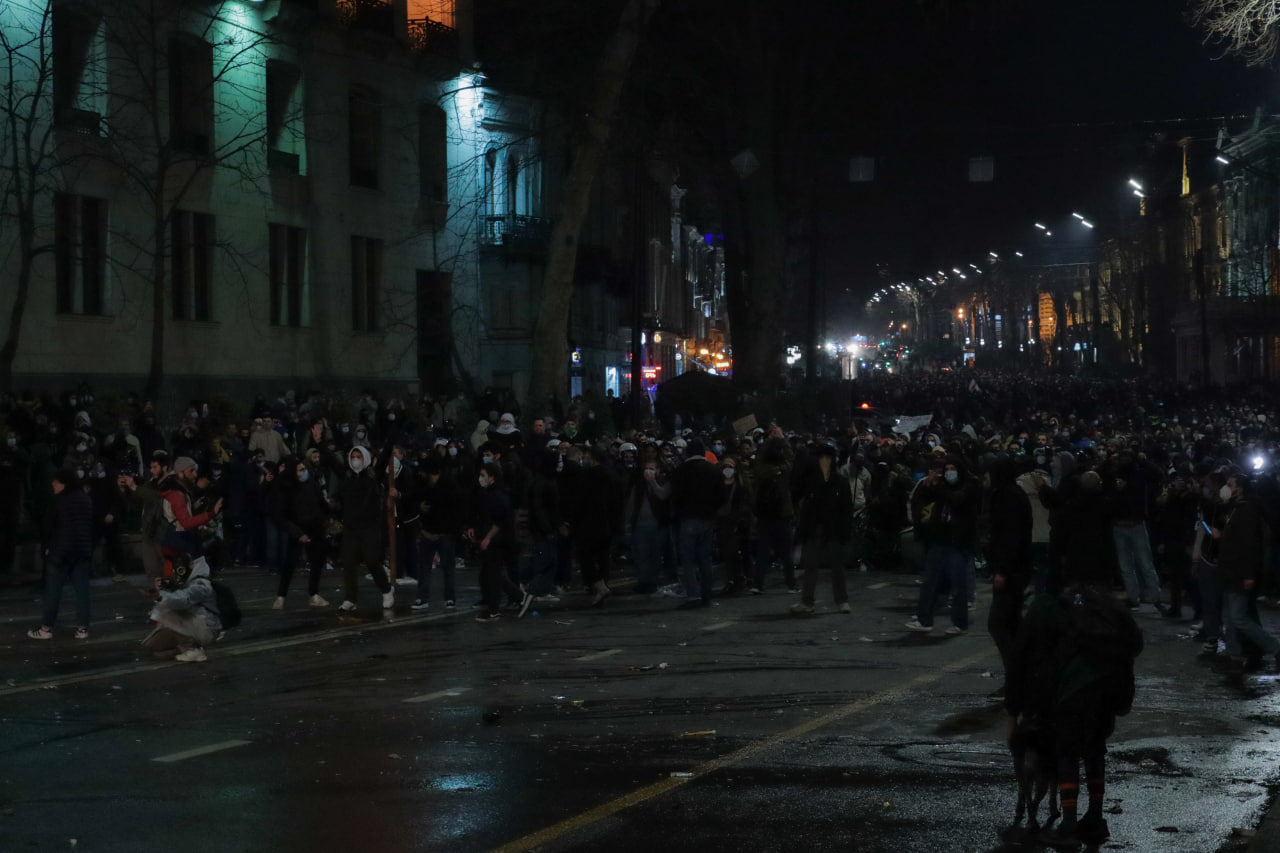
Someone tried to start breaking the fence at the entrance to the parliament before the expiration of the ultimatum, but they were also dragged. During the protest, one of the local journalists was damaged by a car, but the next day on the hood he found a note with an apology, communication to fix a broken headlight and phone number.
Due to such a conscious attitude, the city and private property were practically not injured. "Taped" mainly on the building of parliament and police vehicles.
One of the young people approached the system of policemen with a wooden stick and was clearly going to attack, but one of the elders, in fact, grunting the guy from arrest and possible beating. Periodically, police officers who, with obvious pleasure, "performed their duties" fell into the lenses of the chambers of television channels. Some beat the protesting fists in the face, the other cold-blooded twice sprinkled with pepper gas in the face of the girl when she alone came to their system to say something. By the way, Prime Minister Garibashvili later praised the police for the work done and the “manifested humanity” later.
The confrontation began on Rustaveli, which showed a new side of Georgian protesters for me - perseverance. First, the police used sound installations for overclocking. It was assumed that an unpleasant loud sound should make people scatter. But this amused the young people who, as they themselves said, "listen to this in clubs every day." They went right in front of these installations and began to dance. The police did not include them anymore.
Then the police, standing in the ranks, began to throw a crowd of protesters with lacrimal gas grenades, periodically also using vodometes.
After using tear gas, silence occurred. It was heard only how the journalists who were with me on the pedestrian part of the street were talking. The light of street lamps penetrated the smoke that was creeping along the road.
The smoke scattered and the street was empty, but soon the silence was violated by the cries and slogans of the protesters, who again flocked to the place where they had recently been driven away. They frankly chuckling at the police, threw bottles, stones at them, threw back grenades, which were already poisoned by the security forces themselves, not all of whom were issued a saving gas mask. Many ministers of the law themselves had to relax on the benches at a distance. This was repeated many times.
[Fancy_gallery Gallery = 4]
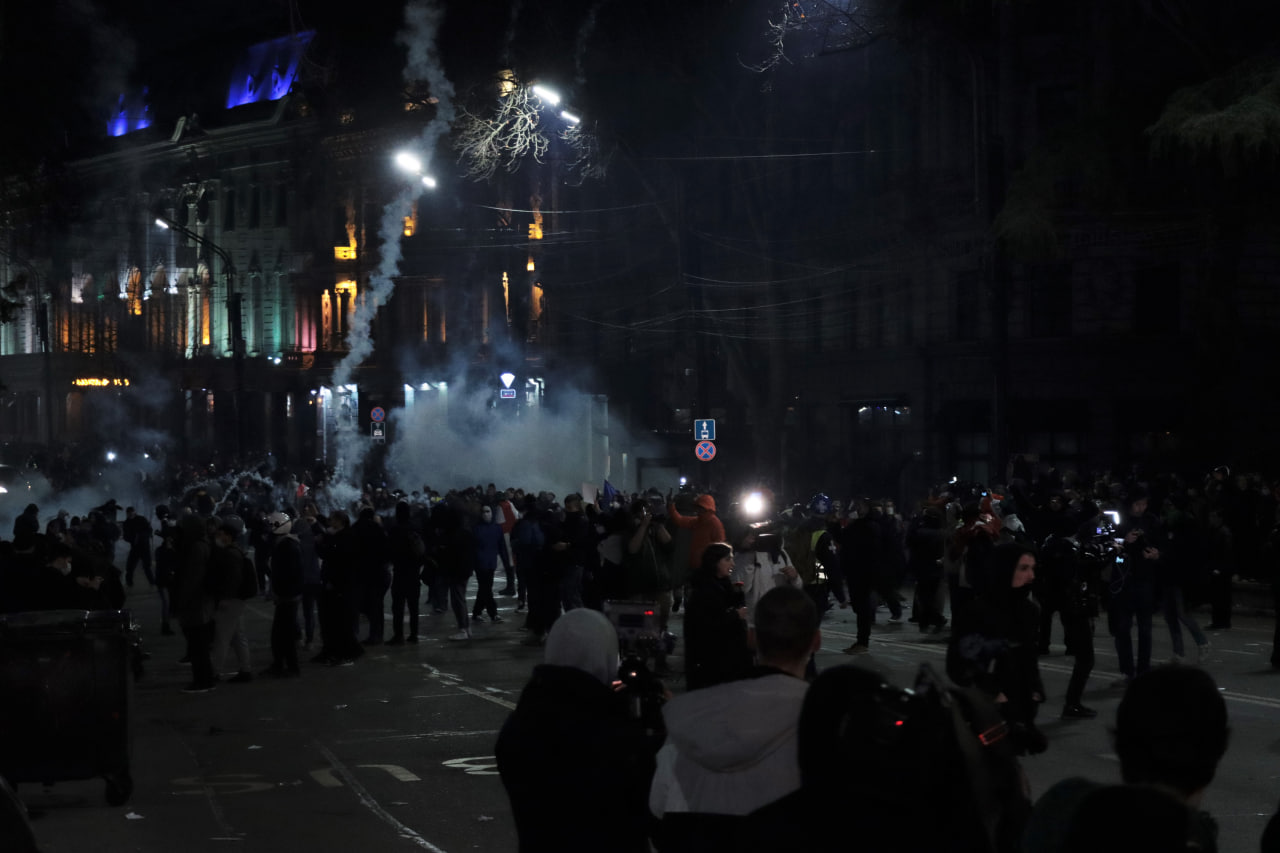
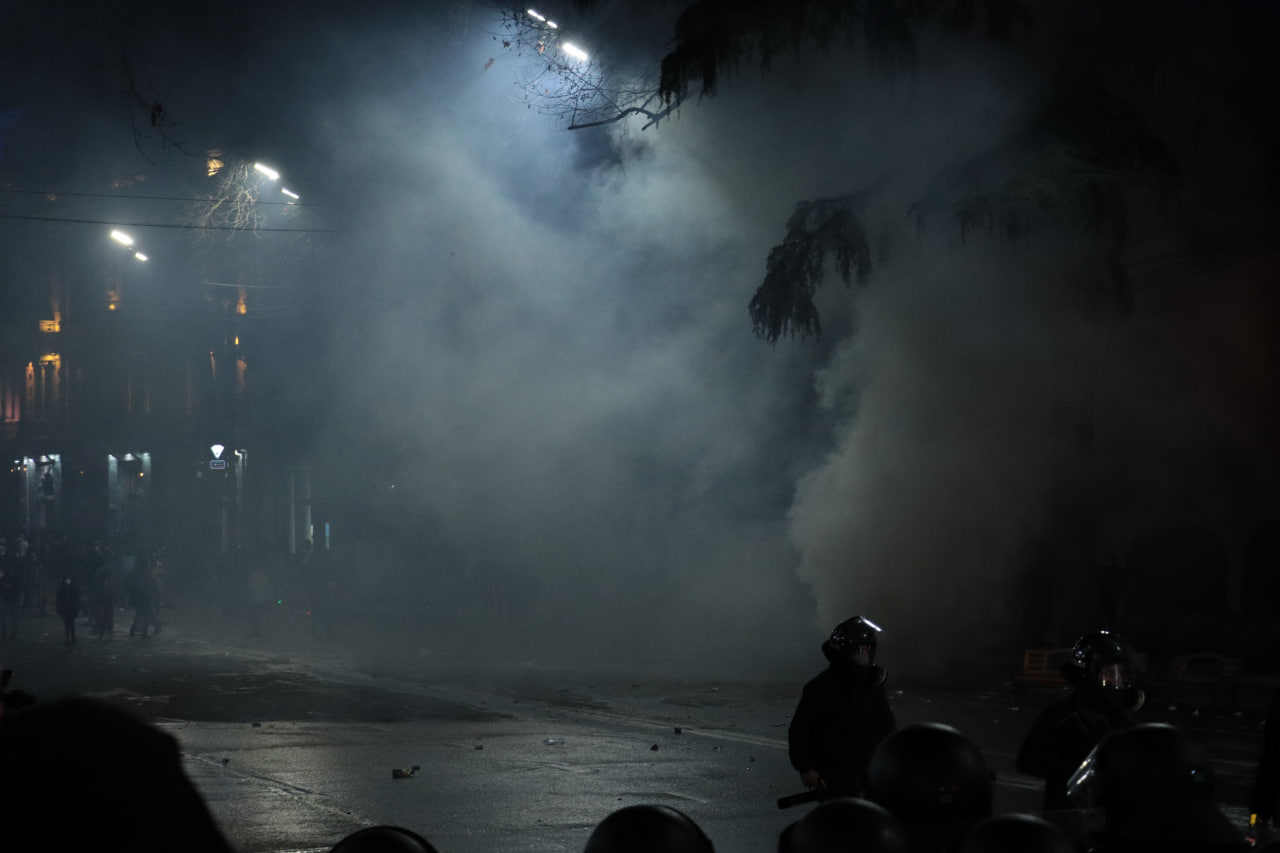
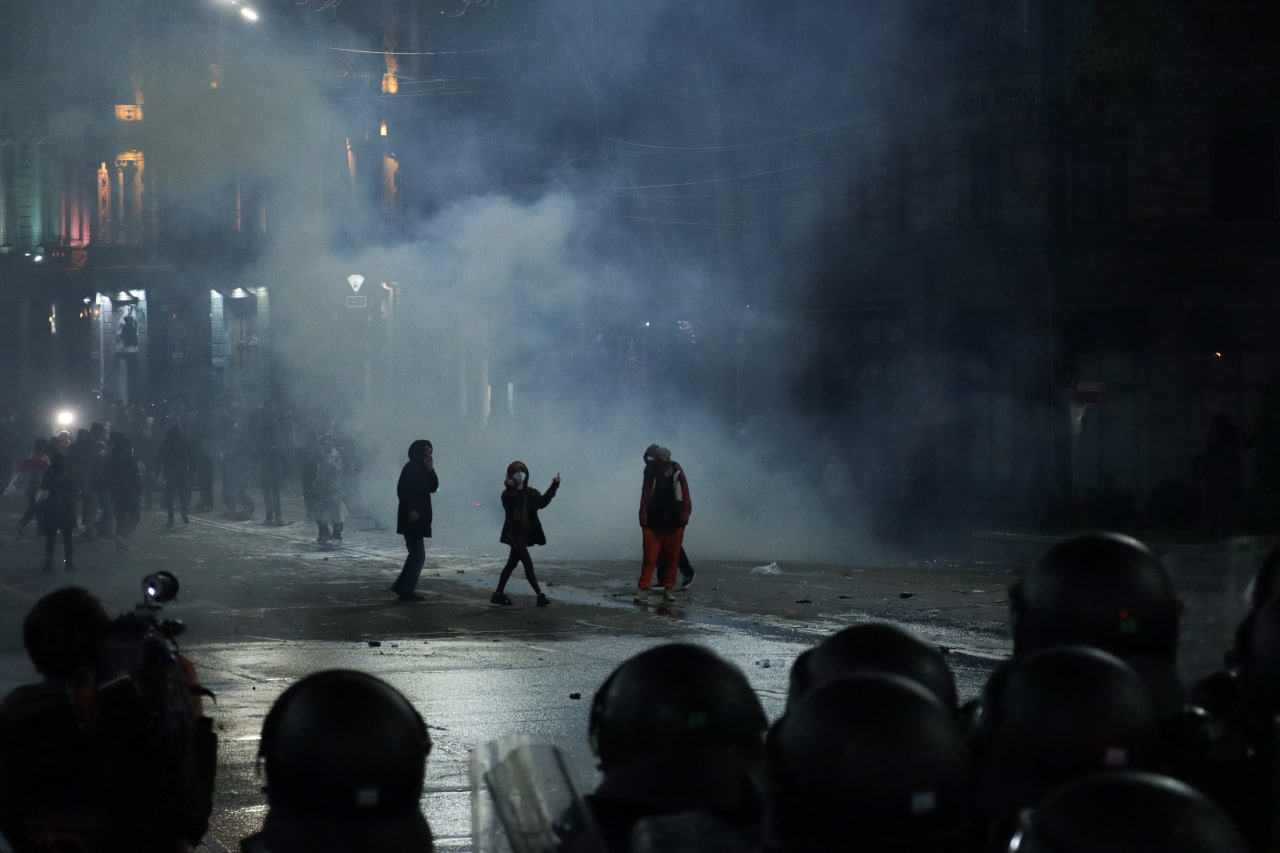
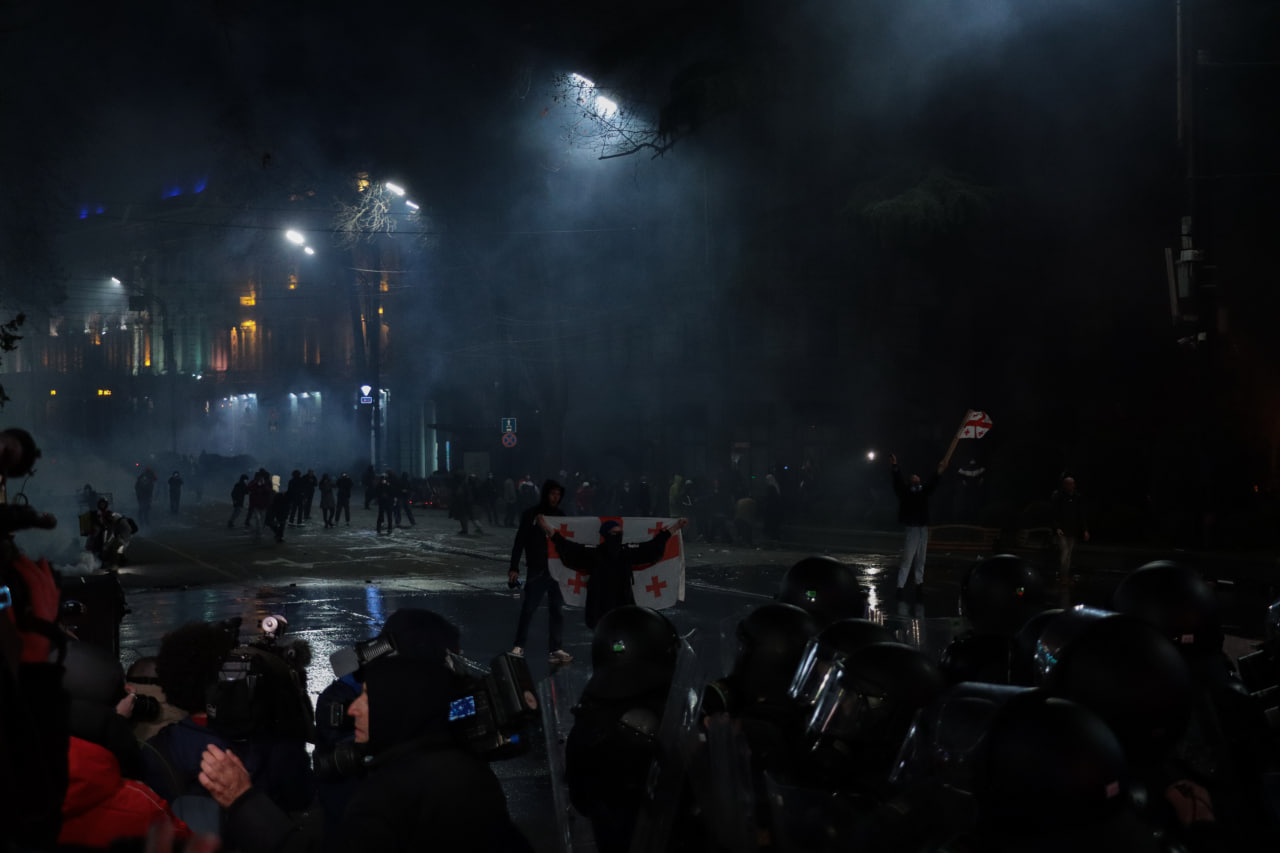
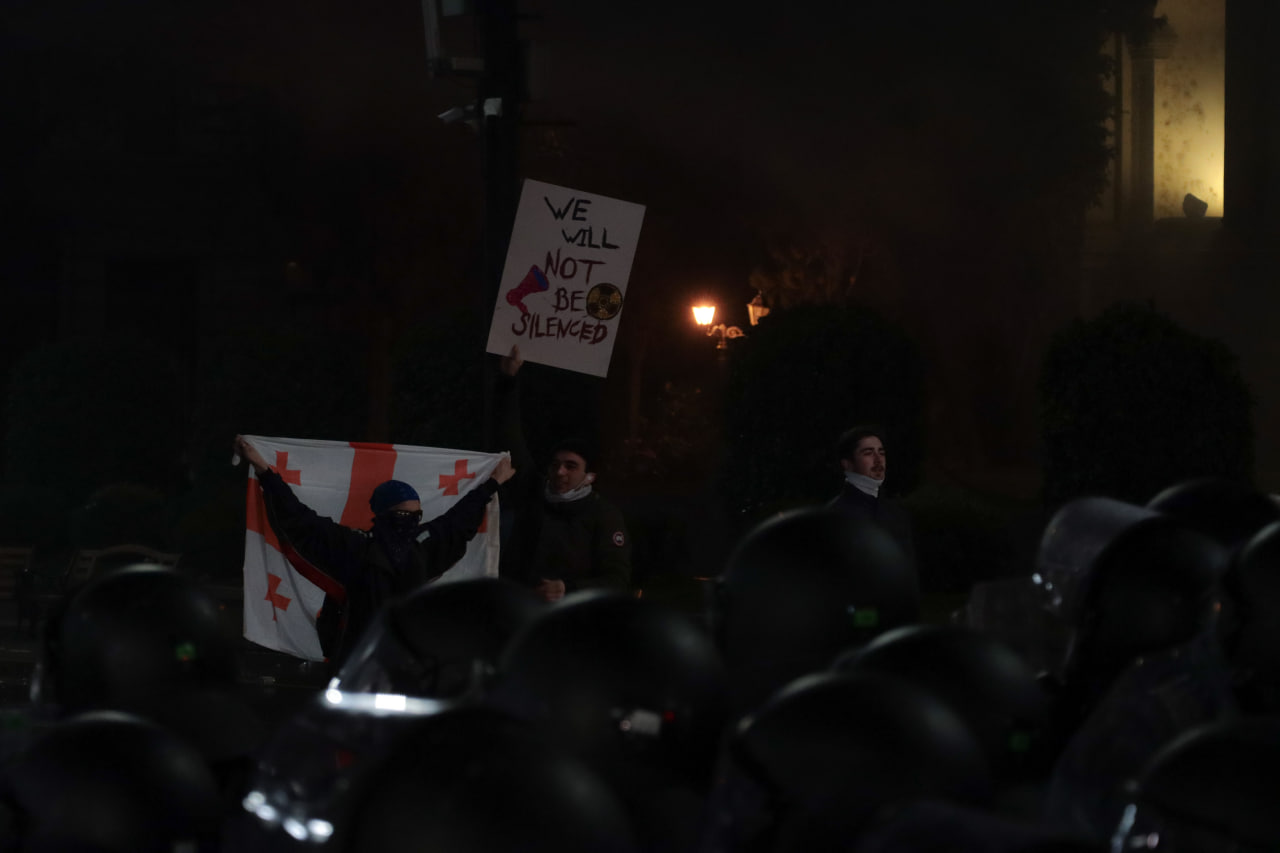
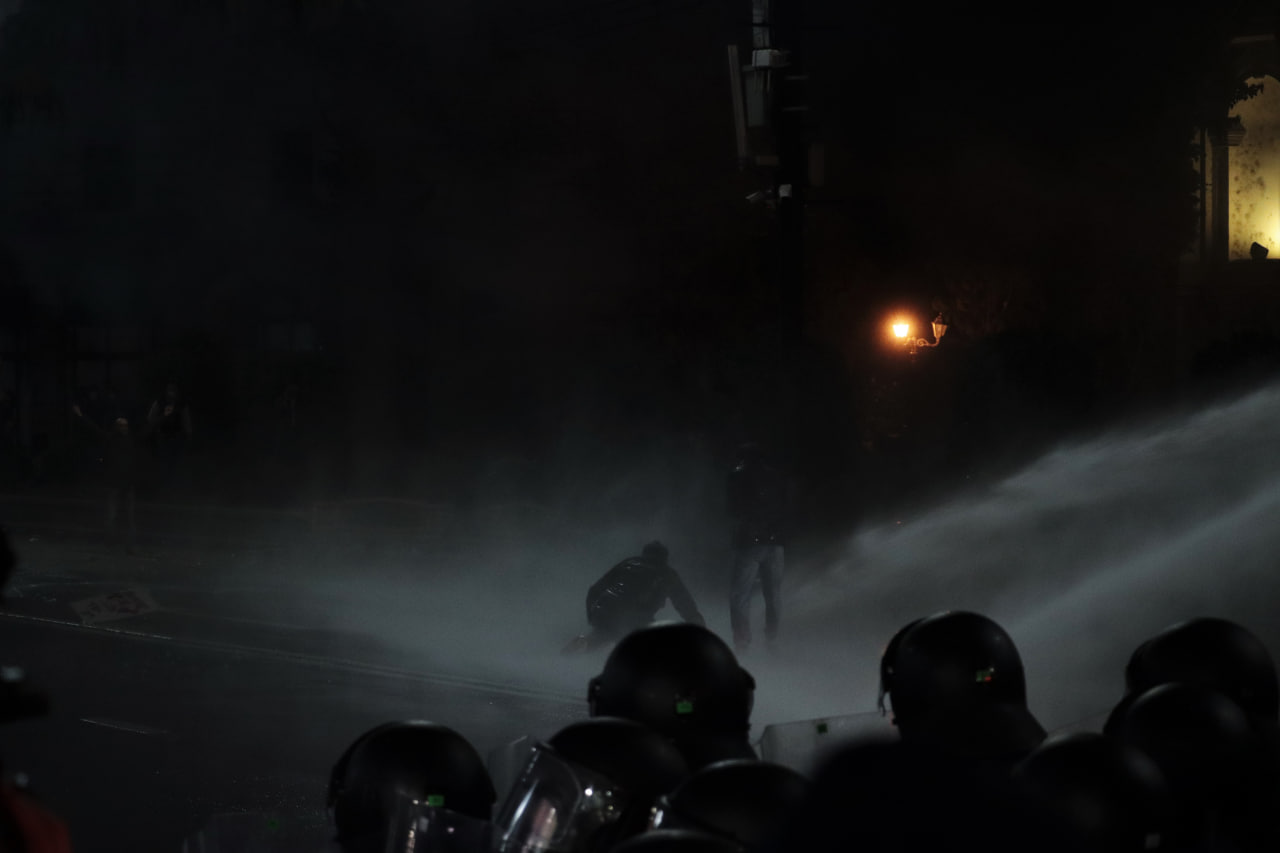
At some point, I went out in front of the police officers once again to remove the crowd of protesters, but glass bottles began to fall around me and beat. Under the cries of the security forces, I ran into a shelter. I realized that I was already poorly thinking and gasped too much, because of which I could not approach the protesters. Some journalists wore gas masks, but I could not boast of equipment. I decided to go home. As I later found out, the protest on Rustaveli continued until the morning, when the tired police officers went down the street, exposing from it no less tired protesters.
Subsequent events
The opposition immediately announced a new protest. The authorities recognized the defeat and reported that at the next meeting of the parliament they would vote against the law. In the afternoon, the action still took place, but was exclusively peaceful. More than 130 detainees on shares were demanded of the authorities. The authorities have also fulfilled this requirement. Civil society celebrated victory. The country rejoiced, and the world media and people from other countries on social networks expressed respect for the Georgians who defended their freedom in two days.
It is worth noting that the meeting of the parliament has passed earlier. The law on "foreign agents" quickly abolished the authorities that "they were not so understood" and they actually want to bring Georgia to the European Union.
However, another indicative case nevertheless occurred in the last action. Opposition deputy George Vashadze approached the young activists who performed from the rostrum, asking him to give him a word. He was not given a microphone, saying that "the youth is tired of politicians." In my opinion, this may mean that Georgian youth has matured in order to decide the future of their country themselves.
I, not being a citizen of Georgia, rejoiced for the local civil society. Сохранить свою свободу и права в то время, когда авторитарность стала восприниматься, как нечто нормальное - дорогого стоит. А еще подтвердилась и моя личная теория - государство нужно останавливать от захвата тотальной власти в самом начале, потому что потом это уже невозможно. Так было не раз в Грузии, так было, например, в Армении, где в 2018 году произошла революция без единого выстрела.
Общество, которое осознает свое право на применение силы в случае, если власть отказывается слушать или подавляет мирный протест, способно защитить свою свободу и свои права. Если бы грузины весь месяц исключительно мирно протестовали против закона об "иноагентах", то он непременно был бы принят после окончательного чтения голосами парламентского большинства, которое принадлежит правящей партии.
Это то, чего, на мой взгляд, к сожалению не поняли оппозиционеры в той же России, Беларуси и Азербайджане. Невозможно постоянно мирно протестовать или вообще игнорировать происходящее, когда государство забирает права и свободы, штампует репрессивные законы и постоянно усиливается. Если власть отказывается слушать, или отвечает на мирные протесты насилием, общество должно осознавать свое право на защиту себя и своей свободы.
Только увидев, что грузинское гражданское общество способно ответить силой на игнорирование со стороны властей, на слезоточивый газ и водометы, правящая партия решила прислушаться к народным массам и избежать дальнейшей эскалации.
Впереди Грузию еще ждет долгий и трудный путь, ведь власть и правящая партия, как и "теневой правитель" Иванишвили никуда не делись и, скорее всего, придумывают новый план усиления своей власти. Но увидев, что грузинам не все равно, что они делают со страной, им придется быть гораздо более осторожными.