
Translated material
Silicone deposits
In the United States, two largest banks collapsed, which worked with startups and crypta. We explain what is happening
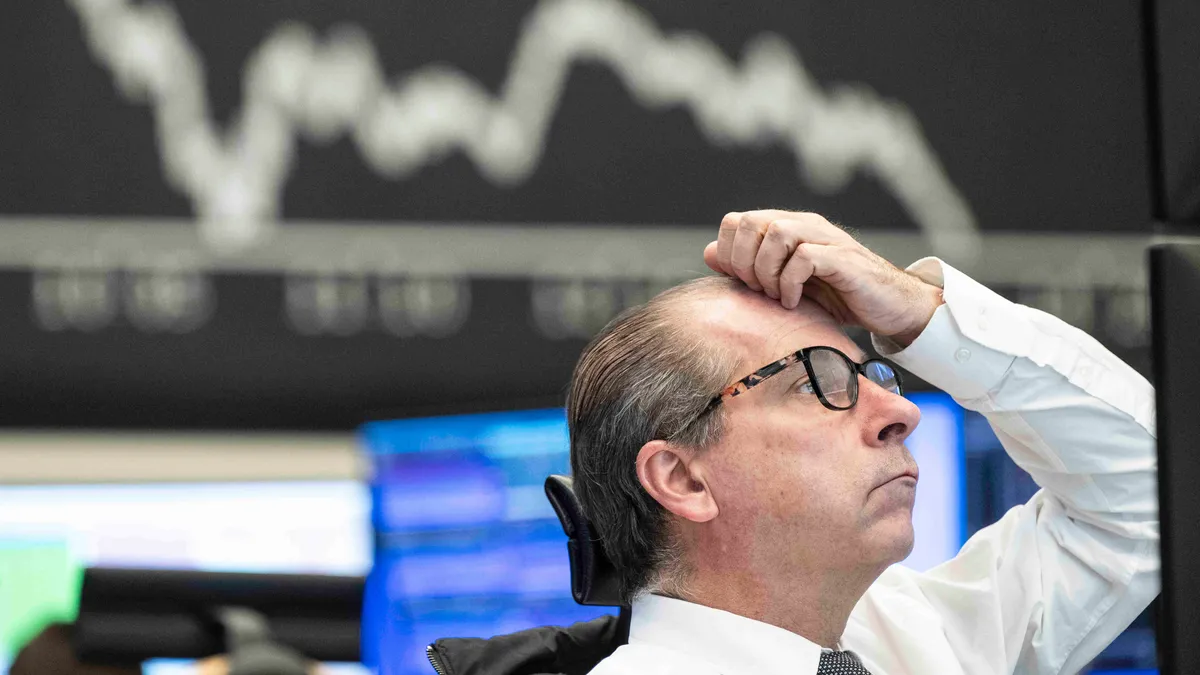
The return of the Black Swan in 2023 did not force himself to wait. It seemed that the fight against inflation in the United States was going according to plan - the head of the Fed, Jerome Powell, hinted at a further increase in the interest rate by an accelerated pace. However, the events of the last week revealed the consequences of the rapid growth of bets last year and led to the second largest bankruptcy bank in the United States since 2008, possibly creating the prerequisites for the next financial crisis.
Sunset of the venture capital
On March 8, Silicon Valley Bank (SVB) conducted a additional share of shares by $ 1.75 billion “to strengthen its balance” and reimbursing losses of $ 1.8 billion, which he suffered as a result of the sale of part of his assets portfolio. This message caused an outflow of funds from the bank’s accounts, customers withdrew the money “just in case”. Caution of customers led to the fact that a hole of $ 1 billion formed in the bank's balance sheet.
At the same time, the company's shares fell by tens of percent, the capitalization of the bank decreased by more than 60%. On Friday, trading shares were stopped. And by evening , the Department of Financial Protection and Innovation of California stopped the bank's activities. The stock market responded with a fall, especially the banking sector. The four largest in size assets of the American bank - JPMorgan Chase, Bank of America, Citigroup and Wells Fargo - fell into $ 52.4 billion in one day.
The peculiarity of the SVB bank was that it was the largest creditor of American venture companies.
For example, 44% of venture technological and medical companies, which last year entered the IPO (Initial Public Offering), were served in this bank.
By assets, the bank ranked 16th in the US banking system ( $ 209 billion) . However, the main thing is that in a similar situation there are other banks. On Sunday, for similar reasons (capital deficiency and systemic risk), Signature Bank was closed (assets of $ 110.4 billion ). This bank was a popular source of financing for cryptocurrency companies.
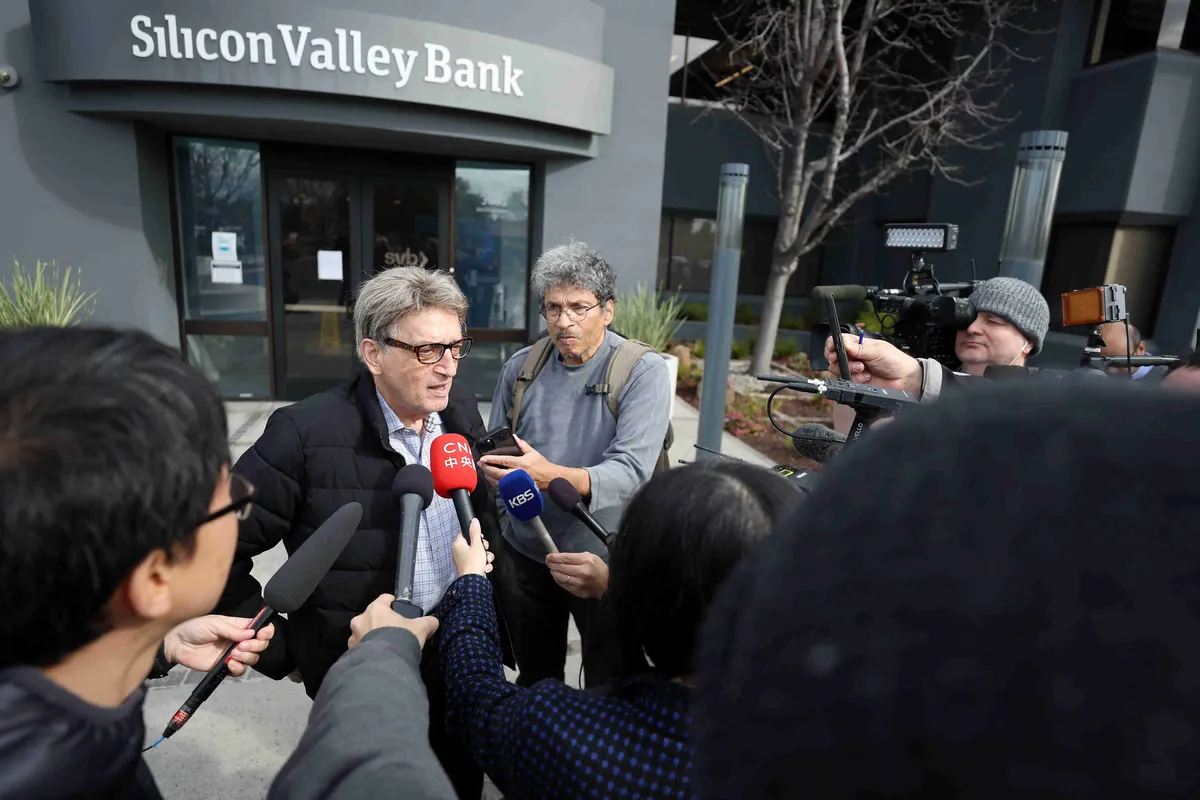
A number of other banks, such as FIRST Republic Bank, Charles Schwab, Western Alliance Bancorp, are also greatly affected by SVB bankruptcy - banks' shares collapsed by tens of percent. Apparently investors suspect something. Of the large international banks, a similar situation is observed in the Swiss bank Credit Suisse.
However, on Sunday , the US Department of Finance said that it compensates for the loss to the depositors. The FDIC deposit insurance fund will be used to protect depositors, many of which were not insured due to restrictions on guaranteed deposits in the amount of 250 thousand dollars.
Betting against deposits
The reason why SVB came to such a sad finale is a sharp increase in interest rates in the American economy. In addition to raising funds in which there was no shortage after the distribution of “helicopter money” during the pandemic, the bank had to take care of placing this money so that the profit was covered in deposits.
However, bonds purchased a year ago and now are very different things. The Fed’s rate was 0.25% at the beginning of 2022 and increased to 4.75% in March 2023. Downstream of the year, the government bonds gave low profitability, almost equal to zero, unlike 10-year papers, where the profitability was higher.
That is, having invested in 10-year bonds with a rate of 1.5% per annum, the bank received a temporary loss in the current situation (the paper fell in price due to the growth of the Fed’s rate), and the total cost of the portfolio was reduced by 9-15% .
Theoretically, if the depositors had not rushed to save their deposits (and the outflow of funds began back in mid -2022, because many companies began to actively “eat” the previously accumulated reserves), then the bank would pay everything on time.
However, the reality is that by March 2022, SVB accumulated almost 130 billion dollars in demand-and by the end of 2022, $ 50 billion of them chose the most perspicacious customers chose to pick up .
There are many questions for the risk management of the bank, as the risk hedging tools are enough on the market. It is known that Laura Verusiki , the head of the risk department at Silicon Valley Bank, prudently resigned from the bank back in April 2022, and could not find a person for almost a year to her position. A curious detail: SVB Executive Director Joseph Gentile was the former leader of Lehman Brothers to the public collapse of the bank in 2008. Of course, this is nothing more than a coincidence.
The excitement of stable tokens
Venture capital involves increased profitability, but also a significant risk. Such assets include cryptocurrency.
In Silicon Valley Bank, not only classic IT entrepreneurs, but crypto companies were kept. Including, Circle, an emissionor of one of the largest USDC stabelcoins. A part of security for this token was stored on the company’s accounts. According to the latest data from the Circle website, on March 9, the total reserves amounted to $ 43.5 billion, of which 75% ($ 32.4 billion) accounted for US short -term papers. But $ 3.3 billion was stored in Silicon Valley Bank.
After entering the public space of this news, the USDC exchange rate “fell off” from the binding to the dollar 1: 1, and for some time it traded below the face value by 10%. The same fate also befell Stablecoin from Binance Busd. But the third popular USDT stablecoin was more stable. However, perhaps the matter is transparency. Circle discloses more information than other casteans of stablecoins.
This event has collapsed Bitcoin and other cryptocurrencies that have already been sagged since the bankruptcy of the FTX crypto -tank. However, the statements of the regulators reassured the cryptocurrency markets. Stable courses recovered, and the price of Bitcoin again showed an increase for Monday evening. Unlike the stock market, where everything is not so clear.
Is the banking crisis in the United States cancel?
Despite the certification of financial regulators that everything is under control, the bankruptcy of the SVB bank is an alarming call for the US banking industry. The first thing that comes to mind is the analogy with Lehman Brothers in 2008. The budget problems of this bank were known in advance both to the management and the regulator - accounting standards allow not to recognize theoretical loss at once. Large banks are always under special control.
Partly the assumption that the problems were also known earlier is confirmed by the operational actions of the regulator, as well as the insider sale of the bank’s shares by the CEO of SVB Greg Becker two weeks before bankruptcy.
It is difficult to predict further development, but at the moment of the US Banks, they are sold at a frightening speed.
Krap banks such as JP Morgan, Citi Bank, Wells Fargo lose interest in price, and smaller banks fall by tens of percent, and trading has already been stopped at many.
In his speech on the situation with banks on Monday, March 13, US President Joe Bayden accused the previous administration of withdrawing restrictions on banking activities, and also assured that customers will gain access to their funds, which is critical for many startups and companies whose account the SVB bank was the only one.
The problem, however, is that out of more than $ 200 billion, about 5-7% of individual deposits were insured from SVB. Probably, most of the non -linear funds will be paid after the implementation of all assets of the bank. True, it is unclear how such a sale of securities will affect the market.
But expectations to increase the interest rate have decreased to minimums in just a couple of days. Moreover, experts argue that raising bets will end this year, and even consider the resumption of quantitative mitigation, from which the Fed tried to leave as part of the fight against inflation. The coming days will show how stable the US financial system is.