
Translated material
According to the rule of the Buleschik
Portrait of Viktor Sadovnichy, active member of the CPSU and United Russia, permanent rector of Moscow State University
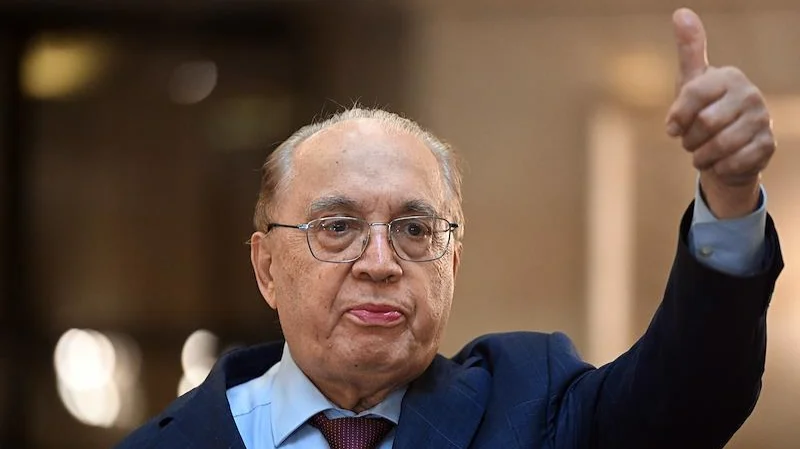
In less than a month, he will be 84. More than 30 of them he is the rector of the country's main university - Moscow State University. Lomonosov. Leads the university Viktor Sadovnichi longer than Putin by the country. However, in a sense they have barter relations. In order for the Sadovnichi to manage Moscow State University, the leadership of the country over and over again changed laws for him. And he - in response - supported the amendments that reset the presidential terms.
I always received state units. He worked under Brezhnev, Andropov, Gorbachev, Yeltsin ... Sadovnichy is an ideal official of all regimes and eras: he does not occupy the ability to comply with the expectations of power and be in the trend of the moment. At the same time, it is not necessary to have a position - it is enough to portray that the position corresponds to the imperious.
Sadovnichy and Ukraine
Viktor Sadovnichi was born in the Kharkov region of the Ukrainian SSR in the year of the beginning of World War II. The family was worker-peasants: his father, Anton Grigoryevich,-a red -der, stove-shaped and blacksmith. Mother, Anna Matveevna, worked on a collective farm. When the Great Patriotic War began, his father went to the front. And their native village of Krasnopavlovka was twice captured by German troops and twice successfully liberated by the Red Army.
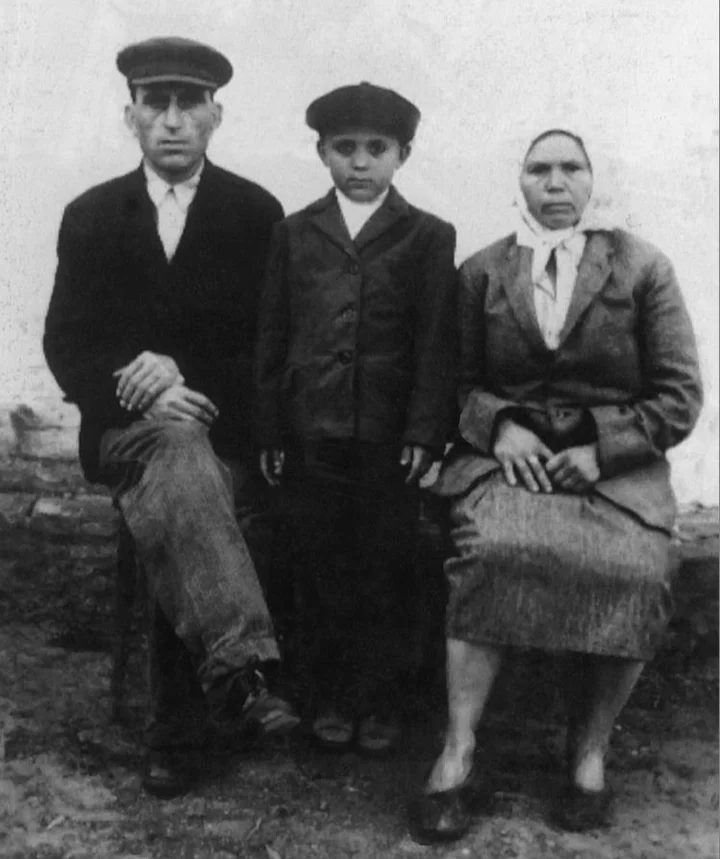
In an interview with Kharkiv television studio in 2020, Sadovniki recalled that their hut stood a hundred meters from the railway, which the Germans bombed; He remembers how the villagers fled from the bombing in the field ... Krasnopavlovka was thoroughly destroyed, and when in the first post -war year he went to study, the rural school was only a small house with one room.
After more than 80 years, this village has been shelling again.
And Viktor Sadovnichi will be the first to support the decision to conduct a special military operation in his homeland and sign the appeal of Russian rectors in support of the actions of the authorities in Ukraine.
And there is nothing supernatural in this. For him, of course. He is always on the Kremlin agenda, and his native village, obviously, is not the same argument to change his conformism even in the declining years.
Sadovnichy and the CPSU
An arithmetic was easily given to the future rector of Moscow State University in primary school, and already in the fifth grade he taught classmates mathematics. But after the rural school, I had to work as a loader at a local beet -column, then Sadovnichy went to Gorlovka (Donetsk region), where he worked in the face with a faster at the Komsomolets mine. He studied at the evening school of working youth at the same time. He lived in a hostel, recalled that his neighbors were there as former convicts. In 1958, having graduated from the evening with honors, he went to Moscow and successfully entered the Mechanical and Mathematics Department of Moscow State University. Where Sadovnichy was seized by public work: he headed the student committee and the Komsomol organization of the faculty.
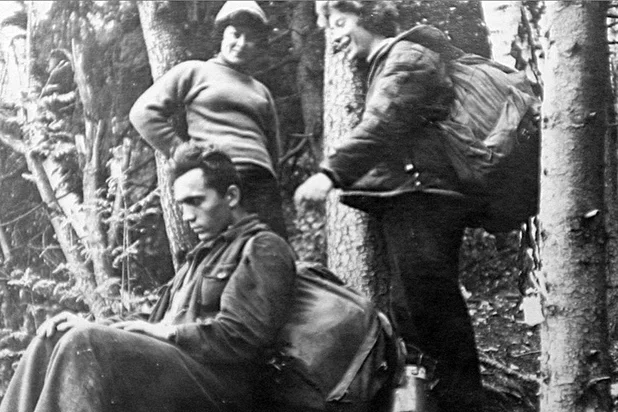
In 1963, with honors, having graduated from Mehmat, he entered graduate school. Further - the standard path for the future university employee: the protection of the candidate, then - the doctoral. At the age of 35, the Sadovniki is already a professor at Moscow State University ... At 43 - the head of the department of Matanalysis Mehmat. A few years later, he will receive the USSR state service for his contribution to the creation of a simulator imitating weightlessness in earthly conditions.
From the late 1970s to the collapse of the Union, he is an active member of the CPSU, even headed the university party committee. He worked in the selection committee on entrance exams.
Subsequently, a number of mathematicians, among which were Alexander Shen, George Spiro and others, included Viktor Sadovnichy among adherents of discriminatory policy on the Mehmat of Moscow State University, expressed in the prevention of Jews to the university.
A graduate of Moscow State University Bioinformatics Mikhail Gelfand directly accused Sadovnichia of participating in the anti -Semitic campaign. Sadovnichy himself called these accusations slander, stated that in those years there were many benefits for admission to children from rural areas, military personnel and workers, and the remaining people were very tough, "and really many, including capable children, did not receive."
Rector
In the spring of 1992, the first alternative elections of the rector in the history of the university were held at Moscow State University. There were four candidates, the debate in the university’s column hall was hot, but at that time, 53-year-old Viktor Sadovnichy, the first vote, eventually received 70 percent of the vote. Since then, he has been a permanent head of Moscow University. This post was re -elected six times in a row: in 1996, 2001, 2005, 2009, 2014 and 2019. But already on a non -alternative basis. According to the gardener, just no one "put their candidacy."
In the 90s, despite all their complexity, the gardener managed to achieve the autonomy of the university. To do this, as he often recalls, I had to get to the meeting with President Boris Yeltsin and to raise the question there. Yeltsin agreed.
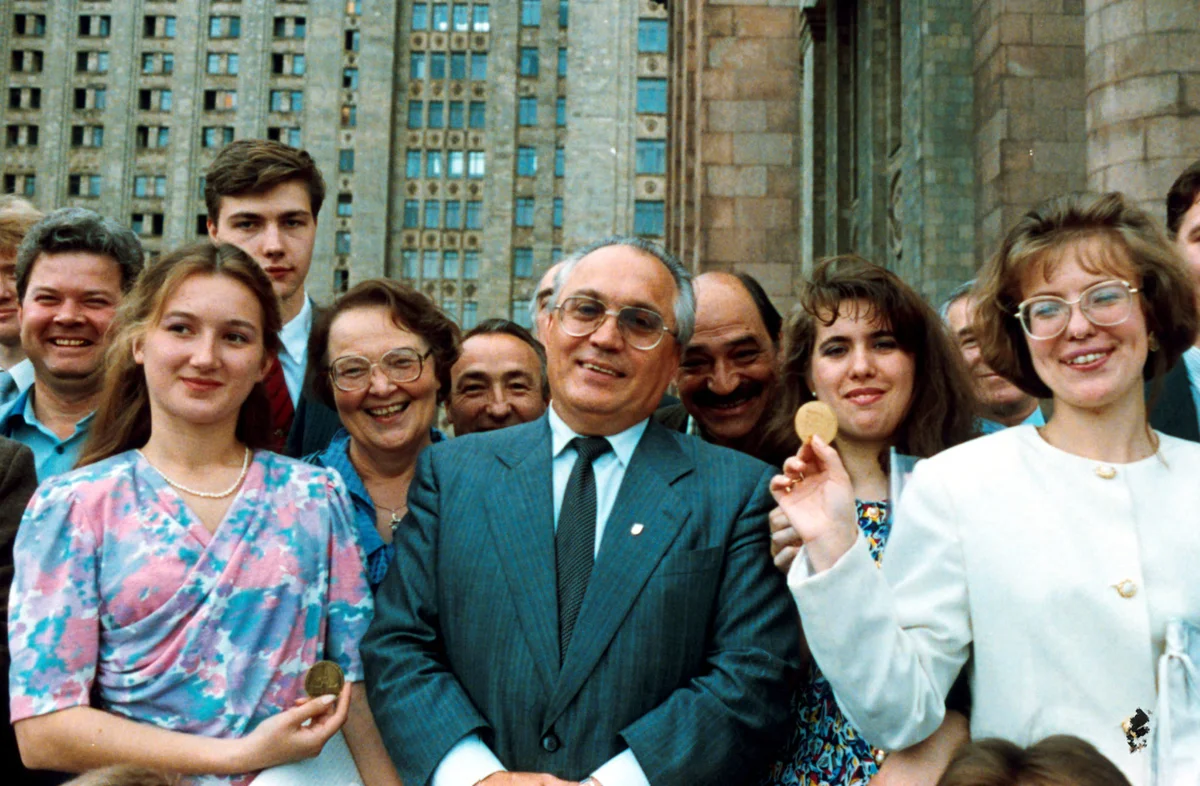
The autonomy of the university implied a separate financing, issuing its own diploma, defending dissertations without advice from the highest certification commission, their own study standards with the transition to six -year education.
And the newly made rector then won the real sympathies of the scientific community.
He showed his perseverance later. When in 2003 Russia joined the Bologna system, the meaning of which was to make education close to world standards, Sadovnichy opposed. He called Russia's refusal from its own fundamental education system by a mistake and managed to defend part of the specifics of Moscow State University: this is one of the few universities where a specialty remained at some faculties (and not undergraduate and graduate).
However, sometimes the Sadovnichy muffled criticism of the Bologna system. For example, when the journalists asked him about a certain Ekaterina Tikhonova, who was just studying in the magistracy of Mehmat. Sadovnichy was her scientific director. What he did not hide in any interview, but he always expressed a theatrical surprise why such an interest in her person.
QUOTE
“I never ask my students who their parents,” he told Vedomosti. - Nobody ever contacted me about her. Well, let them think [Putin's daughter]. <...> I have 70 candidates of sciences and 20 doctors (this is with foreigners). In recent years - about 10 defense. I don’t understand why such an interest in her. I did not know her, she studied at the Institute of Asia and Africa of Moscow State University. After one of the seminars, she came up to me and said that she would like to engage in mathematics. And not just mathematics, but with applications, space. I tell her: “You are a humanitarian. Imagine what path you need to go? " She: "I am hardworking." And she went on a common basis in the magistracy of Mehmat. According to the Bologna system, it is possible. ”
However, when the Russian authorities announced the exit from the Bologna system, the Rector Sadovnichy warmly supported this decision: “There is no need to copy anything, it is necessary to create his own, strong.”
Sadovnichy and Putin
Unlike most of their contemporaries, among which it is customary to scold the era of Yeltsin and Gorbachev, the Sadovnichny did not fall before. In each of his official biography, although modestly, helping the university from the same Yeltsin and other high-ranking persons of the country (Chernomyrdin, Rybkin and even ex-Prime Minister Kasyanov) is remembered.
Yeltsin allocated to the university presidential grants to support the scientific research of young Russian scientists. In the early 2000s, Kasyanov ordered a large-scale to re-equip university science by acquiring new scientific equipment for the university as part of a multi-million German loan. True, if in an autobiography about Yeltsin’s times in Sadovnichi, an ostentatious tearing and emphasis on his own role is traced: they say, it was necessary to push (“V.A. Sadovnichy began the struggle in the“ corridors of power ”for a radical change in the attitude of the state to the problem of financing science. There are many multiple meetings of the rector with the deputy prime ministers, the Ministers of Finance, and the chairmen of the State Duma were allowed Not only to defend, but also to increase the university budget ” *), the words about Putin are fed with epithets to an excellent degree (“ The whole speech, the entire message of the president was dedicated to a person, a citizen of the country, and she was permeated with care, starting from small-small ones who were only born or had not yet been born, and to students ”**).
In a conversation with journalists, Sadovnichi never hid that he was well acquainted with Putin (over 30 years) and had long been imbued with sympathy.
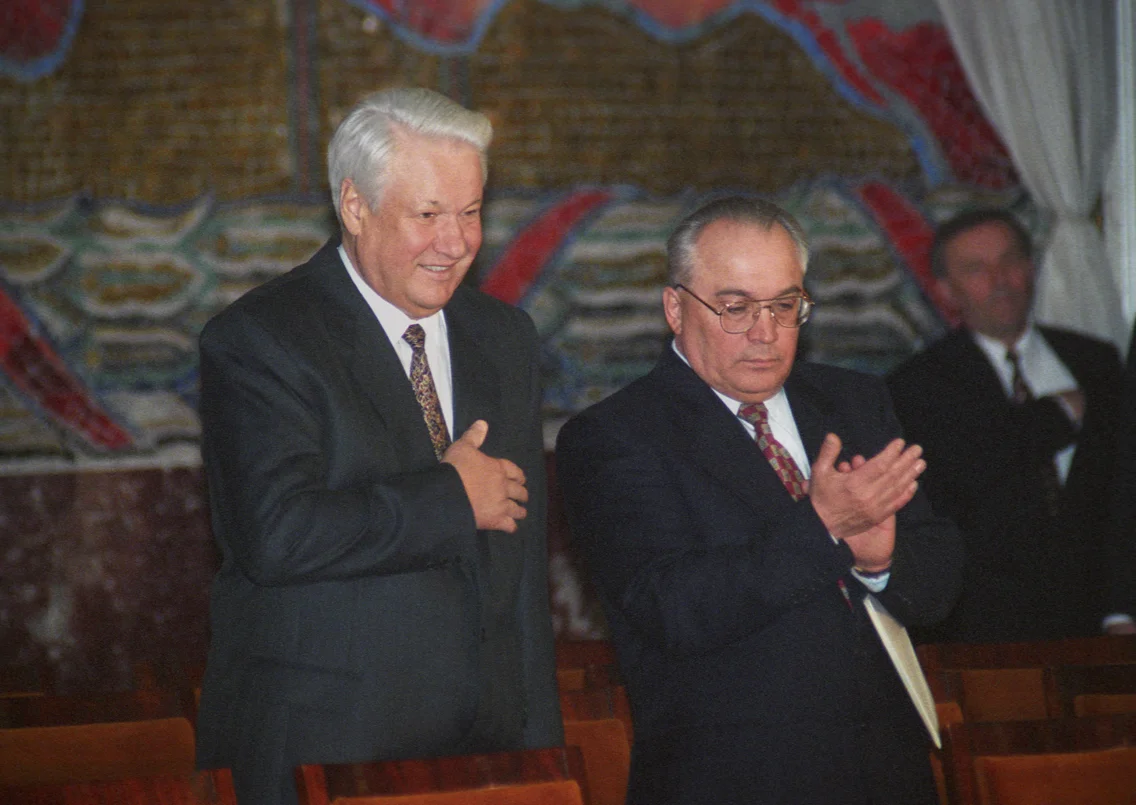
Sympathy, however, were to Yeltsin (during his lifetime). When the president visited the university, Sadovnichi publicly compared Boris Nikolaevich with Alexander II ...
Putin also visits Moscow State University. And Sadovnichi periodically visits officially organized rallies in his support. Three times in the presidential election - in 2004, 2012 and 2018 - he acted as an authorized person of the permanent president. And in 2018 he was even a member of the initiative group, who nominated Putin’s candidacy to where he did not leave. Speaking then at a rally-concert “For strong Russia”, the Rector of Moscow State University stood on the same stage with Dr. Myasnikov, actor Mashkov, singer Rastorguev and humorist Petrosyan. The Sadovnichy explained to the drivers that Russia needs a good and wise president, and "she has him."
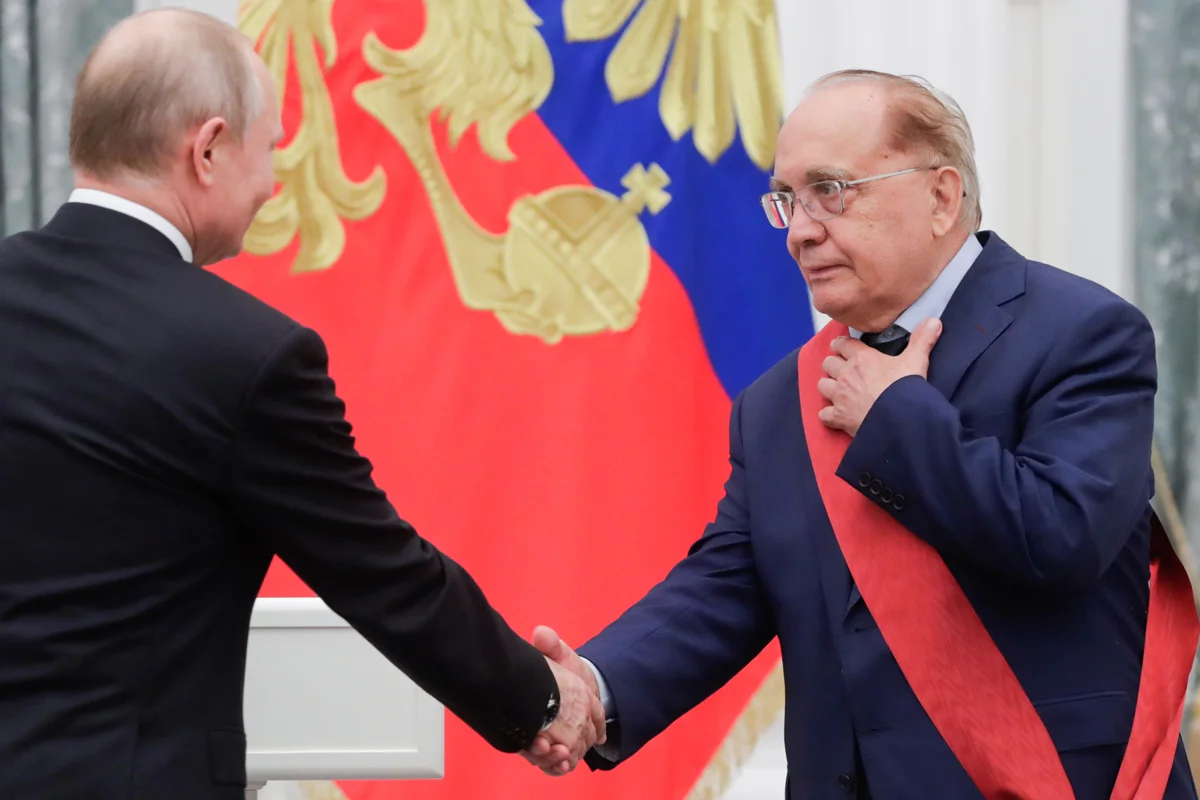
From the current president of Sadovnichi - four orders “For Merit to the Fatherland” of different degrees. The highest - first degree - the rector of Moscow State University received in 2019, almost immediately after the election. That year was generally significant for him.
In the fall of 2019, Putin approved the amendments, which allowed him to reassign the rector of Moscow State University and St. Petersburg State University unlimited number of times ... and soon reassigned a gardener by the rector of Moscow State University for a period of another five years.
(Like the St. Petersburg colleague Nikolai Kropachev, as well as the signator of the letter in support of the special operation.)
As if in response, the Sadovnichy in 2020 approved the amendments to the Constitution, who rescues all previous presidential terms and allow Putin to nominate his candidacy twice more. At one of the polling stations of the capital, where the amendments were voting, the Sadovnichy explained to reporters to reporters to reporters as follows: “Society is changing, new challenges appear, and in each country there is a need to clarify something-the rules that we live according to which we live.”
Sadovnichy, students and United Russia
Viktor Antonovich has been in the party of power for 21 years. No, no longer in the CPSU - today he is a member of the Supreme Council of United Russia.
The membership of the rector in the party of the authorities could not but affect the university. If all the 90s and even the beginning of the 2000s, Moscow University was famous for the spirit of student free thought, then this spirit was consistently expelled from the university.
In the winter, in the winter, 2007, the Faculty of Sociology of Moscow State University was in the center of the loud scandal: a number of students and teachers, dissatisfied with the quality of training, the level of a significant part of the teachers, constant conservative-nationalist indocation from the leadership of the faculty and specifically then the dean of Vladimir Dobrenkov, as well as household insistence, extreme administrative rigidity, expressed their own about this. Public protest. As a result, four activists were expelled.
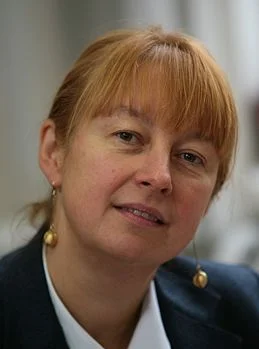
Famous Western scientists then spoke out in defense of students of the social faculty of Moscow State University, including the President of the International Sociological Association, Michelle Vivorki. The latter repeatedly wrote appeals in the name of Sadovnichy. The rector of Moscow State University did not change anything at the social faculty.
For the time being, the Faculty of Journalism of Moscow State University retained its independence. But when the post of dean in 2007 crossed from Yasen Zasursky to Elena Vartanova, the atmosphere on the journalism changed.
State propaganda began to be planted at the faculty, and contracts were torn with lecturers from among independent journalists. The rector of Moscow State University did not intervene.
On the contrary, in 2019, he proposed the Ministry of Education and Science to amend the charter of Moscow State University on the expulsion of students in case of bringing them to criminal liability. The proposal caused protests both among students and in society. The Sadovnichy recalled him. But he called the students nevertheless to “accuracy” with participation in protest promotions.
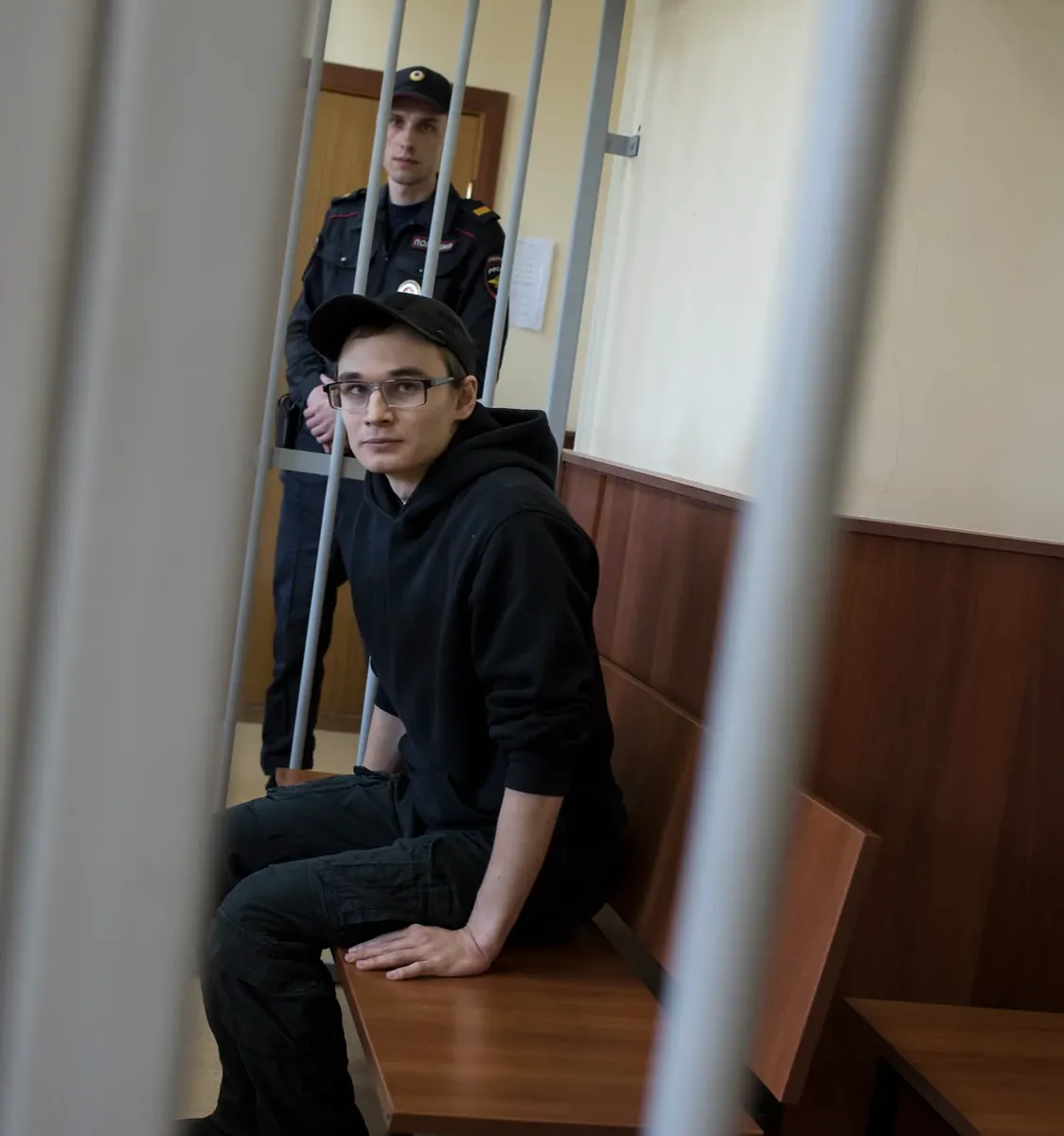
Obviously, on the basis of such accuracy, the Sadovnichy did not speak in support of the graduate student of the Mehmat MSU Azat Miftakhov. The young man in the same 2019 arrested the FSB in the case of an attack on the United Russia office. The Sadovnichy only answered when the journalists asked him: “I follow the course of this matter. I am sure that law enforcement agencies will objectively figure out in all circumstances and the court will make a fair decision. ” When Miftakhov was sentenced to six years in prison in 2021, the Sadovnichy did not comment on the “fair decision” of the court.
Sadovniki and special operation
Until February 24, 2022, Viktor Antonovich was the owner of a number of honorary titles and orders of Ukraine. Then “for special merits to the Ukrainian people”, then “for an outstanding personal contribution to strengthening Russian-Ukrainian cooperation in the field of education and science” or “for a significant personal contribution to the development of economic and scientific and technical cooperation”.
Yes, even in Russia, Putin once awarded him gratitude "for actively participating in the organization and conduct of the main events of the year of Ukraine in the Russian Federation."
And now - a special military operation. Just a few days later, Sadovnichi signed the appeal of the rector of Russia with the support of the policy of the Russian authorities in Ukraine. Under the text, another 183 heads of educational institutions from all over the country signed.
QUOTE
“Before our eyes,” the authors said, “events take place that concern every citizen of Russia. This decision of Russia is to finally complete the eight -year confrontation of Ukraine and Donbass, to achieve the demilitarization and denazification of Ukraine and thereby protect itself from growing military threats.<...> It is very important these days to support our country, our army, which defends our security, to support our president, which, perhaps, has adopted the most difficult in its life, a suffered but necessary decision. <...>
Universities have always been a support for the state. Our priority goal is the service of Russia and the development of its intellectual potential. Now, more than ever, we must demonstrate confidence and stamina in the conditions of economic and informational attacks, effectively rally around our president, strengthening the optimistic spirit and faith in young people by virtue of reason, instilling hope for a quick onset of peace. Together we are great power! "
For this, Sadovnichi was deprived of the title of honorary professor in Kharkov and Dnieper universities. Ukraine imposed sanctions against him. The appeal caused a sharply negative reaction abroad. The Association of Universities in Europe suspended the membership of 14 Russian universities, including Moscow State University.
Well, at the university itself, a month after the beginning, the following was created:
For some faculties, such as bioinformatics and bioenginery, police officers came and - as the students themselves reported - threatened them with expulsion for participating in rallies. The rector of the Sadovnichy statements of students did not comment.
He did not comment on the statements of the assistant to the President of Russia Vladimir Medinsky, who literally called students of the journalism faculty of Moscow State University “creatures” - for their position. “The journalism faculty of Moscow State University is scored by these creatures-also from among, so to speak, students of liberal teachers,” said the official, saying that freedom and pluralism in Russia flourished for thirty years, but “in wartime it is somehow bad.”
Shortly before that, two third -year students in the university group chat condemned the act of a fellow student who came to the faculty in a T -shirt with the letter “Z” and began to wave the flag of the “LPR” on the marble staircase. The leadership of the Moscow State University, which has repeatedly stated that the university outside politics was not coming to the student. But the girls who were obscenely condemning the campaign’s action, the dean of the journalism department of Vartanov, called the girls to a meeting of the ethical commission and soon expelled. The Sadovnichi Rector has not traditionally intervened.
Sadovnichy and asteroid
“What to say now is difficulties. They, it seems to me, are overcome ”-this is how the Rector of Moscow State University spoke about sanctions during the St. Petersburg Economic Forum in the summer of 2022. When asked whether it was worth rebuilding their work to universities, he answered: “We have such a strong education system, we, most importantly, do not lose what is, we are stronger than other countries by training.”
But just in 2022, Moscow State University did not fall into the top-200 universities in the world in the updated rating of the University World Ranking Center ( QS World University Ranking 2023 ). The university sank to 202th place, a year earlier he occupied the 194th.
According to CWUR, the university “sagged” in the global ranking according to the parameters “Quality of Education”, “Opportunities of employment”, “Quality of teaching” and “research potential”.
However, the Sadovnichny has a different opinion on this score. Its main project of recent years was the response of the West-the creation of a domestic analogue of the Silicon Valley, the so-called scientific and technological valley of Moscow State University. Из заявленных целей проекта: стать частью центра отечественных «прорывных» технологий, увеличить количество иностранных студентов, вернуть российских ученых из-за рубежа и повысить престиж науки в России. Власти выделили Долине территорию между Ломоносовским проспектом, проспектом Вернадского, жилыми кварталами на Мичуринском проспекте и улицей Удальцова. Общая площадь составит 455 000 кв. m.
В проекте, по словам ректора МГУ, задействованы «Роснефть», «Газпром», «Росатом» «и другие высокотехнологичные компании».
QUOTE
— Это великий проект Московского университета, — рассказывал на экономическом форуме Садовничий. — Я его предложил Владимиру Владимировичу Путину, он поддержал. И создан фонд, и таким образом Долина — это новое в нашей системе и подготовки кадров, и технологий, когда молодые люди, окончив, допустим, университет, тут же, перейдя дорогу, могут оказаться в так называемом «гараже», в сообществе людей, которые делают технологии. Идея сначала была не очень принята, но сейчас все ее понимают.
Действительно, как тут не понять. Один из авторов концепции Долины — фонд «Национальное интеллектуальное развитие», который формально принадлежит МГУ и действует под брендом «Иннопрактика». «Иннопрактику» возглавляет Катерина Тихонова.
…Следующие выборы ректора МГУ совпадут с президентскими — они пройдут в 2024 году.
О личной жизни ректора МГУ известно немного. Женат, трое детей, четверо внуков. Человек с фамилий Садовничий, Виктор Антонович увлекается… садоводством (опять же из официальной биографии). В громких коррупционных связях замешан не был. Дом на Рублевке поскромнее многих, да и зарплата куда меньше многих вип-соседей. Наследниками может гордиться. Они пошли по его стопам. Все трое детей, как и он, окончили мехмат, и тоже все трое — безобидное совпадение — работают у него в МГУ. Сын даже заведует одной из кафедр…
Обладатель почти сотни званий, наград и регалий, сам Виктор Антонович в свои 84 по-прежнему активен и в профессии, и в части соответствия ожиданиям власти. Он, как всегда, нужен.
В честь него в Крымской астрофизической обсерватории назван астероид Sadovnichij.
Имя «Академик Садовничий» носит и сорт древовидных пионов с махровыми и полумахровыми желтыми цветками…
Наверное, жизнь удалась. Только теперь в цивилизованном мире его именем ничего не назовут. Да на родину — в многострадальное село под Харьковом — вернуться ему не судьба. Впрочем, такую судьбу он выбрал сам. А ведь с детства хорошо знал третий закон Ньютона.