
Translated material
Moldavian front
How Moscow and its allies wage an undeclared war with Chisinau
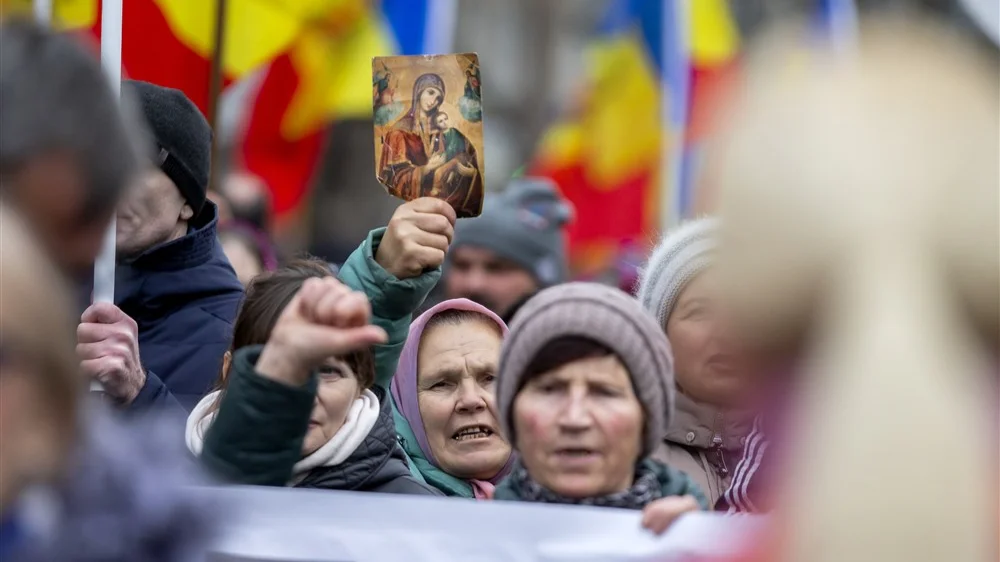
According to the investigation of the Dossier Center, despite the difficult situation at the front in Ukraine, the Kremlin leaves no attempts to take under political control of another state in Europe - Moldova. The pro -European government in Chisinau is protected: it reveals the Kremlin’s plans for the coupling, blocks the protests organized by pro -Russian forces, and is preparing to introduce amendments to the Criminal Code of the Republic, which provide liability for separatism.
Probably, it is the latter that causes special irritation in the Kremlin. Amendments are able to greatly complicate the life of the leaders of the unrecognized Transnistrian Republic, and following the example of Ukraine we know that political support for separatists is the Kremlin’s favorite reception to retain the post -Soviet countries in the orbit of their influence. What other levers of influences remain in the Kremlin in Moldova and how the proevpry government of Maya Sandu gradually eliminates them-the correspondent of the Independent Edition of Newsmaker Evgeny Cheban sorted out specially for the New Evrope.
The war, unleashed by the Kremlin in Ukraine, subjected the Republic of Moldova to serious risks. The fact of compliance with the monastery , a noticeable share of the pro-Russian population, not controlled by the government in Chisinau, the regional on the border with Ukraine (the so-called Transnistrian Moldavian Republic), which was located without special foundations, is the Russian military contingent-all this created grounds for anxiety of the country's authorities, where the authorities of the country, where the authorities of the country, were finally unanimously unanimously arrived. Forces focusing on the West and entry into the EU.
In the first months of the war, Russian generals openly spoke about the “corridor” in Transnistria. President of Belarus Alexander Lukashenko showed his military map, on which the border with Moldova was indicated by one of the directions for the Russian troops. Even if Moldova avoided military intervention if the Kremlin was successful in Ukraine, the reintegration of Transnistria could be forgotten. In this case, Moldova, most likely, would have become a kind of buffer zone between a striving to expand the zone of his interests by Russia on the one hand and the United States, the EU and a separate Romania on the other.
But the Kremlin’s plans, as you know, destroyed the Armed Forces of Ukraine. Their successes took away the potential military threat from the borders of Moldova. This, for example, was repeatedly talked by the deputy agent NATO Mircea Joan. And the representative of the National Council of the Safety of the White House John Kirby confirmed .
However, having lost the opportunity to reach the borders of Moldova with the help of the army, the Kremlin decided to act in an old proven way: to influence the country's domestic policy through its local political partners.
This explains the many recent events in the republic - from mass protests and clashes with the police organized by the pro -Russian Party "Shor", until the military tension around the Transnistria was discouraged.
As we now know thanks to the investigation of the center of the dossier and the European media, most of these steps were indeed part of the Kremlin’s secret plan to pressure the pro -European government of Moldova.
The cursory ally of the Kremlin
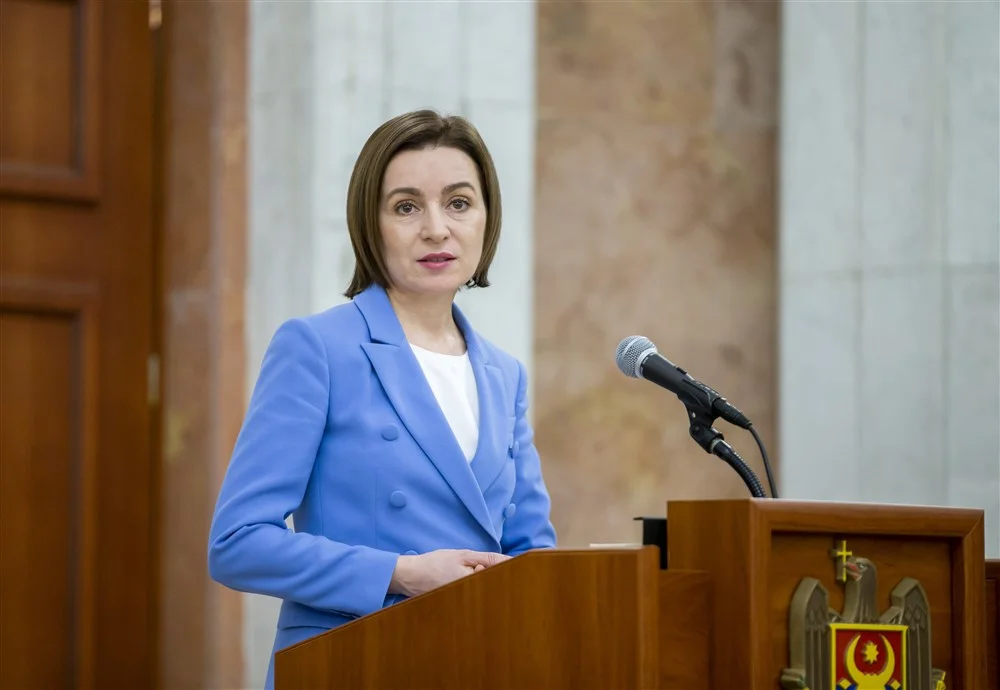
In mid -February, at a special briefing, Moldova President Maya Sandu stated that Russia was preparing a state -breeding in Moldova. For this, the Kremlin plans with the help of opposition protests and with the involvement of people with military training, as well as citizens of the Russian Federation, Belarus, Serbia and Montenegro to attack government buildings and change power in the republic. Such a statement and his resonance in the world press are quite atypical for the president. Probably, with his help, Sandu tried to rally supporters around her and acted ahead of schedule, demotivating future participants in anti -government protests in the republic.
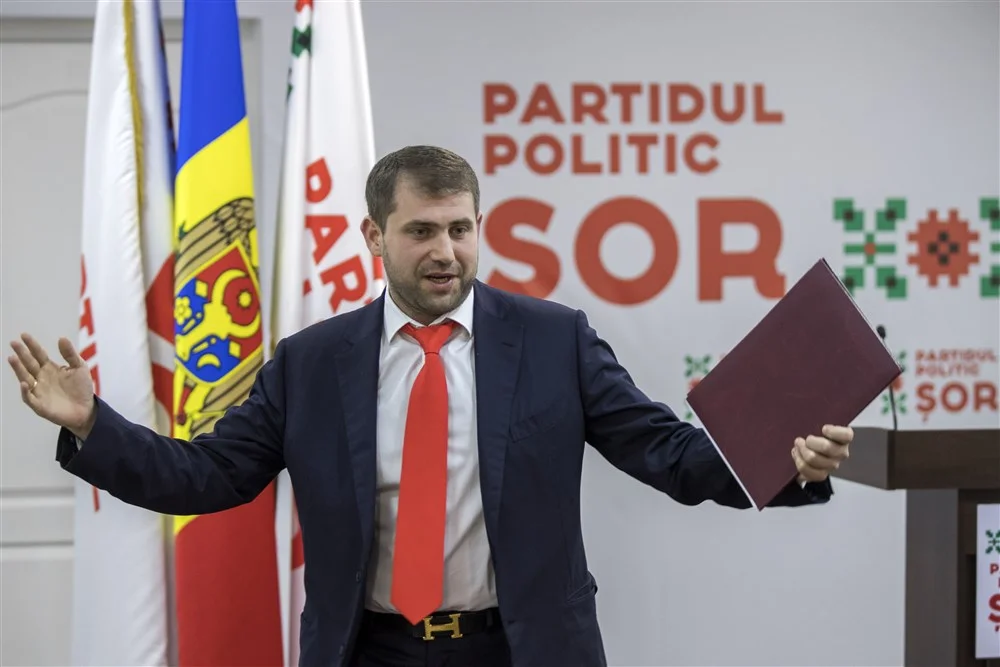
Since the collapse of the USSR, Moscow has always, one way or another, has been present in the Politics of Moldova through its local political protege. The last of them was the Party of the Fitty Moldavian deputy Ilan Shor, who received its name in honor of the founder.
In September last year, deputies from the Shor party visited Moscow, becoming the first Moldovan politicians who visited Russia since the beginning of the war. Delegatov was accepted by the chairman of the Committee on International Affairs of the State Duma and the new head of the LDPR Leonid Slutsky. Later, Ilan Shor, who is wanted and hidden in Israel from justice, published a letter of Slutsky addressed to him, in which the Russian deputy promises to help with a preferential gas price for individual Moldovan regions and with export in the Russian Federation of Moldavian agricultural products. The Russian propaganda media began to support and actively cover the protests that the Schor party tried to organize in the republic.
Later it turned out that two Moldovan television channels - Primul in Moldova and Accent TV, previously controlled by the former pro -Russian President of Moldova Igor Dodon, were controlled by Ilan Shor. Primul in Moldova broadcasts in Moldova the content of the Russian Channel One. In addition, an advertising company was transferred to the department of the Ilana Shora team, which sold advertising for the Moldavian segment of the Russian social networks "Odnoklassniki", VK, portals Mail.ru.
Founded by the current President of Moldova, Maya Sandu, the party “Action and Solidarity” (PAS), which came to power in 2021, tried to suppress the rapid political activity of a fugitive deputy, secured by the support of the Kremlin. Criminal cases on charges of fraud were opened on the members of the Schor party, the police conducted searches with activists on charges of illegal financing of the party, withdrawing large amounts of cash.
Housing rate on housing and communal services and money
In early December, after Shor paused in not very successful protests, six Moldovan television channels that relay Russian entertainment content lost their licenses at once. Four of them were controlled by Ilan Shor.
Starting a new, spring protest campaign, the Ilana Shora team began to refer to their good relations with the Russian authorities much less often. Now the main slogan and the requirement of protesters are exclusively populist: they demand that the authorities pay utility bills for all Moldovan citizens for three winter months.
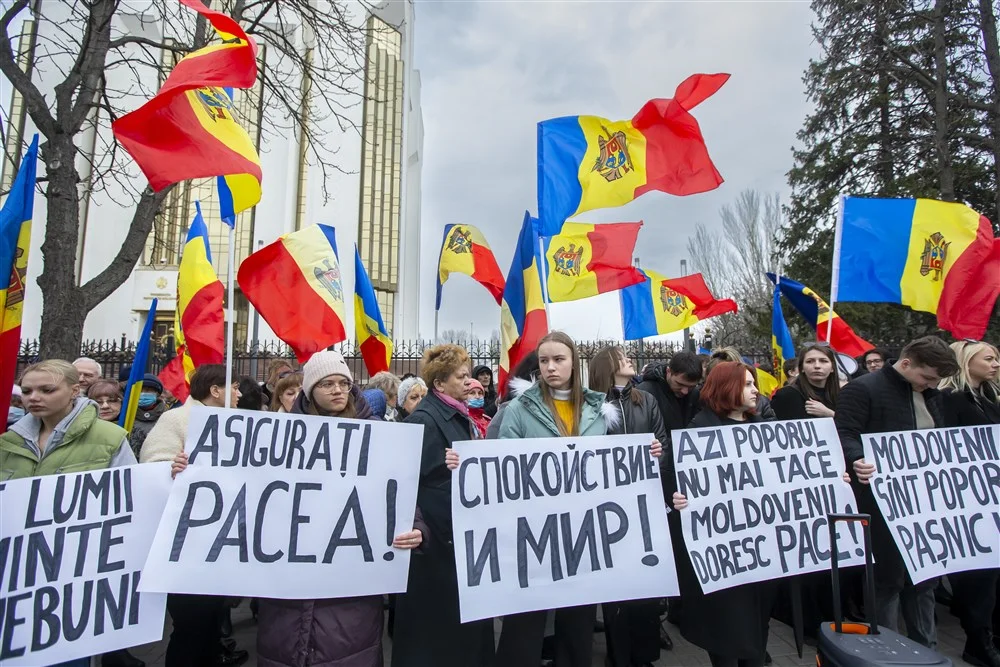
After President Sandu announced the preparation of a coup in the country, the Moldovan security forces began to act somewhat more decisively. In addition to searches with the activists of the Schor party and cases of non -permit to the country of foreigners, who, according to the authorities, can be potential participants in the riots, the Moldavian police began to prevent the arrival of part of the protesters in Chisinau. During the last two protests of the Shor party, transport with protesters stopped at the entrances to the Moldavian capital or in the regions.
Despite this, Schora supporters protest mainly peacefully. Almost every party’s protest is not complete without local skirmishes with the police, but it does not reach the riots.
Ilan Shor really has devoted supporters. As a rule, these are elderly people and socially unprotected groups of the population with whom his party works especially tightly. But outside its small electoral field, which is unlikely to exceed 10-15%,
Shor is an extremely unpopular politician and is perceived in public consciousness as a person who stole a billion dollars from three Moldovan banks.
Even on his party protests, Ilan Shor lures people mainly with a ruble. Moldavian media wrote about this repeatedly and with evidence. Even in the fall, Ilan Shor was forced to admit that he was paying the protesting: according to him, this is "money for food and travel."
Thanks to such a reputation, Shor still has no other opposition party of Moldova, except for the Communists, always acting as younger partners of a fugitive deputy. But the Ilan Shor team cannot stop to stop. For them, the presence in Moldavian politics is the only chance to protect their interests in Moldova and avoid persecution.
We are not ready to stop in their attempts to destabilize the situation in Moldova and in the Kremlin, where other channels of influence in the republic are looking for to return the positions lost after the start of the war.
Armed threat
From the first days of the war, the Military-political leadership of Ukraine speaks of a possible military threat to himself from Transnistria or Russian troops located there. At the first stage of the Russian invasion, the participation of the grouping of Russian troops in Transnistria-for example, the occupation of the Odessa region or blocking Odessa from the north-did not seem fantastic.
In Transnistria is the operational group of Russian troops (OGRV). She is the heiress of the 14th combined arms army of the USSR, which in Soviet times was deployed in this territory. Most of the army formed from the territory of Moldova by the beginning of the 2000s. Today, two motorized rifle battalions and a guard and service battalion remain in the OGRV. According to military specialists in Chisinau, Kiev and independent Russian experts, the number of OGRV is about 1.5 thousand people.
Russia does not have the opportunity to rotate the military in Transnistria since 2014. Therefore, Russian units in the region are equipped mainly from local residents with Russian citizenship.
The commander of the OGRV also has not changed for almost 10 years.
In addition to the OGRV itself, the Russian peacekeeping contingent acts in Transnistria - part of the tripartite ( Moldova, Russia and the armed formations of Transnistria - approx. Ed. ) The peacekeeping mission.
Formally, Russian peacekeepers in Moldova and OGRV have different legal status. Russian peacekeepers are located in the Transnistrian region on the basis of an agreement between the presidents of Moldova and Russia of 1992. OGRV has no legal status on the territory of Moldova. The Moldovan authorities consistently for many years require the withdrawal of OGRV from the territory of Moldova. In accordance with the decision of the Istanbul Council of the OSCE of 1999, Russia pledged to withdraw the weapons and the entire personnel from the territory of Moldova until the end of 2002, but this has not yet happened.
OGRV, like the peacekeeping corps, participates in a peacekeeping mission. But, in addition, the troops are protecting the former warehouse of ammunition of the Soviet 14th Army, located in the village of Solbasna, a few kilometers from the border with Ukraine. The exact number and condition of the ammunition stored there is unknown. In Russian sources, the warehouse is called the largest repository of ammunition in Europe.
Significantly larger than the OGRV, the armed formations of the most unrecognized PMR, the basis of which are four motorized rifle brigades. The total number of PMR divisions is not officially disclosed, but, according to various estimates , it can be from several to 15 thousand people.
In service of the OGRV and the Transnistrian armed forces there are small arms, old Soviet equipment (BRDM-2), mortars, anti-tank artillery guns. The army of Transnistria is in service with no more than 18 T-64 tanks and the Grad MLRS. In what condition this technique is also unknown.
After the first months of the war, after the retreat of the Russian Federation from near Kiev and from the moment the Ukrainian army was able to stabilize its southern front of the front, in Ukraine they publicly hinted ( link , link ) to Chisinau, that they can help once and forever resolve the Transnistrian issue. In Chisinau, they did not answer these calls.
In April-May 2022, the tension around the Transnistrian region reached its peak. Three unknown people shot the main office of the Transnistrian “Ministry of State Security” (MGB) from grenade launchers, then one of the towers of the radio complex in the Transnistrian village of Mayaki was blown up . In the Transnistria of the provocations, Ukraine was accused, while Chisinau insisted that armed provocations were the result of the struggle of intra -Podnestrovsky clans.
Gradually, the tension around the Transnistria was asleep.
Blackmail and provocations
The next, this time, while only a media escalation around Transnistria began in February this year after Maya Sandu accused Russia of preparing a coup in Moldova, and the government changed in Chisinau.
The replacement of the Prime Minister-Financial, Natalya Gavrilitsa, caused by the contradictions within the ruling party, was perceived as an concern for the presidency in the field of security and the former head of the Ministry of Internal Affairs of the Ministry of Internal Affairs of Safety and the former head of the Ministry of Internal Affairs of Safety and the former head of the Ministry of Internal Affairs. Especially after the Republic in one of the first interviews spoke about the need to demilitarize Transnistria, although Chisinav defends such a position since 2005.
The Kremlin’s media response did not make you wait long. The Russian Ministry of Defense said that the Ukrainian forces in the near future supposedly plan to arrange an armed provocation in Transnistria.
Kiev and Chisinau repeatedly denied statements by the Russian authorities. The American Institute for the Study of War (ISW), in turn, suggested that the Kremlin creates information conditions for conducting operations under another's flag in Transnistria.
On March 9, the authorities themselves already reported an unrecognized Transnistria about the attack preparing on them. The Ministry of State Security of Transnistria said that a terrorist attack was being prepared in the republic. On the same day, in the prime time, a twenty-minute film was shown on the Transnistrian television channels about how the terrorist attack was supposedly prepared in Transnistria, behind the Security Service of Ukraine (SBU). In the SBU, all the accusations refuted .
Panic in the Kremlin
Regardless of the real level of threats to Transnistria, the Kremlin’s information attack on Moldova at first glance looks like a win -win action. It forces Ukraine to distract attention from directly the situation at the front, should strengthen the image of the enemy in the person of Ukraine from Transnistrian residents and at the same time carefully scare the inhabitants of the rest of Moldova.
Moscow is unlikely to have real grounds for panic: the power “demilitarization” of Transnistria is impossible mainly because of Chisinau’s position . Ukraine cannot attack the Russian units in the PMR without the consent of the Moldovan authorities - this would shake the diplomatic positions of Kyiv in the international arena and affect the degree of support of the country by the West. This is discussed in Kiev openly .
It is hardly possible to imagine Chisinau consent to military intervention in Transnistria. In Moldavian society, there is a persistent rejection of any military solution to the Transnistrian issue.
Any decision related to the “import of war” to Moldova will immediately ground the rating and deprive the political future of the politician who adopted it.
This in the administration of the Moldavian president is very well understood. With understanding to such a pacifist position, Moldavan and Official Chisinau have long been treated in Kyiv.
They do not realize this, it seems, only in the Kremlin. This is partly due to the old habit of Moscow not to reckon with the subjectivity of Chisinau. And partly with the fact that the Russian leadership seems to be simply covered by panic due to the realization that Moscow lost the opportunity to influence Moldova and its Transnistrian region, which remained deep in the Ukrainian rear.
It is clearly difficult for Moscow to accept this new geopolitical reality. Instead of preparing plans for the least painful “departure” from Transnistria, politicians perform reckless actions, drawing up secret plans and scenarios of coups in the republic or waving Kishinev’s fist in fear that he would agree to the proposal of a “military solution” of the issue in Transnistria, which Kiev would be able to help with.
If the situation on the Ukrainian front will not change in favor of Moscow, official Chisinau may have much more determination and willingness to solve the Transnistrian problem without looking at the Kremlin. Moldova’s authorities with Transnistria are not ready to fight the authorities, but they can move on to much more stringent pressure measures to the self -proclaimed administration of the region.
Already on March 18, in Moldova, amendments to the Criminal Code, providing for liability for separatism, are entering into force. If Chisinau will have enough political will for the use of new articles, these innovations can block the official interaction between the banks of the Dniester and will be placed by all Transnistrian officials within the region. Perhaps this is exactly what they are trying to counteract in the Kremlin in advance, escalating the situation around the region.