
Translated material
The chairs parted
I forced Serbia to take the European side and begin to negotiate on the problem of Kosovo
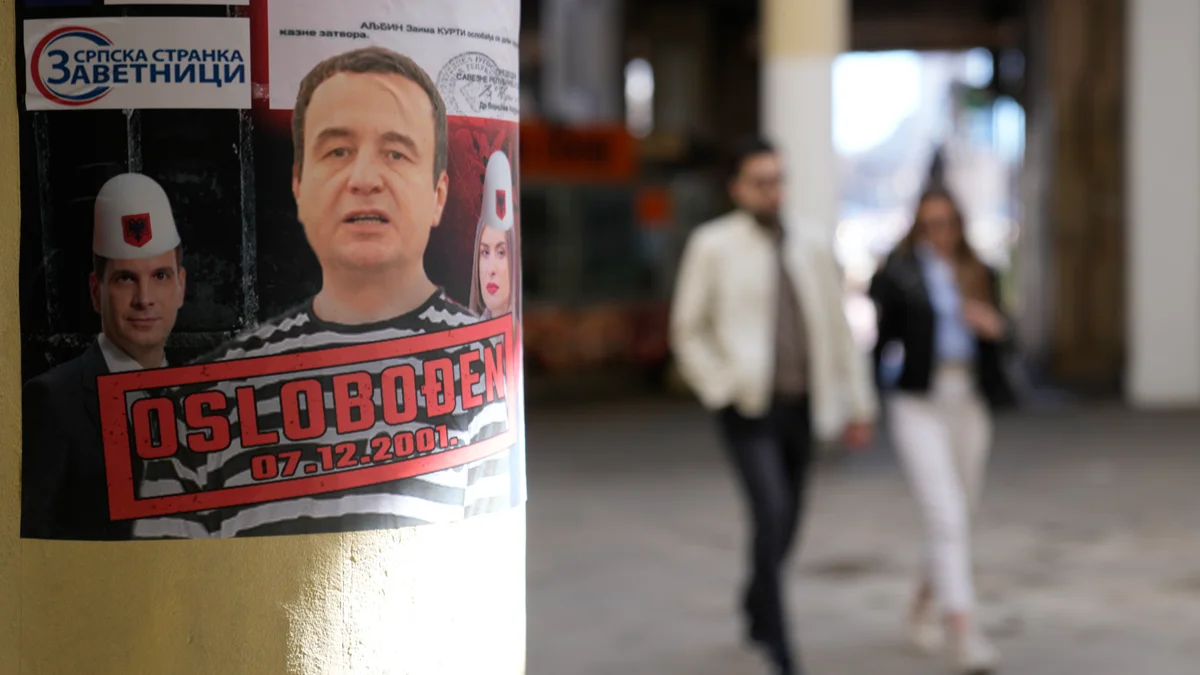
The other day, the new Belgrade, the peaceful sleeping district, which in the early 1980s was scheduled to be in colonels and generals of the Yugoslav People's Army and who now loved emigrants from Russia, turned out to be completely covered with strange posters. On them are the leaders of the extreme right Serbian parties and signatures like “traitor” or “Milos French”.
Obviously, the liberal opposition cannot stand behind this - such words as a “traitor”, there is no vocabulary in their vocabulary even for competitors on the right side of the political spectrum. Although the posters are not signed, it is not difficult to guess that behind this black PR is a ruling National Populistic Serbian progressive party. It would seem that the National Populists and the ultra-right should be on the same side, and not to fight on the wide avenues inhabited by the once elite non-existent army of a decayed country. And yes, and no. When it was necessary to pursue liberals, they were definitely at the same time.
When the time came to come to terms with the fact that Serbia can be part of only the Western bloc in the new realities of the Cold War, and this, in turn, implies the closure of the “Kosovo question” - they were on different sides of the barricades.
The current government in Serbia spent more than ten years, cultivating populist nationalism among the population. In its propaganda discourse, the Serbian nation in its qualities and significance surpasses others in the West Balkan region and at the same time is the biggest victim. Only historical crimes over the Serbian people were covered and artificially increased, and the crimes and historical expansionism of Serbia were silent or, conversely, regarded as the processes of liberation.
When Serbia, throughout the 19th and 20th centuries, tried to return Kosovo to its borders - the territory where the Albanians lived in the majority - its elite interpreted only in a positive way: the Serbian state returns its promised land. It doesn’t matter who lived on this earth, because the Lord God bequeathed to the Serbian people (although the borders of the Serbian state are not mentioned in the Holy Scriptures).
The Serbian political elite, and most of the Serbs looked down at the Albanians, as at the barbarians who need to be disciplined, and if this does not work, then it is clear what to do with them.
In the second half of the twentieth century, when the Albanians, forced by poverty, migrated to Belgrade in search of black work, which were bypassed by the inhabitants of the Yugoslav (and Serbian) capital, the Belgrade looked at them as American racists of the Yuzhans-at the African American.
Times are changing, and as the Serbs once fought against Ottoman slavery, the Albanians lifted riots against Serbian rule. Due to the undemocratic policy of Slobodan Milosevich, a series of war lost by the Serbs, Kosovo Albanians managed to fulfill their historical goal-
They received freedom to manage their lives in Kosovo.
Serbian state propaganda continued in the XXI century to pay attention exclusively to the Serbian minority in this territory (about 5% of the total population). For Serbia, Kosovo Albanians did not exist at all or were perceived only as killers, terrorists and drug traders. This shows that in reality Serbs do not need Kosovo as it really is - they dream of the mythological kosovo of the Middle Ages. It is only about the issue of national dignity, and if it is translated into everyday language - pure stubbornness.
This is also evidenced by studies of the public opinion of the Ninamedia agency of last year - 49.9% of Serbia citizens believe that it is impossible to regain full control over Kosovo, and 35% are in charge of the reverse opinion, but when they ask if they would support the contract, after which Kosovo would have been independent, and their life standard would increase, 53.5% of citizens would not agree with this agreement, and only their conclusion would support it. 26.3% of Serbia citizens.
This generally says all about the mood of the Serbian society regarding the Kosovo issue - it is impossible to return it, but we will not give it away.
Any power in Serbia understands that the resolution of the Kosovo issue does not benefit its party rating. Therefore, a delay strategy, or a frozen conflict strategy, was chosen. This strategy was unrealized by the special military operation of the Russian Federation against Ukraine. Serbia in the context of the New Cold War can no longer afford to rely on Moscow, it has become too costly, because the West will not tolerate this, namely Western capital leaves the Serbian economy alive.
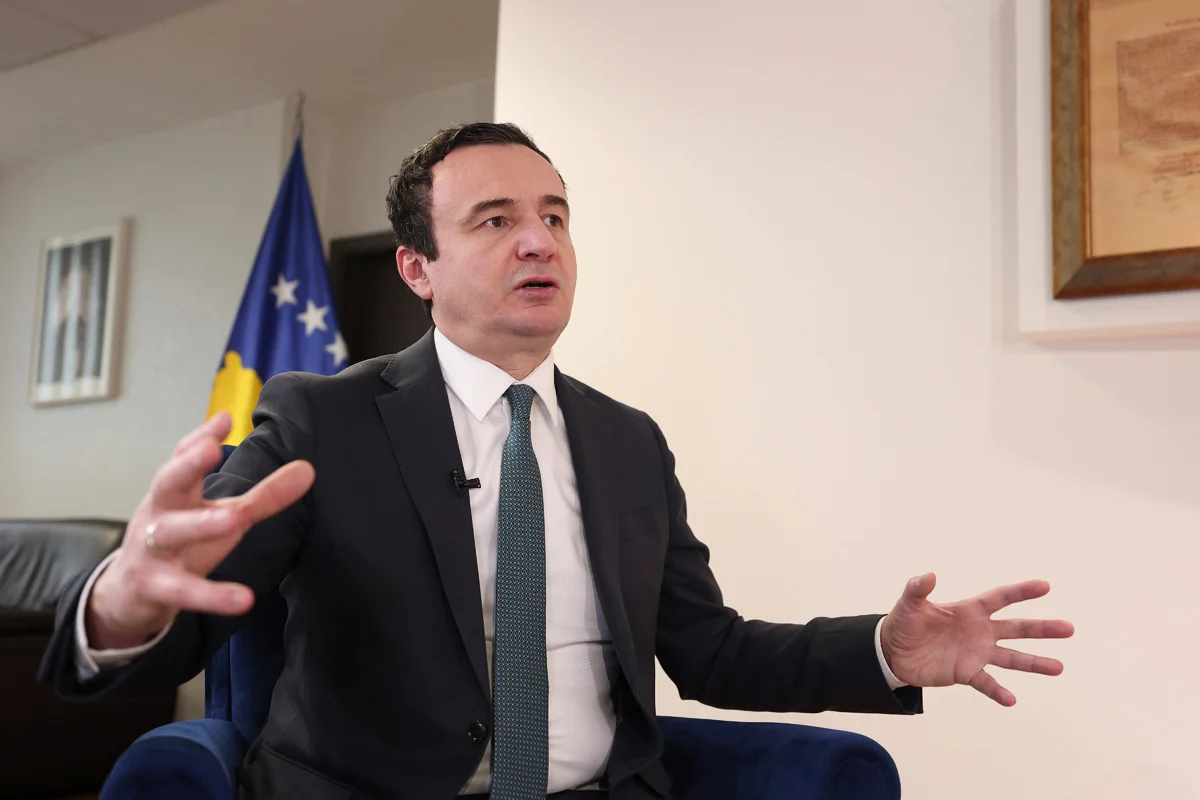
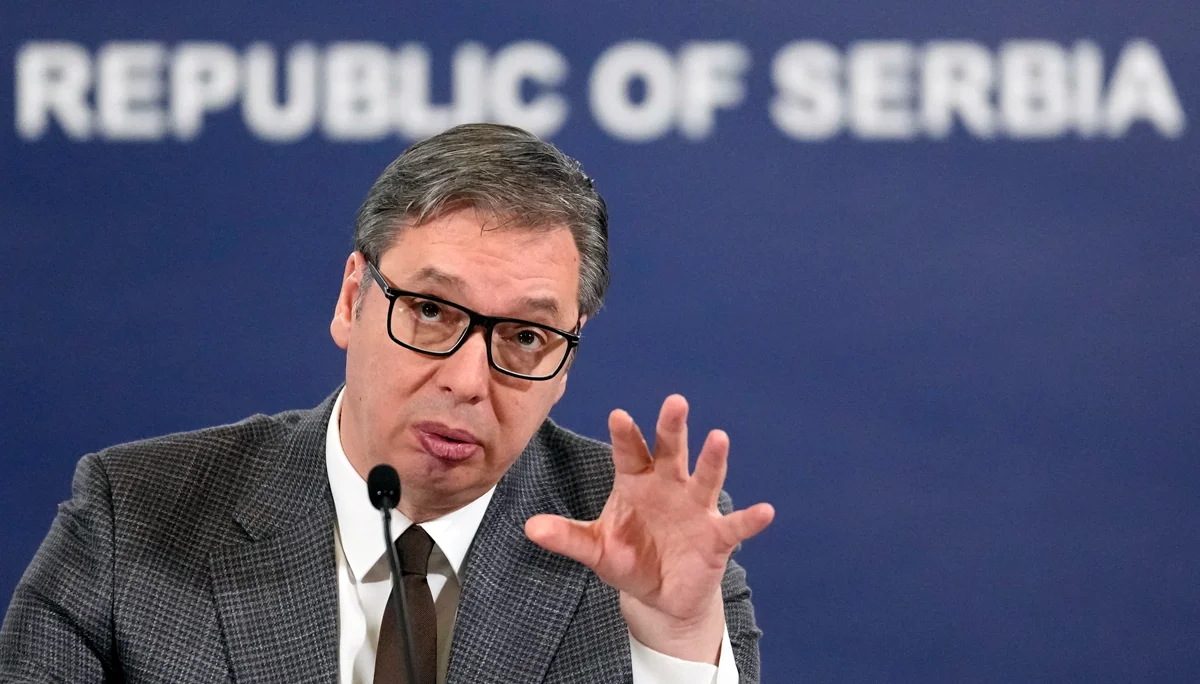
The leaders of Serbia and Kosovo - Aleksandar Vucich and Albin Curty - agreed with the new negotiation platform under the auspices of the European Union (and Washington, informally). Now it has been published: paragraph 4 says that Serbia will not interfere with Kosovo to become a member of any international organization (including the UN naturally), and in paragraph 7 - that the Serbian minority in Kosovo should receive a high level of autonomy according to European standards. The document is written in such a language that neither Kosovo membership in the UN, nor the autonomous political unit that Kosovo Serbs will find, are not directly mentioned anywhere. Serbian society does not want to formally recognize the independence of Kosovo? There is no direct recognition. Kosovo-Albanian society does not want to create a state in the state, fearing the sabotage of the functioning of the state by the Serbian minority? No federation is mentioned.
There will be membership of Kosovo at the UN, there will be autonomy of the Serbs in Kosovo, and this is the general framework of the contract that minimize the resentment and fears of both societies.
This is not the end, but the beginning of the final stage of the negotiation process on the status of Kosovo. It is ahead, and this is very important, to coordinate the road map of the platform, whose essence is given above. This document will be an application to the signed agreement. Only after signing the application can we talk about the implementation of the contract. This means that there are three phases of the implementation of the new negotiation platform and that the first has already been completed - the framework principles have been adopted by Belgrade and Prostina.
Now it is necessary to move from the formulation of principles to practical steps so that the platform does not become like the Minsk agreements that both Russia and Ukraine adopted, but not one of the parties was going to implement the contract. The execution of the contract will accelerate (on the scale of the Kosovo process, which lasts 24 years) the conditions of the new Cold War,
Which do not allow Serbia to continue to hide behind Russia, outwardly cooperating with the West, but in fact simply buying time.
Until now, the goals of this strategy have been strictly partying - to hold out in power, stretching the negotiation process, since Kosovo cannot be returned either by force or political maneuvers. It is not surprising that in the changed conditions, President Wucich came to the idea of creating a new political movement - the "folk movement for the state." For current power, even the previously created ultra -right loyal opposition poses a threat. This also explains the appearance of strange posters in Belgrade with the brand "Traitor" for yesterday's shadow junior partners Alexandar Vucic.