
Translated material
War with poverty
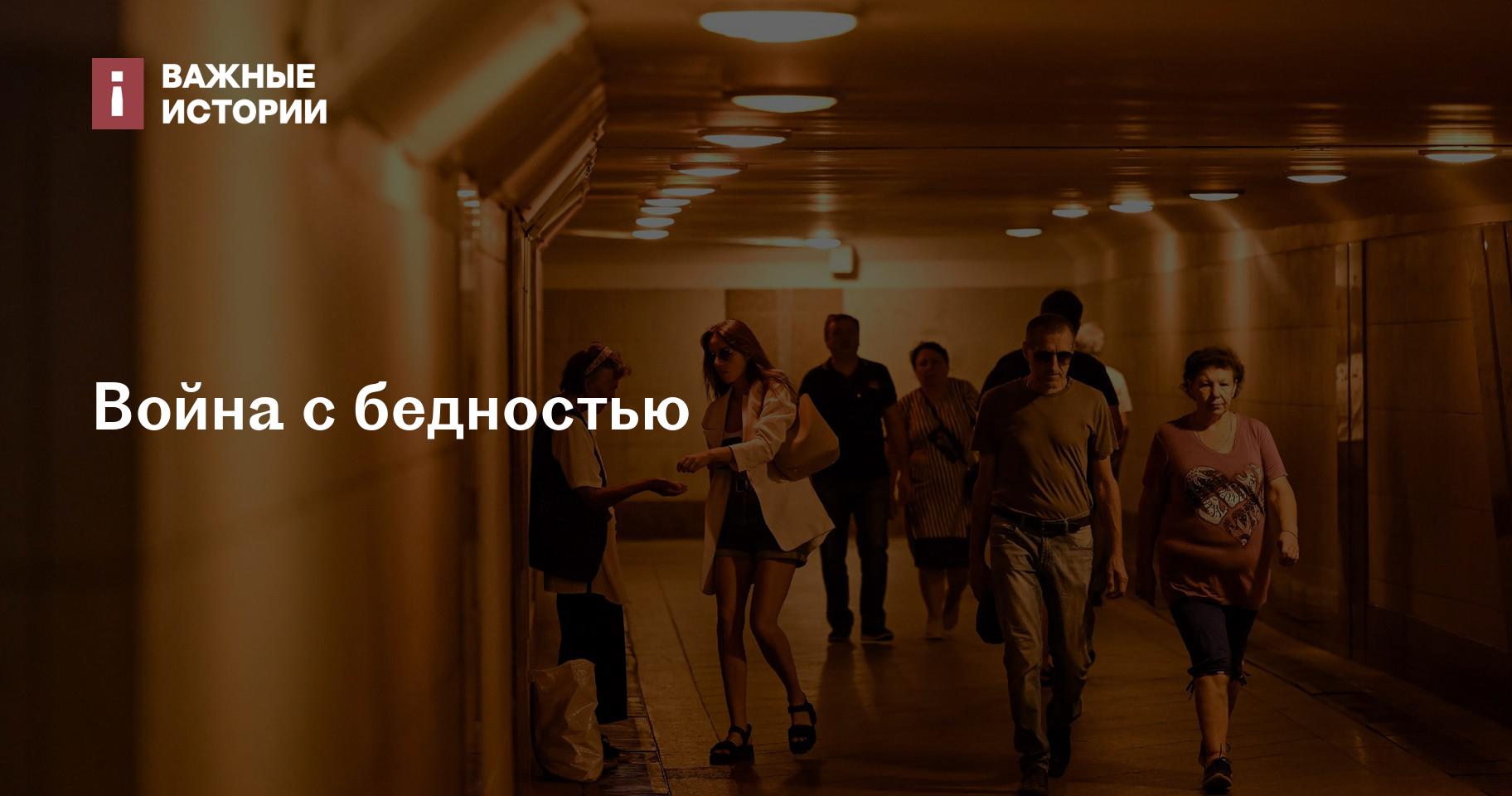
A full -scale war is going on for the second year, GDP in 2022 decreased by 2.1%, the budget deficit is calculated by trillions of rubles, but there were fewer the poor in Russia. The number of Russians with income below the poverty border amounted to 15.3 million people, the Rosstat said preliminary data for 2022. This is 700 thousand people less than in 2021.
This fall was reflected at the poverty level in the country - the share of people with incomes below the poverty border (until 2021 it was called the subsistence minimum) from the entire population of Russia. In 2022, it amounted to 10.5 versus 11% a year earlier. This is a historical minimum: the previous record was set in 2012 - 10.7%. Then the poverty level began to grow, reaching the peak in 2015, after which it decreased. Why did you have much greater shocks than in 2014-2015 led to an increase in poverty, as then?
Help of the state
At first, poverty jumped: 14.3% - in the first quarter 2022, 12.1% - in the second. These figures should not be taken seriously: poverty is highly dependent on the time of year (therefore it is the annual indicator that is important). Before the New Year holidays, pensions and salaries are paid ahead of schedule, therefore, in the fourth quarter, poverty is always minimal. This is compensated by her jump in the first quarter (minus one payment), after which poverty is smoothly reduced. Last year was no exception. If you remove this seasonality, then poverty in the first half of the year even decreased: 13 against 13.2% in January - June 2021.
The state support helped. When the blitzkrieg in Ukraine did not work, and Russia was responded with rigid sanctions, it seemed that the economy would collapse. And the authorities began to help those who needed the most. Since April, “children's” payments to the poor have been extended to children of 8-17 years old, and their receipt was simplified , in June, pensions of 10%were indexed .
And then the situation in the economy began to straighten out. Instead of a jump in inflation, we received three months of falling prices, and real (taking into account inflation) salaries from May began to grow - according to the results of the year, they were even a little higher than in 2021. The incomes of the population grew.
Everything was almost spoiled by mobilization, which painfully hit the economy. But in a paradoxical way, she eventually helped a decrease in poverty.
To whom war, to whom mother is native
Mobilized received a one -time payment of 195,000 rubles and the same amount per month. In Russia, this is a lot of money, three times higher than the average salary in the country. Three million rubles are supposed to be wounded, in the case of death - five million.
Russia launched the war mainly by contractors, they had previously received payments and did not apply to the poor. Putin spoke of 318 thousand mobilized. It is impossible to say how many of them belonged to the poor. But based on the fact that their share among the above -mobilized average in the country (say, 1.5 times), it turns out about 16% of the poor, almost every sixth. Given the members of their families, we can talk about 150 thousand people. These are only officially poor, and there are still people with income not very far from the poverty boundary: in 2021 (recent data) 13.5% of the population, the population had an income of 1-1.5 times more border and about the same - 1.5–2 times. With them, the score will go to large hundreds of thousands.
This is already reflected in the behavior of people. Investbanker Evgeny Kogan talked about a businessman who began to quit employees from the family of mobilized: why should they now work for 30 thousand rubles.
This is the second reason for a decrease in poverty: a crisis in the labor market. It was well described by the Central Bank, following a survey of managers of more than a thousand enterprises. In short, due to mobilization, emigration and sharp growth of defense order in the country, a shortage of workers was formed. This is the reason for the record low unemployment. Enterprises lure employees from each other, and salaries are growing.
Salaries are the main component of the income of the population, and they also added sharply, the experts of the Central Department Store (an analytical center advising the Russian authorities) write . The real disposable cash incomes of the population (what remains after mandatory payments taking into account inflation) in the IV quarter increased by 0.9%, although by the results of the year they decreased by 1%. By minimal unemployment, the experts of the TsMAKP add demand for jobs that "jumped, and immediately to a historically maximum level."
Reducing poverty when income falls is an indicator that the main blow of the crisis came in the middle class
So salaries will continue to grow. According to a survey of the Central Bank (Central Bank), in 2022, 82% of enterprises raised salaries to employees, 74% planned this. But not as much as in the past.
The second poverty level
In addition to formal poverty, which has decreased, there is another, which the Tsmakp calls "pre -personality." In it live people with income slightly higher than the poverty line. And they are noticeably more than officially poor.
It can be determined in different ways. We have already given the Rosstat data that 13.5% of the population have 1–1.5 subsistence minimum and 13.3% income from 1.5 to 2. Together with the poor it turns out more than 37%. Another method is the results of regular surveys that infrom by order of the Central Bank. About 10% of Russians do not even have enough money for food (close to the share of the poor), about a quarter enough for food, but not to buy clothes and shoes.
Social and military payments and salaries supported this category. This led to a decrease in inequality. Gini characterizing his coefficient sank to many years of minimums .
However, the risks of the transition from the “pre -person” to simply the poor are very large, especially in the event of shock, notes the TsMAKP. Despite the fact that the poverty level has not yet increased quantitatively, the availability for households of some products could significantly change. The CMAKP compiled a consumer basket for the “poor” from a minimum set of products - without butter, alcohol and other things - plus medicines, household chemicals and housing and communal services without hotels and transport. The inflation of the basket of the poor more often turns out to be larger, and, according to the CMAKP calculations, at the 5-year interval (from 2017 to mid-2022), it significantly exceeded the standard one.
The result is clearly visible on the example of pensioners, some of whom are “pre -bus”. The size of pensions (adjusted for different inflation) changed almost the same for three years, but in 2021–2022 the pensions of the “poor”, according to the calculations of the Central Department Store, fell noticeably faster. There is no official data about this. “Since 2019, the“ average annual pension ”indicator has not been developed, which does not make it possible to draw full conclusions about changing the standard of living of pensioners,” the Accounts Chamberwrote . It turns out that although formally the poverty level did not increase, the position of a part of the poor could significantly deteriorate due to the specifics of their consumer basket, concludes the Central Department Store.
The average poverty level
Nevertheless, the paradox: poverty has decreased, the “prefabricity” seems to have not increased, but the real disposable incomes of the population decreased.
Support “important stories” your donation will help us to continue to tell the truth - we do not obey the censorship to supportReducing poverty in the fall of income is an indicator that the main blow of the crisis came in the middle class, explains MMI analysts. “The poor [authorities] will help, and the middle class is spinning yourself,” said Natalya Zubarevich, professor of Moscow State University.
Whether he will get out, a big question. The TsMAKP calls the problems of the middle class among three risks for the well -being of the population along with the growth of poverty - absolute and relative (formally people are not poor, but cannot support accepted consumption standards). Risks for the middle class - a general decrease in the level of income and consumption standards, as well as "the risk of erosion with burden towards the low -income segments of the population." This is a serious problem, writes TsMAKP, since it is the middle class that “cement” society.
What's next
Although the collapse of the Russian economy did not happen , her prospects were deplorable (“important stories” explained why ). The economy and the budget are rebuilt on military rails, and there will be less and less opportunities to support the poor. The unspoken priority of the authorities in 2023 will be the desire to avoid larger budget expenditures, the economists of Alfa Bank wrote . This year is pre -election, and the authorities will add money to people, but then ...
Subscribe to our ravykums we will send you only important storiesThe current crisis, unlike all past, will not pass quickly, and its “influence on the standard of living of the population will be more serious and long,” said the TsMAKP. Simply put, the authorities do not get rid of one -time measures.
“It is difficult to foresee some growth in real income, rather further sliding,” reasoned the professor of the Higher School of Economics Oleg Vyugin, the former first deputy minister of finance and the deputy chairman of the Central Bank. -In Russia, the poverty parameter depends on the fact that something is paid from the budget. 10,000 for each child - so the poverty indicator improves significantly. Will there be opportunities for such payments? In case of decline - are extremely limited if you do not switch funds from power and defense programs for social assistance. Therefore, the level of poverty, if not manipulated with numbers, will deteriorate. ” We can talk about stabilization of poverty at a relatively high level, concludes the Central Department Store.