
Translated material
STO-art returns
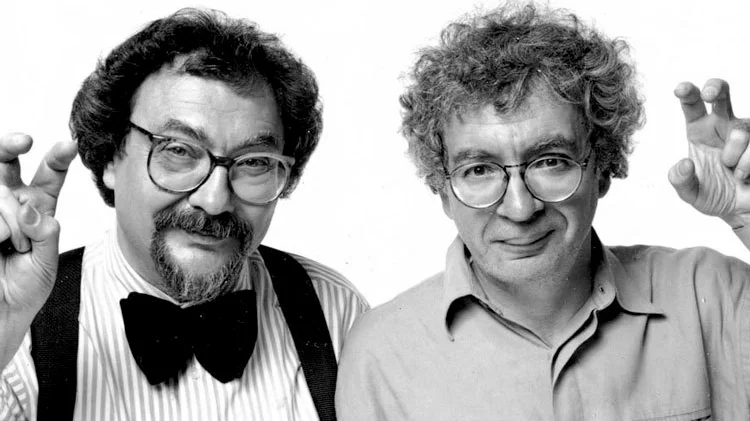
Retrospective of mosquito and melamide
1.
I saw this museum became famous. At the height of perestroika in an ancient, even before the American revolution, the University of Ratgers arrived, led by the very Anatoly Sobchak. The audience was waiting for an important ceremony. A modest museum, which stored for students, as usual in academic America, a couple of each creature, became unique overnight. The legendary American collector Norton Dodge (a phlegmatic good -like, similar to Morge and Goncharov) handed the museum his fabulous in wealth and an indescribable collection of Russian non -conformist art.
In the speech at the opening of the exposition, Sobchak was glad that all this art gathered in one place, and was upset that it was outside Russia. But the director of the museum was beam with happiness.
“Imagine,” he boasted, “that all the paintings of the impressionists got into one museum, and you will understand what I feel by becoming a career of a whole artistic trend at once.”
Since then, the Zimmerly Museum, which was conveniently located an hour from Manhattan, has become the capital of free Russian art, a common denominator for which is just the definition of “free” - from censorship, power, stamps, habits, logic, and sometimes reason.
Each large exhibition, smartly arranged by the curator Julia Tulovskaya, becomes a grandiose event in the life of not only Russian America. But for old -timers like me, this is also a meeting with friends. Luxurious retrospectives of Vagrich Bakhchanyan, Oleg Vasiliev, Leonid Sokov - what a parade of names and masterpieces! And this winter - a huge (to the whole floor) exhibition of patriarchs Vitaly Komar and Alexander Melamid.
2.
I know them for almost half a century and I remember how their glory in America began on the vernisages in New York of the 1980s. Most of all I liked Stalin with Muses - a canvas that caused a cheerful commotion.
The instant success of the picture was due to the fact that social art overturned the leader into an ancient environment with the same enthusiasm brought to the absurdity, with which socialist realism painted uniforms and epaulets, not daring, however, to continue the apotheosis of the servility for the limits of his era.
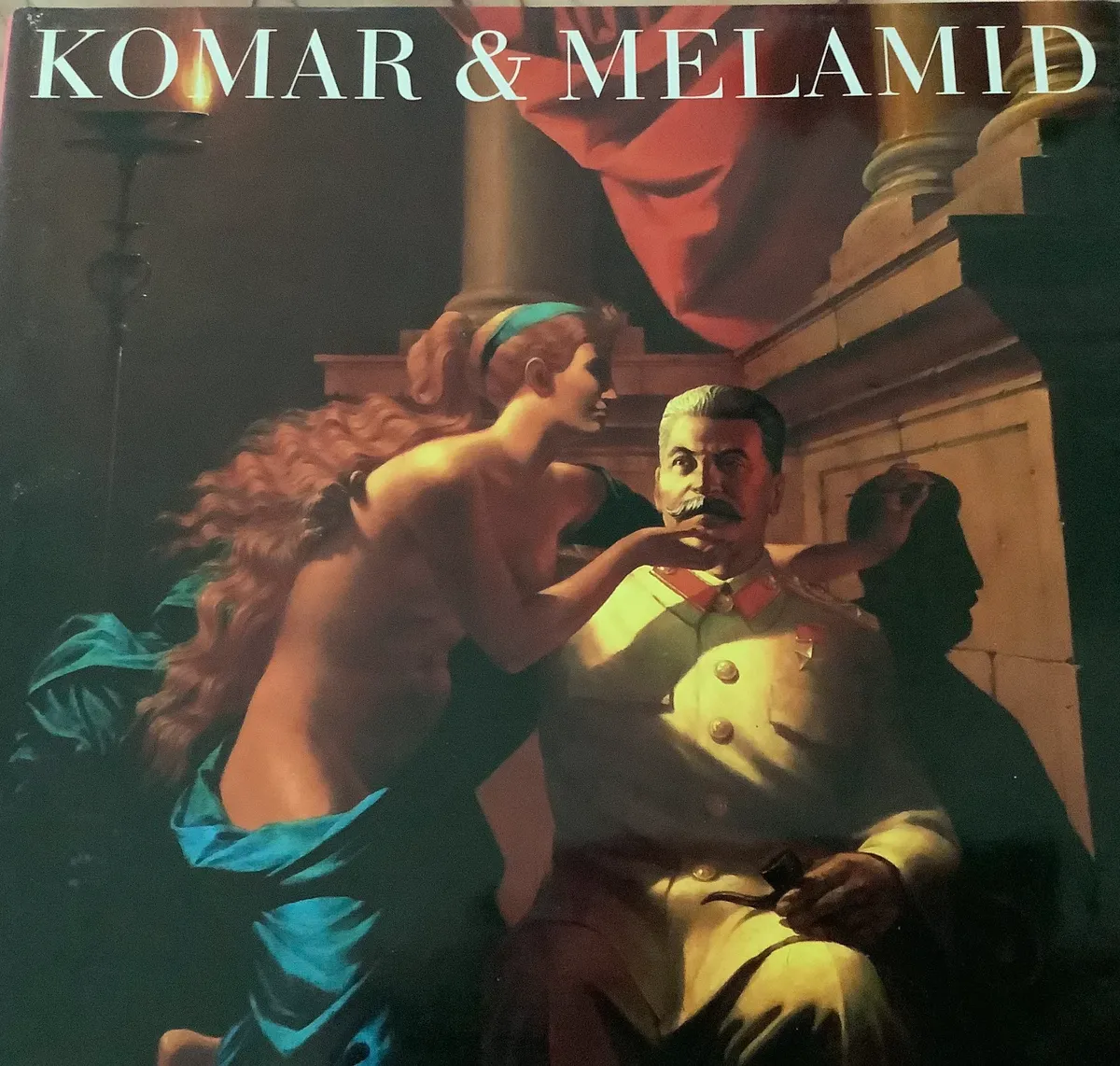
But in a mosquito and melamide hyperbole, sillowing turned loyalty into its opposite: stupid panic.
In the company of MUZ, Stalin did not seem terrible, not formidable, but stupid - like a hero, ineptly embroidered on a bazaar rug.
Having broken the brakes of credibility, the artists demolished the fence of history, erected the cult of personality into an infinite degree and turned their hero into a universal laughing stock.
Artists showed themselves not only skillful practices, but also thin theorists. Socialist-art conquered the West not by the exposures of the crimes of the regime, as Solzhenitsyn did, but the dialectical interpretation of Soviet experience.
“In addition to the obvious irony and exposing sarcasm,” one of them said then, “a lyrical confession is hidden in these canvases.”
“Roughly speaking,” the other added, “in each of us there is a kilogram of Feckali, albeit nasty, but their own.
And this means that in social art art there is also an author’s reflection that explained our place in the mythological series.
Today, when the story in Russia is no longer stomping, but bumming up, this experience again has become relevant. If Stalin could meet with the muses, then why not with Putin?
3.
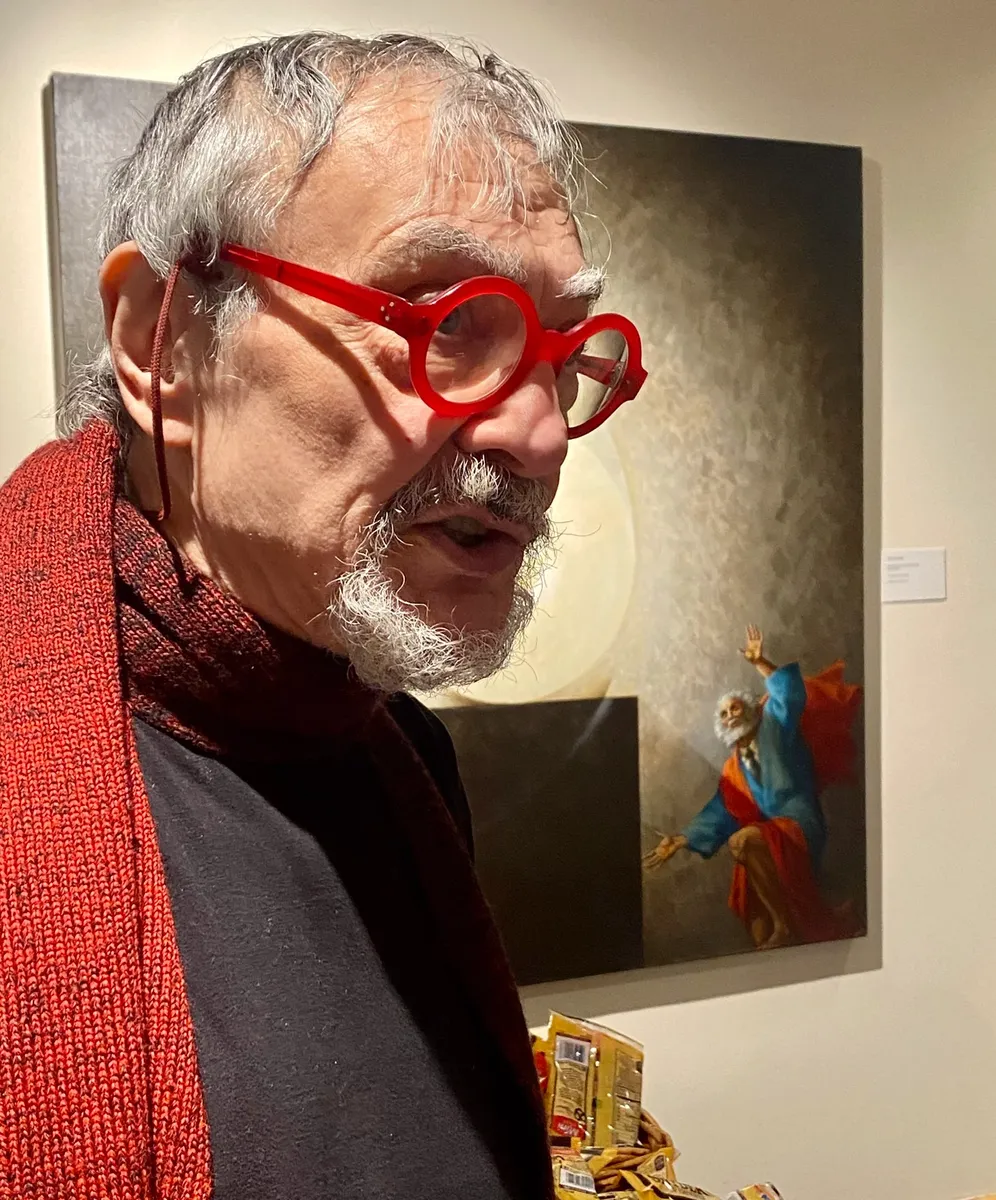
Bypassing the exposition, I was delayed on sign things, noting every milestone in the work of Komar and Melamid. The exhibition divided into Soviet and American periods surprises with rhymes on the present day. Pound said that the artist is an antenna of the race. In this couple, she rushed into the past, but spoke with the future.
So, from long-standing, but again, I discovered a series of “false portraits”, where, as it is now customary, Russian classics are responsible for the crimes of their homeland, and look like Prigozhinsky convicts, especially the one-eyed Tchaikovsky.
Or another old job, where the ruins of the Guggenheim Museum are hiding in the jungle. This is a post -apocalyptic picture, which wonders what would happen if Chernobyl happened on the fifth Avenue.
But a special impression is made by a hall filled with burning canvases written by Vitaly Komar. All these paintings speak of the current war - even when they were written before its beginning. It happens with artists.
In the new works, Komar developed his own vocabulary of video symbols, which create a mythological interpretation of the disaster. This is not a commentary on events and not a reflection of them, but an autopsy of reality, exposing the deep causes and internal sources of what is happening. For a mosquito, this is primarily a violation of the cosmic balance.
“Putin’s bear,” says the artist, “and his cruel attack on Ukraine is reflected in several of my works, one of which was exhibited at the 2015 Biennale.”
I see this war not only as an attack on state borders, but as a dangerous attempt to destroy the visual symbols of world and socio-political balance:
Yin-Yang and Libra of justice. I unite them on one canvas, showing how the enemy in the form of a bear attacks space and political boundaries.
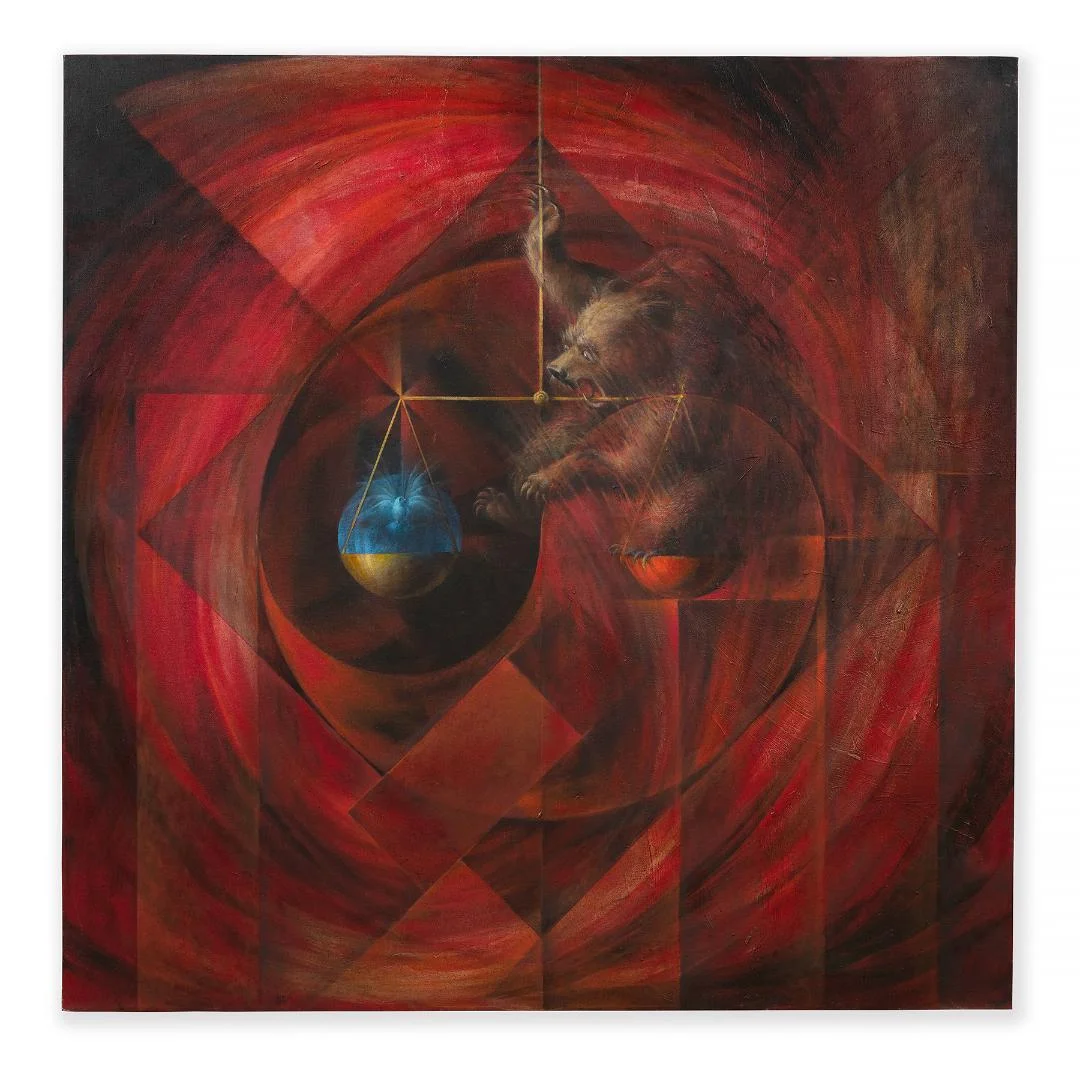
A mosquito bear does not look like cute bears with candy candy wrappers. His bear picks up and develops the traditional image of the sovereign beast with all its inherent features, the first of which is treachery. I had zirkachi friends, including trainers. They said that the only animal that cannot be trusted is a bear. On the arena, lions and tigers appear without a muzzle, but they do not remove him from the bear, because he is terrible and unpredictable. At the same time, as a heraldic symbol for the state, the bear radically differs from ordinary lions, eagles and unicorns. Following the figurative system of social art, the bear is a folk king, it is found with gypsies, it can turn and dance at the festival. This is a certain heroic-comic cross between Yeltsin, Pugachev, and now Putin.
The current work of Komar introduces a new alphabet of symbols, but the artistic texts written by them return the viewer to that pathos of mission and protest, to which social art owes their recognition on both sides of the ocean.