
Translated material
Man of the day: Alexander Vertinsky
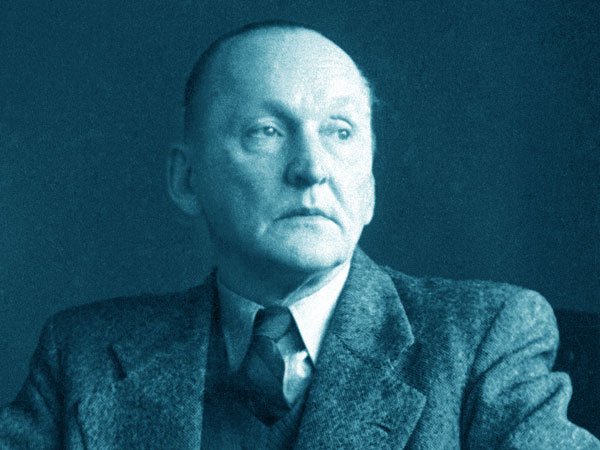
On March 9 (21), 1889, Alexander Vertinsky, poet, composer, singer, actor, creator of the famous image of Russian Pierrot, was born.
Personal business
Alexander Nikolaevich Vertinsky (1989 - 1957) was born in Kiev in the family of private attorney Nikolai Petrovich Vertinsky, who could not marry his mother from the nobles Evgenia Stepanovna Skolatskaya, since his first wife did not give a divorce. Father "adopted" his own children a few years later. Parents died when Vertinsky was still a child, after which he and his sister Nadezhda were in different families of his mother’s relatives, and his brother assured that his sister was dead. They met only in adulthood.
The theater Alexander was carried away in the gymnasium, from which, however, he was excluded. Then he joined the literature - he wrote reviews of celebrity performances and small stories. At this time, he met Mikhail Kuzmin, Konstantin Malevich and Mark Shagal.
In 1913, Vertinsky moved to Moscow, where he began to perform in literary and dramatic communities. He tried to enter the Moscow Art Theater, but Konstantin Stanislavsky personally refused a reception due to trigger. However, this did not prevent his debut at the Miniature Theater and in the cinema in the film “Cliff”.
On the war, the novice artist went as a volunteer - to the sanitary train where he made (according to the records in the magazine) 35 thousand dressings. He was lightly wounded and returned to Moscow.
The program “Pierrot’s Songs” first sounded from the stage in 1915 - then the first image was formed: a special suit and makeup in the “lunar” light of the ramp. Grassing has now become an integral part of the artist style. Later, the image of the “black Pierrot” appeared, more ulcerative and ironic: a deadly white make-up on her face replaced the Domino mask, a black dress with a white scarf on the neck replaced the white costume of Pierrot. Now Vertinsky deliberately sought to create songs-pies or song-nolla with a short finished plot.
At the end of 1917, Vertinsky went on tour in the southern cities of Russia, so as not to return to Moscow before emigration. It began in 1920 with Constantinople. Having bought a Greek passport that provides freedom of movement, he went to Romania, then to Poland. Together with compatriots, Vertinsky began to touring in European countries, where he gradually gained popularity. He also continued to act and release poetic collections.
Having lived for some time in Berlin, in 1925, Vertinsky moved to France, which, according to some researchers, accounts for the heyday of his work (“In the Blue and Far Ocean”, “The Sarasate Concert”, “Crazy Suprine”, “Madame, Leaves are already falling”, “Palestinian Tango”, “Yellow Angel”).
Since the fall of 1934, Vertinsky settled in the United States, where on regular tour, he often gave two concerts a day. Vertinsky’s repertoire began to change: nostalgic motifs (“Alien cities”, “About us and about the Motherland”), several “cardboard” characters performed by broken passions began to give way to ordinary people experiencing simple human feelings.
A year later, Vertinsky first moved to Harbin, and then to Shanghai, where a large Russian colony lived. Here he married Lydia Vladimir Ziggvawa, whose daughter Marianne was born in China. During these years, for the first time in exile, he ran into need, especially after the invasion of China of Japanese troops.
 Alexander Vertinsky
In the second half of the 1930s, Vertinsky repeatedly turned to Soviet representative offices with a request to allow him to return to his homeland. In 1937, A. Vertinsky was invited to the Soviet embassy in China and presented the "official invitation of the All -Russian Central Executive Committee, inspired by the initiative of the Komsomol." But the documents were never executed due to the beginning of World War II. Vertinsky was able to return only at the end of March 1943; Exactly a year later, the second daughter was born - Anastasia (both daughters of Vertinsky became famous actresses). Vertinsky toured at the front, performed patriotic songs - both Soviet authors and his own composition (“About us and about the Motherland”, “Our Woe”, “In the Snow of Russia”, “Another Song”, “Kitezh”).
Despite the very popularity of the singer among the people, the official press to his work was with restrained hostility, concerts in Moscow and Leningrad were rare, they were not invited to Vertinsky’s radio, and records were almost not published. However, he continued to act in the cinema - among his most famous Soviet paintings “Anna on the neck”, “The conspiracy of the doomed” and “The great warrior of Albania Scanderbeg”.
Vertinsky died on May 21, 1957 from acute heart failure. He was buried in the Novodevichy cemetery.
What is famous
The whole country, which was officially unrecognized in the USSR, without exaggeration, knew without exaggeration. The beginning of the fame of Vertinsky coincided with the beginning of its recent history: his benefit took place in Moscow on October 25, 1917.
What you need to know about
According to some reports, it was the Vertinsky that the cold faith was owed to its rapid rise. He was the first to see in her the “demonic beauty” and the talent of the actress and brought her to the Khanzhonkov film factory.
Due to the romance “What I must say” about the death of three hundred Moscow cadets Vertinsky was called to the Cheka. According to legend, saying there: “This is just a song, and then, you cannot forbid me to feel sorry for them!”, He heard in response: “We will have to, and forbid you to breathe!”
The only award of Vertinsky is the State (Stalin) Prize of the USSR (1951) for the role in the film "The Conspiracy of the Doomed".
7 facts about Alexander Vertinsky
- For the first time, Vertinsky married in 1923 on Raisa (Rachel) Pototskaya. The marriage broke up after seven years, but the divorce was framed only in 1941.
- Vertinsky wrote the first request for returning to Russia back in 1923.
- In Shanghai, Vertinsky had to take a tailcoat at the pawnshop every time after the performance, and redeem it before the concert.
- In the USSR, Vertinsky gave 24 concerts a month, including at factories, mines, orphanages and hospitals, and the total number of performances was, according to various sources, from 2 to almost 3 thousand.
- Of the hundred and more songs from the Vertinsky’s repertoire for execution in the USSR, about thirty were allowed, and a censor was present at each concert.
- The artist gave the last concert on the day of his death.
- Asteroid (3669) Vertinskij, open on October 21, 1982, is named in memory of the artist.
Direct speech
About emigration: “What pushed me to this? Did I hate Soviet power? Oh no! The Soviet government did nothing wrong to me. I was an adherent of any other system? Also not: obviously, it was a passion for adventure, travel. Youth carelessness. "
About work abroad: “All our acting whims and tricks in their homeland suffered with an affectionate smile. The actor was considered the highest being, to which a lot was forgiven and a lot was allowed. From this I had to wean in a foreign land. And the taverns were terrible because, regardless of whether they were listening to you or not, the artist is obliged to fulfill his role, the audience can behave as she wants, sing, drink, eat, talk or even scream. ”
About the USSR: “I went through today in the mind of all my friends and“ friends' '' and realized that I have no friends here! Everyone walks with his own adhesive and grabs everything that he needs, spitting on the rest. And all the psychology he has `` Avoschny '', and you - at least die - doesn’t give a damn! <...> You look at this story with Stalin. Everything is false, vile, wrong. <...> At the congress, Khrushchev said: '' We will arise the memory of 17 million people tortured in the camps ''. Wow?! Who, when and what will pay for the '' mistakes' '' of all this bastard?! And how long will they mock our homeland? "
About Soviet culture: “The palaces of culture are being built throughout the Union, but they are not built. They forget that culture begins with them. ”
About the reputation in the Soviet Union: “It is strange and unpleasant to know what they write about me, they know and remember more than in my homeland. Until now, about a million a year are released abroad, and here from under the floors they still sell me in the bazaars '' along the blat '' along with the vulgar Kabatsky singer Leshchenko. "
Materials about Alexander Vertinsky
Page about Alexander Vertinsky on Wikipedia
Life Rules of Alexander Vertinsky