
Translated material
Will China give weapons to Putin?
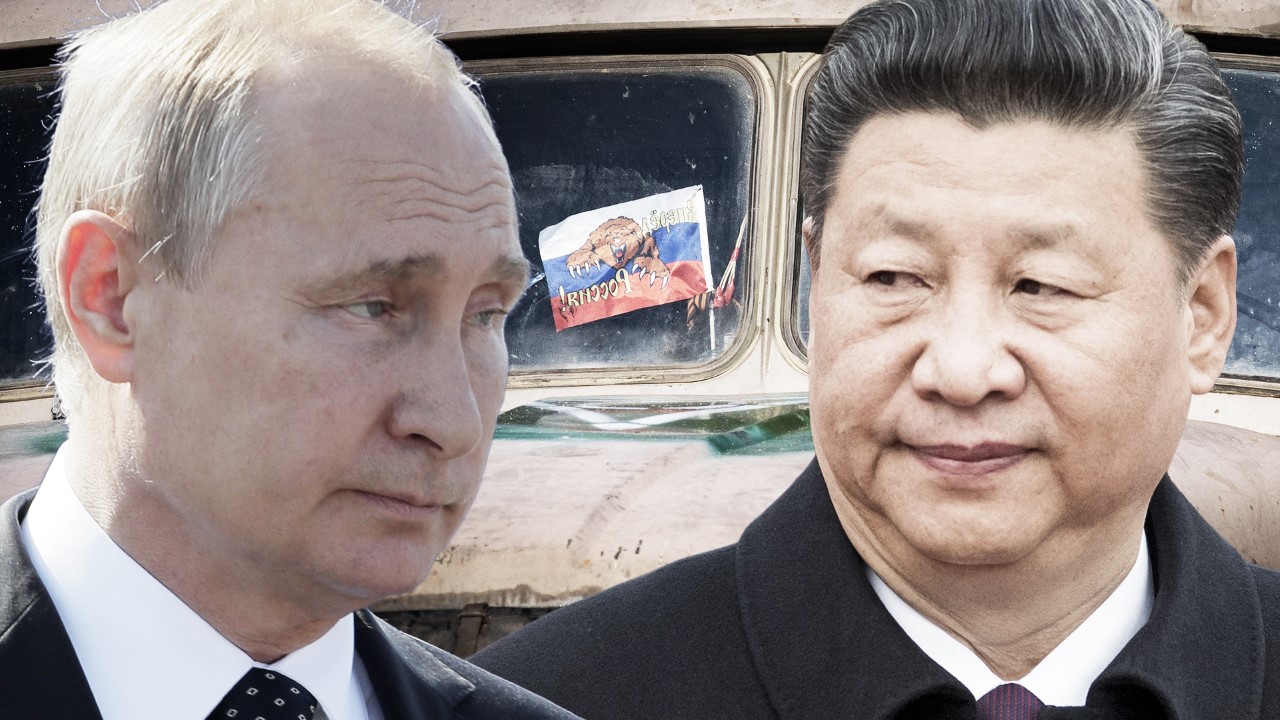
Mumin Shakirov and his guests summarize the results of the 12th week of 2023
Xi Jinping came to Russia for three days. The Chairman of the PRC brought with him a plan how to reconcile Moscow and Kyiv. What did China offer Vladimir Putin and what did he get in return? Who benefits from war in Ukraine? Against the backdrop of the visit of the Chinese leader, searches were held at the Memorial, criminal terms continue to be issued for criticism of the President of the Russian Federation, arrests and fines of opponents of war. Spring of 2023 beats the records of the own cruelty of the security forces. What is the reason for the next wave of repression in Russia?
Mumin Shakirov discusses these and other topics and summarizes the results of the week with the Chinese at the University of Leipzig, Alexei Chigadaev , economist and political scientist Vladislav Inozemtsev and human rights activist, member of the Moscow Helsinki group Ilya Shablinsky .
In the ideversion of the program
Xi Jinping in Russia
Mumin Shakirov: I talked about the features of Chinese diplomacy and the true intentions of the Chairman of the PRC with Alexei Chigadaev .
Why did Xi Jinping come to Russia?
Alexei Chigadaev: The main thing is that the pressure, including the world community, reached a critical level on Xi Jinping, and the conflict was so prolonged that the PRC chairman decided to look with his own eyes what was happening at all. Both the United States and the European Union force Xi Jinping to become, if not a mediator, then to take some consistent position on the resolution of the crisis. And Xi Jinping said: "Do you want me to become a mediator? Well, I will see what is happening at all, I will meet with Putin." I am sure that Xi Jinping will call or talk with Zelensky in some other way. "I will collect feedback and will bargain with you." I think that Xi Jinping will collect a package of some conditions, discuss this with the leaders of the two states and will trade as it is beneficial to China and with the USA and the European Union. "Do you want me to be a participant in this conflict and help in its resolution? We will discuss the supply of military weapons to Taiwan. Do you want me to limit trade with Russia? We will discuss that we have a trade war with the United States."
Mumin Shakirov: Let's try to break the interests of China into current and for the future. What Beijing is reluctant to publicly talk about.
Alexey Chigadaev: The current interests of China: What is still bringing good money. China buys what he used to buy in Russia at a higher market price. He buys it cheaper and can dictate his conditions in terms of supply, in terms of mutual settlements and so on. Strong politically, Russia, China, is most likely not needed. Because in the framework of Central Asia and within the framework of the continent, China wants to remain the largest, most important, decisive force, for which strong Russia, is probably not a gift. Better we talk about future interests. In the interests of the future, this is probably very profitable, because all the attention of the United States is attracted to Ukraine, attracted to Europe. And we know that last year Blinken and Biden signed a foreign policy strategy, where China was called the main military enemy of the United States. Naturally, in China they could not miss such an ears and realized: "Well, let the Americans look anywhere else, only not at us. The Americans will allocate 88 million help to military Ukraine - and well, these 88 million will not go to tanks for China." Therefore, here, probably, the main foreign policy course is a distraction of attention. We will adhere to the main principle of China: "Let's all do everything that they want, not intervene in each other's affairs and will trade." And I think that today China remains in the plus, of course.
I'm not sure that the Russian political leadership has some incredible offer that could be of interest to China
Mumin Shakirov: You wrote in one publication: "The collision of the United States and the PRC seems not just a variant of the development of the future, this is a statement of fact." When and how will this happen?
Alexey Chigadaev: This is written in the US foreign policy. I do not presume to predict that this collision is inevitable, I only quote our American colleagues. The form of this conflict is incomprehensible to me. There is now a coalition of states around China, not very friendly to it in military terms. There is Japan (where the US bases), which increases its military budget, it is almost twice as much as Chinese. There is Australia. There are Philippines who are dissatisfied with the influence of China. There is Vietnam. There is South Korea, where the US bases are. There is India. Border conflicts occur with India about once every two years, about 100 people die there. That is, China, it seems to me, has much more reasons to worry about their safety than Russia had them until February 24. Imagine the military conflict of these countries with China. How can it be - I do not really understand. China is huge, it has a reliable rear, including Russia and Central Asia. China has a sea border, including Taiwan, with Japan and Korea. To me, as a person who reads these documents, the US statement seems incredibly wild. Why write about it? What goals do the United States want to achieve, declaring China its future enemy? We do not have a single Chinese document that says: "The USA is an enemy number one." None of the official officials said: "Our enemy is the USA, and the war is inevitable." It would be very strange. And that would be a terrible signal for all of us.
Mumin Shakirov: Pompeznaya meeting in Moscow, a motorcade with motorcyclists, a cleaned capital, kilometer traffic jams, direct esters, propaganda television channels in ecstasy cover the meeting of two leaders. And at the exit - emptiness. Xi Jinping arrived, praised Putin and flew back to Beijing. No high -profile statements, fateful documents. And what is the intrigue then?
Alexey Chigadaev: We will give out the main formula of Chinese policy. Every Chinese holds in his head: "Is it beneficial to me? And what will I get for it?" This is a very rational and understandable logic. Surely there were requests, the explanations of the Russian side, some plans were explained, possibly a vision of the future, but probably Xi Jinping answered all this: "What will I do for it?" Perhaps he didn’t even say, but he had this thought in his head. And I'm not sure that the Russian political leadership has some incredible offer that could interest China. Yes, this was justified in the sense that propaganda exists exactly in order to inflate the information farms. There was no excitement in the Chinese media. I specifically went to the sites "Jenmin Gibao", "Sinhua" - this was the news, but it was not central: "SI chairman went to a foreign tour. SI chairman met with Vladimir Putin." Just because the Chinese reader is not clear what it means to him.
Mumin Shakirov: Chinese plan to resolve the situation in Ukraine published on February 24. There are 12 points. The first lines: "Respect the sovereignty of all countries, observe international laws, including the UN Charter, the territorial integrity of all countries." Judging by the reaction of Moscow, this version of the document is unacceptable for Putin. Maybe hence the quiet departure of the guest?
The Russian Federation has not received support in the military operation by China, it does not exist, it is not on paper
Alexey Chigadaev: Yes. This is, perhaps, some cunning or art (from which side to see) Chinese diplomacy. The principles of this plan are very good, they do not contradict international law. And the phrase "sovereignty must be respected and not violating other people's boundaries" is absolutely beautiful and completely logical. And it is impossible to argue with her either Jinping, or to any other state leader. And I think there really was an explanation from the Russian side of what was happening at all. As far as we understand, these explanations do not really convince China simply because we do not see any response. Could Xi Jinping get up, pat Vladimir Putin on the shoulder and say: “We join the Russian front, we will build an anti -Western coalition, our UN, it will have an incredible right of sovereignty for each of the states and everyone will be free to do everything that he wants”? Of course, he could. But back to the sacred question: why is this China? There is no need for China. The current political landscape in the world is absolutely satisfied with China. We may not agree with the Rules of the WTO and say that they are bad, and China says: "wonderful rules! We only benefit from this." We can say that the UN is a bad organization, and China says: "A wonderful organization! We are always for the UN, because we are a member of the UN Security Council, we are responsible for the fate of the world." There was the term "oonization". I really liked him, I recognized him from Xi Jinping in his article. In this sense, China does not cut itself off from the position of the mediator. Perhaps some very right-right reset patriot can interpret the visit of Xi Jinping as supporting Russia. But to read the texts, to watch the interview - nowhere to the Russian Federation received support in the military operation by China, it does not exist, it is not on paper.
Mumin Shakirov: The volume of Beijing with Moscow is 190 billion dollars a year, with the USA and Europe - 1.5 trillion, eight times more. Is this a strong argument so as not to supply Russia's weapons? Or can geopolitics in this case steer the economy?
Alexei Chigadaev: We have numbers that talk about this: Russia last year escaped to 10th place in terms of commodity circulation with China. This is comparable to Vietnam, their gap is not so large. And sacrificing the US market, the EU for the sake of the Russian market is completely unjustified. Despite the fact that most of the exports from Russia to China are resources: coal, forest pillomatter. And what comes from the EU, what comes from the United States ... Of course, they rot and everything is bad with them, but there are technologies, processors, iPhones, computers. Russia cannot sell as many technologies as the USA and the EU. Therefore, China will not refuse high-marginal trade iPhones, computers, and truly high technologies for the sake of barrels with oil and wood.
What is it in the economic embrace of China?
Mumin Shakirov: We will continue the topic of Russian-Chinese relations with Vladislav Inozemtsev . What is it like to be in the economic hugs of China and is it possible to jump out of them after the war in Ukraine? What was the purpose of the visit? Did you manage to see that perhaps other experts did not see?
Vladislav Inozemtsev: The visit, of course, was requested by the Russian side, there was no serious reason to go to Moscow by Si Jinping himself. The Chinese side did not associate some big hopes with this visit. Of course, it was said that the Ukrainian theme would be discussed, a Chinese peace plan was announced, but completely quickly, in my opinion, on the first day, it became clear: there is no chance that Putin could start talking about resolving the conflict. The visit is empty, in fact, it turned out to be so. No agreements were signed, no declarations, with the exception of the most general ones, were demonstrated.
Putin for the sake of his whim destroyed ties with Europe, if he suddenly did not like something in China, he will do the same
Mumin Shakirov: "The President of Russia whether the Vassal of the Chinese leader has become." How do you perceive this opinion imposed by various experts - as a metaphor or really Russia's economy is now tightly attached to the Celestial Economy?
Vladislav Inozemtsev: I think that this, softly say, is not entirely true. If Putin lay down under Xi Jinping, then, of course, he would begin to promote his peace plan, which in no way is visible. Putin continues his Ukrainian adventure and will continue it, apparently, until the last opportunity. Is the Russian economy attached to the Chinese? Of course, it is attached, but you need to understand how. It is attached, from the point of view of China, not too much, because all Russian energy supplies to China are about 10-11% of gas and somewhere around 17% of oil that China imports. These are large volumes, of course, but not determining. Russia does not dominate this market as it dominated in European last year. At the same time, of course, Russia buys a lot from China, including high -tech goods. The industries will be monopolized in the near future (or already) by China - the sale of smartphones in Russia, automobile industry, all equipment for mobile communications, many, apparently, transport technologies and so on. That is, China, of course, holds Russia on a short leash. But how short it is - I would not exaggerate. Because the political subjectivity in Russia is completely. And economic factors, in my opinion, are still secondary for Putin. For the sake of his whim, Putin destroyed ties with Europe, if suddenly he didn’t like something in China, he will do the same, he will not think again, only then people will figure out what to do with it. But to say that Putin Vassal, no, I would not.
Mumin Shakirov: What will be the price of Russia's return to Europe, to the circle of former partners who pay more for resources than India and China, and share new technologies?
Vladislav Inozemtsev: This is not an economic question. This is a question of changing political preferences. The price of the issue is the end of the war in Ukraine, probably some compensation, reparations in favor of Ukraine, many problems related to military crimes, their investigation. I would say that the price of the issue is such that no one will pay it while Putin is alive. Therefore, the issue of returning to normal relations with the West, the sale of resources at more worthy prices is not worth it at all.
Mumin Shakirov: The Japanese Prime Minister came to Kiev at the moment when the Chinese leader was in Moscow. Fumio Kisida promised a little one of five billion dollars to restore the Ukrainian economy. Can Tokyo become a military-political ally of Washington and the European Union to strengthen this alliance against the conditional “axis of evil”-Iran, Belarus, Russia and China?
Vladislav Inozemtsev: Japan will act extremely carefully. It has long been a regional counterweight to China, and the United States consider this this way. Japan has been building a rather close allied relationship with India for 20 years, which also looks at China rather askance. In general, in general, a new security architecture in Asia is built in the Pacific and Indian Oceans. Based on security, then at least a new block architecture appears there for sure. Therefore, I would say that the confrontation between Japan, in my opinion, is quite unlikely. Japan has nothing to share with Russia. I do not think that she wants to untie the conflict with the Russian Federation. As for China, Japan carefully monitors its strengthening and, of course, is not happy about this. And naturally, in Asia it will conduct an independent, independent, to some extent anti-Chinese or at least restraining China with a policy. As for Belarus and Iran, I would not say that Tokyo has at least some business before them.
Mumin Shakirov: Experts write that Xi Jinping refused to finance the construction of the new branch of the Siberia - 2 gas pipeline through Mongolia to China, and this was a sensitive blow to Putin. Why doesn't Beijing want even more cheap gas from Russia?
Vladislav Inozemtsev: There is no unequivocal answer to him. On the one hand, in China with energy, everything is fine, he has something to choose from. The Pacific Ocean has Australia, Indonesia, its own Chinese booty, Qatar, which is ready to supply liquefied natural gas to China. Moreover, in the 22nd year, China reduced the import of all types of energy resources. Therefore, Putin’s proposal to increase the supply of gas supply by 2.5 times, taking into account the second branch of Siberia, China is not just inspiring, but, by and large, is not a priority task. We perfectly understand that it will only be in six to seven years, and no one knows what will happen then. Plus, as I understand it, China is not enthusiastic about the gas pipeline route itself, because it does not want to somehow depend on the transit from Mongolia. Therefore, there are many questions here. China is not that he refused to sign some contracts, but they were not as such. Until now, there is a study of the feasibility study of this pipe. Therefore, it seems to me that the readiness of resolving this issue was low. On the other hand, China did not certainly force it. This was partly due to the fact that no progress on the peaceful plan was also achieved. I had the feeling that Xi Jinping was driving in order to get the laurels of a peacemaker, and since he was clearly not offered to him, his interest in cooperation in other areas was also a little in a little bit.
Mumin Shakirov: Putin wages the war for exhaustion, and he has enough resources. Where is the weakest link in the Russian economy when you have to make unpopular decisions?
Vladislav Inozemtsev: You mean: at what stage and at what site the money will end. They will not end. At least for another one and a half years, Russia has enough money, and even if they are not, they can be invented - occupied, printed - and throw them into the economy. The economy is such a strange thing that even printed money gives it very often a very real effect. We perfectly remember, for example, how two years ago in the United States during Covid was printed, but in fact, about five trillion dollars were imitated or occupied by the Ministry of Finance at the Central Bank. They were thrown into the market, allowed the economy to live for a long time. Then some negative effects such as inflation and other side problems began, but they began later. Putin does not have an understanding that he plans something for a long time, he needs to live here and now, he needs to solve current problems. Loans, emissions, taxes, embezzlement of a reserve fund - this is more than enough to cover all costs for this and next year. There are more questions from the other side. And I am surprised that for some reason no one puts them on whether this money will give some effect. Putin’s performances, which were many years ago, always boiled down to the fact that “we allocate some billions of rubles (or trillions) for such and such needs”, and the entire hall applauds, everything is wonderful. And after that, the topic is removed from the agenda. And whether the program is really executed - no one asks. Over the past 20 years, no strategy, program, nor a state project has been completed in Russia, because some new program replaced the previous one until it ended. This is the arms program and the development program of the railway industry, almost everywhere. The program is adopted for five years, after three years a new one is accepted, and no one will summarize the results of the previous one. Why? Because money is a good thing, but in Russia it very often does not bring a result. The same thing: you can allocate several trillion rubles of the military-industrial complex, but in the end you will still translate the tanks of the 60s, because you cannot produce products on the scale, in the quantity in which it is destroyed at the theater of military operations. The problem is not where Putin does not have enough money, but the question is where this money will cease to bring effect. If you give them to pensioners, they go to stores, and farmers grow their products and sell it - there are no problems here. If there is more money, farmers will grow more, small and medium -sized businesses will work more actively. And in fundamental things there is a problem. Even if you are pushing a lot of money, for example, in the aircraft industry, he will still not make planes without foreign spare parts, which are not. If you are pushing more money in the military -industrial complex, it still will not produce more tanks for you than he can do. It will produce more at 10–20%, but before the war-in the 18-19th-the military-industrial complex reported that they produced and modernized about 300 tanks per year. In the 84th year, under Konstantin Ustinovich Chernenko, one Uralvagonzavod produced approximately 1,600–1800 tanks per year. And this level will not come out with any money today's Russian industry even in 10 years.
What is the reason for the next wave of repression in Russia?
Mumin Shakirov: This spring beats all the records of the softer’s own cruelty, which show unprecedented activity, despite the fact that Russia has been giving mass public demonstrations and rallies for more than a year that would collect hundreds or thousands of protests. The searches of the employees of the Memorial human rights center, by the way, are the Nobel Prize laureates, police raids in bars, real criminal terms for criticizing Putin, arrests and fines of journalists and opponents of war became the usual routine in the information tape. Sometimes it comes to absurdity. In the Moscow metro on the passenger-40-year-old Yuri Samoilov -a random fellow traveler came due to pictures on the phone, supposedly with the image of the Azov Chevron. The court sent Samoilov under administrative arrest for 14 days, according to the protocol on the distribution of extremist materials (Article 20.29 of the Code of Administrative Offenses). About this "Mediazone" was told by his brother Nikolai Lunchenkov . Another story. A resident of Krasnoyarsk was given three years in a colony in the case of calls for extremism and terrorism for a comment about the "old fascist Vovka Putin." The Investigative Committee of Russia opened a criminal case against the employees of the Memorial under an article on the rehabilitation of Nazism. “The investigation believes that a number of employees of the Memorial equated collaborators with victims of political repression and distributed knowingly false information about the activities of the USSR during the Second World War with the use of mass media” - this is the interpretation of security forces. The real reason for the searches for the employees of the Memorial in Russia in the “rehabilitation of Nazism”, as indicated in the case, has, according to the employees of human rights activists of the center themselves.
Another attack on the "Memorial" is the postponed revenge for the Nobel speech by Yana Rachinsky
We will talk about this with Ilya Shablinsky . Ilya, what do you associate with this spring exacerbation of the security forces?
Ilya Shablinsky: In my opinion, another attack on the "memorial" is the postponed revenge for the Nobel speech of Yana Rachinsky. I think that few Russian citizens are familiar with this speech, but meanwhile this is a very bold performance. It took place on December 10 last year in Stockholm. And so about the war going in Ukraine, about the beginning of this war, no one spoke about the initiators of the war for a long time. Here are a few lines from this speech ... "In order to give aggression against a neighboring country for" the fight against fascism ", it was necessary to derive the minds of Russian citizens, changing the concepts of" fascism "and" anti -fascism ". And so on. There are very stringent assessments, very accurate and tough. I think that the presidential administration was offended and decided to take care of this way. And the attack on the attack. "Memorial" is a propaganda operation.
Mumin Shakirov: I will return to the story with a scammer from the metro, who did not like the screensaver on the phone, supposedly compromising the Russian army. The person was put for 14 days - is this a piece business? Or, as Sergei Dovlatov said: "Stalin, of course, is a tyrant, but who wrote four million denunciations?"
Ilya Shablinsky: I still did not hear about such cases anymore that someone was caught and forced to open the phone. Now to demand a telephone for any citizen in Russia is such a requirement from any security officer illegally and unconstitutional. There is article 23 of the Constitution, we guarantee the secret of telephone conversations on it. In Belarus, the secret is canceled, there all these rights are crossed out. There, police officers select phones and first of all watching all subscriptions, all conversations. In Russia, phones are not by force, but they are selected when citizens leave for Estonia, to Latvia. The buses take phones and check the subscriptions. But as if asking. Do not be selected by force. But, I think, soon something will change here. Such a case is one, but, in principle, Russia is moving towards this Belarusian venture.
Mumin Shakirov: Last week, the former mayor of Yekaterinburg Evgeny Roizman , who has not shown political activity, had been hit by administrative arrest. Whose personal revenge? Or is it just the so -called "sanitary prevention" from the Kremlin officials?
Ilya Shablinsky: Maybe the second. Of course, this is someone's personal decision. I think that Kiriyenko sat in the administration with Yarin in the evening, scratched their heads and thought: "Why do we still have Roizman at free? How to be with him?" Who do they work for? They have one customer, and only they should impress him. They then report that they "put such and such, house arrest with such and such." They put Putin on the table this news. And they, sitting in the evening in Old Square, decided: "We must do something with Roizman." I think they don’t even know what to do. They gave these absolutely invented 14 days - just absurdity. Roizman has never been to the VKontakte social network, he has no account. There is a certificate of one of the VKontakte administrators, which says that you can’t write anything if you have no account. The judge listens to all this and makes a decision - 14 days. Some peasants, such as Kiriyenko, are now braking, what to do next.
Mumin Shakirov: Will, in your opinion, will intensify the internal terror and will the queue reaches the intra -Krelevsky purges, given that Putin and the generals are doing at the Ukrainian front, they say, say, not what they wanted?
Ilya Shablinsky: They, apparently, are avoided. Apparently, Putin does not want to follow in the footsteps of the “father of all peoples”, it is important for him to maintain the complete loyalty of his large team, it is important for him to maintain real fidelity, although they are afraid. Therefore, with the one whom they consider traitors, they understand mercilessly. We still do not know how many people were killed, poisoned from court billionaires, from the servants. But I do not think that he will clean ... And Shoigu is still on the spot, and all the Feesbashniki, who gave such information in Ukraine in January last year, are all in place, in general. Here with regard to ordinary citizens, terror can ... that is, punishment, the regime may be toughened. If at the front they will be completely sour, they will somehow be recouped by citizens, they will fight even more tightly with any critics.
4th anti-war forum
Mumin Shakirov: In Riga, a 4th anti-war forum organized by Russian politicians, public figures and human rights activists who had forced to leave the country due to persecution and war in Ukraine was held in Riga. My colleague Ivan Voronin visited the conference.
Ivan, why does this forum take place in Riga? Previous forums took place exclusively in Vilnius.
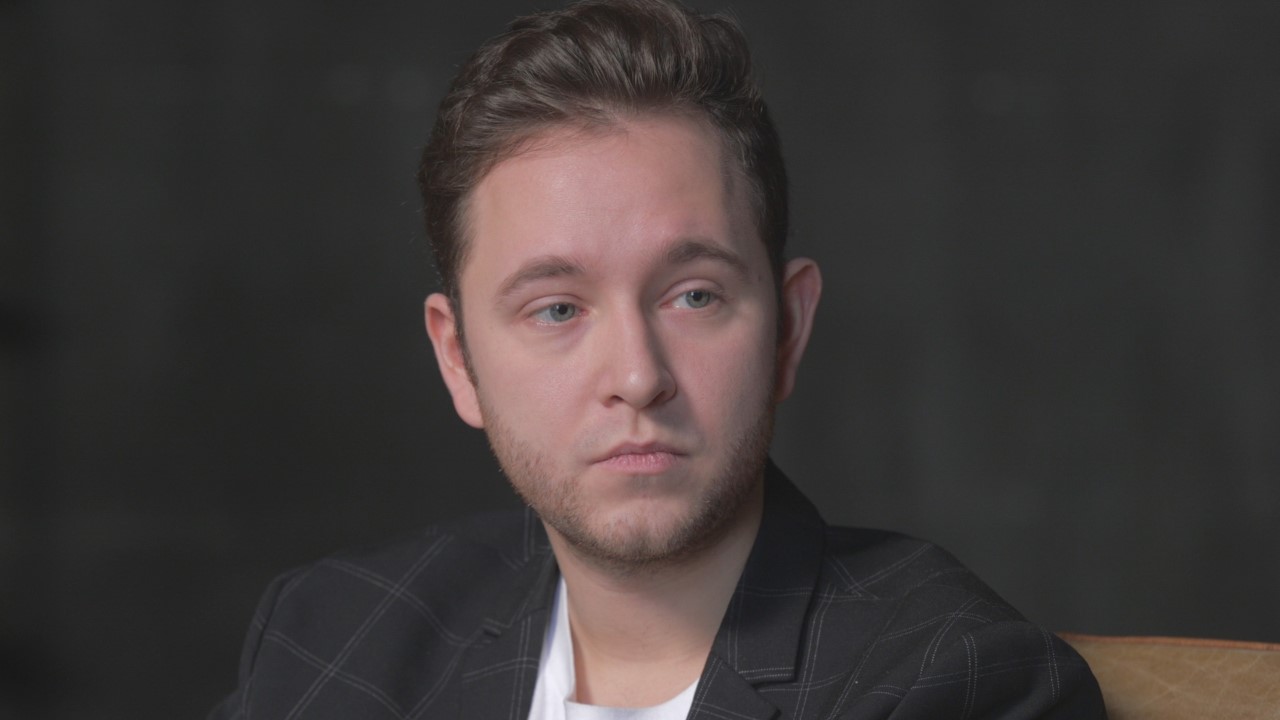
Ivan Voronin: As the organizers were given to understand, they have no task to tie an anti -war forum to one city and one country, since now those who left Russia, being against the regime of Vladimir Putin or opposing the war, are scattered from Lisbon to Yerevan literally. And thus, the organizers seek to expand geography. And they do not exclude that one of the future anti -war forums will be held in Paris, where there is a very large Russian community, which actively opposes the war.
Mumin Shakirov: Every time the opposition gathers, the question arises: whom to call, who is not to call, who is a handshake, and to whom their hands are not presented. Once, one of the forum participants in general, a careless phrase divided the opposition into "good Russians" and "not very." In what atmosphere did this conference in Riga take place?
The Russian opposition and those who opposed the war in Ukraine have too much in common and too much a common enemy to fight this struggle separately
Ivan Voronin: Traditionally, this event is ignored by the supporters of Alexei Navalny. However, I do not exclude that they are no longer called there, since they do not join in many positions. Today, a public figure, a former coordinator of Open Russia Anastasia Shevchenko asked the hall: "Are there those who are or against the idea that the Russian opposition in exile is able to unite?" Были те, кто выступил против: "Нет такой уверенности, поскольку есть разногласия". Мы сегодня об этом поговорили с политиком Максимом Резником, в прошлом экс-депутатом Заксобрания Санкт-Петербурга. Он отмечает, что, на его взгляд, у российской оппозиции и у тех, кто выступает против войны в Украине, слишком много общего и слишком большой общий враг, чтобы вести эту борьбу раздельно.
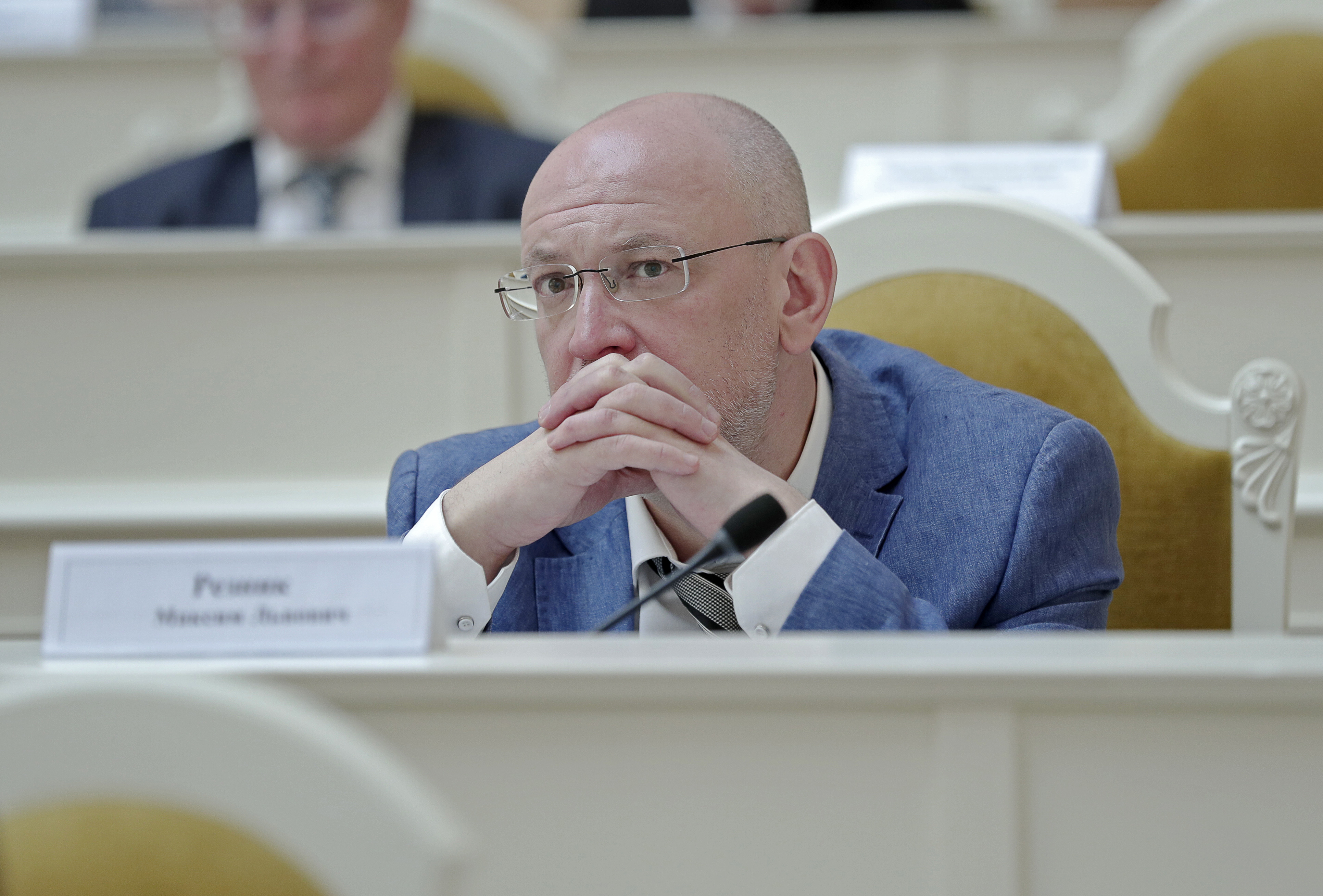
Максим Резник: Время подтвердило, к сожалению, политическую правоту лидеров форума, того же Гарри Каспарова… К российской оппозиции я сегодня причисляю только тех, кто выступает за победу Украины. Потому что это – не победа конкретной страны над какой-то другой конкретной страной. Это вообще не война паспортов и гражданств. Это война свободы и диктатуры. Это война демократии и тоталитаризма. Поэтому у меня, например, с путинскими фашистами нет ничего общего, кроме паспорта. А с теми, кто поддерживает Украину, у меня все общее, желание жить на нормальной планете Земля, где главная ценность – человек, его права и свободы, а государство не перемалывает его в пыль ради собственных бредовых, маниакальных идей. Уже неважно, кем мы были вчера: кто был сторонником Каспарова, Ходорковского, Навального. Мне кажется, это время закончилось, оно осталось там, в 23 февраля. Сегодня мы все антифашисты. Этот весь свободный мир, и мы – его часть, мы должны быть вместе в этом строю, помогать Украине всем, чем можем, приближать любыми своими действиями победу Украины, потому что это приближает свободу России. И ставить задачей не только восстановление территориальной целостности Украины, что безусловно, несет не только безусловную компенсацию ущерба, не только наказание военных преступников, но и демонтаж самого путинского режима. Волан-де-Морт не только должен быть уничтожен, он не должен возродиться, на месте Путина не должен возродиться какой-нибудь Шмутин, Патрушев, Шматрушев или еще какая-нибудь гнида такая же, или еще хуже. То есть сама система воспроизводит все время эту агрессию со стороны территории, которую занимает сегодня Российская Федерация. Поэтому переустройство территории от Калининграда до Владивостока на условиях нормального демократического общежития – это очень важная задача для российской оппозиции и всего свободного мира. Мы должны убедить, что война не закончится, даже если Украина освободит свои территории, потому что агрессор всегда будет стремиться к реваншу, это очевидный вывод. Поэтому зло должно быть уничтожено на корню.
Мумин Шакиров: Существует ли "табель о рангах" на этой конференции? И заходила ли речь о том, как выстраивать это оппозиционное движение? Есть ли идеологические расхождения? Все-таки люди разные собираются.
Иван Воронин: Дискуссия о возможности объединения оппозиции – на повестке дня форума, как минимум это проскакивает периодически и в вопросах из зала, и в некоторых утверждениях политиков. Но то, что мы обсуждали с гостями и участниками этого форума, есть ощущение того, что это и не нужно. Например, мы поговорили об этом с политологом Александром Морозовым. Он считает, что в европейских традициях скорее горизонтальные связи.
Александр Морозов: Требуется ли объединение? No. Я считаю, достаточно того, что все российские гражданские группы за пределами страны занимают одну позицию, что это агрессия, это военные преступления, Россия должна понести в полном объеме – как бы для себя – последствия этого. И в этом смысле слова нет разночтения. Я бываю на многих конференциях, и там звучит одна общая мысль: Кремль должен вернуться к границам 91-го года. Это полностью совпадает с позицией украинского руководства да и всех стран глобального альянса, поддерживающих Украину. Поэтому здесь важно не организационное объединение оппозиции – это ничего не даст. Сейчас все, особенно те, кто находится в Европе, хорошо знают, что сила в горизонтальных связях, а не в иерархии.
Мумин Шакиров: Шла ли речь о том, чтобы политики и общественные деятели подвели предварительные итоги, что уже сделано? И есть ли у них какие-то контакты или "свои" люди, в структурах Евросоюза, где они могли бы лоббировать свои интересы?
Иван Воронин: На прошлом форуме в Вильнюсе мы обсуждали с политиком Дмитрием Гудковым потенциальное открытие офиса российской оппозиции при Европарламенте в Брюсселе для проведения диалога, для построения горизонтальных связей. Это не "правительство в изгнании", но какой-то все-таки репрезентативный орган. И многие участники форума очень надеются на то, что он будет максимально презентовать и тех, кто уехал из России, и тех, кто выступает против войны и режима Владимира Путина прямо сейчас в России. Об этом мы поговорили с сооснователем форума и политиком Иваном Тютриным.
Иван Тютрин: В рамках той большой конференции, которая готовится в Брюсселе, в Европарламенте, изначально был сформулирован запрос, что должны быть представители всех основных оппозиционных групп. Действительно, это часто вызывает недоумение у европейских коллег: как так получается, что даже на этапе взаимодействия вы не можете представить какой-то общий список. По сути, мы говорим сейчас о единственной проблеме, связанной с ФБК, которая существовала по сей день, потому что все остальные крупные игроки, известные эксперты действуют сообща, все совместно в рамках Антивоенного комитета. Так что я вижу очень позитивные сдвиги в этом направлении.
Иван Воронин: Я очень просил Тютрина указать конкретные даты, когда это планируется, но он дипломатично ответил, что "постараемся в течение месяца".