
Translated material
Infection by Nazism
Memorial is accused of rehabilitation of Nazism. Its employee historian Sergei Bondarenko explains the logic of investigators
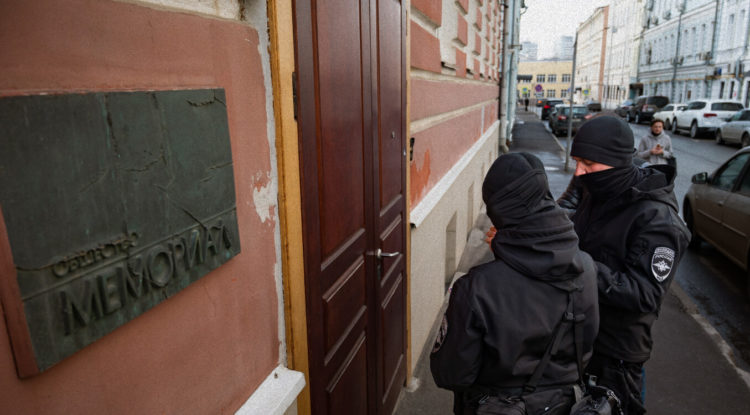
On March 21, several employees of the Memorial Historical and Board Society, which received the Nobel Prize of the world in 2022, took searches. By the decision of the Russian court, Yurlito Memorial has been eliminated for a year, which did not prevent the investigators from accusing the people who worked there, of “rehabilitation of Nazism”. Historian Sergey Bondarenko, a long -term employee of Memorial, tells where these accusations came from, and discusses the paradoxical logic of modern Russian repressions.
In order not to miss the main materials of the "cold", subscribe to our Instagram and telegram .

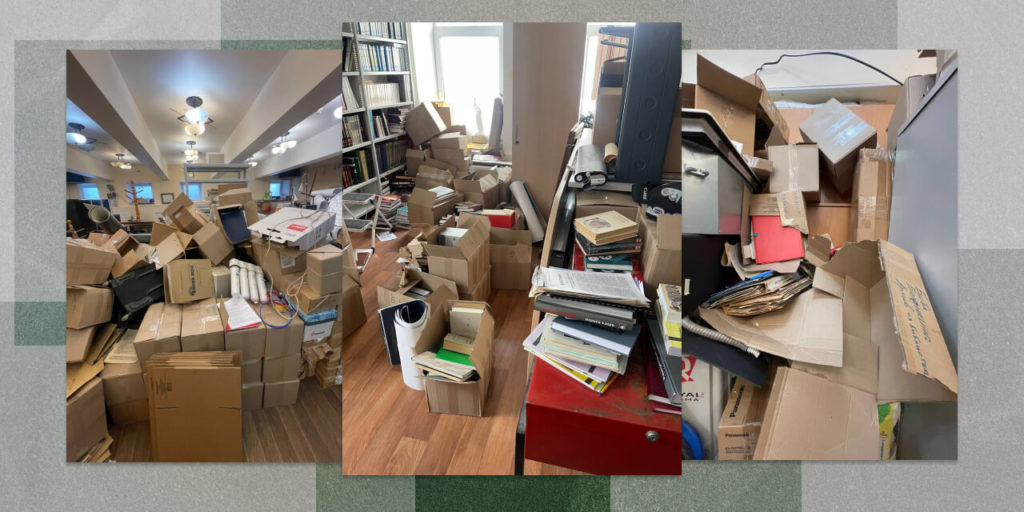
During the search in the Memorial building on a small carriage, the employees of the Investigative Committee drank all the vodka remaining in the building, ate a box of sweets from Bishkek (decolonization?) And, presumably, took several memory books from the library.
Thus, the investigation is looking for evidence of the “rehabilitation of Nazism” in the database of victims of political repression, which the Memorial has been the last 30 years. The point here is that among more than three million records there are people who can be suspected of collaboration during the Second World War. (In total, about 12 million people fall under the modern law “On the rehabilitation of victims of political repression” - that is, the list is also obviously incomplete.)
The Russian state works in two registers at once. On the one hand, announced by the “ino-agent”, and then the liquidated “memorial” is a “bunch of national traitors”. On the other hand, for some unnatural reason, the same people turn out to be authors of the sacred list, the violation of the purity of which is a metaphysical and criminal offense.
The “fake” victims in the lists of “Memorial” were already found before - and this, generally speaking, is normal: mistakes in a huge database collected by the efforts of hundreds of people at different times and with access to different volume of information are inevitable. The compilers are ready to discuss and correct them.
There are three current suspects: Petr Alekseevich Oknikov, Pyotr Pavlovich Dvoye and Rudolf Yakovlevich Naimiller. They are included in the books of Memorial memory in the first half of the 2000s. The first two appear in the same volume of the book of memory of the Republic of Tatarstan on the letter “D” (which leads to interesting thoughts about the criteria of operational search). The Naimiller is from the Odessa region, and his name is indicated in the Odessa Martyrologist-a separate memorial edition, which has been in Ukraine since the mid-1990s. All of them were repressed under various editions and points of the “political” article of the Criminal Code of the 58th article (in Ukraine it was the 54th article) in the 1940s-during and immediately after the war.
These three people have different stories. But in all three cases, we know very little about what happened to them. Investigative affairs for Okolnokov and double are closed for researchers without shoulder straps: the Kursk prosecutor's office refused to rehabilitate them in 2001, and according to the law, access to the affairs of non-rehabilitated in Russia is still impossible. Researchers in Tatarstan, including dual and double, most likely, have never seen the materials of their affairs. Both served a sentence in Sviyazhsk and were attributed to the local book of memory on a geographical basis.
Judging by the data declassified (15 years after getting into the base) data, really participated in the executions of the Jewish population in the occupied territories in Ukraine and Moldova - and was convicted for this for 25 years in 1954. But he fell into the lists of the Memorial as a “special settler”, forcibly moved from the Odessa region much earlier, immediately after the war. Was he deported as a collaborator or as an ethnic German? This can only be checked in the case file, which are still inaccessible to researchers.
The general scheme briefly looks something like this. For decades, Soviet repressive bodies have been engaged in mass political terror: millions of people were arrested and killed. Some of them were posthumously rehabilitated, others were not. Small groups of activists on the territory of a huge state, which fell into a dozen countries, gathered information about these people in state and departmental archives - half -open, half -closed - with the support or opposition of local authorities. And now the new post -Soviet repressive bodies are looking for “Nazis” among three millions of records of people with a complex biography and accuse of sympathies to the Nazism of those who made these records.
The logic of infection by Nazism used by Russian investigators is the logic of familiarization, touch, it has no place for causal relationships. During the search, the SK employees drank vodka, ate sweets, were interested in books about Petson and Findus, took books in the library. Attention, the question: will they become “foreign agents” after that? Do their hair grow on their palms, do they howl on the moon? Are they already infected with the “rehabilitation of Nazism” - or can they be cleansed?
In an optimistic scenario, one of us will live to collect new lists of political repressed ones-they will have those who are now being persecuted for compiling old ones. As it was written on the first page of the book of the dissident and mathematician Vladimir Albrecht “How to behave on a search”: “The manuscript is not to be removed, since it is this circumstance that increases its volume.”