
Translated material
Quentina Tarantino - 60
Here are ten of his inventions that have changed the entire world cinema
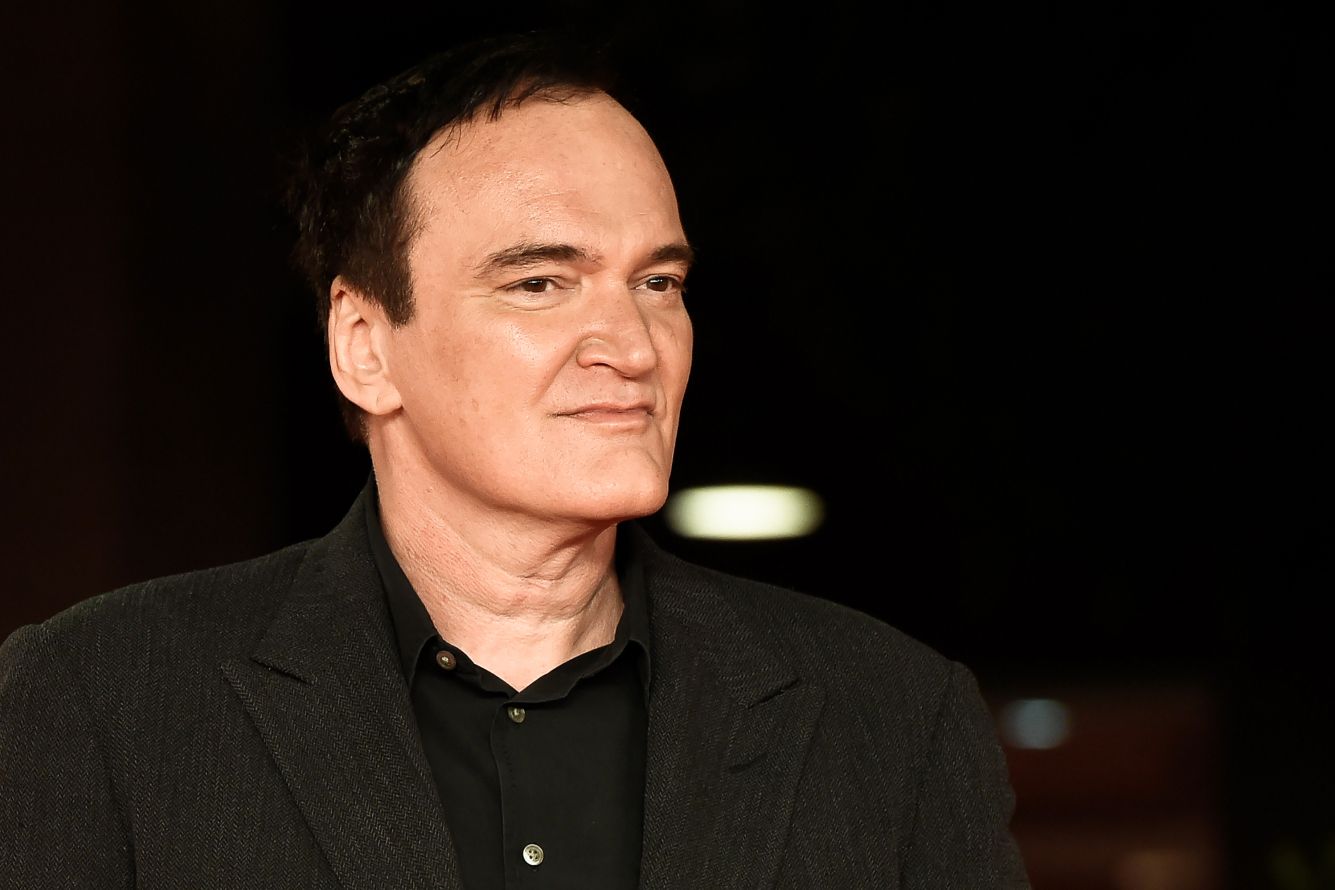
Quentin Tarantino celebrates the 60th anniversary-an age at which, as he repeatedly claimed, it is time to retire. The director promised that he would leave the profession after his tenth film, and the script for it is already ready: a new and presumably the last picture of Tarantino will be called the “film critic”. Anton Dolin summarizes the preliminary results of an incredible career of Tarantino - a list of discoveries, which cinema owes this director.
1. Success Self -taught
Quentin Tarantino never studied at the University of Cinema, he learned everything he needed in California cinemas, from which he did not crawl out of early childhood. Interspersed the future director watched the masterpieces of “New Hollywood” and low -grade genre films (his recent book “Cinema Speculation” ) tells about this. Then there was a video show where he got a job.
The first paintings of Tarantino shown on Sandance - “Frantic Dogs” and especially “Crime Cross”, with the unprecedented success of which the director’s career rise is associated, will accumulate his spectator experience, melting into the original style. The apotheosis of this manner was the dilogy of “kill Bill” - a collage from his favorite genres and borrowed cinemas, which the author appropriated inspirationally.
Enough Tarantino did not belong to the environment of professionals. He declaratively made a movie “On behalf of the audience”, neglecting the hierarchies and the so -called laws of industry. In fact, it was he who made postmodernism in the USA and the whole world of truly popular current. Tarantino is ranked to the generation of self-taught Hollywood directors (his close comrades Robert Rodriguez and Paul Thomas Anderson belong to him), but among equal terms he is undoubtedly the first. At least from the point of view of popularity among the audience and the influence on the authors who came after him.
2. Work over time
Tarkovsky called the cinema "captured time", and many in their own way interpreted this definition. Tarantino proposed one of the most unexpected views. Each of his picture is a detailed experiment with several times.
Firstly, this is the time of action (it can be mythological, as in “kill Bill”, or placed in a specific era, as “inglorious bastards” or “once in ... Hollywood”). As a rule, in his paintings, accuracy in suits and decorations are combined with outrageous inconsistencies in dialogs and design - for example, music. Secondly, the internal time of action, which Tarantino stretches (an episode insignificant from the point of view of the plot, can occupy a disproportionately large interval, such as the prologue of a “disgusting eight”) or compresses, jumping with one gluing through years. Thirdly, the actual order of events: the shocking effect of the “criminal reading” was directly related to the nonlinear chronology of the narrative, which forced the viewer to independently “collect” the film as an exciting puzzle.
3. Tarantino dialogs
The adjective “Tarantinovsky” has long been included in many dictionaries around the world (very few directors have been awarded such an honor - to become part of not only folklore, but also a language), and it means a variety of elements of an individual style. However, most often it is used precisely in relation to dialogues.
From the debut film, Tarantino attracted the attention of critics by the ability to create a dialogue on an abstract topic that is not directly related to the intrigue - but suddenly changing the focus of the viewer’s attention, it is so brilliantly written. “Frantic Dogs” is opened by a conversation about the Like a Virgin Madonna’s song (this can also be seen in a symbolic meaning, because the debutant-player “loses its virgin”, at the same time demonstrating his experience, that is, plenty) and continues with a dispute about tips-these scenes are almost more famous than an episode with cutting of an ear or a final shootout.
The “criminal fiction” glorified the impeccable dance of Vincent Vega and Mia Wallace at the twist contest in the retro restaurant, but the dialogue of two killers about the metric system and what Burgers (“Le Big Mac”) became no less cult. Even in “Kill Bill”-the Ekshn-Kino Encyclopedia-the climax is interrupted by a thorough philosophical monologue about the role of Superman. The unbearable Saspens opening the scene of “inglorious bastards”, in turn, is due to the conversation of Colonel Landa with a French farmer.
Tarantino is an outstanding writer, primarily a playwright. Not without reason, even before his debut, he wrote scripts for other directors - the brightest representatives of the profession, Oliver Stone (“Inborn killers”) and Tony Scott (“True Love”). It is no coincidence that the “disgusting eight”, whose scenario was premature on the Internet, the director initially presented in the form of a dramatic reading. It is clear why, after leaving the movie, Tarantino is going to devote himself to literature.
So far, he writes and does not publish plays or scripts, but prose: the novel “Once in Hollywood” and “Cinema Speculation”, ahead of the publication of a book with a completely Borkhesian idea - “Rick Dalton’s Films”, about an imaginary biography of the character’s fictitious Tarantino, has already been released.
4. Violence
It was customary to extol Tarantino for virtuo -based work with screen violence and cruelty or, conversely, criticize him for speculation at this ancient attraction.
Tarantino really knows how to put a scene of a fight or murder so that the viewer will become uneasy. However, it is almost as important in which the context he puts each such episode. The same “frantic dogs” consist almost completely of the dialogues, although the plot is devoted to the failed robbery, and most of the characters dies to the final: against the backdrop of endless conversations (sometimes about anything, definitely not about business), a sadistic scene in which Mr. Blond tries a bound police, or brutal tip.
The “criminal reading” (MII Wallace’s revitalization using injection in the heart), “Jackie Brown” (the entire action part fits in a few minutes) and even the experimental racing slasher “Proof of death”, which actually occupy very little time, and that is why they cause such a strong response from the audience, especially in the brilliant last foot frame , were arranged in a similar way.
The director repeatedly said that two worlds coexist in his cinema. One is a realistic one, to which the viewer belongs to: here they “play” in movie characters, and violence is always uncomfortable for the public. By the way, most of these episodes Tarantino completely hide from the camera as an accidental murder of a guy in the back seat of a car in a “criminal reading” or in the same place - the rape of Marcellas Wallace. The other is the imaginary world of the cinema, in which literally everything is possible (the action of “kill Bill” is unfolding in it), and violence can be arbitrarily detailed, bloody and spectacular, since intonation and style itself unequivocally emphasize: these are only special effects, not a single living soul on the shooting was affected.
(Here it is impossible not to mention the real injury of the mind of Turman on the set of “Kill Bill”, after which Tarantino’s relationship with his muse went bad - she didn’t act more with him).
5. Music
Another purely “Tarantino” line is special attention to soundtracks, often (“Frantic Dogs”, “Crime County”, “Kill Bill 1”) acquiring the status of an independent work of art.
In fact, Tarantino works like a DJ: collects his favorite tracks, unexpectedly connects the classics with something fresh, and hits with old forgotten melodies. Or as a bartender mixing unexpected cocktails (Tarantino played such a role in his own “evidence of death”).
Many songs were included in the hit parades and playlists-or returned there-it was thanks to Tarantino: this is at least “You Never Can Tell” Chuck Berry and “Girl You <Woman Soon” Urge Overkill from the “Crime-Fix”, “Bang Bang” Nancy Sinatra and “Goodnight Moon” Shivaree from “Kill Bill”, “Across 110th Street” Bobby Wamak from “Jackie Brown”, completely unexpectedly sounding in the historical context of “Cat PEOPLE” David Bowie from “inglorious bastards” and “Apple Blossom” White Stripes from the "disgusting eight", but also perfectly coinciding with the "Hush" deep Purple from "Once in ... Hollywood." No wonder at least two soundtracks of Tarantino are arranged precisely as playlists of fictional radio stations - in “Frantic Dogs” and “Once in ... Hollywood”. And four years ago he himself compiled a three -hour playlist of the best tracks from his films.
Tarantino is known for the soundtracks of the soundtracks, but at least once built a film on ordered music-we are talking about a “disgusting eight”, where he called as the main composer of the master of the Italian spaghetti western, at that time 87-year-old Annio Morricone. For his beautiful score, he received an honored Oscar.
6. Calculation of history
The inglorious bastards opened a new period in the director’s career - more academic and mature, when he began to rethink and copy not only other people's tricks, but also his own. In this heroic and at the same time mockery epic about the Second World War, the final battle of positive heroes - the conspiracy Jewish of Shoshanna and the special forces of the partisans “inglorious bastards” - with the Nazis, in which Hitler himself dies at the hands of the Jews, was the final battle of positive heroes.
The evolution of the imaginary world of Tarantino is logical: since anything can happen in it, there is no reason to make an exception for historical facts and personalities. Placing in the real context of fictitious characters (whether it is a “Jewish hunter” by Hans Landa or Texas ranger Aldo Rhine), Tarantino launches the “butterfly effect”, the natural result of which is a different outcome of the war. At the same time, the director is troll the conservative spectators accusing filmmakers of historical inaccuracies. In a pink film, absolutely anything can happen, any bold fiction is logical if it is justified by the author’s idea.
Tarantino repeats the trick in “Once in ... Hollywood”, dedicated to specific events - the murder of actress Sharon Teit and her friends sect Charles Manson in August 1969. Squeezing the era, up to the playlist of the Los Angeles radio stations that summer, Tarantino puts at the center of the intrigue of two friends-actor Rick Dalton and stuntman Cliff Buta, whose intervention changes the course of history and allows you to save Sharon.
By and large, we see the same “rewriting of history” in the “Dzhango freed”, even if the bloody reprisal of the former slave over the planter is slightly easier for ourselves to imagine what the explosion of the Parisian cinema along with the top of the Third Reich. And in the "disgusting eight" the most important McGaffin is the false letter of Abraham Lincoln, launching the course of events. This is a kind of creative manifesto of Tarantino: any falsification is excusable if it has beauty and metaphorical weight.
7. Mixing genres
The unspoken agreement inside American cinema is as follows: commercial films are clearly divided into genres, while author's cinema neglects genre laws and conventions. Tarantino finds the third way. Its undeniably author’s style consists precisely from the use of canonical genres, each picture is filled with direct quotes and specific references to the classics (primarily commercial cinema), but the layout of the elements is so original and contrasting unexpected that this allows you to create an instantly identified cinema language. Tarantino is an incomparable collage master, and his films are akin to the same unique portraits of Archimboldo .

Thus, the criminal genre already in the “frantic dogs” the director deprives the main component-action scenes (the robbery on the screen itself is not shown at all), bringing this technique to the apotheosis in Jackie Brown: a picture of a bag with money belonging to the Tarantino merchant turns into a delicate film about the second chance and the second chance. late love.
The “criminal fiction” is mowing a nihilistic comedy with a religious parables, a boxing film (and again, without a fight) with a romantic comedy (a dating scene in a restaurant). “Kill Bill” connects American cinema (“Revolutionary Film”, a classic action movie) with Asian (Japanese Samurai film, Hong Kong action movie, anime), seasoning with the hybrid genre of the Italian spaghetti western (he rethinks him again and again in the “Liberated Eight”).
In “inglorious bastards”, European author’s cinema meets with Hollywood fantasies on the World War II (“dirty dozen”, “guns of Navaron Island”). Finally, “one day in ... Hollywood” the director draws a thin line between the revisionism of the “New Hollywood” and the conventions of classical American cinema “The Golden Age”, between which the main characters turn out to be.
8. The struggle for equality
Tarantino canceles any hierarchy, declaratively neglects the division into high and low, most important and secondary (one of the paradoxical consequences - the twice presentation by Christoph Valtz “Oscars” for the “second -plan role” in Tarantino films, where his characters were obviously central).
He refuses Hollywood ideas about the "professionals" superior "lovers": being a self-taught lover, becomes the most respected industry professional. In its “lists of loved ones” and in its own universe, the Class B cinema - militants, slashers, western, comedies and melodramas - with the best samples of “premium” cinema from the lists of Cannes or Oscars. Of course, this also affects the plots and the system of characters in Tarantino films. Those who are used to considering the director a cheerful cynic will be surprised to consider the human rights component of cinema Tarantino.
He introduces to the central roles of the African American-the favorite of his teenager years and the Blaxylotheishn superstar Pam Griere in Jackie Brown, Jamie Fox in Dzhango released (“Classic” Dzhango Spaghetti-Testerna-of course, white), his close friend and beloved artist Samuel L. Jackson: His character Juls in Crime Reading is the only sinner who is a miracle and salvation is granted.
He makes films in which women refuse a passive role, joining martial arts with men and easily winning - from a realistic fight in Jackie Brown to a phantasmagoric duel in “Kill Bill”. In the “evidence of death”, only a woman is able to physically destroy a maniac who killed the defenseless.
Finally, he gives the Jews the possibility of revenge, retrospectively turning them from the victims of the Holocaust into fighters and avengers who can independently deal with the greatest evil of the twentieth century. It is not surprising that Israel chose the second country after the United States, where he married happily and spends several months a year lately.
9. Actors and stuntmen
In an amazing way, Tarantino, who starred in her own films (the most striking episode remains in “Crime Reading”) is deprived of narcissism. In any case, his version “8 ½” , “Once in ... Hollywood”, he devotes to the hardships of not a director's, but an acting profession. Speaking about the film industry and art, he offers the view of the performer, not the creator. Even one of the greatest authors and the idol of Tarantino, Roman Polanski, performs in the film as the pale shadow of his wife - the inimitable Sharon Teit.
It is impossible to become a great American director if you do not know how to work with artists. One cult actors on the films of which Tarantino grew up, he presented his career restart - Harvey Keitel (“Frantic Dogs”, “Crime Crime”, “Crime Crime”), who helped collect the deni for the debut film; It’s forgotten by the mid-1990s to John Travolta (“criminal reading”); Celebrities of the 1970-80s Pam Griere and Robert de Niro (Jackie Brown), who then had a pause in his career; David Carradine (“Kill Bill”) and Kurt Russell (“Proof of Death”, “Minding Eight”). Today's viewer knows and loves them all precisely according to Tarantino paintings.
Tarantino brought others to the forefront and gave them cinematographic immortality - this happened with Tim Roth, Michael Madsen, Uma Thurman, Christoph Valts, Samuel L. Jackson. And even those recognized stars who did not need Tarantino’s support, it was thanks to his roles in his films that came out with Bruce Willis, Jamie Fox, Jennifer Jason Lee, Leonardo DiCaprio, Margo Robbie and Brad Pitt, who finally received his first and so far the only Oscar for the role in “once in“ one time in ... Hollywood. "
In addition, Tarantino is a rare director who is in love not only of actors, but also in stuntmen. They become his main characters - protagonists, like a charismatic cliff But in “once in ... Hollywood,” and antagonists, like a demonic Mike in “evidence of death”. Наконец, в том же фильме, а потом еще в двух, Тарантино дарит важные роли Зои Белл — вовсе не актрисе, а опытной каскадерше, дублировавшей Уму Турман в «Убить Билла».
Знаменитая сцена драки Клиффа Бута с Брюсом Ли в «Однажды в… Голливуде» — это реванш каскадера, который в поединке пусть и не побеждает кинозвезду, но доказывает свое равенство ей.
10. Кино как спаситель
Каскадер для Тарантино — не только супергерой (или супергероиня), но и маг, стоящий одной ногой в реальном мире, а другой в иллюзорном. Поэтому каскадер способен одолеть абсолютное зло, будь то маньяк-убийца в «Доказательстве смерти» (тоже каскадер, но отставной), или хиппи-сектанты в «Однажды в… Голливуде».
Это не что иное как метафора кинематографа — волшебного артефакта, способного спасать жизни и менять ход истории. «Бесславные ублюдки» не убили бы Гитлера, если бы не заманили его в кинотеатр — там, в пространстве вымысла, власть реального диктатора закончилась. Клифф Бут и Рик Далтон не остановили бы Чарльза Мэнсона, не будь они порождениями кинематографической фантазии и актерами по профессии.
Источник художественной силы и самобытного таланта Тарантино — его заразительная вера в невероятные возможности кино. Она передается и зрителю, который отнюдь не случайно видит даже в самых легковесных картинах Тарантино нечто большее, чем остроумное и изобретательное развлечение. По сути, вся фильмография Тарантино — многоуровневый, сложно устроенный и вполне при этом устойчивый храм кино как могущественного искусства, обладающего не вполне еще раскрытым потенциалом. Увлекаясь имитациями реальности, режиссер никогда не оставляет надежд переписать законы самой жизни и привести зрителей за собой в пространство тотальной фантазии, где все возможно и любая мечта (в том числе, американская, об успехе) осуществима.
Anton Dolin