
Translated material
Great six
50 years ago, women first became members of the London Stock Exchange
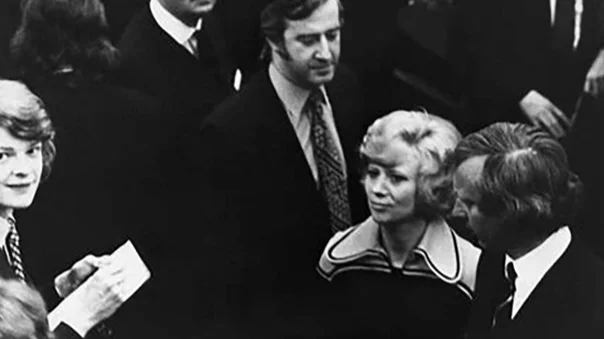
It can be difficult for us, brought up on the Soviet model of equal rights, it can be difficult to believe that women - to property, real estate, inheritance, and a professional career - appeared in the West by historical standards recently. Half a century ago, on March 26, 1973, the world press gathered in the London City to tell about the sensation: six women entered the building of the London Stock Exchange, so that for the first time in 170 years of her story to start a working day of a woman-broker.
Actually, women did not exist a formal ban on women in the London Exchange - just at the time of creating the rules like it was unthinkable. Nevertheless, women's statements about admission to membership were deviated each time by the vote of the Exchange Council with a huge advantage. The exchange of that time was called the "Bastion of the femininity" City with his, according to the press, "the undiluted atmosphere of the gentlemanly club." “In those days, the only woman you really saw or gave you lunch, or was your secretary,” the Boss of a large financial institution quotes the Telegraph.
Formal fears of members of the Council are also known:
But what if the woman will use short skirts and the corresponding special charm to obtain the benefits of the benefit? How will they move in a crowded trading floor? And what about the absence of women's toilet rooms?
It is significant that in 1972 the exchange once again moved-to the new 26-story office block in the very center of the London City with a trading hall of 7 thousand square meters. At the same time, the problem of the lack of a ladies' room as an obstacle to the admission of women was seriously discussed. But although, as historians say, by the end of the 60s the advice of the exchange already saw the need for changes: the first women were accepted only because the London stock exchange merged with the regional exchanges of Birmingham, Glasgow, Liverpool, Manchester (in total with 11 exchanges), where women were taken since the Second World War. There was nowhere to retreat.

These six brave belonged to the middle class and were professionals in finance and business. For a short time, they became celebrities: Muriel Wood, Susan Show, Hilary Rout, Antei Gaucher, Audrey Geddes, Elizabeth Rivers Ballley. All of them were extraordinary personalities with unusual cinema biographies.
For example, Rivers Bully was a champion in the breeding of pigs, a financial observer Daily Telegraph and the founder of a nightclub. After many years, she will be one of the first to take advantage of the right to euthanasia in Switzerland. Muriel Wood, who began his career in City in 1925 as a driver, many times unsuccessfully asked to become a member of the LFB. But on that significant March day, when she achieved her own, she was happy to stuck the “hairpin”: “There is a lot of noise and fuss, but it seems that everything happens at a rather relaxed pace,” she said to the press.
All six women have succeeded in career and after they left City. And on the stock exchange time went on its course:
Computerization (1986) and refusal to trade in face to face earlier than women-brokers allowed to wear trousers (since 1996).
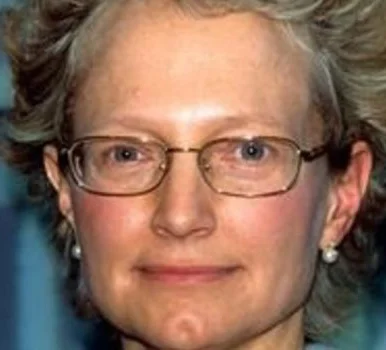
Almost five years have passed when Clara Hedwig Francis Furs became the first woman - Executive Director of the LFB (2001). Today she is the chairman of the British network of the world's largest Bank HSBC - HSBC UK.
The Guardian has recently given the data of specialized researchers, according to which women occupy only 16% of places in directors and 14% in the “Fortune 500” list. In a quarter of these companies there are no women in leadership positions at all. However, the indicators are better in the financial industry, where women occupy 29% of leading positions. A review of the Treasury of Great Britain 2022 on the state of women's entrepreneurship records that the growth of enterprises led by women is ahead of the growth of enterprises headed by men.
Women and money. Only it seems that these two concepts are always connected:
Only half a century ago, women did not have the right to open their own bank accounts, they could not take a mortgage and even - until 1982 - did not have a legal right to buy a drink in an English pub.

If you delve into history, then, for example, in the 21st century, laws consider married man and a woman as one person, married women lose the right to own property or conduct business on their own (single women and widows are a separate story, a great charter of liberties, for example, a separate requirement records the right to rich widows not to be compelled to marry).
In 1870 alone, the UK adopted a law on the ownership of married women, and married women become legal owners of all the money they have earned, including real estate, investments and inheritance. In 1919, the law prohibits discrimination on the basis of gender. This gives women the right to a professional career as an accountant, lawyer or veterinarian.
In 1922, British women and men receive equal rights to inherit property from each other (before being married, women had to abandon all legal rights to property).
The Americans, by the way, go ahead and begin to deal with the problem of equality in wages, and in 1967 the first American appeared on the New York Stock Exchange.
In 1968, 850 women announce a strike at the Ford factory in Dagenham (East London), demanding equal wages with men (they receive more by 15 percent). The strike ends in three weeks, when they increase the salary by 8 percent. And in 1970, the parliament adopts the law on equal wages (entered into force after another 5 years), which forbids women to pay less than men for the same type and volume of work (women could receive half less men), as well as receive inferior benefits in their employment.
Then, in 1975, the Law on Discrimination on the basis of sex announces illegal discrimination of women in the UK in the field of labor, training and education. From now on, women should now include employers, landlords, banks and financial companies. British women get the opportunity to open bank accounts and apply for loans and loans in their name, without the permission of their husband. In fact, of course, it is still difficult for many women to get a loan due to low earnings-they usually earn less men and often take breaks in their careers due to pregnancy and child care.
In 1982, women were allowed to spend their money in English pubs. Prior to this, by law they could be denied maintenance, since pubs were considered a place “only for men”.
In 1987, a compulsory pregnancy and childbirth allowance was introduced in the UK. From now on, women have the right to a six -week maternity allowance of 90% of their usual earnings.
Since 1990, married British have been taxed regardless of their husbands. Their income is now officially recognized by their own, and not by the continuation of the income of their husbands.
Since 2018, all companies with the number of employees over 250 people should publicly declare wages-and the difference in remuneration of labor-male employees and female employees.
And today, the audience discusses the problems associated with the influence of menopause, and the measures that should be taken in order to maintain the maximum number of women in workplaces. The "post -bore" Great Britain is not enough employees. And this movement has and will have their own heroines, like those six that the British recall these days.