
Translated material
Years drowned in blood
The war in Iraq is one of the unsightly pages in history. But the knowledge of what it was, explains why this should not be repeated
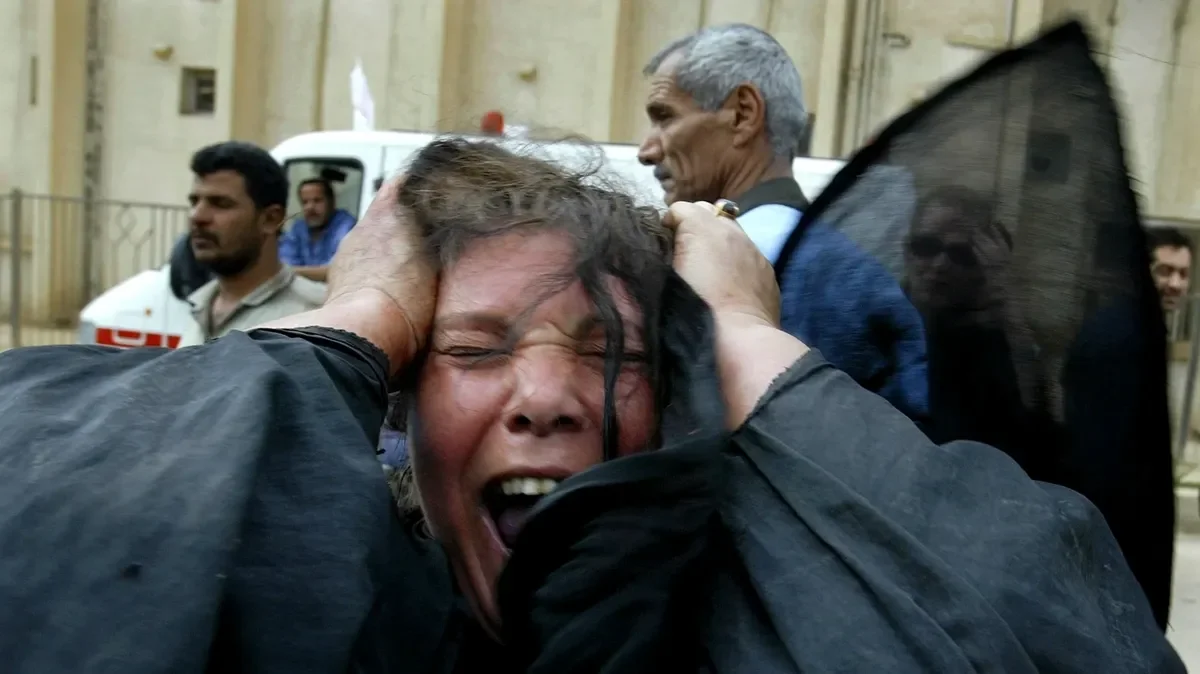
On September 11, 2001, al-Qaeda terrorists* stole four aircraft, two of them crashed into the towers of the New York World Commercial Center, one into the Pentagon building, and the fourth was sent to the White House, or to Capitol-fell in Pennsylvania, without reaching the goal.
After those events, the United States declared a “war on terrorism”. Already in October 2001, the bombing of Afghanistan began, and in November the Taliban were knocked out of Kabul. However, the leader of Al-Qaeda, Osama Ben Laden, managed to hide then.
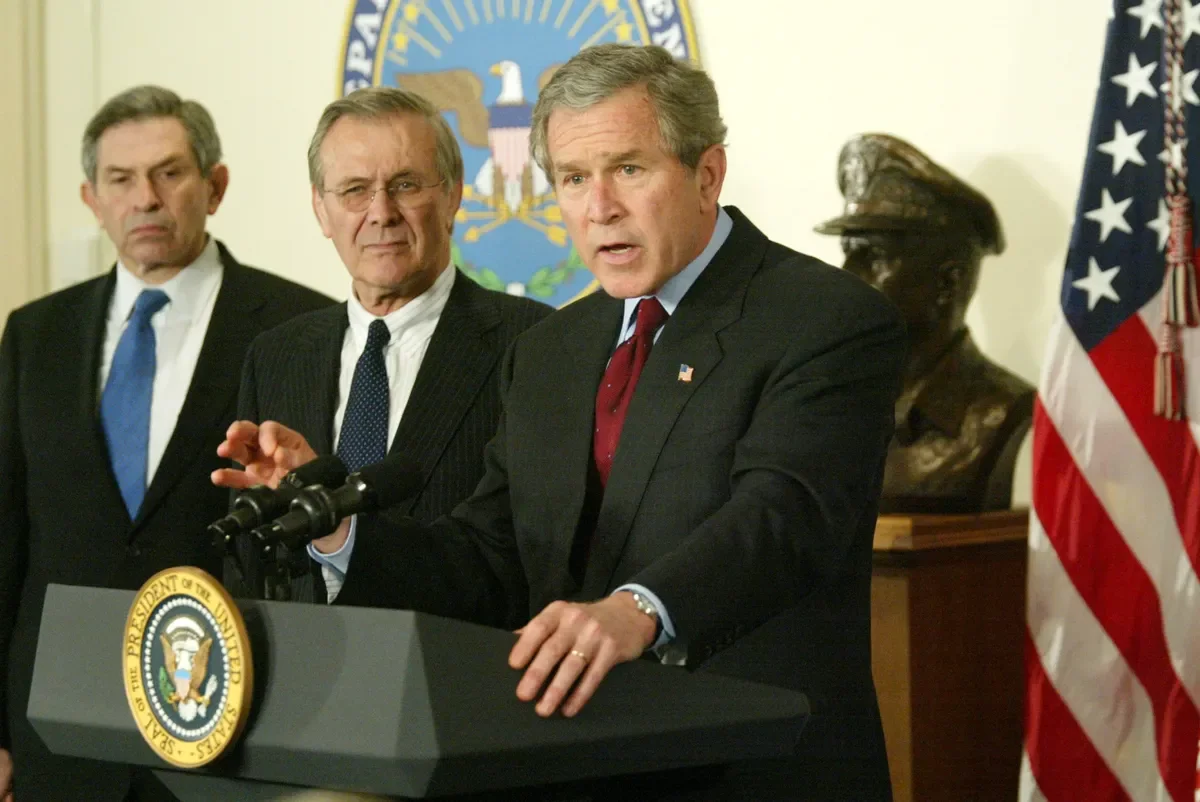
In 2003, after the attacks in Indonesia and Kenya, US President George Bush Jr. decided to start the military operation in Iraq, accusing the country of the dictator Saddam Hussein in relations with the international obligation to disarm (first the UK, Australia and Poland joined this operation, and then several dozen dozen states). The performance of US Secretary of State Pawell in the UN Security Council with a test tube became widely known, in which, according to him, there were allegedly disputes of the Siberian ulcer. He emphasized that in Iraq a lot of such spores has been developed - enough for the whole world.
These parts of the American intelligence community spoke of the opposite, as it later became known, but ignored the US leadership.
Only after the overthrow and execution of Hussein, the same Powell was forced to admit that the weapons of mass defeat in Iraq were not found.
It is known that from September 2001 to September 2003 (before the invasion of Iraq), the US leadership made 935 statements regarding Iraq and not true. In particular, President Bush Jr. made 259 wrong statements, and Powell-254. The invasion of the American military in Iraq was criticized by politicians of different countries, including the former president of France Jacques Shirak, the former German Chancellor Gerhard Schroeder and President of the USSR Mikhail Gorbachev.
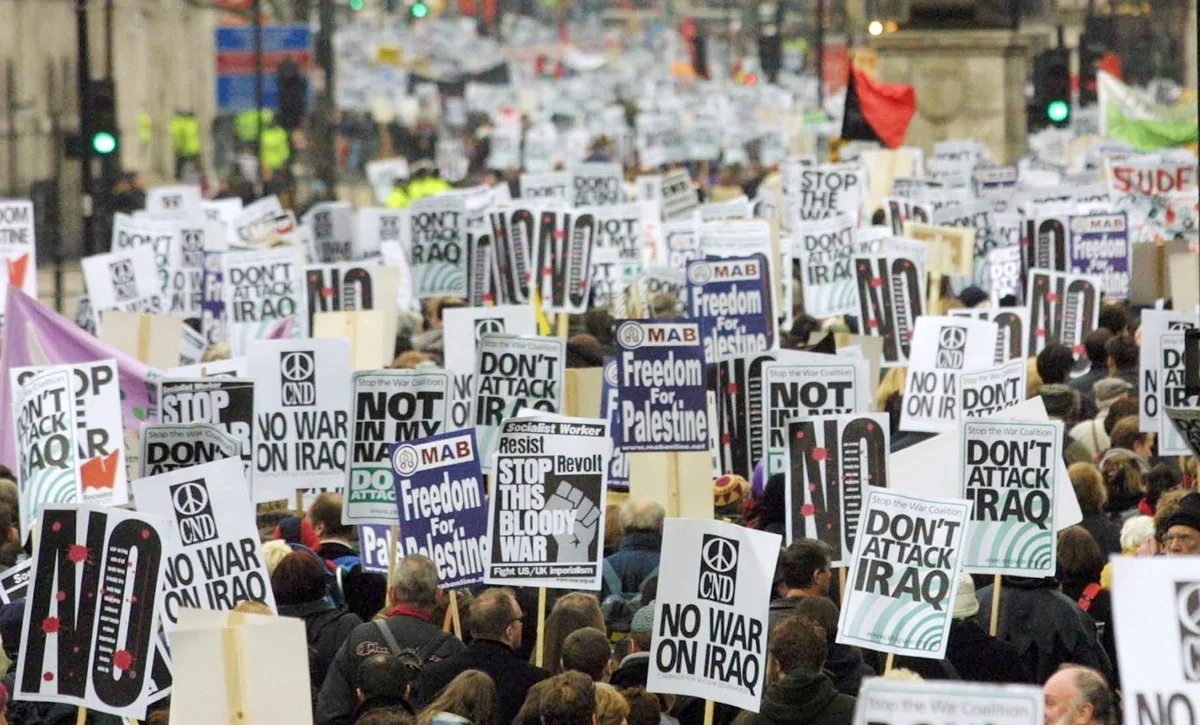
Throughout the world, protests against the war in Iraq were held: according to some reports, only from January to April 2003 about 36 million people took part in three thousand large anti -war demonstrations. However, mass anti -war performances did not prevent the invasion.
Materials "New" about the Iraqi war
"Country-Kamikadze" -report from Iraq
"Chekists shoot a penny" - about the capture of Russian diplomats in Iraq
The end of the Global War with Terrorism is 2021. Already President Biden announces the end of the American military mission in Iraq
Entering of troops
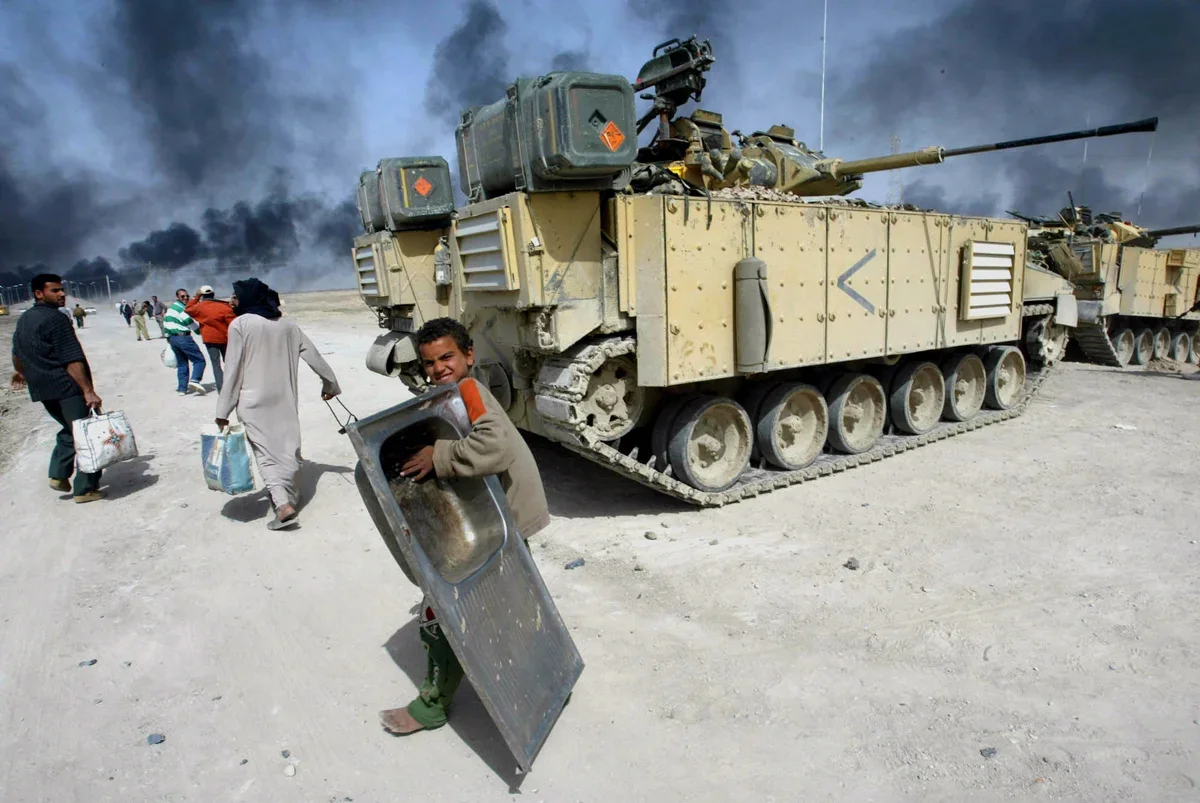
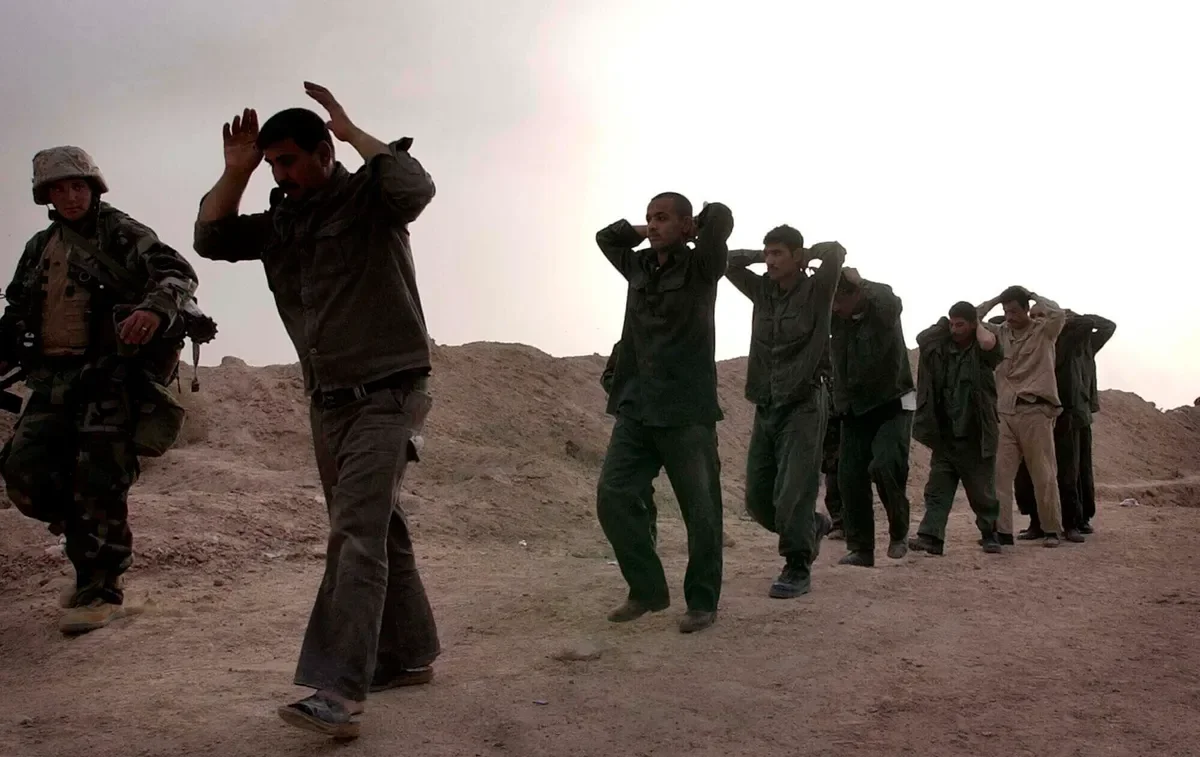
US invasion to Iraq began early on the morning of March 20, 2003. Kuwait became a bridgehead for him. Four divisions and five brigades of the United States and Great Britain did not meet serious resistance from 23 divisions of Iraq. By the beginning of April, the US forces were already on the outskirts of Baghdad, and on April 9 the city was taken without a fight, a symbol of which was the overthrow from the pedestal of one of the statues of Saddam Hussein, which was shown live. Continuing to move north, in mid -April 2003, American troops took the city of Tikrit, thus completing the phase of active hostilities.
At this time, Baghdad, and then Tikrit and other Iraqi cities plunged into looting: in the conditions of temporary invidry, many government agencies, private houses and shops were plundered. It is also known that during a month and a half invasion, 9,200 Iraqi troops and 7,300 civilians died, even more than 7,000 Iraqi military were captured. In 2008, The Guardian published data from the book by the chief economist of the World Bank Joseph Staglits, according to which only the first 10 days of the war cost the United States $ 5.5 billion.
Partisan war
After the end of the American invasion, the war acquired a partisan character. In the spring of 2003, the coalition forces began the creation of the first police units in cities and divided the country into several zones: Baghdad, the “Sunni triangle”, the northern regions of Iraq and the al-Anbar province were controlled by American troops, populated by Shiites of the territory south of Baghdad were taken under control of the military units of Poland, Spain, Ukraine, Italia and several countries of the Central Central Central Central Asia, and in the extreme south of the country, in the city of Basra, the British contingent was deployed.
To manage the occupied Iraq, a temporary coalition administration was created, the task of which was “the creation of the necessary conditions for the transfer of power to the new Iraqi government”. One of her first decisions was the dissolution of the Iraqi army and the police, as well as the creation of a Iraqi study group, which took up the search for weapons of mass defeat and later, in 2004, announced, according to the results of her work, that by the beginning of the US invasion, Hussein's regime did not have the like.
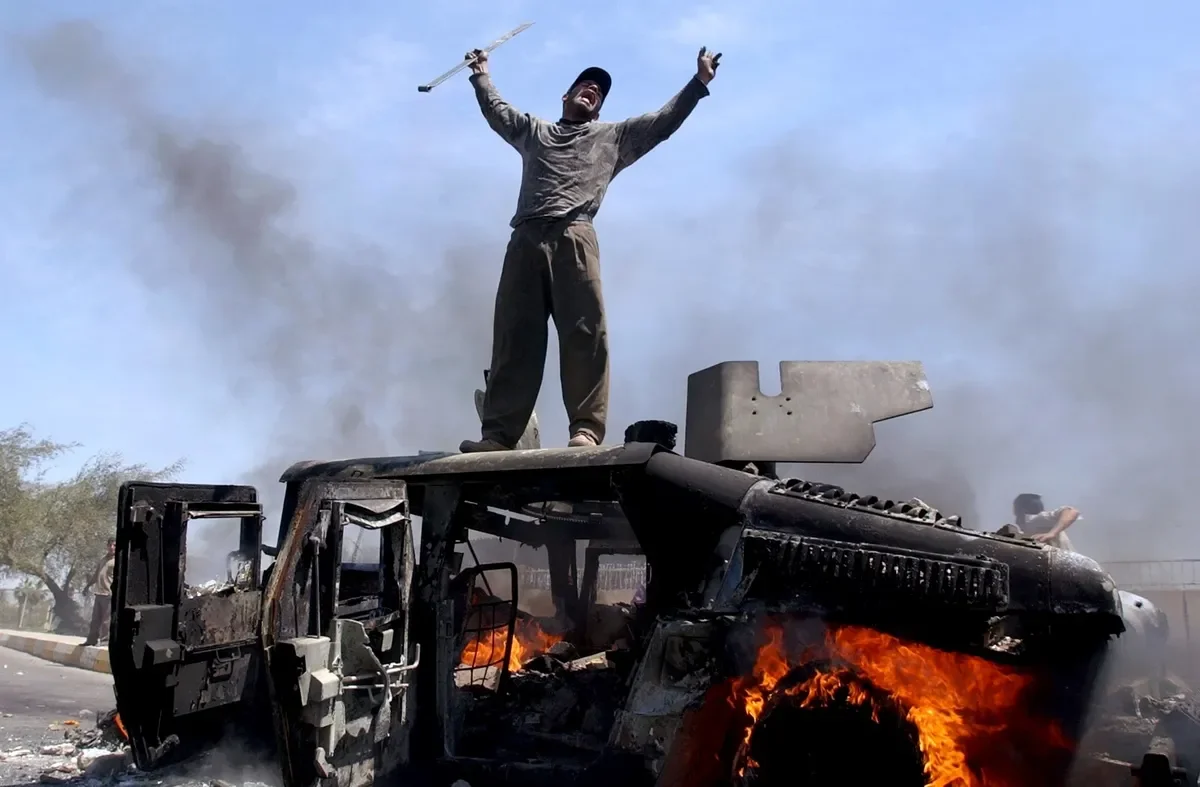
However, the partisan forces, which initially consisted mainly of activists of the Party of Proper Iraqi Baas and supporters of Saddam Hussein, for a long time fought with coalition troops and committed successful attacks on them. The center of partisan resistance was the city of Falludge in the province of Al-Anbar, occupied by the American military. Partisans used explosive homemade devices and carried out terrorist attacks, including abroad. It was believed that after the arrest of Hussein on December 13, 2003, the partisan movement in Iraq would decline, but this did not happen. And in the spring of 2004, the relative lull of military operations in Iraq was replaced by a tough clash of the armed coalition forces with the most serious force-the partisans-Sunnis and Shiite opposition who claimed power.
In the cities there were heavy battles, the demonstrative executions of the American military were arranged, which during the fighting suffered heavy losses. Despite this, American troops were able to suppress the majority of resistance centers by the end of April 2004.
And already in June, the Provisional Coalition Administration transferred its powers to the Iraq to the transition government, led by Prime Minister Ayayad Allaaui, putting the end of the occupation of Iraq, which lasted more than a year. However, the coalition forces remained in Iraq in accordance with the UN mandate, since the transition government by that time did not have the forces and means to maintain order in the country in the conditions of partisan resistance.
Elections, Constitution, Crimes and Milia
At the same time, the transition government announced the plan of the “political development of Iraq”, which provided for a referendum under the new Constitution, elections to the National Assembly and parliamentary elections for the formation of a new government of the country.
Throughout 2004
The invasion of Iraq was condemned in many countries of the world. The criticism was aggravated after the scandal that received a wide publicity around the brutal torture and bullying of the Iraqi prisoners in the American prison Abu Graib.
Other war crimes of both sides of the conflict also received wide publicity. This includes violence against peaceful Iraqi residents, including the rape of a 14-year-old Iraqi girl and the murder of her family with American military, massacres in the cities of Khadit and Ishaki and the village of Mukaradiba, also committed by the US military.
Armed groups that opposed coalition forces arranged no less brutal torture, executions and systematic killings of civilians during terrorist attacks, including the use of chemicals (it is known about at least twelve thousand victims among the civilian population during the terrorist attacks), an attack on diplomatic departments and diplomats, including the murders of five Russian Ministry of Foreign Affairs and prisoners of prisoner of prisoners
The Iraqi war occupied a central place during the US presidential election in November 2004. Despite her criticism, President Bush Jr. was able to re-elect for a new term. And at the appointed temporary coalition of the multi -party parliamentary elections, which for the first time in half a century held in Iraq in January 2005, the Shiite united Iraqi alliance won, who gained 48% of votes. Four months later, the Provisional Government was formed in Iraq - to develop a new Constitution of the country.
In the process of its creation, serious disagreements between Shiites and Kurds were revealed, on the one hand, and the Sunnis - on the other hand: the draft document mainly reflected the interests of Shiites and Kurds, therefore, in some areas of Iraq, polling stations did not open at all, but despite this, the constitution was adopted. And in December 2005, parliamentary elections took place. The united Iraqi alliance, which received 128 seats in the National Assembly, again won the victory, while all Sunni parties received only 58 seats, and the Kurds - 53.
The result of those elections exacerbated the split between the Iraqis belonging to two different branches of Islam, and subsequently led to a civil war on the basis of inter -religious and interethnic contradictions.
Civil war
It is known that the Sunnis, which made up the minority of the Iraq population, but traditionally were the basis of the political elite, and after changing the political situation in the country, they stopped being afraid that the Kurdish and Shiite, who had gone to power, would proclaim their own states on the territory of Iraq.
On February 22, 2006, unknown people organized an explosion in the Al-Askaria mosque-one of the main Shiite shrines. And Iraq again swept a wave of violence and murders - now against the backdrop of the conflict between the followers of the two branches of Islam:
The militants on both sides arranged terrorist attacks, stole, tortured and killed civilians - their bodies were found right on the streets of cities. Such reprisals were then a common occurrence - at that time in Iraq on average more than 1000 citizens perished monthly.
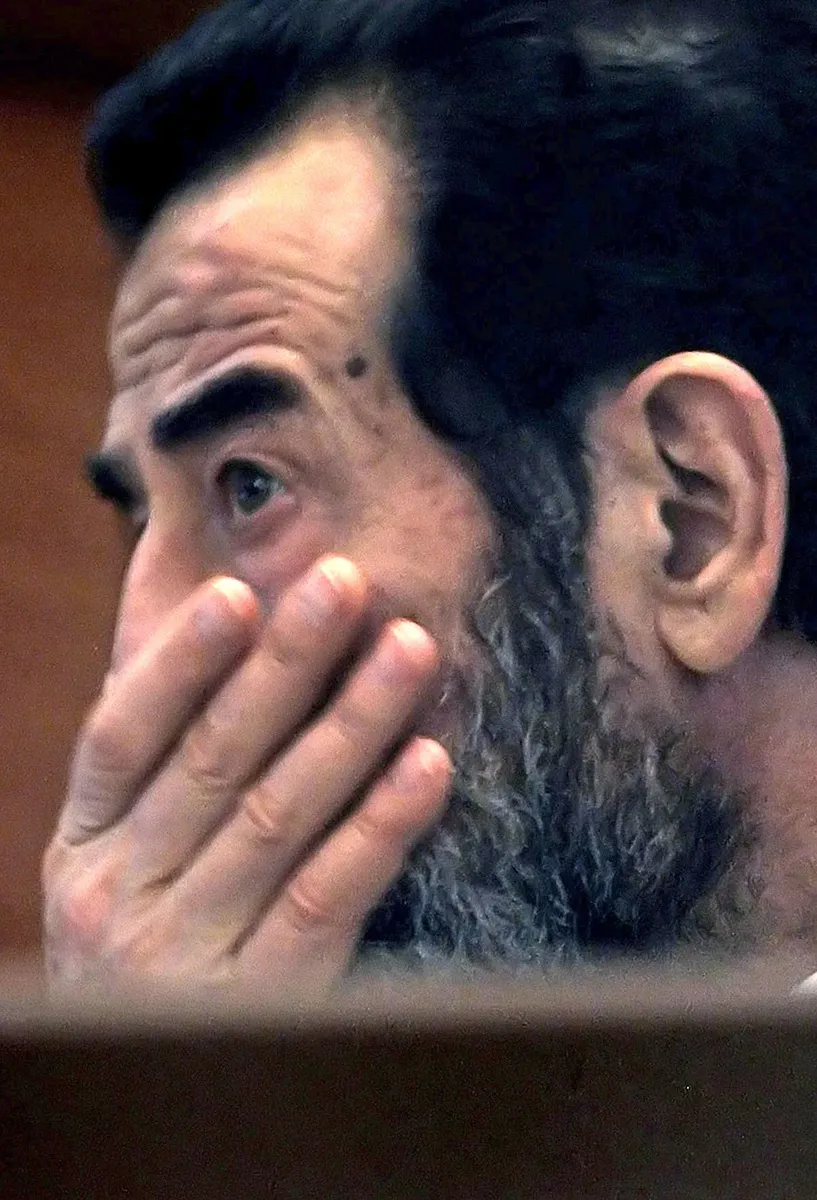
And on May 20, 2006, Iraq for the first time after the overthrow of Saddam Hussein, who was executed through a hanging on December 30 for the “mass murder of Shiites in one of the Iraqi villages in 1982,” received a permanent national government-then Nuri Malika became the prime minister. The coalition troops even transferred complete control over several provinces to the new government, but the progress in the “return of Iraq of sovereignty” remained insignificant for a long time-mainly due to the ongoing struggle of armed groups. The level of violence in Baghdad remained high, and the losses of the American army, which then increased its contingent, remained large due to the activities of Iraqi snipers and partisans, who fought with the occupation forces mainly with the help of home-made bombs.
After the next large wave of terrorist attacks, as a result of which about 200 people died in a short time, the Iraqi war in the United States began to use less and less support.
However, the more significant damage to its popularity was scandalous around the publication of information about the murder of 24 civilians in the Iraqi city of Hadit in November 2005, as well as other murders of civilians by the American military.
Against the backdrop of the unpopularity of the war, the Republican Party lost the majority in both chambers, President Bush Jr. was forced to resign the Minister of Defense of Ramsfeld, and in the American press, society and the very White House, citizens and politicians increasingly began to draw analogies between the Iraqi and Vietnamese wars regarding their meaninglessness, the level of bloodsupoly and "the involvement of troops in a mission, which is not visible."
With renewed strength
Despite the fact that the war in Iraq became an extremely unpopular part of the US foreign policy, in early 2007, President Bush said that the United States “was waiting for a difficult and bloody year” and published a new strategy for Iraq with the transfer of additional troops to the country “for a long -term support of security”. This plan, as expected, was perceived ambiguously. Congressmen-democrats even developed a plan to withdraw American troops from Iraq, but it was eventually rejected without gaining the required number of votes for its adoption.
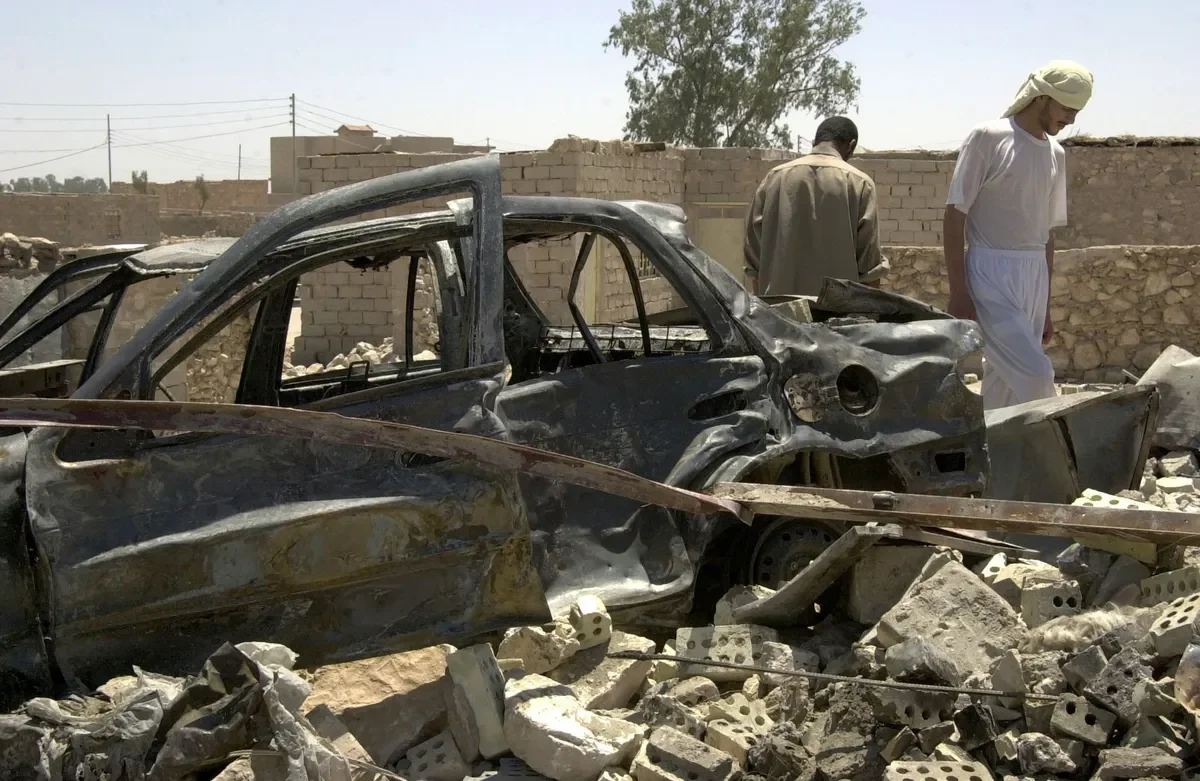
As part of the new strategy, American troops were focused on suppressing the interfaith conflict in Baghdad between Sunnis and Shiites who continued to kill each other. The operation lasted nine months - from February to November 2007. By its beginning, coalition forces were controlled only by 20% of the territory, and the militants significantly intensified their activities, which led to a sharp increase in the number of losses among the American military.
At the same time, the coalition forces conducted a protracted operation in the Iraqi province of Dihyal, where the rebels from Baghdad penetrated. Both sides suffered large losses in the fighting that covered the region. However, by the middle of the fall, the occupation forces managed to turn the situation, after which the United States even began the conclusion of the team of the 1st cavalry tank division who fought here.
At the same time, on the eve of the US presidential election in the United States, the American leadership decided to conduct an experiment by concluding an unspoken agreement on the ceasefire with the rebels in the restless province of Al-Anbar and agreeing to transfer power to them there. This caused strong discontent among the Iraqi Shiits, but also reduced the amount of violence in the region. The Americans tried to transfer this successful experiment to suppress violence to other provinces.
They agreed with local elders about the paid cooperation in the fight against al-Qaeda. Ordinary Sunnis said this about this deal: “We hate you, Americans, because you are the invaders, but al-Qaeda we hate stronger, and Iraqi Shiites are even stronger.”
At the end of the year, the United States also recognized that in a decrease in the level of violence of Iraq there is a merit, among other things, under the influence of which the Shiite “Mahdi army” in August 2007 announced a half -year ceasefire.
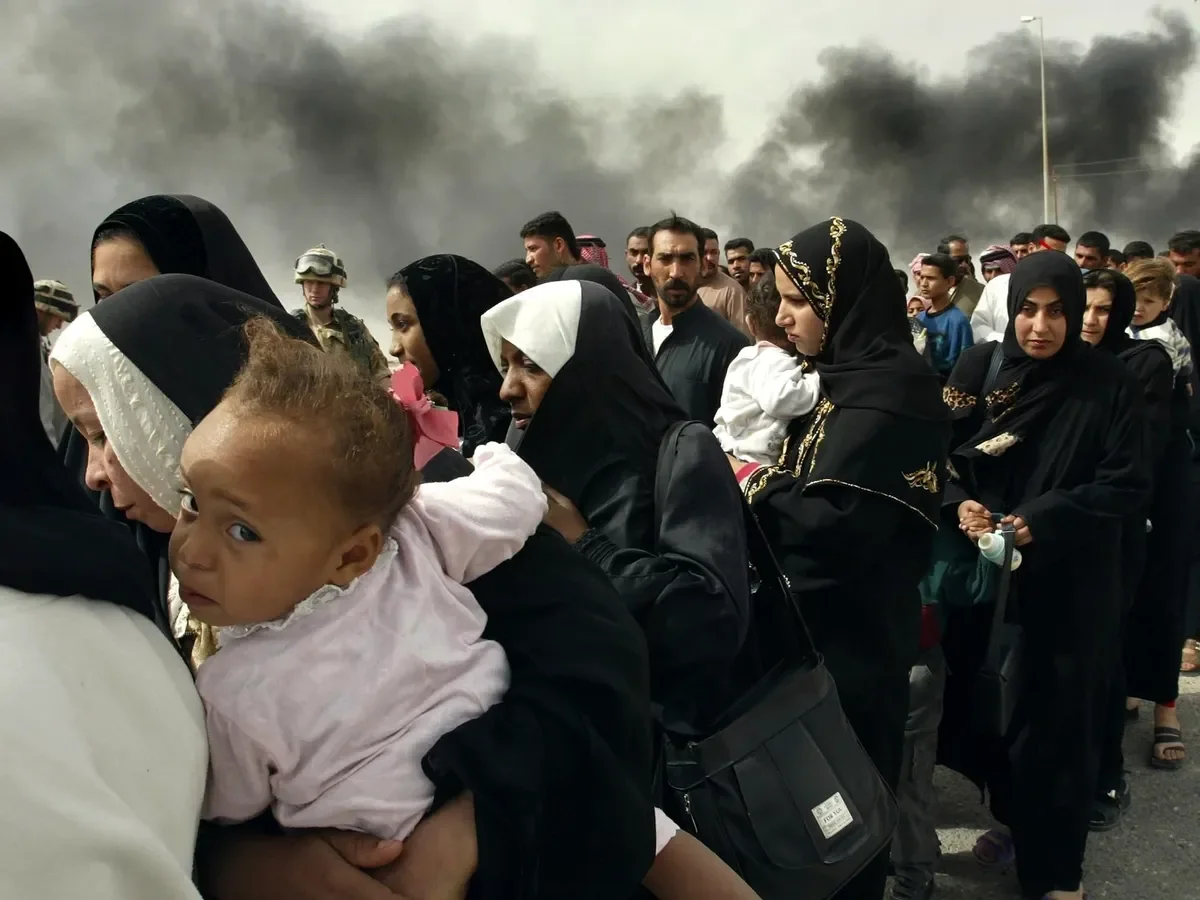
It was against the “Mahdi Army” the Iraqi government with artillery and aviation support of the coalition forces began a new operation in March 2008 in the city of Basra, thus interrupting the relative lull of another bloody massacre. The truce on government conditions occurred at the end of the month, but the armed confrontation continued in other provinces until the end of April 2008, and ended with an agreement on a truce in mid -May.
The cessation of these battles allowed the Iraqi security forces to concentrate efforts on Mosul, which, by that time, was considered the most dangerous city in the most dangerous country in the world due to the presence of al-Qaeda there, which actually controlled it. In May 2008, a successful operation to capture militants and the search for hiding places with weapons was carried out in Mosul.
After that, there were no active hostilities in Iraq until the end of the year, but in some provinces partisan terrorist attacks and interfaith violence still continued. Experts and politicians stated that "Iraq was bogged down in internecine war and the struggle for resources." Despite this, the coalition forces continued the transfer of the Iraqi provinces under the control of the Iraqi security forces.
"This happens"
In the same 2008, after many months of negotiations, an official ceremony of signing a bilateral agreement on the status of the US troops in Iraq was held. The document involved the withdrawal of American troops from Iraqi villages and cities by July 2009, and the full conclusion of all military - by the end of 2011, the transfer of Iraq to full control over its airspace, the mandatory coordination of military operations in Iraq with its leadership and the ban on the use of Iraqi territory for attack on other countries.
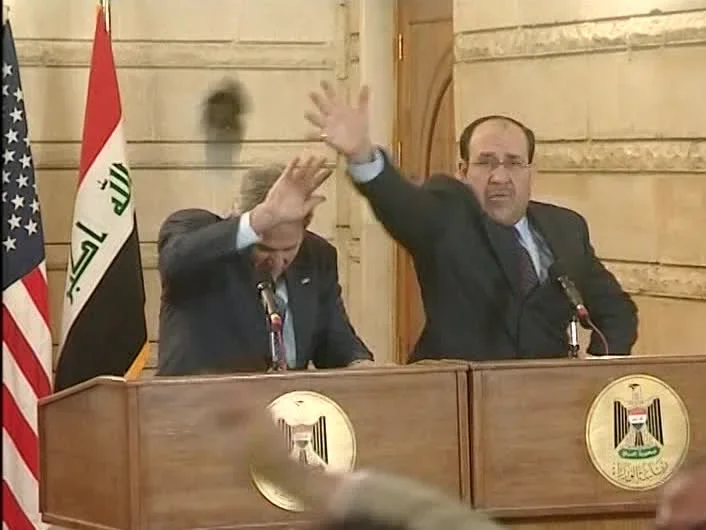
By the beginning of 2010, the main forces of the American troops were withdrawn from Iraq, and in December the US armed forces were launched over Baghdad, which marked the official completion of the military campaign. A few years before, almost a month after the signing of the bilateral agreement between the United States and the Iraqi government, at a press conference in Baghdad, the Iraqi journalist threw two of his boots at President Bush Jr., calling it a "farewell kiss from the Iraqi people." Entering the shoes, Bush then said: "This happens, and this is a sign of a free society."
According to official figures,
US losses in Iraq amounted to 4423 dead and 31,942 wounded military personnel. From the beginning of the war in 2003 until 2009, almost 8 thousand military were deserted from the US Armed Forces to Iraq. In addition, the war caused the stress and suicides of many American soldiers.
One of the victims of that war was the son of the current US President Bayden - Joseph Bayden, who served in Iraq as a reserve of the National Guard of Delaware and died in 2015. Biden Sr., who in the past, being the chairman of the Senate Committee on International Affairs, voted for the use of military force against Iraq, believes that it was the toxins with whom Bo dealing in military service that led to deadly cancer of the brain. And here
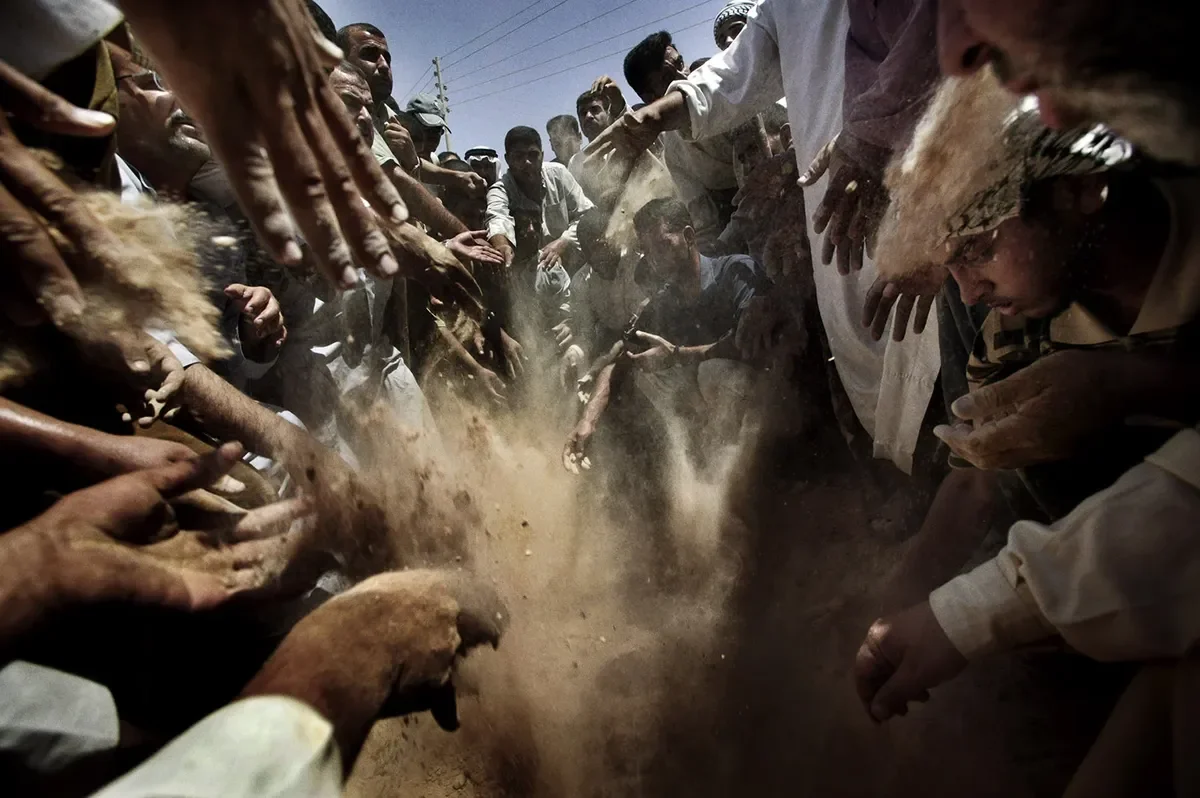
The losses among the civilian population of Iraq are still exactly unknown: experts give different assessments, but these are hundreds of thousands of civilians. According to the most pessimistic estimates, from 946 thousand to 1 million 120 thousand civilians, as a result of US invasion, Iraq could die in Iraq.
It is also known that after the American invasion, the number of Iraqi children with congenital defects increased.
Post Effect
After the withdrawal of American troops from Iraq, new leaders recreated al-Qaeda ( it is also the Islamic State ** ). In 2013, the Islamic State, which was at that time, part of the al-Qaeda world network, headed the Sunnis's uprising against the Shiite leadership, and the next year the Mosul and the vast territories bordering him and approached the Afghan capital of Kabul. At the same time, the “Islamic state” broke off relations with al-Qaeda and invaded Syria, where it was eventually defeated by the efforts of Iran, Russia and Turkey in 2019. In turn, in Iraq, the radicals were defeated in 2017: with the help of two sworn enemies of the Iraqi government - Iran and the USA.