
Translated material
Gene. A very personal story
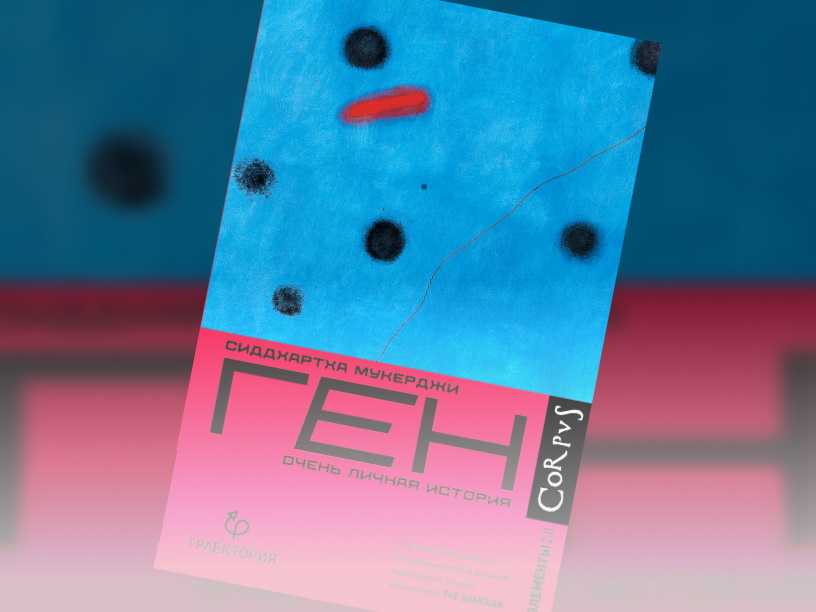
Corpus Publishing House presents the book of the oncologist and immunologist Siddharthi Mukerji “Gene. A very personal story ”(translation by Olga Volkova, Ksenia Sayifulina).
There are three interpenetrating biographies to the reader: the ideas of the gene, human society during its development and the author’s family, into which this idea penetrated with the luggage of hereditary mental illness. On the pages of this epoch -making book, the Gene's concept arises in the vague guesses of Aristotle about the information nature of heredity and in the representations of Paracelsus about homunculi, is woven into the images of people who created genetics in the XIX - XX centuries, is involved in eugenic projects and evolves in the technology of editing genomes. Observing the influence of genes on cellular and human destinies as a scientist and a doctor whose own family is a hereditary ailment, Mukerji impregnates the scientific story of the dramas of people with genetic diseases and means the ethical challenges that we encountered, having learned to “read” and “write” in the DNA language.
We offer to read the beginning of one of the chapters of the book.
The birth of the clinic
I begin from the prerequisite that all human diseases are genetic.
Paul Berg
In 1962, a few months after NIrenberg with colleagues in Betesd deciphered the DNA triplet code, an article on the “explosive” future of human genetics was published in the New York Times. Now that the code has been “hacked”, the article has been predicted, human genes will turn into objects of interventions. “It can be safely argued that some of the“ biological bombs ”, which will soon be exploded due to [hacking the genetic code], in importance for a person, they will be preserved with an atomic bomb. Here are examples of some of them: identifying the mechanisms of thinking, <...> The development of medicines for ailment that is impossible to cure today, in particular, from cancer and many severe hereditary diseases ".
The then skeptics, however, can be forgiven for the lack of enthusiasm: the predictable loud explosion of the “bomb” of human genetics still resembles a rather miserable squeak. A stunning leap in the development of molecular genetics from 1943 to 1962 - from an experiment on transformation to determining the structure of DNA and mechanisms of genetic regulation and reparation - made it possible to form a mechanistic idea of the gene, which gradually surrounded new details. However, this idea hardly influenced people's lives. On the one hand, the Nazi Eugenics discredited the region of human genetics so much that it, together with the basic attributes of science, has lost all confidence in the scientific world. On the other hand, simple model organisms - bacteria, flies, worms - turned out to be much more convenient experimental objects than people.
When in 1934 Thomas Morgan came to Stockholm to receive the Nobel Prize for his contribution to genetics, he emphasized dismissively about the significance of his own work for medicine. “In my opinion, the most important contribution of genetics to medicine was purely intellectual,” he wrote. The word “intellectual” in this case was not praise, but humiliation. Genetics, as Morgan noted, is unlikely to even minimally affect healthcare in the near future. The idea that the doctor “wants to contact friends-geneticists, so that they consult him,” it seemed to him a stupid, unreasonable fantasy.
However, penetration or, more precisely, the return of genetics to the world of people was caused by a medical necessity. In 1947, Viktor McCusik, a young therapist at the University of Jones Hopkins in Baltimore, observed a young patient with spots on lips and language and multiple polyps in the internal organs. McCusika surprised and interested these symptoms. For relatives of a teenager, they also manifested themselves, and such family cases were mentioned in the literature. McCusic described what he saw in the New England Journal of Medicine, assuming that at first glance the symptoms are not related to each other - spots in the tongue, polyps, obstruction of the intestines and cancer - actually made up the unified group and were the result of mutations in the same gene.
The clinical case observed by the McCusic - this pathology was subsequently called the Paittsa - Jehtz Syndrome in honor of the first doctors - aroused interest in studying the connections between genetics and human diseases. McCuisik began with the study of human diseases, in which the influence of genes was obvious and most strongly - pathologies due to some one genome. Let such diseases and a little, their well -known examples are simply impossible to forget: these are the same hemophilia in representatives of the English royal dynasty or sickle -cell anemia among immigrants from Africa and Caribbean countries. Digging in the old articles of the University of Johns Hopkins, McCuisik discovered that the London doctor, who worked at the beginning of the 20th century, described the first example of a person’s disease, apparently caused by the only genetic mutation.
In 1899, the English doctor Archibald Garrod described a strange ailment, which was transmitted in families from generation to generation and manifested itself in the first days after birth. Garrod first watched him in a child in a London hospital for sick children1. A few hours after the birth of that boy, his diapers turned black due to urine of an unusual color. Having carried out thorough work to identify all patients with such symptoms and their relatives, Garrod found that the disease was family and did not take place in maturity. In adults, sweat could darken, and its drops were painted in brown axillary zones of clothing. The ear sulfur in such patients in contact with air blushed like rusting iron.
Garrod suggested that all these patients have changed some inherited factor. The boy with dark urine, the Garrod reasoned, was probably born with changes in one of the units of heredity, which violated metabolic processes in the cells so that the composition of urine deviated from the standard. Garrod noted that “phenomena of obesity and diversity in color of hair, skin and eye” can be explained by variations in units of heredity, determining the “chemical differences” of organisms of different people. His explanation seems to be visible now. Just when another Englishman, Batson, rejected the concept of gene (and ten years before the introduction of the word “gene”), Garrod speculatively designed the idea of the human gene and explained the variations in the appearance and physiology of people with “chemical differences” that are encoded by units of heredity. Genes make us people, reasoned Garrod. And mutations make people different.
Inspired by the work of Garrod, McCuisik began a systematic collection of information for the catalog of human genetic diseases - “encyclopedia of phenotypes, genetic signs and disorders”. The outlandish world opened in front of him; The range of human diseases determined by individual genes turned out to be wider and more surprisingly than he expected. With Martin's syndrome, who first described the French pediatrician in 1890 x, mutated the gene that controls the structural integrity of the skeleton and blood vessels. Patients grew unusually tall, with elongated hands and fingers, and were inclined to die from a sudden rupture of the aorta or from the inferiority of heart valves (recent decades, historians of medicine suspect that Abraham Lincoln had a non -diagnosed marfan syndrome). Members of other families suffered from imperfect osteogenesis - a disease caused by a mutation in the collagen 2 gene, a protein that forms and strengthens the bones. In children with such a mutation, bones were fragile from birth and could crumble from the slightest effect, like an old plaster. Children could break their leg for no reason or wake up one morning with broken ribs (such cases often attributed to the score of domestic violence, and many of them fell into the sphere of attention of doctors thanks to police investigations).
In 1957, McCuisik founded Clinic Moore at Jones Hopkins University Hospital. Named after Joseph Earl Moore, a Baltic doctor who devoted his life to the fight against chronic diseases, the clinic focused on hereditary ailments. McCusic himself, meanwhile, turned into a walking guide to genetic syndromes. He found patients unable to absorb chlorine ions and therefore suffering from unconscious diarrhea and constant lack of nutrients. He found out that there are men who risk becoming a victim of a heart attack at the age of 20; family, from generation to generation, overcome by schizophrenia, depression or pathological aggressiveness; Children born with a webbing neck3, excess fingers or an indestructible smell of fish. By mid -1980 x, McCusic with his students cataloged 2239 genes associated with human diseases, and 3700 diseases associated with single mutations. In 1998, in the 20th edition of his book, McCuchesics described as many as 12 thousand genes of genes associated with certain characteristics and diseases of varying degrees of harm.
Inspired by the diseases built by the taxonomy due to mutations of some kind of gene, that is, monogenic, maccuisik and its students dared to encroach on diseases caused by the convergent influence of many genes, that is, polygenic ones. As it turned out, they are of two types. Some of them are due to excess chromosomes. So, with Down syndrome, first described in 1860 x, people are born with an extra copy of the 21st chromosome carrying more than 300 genes4. Genes of excess chromosome affect the work of many organs. Children with Down syndrome are born with flattened faces and nose bridges, small chins and characteristic folds in the eyes5. In such children, intelligence, hearing and reproductive function suffer, heart disease develop faster, risk of malignant blood diseases increases; Many die in infancy or early childhood, and only some live to the elderly. The most interesting thing, however, is that children with Down syndrome are very kind - as if with an additional chromosome they acquire something that takes away all sorts of anger and cruelty from them (if you doubt that the genotype can influence the character and personality, one meeting with such a child will convince you).
Genetic diseases from the last category of McCuches was the most difficult: polygenic diseases that develop under the influence of many genes scattered throughout the genome. Unlike two other categories presented mainly by rare and unusual syndromes, this included well -known, ubiquitous chronic diseases: type II diabetes, coronary heart disease, hypertension, schizophrenia, depression, infertility, obesity.
These diseases were essentially opposite to the fact that they fit into the paradigm “one gene - one disease”, because here many genes determined many diseases. Hypertonic disease, for example, had thousands of varieties, and hundreds of genes influenced it, each of which made a small contribution to the effect of blood pressure and the integrity of the vessels. Unlike Marfan or Down syndrome, when the only point mutation or chromosomal aberration was a necessary and sufficient condition for the development of the ailment, the effect of any individual gene in polygenic syndromes was very moderate. But the dependence on the factors of the environment - influences on the body in the womb, age, smoking, the amount of nutrients and other characteristics of the diet - was more clearly. Phenotypes were distinguished by a wide variety and blurry of the boundaries between the options, and the inheritance scheme was difficult. The genetic component acted only as a trigger at the gun with several hooks: it was necessary, but insufficient to manifest the disease.
Four important conclusions flowed from the created classification of genetic diseases. Firstly, McCusik realized that mutations in the same genus were able to cause diverse manifestations of the disease in different organs. With marfan syndrome, for example, a mutation in the structural protein of fibrils affects the condition of all types of connective tissue - and tendons, and cartilage, and bones, and ligaments. People with Marfan syndrome are characterized by easily recognizable anomalies of joints and spine. Perhaps not so obvious and specific, but the cardiovascular manifestations of the disease are not uncommon: the structure of large arteries and heart valves supports the same protein, which is part of the ligaments and cartilage. Mutations in his gene, therefore, can lead to heart failure and ruptures of aortic with a catastrophic outcome. People with Marfan syndrome often die even in his youth because their blood vessels are torn by a stream of blood.
Secondly, oddly enough, the opposite is also true: many genes can affect the same physiological process. For example, blood pressure is regulated by many chains of genetic interactions, and disorders in one or more of them lead to the same disease - hypertension. The expression “hypertension is a genetic disease” is absolutely true, but the addition to it is also true: “there is no gene responsible for hypertension”. Many genes reduce and increase blood pressure, acting as a network of threads attached to different parts of puppets. If you change the length of one of these threads, the puppet pose in general will change.
The third conjecture of McCusik concerned the importance of penetrance and expressiveness of genes in the development of human diseases. Genetics that worked with Drosophils and worms found that some genes appear in the phenotype only due to special environmental influences or even randomly. For example, the activity of the gene, thanks to which the faces are formed in the mushin eye, depends on the temperature. In the worm, one of the options for another gene changes the morphology of the intestine - but only 20 % of its carriers. The concept of “incomplete penetrance” means that even if there is a mutation in the genome, its ability to “penetrate” into physiological or morphological signs is not always one hundred percent.
McCuisic found several examples of pathological genetic options with incomplete penetrance in a person. In some ailments, including the Tea - Sax, penetrance is almost complete: in a person with the corresponding genetic mutation, the disease manifests itself almost certainly. But in the case of other diseases, the contribution of a separate gene to their development is more complicated. As we later find out, the inheritance of the mutant genes of the BRCA1 sharply increases the risk of getting sick with breast cancer - however, it does not develop in all women with mutations in this gene, moreover, very different in penetrance. The same hemophilia definitely develops due to the genetic anomaly, but the frequency of dangerous bleeding varies significantly between patients. Each month, life -burning blood loss occur, and someone is generally rare.
The fourth guess of McCusik is so important for my story that I separated it from the rest. Like the expert in genetics, Drisophil Feodosius Dobrzhansky, McCuisic understood that mutations were just genetic variations. Although the statement sounds trite, it expresses an important, deep truth. The mutation, as McCuisik realized, is related to the field of statistics, and by no means pathology or ethics. The fact of mutation does not imply automatic development of the disease, acquisition or loss of any function. Formally, a mutation means deviation from the generally accepted norm (the antonym of the “mutant” is not a “normal organism”, but a “wild type organism” is the owner of such a set of characteristics that is more common than others in the wild). Thus, a mutation is a rather statistical concept than normative. A tall man, abandoned into the country of Liliputs, will be a mutant, like a fair -haired child born among brunettes. Both of them are “mutants” in exactly the same sense of the word as the boy with Marthan's syndrome against the background of “normal” children who do not have this syndrome.
It turns out that the mutant or mutation itself does not give reliable information about the disease or deviation. The disease is determined rather through the prism of specific disorders caused by the inconsistency between the individual’s genetic baggage and the current environmental conditions - between the mutation, the circumstances of a person’s life and his intentions to survive or succeed. The disease ultimately causes not a mutation, but a mismatch.
This disagreement can, by force, reach a disabled scale. A child with the most severe form of autism, all days, monotonously swaying in the corner or combing the skin to ulcers, got such an unsuccessful genetic baggage that it is not consistent with almost any environmental options and life goals. At the same time, another child with a different - and more rare - version of autism can function normally in most circumstances, and in some, perhaps, even better than others (say, play chess or remember something). Its disease is situational: it is more clearly manifested in the non -compliance of the characteristics of a particular genotype to specific circumstances. Even the nature of this inconsistency in some sense mutates: since the environment is constantly changing, the definition of the disease should change with it. In the country of the blind, the sighted will turn out to be the king, but it is worth filling it with a poisonous, blinding light, as the authorities will return to the blind.
The belief of McCusik in this paradigm is to focus on what the disease interferes with a person, and not on how such a person differs from the norm - expressed in the approach to the treatment of patients in his clinic. For example, interdisciplinary groups of genetic consultants, neurologists, orthopedists, nurses and psychiatrists who were taught to work with the limiting features of low-growing patients were engaged in people with dwarf. Surgical interventions were saved only to eliminate individual deformations as they appear. The doctors faced the goal not to return the body to the “norm”, but to give a person of vitality, performance and reasons to enjoy life.
McCuisik has overcome the basic principles of modern genetics, only in the light of human pathology. People, like wild Drosophils, had many genetic variations. And in the same way, the variants of genes, the factors of the environment and interaction of genes with the environment jointly determined the final phenotype - only in the case of human pathology, the phenotype meant the disease. Here, some genes also observed incomplete penetrance, and the expressiveness varied widely. One gene could be the cause of many diseases, and there could be many genes the cause of one disease. And here, too, it was impossible to evaluate the “fitness” in absolute values. Rather, the lack of fitness - in other words, the disease - was determined by the relative inconsistency between the characteristics of the body and the environment.
“Invaluation is our grace” 7, ”wrote Wallace Stevens. If we could learn some kind of lesson from the invasion of genetics into the world of people immediately, then it was this: imperfection is not just our grace, this is an integral property of our mortal world. The degree of genetic variability of a person, as well as the power of its influence on our pathologies, turned out to be completely unexpected. The world appeared before us huge and diverse. The genetic heterogeneity was our integral feature, our natural state - and not only in some distant, isolated corners of the world, but everywhere around us. The populations that seemed homogeneous were actually surprisingly heterogeneous. We saw mutants - and we were.
The exit of the “mutants” into the public zone of visibility, perhaps nowhere was as obvious as in the reliable barometer of the anxieties and fantasies of the Americans - comics. At the beginning of 1960, people-mutants quickly broke into the world of comic book characters.
In November 1961, Marvel Comics introduced a “fantastic four” - a series of issues about four astronauts, which were trapped by a spaceship, like Drosophila German Maller in bottles, were subject to radiation and acquired mutations that endanated their supernatural abilities.
The success of the “fantastic four” prompted its creators to a new, even more popular project-“Spider-Man”. This is a saga about a young scientific genius, Peter Parker, who was bitten by a spider, irradiated by a “incredible dose of radiation”. The mutant genes of the spider were transmitted to the parker, apparently, by horizontal transfer - some kind of human version, similar to the transformation of bacteria in the Eve experiment. This gave the Parker “dexterity, proportional stability and the power of the spider -like”.
“Spider-Man” and “Fantastic Four” introduced the American audience to the mutant-supergeries, and the “X-Men”, published in September 1963, brought the topic of mutants to psychological climax. The main storyline of “X-ICs”, unlike their predecessors, concerned the conflict between mutants and ordinary people. The “Normals” grew a distrust of mutants, and mutants, fearing surveillance and violence from the crowd, took refuge in a secluded school for gifted teenagers, created specifically to protect and rehabilitate such children, in a kind of Moore clinic for mutants from comics. The most remarkable feature of the story about the X-Men was not the increased variety of mutant characters-a mock-like man with metal claws, a woman capable of calling for typical English weather, and many more-and the change of roles of the victim and the offender. In the typical comic book of 1950, people ran away and hid from the terrifying tyranny of monsters. In the “X-Men” mutants were forced to run away and hide from the terrifying tyranny of normality.
1 Modern name-a children's hospital for Great Ormond Street. It is famous for the powerful cardiac surgery and belongs to the largest world centers of heart transplantation. - approx. trans.
2 more than 20 types of collagen are known. Here we are talking about the type I collagen, the most common. - approx. trans.
3 Apparently, we are talking about Nunan syndrome. The external signs of this pathology-including the patchy growth of the skin of the neck-are similar to the signs of Shereshevsky-Turner syndrome, but its cause lies not in large anomalies of the X chromosome, but in mutations of individual autosomal genes. - approx. trans.
4 The relationship of Down syndrome with an abnormal amount of chromosomes in the cells was installed by Jerome Legon in 1958. - approx. author.
5 Here, Epicant (mustache) is referred to - the fold of the upper eyelid at the inner corner of the eye, which is severely expressed in people with Down syndrome, regardless of ethnicity. The epicant itself is not pathological and is often found among representatives of the central, North- and East Asian peoples. - approx. trans.
6 FBN1 gene encodes the protein matrix fibrillin 1, which is part of microfibrils, structurally forming elements of connective tissue. Fibrillin 1 gives tissue strength and elasticity, and also participates in intercellular communication (transmission of molecular signals): the inferiority of the protein with marfan syndrome leads to the excessive alarm TGF -β, which is considered the main cause of the cardiovascular problems typical of the aortic aneurysm.
7 Stevens U. Poems of our climate / Per. V. Britanish // American poetry in Russian translations. M.: Rainbow, 1983. 329