
Translated material
Black entrance
The IOC recommended that the disagreement from Russian athletes, but not from all, but only from individual - those who distance themselves from the state
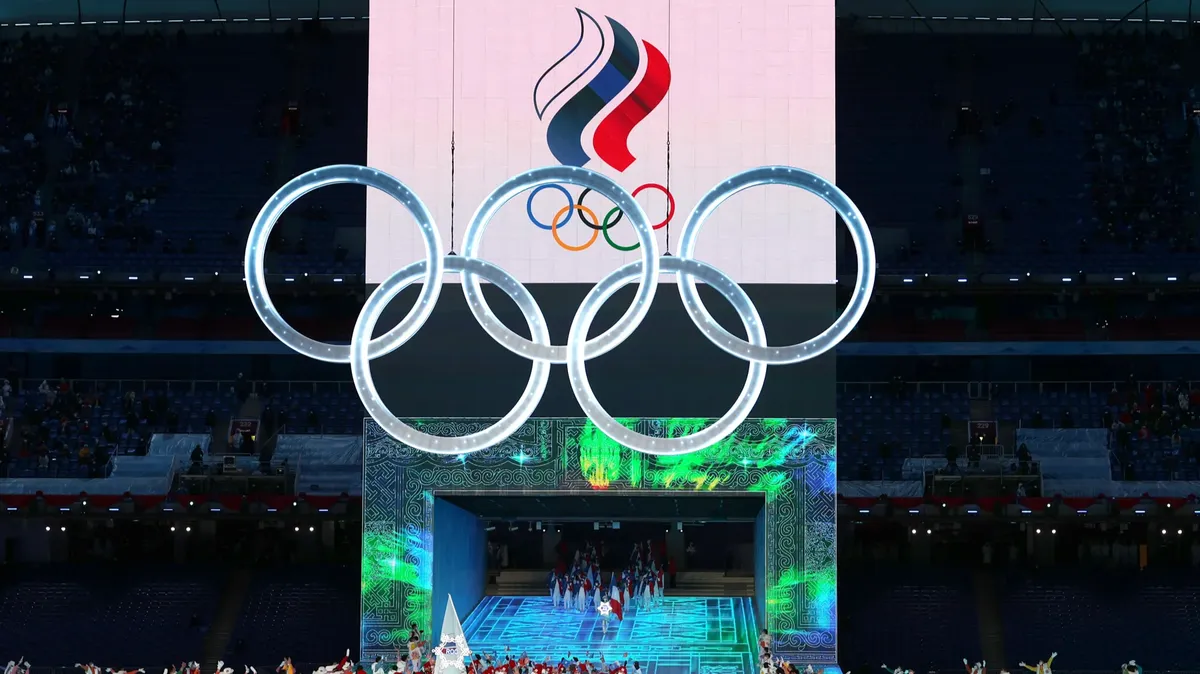
Photo: Sergey Bobylev / TASS
They did not expect that from the executive committee of the International Olympic Committee, not at all.
The most naive hoped that Russians and Belarusians would be allowed to all competitions, including the Olympic Games, without any restrictions. Since President of the IOC Thomas Bach handed it back, recognizing last year, the organization of the organization on the total detachment of all Russian athletes from international starts is partly discriminatory, the IOC logically had to remove all the obstacles to the Russians return to the Olympic family. According to another logic, why would he have to do all this if, more than a year on the line of confrontation between Russia with Ukraine, nothing has changed, and partly even aggravated?
Be that as it may, the executive committee had to specify the criteria for returning and give more or less clear recommendations than to be guided by the international federations in Olympic sports. He gave, providing the Russian sports, and not only sports, community with the perfect material for hot and, in essence, useless discussions for many months ahead.
In short, the desire to return, albeit in a neutral status, confirmed. At the same time, they provided a road map by a number of restrictions - both old and new.
From the old ones for Russia, a ban on holding any domestic competitions of international levels remained valid,
Of the adjusted new ones, the complete prohibition of not only flags and anthem, but also attributes and forms, posts in social networks or photographs that directly or indirectly hint at communication with Russian symbols.
This applies not only to international competitions, but also by internal with an yet unclear status. And not only directly athletes, but in some part of the spectators who are prohibited from carrying to the stands and demonstrate Russian symbols. In principle, this can be survived, in a softer form this has already passed at several olympiads. Even with a white or single-color form, you can come up with or challenge something (equally “one-color” skaters?).
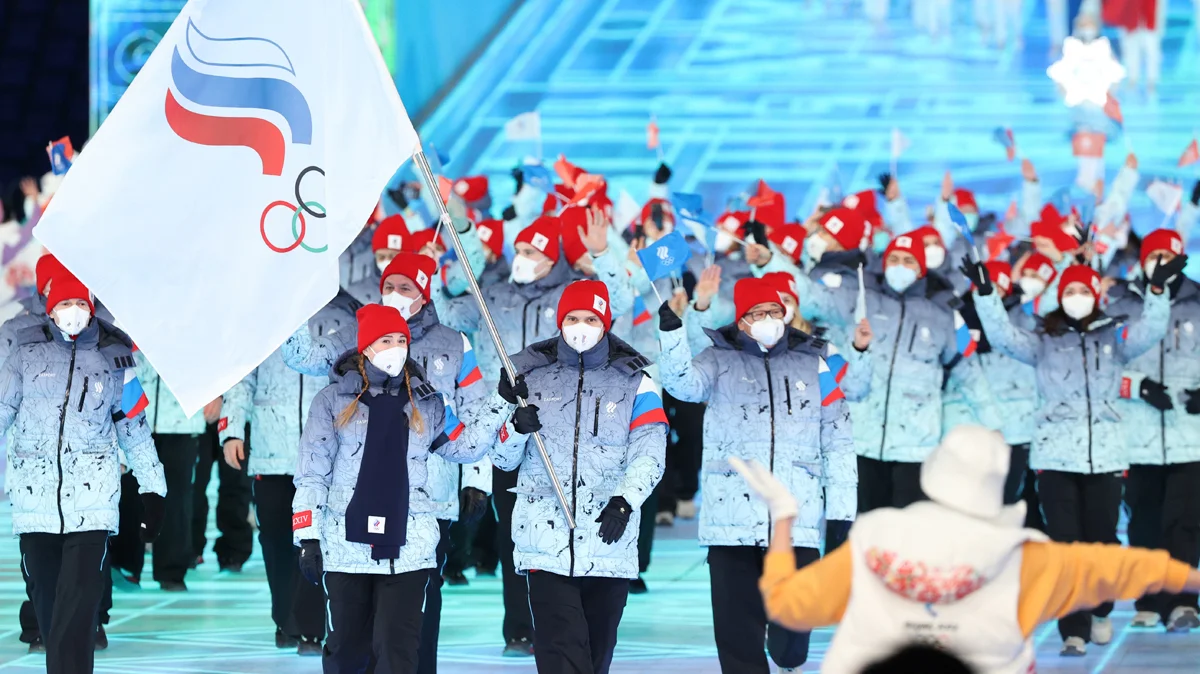
The main thing applies directly to the criteria.
The first - only individual athletes in individual forms will be allowed, participation in command species as it was prohibited, and remains.
The second - only athletes who share the peacekeeping mission of the IOC who are not seen in support of hostilities in one or another public way can be obtained.
The third - athletes who represent the armed forces and law enforcement agencies are not subject to “rehabilitation”.
These are not all criteria, but the main ones. In the latter case, one note is enough to automatically remove 75–90 percent of the elite of domestic sports from the process.
When developing their concept, the working groups obviously proceeded from the fact that the sports structure of Russia is quite easily transformed depending on the current situation and the requirements for it. Or vice versa: the developers had a completely clear idea of the Russian format of the existence of large sports. The fact that it is almost all contained in state funds is sent and encouraged by the state, for no one is a secret.
This, of course, is the heritage of Soviet times, but behind the actual absence of sports societies (in the USSR there was some kind of variety of them) the format should be recognized as quasi-Soviet-with the difference that the money in it is completely different.
The IOC in a blue eye offers athletes, in fact, the only option for returning is to distance themselves from the state, to get out of its caring guardianship. For most representatives of the sports elite, this means simultaneously losing everything that they go to them.
Training bases, arenas, medical support, fees and tournaments, personnel, equipment, form, finance - all this is the concern of the state, centralized or local.
Not everyone is so lucky with the provision, but in this case we are talking about top views, members of the national teams and the nearest reserve. Free swimming can hardly leave with a dozen superstars, and even then with a big eyebrow. Of course, you can conclude a certain secret agreement with the state, developing and financing schemes, but “protecting the sports honor of the Motherland” conspiratorially does not meet state interests, and not everyone will understand.
The situation with the army and security forces, the ranks of which are not so easy to leave even fictitious army and security forces, who are simply “attributed” to the Armed Forces and departments. Of course, a lot has changed since at the turn of the 90s of the last century to continue their careers in North America, the same great KSKA hockey players got rid of epaulets, but no one has canceled the laws on military service, especially in today's times.
And again, no one waits for the epaulets anywhere with open arms - there are too expensive assets, there are no so many clubs and ready to fork out sponsors, and there is no corresponding alternative structure elementaryly.
How triumphantly broadcast by cheers-patriotic citizens who want to go out-please, but after that everything is at their own expense.
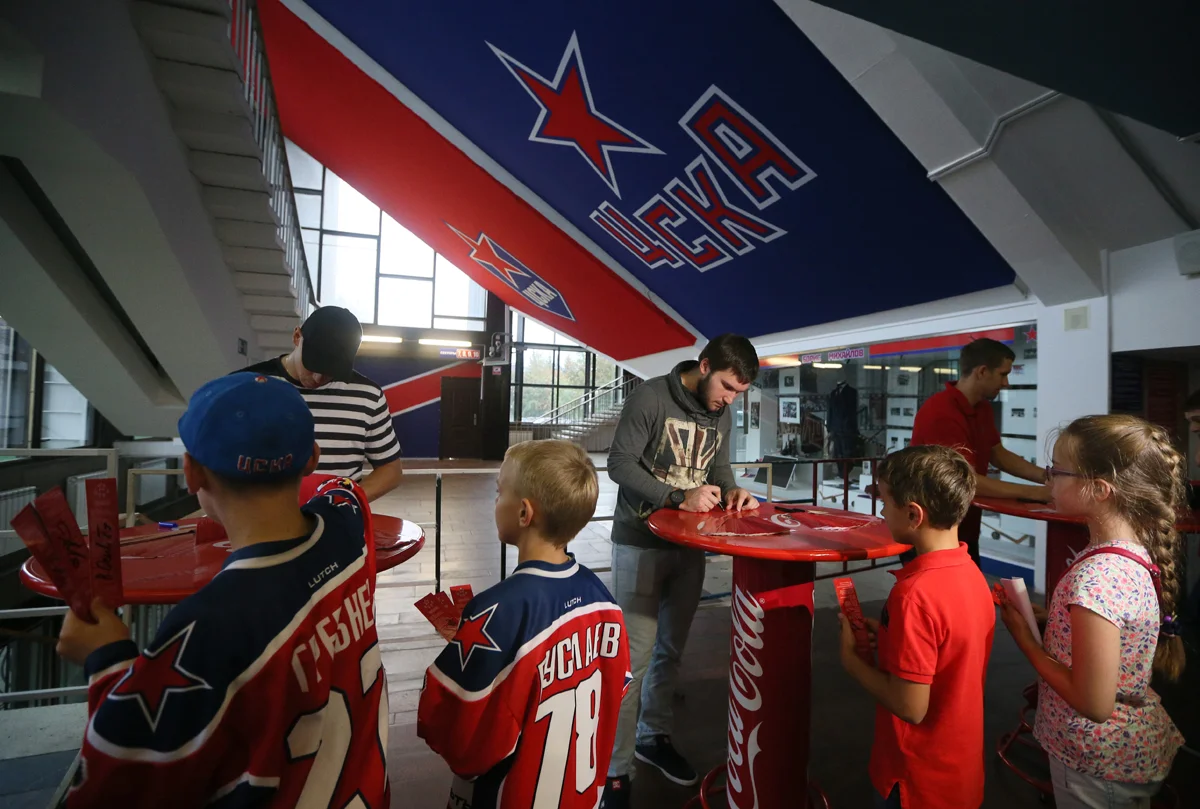
It is curious that the requirements to remove the load on financing the same football clubs from the state have repeatedly sounded from the Kremlin heights. They listened to the requirements, even some move began, but just as quickly everything faded, because "we live so well."
However, football will still sit at home and cook in its porridge, as well as other sports games-not because it is mainly contained on budget money, but because Ban IOC applies to all team views, including football, hockey, basketball, volleyball and other games. By the logic of the “prohibition of the collective”, Russians will not be able to participate in athletic, ski, swimming and biathlon relay races, gymnastic all -around, and this is not the whole list. It is not very clear whether the recommendations of the IOC of paired performances in beach volleyball, figure skating, finally tennis.
In general, this part of the official release is least explained - perhaps any team action has a stronger emotional impact on the public than individual victories or failures. And the IOC here lays straws here, so that, God forbid, do not aggravate the possible manifestations of open discontent on the stands, in social networks, or in any other way. And the fact that not everyone will be satisfied with the alleged admission with such restrictions, including athletes and fans, especially from the "unfriendly" countries, has long been no doubt.
The clause on the prevention of athletes, who in a public way support their own, is supplemented by the recommendation of international federations to create special commissions for the trial of such cases. It is unclear to these and other tips, especially those that have already run forward, like the same loyal foil of fencing sport.
One thing is clear: in Russia itself, the athletes are unlikely to avoid accusations of “betrayal” by separate “black entrance”.
The arguments taken into account during doping sanctions - that the sports age is short, and you can not lose entire generations of people for whom the sport is the work of all life - today do not work. Everything is much tougher and more definite.
The official reaction to the last initiatives of the IOC by the Ministry of Sports and the Olympic Committee of Russia was predictable: “The voiced parameters and criteria for the return of Russian athletes are absolutely unacceptable ... There is discrimination not only according to the passport, but also for sports. This approach is contrary to the Olympic Charter and any generally accepted norms. ” From the very top there has not yet been followed. Obviously, they will appear when the IOC formulates its position as possible to the admission of Russians to the nearest Olympic Games. While this was not said about this in Lausanne.
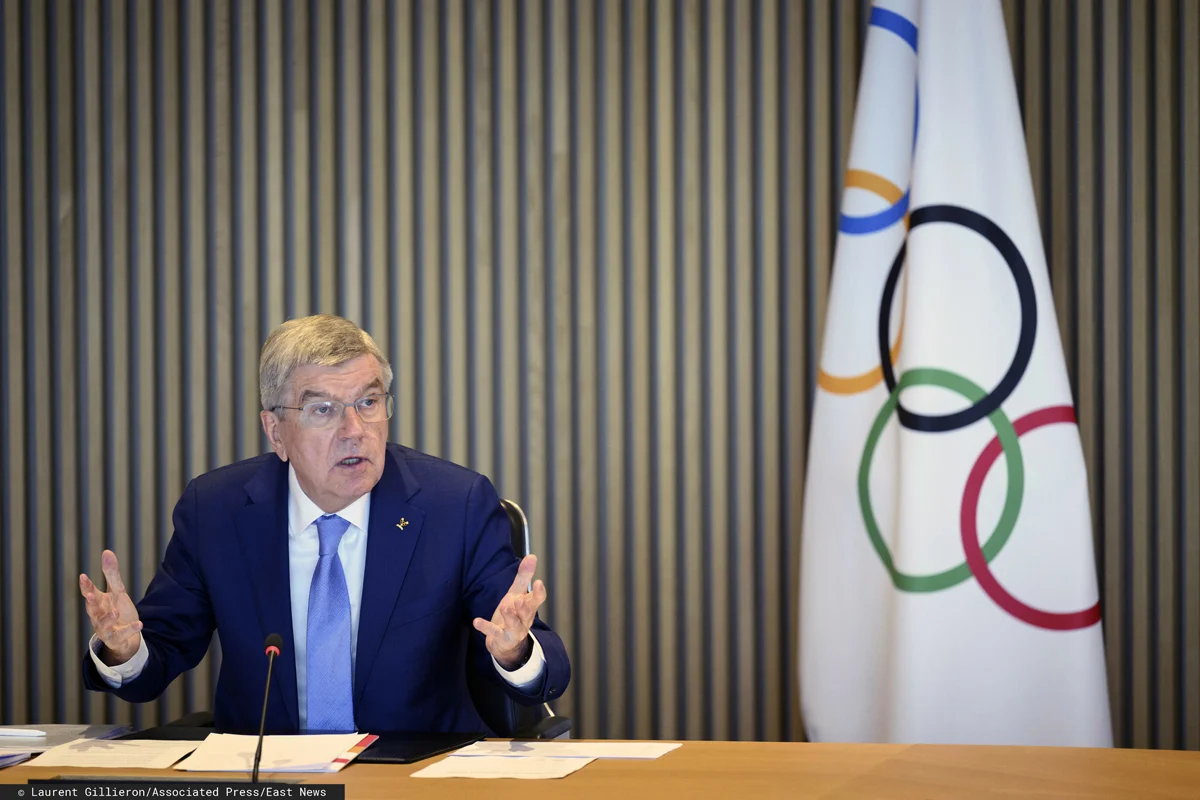
Thomas Bach fulfilled his part of the task, formally pleasing to both sides. Everyone remained unhappy, because in the current situation not only the perfect, but even partly an acceptable solution and cannot be.
It depends on another. Much more important than sport.