
Translated material
For intelligence in China
Europe is against the “Kitakentric world”, but is ready to cooperate with Beijing, the EU leadership stretched to the east
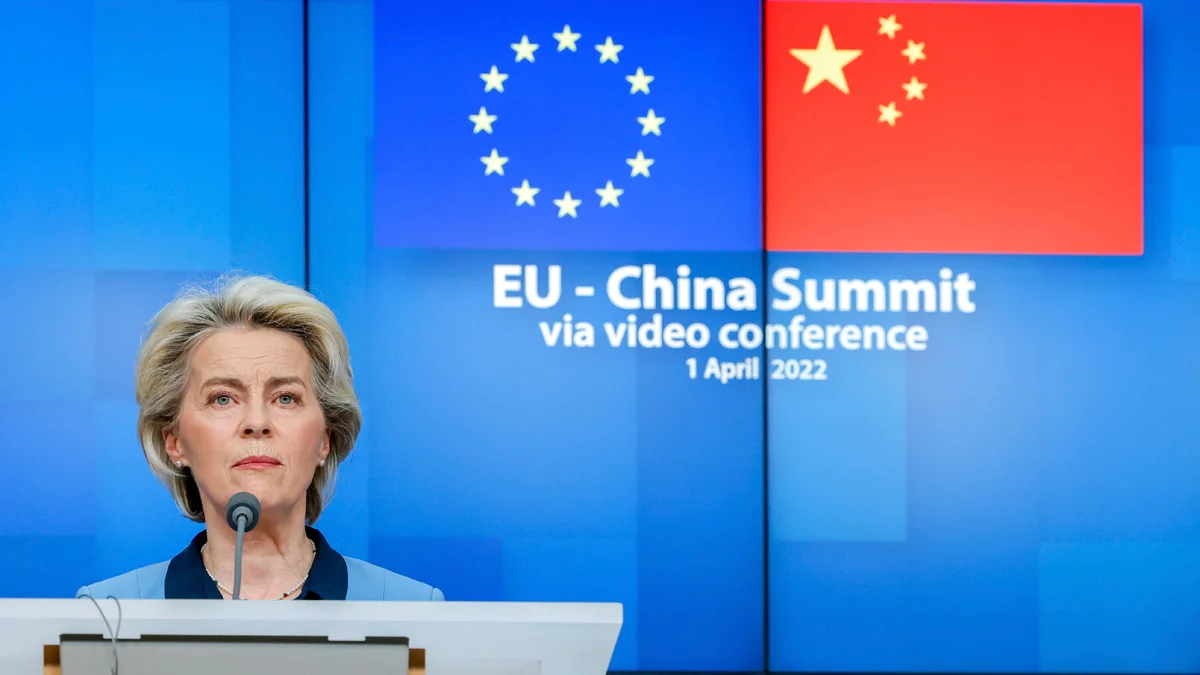
Ursula von der Layen. Photo: AP / TASS
The European Union without delight accepted the results of the visit of the chairman of China Xi Jinping to Russia and his fraternity with Vladimir Putin. But for the United Europe, this is only one of the strokes to the picture of her relationship with China and in general her place in the new world order. He does not want to break with China, he intends to cooperate, but leaves the rainbow illusions of the last decade and exhibits protective fences.
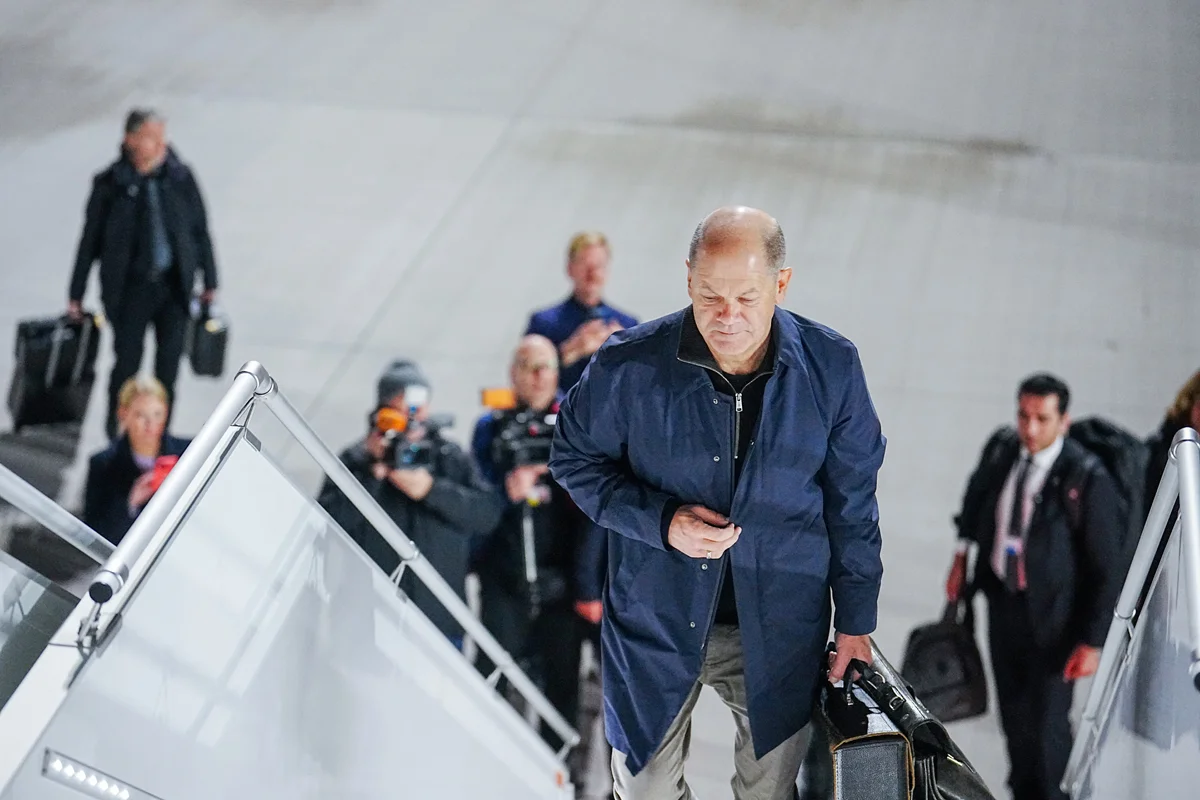
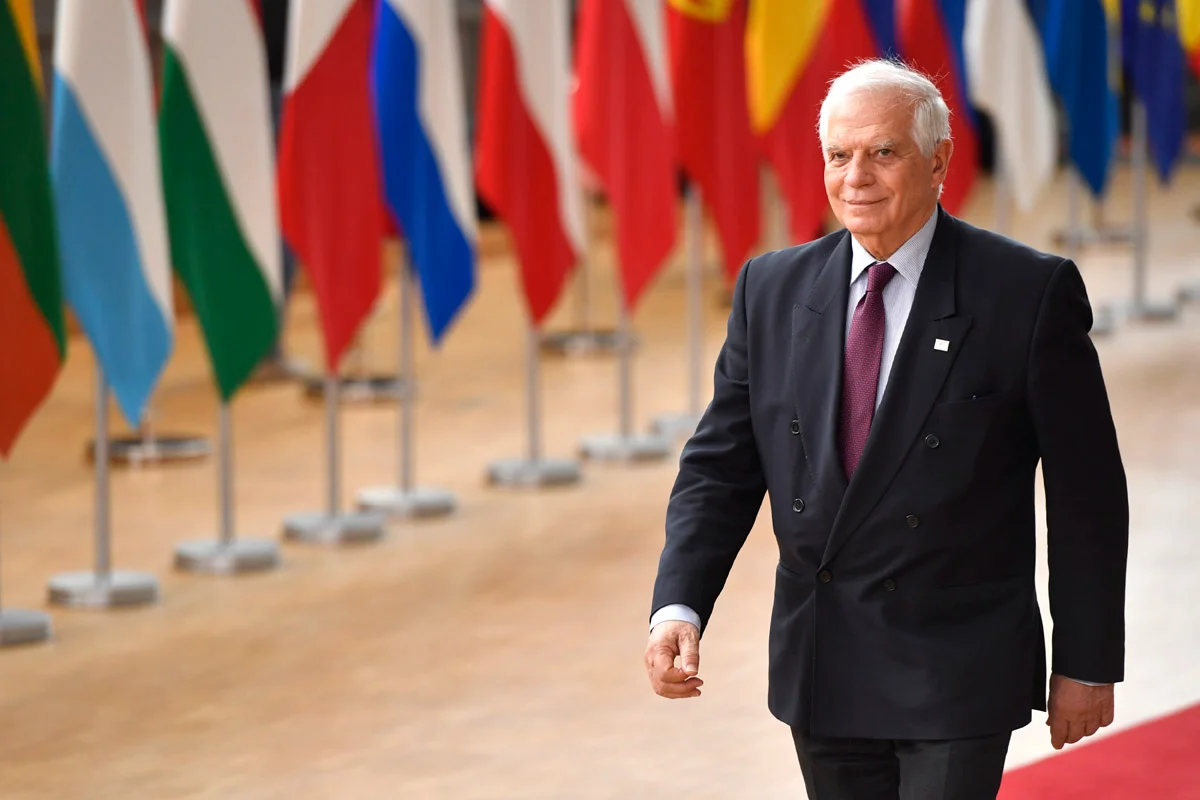
In the wake of the XX Congress of the Communist Party of China, the leaders of European countries, which were held at the end of October, issued a business trip to Beijing one by one. The first was the Chancellor of Germany Olaf Sholts in early November. Maybe hurried. The Chinese still rearranged the chairs. But after the chairman of SI went to his first trip after re -election - to Moscow, the European chiefs massively reached out to China. At the very end of March, the Spanish Prime Minister Pedro Sanchez, at the beginning of April - French President Emmanuel Macron together (but according to separate programs) with the chairman of the European Commission Ursula von der Lyain, the head of the EU diplomacy Josep Borrel, then - the chairman of the Italian Minister's Council George Melony.
Gathering in Beijing, von der Layen outlined by Europe a vision of her relationship with China-Svorotrava. To announce this manifesto, she chose on March 30 the audience of the Mercator Institute of Chinese and the Center for European Policy, which prepare expert councils for European institutions in Brussels. She expressed solidarity with Chinese, political scientists and economists, who were brought by the Chinese authorities in the sanctions lists.
Admiring the ancient history and philosophy of China and an incredible jerk in the development that China has committed over the past half a century, the head of the “European government” stated that the relations between the EU and the Middle Kingdom became “more remote and more complex”.
For some time, "intentional tightening of the general strategic position of China" was observed. China has become more assertive outside and more repressive inside.
From the visit of the Chairman of SI to Moscow in Europe, they expected the effect of litmus paper, confirmation or refutation of conjectures. The balance was mixed. The main diplomat of the EU Borrel is reassured by the fact that Beijing “did not cross the red lines,” for example, did not announce his intention to supply Chinese weapons to Russia. Therefore, they say, there is no taboo to interact with him.
On the contrary, von der Layen noted in her manifesto that SI is by no means embarrassed by Moscow’s military operations in Ukraine and that he confirmed his “boundless friendship” with Putin.
She also noted something more than the current military-political chronicle: “The dynamics of relations between China and Russia has changed”, it is clear that “China considers Putin’s weakness as a way to strengthen its influence on Russia”, that “the balance of forces in (Chinese-Russian) relations, which over the most part of the last century has been in favor of Russia, has changed to the opposite.”
That is, Russia, when the world is “tired” and will become multipolar, can be attributed to the field of attraction of the Chinese “pole”. And now attention should be paid to China.
According to Brussels, he, as a permanent member of the UN Security Council, is obliged to play a “constructive role in promoting a fair world” in Ukraine. Any peaceful plan that would actually consolidate the new territorial acquisitions of Russia, the EU considers it unusable.
“We must be frank in this matter,” said von der Leyen. “How China will continue to interact with Putin in his (...) will become a determining factor for the development of relations between the EU and China.”
In addition to Russia and Ukraine, there are also other conditions that the EU does not call pathetically “red lines”, but announces loudly. A demonstration of military force in the South China and East Chinese Seas, in the Taiwan Strait, as well as on the border with India directly affects the EU partners and their legitimate interests, freedom of navigation. In those waters and straits, trade routes are vital for Europe. And yet. The way China fulfills international obligations regarding human rights will also determine the degree of EU cooperation with China.
Brussels notes three significant changes recorded by the XX Congress of the CCP. They can have an epochal value. China turned the page of the “reform and openness” era and enters into the era of “security and control”.
It turns out that the imperative of security and control prevailed over the logic of free markets and open trade. The clear goal of the Chinese Communist Party has been proclaimed a systematic change in the world order. In the center of the universe, China should be (self -name - a median state). The world order in which individual rights are subordinated to considerations of national security, where security and economics are more important than political and civil rights. The Chinese model of the suppression of human rights and civil freedoms fundamentally contradicts the European model of social structure.
This can be seen on the examples of the “One Belt - One Way” project, the creation of new international banks and other institutions for competition with the current international system. In a number of Chinese global initiatives, he positions himself as a strong and peaceful intermediary, for example, in a recent agreement between Saudi Arabia and Iran.
Nevertheless, the EU wants to work with Chinese partners in global issues, such as trade, finances, climate, sustainable development or healthcare. For this, institutions and systems will strengthen in which countries can compete and gain benefits.
The key word "interdependence". If last year it sounded in the EU almost exclusively in conversations about Russian gas (remember - “Europe freezes” and mocking videos on Russian television channels?). Now they are rarely remembered by Russian gas. From her, not painlessly, but managed to leave. Europe is now worried about the addiction on the supply of what cannot be dispensed with in the development of the technology of the future.
The head of the EC recalled that now China is a vital trading partner, he accounts for 9% of the EU commodity exports and more than 20% - imports.
But the relationship is incurred, they are increasingly affected by the distortions created by the Chinese system of hospitalism.
A comprehensive investment agreement (CAI), negotiations on which ended in 2020, was aimed at such balancing. But the EU must admit that the world and China have changed significantly in three years and the agreement needs a revision. There are some areas where trade and investments pose a threat to the EU economic and national security, especially in the context of the "clear merger of the Chinese military and commercial sectors."
The EU is developing a strategy for reducing economic risks in four areas. Firstly, increase the competitiveness and stability of their own economies and industry. The goal is to produce at least 40% of environmentally friendly technologies necessary for the transition to “green” technologies, such as solar energy, ground and sea wind farms, renewable energy sources in the broadest sense, batteries, etc.
The problem is that now there are 98% of the supply of rare earth elements to China, for example, 93% - magnesium and 97% - lithium. Demand for this raw materials will grow rapidly. The prepared bill of the EU “On critical raw materials” is designed to diversify and protect deliveries. In Europe, they remember very well about what happened with the import of Japan of rare earth elements from China ten years ago, when the foreign policy tension between the two countries in the East Chinese Sea worsened.
European demand for these materials will grow rapidly as the digital and “green” transition accelerates. According to forecasts, by 2050, batteries that eat electric cars will increase the demand for lithium by 17 times. That is why the EU bureaucratic chain is already undergoing a draft law on critical raw materials. It is designed to diversify and protect deliveries.
The risk reduction strategy involves better to use the existing set of trading protection tools (limiting Chinese participation in 5G communication systems, control over direct foreign investment, export control). The changing policy of China may require the development of new protective tools for some industries.
“The EU must determine its future relations with China and other countries in such sensitive areas of high technologies as microelectronics, quantum computing, robotics, artificial intelligence, biotechnology, etc.,” the head of the European Commission emphasized. - Where double goals cannot be excluded or human rights can be affected, it will be necessary to clearly determine whether investment or export to our own security interests meets. We must ensure that the capital, experience and knowledge of our companies are not used to strengthen the military and intelligence capabilities of those who are systemic competitors. ”
The EU has hopes for expanding interaction with other international partners, especially with countries close in views, plans to conclude new free trade agreements and modernize existing ones. This is especially appropriate against partners in the G7, as well as those who are more integrated with China in the G20 and are more, know his habits and secrets of risk reduction. Among them are New Zealand, Australia, India, ASEAN, Mexico and Chile.
Europe (along with America, but not in one bunch) is preparing to withstand the formation of the “Kithecentric world” of Comrade Si. Aware of the difficulty of the task.
“China is a fascinating and complex mixture of history, progress and challenges, and this will determine our century,” said von der Layen. - But the story of how we relate to China is not yet completely written, and it should not be protective. We must collectively show that our democratic system, our values and our open economy can provide people with prosperity and security. And at the same time, they should always be prepared to communicate and work with those who sees the world differently. ”