
Translated material
Maidan in Hebrew
The Israeli judicial reform under the pressure of the protesters was postponed, in response a rally of its supporters was held. Why is Israel protest?

Photo: AP/TASS
On Thursday evening, March 30, a large-scale pro-high rally took place in Tel Aviv. It was organized by the ruling party "Likud" and the associated with it the right organization "Tyrtza". According to the estimates of the 12th Israeli TV channel, about 30 thousand participants responded to their call. According to the organizers - about one hundred thousand.
With the king in the head
The participants in the action demanded that the coalition show fundamentality and bring the declared notorious judicial reform, which caused mass indignation, to the end. On their posters it was written: “Reform now”, “The people chose judicial reform”, “Right patriots are not second -class citizens”. Some supporters of the current prime minister carried posters with the inscriptions: “Bibi ( the nickname of the Prime Minister Beniamin Netanyahu. - R. Ya. )-King of Israel” and “Bibi honest and fair”.
Some of the participants arrived on ordered buses from other cities. This is the first such mass event in Tel Aviv, which is considered a stronghold of opposition and liberal forces.
It was there that in recent weeks, hundreds of thousands of opponents of judicial reform, which the current coalition promoted, regularly gathered at demonstrations. In order to avoid clashes, the traditional Tel Aviv demonstration against the reform was canceled on this day.
The right protesters who, a few days ago, called their opponents anarchists for the fact that some of them, as part of protest, overlapped the movement along the Ayalon busy highway in the center of Tel Aviv, themselves blocked the movement along it for a couple of hours.
In the crowd on Ayalon, the deputy of the Knesset Almog Cohen was seen from the ultra -right party of the Jewish Power, which previously performed with a particularly sharp criticism of the antireformable protest.
Reform on overexposure
In parallel, the opposition announced the past week to promote the bills of the Coalition. Each day, various protest events were held throughout the country.
Groups of army volunteers, including from the Air Force and Military Intelligence, began to refuse to undergo reservist fees. This prompted the Minister of Defense of Yoav Galant on Saturday evening, March 25, to make a public statement.
He called for stopping the promotion of the reform, which caused a deep split in Israeli society, and start negotiations. According to Galant, this is necessary because it endanates the whole country against the backdrop of serious threats in the field of security. According to him, "the victory of one of the camps will mean the defeat of all Israel."
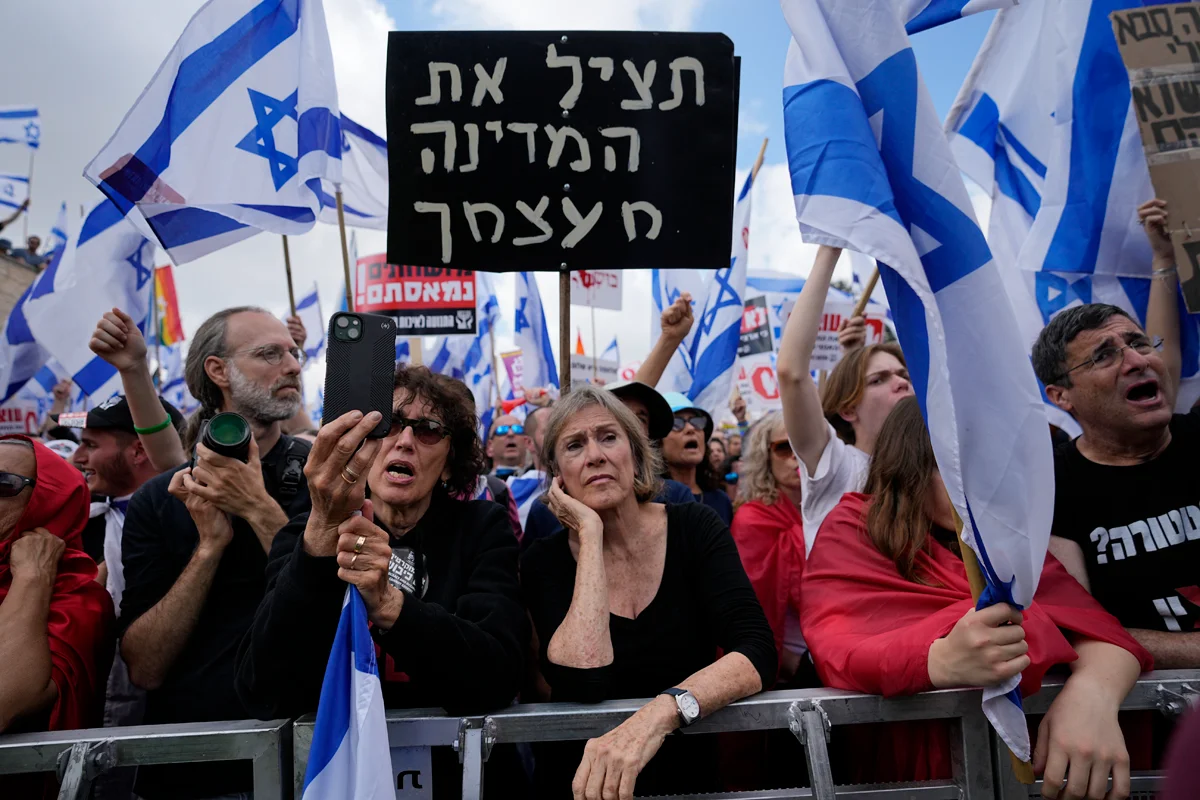
The next day, Benjamin Netanyahu fired Galant from the Minister’s post with the wording “Loss of trust”. An hour after the announced dismissal throughout the country, spontaneous mass rallies passed, the largest of them in Tel Aviv.
The next day, the All -Israeli Federation of Trade Unions announced a national strike, and various structures began to join in protest: municipalities, ministries, courts, universities, schools, tax management, employment, banks, seaports, airport.
On Monday evening, March 27, Netanyahu announced the temporary freezing of the promotion of judicial reform - until May to take a break for the holidays and give a chance to negotiations with its opponents.
Later, a spicy detail surfaced-the channel 11 journalists found out that the strike at Ben-Gurion Airport was coordinated with the Chancellery of the Prime Minister. This was confirmed by the Chairman of the Trade Union Committee of the Airport Department of Pinhas Idan. The wife of Prime Minister Sarah Netanyahu secretly turned to senior union members so that they put pressure on the government to suspend judicial reform.
Then the Prime Minister Benjamin Netanyahu received a complete legitimacy to make a statement about the temporary freezing of the reform, despite the pressure from the “hawks” in his coalition. Of course, in the office of the head of government deny assumptions about coordination of actions with trade unions.
Netanyahu’s statement was approved by Israeli President Yitzhak Duke, who long ago called on the parties to start negotiations in order to coordinate the provisions of the reform. “The suspension of legislation promotion is right,” he said. “It's time to start an honest, serious and responsible dialogue that will immediately calm passions and extinguish the flame of protest.”
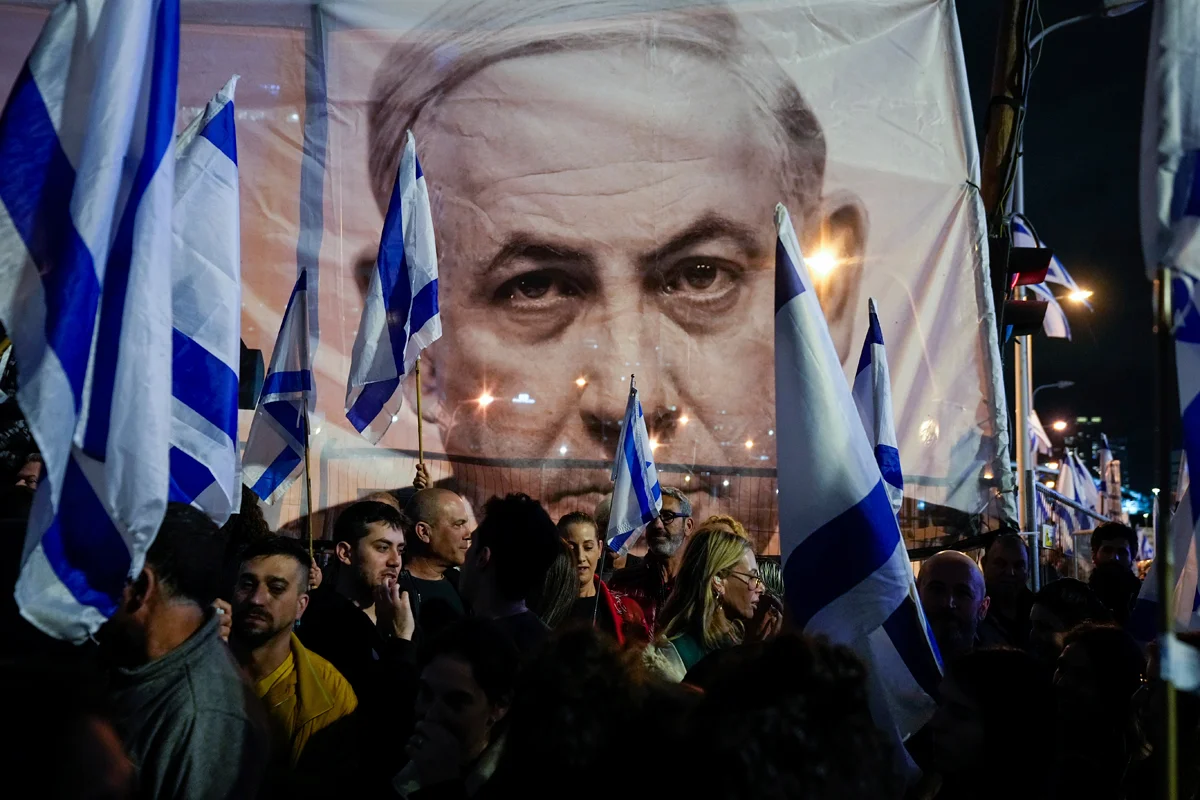
The first trial meeting of the negotiation groups in the president’s residence has already passed, but the negotiations have not yet begun.
In addition, not all opposition parties are ready to participate in them. The head of the "Our House of Israel", the Russian -speaking politician Avigdor Lieberman explained his refusal as follows: “This morning I was asked several times why we did not participate in negotiations in the Presidential House. I know Netanyahu for many years, he will not lead me. It is clear that on his part there is only a fraudulent desire to wait out difficult days, including the day of independence and the day of memory of those who fell in the wars of Israel, suppress the foci of the rebellion inside the Lida, but the most important thing is to “drain” the mass protest. We will not participate in such negotiations. ”
He recalled that, despite the statements of readiness to participate in negotiations, the coalition continues to promote planned bills, although the opposition requires a break.
Why all the noise?
We remind. Three months ago, on December 30, in Israel, a new, 37th government, led by Benjamin Netanyahu, was oath, the most right and most religious for the history of the state. The new coalition began to promote judicial reform, the essence of which boils down to neutralizing the judiciary .
In just three months, deputies from the ruling coalition submitted 141 bills, many of which are designed to change the “rules of the game”.
Supporters of the reform believe that the Supreme Court, whose members are not folk chosen ones, became the bastion of the left camp and appropriated too many powers. It intervenes in the activities of the Knesset, periodically canceling the laws, which, in their opinion, violates the principle of separation of powers.
Opponents of the reform note that the inconsistent actions of the coalition break the existing system of checks and counterweights, and the weakening of the court is actually a coup, because it will lead to the emergence of a dictatorship and the violation of human rights.
Israel is a parliamentary republic in which the executive branch is formed from legislative leaders. That is, in fact, these two branches of power are closely intertwined. Against this background, the judiciary is of particular importance, which neutralizes especially the pernicious initiatives of legislators.
In the absence of a constitution in Israel and laws that clearly share the powers of the branches of government, in the 1990s the Supreme Court took on the functions of the Constitutional Court and ensures that the laws adopted did not contradict the existing basic laws of the state.
As practice shows, judges try to intervene as little as possible in legislative activity. According to the Israeli Institute of Democracy, over the past quarter century, the court recognized as invalid the provisions of certain laws in 22 cases, that is, with a frequency of about 0.8 per year.
The current coalition made a serious mistake when she did not conduct an explanatory campaign in order to explain to the society what exactly she achieves. Moreover, part of the promoted bills is noticeably personal in nature.
In particular, the first adopted law from the package significantly complicates the procedure for removing the current Prime Minister.
The actions of the coalition led to a wave of protests throughout the country, which, as the legislation progressed, grew and width. Their peak fell on the last week - about half a million protesters took to the streets of Israeli cities.
A month ago, the president of the country Yitzhak Duke called for the promotion of the reform on a two -week pause in order to try the parties to coordinate the details of this reform. But the coalition then categorically refused.
As a result, inconsistent promotion of legislation can lead to an unprecedented constitutional crisis if the Supreme Court uses its powers and cancel the adopted laws that undermine its ability to balance the legislative power.