
Translated material
Putin - Inhan!
Propaganda accelerates the narrative that Putin is adored in China. This is only partly: the Russian president was interesting to Beijing 10 years ago - but not now
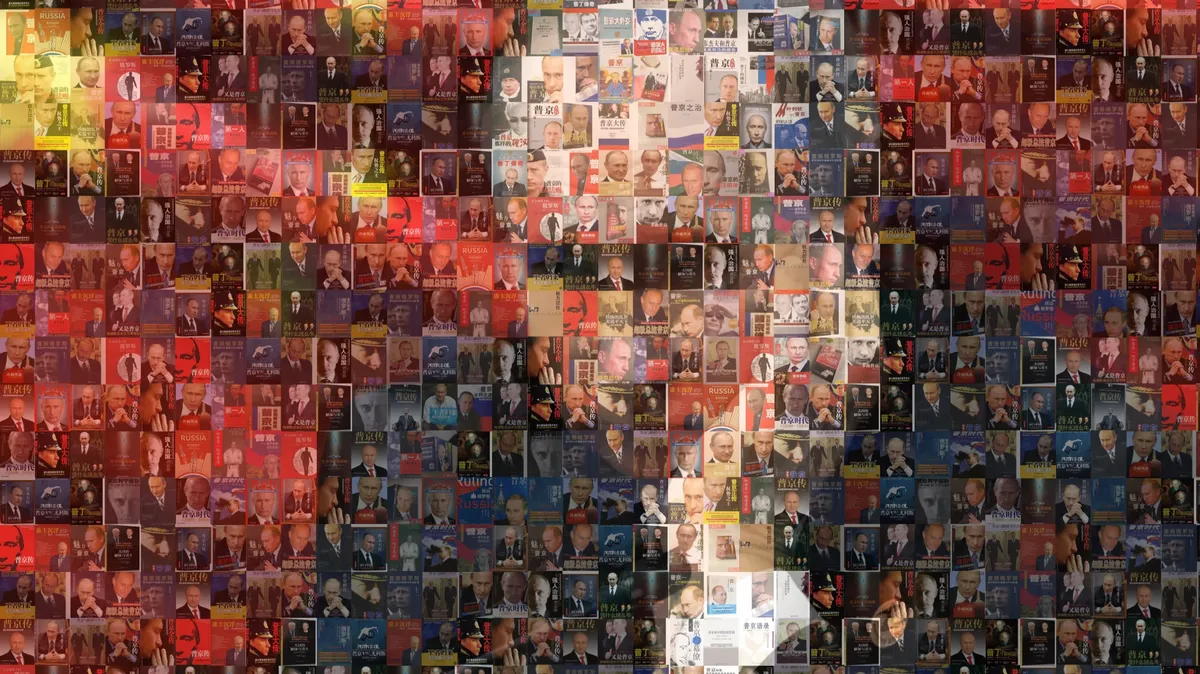
Illustration: "New Gazeta Europe"
One of the side effects of the visit of Xi Jinping to Russia was the strengthening in the propaganda discourse of the thesis that President Putin is also very fond of in China. They admire them and write a huge number of books about him, promotes propaganda. Due to language features, it is very difficult to check this thesis - but we did it. Especially at the request of Novaya Gazeta Europe, Chinesist Alexei Chigadaev studied the book of books about Putin in China and - moreover, read them. The Russian president really appeared in them as a hero - but only in the past and only until this heroism became a threat to the current Chinese regime.
The visit of the Chief of China Xi Jinping to Moscow on March 20–22, 2023 clearly demonstrated that the relations between the two states, indeed, reached a new level.
An objective assessment of bilateral relations went to multi-page reports of analytical centers and on the sidelines of the community of academic researchers and business analytics. Both Russia and China form the image of mutual friendship they need, which ceased to have any connection with objective reality. Objective reality, unfortunately for most employees of the state media, exists, but is not suitable for the formation of the necessary image of "relations of a comprehensive partnership and strategic interaction entering a new era."
Russian President Vladimir Putin is one of the main pillars of pro -Russian propaganda in China. The image of a strong leader in Russia is actively operated in all types of entertaining content: from short videos and Internet memes-to mandatory mention in information television programs and books.
We have collected a list of 100 books in Chinese dedicated to Vladimir Putin. What image of the President of Russia will Chinese authors construct and what pains of Chinese society are the headlines of books respond?
How we selected books
The list is included as books that you can buy right now. For example, on the Chinese platform for the Taobao (淘宝) online stores you can order directly from the seller of both new publications and used specimens. There are books that have disappeared from the sale, but the Chinese online database and the social network Duban (豆瓣), which recommends potentially interesting books, films and music, remembers them, and users, in turn, can write reviews and announce cultural events. Many books have several reprints, including under different covers, some came out a limited circulation exclusively for the academic audience. We also included in the selection of books published in Hong Kong and Taiwan. For written texts, traditional hieroglyphs are used here, and these books are more implemented only in the territories of Hong Kong and Taiwan. In mainland China, the vast majority of literature is released using simplified hieroglyphs that appeared in the middle of the 20th century after the reforms of the Communist Party of China. However, nothing prevents the reader from mainland China from buying and reading an electronic book written using traditional hieroglyphs: there is no fundamental obstacle to reading such literature.
Let's start with numbers
Often it is not possible to find the exact date of the publication of the book, especially if it has already disappeared from the sale and was released until the Internet penetration. The division by terms is conditional, especially if we take into account the fact that the inauguration of the President of the Russian Federation usually takes place in May. We shared the release of 100 books according to the stages of Putin’s political career and at the end gave the general statistics of books by year.
The first presidential term
On July 17-19, 2000, Putin made the first official visit to China and held negotiations with the chairman of China Jiang Zemin. The Chinese leader at that time is 74 years old, and against his background, the dynamic 48-year-old Putin looks like a symbol of the new Russia, which is not yet known about. In 2001, Vladimir Putin visited China twice with working visits, and in December 2002 a second official visit to China took place . An obvious request for literature on the young leader appears in the Chinese market, and an active translation of the books of Russian authors begins. In Chinese, one after one, the books of Putin’s era Roy Medvedev, “The formula of power. From Yeltsin to Putin, ”Leonid Mlechin,“ a native of Leningrad - 35 moments of Vladimir Putin’s life ”Oleg Blotsky,“ Putin and his adjutants ”by Alexei Mukhin, and, of course, the first autobiography of Vladimir Putin“ First Person: Putin about himself ”comes out.
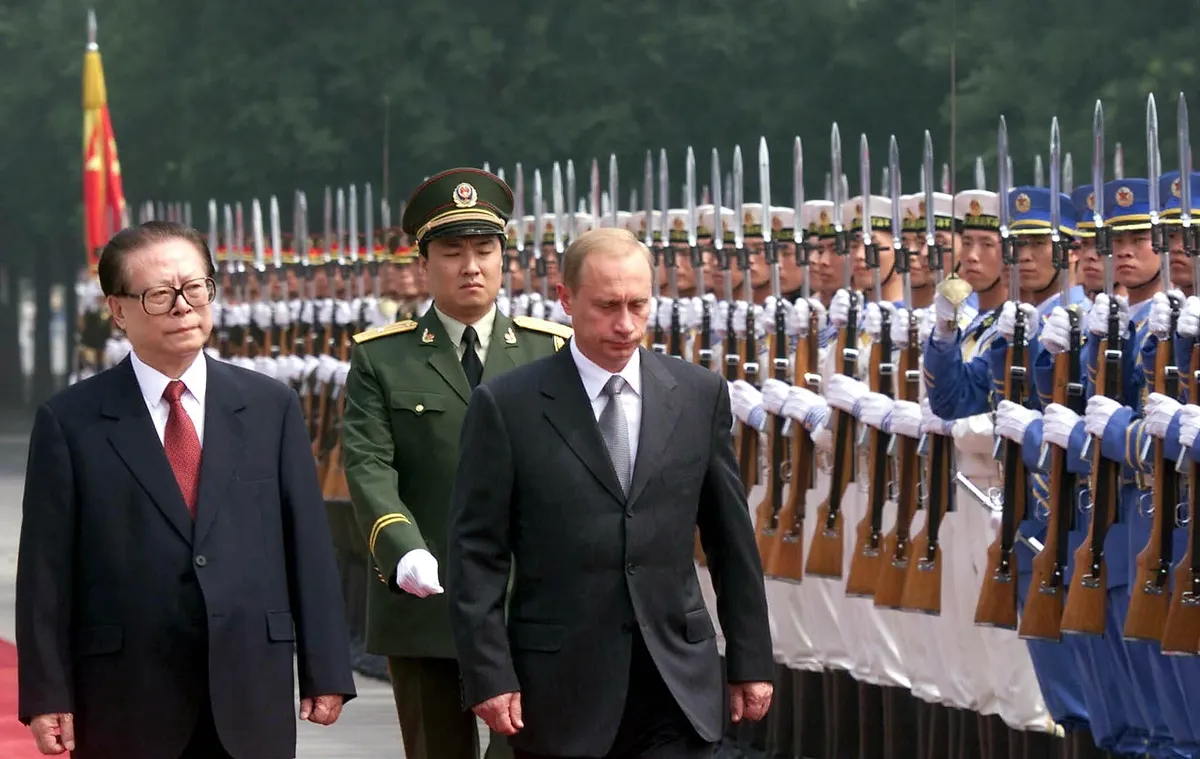
Chinese authors are gradually forming, studying the biography and public performances of the President of Russia, trying to answer the legendary question of the American journalist Trudi Rubin in January 2000 at the World Economic Forum in Davos: "Who is Mister Putin?"
The headlines of books are understandable: “The biography of the new president of Russia Vladimir Putin: from KGB to the successor of Yeltsin”, “Putin: from KGB Lieutenant Colonel to the President of the Russian Federation”, “From Spy to the President: Saga about Putin” and “Putin is the new owner of the Kremlin”.
The image of a young spy, who worked for the benefit of his homeland against Western intelligence in the rear of the enemy, is unusually in demand and romantic.
It can be said that by the end of the first term, Vladimir Putin finally won the hearts of Chinese readers, and the last three books of 2004 are under the headings “Power and Charm: Watching Putin”, “Charming Putin” and “What is Putin’s steepness?”
Let's make a small lexical retreat. By the end of the first term, appraisal vocabulary for the first time appeared in relation to the President of Russia. Putin is associated with the concept of 魅力 (“Mayly” - the power of charm, charm, attractive power, charisma). Putin penetrates into the segment of popular literature, where you need to write easier and more interesting, and there he is already at the youth slang 牛 (“nude” - cool).
Only three authors ask political questions, trying to analyze Russian realities in separation from the media context. The domestic policy is considered in the question: “Can Putin revive Russia?” - but the authors themselves give an answer in another book under the name “The strong hand of Vladimir Putin arose as a response to Russia's request by an order of magnitude and stability”. The first results of the foreign policy of Russia in the book Putin's Diplomacy are also summed up. In the political plane, Putin receives hieroglyphs 铁腕 (“Tevan” - literally: an iron hand, figuratively - a strong hand).
For the first presidential term, 17 books were published, for the second presidential term there will be another 19 of them.
The second presidential term
From the Russian authors, the books of Andrei Kolesnikov were translated “next to Vladimir Putin: the Kremlin’s special corner watches the president” and “second term of Putin President” Alexander Rar.
After the first term, Chinese authors summarize the first results (“Vladimir Putin: four years in the Kremlin”) and have no doubt that the second presidential term will be no less bright than the first. Why? Because “Putin is the last chance of Russia”, which has a “new vision [...] Russia” and “Putin's safe path”.
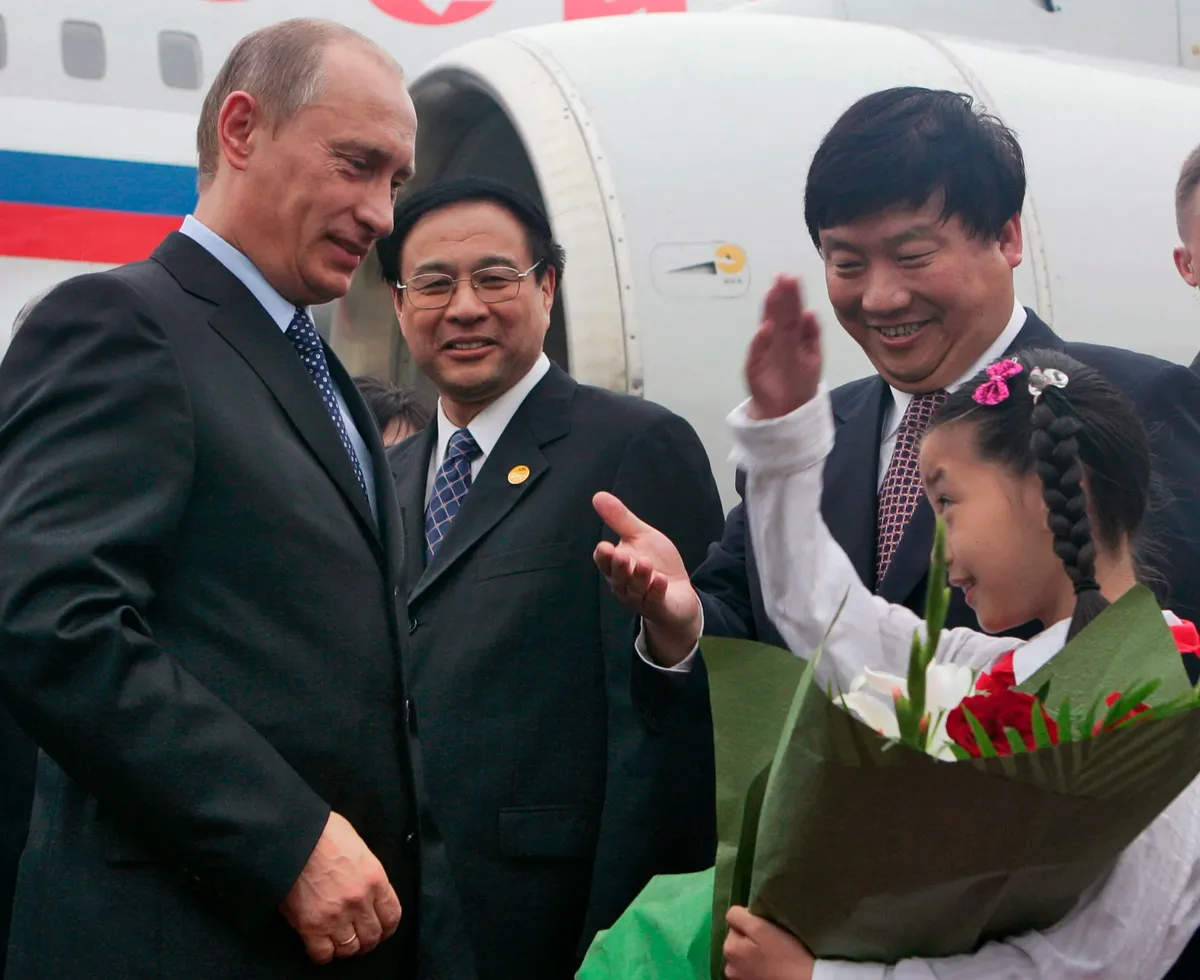
USSR President M. S. Gorbachev and President of the Russian Federation B. N. Yeltsin are still alive, but Chinese authors are already beginning to compare the successful leader with their predecessors in the books “From Yeltsin to Putin: the way to Russian constitutionalism” and “Take a look at Putin again” - and far from in favor of his predecessors. By this time, Vladimir Putin had enough press conferences and answered many different questions from journalists. The Chinese note its resourcefulness, liveliness of communication and “accessibility”, unlike the Chinese leadership that does not have a dialogue format with the people.
Chinese wisdom begins to replenish with quotes of the Russian leader. In 2006, a famous quote from the interview with German television channels of the ArD and the Central Duma of May 5, 2005 was made on the cover of one of the first biographies of Vladimir Putin as a subtitle: “You know, we say: those who do not regret the crash of the Soviet Union, and who regret does not have a head.” It is intentionally or not, but in a Chinese translation it sounds much more ironic, especially if you read it in 2023: "Those who do not regret the collapse of the USSR have no conscience, and those who want to restore the past have no brains."
To the image of a spy (“Putin’s life: a person with a cold expression”) and a strong hand add the image of a political strategist. A book, entitled “A strong hand, controlling the vague times: softness and meekness / philosophy of judo lead the country to calm.” Hieroglyphs 柔道 In this case, they can be interpreted in two ways: both “softness and meekness” and as “judo”.
This is the only attempt to somehow connect Vladimir Putin with the culture of Asia. The Chinese media traditionally try to emphasize that the hero of their books, material is somehow connected with China and Asia: loves a certain dish of Chinese cuisine, studies the language or read the book of a Chinese author.
In this case, Putin is always positioned as a Western leader, a player of Western policy, and no one seriously discusses Putin’s potential connections with China. Judo here is quite enough.
In 2008, Chinese authors summarize the political results of the presidency of Vladimir Putin (“Putin’s era of 2000-2008”, “Eight years of Putin: the path to the revival of Russia (2000-2008)”, “The Renaissance of Russia: the Foreign Strategy and Politics of Putin”) and get acquainted with the new leader of Russia Dmitry Medvedev (“Medvedev and Putin: Tandem of the Higher level,” “Putin's ups and falls: from president to Prime Minister”).
In the segment of the more popular mass literature, the President of Russia is now “superpreter Vladimir Putin”, and everyone still continues to look for the secret of his charisma (“Putin’s charm”).
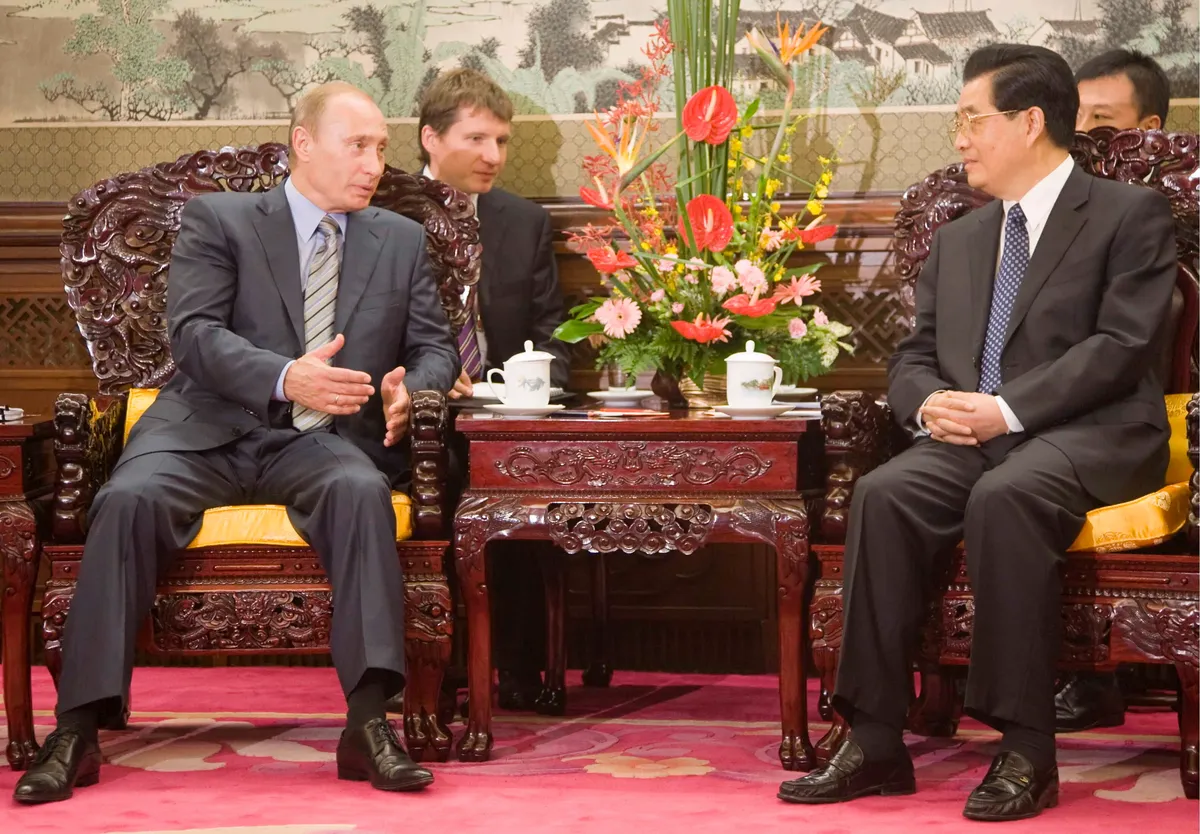
Chairman of the Government
This may seem strange, but exactly at the moment of leaving the active foreign policy and concentration on the domestic political agenda, interest in Putin grew. The number of books at this stage reached its maximum - 30 original Chinese and translated publications. The least books at this stage-three pieces-is written in 2010, and the absolute record-16 books-in 2012.
From Russian books, we note “Two Persons of one Putin” by Andrei Kolesnikov, “Encyclopedia about Putin” by Nikolai Zenkovich, “Kremlin German” by Alexander RAR, “Again Putin” by Vladimir Solovyov and Nikolai Zlobin, “who controls Russia: the path of Putin and the FSB to the highest echelons of power” Andrei Soldatov and Irina Borogan. In 2012, the book of Masha Hessen “Putin: the second coming of the king” was published in Hong Kong. Literature with a critical analysis of Putin’s personality and his policy in China is not published in the mass segment.
In the same period, the Chinese begin to actively translate non -Russian literature about Putin: “Putin and Yukos: Oil Wars in Russia” by the British journalist Martin Sixmit, “Putin and Medvedev” by the Finnish political observer Tasisto and “a strong man controls the state: Biography of Putin’s British journalist Angus Roxburgh.
Chinese authors release five full -fledged biographies of Putin, one of which comes under the heading "Born for Russia." An important event - the first collection of Putin's best quotes appears in print.
For a country with a rich written tradition, this is a sign that now a person has officially entered historical discourse.
Now there is a canon of Putin's texts, which can be addressed on occasion. In Taiwan, the first biography of Putin entitled "Putin's biography: Eagle of the New Russia" is released. In 2010, the study of new military reforms in Russia in the Putin period is published, and this is the only book at the moment in which the authors are trying to seriously analyze domestic political reforms publicly.
Putin still has 魅力 (“Mayly” - the power of charm, charm, attractive power, charisma), but now most of the headlines are focused on sales, so they should become brighter and more understandable. The main audience is middle -aged men who are interested in politics, “sofa analysts”, small and average businessmen, young students. In the literature segment, five books are published for men under the general topic “Be cool, like Putin, / Putin’s male rules”. The main thing selling the word is 硬汉 (“Inhan” - a solid, adamant, principled person) - perhaps one of the highest informal titles for a Chinese and non -Chinese man in society. And if Yuri Dud spoke Chinese, then he could ask his guests: "Putin-Inhan?"
In the segment of children's literature, Putin appears in the book "Strength in you: Tips for adolescents from the unbending President Putin."
Four books are published in the segment of near political literature, where Vladimir Putin is now 王 (van) - the prince, king, king, emperor, sovereign, monarch. The headlines with this hieroglyph echoing with the entire name of the film “The Lord of the Rings - the Return of the King”. The context of the appearance of books is easily explained by the appearance of Tandem in Russia.
The third presidential term
On September 24, 2011, Russian President Dmitry Medvedev invited Prime Minister Vladimir Putin to run for president in 2012. On March 4, 2012, the President of Russia was held. Vladimir Putin scored 63.6% of the vote.
Over the third presidential term, 29 books were published that only one book was only less than Vladimir Putin as the Prime Minister. But the presidential term has increased to 6 years, and in relative numbers the number of books decreased 1.5 times compared to the previous stage.
Translations of foreign authors are released: “Russia under Putin: power, money and people” of the British researcher Simon Pirani, “Power and Iron Fist: Biography of Vladimir Putin” by Angus Roxburgh, the Anglo-American work of Political scientist Fiona Hill “Biography of Vladimir Putin: Restless Necessary Russian”, “Disconnection of the Great Power: Gorbachev and Putin” by the American researcher. David Kotz, the book of American journalist Ann Garrers “Putin’s country: a journey to real Russia”, “From the Revolution to Putin’s authoritarianism” by the American political scientist William Tsimmerman. In Hong Kong, the book of Arkady Ostrovsky “Creation of Russia: from Gorbachev to Putin, the transformation and development of the modern Russian state” is published.
The trends of the book market remain the same. The new collections of Putin’s quotes continue to be released as often as the next biographies of Putin. He is still 硬汉 (“Inhan”-a solid person) and 王 (“van”-king). Many authors go even further, but do not even think about new epithets, but simply, in addition to the “king” and “solid man”, they add the epithet already familiar to us 魅力 (“Mayly” - the power of charm), constructing from Putin and the charismatic king and a charming solid person.
More often they began to add subtitles - they have already accumulated enough. In the subtitles of the biography, quotes “Give me for 20 years, and I will return to you wonderful Russia!”, “Do not joke with me: a new biography of Vladimir Putin. The state is my faith ”,“ The big biography of Vladimir Putin: to live to change Russia ”and“ Putin’s biography: Putin's spring has come. ” A strong hand in the title of one of the books turned into “Iron Fist Putin” (铁拳 铁拳 - “Tetsyuan” - literally: an iron fist).
In two biographies, grammatical constructions with the meaning “Born for Russia” are amusingly echoing. In one headline we read “Biography of Vladimir Putin: an unbending president born to Russia”, and in the other, “Putin: a Simpatyaga born to Russia” (万人迷 万人迷 万人迷 万人迷 - “vanjenmi” - literally: a person whom many people love).
In the popular segment, they continue to release the rules of life of a real man Putin “Life without defeats: the law of Putin’s power”, in teenage literature there is a “road to a dream - ten tips for young people from Putin”.
On June 6, 2013, Vladimir Putin and Lyudmila Putin announced the completion of the marriage. In the same year, a book was published for the women's audience “Putin: the perfect man in the performance of a woman.”
In the political sector, works devoted to a variety of aspects of Russia’s policy for this stage are published: this is “the Great Putin's diplomacy: Russia's foreign strategy in the 21st century (1999–2017)”, and “Putin's Russia in the new era (2011–2015)”. Books appear on political economics, energy strategy, national idea and subsequent transformation of Russia. The topic of the annexation of Crimea in the books is raised, but there are no individual books, where the heading is mentioned directly and his attitude to the question of the belonging of Crimea or conflict in Ukraine.
Четвертый президентский срок
С 2018 года начинается спад интереса к личности Путина. В 2018 году вышло две книги (и только одна за авторством китайского исследователя). В 2019–2020 годах выходит пять книг, и только одна из них написана китайским автором с материка — очередная биография «Приближаясь к Путину».
В Тайване переводят книгу Стивена Ли Майерса «Новый царь: взлет и правление Владимира Путина», в Гонконге выходит очередная книга Маши Гессен «Великая Россия вернулась: национализм, тоталитаризм, историческая память; как путинскому государству удалось в очередной раз подчинить народ». Вышли переводы книг Хуберта Зайпеля «Логика власти» и Ричарда Саквы «Биография Владимира Путина: западный эксперт по России авторитетно объясняет, почему Путин МОЖЕТ».
We will summarize
Мы не смогли найти книг о Путине, которые бы были опубликованы с 2021 года до конца 2022-го. Переиздания, несомненно, есть, но новинок нет. И если в среднем с 2000 года в Китае ежегодно появляется около пяти книг о Путине, то за последние годы не появилось ни одной. Интереса к фигуре Путина в книгах меньше, чем в первые годы его прихода к власти. Это можно объяснить распространением социальных сетей, личных блогов и банальным «люди стали меньше читать», но факт в том, что Путин в социальных сетях, государственных СМИ, видеоблогах, интернет-мемах и книгах — это разные Путины в силу различий в целевой аудитории.
Базовый образ Путина, несомненно, формируется при поддержке либо при попустительстве государственных институтов пропаганды. И возникает вопрос, а что первично: спрос на пропаганду или инструменты пропаганды?
Путин определенно нравится китайским читателям, и ради них писатели создают еще больше книг, потому что это приносит деньги. Как на это реагировать государственной пропаганде и машине цензуры? Участвовать в процессе создания контента, не допуская, в первую очередь, негативных сравнений со своей собственной политической системой. Путин — 硬汉 (инхань) / красавчик! Но он всегда красавчик в вакууме либо красавчик по сравнению с западными лидерами и своими предшественниками. Они не смогли, а он смог. Они слабаки, а он прогнул. Они бюрократы, он шпион. Они скучные и безликие, он дзюдоист и настоящий мужчина. Не сравнивать Путина с китайскими лидерами — и точка.
На фото обложек Путин не стареет. На официальных изданиях всегда в костюме, запечатлен в движении.
В популярной массовой литературе одет в военную форму или неформально, но всегда собран и динамичен. Часто улыбается — свой парень. Такому и жизнь можно доверить, и страну.
Искусственно ли снижение упоминаний Путина в заголовках книг в последние пять лет? Хороший вопрос, ответ на который мы узнаем через несколько лет. Будет как минимум странно, если за 2021–2023 годы не выйдет ни одной книги о Путине на китайском языке, так как последняя книга, написанная именно китайским автором, выпущена еще в 2018 году. Машина китайской пропаганды и цензуры работает безупречно. Если завтра понадобится выпустить пять книг о Путине — они будут готовы к вечеру. Если необходимо, чтобы упоминания о Путине исчезли, — инструменты для этого также готовы. Приносят ли книги о Путине деньги своим авторам и издательствам сейчас? Ранее издательства охотно говорили о том, что какая-либо биография стала хитом продаж, но конкретную цифру проданного тиража или сумму старались не называть.
Популярность литературы о Путине снижается, потому что история главного героя больше не удовлетворяет потребностей читателей.
Age. Путин был молод и активен, образ живого руководителя государства, который не читает по бумажке и активно жестикулирует, контрастировал с китайской действительностью. Путину уже за 70 лет, и внешне он неотличим от среднего китайского бюрократа. Можно было безболезненно уйти на должность отца нации или патриарха общества, но эта ниша занята Председателем КНР Си Цзиньпинем, а ему не нужен даже виртуальный конкурент.
Domestic policy. Пропала дихотомия хаоса и порядка. Раньше Путин решал проблемы, успокаивал волны и умиротворял регионы, но теперь ситуация кардинально изменилась: на протяжении последних нескольких лет страна непрерывно вовлечена как в военные конфликты за рубежом, так и на своих границах. Китайские туристы приехали в Россию и обнаружили, что их уровень жизни подчас гораздо выше. Власть не справляется с обеспечением того уровня жизни, к которому привык среднестатистический китаец. Зачем мечтать о жизни, «как в России», если дома лучше?
Foreign policy. Путин был звездой международной новостной повестки. Можно было часами рассуждать о том, как Путин им показал и не прогнулся, а ответил с достоинством. Китайцы тоже хотели стать частью глобального культурного и политического контекста — и стали. Летняя Олимпиада, Зимняя Олимпиада, бесконечные международные форумы, Председатель Си путешествуют по всему миру, встречи с ним добиваются сильные мира сего. На этом фоне читатель не видит внешнеполитических успехов России.
Складывается ощущение, что китайский читатель вырос из литературы о Путине. Так, есть набор книг, которые нужно прочесть до 20 лет, и если не успел, то в более взрослом возрасте читать это уже бесполезно. Китайский читатель искал вдохновение, модель поведения и образ светлого будущего. Но спустя 20 лет Китай перерос этот образ, мечты сбылись. Китай на равных общается с США, усаживает за стол переговоров Иран и Саудовскую Аравию, реализует международные проект «Один пояс, один путь» с участием 78 стран в Азии, Африке и Европе. Чему теперь Путин может научить Китай? Что Путин может предложить Китаю? Си Цзиньпин дал людям повод поразмышлять о «китайской мечте», но никто не знает о «мечте Путина».