
Translated material
Marquis de Court
The Georgian femid is tormented and tormented: US sanctions are imposed in relation to judges, but they refuse to release Saakashvili for treatment - despite the calls of Navalny
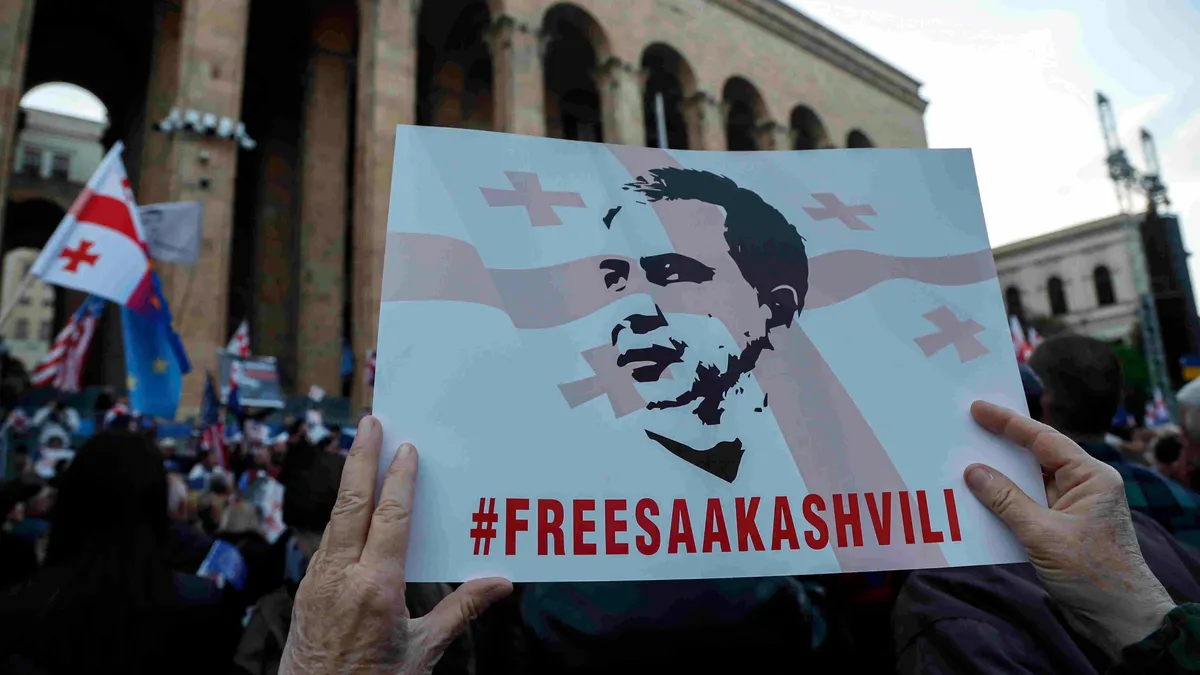
The poster demanding to free Mikhail Saakashvili at a rally near the Georgian Parliament, April 9, 2023. Photo: EPA-EFE / Zurab Kurtsikidze
Lawyers of Mikhail Saakashvili filed a complaint with the European Court of Human Rights, demanding to delay the punishment of the ex-president of Georgia and transfer him to treatment abroad. Lawyers say that after almost a year, treatment in the Tbilisi clinic does not give a result: Saakashvili confirmed Caheksia and Dementia, doctors claim that he was practically at death. There is another important circumstance - the soaked reputation of the judicial system of Georgia. After many years of criticism of the Georgian “court clan”, the United States first appointed sanctions against specific judges. Opposition politicians and experts are sure that in fact this is a “yellow card” for the informal ruler of Georgia Bidzina Ivanishvili.
Punished by Prometheus
The fact that Saakashvili is filed by a lawsuit in Strasbourg was not the lawyer, but the famous French philosopher and publicist Bernard-Henri Levy, who is often called the "unofficial Minister of Foreign Affairs of France", first announced this week.
“The question of life or death is a symbol of democracy in Georgia for this,” Levy wrote on Twitter.
He recalled that the international team of doctors confirms: Saakashvili - in a critical situation; - As well as the fact that Poland is ready to accept and treat Saakashvili at home.
Levy became a hot supporter of Saakashvili after during the Russian war in Georgia in 2008 he visited Tbilisi and took an interview from the president. He also met with him after Saakashvili moved to Ukraine. Russian propaganda usually calls Levy "the director of the Ukrainian Euromaidan."
The fact that Putin needs to be urgently stopped, otherwise he is destabilizing the whole of Europe, Levy declares since Russia annexed Crimea.
This time, Levy spoke about Saakashvili in Warsaw, where on April 12 the Polish Prometheus award named after President Lech Kachinsky was transferred to him. This year, the prize in 2019 “for the contribution made to the struggle for freedom” went to Mikhail Saakashvili and the UK Defense Minister Ben Walles.
Instead of Saakashvili, his mother - Giuli Alasania arrived to receive a prize in Poland. Levy also rose to the stage and made a speech in which he called Saakashvili "the great president, great man and the great European hero":
“Today he is in prison and poisoned, like many enemies of Putin. He is punished as Prometheus, who carried people in Georgia and in Ukraine of Freedom. ”
This is not the first European award received by Saakashvili for the time that he was in custody. On March 26, the mother and youngest son of Saakashvili visited Oslo, where they were given a prize from the Norwegian Conservative Party - "For the promotion of human rights, political and economic freedoms and democratic institutions."

After the award became known in Georgia, Prime Minister Irakli Garibashvili said that the Norwegians could just as successfully award his terrorist Breivik, since Saakashvili "killed hundreds of people, and his regime was a bloody regime." The Norwegian ambassador was even called to the Georgian Foreign Ministry - and protested him.
Saakashvili case and his health
Mikhail Saakashvili was detained in Tbilisi on October 1, 2021 after a secret arrival in Georgia. He was immediately placed in prison on the basis that the court had previously sentenced him to imprisonment in absentia for a period of six years for “abuse of power”.
Saakashvili, who considers himself political prisoner, spent two hunger strikes in prison: he refused food for first 20, and then 50 days in a row.
On November 10, Saakashvili’s lawyers turned to the ECHR, hoping that the court will oblige the Georgian authorities to transfer ex-president from a prison hospital to a civilian multidisciplinary clinic. However, the European court then refused to use a temporary measure. Nevertheless, Saakashvili achieved that for almost a year - since May 2022, is not in prison, but in the Tbilisi clinic Vivamed. Doctors consider Saakashvili a naughty patient, and the prison authorities accuse him of simulating and deliberately causing health damage-the 55-year-old ex-president practically does not take medications, and reduced the amount of food to a minimum. With a height of 195 cm, Saakashvili now weighs a little more than 60 kg, he has lost half of his usual weight.
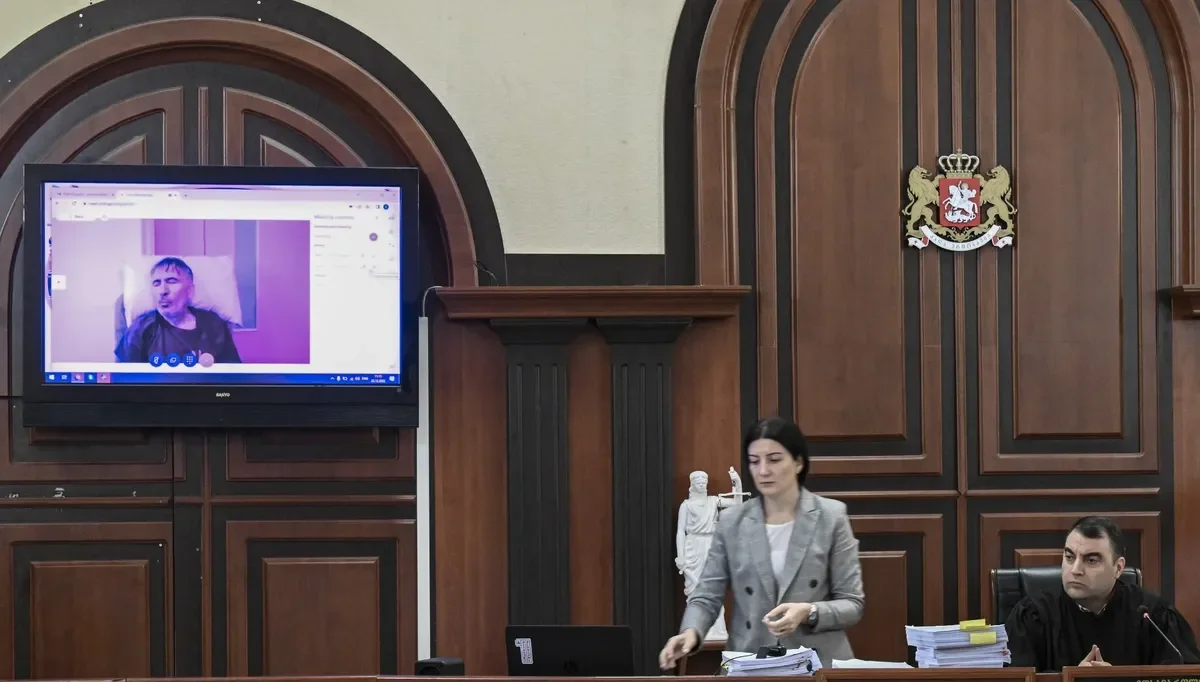
On February 6, the Tbilisi City Court refused the ex-president to release for health reasons. On March 2, the refusal was confirmed by the court of appeal. Saakashvili himself did not participate in these meetings-because of muscle atrophy, he hardly moves around his own ward.
New lawsuit
“We still did not say anything about the lawsuit in Strasbourg so that the case was not damaged. We have little time, we must have time while Saakashvili is alive, ”said George Chaddze , head of the headquarters of the liberation of Saakashvili, created by the former ruling party“ Unified National Movement ”, in an interview with the Georgian media.
Chalodze emphasizes that the defense, of course, has no guarantee that Strasbourg will satisfy Saakashvili’s new lawsuit, but hopes that “unprecedented international support” will become an additional factor when considering a complaint.
“Oligarch Ivanishvili fulfills the order of Putin, Saakashvili - a political captive. But we will not allow the President Saakashvili to kill the employees of the Department of Plastic Cards of the Bank of Ivanishvili, whom he made by the ministers, ”says Chadladze.
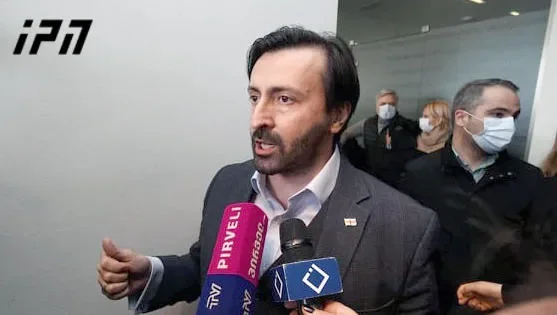
The Gifts of the Great hope that the court will take into account the serious condition of Saakashvili, and the ECHR recommends transferring it to treatment abroad, that is, to postpone the execution of the punishment. The Polish government once again confirmed that they could urgently take Saakashvili to their place.
According to him, this should not be symptomatic treatment, as what is carried out in Tbilisi, but treatment for poisoning with heavy metals.
Earlier, the American toxicologist David Smith identified Baria, Wismuth and Mercury in the body of Saakashvili. The expert is inclined to the fact that the poisonous substances fell into the body of the ex-president after he was imprisoned.
Heavy metals, including traces of mercury, were found in the body of Saakashvili and experts of the Georgian non -governmental organization Empathy.
The American neurologist Shakhin Emmanuel Lahani presented a conclusion in court in January, according to which Saakashvili has a dementia, which is progressing quickly - this is incompatible with serving a sentence.
At the same time, the lawyer Shalva Khachapuridze calls not to ahead of the events and not to feed too much expectations. Nevertheless, he is sure that this is a special lawsuit: the ECHR has never considered the case that concerned the former presidents.
Speaking about the deadlines, the lawyer Saakashvili hopes that the ECHR will announce a decision on the new lawsuit quickly enough, but recalls that the Russian opposition politician Alexei Navalny took more than a month for this.
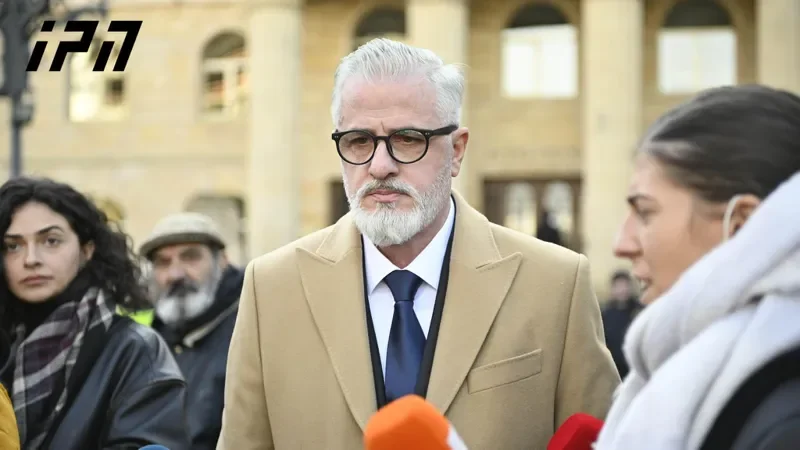
By the way, on the eve of those who call to free Saakashvili, Alexei Navalny himself joined. At the same time, he expresses the hope that the authorities of Georgia will do this, although almost no one believes in this in Georgia itself - in the list of Saloma Zurabishvili, pardoned by President Salome Saakashvili, there was no Saakashvili surname.
“Saakashvili is very sick and all the conversations that he is pretending is nonsense. Believe me, the prison sucks health from any and at a great speed. To release it for treatment with a postponement of conclusion or to do something similar that will allow the parties to observe the law and save the face, it would be the right thing, ” Navalny writes on social networks.
An important detail: Strasbourg instructed the Georgian authorities to treat Saakashvili with modern methods when it was about leaving the hunger strike. Then the Ministry of Justice wrote in the ECHR that it would be treated by the "California refider method." “In the trial, it turned out that this method is generally unknown to its attending doctors. That is, the task of Strasbourg was not completed, ”Khachapuridze explains.
In 2021, Strasbourg’s refusal to consider the Saakashvili’s claim to the Georgian authorities wrote to their asset - then the Ministry of Justice stated that this decision of the ECHR confirmed: the rights of the prisoner were protected, and the treatment met the established standards.
Saakashvili himself called this a distortion of facts. He argued that the ECHR suspended the consideration of a complaint at his request. “On December 7, 2021, I told the Strasbourg court in writing that since the means of legal protection at the national level have not yet been exhausted, I will not file a lawsuit at this stage, although I will retain this right in the future and use it. It was on this basis that the Strasbourg court completed the proceedings on the case, ”wrote Saakashvili in social networks.
Not the most humane court in the world
We can say that the lawyers of Saakashvili had a key witness. This is the head of the US Department of State Anthony Biginen. On April 5, he made a sensational statement: the Georgian court is corrupt, and it is controlled by the Clan.
Blinken personally announced the imposition-for the first time in the history of Georgian-American relations! -sanctions against four Georgian judges-the tops of the so-called “court clan”, due to “involvement in large-scale corruption”.
These are judges:
Mikhail Chinchaladze - Chairman of the Court of Appeal;
Levan Murusidze - member of the Supreme Council of Justice;
Irakli Schengelia is a judge of the Tbilisi Court of Appeal;
Valerian Tserzvadze is a former chairman of the Tbilisi Court of Appeal.
According to the State Department, the judges abused their position, "undermining the rule of law and the confidence of the company to the judicial system of Georgia."
Sanctions do not provide, at least for now, freezing of accounts and other financial consequences. Four judges, as well as their wives and children, were deprived of only the right to enter the United States. However, the State Department promised to continue to monitor those who "abuse power" in Georgia, as well as support judges who "have the lack of honesty and courage to act impartially and independently."
American sanctions expectedly caused hysteria in the ruling circles, which, already recently, have more and more often come up with anti -Western statements.
What was worth a letter sent to Washington in the name of Blinken, the head of the Ministry of Foreign Affairs of Georgia Ilya Darchiashvili. In it, the Georgian minister demanded explanations, evidence, as well as the abolition of sanctions. “Thank you for not having declared war on the United States,” they reacted in Georgian social networks.
There they also discussed what would happen if Georgia really breaks off relations with the United States. It turned out that the country was waiting for an immediate budget crisis due to the stop of many programs funded by Americans-from educational to municipal ones. In addition, the Georgian army is developing almost due to American assistance programs.
In addition, the bills and shares of the billionaire Ivanishvili - most of them - are still in the West. According to the billionaire’s lawyer, since March 20, Ivanishvili has no access to his assets at the Credit Suisse bank, even though the court granted him the right to do so.
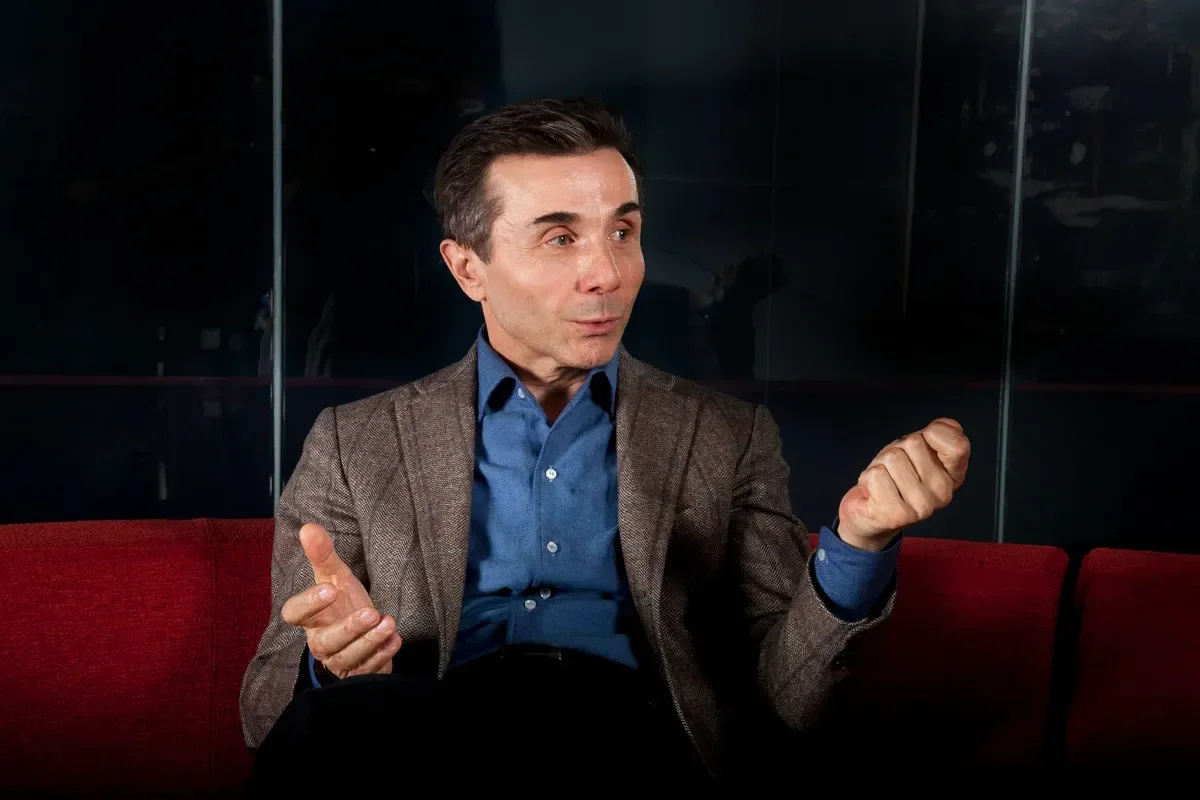
Meanwhile, Darchiashvili threatened in his letter that “if Washington does not revise the decision on sanctions, then the state and the Georgian people will perceive this“ as a pressure on the independent court of the sovereign state and gross interference in its activities, ”which would harm a long -standing friendly relations between Georgia and the United States.
The Minister insisted that after coming to power in 2012, the Government of the Georgian Dream only improved the situation in the judicial system, which was the “heavy heritage” of the Saakashvili government.
In response, the US State Department limited himself to a statement by the head of the Vedanta Patel press service: he said that Washington did not doubt the accuracy of the information on the basis of which sanctions were imposed. The US Ambassador to Tbilisi Kelly Dnunan added that most of this information was obtained from Open Sources. (This is true: the Georgian opposition media quite often publish investigations against the “judicial clan”. However, the investigation against these judges in Georgia never even began).
In turn, this provoked an angry speech by the leader of the ruling party Irakli Kobahidze, who called several dozen Georgian non -governmental organizations that are engaged in the situation with the rule of law in the country. It was noticeable that Kobahidze really lacked the law on foreign agents in order to spread their dissatisfaction officially, and not rhetorically. But it was not possible to adopt such a law of the ruling party in March-due to large-scale protests.
The State Department in the last three years not only criticized the Georgian court in each of his reports, but also used the term “clan”. The first references to the court clan appeared back in 2018. In the State Department’s report on the situation with human rights in Georgia for 2020, the problems in court were mentioned nine times.
An attempt to apply something similar to sanctions was carried out for the first time last year: Judge Lasha Chkhikvadze refused a trip to the United States to training. This judge is known for sending to prison for three and a half years of the most opposition media manager of Georgia, the founder of the Mtavari television company Nika Gvaray. At the same time, the lawsuit against Gvaray began as a civil about the “abuse of powers” of the director of a private television company. First, the prosecutor’s office accused Gvaray of “assigning and embezzlement” of a private television company. When it was not possible to prove this, he was imprisoned literally because he drove his wife and children in an official car.
By the way, the Rustavi-2 television company-the most opposition-thanks to the fair Georgian court, managed to sue in favor of one of the past owners. By a strange coincidence, this businessman was a supporter of the Georgian Dream.
Dear court
The Georgian Prime Minister Irakli Garibashvili was silent for the longest-he reacted only on the third day after the stunning statement of Blinken. The prime minister came to the Supreme Court and held a closed meeting with members of the Supreme Council of Justice, as a result of which he promised them “protection”. Experts unanimously stated that this is an unimaginable situation when independent, as recorded in the Constitution, branches of the authorities, suddenly meet to exchange complaints and secrets.
Garibashvili announced that the judges, including those against whom the sactions were applied, are actually "highly qualified, professional and consciously serve the independence and strengthening of the country." The prime minister promised to “do everything possible to protect the court from any intervention”, including “from outside”.
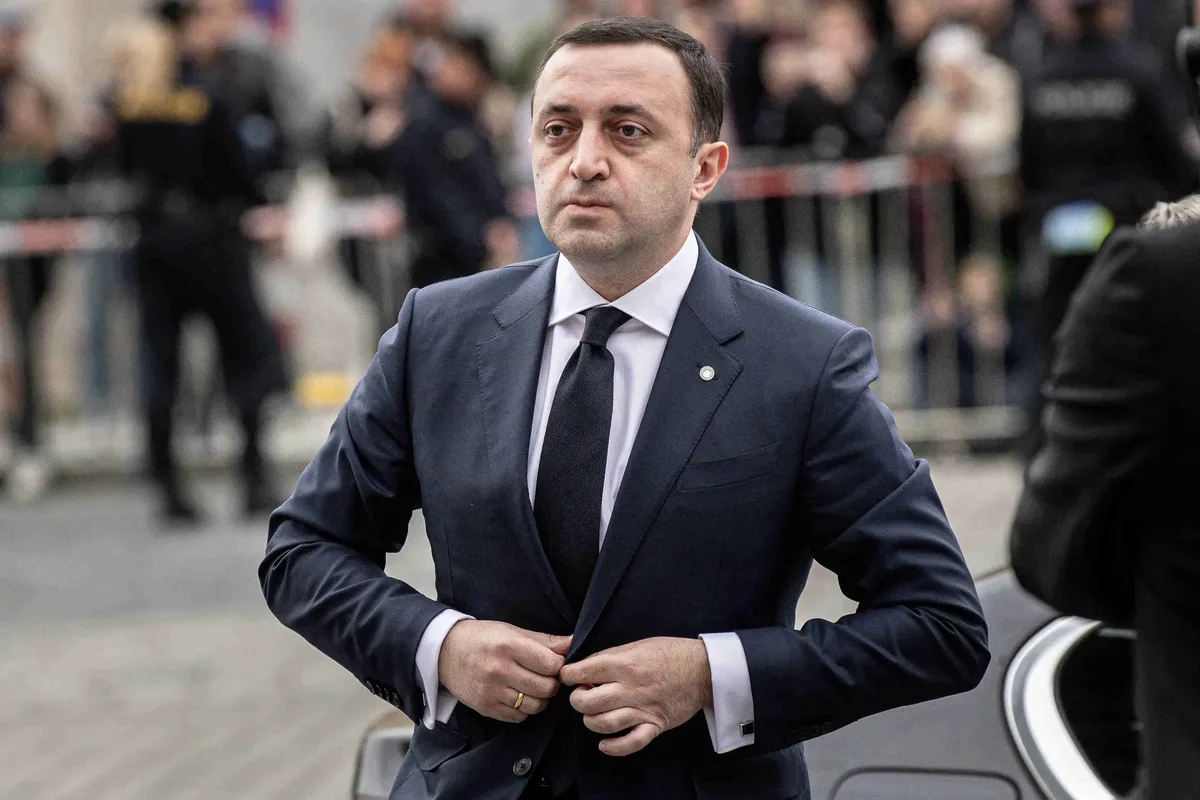
To the journalist question: "From whom do you defend the court, is it really from the United States?" , Garibashvili said that “the Georgian court is one of the best in the European Union” and that he, “as a prime minister” asks to show respect for judges.
Garibashvili noted that, according to the justice index, Georgia is ahead of 11 EU member countries and 13 NATO member countries, including in the ratings of the perception of corruption, and the trust in the judicial system is at the historical maximum-55%, which was not during the reign of Saakashvili-“then it was almost at zero”.
However, many opposition journalists found the words of the prime minister with manipulation, since, according to the same justice index, Georgian indicators have been steadily reduced since 2015.
Both the prime minister and journalists provide data from the authoritative international organization of the World Justice Project, which explores the judicial systems of 140 countries, output the corresponding index.
According to the index of justice or the rule of law, Georgia occupies 49th place out of 140 countries. At the same time, Georgia ranks first among 14 countries of East Europe and Central Asia. It is followed by Kosovo and Northern Macedonia. Georgia, of course, is also ahead of three countries with the lowest points in the region - these are Russia, Kyrgyzstan and Türkiye.
The index is displayed on the basis of eight factors: restriction of power, lack of corruption, open government, fundamental rights, law and order and security, compliance with the rules, civil and criminal justice.
Augean stables
The appointment of sanctions inspired Georgian non -governmental organizations - especially those that deal with legal issues.
They believe that America has finally decided to clear the “Augish stables” of the Georgian court, and not just allocate money for endless “waves” of judicial reform, under the banner of which the “Georgian Dream” came to power in 2012.
“Finally, America has begun to fulfill the conditions for Georgia to obtain the status of a candidate for the European Union,” they cut off in social networks. Indeed, judicial reform is one of the 12 conditions of the European Commission to provide Georgia with such a status. Experts evaluate this condition as the most hopeless.
The fact is that the refusal to carry out judicial reform and the total subordination of the court to the prosecutor's office has always been the most common accusation against Saakashvili even from supporters (his party ruled Georgia in 2004 - 2012). Но оказалось, что «Грузинская мечта» не только забрала себе в наследство подслеповатую Фемиду, но и усилила «клан». Судебная система окончательно стала пристройкой к политической системе.
«Мечта» пришла к власти на волне протестов и недовольства, вызванных, в том числе, громким делом о причастности высокопоставленных чиновников МВД к трагической гибели банковского служащего Сандро Гиргвлиани. Решение смягчить приговор обвиняемым, вызвавшее общественный гнев, выносил судья Мурусидзе, который и сегодня остается главой «судебного клана».
Объясняя тот факт, что судьи, против которых «Мечта» так боролась до прихода к власти, остались в системе, основатель партии Бидзина Иванишвили как-то сказал, что судьи сами были жертвами системы, но потом исправились. Образно любит объяснять ситуацию в судебной системе и премьер Гарибашвили: «Была ночь, и стал день».
Эксперты и те судьи, которые в последние годы были выдавлены из системы за непослушание, подтверждают, что представители «клана» занимаются неформальным администрированием в случае рассмотрения дел, которые касаются политических и бизнес-интересов правительства. Они отбирают, назначают судей или, напротив, могут снять их с дела. Например, «нежелательных» судей просто не назначат на процесс, который имеет политическое значение.
Такой удобный менеджмент стоит недешево. Грузинская независимая студия «Монитор» недавно рассказала в фильме-расследовании о квартирах, загородных домах, земельных участках, гостиницах, путешествиях за границу и бизнесах судей «клана» и членов их семей.
Интересно, что США не стали вводить санкции против председателя Верховного суда. Эксперты говорят, что здесь все дело в том, кто в суде настоящий лидер. Санкции рассчитаны на то, что эти четверо судей потеряют авторитет, а другие судьи задумаются над тем, стоит ли принимать решения по их указке.
«Мы не видим, чтобы санкционированным судьям удалось собрать большую толпу защитников среди коллег. Судьи вообще не склонны делать политические заявления, исходя из специфики работы. Однако мы не видим кампанию в их защиту. Скорее это, напротив, «громкое молчание», — говорит глава неправительственной организации Georgian Court Watch Нази Джанезашвили (в 2017-2021 годах была членом Высшего совета юстиции). По ее словам, члены «клана», попавшие под санции, очень хотели, чтобы судьи приняли коллективное заявление в их защиту, но им не хватает для этого подписей — из 300 судей их поддержали пока только 25.
Судья Мурусидзе, оказавшийся в санкционном списке, поначалу шутил: «Если меня не пустят в США или Евросоюз, это ничего, жизнь продолжится. Мой дед тоже не ездил в Америку». Потом его шутки стали более мрачными: он говорил, что посольство США намерено «захватить судебную власть в Грузии» и даже готовит на него покушение и вообще — это очень тяжело, когда тебя наказывает «страна номер один во всем мире, а не какое-то Вануату».
«Я не знаю, что сказать, если американский посол заявляет, что «правосудие — это не ночные телефонные звонки и не раздача взяток», значит, они знают, что Мурусидзе осуществляет звонки по ночам, то есть прослушивают меня по телефону», — недоумевал судья.
Важно и то, что судьи после объявления санкций сами потребовали встречу с премьером. Многие комментаторы уверены, что у «клана» собралось уже столько компромата на власти, что они действительно потребовали объяснений и, конечно же, гарантий неприкосновенности.
All Right
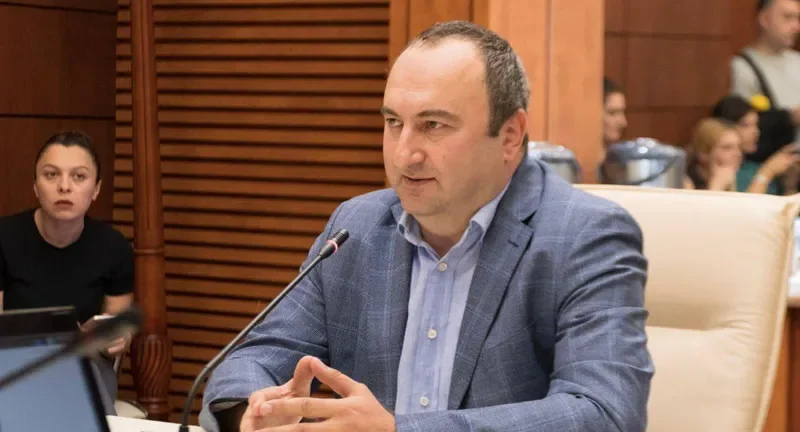
Критики власти в самой Грузии уже усмотрели в санкциях «новую парадигму» в отношении запада. Политолог Гия Хухашвили, который многие годы был личным советником Иванишвили, считает, что «этими санкциями США сузили возможность маневра для Иванишвили».
«Иванишвили сейчас тянет время. Он не знает, какой вывешивать флаг: красное знамя или флаг Евросоюза. He was confused. Переключит на российский телеканал — выставляет красный флаг, потом включает «Евроньюс» — и выставит синий. Он запутался. А на западе ему говорят: давай уже, определяйся, на какой ты стороне фронта. Если ты с Россией — так и скажи, это тоже выбор», — говорит политолог.
Вместе с тем Хухашвили уверен, что «Грузинская мечта» не станет прямо заявлять, что они с Россией — из опасения массовых протестов, как это произошло в марте, когда парламент пытался принять закон об иноагентах, из-за чего на улицы вышли десятки тысяч людей:
«Пусть только попробуют и скажут что-то подобное — все обрушится на их голову. Они знают этого и боятся.
Они только говорят, что не боятся, на самом деле, боятся и очень. Сейчас главный страх властей — чтобы в системе не возникла трещина, они пытаются сохранить устойчивость системы».
По его словам, США сказали все «очень прозрачно» — следующим шагом уже будут санкции против представителей правительства и, возможно, самого Иванишвили. К тому же, политика санкций актуальна и для Евросоюза:
«США — это «первая скрипка» запада. Происходящие там процессы потом повторяют везде. Недавно распространилась информация, что глава МИД Франции требует объявить санкции против Иванишвили, а он, как известно, гражданин Франции».
Еще один бывший президент Грузии — Георгий Маргвелашвили (он был четвертым президентом, сразу после Саакашвили, и, хотя был ставленником Иванишвили, быстро оказался в опале), считает, что санкции нужны были уже давно.
«Самое главное, что список открыт и изменилась парадигма. Создан прецедент, это значит, что там, где названы четверо, вскоре может быть и 24 человека. <…> Сегодня Грузия управляется из России. And you have to fight this. В этой борьбе запад должен не оставлять нас один на один с Москвой, а встать за нами, как за «Грузинской мечтой» стоит Москва. Нам нужна именно такая поддержка, а не разговоры на полутонах, которые мы слышали слишком часто, и что довело, в принципе, ситуацию до того, что происходит сейчас — до деградации демократии», — говорит Маргвелашвили.