
Translated material
He left us a choice
Today, April 15, 90 years old Boris Natanovich Strugatsky
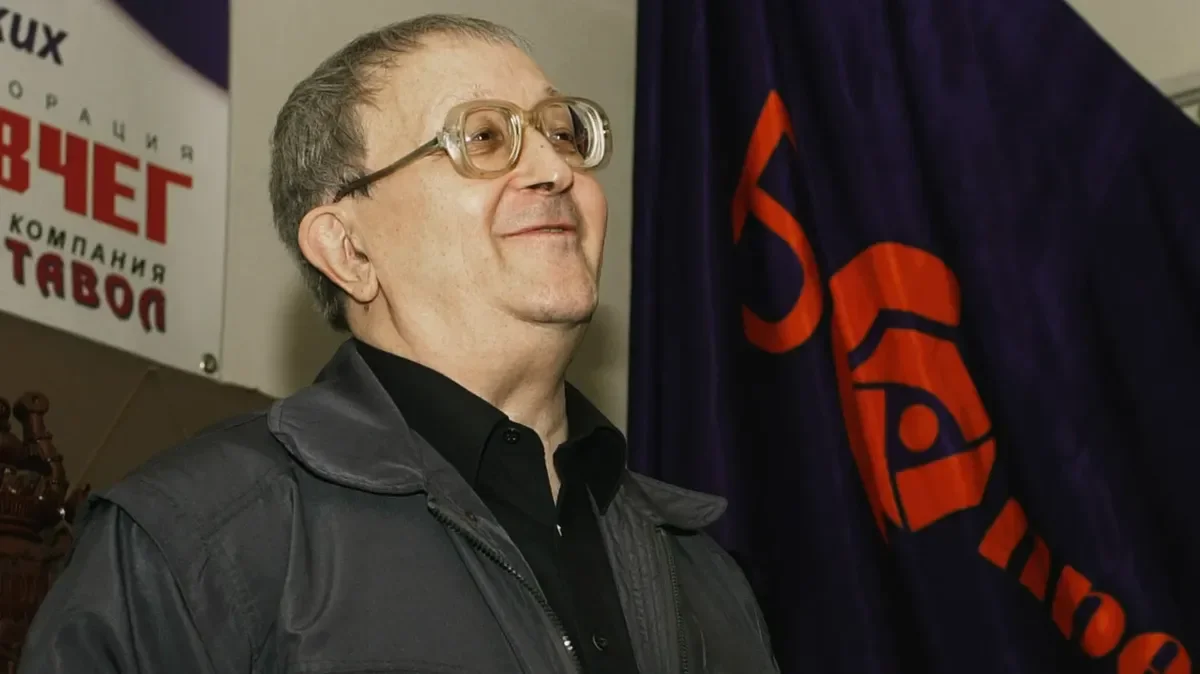
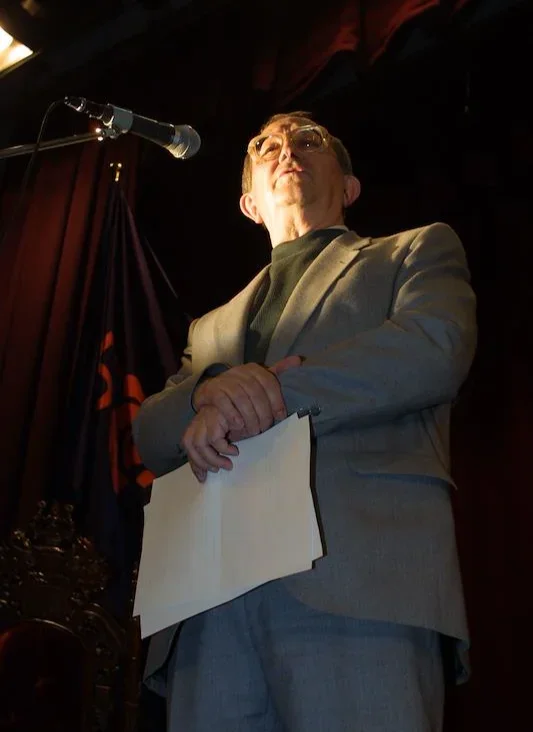
Boris Strugatsky. Photo: Dmitry Gusarin / ITAR-TASS
Today, April 15, it would have turned 90 to Boris Natanovich Strugatsky.
One of the brothers, in whose worlds of works that replace each other, we have been living for three decades. “The Strugatsky never tried to predict,” Boris Natanovich told me a decade and a half ago. “They simply painted pictures that seemed to them both curious and believable at the same time.” As it turns out, a lot turned out to be “drawn” monstrously believable.
For example, “ugly swans” , where “the countries that Mr. President liked, fought fair wars in the name of their nations and democracies. The countries that the president did not like for some reason did not like the wars of the wars and even, in fact, did not waged war, but simply produced gangster villain attacks. ”
Where “there are people who cannot live without the past, they are entirely in the past, more or less remote. They live in traditions, customs, covenants, they draw joy and example in the past. Say, Mr. President. What would he do if we did not have our great past? What would he refer to and where would he come from at all. ”
Where is the most bold act - defiantly wipe the cheek from spray flying from the master of the president, who "deigned to inflate himself to the last degree."
Or “inhabited island” - with the radiation of the towers, under the influence of which “the brain of the irradiated lost the ability to critical analysis of reality, the thinking man turned into a believer, and the believer frantically, fanatically, contrary to the eyes of reality.”
With a state ideology built on the “idea of threats from the outside,” and the dream “returning to the bosom, having previously strictly punishing” the former “province of the old empire, which proclaimed independence in difficult times”.
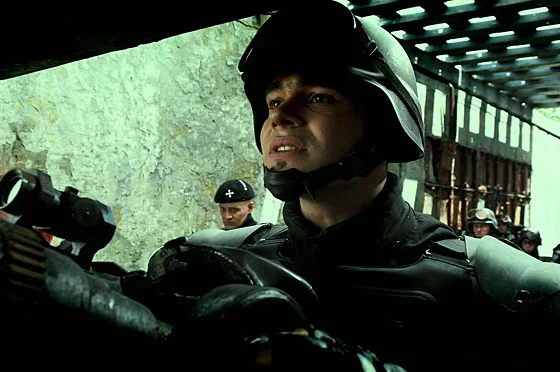
With rulers who have “two goals, one is the main one, the other is the main one. The main thing is to stay in power. The main thing is to get maximum satisfaction from this power. ”
And of course, “it is difficult to be a god” - “smart ones are not necessary for us with a patriotic school and its motto, they need faithful”, and with the basic establishments of the new state: “The blind faith in the infallibility of laws, an unquestioning obedience, as well as the inexplicable observation of everyone behind everyone.”
With punishment for "involuntary way of thinking."
With blacks who came after the gray.
With the king, who is “as usual, is great and light, and Don Raba is unlimitedly smart and always on the alert.”
And with the definition of the truth as the fact that "now for the good to the king, and everything else is a lie and a crime"
(Is it not according to such logic that all affairs about “fakes” and “discrediting” are built today?).
Ah, what a pity that “TBB” (the common name of the story) was not embodied on the screen in the authentic version, because the film by Alexei German, released 10 years ago, has a distant attitude towards the book.
Alas, the famous director, shooting the film “About his”, did not want to understand the book of Strugatsky. And not only numerous - and the most important for understanding - the reasoning of the protagonist disappeared from his picture.
The problem of choice has disappeared (“The main theme of the Strugatsky is a choice,” Boris Natanovich repeated over and over again).
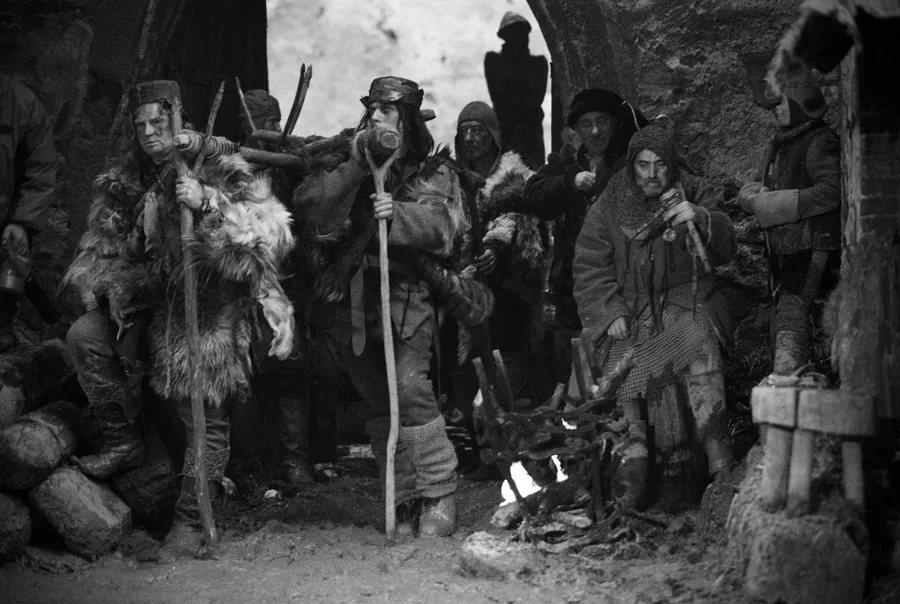
The most difficult moral problem is the possibility or impossibility of interfering in the affairs of the world.
Can and should a person calmly look from the ground as in the medieval world, where he is sent by a scout, kill, torture, rape, executed? To what extent can he - and can it intervene at all?
Let me remind you of the words of Anton - Don Rumata - at the very beginning of the story:
“I do not like that we tied ourselves in the hands and feet of the very formulation of the problem. I do not like what it is called the problem of bloodless influence. Because in my conditions this is a scientifically sound inaction ... I know all your objections! And I know the theory. But there are no theories here, here a typically fascist practice, here animals are killed every minute! Everything is useless here. There is not enough knowledge, and gold loses the price because it is late ... "
But this is much more - it has gone from the film by Herman. And the essence of the book went away.
True, I have no illusions since Herman said that "I thought about Putin as a prototype of Rumata." Absolutely dumbfounded, I ran to Boris Natanovich, saying that my Putin was always associated not with a Rumata, but with a completely different hero of the story “It is difficult to be a god” - Don Raboy. “I have it too,” answered Boris Natanovich. By the way, about 2006, when the president held his Internet conference, with Strugatsky they asked what he would like to ask Putin about.
“About nothing,” Boris Natanovich answered dryly. - We have no common topics for conversation ... "
Meanwhile it was - it was! - The possibility of film adaptation of TBB, and according to the script written by the Strugatsky brothers themselves in 1966-1968.
The story with this non -incarnated script turned out to be detective.
According to Boris Natanovich, the script was considered hopelessly lost.
And then, in February 2020 (great gratitude to Alina Klimenko and Professor Alexei Elyashevich) was accidentally discovered in the Central State Archive of Literature and Art of St. Petersburg.
Together with the “scenario business”, which describes in detail the process of finalizing and passing the script at Lenfilm.
And finally, the hypothesis (more than once expressed by the Brothers Strugatsky) was proved that the film was not shot then precisely because of the defeat of the Prague Spring.
In the "Scenario" - two impressive documents that differ in time only for a month.
On July 26, 1968, the Artistic Council of the Third Creative Association of the Lenfilm film studio praised the scenario “According to its ideological and moral levels”, approved it and recommended that the studio leaders to include in the thematic plan of 1969 and launch in the directorial development.
And already on August 26, 1968, the director of the Third Creative Association G. Malyshev writes a letter to the authors, saying that "the experience of filming the novel" It is difficult to be a god "cannot be recognized as successful" and "the studio leadership did not consider it possible to accept the proposed script."
What happened for this month is well known: on August 21, 1968, an attempt ended to build “socialism with a human face”, the troops of the five countries of the Warsaw Treaty entered Czechoslovakia, crushing the “Prague Spring”.
According to Boris Strugatsky’s memoirs, five years before, when TBB was written, the authors will say to themselves:
“We are controlled by rednecks and enemies of culture. They will never be with us. They will always be against us. They will never allow us to say what we consider right, because they consider something completely different. "
And 30 years after the suppression of the “Prague Spring”, Boris Natanovich will say in an interview to one of his best students: it was then “it became finally, to the icy cold in the shower, it is clear: my country is just a semi -fascist totalitarian state.”
At the same time, as Boris Strugatsky told me in an interview, in her youth he and his brother were “real Stalins”, who believed that everything that was happening was right, if there are any shortcomings and troubles-this is inevitable, only one who does nothing is mistaken. And only after the XX CPSU, in 1956, where Nikita Khrushchev made the famous report “On the cult of the personality of Stalin and its consequences”, insight began.
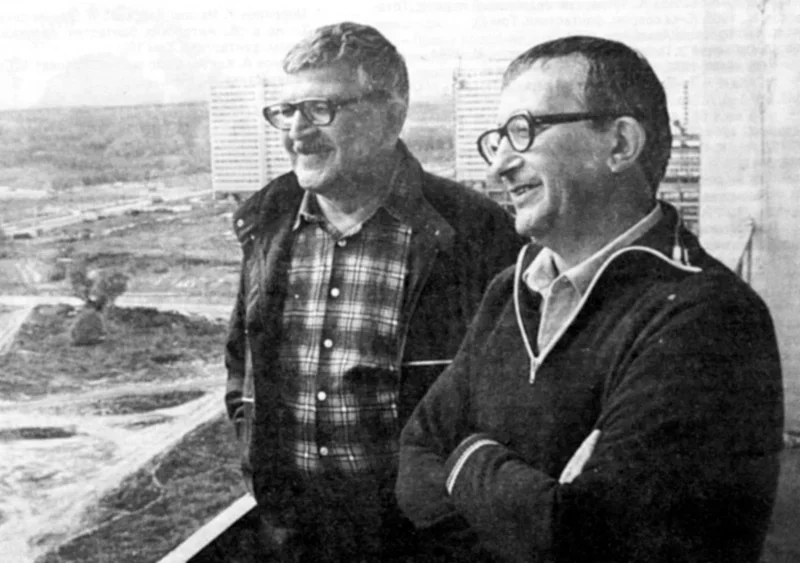
“We are pretty fast,” Boris Natanovich will say, “about the XXII Party Congress, we realized that we were dealing with a gang of gloomy and villains at the head of the country. But faith in the correctness of the work of socialism and communism has been preserved with us for a very long time.
The thaw contributed to the preservation of this faith-it seemed to us that finally the time came when it was possible to tell the truth, and many were already telling the truth, and nothing happens to them ... This process of erosion of beliefs was probably lasting until the Czech events of 1968. Then the end of all the illusions came. ”
The thaw of the 60s ended, and a long reaction period began: not without reason in the 70s, Strugatsky did not have a single new book-only a couple of reprints.
Although with censorship nit -picking and devastated official criticism they came across earlier.
So, the hero of “attempts to escape” Saul Repnin, according to the original plan of the authors, was supposed to flee the future from the Soviet concentration camp, but at the request of the authorities from the “young guard” the concentration camp was replaced by German.
As for the TBB, in 1966 Izvestia stated that the story, "published after the interesting and necessary first books" Country of Bagrian Clouds "and" The Way to Amaltea ", unfortunately, does not indicate the ideological and artistic growth of the authors." And in 1967, October, headed by Kochetov, deflaxed obscurantism, accused the story of “throwing a shadow to the selfless assistance of our state by liberation movements in the low -development and colonial countries” ...
Here's what Boris Natanovich will write later:
“Today's reader can simply imagine what it was for us, the sixties-seven-senches, how mercilessly and mediocre the literature and culture of generally the almighty party-state press, according to which narrow and free-minded bridge, had to make his way to the writer who respects himself: a step to the right-and there the seventy (or nineteenth) court, the Court, the court. camp, psychiatric hospital, at best - blacklisting and expulsion outside the literary process of years for ten years; A step to the left-and you are in the arms of the gorges and mediocrity, the traitor of your business, a rubber conscience, Judas, you think, you read the filthy cuts ... Today's reader is no longer able to understand these dilemmas. Freedom is like air or health: while it is, you do not notice it and do not understand how it is - without her or outside her ... "
In the early 90s, when we met Boris Strugatsky, these memories seemed a terrible reminder of the past, which would never happen again.
Today they seem to be terrifiedly topical: after all, the “today's reader” observes the consequences of the work of a similar “press”, which presses more and more. And the lack of freedom is very noticed. And more and more often I recall a phrase from the not -known, but one of the best, in my opinion, Strugatsky stories - “The second invasion of Martians”:
“At least one bastard asked what she should do. So no, every bastard only asks what they will do to her. ”
And the last, especially acutely recalling now, when teachers are reporting to “politically unreliable” students.
This is from the “burdened by evil” - the last big work of the Strugatsky brothers, where in the image of G.A. Nosova is embodied by them (quoting Boris Strugatsky) "beloved, for years a cherished idea of a teacher with a capital letter."
“There were many cases in history when students betrayed their teacher.
But something I do not remember the case that the teacher betrays his students. ”
Boris Natanovich Strugatsky never betrayed his students.
And he was a teacher not only for those who went to his famous literary seminar, but also for several generations of readers.
And more and more students get into their ranks - so important and relevant everything that he and his brother wrote.