
Translated material
Lawyer Maria Aismont about human rights with repressions
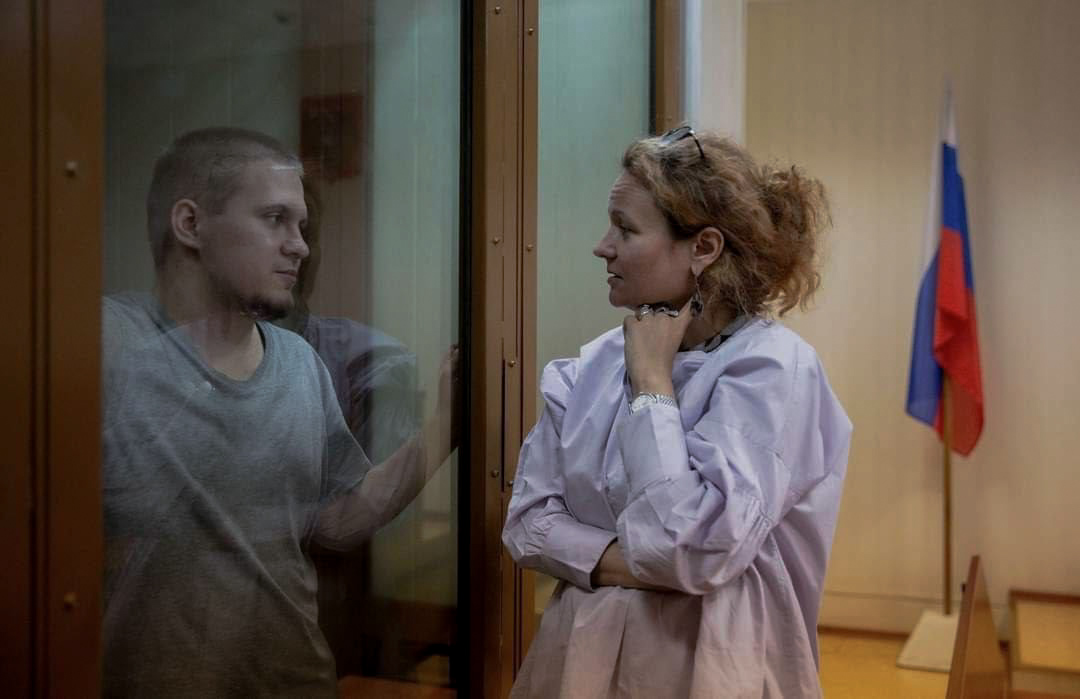
Lawyer Maria Aismont - On the meaning of the defender's work in a repressive state
Briefly
For 13 months of hostilities in Ukraine, the Russian authorities detained almost 20 thousand people in anti -war protests. About 500 became defendants in criminal cases for “fakes” about the armed forces, their “discrediting”, arson of military enlistment offices or “calls for terrorism”. Most of the convicts on "anti -war" accusations receive real - and significant - terms. Maria Aismont left journalism several years ago and now protects the accused in political cases. She told the “line”, what is the meaning of her work in the conditions when it is almost impossible to achieve justice in court, why does a “ritual” appeal and how combing, cream and linen for a prisoner really need to influence the course of her case.How has your work changed since February 24 last year?
When this question is asked to me-and they have been asked to me very often recently-it seems that in response they want to hear that from February 24, something radically changed in our law enforcement and judicial system. But nothing fundamentally changed in it. In our life - yes, everything has changed about: in our future, in our plans for him, in everything that we live, how we breathe, what we all feel. Because a terrible war began. But our system came to February 24 already in the form in which it is.
Everyone was rightly indignant, as [Vladimir] Kara-Murza was detained from scratch, they quoted the report that he “changed the trajectory of movement” to his own entrance, but this was all earlier, for example, two years before Lucy Stein , there was about the same frankly crazy explanation of its detention. And even earlier, the position of the courts arose: “We have no reason not to trust police officers,” no matter what they write in a delirious report. All this did not arise today or even yesterday.
Yes, new criminal articles have appeared. But repressive compositions of [crimes] appear for a long time and regularly. And the affairs of “military censorship” are not a qualitative change, although of course it is perceived as another broken bottom. “There is only one truth, and it pours out of the lips of representatives of the authorities, everything else is a lie and extremism,” this installation existed before “obviously false information about the use of the Armed Forces” began to be considered any information contrary to the briefings of Lavrov and Konashenkov.
For a long time, with a great desire, a person can be delayed completely groundlessly. There is enough report of any security officer who will say that this man attacked him, rude, was drunk and swearing. And the courts always “have no reason not to trust” such reports.
Everything is very bad for a long time. The complete impossibility, if the system wants to roll you up, somehow counteract this, exists much longer than the war is going on. And in this sense, if until February 24 we had some other law enforcement and judicial system, maybe it would not have happened on February 24.
I would like to object: there is a feeling that before figures like the same Kara-Murza, Yashin were inviolable to some extent. Remember, there was a presumption that Navalny would not be imprisoned? Here are random guys who, at the rally, pulled the riot police by the belt from the helmet - please. But Yashin - no.
I do not think that there were and there are some inviolable figures among independent politicians and public figures. Kara-Murza definitely cannot be considered inviolable-with two attempts to poison. And so about every person who is at large - and even about me - you can say so: “Mash, why do you still walk freely and give interviews? Why are you still not deprived of status? Why haven't you been imprisoned yet? "
This discourse always seemed strange to me: you are free-it means some special. Why? Maybe the hands just did not reach.
Asking such questions, perhaps they want to find some kind of harmonious logical scheme, having understood which, they can predict who and when they come. So, prepare yourself. But there is no logic and system, you can not calculate the behavior in which you are guaranteed not to undergo repression. You can avoid them, but it will be as unpredictable as if you fall under them.
February 24 happened because we agreed to live in a system in which such a question was possible? “Why is Yashin still not sitting, maybe something is wrong with him? Why is Navalny still not sitting, maybe something is wrong with him? "
I think that on February 24, the totality of circumstances happened. First of all, this is a consequence of the murder of all institutions of civil society and the defeat of all independent political and civilian forces. On February 24, it happened because in Russia long before it was a independent court, designed to resolve all disputes arising in society, including disputes between citizens and the authorities elected by them. Nobody has been choosing power for a long time - although the events called the elections are held regularly. At the same time, due to the lack of an independent court, there is no place to challenge falsification and inaccessible elections. This all began long until February 24.
That is why the approach "all Russians are to blame for my fault, because they chose this power." No, the Russians did not choose this power, and this is easily proved mathematically.
To say that all Russians are to blame is not a discourse of the 21st century. Generalization on signs that is not related to a conscious choice of a person are completely unlucky. And citizenship is certainly such a sign: almost no one chooses citizenship. A rare opportunity to change citizenship, which exists for a limited category of people, only proves the general rule: the vast majority of people are born in the citizenship in which they end life. Discriminating them on this basis is unacceptable.
How now, according to your sensations, the repressions have changed quantitatively and qualitatively?
Repression has become significantly more. People who had not talked about them before, began to talk. I did not conduct any research on this score, but this is my feeling, what I see with my own eyes. I am told the clients that if a few years ago they said in a car carrier on the way to court: “I am political,” everyone asked: “What?” And now you say: "I am political ." They answer you: “Two hundred seven points three? Fakes or discrediting? " And then you will also hear from a neighbor “Oh! And I!"
At least, the general awareness of repressions has accurately increased. People who, before talking about political affairs, simply crooked and looked at you as a demobis, now they certainly do not - they know much more about it and they themselves are afraid.
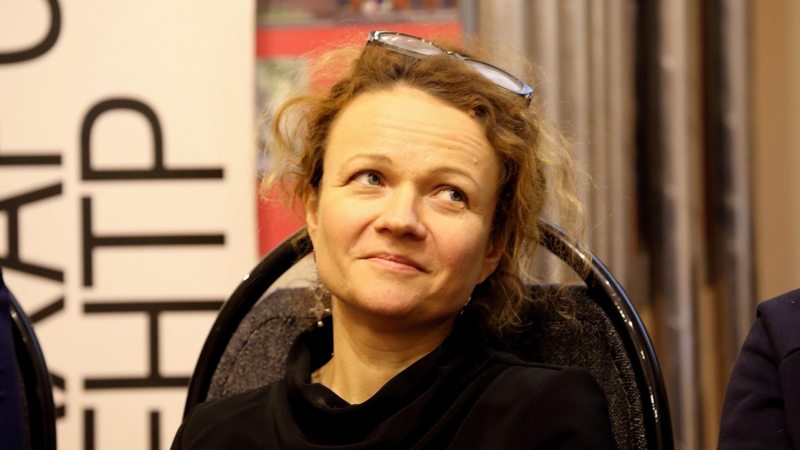
You communicate by virtue of your work with representatives of this system. Maybe there is even friendly ties ...
There are such. They often say to me: “How can you communicate with them so nicely? There is nothing human in them! ” Firstly, why add mutual aggression, which will additionally poison the already difficult situation and will not help? And secondly, I am interested in what they think and feel.
And, of course, they are people. I do not think that participation in repressions can be justified in any way. But even condemning them and claiming that they participate in an unlawful and evil case, even wanting them punishment, one cannot help but see people in them. They can be bad people, or they can be mistaken, may not be bold enough to go against it. Distribution is unacceptable in any case.
And what is the attitude to what is happening among them? Especially against the backdrop of a shaft of affairs against politicians, cases of "fakes"?
There are those who seem ideological - at least, judging by their behavior and what they say. They believe that the state does everything right that the enemy must be punished, that for the sake of security and stability of the state, it is quite acceptable to violate the rights of people. Such a time, such challenges, this is all. Among those with whom I communicate, there are such a minority. Most either understands everything, or guess, feels that something is wrong. And, not seeing the strength to withstand or leave, they prefer not to think. Well, or somehow they rationalize this. For example, conducting cases of military censorship, many of the security forces, it seems to me, experience some awkwardness.
Shame?
I am very carefully trying to talk about the feelings of other people, especially if they did not tell me about these feelings. I don’t know if I can say for them that they are ashamed. But many talk on these topics, they feel that something is wrong.
I know people who have left the system after participating in matters that we call political. I know people who left the system after February 24. The majority leaves quietly-you will not find mentions of high-profile dismissals on your own on your own due to disagreement with the policy of the department’s leadership.
Is it good that it's quiet?
This is their choice, I am not ready to advise. I just state that they are leaving. I know one representative of the power department, who left just a few days after February 24 - and the day after the dismissal went to anti -war protest. He was beaten and detained, and I went to his police station.
But the majority remains. I understand very well what claims can arise. The vast majority of the investigators with whom I worked on political affairs told me something like: "Here, they gave me this stupid political affair, I hate politics." They perceive this as a disgusting duty-they hung some kind of cleaning, class on duty, you hate it, but you need to do it. But on the rest of the days you can do the right, necessary things. You are a professional! You go to the corpses, neutralize the gangs, catch the thieves, look for layers. On the rest of the days you are well done.
But there is no pleasure and joy from conducting “political” affairs of those with whom I communicate. They want to quickly go through this unpleasant procedure and return to their real affairs. And the thoughts that can be objected to the authorities are not in this environment. I sometimes ask the question: "And refuse?" They look at me with huge eyes: how can you refuse if the authorities entrusted you with?
Sometimes friends say to me: "Mash, they will not put you, you are loved by traces." I say: “So what? What depends on them? The authorities will say - they will do. They will come to me in a pre -trial detention center, continue to be cute with me and love me in interrogations. ”
You can sabotage - at least not ask for arrest. Why don't they do this? They proceed from the fact that they will be fired and there will be no one to neutralize the gang?
This must be asked. Just asking, probably not now, but when they are ready to talk and talk about it.
Why do they do something or do not do a matter of different sciences. It's just that now is not the time for analysis. But this time will come and the demand for understanding will appear-why did someone support the war? Why did someone vote for the use of troops abroad? And why did someone sign the indictments, realizing that the person who simply wrote posts will receive five years?
If I am alive, maybe I will contribute to the clarification of this. I’ll tell you what I saw what kind of conversations I had, I’ll tell you about the feelings that I had from these people. Maybe these people themselves will participate and also tell how it was. They will write some memoirs.
As for not asking for arrest - a preventive measure very often, and in “political affairs” in particular, is agreed with the leadership. The leadership gives the installation: "This is in custody." And this is not discussed.
Do you know cases of quiet sabotage at least in small things?
Quiet - I know. For example, in the case of Konstantin Kotov ( an activist who received four years of colony on charges of repeated violations at rallies; subsequently reduced the term to one and a half years - approx. “Features”) was an act of inspection of the video - a standard document in which the investigator watches a video and describes what is happening on it. It was a record on which Kotov came out of the transition to Kitay-Gorod and for 38 seconds passed a certain amount of meters deep into the square at the monument to the heroes of the Plevna, after which the police ran to him and grabbed him. And this video, either filmed by some streamer, or the media or YouTube channel, was introduced to business.
The investigator wrote in the act: at such a second, a person just goes, does not touch anyone, does nothing bad, does not violate anything, looks into the ground. At such a second, the police rush to him, he is detained. This act was in the case, we referred to it as evidence of Kotov’s innocence: here, he was seized without any reason. Not sure that this can be called sabotage - this is a conscientious work. But from this description it followed that Kotov did not do anything bad, but was detained for no reason, that it seemed to me that it was done intentionally, with certain feelings. By the way, this investigator left immediately after Kotov’s case. Although he loved his work.
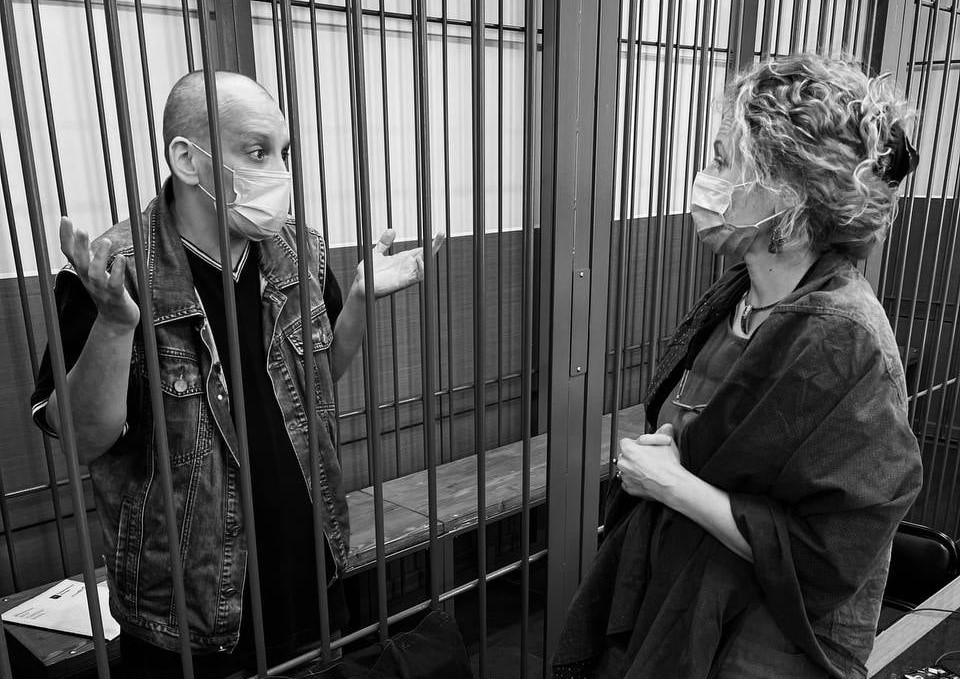
And just the other day, another investigator in the Kotov case wrote to me that he had quit. He said that he wanted to go to lawyers. This in itself does not mean anything, but I want to believe that he will be an honest lawyer, and the specific experience of participating in frankly political business will affect him correctly.
Can I change the system from the inside? Here I am a young trace with burning eyes, went there because I grew up on TV shows about cops or serial killers. Can I somehow interfere with what is happening?
You can leave. Some are leaving. Some, for the first time faced with this kind of affairs, left immediately.
This will not change anything. Only my conscience will clean, probably.
Will not change. Today, once again, one of the investigators asked: “But what if you refused to hold the innocent obviously to you?” He replied: "They would have kicked out right away." Many answer this, and perhaps they are right. We do not know what would happen if some prosecutor got up in court and refused to accuse, because he would be sincerely convinced of the unreasonableness of this accusation. We do not know what happens to prosecutors for this, because we do not see such “refuseniks” in modern Russia.
How do the system relate to resonance around affairs? They are somehow impressive, they take it into account? It comes to my mind that is the matter of " new greatness " ...
I entered the case of "new greatness" at the court stage, I can’t tell you anything about the investigator.
Well, and the judges?
The judge was cute and amiable. Then he gave six years to a man who did nothing criminal. And which was first divorced into a leisure time, and then deceived. Is their mediainess impressive? I think that many, although not everyone, read the press and monitor what they write about their business and about themselves. But no one complained to me: “Masha, what a horror! They wrote about me that I am an executioner, a strangler of freedoms. But I just did my job ”or something like that. On the other hand, one can always say: "This is an engaged media, it's all lies."
There is a feeling that now as many people will not come to court as it went to the " new greatness . "
Many activists and people who were interested in political processes have left. And still, people come to the courts. We had a meeting on Dima Ivanov ( author of the Telegram Channel “Protest MSU”, a student sentenced to 8.5 years in prison for “ fakes on the army ”-approx. “Lines”), so the bailiffs had to open the doors because the hall did not contain people and put the benches in the corridor in several rows.
Doesn't it seem to you that this is also an example of a quiet sabotage? They actually never do that.
Even in my practice, they did this for the first time. The bailiffs, by the way, spoke many words of gratitude. I hope they felt that they had done something good. The next meeting organized a broadcast in the neighboring hall.
How many clients have you sentenced over the past six months?
Yashin, Dima Ivanov.
They are about to be sentenced to Kara-Murza.
Well, have not yet been sentenced.
How are you worried?
I can’t say that it’s easy. But since recently I have no doubt what the result will be for such matters, I just set myself other tasks. In each case, this is something of its own. The main task is to make your position as much as possible improves his position, facilitates his life, and help to keep in touch with the outside world.
For example, I now have a client, a girl from Ukraine, accused of a “terrorist” article. She was beaten, tortured, then kept in the basement - they were waiting for the traces to come. Then they sent to Moscow, simultaneously saying that her relatives renounced her. Even before I went into business as a lawyer, I contacted her relatives, who, of course, did not renounce her and were actively looking for her. I learned the size of her clothes, shoes, linen. And she thought: “What would I want to get if I were in prison in another country after a month in the basement?” And I went to buy gaskets, comb, cream, bras, panties, coffee, tea, sweets, shirts, spacious blouse, slippers. I chose for myself. I sent her a parcel.
And we saw each other later. I went into business as her defender, and she was brought to me to meet the investigative office - in the very jacket that I sent. And she admitted: “When I received this parcel, I burst into tears. Because I realized that someone knows where I am. What does someone think about me. And these things were exactly what I needed. " At that moment I was proud of myself.
There is a feeling that now it is useless to protect the rights of repressive, political prisoners. Nothing to change. If so, then why is it needed? For descendants, for cleaning conscience?
Why brush your teeth every day? Why, passing by a cat stuck in a pipe, try to pull it out?
The efficiency of the cat pulling out is higher than the efficiency of pulling out a political prisoner from the pre -trial detention center. Well, you probably heard replicas addressed to you, they say, why are you doing this? You will not achieve anything.
It depends on what we set.
And what?
Help a person.
But he will get a deadline anyway.
Well, let's ask those who work in the hospice, in Palliative, why are they doing this? These people are doomed, they will die anyway, why waste time? It seems to me that the hospice movement, which, thank God, has developed very much and reached outstanding heights, has already answered your question in advertising slogans: “If a person cannot be cured, this does not mean that he cannot be helped.” In each case, anyway, you can somehow improve the life of a person, soften the horror in which he ended up.
Well, another point: remember there was a story about a man who every day cleaned the runway, which no one used? And then the plane flew in and landed on it emergency. This, in my opinion, is also an answer to your question.
800 times it will not work, will it turn out on the 801st?
Смотри: когда ты начинаешь участвовать в уголовном «политическом» деле, у тебя нет серьезной задачи добиться оправдания. Да, и тут бывают прекращения преследования — например, несколько человек отпустили по «московскому делу». But this is a rare case. И ты на него все же серьезно не рассчитываешь, потому что ты вменяемый здоровый человек и понимаешь, с чем имеешь дело.
У меня тоже, к примеру, было прекращение дела о «дискредитации ВС» в отношении Кости Янкаускаса , когда он перепостил молитву Папы Римского о Мариуполе. Но, хотя судья пришла к выводу об отсутствии состава правонарушения, я нисколько не считаю, что такой результат связан исключительно с моим участием в этом деле и работой по нему. Я ничуть не меньше и не хуже участвую в других подобных делах, которые заканчиваются не так хорошо для подзащитных.
В большинстве случаев ты не можешь помочь прекратить дело. Ты просто ставишь себе другие, более реалистичные цели. И достигаешь их.
А тогда в чем заключается помощь? Получить срок поменьше, внушить веру в существование добрых людей?
Представляешь, ты единственный человек, который вообще к ходит к заключенному и общается с ним без стекла и телефонной трубки. Это ты — единственная его связь с внешним миром. Он сидит там круглые сутки… Вот сейчас Дима Иванов сидит в камере на четверых, где шесть человек. Это еще хорошо, что там туалет отгороженный. Ты к нему приходишь, приносишь новости, обсуждаешь какие-то дела, передаешь привет от его друзей, ты просто с ним болтаешь о всякой ерунде. А потом ты собираешься уходить и он спрашивает: «Когда ты ко мне опять?» Он не спрашивает: «Когда меня выпустят на свободу?» Но он спрашивает: «Ты когда ко мне в следующий раз?» Значит, ему важно, чтобы я приходила. Но вообще, мне хотелось бы, чтобы этот вопрос был задан тем, к кому мы ходим — насколько это для них важно, что мы с ними вместе это все проходим. Как-то немного неудобно за них отвечать.
Я думаю, что очень.
Ну, значит, вот ответ на твой вопрос. Я часто слышу: «Когда ты придешь еще раз?» Значит, одного того, что ты к ним приходишь, уже достаточно, чтобы хоть как-то скрасить их повседневную жизнь.
Вот у меня, например, есть подзащитный — Валерий Голубкин , 70-летний профессор, доктор наук, обвиняемый в госизмене. Это секретное дело, поэтому, к сожалению, я не могу о нем рассказывать, но просто поверь: никакой гостайны он не передавал, там все комиссии дали заключение, что эти сведения могут быть открыто опубликованы. Он очень лояльный государству человек, такой советской закалки, настоящий патриот страны и отечественной науки.
И вот его обвинили в госизмене, и ему грозит от 12 до 20 лет. И нет никаких сомнений, что ему как избрали стражу, так и будут продлевать — по этой статье все находятся под стражей, дело ведет ФСБ. Никакого судебного контроля над законностью меры пресечения по факту нет, и у него просто каждые два месяца бессмысленный на первый взгляд суд по продлению стражи. А потом каждый раз мы пишем апелляционную жалобу на это продление.
Но это только на первый взгляд кажется, что суд бессмысленный, и что обжаловать стражу бессмысленно.
Потому что на этот суд приходят его родственники. Дело закрытое, но на оглашение их пускают. Они могут его видеть целых 15 минут. А если судья добрый, то их запустят сразу, как только суд удалится в совещательную комнату для вынесения постановления — и это уже будет минут 30 или 40. Они смогут сидеть и смотреть на него, махать ему рукой — потому что, как правило, конвой скажет, что разговаривать нельзя. Если очень добрый конвой, то он может пропустить мимо ушей, когда они спросят: «Как твое здоровье, дорогой?», — а он ответит: «Все хорошо, я очень рад вас видеть».
И мы всегда обжалуем продление стражи. Necessarily. Не потому, что я надеюсь, что суд как-то воспримет доводы жалобы. А потому что на рассмотрение жалобы его тоже привезут. Чуть ли не единственное преимущество этих секретных дел — в том, что видеосвязи не бывает: вдруг страшная тайна просочится через эту видеосвязь. Поэтому человека привозят. А значит, родственники могут приехать на обжалование.
И моя задача каждый раз в процессе сказать: «А тут еще, кстати, сидят в коридоре родственники, и я прошу суд, когда он удалится в совещательную комнату… Понятно, что дело закрытое, но поскольку будет оглашаться только вводная и резолютивная часть, то прошу допустить на оглашение родственников». Я это прямо проговариваю для протокола. И пока, слава богу, судьи в подавляющем большинстве случаев говорят: «Ну ладно». И мы бежим за родственниками, говорим им: «Вы можете зайти». Они заходят и смотрят на него целых 30 минут. Это очень важно для них.
*Фото на обложке: Александра Астахова