
Translated material
"Bloody Marauder" against the "dirty liar." Who will win in Sudan?
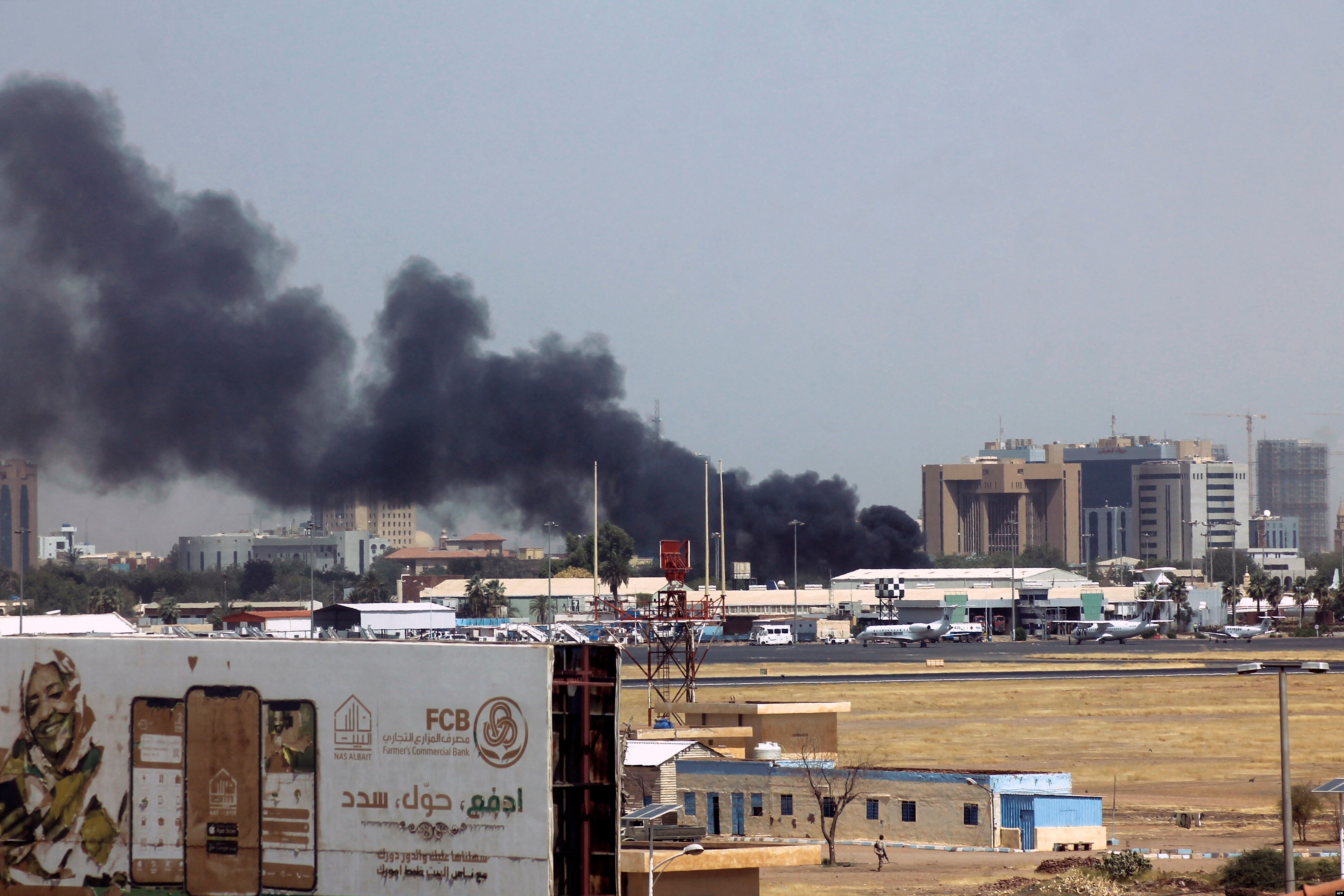
In Sudan, the tension growing all over the past months between rival military leaders develops into an open civil war. The battles are already going on throughout Sudanese territory, including historically long -suffering regions of Darfur and South Cordofan . The capital of Hartum was bombarded from the air, at the city airport the blow was inflicted on the flight field and civilian airlines, while frightened passengers were hiding in the building. At least 100 people were killed, at least a thousand were injured. Who will win is not clear. It is also unclear whether the mercenaries from the Wagner PMC have any relation to all these events, whose presence in Sudan is already recognized by the Kremlin itself.
After the military revolution accompanied by bloody collisions took place in Sudan, the third largest by bloody clashes, as a result of which the dictator Omar al-Bashir , which was unleashed from power, continuously rule the military, was accompanied by bloody clashes. At the same time, Sudan has long plunged into permanent chaos, he is constantly shocked by popular unrest and attempts by new coups. At first, the country was ruled by the so -called transition military council of Sudan , which later replaced the sovereign council of Sudan , now called the transitional sovereign council . De facto today Sudan is a military dictatorship, although formally, the presidential republic, led by General Abdel Fattah al-Burghan .
The finally hopes for the affirmation of democracy in Sudan collapsed a year and a half ago, when the two most powerful local military ruler, that is, Abdel Fattah al-Burkhan and his deputy lieutenant general Muhammad Hamdan Duplo , the head of the Fast response forces (SBR), formed on the basis of the Arabic tribal militia known by military crimes "Dzhanjavid" - together seized power as a result of the next coup. It is they who are now fighting with each other.
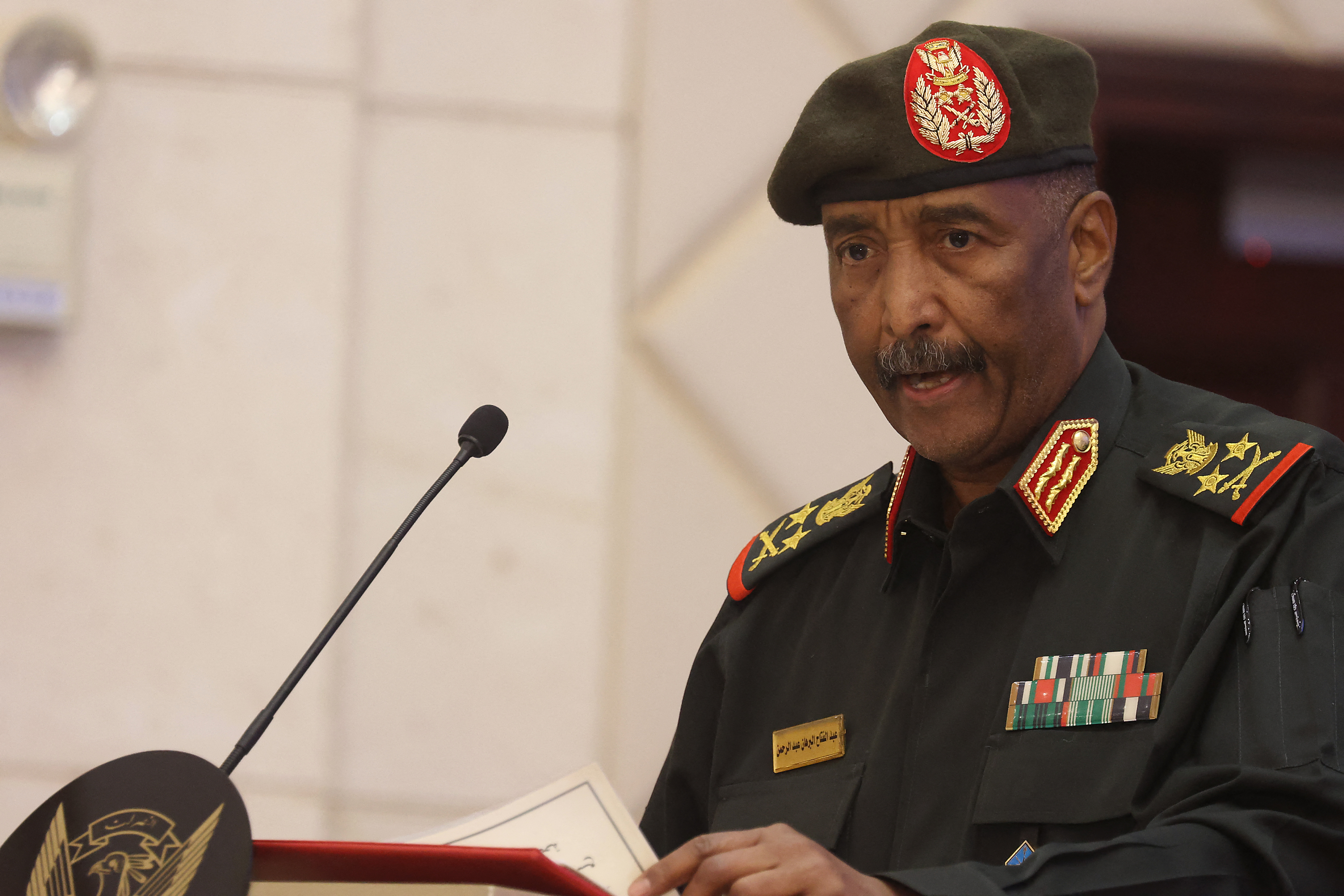
Almost all Sudan countries make various efforts to reconcile the warring parties and extinguish the conflict, reasonably fearing that the fighting and instability will creep on their territory. The African Union sits in permanent mode, and Egypt and South Sudan were proposed to act intermediaries between rival groups. But not one of the parties in Sudan has yet demonstrated any readiness for a truce - moreover, both warring leaders make extremely bloodthirsty attacks to each other.
General Abdel Fattah al-Burkhan first stated that he was ready to negotiate with the “quick response forces” if they were the first to agree to lay down the weapon, but then changed his mind and called the recent deputy with the Blood Marauder. In response, the commander of the SBR, Lieutenant General Mohammed Hamdan Dagalo, called his yesterday’s boss al-Burkhan "a dirty liar and a criminal" and promised that his troops would either transfer him to the hands of justice, or he would "die like a dog." He also stated that his troops intend to fight until all the military bases of the regular army were captured.
Constant messages are received about the victims and the wounded, and contradictory. According to the Al-Juzira TV channel, during clashes in El General and Hartum, at least three civilians died and dozens were injured. According to Al-Arabia, in North Darfur at least two civilians were killed and 26 were injured. Three more peaceful residents there were killed by a grenade launcher, and one woman was injured. The statement of the Sudanese committee of doctors says that two civilians were killed at the Hartum Airport and one person was shot in the state of North Cordofan. The dozens of killed and hundreds of wounded during battles in the city of Faro Baranga in West Darfur are reported. Western news agencies clarify that 56 dead, whose death is confirmed, are only civilians. The number of killed military and rebels is not known, journalists talk about "dozens."
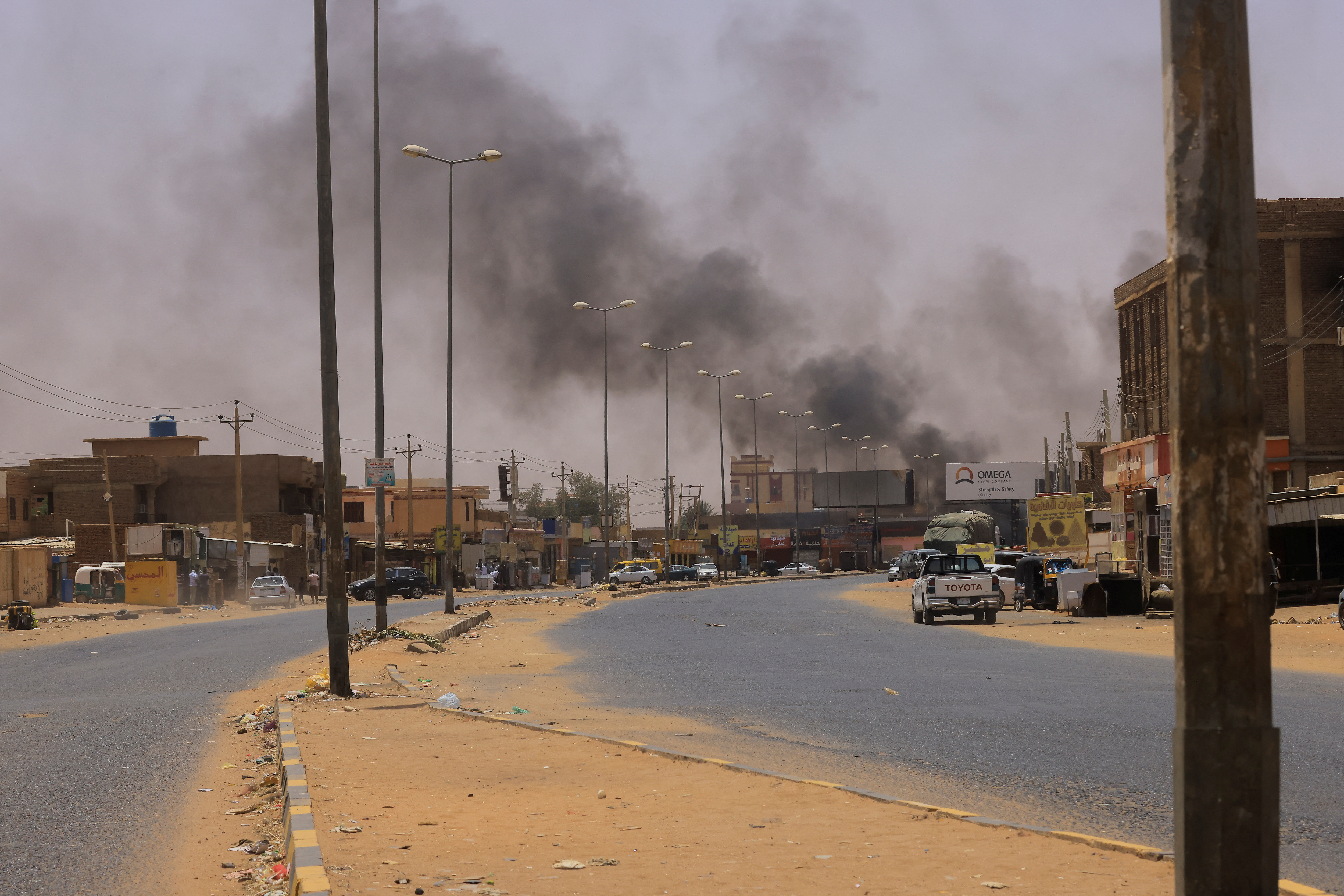
Large -scale military operations began with the fact that on the morning of April 15, militants of "quick response forces" attacked several bases of the army in Khartom and in its suburbs. Then the clashes began in large cities of Jabra, Kafuri and Shambat. SBR fighters said they captured the Airport Morave and the nearest military base, Hartum Airport and the DOS base, inflicting "large losses of armed forces." The shooting was heard in Hartum near the General Staff of the army and the government residence, recently named after the ruler of Al-Burkhan. SBR units later dug in the airfield, and government troops placed armored vehicles at the presidential palace. Even later, the rebels announced that they had captured the Presidential Palace-although representatives of General al-Burkhan denied this-and Al-Abade Airport.
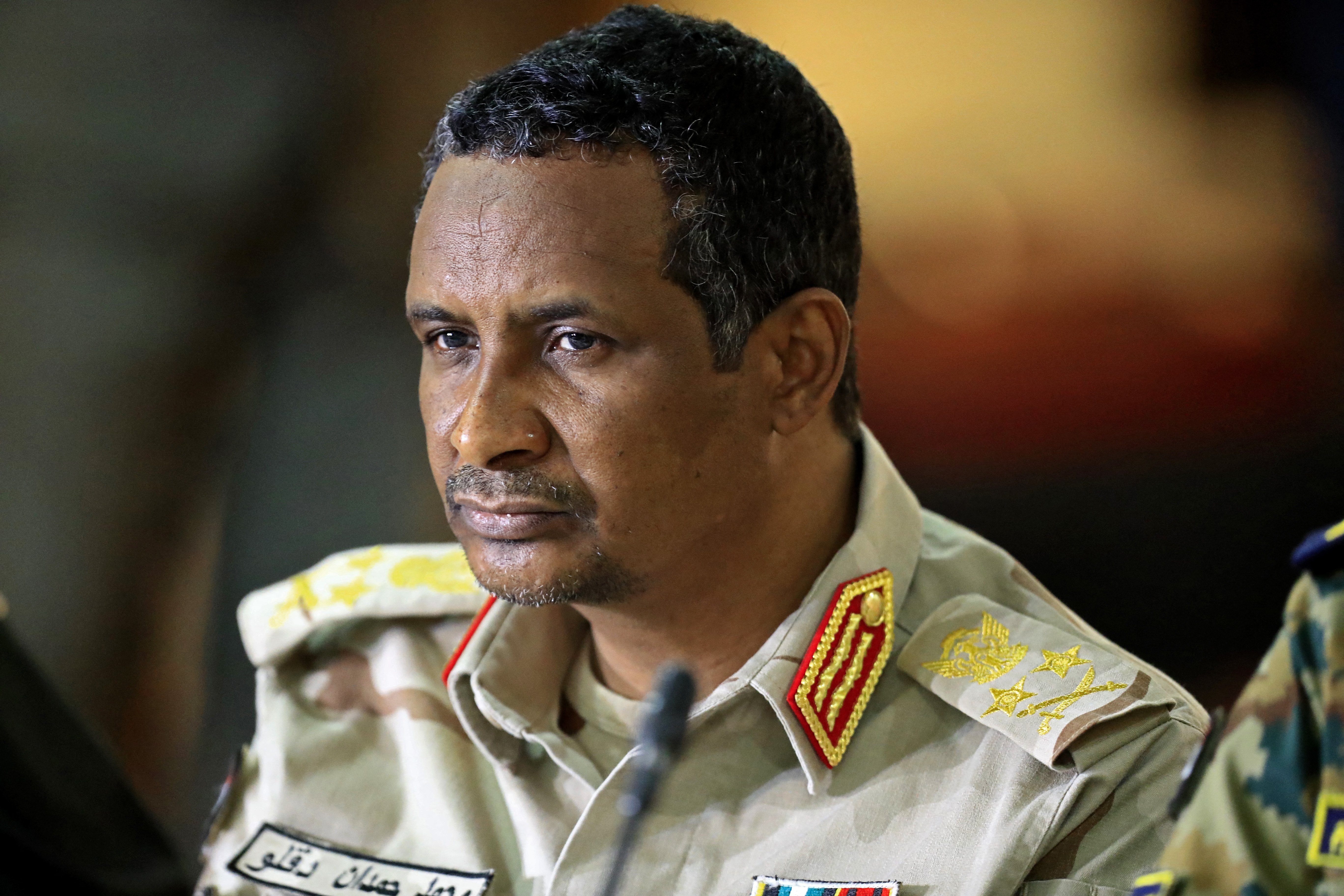
The militants of the SBR and the fighters of the transitional sovereign council are now always reporting their victories in different areas and provinces. On April 16, the government army reported that it had repelled the attack on the main Sports City stadium in Hartum. The next clashes occurred on the Hartum bridge over the Bely Nile River. At the same time, reports about battles in the second most important city of Omdurman began to arrive, including using heavy artillery and tanks.
The Sudanese Air Force, which remained on the side of the transitional sovereign council, continue to strike at the bases and positions of the SBR. Artillery fire is now heard in different parts of Hartum. Fights are also carried out in the capital of North Darfur El Fashiri. By the evening of April 16, government troops announced that the commander of the SBR forces in the state of the White Nile had surrendered, and the Taib and Dog Camps were destroyed. Meanwhile, in al-Fashiri, the forces of the rebels tried to capture the local airport and other buildings. Soon, information about the battles in the largest port city of Port Sudan on the Red Sea began to arrive.
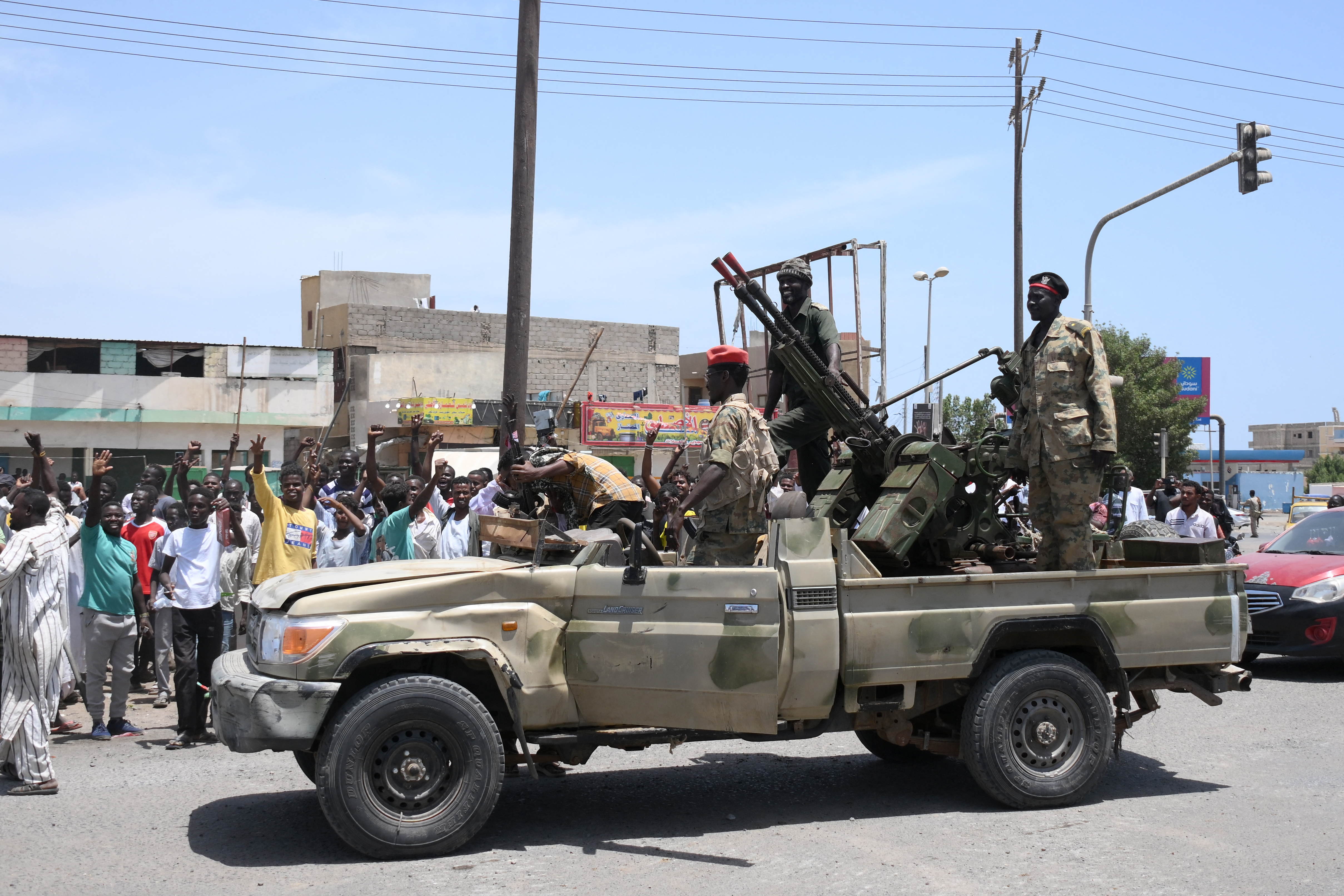
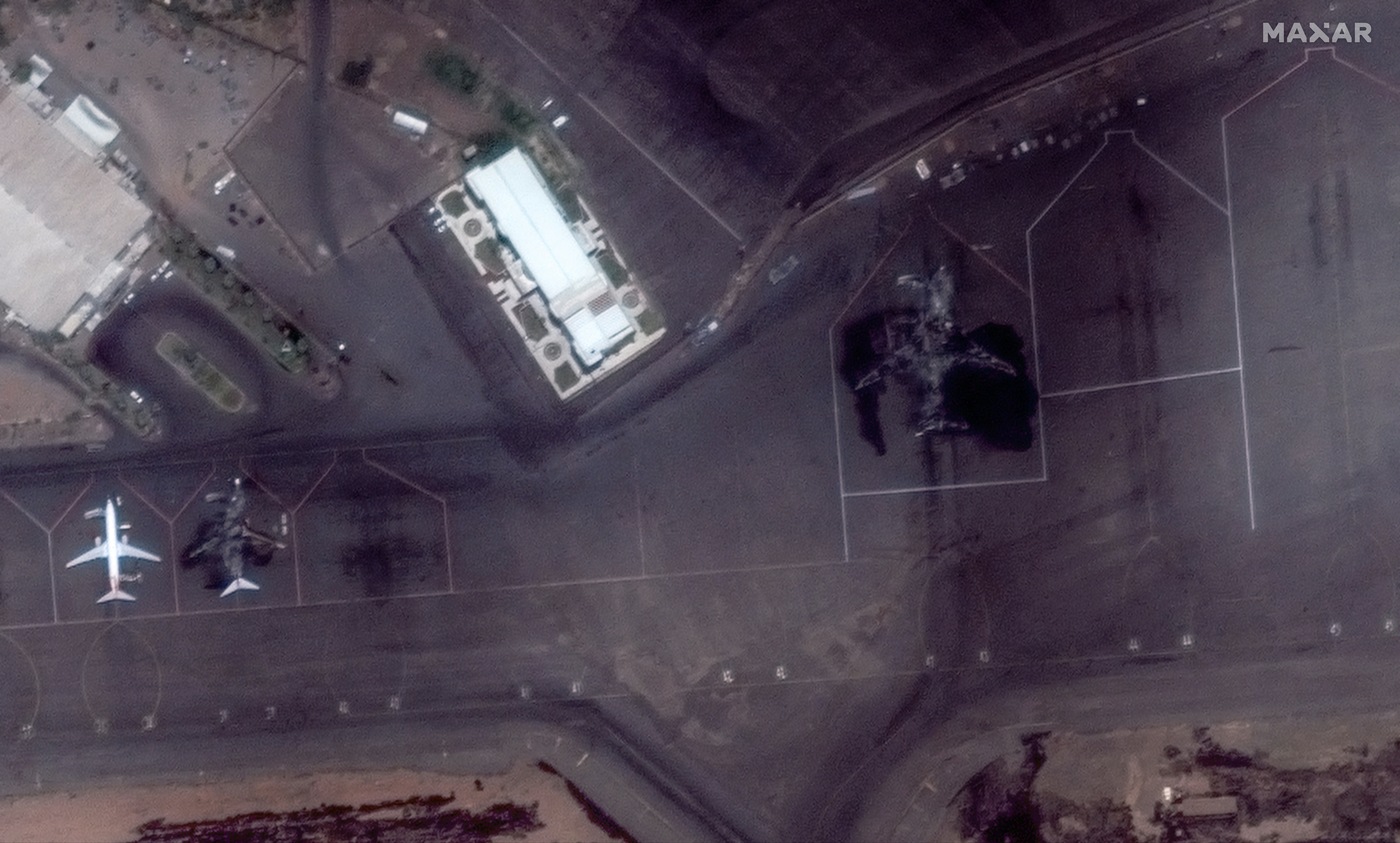
Saudia reported that as a result of shelling at Hartum airport, one of its aircraft was damaged. Now all world airlines canceled flights to Hartum. In satellite pictures taken on April 16, thick black smoke in the sky above the airport and two burning large transport aircraft IL-76 are visible. According to satellite pictures published by the British The Times, at least four airliners burned out there from Saturday. According to the inhabitants of the Sudanese capital, electricity is periodically disconnected in the city, and during many hours of ongoing battles they hide in the basements. On Sunday, one of the uncontrollable missiles fell into the residence of the Norway Ambassador in Sudan, fortunately, no one was injured. According to the specialized Supervisor of the UN Secretary General in Sudan Folker Pertes, three, on the evening of April 16, as a result of battles in Sudan, three employees of the UN World Food Program were killed.
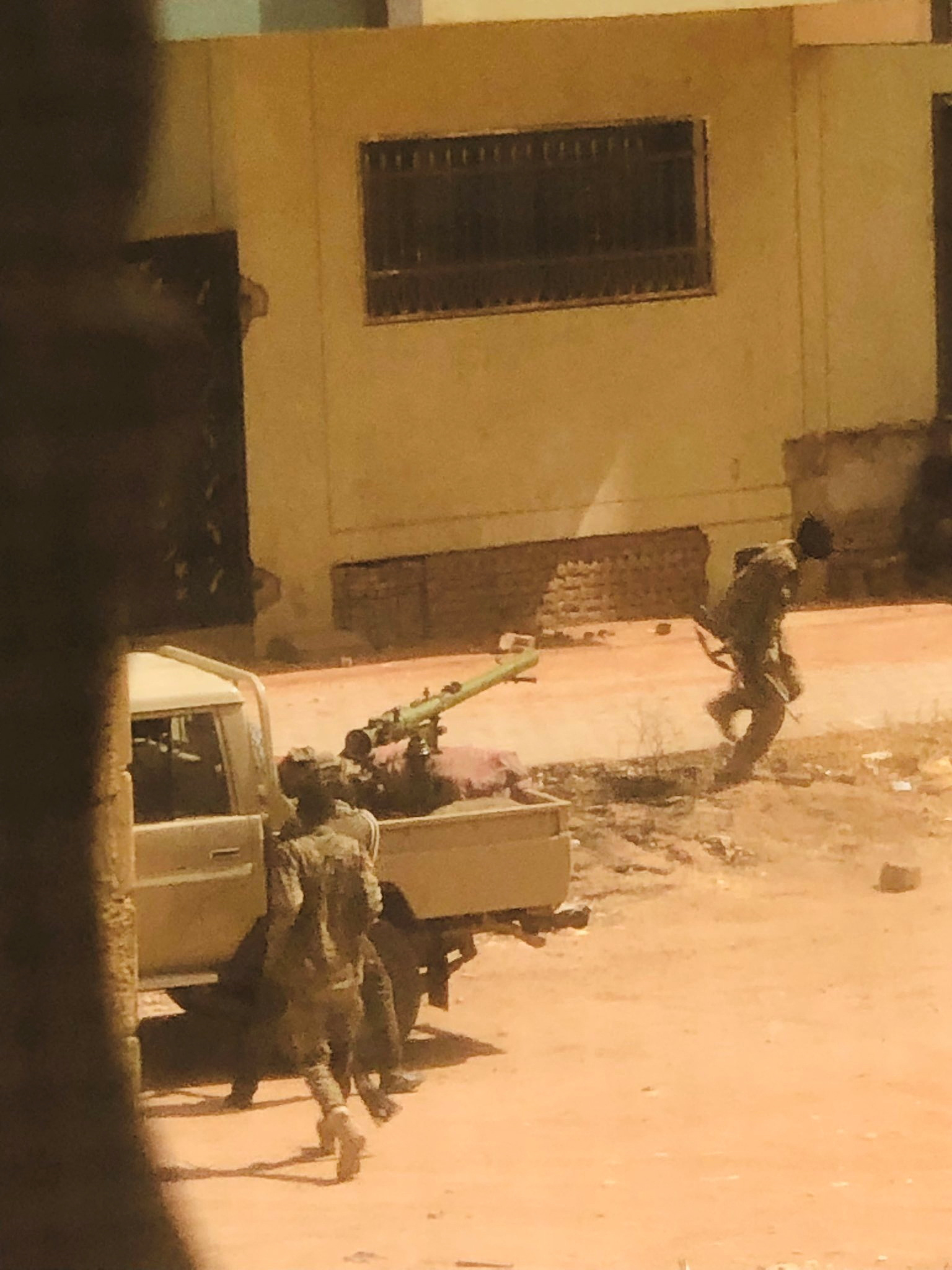
Military ruler of Sudan, General Abdel Fattah al-Burkhan, who was behind the revolution of 2019 and the removal of the former dictator Omar al-Bashira-a military personnel who once formed the functions of the gendarmerie and internal troops of the “quick response forces”, which now rebelled against him. He himself is guilty of many crimes, for example, in the bloody suppression of peaceful protests in the summer of 2019, subsequently called "massacres in Hartum" - namely the hands of the SBR.
On October 25, 2021, General al-Burkhan headed a military coup, after which he announced the introduction of a state of emergency and the dissolution of the government and the semi-citizens of the sovereign council. He stated several times that in July this year, honest general elections would finally be held in the country, although he repeatedly did this before, constantly transferring their date. Now, on the fourth anniversary of the overthrow of the dictator al-Bashir, he, as the head of the “transitional sovereign council,” again stated that so far “was not ready to transfer power to civilians”, which caused the rage of his yesterday’s ally Muhammad Hamdan, the heads of detachments of the SBR.
There is quite little known about the life path of Lieutenant General Muhammad Hamdan Diglo, who now headed armed resistance to the official military authorities of Sudan. This is a native of the nomadic Arabic sub-ethnic group Shoa, the son of camel merchants, who quit school after the 3rd grade and signed up in the Dzhanjavid militia-where he made a quick career. At the end, it was Omar al-Bashir who appointed him the head of this group, which was already transformed then into "quick response forces." Together with General Abdel Fattah al-Burkhan, he constantly entered the composition of all the military who ruled Sudan, “transitional” and “sovereign-transitional” advice-while al-Burkhan has not finally monopolized power.

It is interesting that recently, of all the military ruling the military, it was Muhammad Hamdan who was more likely to visit Russia and spoke out in support of the construction of the Russian naval base on the Red Sea, for the last time in 2022. The construction of such a base was agreed by Omar al-Bashir shortly before it overthrow in 2019. Despite the removal of al-Bashira, negotiations between Moscow and Hartum continued. In the end, the agreement was finally approved during a visit in the middle of last February to Africa of the Minister of Foreign Affairs of the Russian Federation Sergey Lavrov. Russia will receive a port that will allow it to control one of the most important intersections on world shipping routes, approaches to the Suez Canal and access to the Indian Ocean. In exchange, Moscow will supply Sudan with weapons - and exploit its mining deposits. First of all, gold mines.
Although now the fate of this agreement, obviously, hung in the air again, it can be assumed that the Russian Marine base in Sudan will still appear, since all the military in Hartum, no matter who would win, are urgently needed by both money and allies in the international arena, and except in Moscow (or in Beijing) there is nowhere else to look for them. Western countries and international financial organizations have business with the Sudanese generals, who tarnished themselves with repression and massacres, refuse, especially - to give them new loans and write off debts. At the same time, Sudan is one of the African states, which, in fact, have been at war for decades - both civilian and different neighbors. This is a constant enmity with Southern Sudan, which separated in 2011, and equally bloody conflicts in other areas of the state - in Darfur and Southern Cordofan .
In recent years, Moscow has generally played a very noticeable role in all internal Sudanese affairs. According to the Stockholm International Institute for Research of Peace Problems (Sipri), the Russian Federation was and remains the main supplier of weapons in Sudan. The share of Russian military equipment in service with the Sudanese army reaches 87 percent (and 8 percent of the production of the PRC). Even during Omar Al-Bashira, who was considered one of the most promising allies in Africa in the Kremlin, Sudan became one of the few countries that recognized the annexation of Crimea.
Many media, including Radio Liberty, have repeatedly written about the active activity that are developing in Sudan structures related to Evgeny Prigozhin, who attended most meetings of senior Russian officials with various Sudanese leaders since 2014-2016. In particular, a few years ago, Prigozhin agreed to develop in Sudan the gold deposits belonging to him by the company Mol of Invest (every year gold mining in Sudan reaches 100 tons , this is the third place in Africa), the protection of Wagner PMCs took up.
In parallel, mercenaries from Russia, whose presence in Sudan now recognizes, act there as military instructors. They also trained the Sudanese special forces, which in recent years overclocking of mass folk anti -government performances. Today, according to Western intelligence agencies, the Wagner PMC fighters are engaged in Sudan (as well as other African countries) by the operation of natural resources to finance war with Ukraine. Moscow rejects these accusations.
Today in Sudan, the main instrument of Prigozhin, according to Western intelligence services and the media, is under the sanctions of the United States, Meroe Gold, a subsidiary of Mer Invest, which is engaged in gold weapons, supplying military weapons and teaching their army and pro -government militarized formations, primarily the very "quick response forces of Muhammad Hamdan Dig, now opposing the head of the military junta, General Abdel Fattach al-Burghan.
-

Alexander GOSTEV
The editor of the RS information service, international observer, author and editor of the heading and podcast "Atlas of the World"
Gosteva@rferl.org