
Translated material
Catalan Quyr, Caribbean Messiah, animal conversations
The short list of the International Boker of 2023 was declared. What the finalists of the most prestigious prize of the English -language book world write about

Mettle: Vectonauta, Freepik
On Tuesday, London was called the six finalists of the 2023 International Buker Prize. This year, it included Korean Chhon Möngwan with the novel “Kit”, Catalonka Eva Balthazar with “Stone”, Ivoarian Gaus with the novel “Stand firmly”, Bulgarian writer Georgi Mr. with the book “Time -Reason” (recently published in Russian in the Polyandria publishing house, in the translation of Natalia Nankinova), a modern classic of franco -speaking The literature, the writer of Guadeloup origin, Mariz Conde with the novel “The Gospel of the New World” and the Mexican Guadelup Nepapel with the novel “All the Born”.
Since 2004, the International Bouquer has been presented to the authors from different countries whose books have been translated into English and published in the UK and Ireland, as well as their translators.
The prize fund of the award is 50 thousand pounds and is divided equally between the author of the book and its translator into English. In addition, each translator and author of the book that got into a short list of bonuses receive a prize of 2500 pounds.
This year, the list of finalists of the award is interesting for several reasons. Firstly, for the first time in the history of the Boker, translations from Bulgarian and Catalan appeared. Secondly, there is a book on the list that became a bestseller long before the international booker was established at all-Kit was released in 2004 and is still enjoying a great success in the homeland of Chon Möngvan in South Korea. Thirdly, this year, books tied to the topic of human interaction and national history were included in the short list: overcoming and understanding the heritage of colonialism, as well as the relations of people with the outside world.
"Kit", Chon Möngwan

Family saga about post -war Korea, covering the period from the end of the Japanese occupation to the end of the eighties. The entrepreneurial Kimbok founds a brick factory, but once observes how the whale floats in the sea - and becomes obsessed with whales. Her daughter Chuunhi will grow so strong that he will receive the nickname “queen of bricks” - for extraordinary strength and skill. But here's the bad luck: Chuhunhi is a significant, and can only speak with elephants - with the help of telepathy.
“Kita” is already compared with the classical novel by Marquez “A Hundred Years of Loneliness” - each hero of Möngvan has his own background, which the text examines deeply. However, Mohenwan’s novel is more satirical, places to the point of absurdity, and pedantically examines the development of the Korean society of thirty post -war years.
Moongwan makes a focus on female vitality, which goes beyond the scope of patriarchal templates, and enters the personal fate of the heroes into the epic history of Korea of the 20th century.
Mohenvan can be called a modern classic of South Korean literature, which at the same time works with the genre and reaches the genre conventions: in his bibliography there is both a soap opera about the alcoholic suffering from loneliness and anti -utopia, in the center of which the reality of modern Korea brought to the extreme. In an interview with Möngwwan, he belonged to the release of the novel in English with humor: after all, in the original he went out 20 years ago, and the author himself “almost forgot” it. And Möngvan managed to debut as a director: the criminal thriller “Hot Blooded) based on the novel of the same name Kim Onsu was released in 2022.
"Gospel for the New World", Mariz Conde
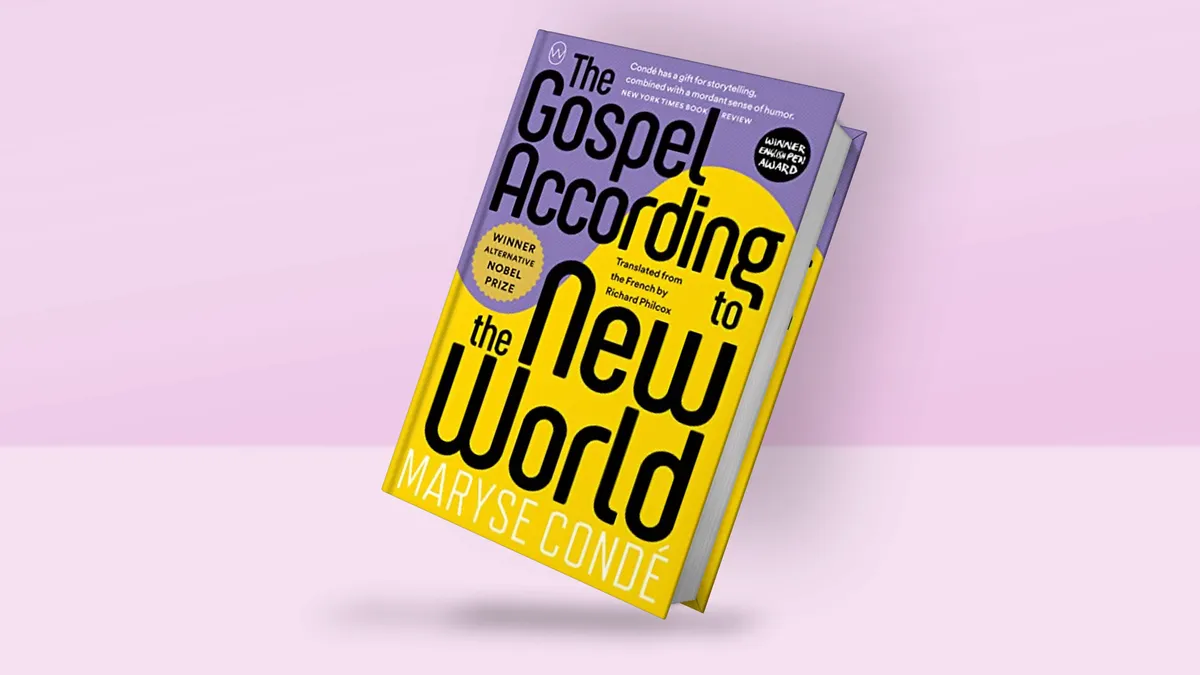
Mariz Conde is a native of Guadeloud, laureate of numerous awards of the French -speaking book world. In 2018, she was awarded an alternative Nobel Prize in Literature, which appeared as a result of the Swedish Academy of Scandal with sexual harassment. Nevertheless, in Russian, only one book of Conde was published in Russian: “Titube, a witch from Salem” of 1986 - an artistic rethinking of the life of the first woman, who became a victim of the famous Salem process.
In the new book, Conde again reflects on the relations of society, religion and myth, but this time with a bright anti -colonial subtext. Pascal is a child thrown in childhood, whom others consider to be a new Messiah. He travels around the new island and falls into different troubles, some of which are allowed miraculously - hence the reputation.
Pascal travels between the Caribbean communities, trying to find out whether he is really a messenger of the gods and if so, what is the purpose of his travels?
Conde describes in detail the journey of Pascal, not directly copying the gospel (parallels with Christ are too obvious), but exploring the roots of the inhabitants of the Micmome Roman, thus linking the history of her characters with the colonial heritage of the islands of the Caribbean.
Conde is 86 years old, and for some time she suffers from a neurodegenerative disease, which causes difficulties with vision and speech. Therefore, the last Roman Conde to date helped to edit and translate her husband Richard Filcox into English.
“Stand firmly”, Gauz

Gauz grew up in the cat d'Ivoire. He also learned to the biochemist, then moved to Paris, where he shot documentaries about the life of the Ivuarian emigrants and studied. Then he returned to his homeland. The “strong foundations” were released in 2014 and immediately earned the attention of French critics. The novel is partially based on the biography of the Gauz itself: three young Ivoarians illegally live in Paris and are earned by guards in boutiques. The work of the guard is so common among emigrants from West Africa that she got her own name on slang-“stand firmly”, that is, not to go away and receive at least some money. The narrative covers three time layers, from the 1960s to the beginning of the XXI century, when the Ivoari community in France tangled the consequences of the attack on September 11. Gauz talks about the heritage of French colonialism, simultaneously showing the realities of the life of an emigrant in France and the social problems of the country, which half -years after the war in Algeria did not outlive racism and colonialist trends.
"Time -Reference", Georges Mr.

“Return of the past” is an experimental center for the treatment of Alzheimer's disease. Each floor of a huge building is devoted to a separate era: forty, sixties - and is designed to return to people lost memories. An unnamed storyteller of history helps in this mystifier to Gaustin: he methodically collects objects of the past: buttons, furniture, clothes - to return the best moments of their life to the old people.
But the situation gets out of control, when the youth nostalgic for uninhabited eras is breaking into the door of the center, and the past begins to imperceptibly crush the present.
Mr.ovov is known far beyond the borders of his native Bulgaria. His books are translated into 29 languages of the world. Themes are familiar: the heritage of socialism, the anxiety of modern Bulgarian society, but the original texts of Mr.ovov make an experimental approach to each text: in the “natural novel” the narrator argues how the literature written by fly, and about the history of the toilets, and in the “physiology of sadness” the split narrative rushes between the family history of Mr., stories about the history of Bulgaria and Greek mythology.
"Stone", Eva Balthazar

The storyteller "Stone" (Ang. Boulder) works as a ship's coca on the sea routes around Chile, until one day he meets an Icelander named Samsa on the next flight. Friendship develops into love, the couple moves to Reykjavik, where relations are faced with the need to establish a critical difference in plans for life. Quir-Roman turns into a literary version of the “marriage story” of Noah Baumbach, the shaky world of partners turns around by playing each other's spiritual strings until one of these strings is broken.
Eva Balthazar studied at the Barcelona University Pedagogical Faculty and released ten collections of poetry in Catalan, which collected several literary prizes. “Stone”-the second novel of the Balthazar trilogy about Quir-Relaxing, the first-“Eternal permafrost”-was awarded several literary awards.
"Still born", Guadalup Netel
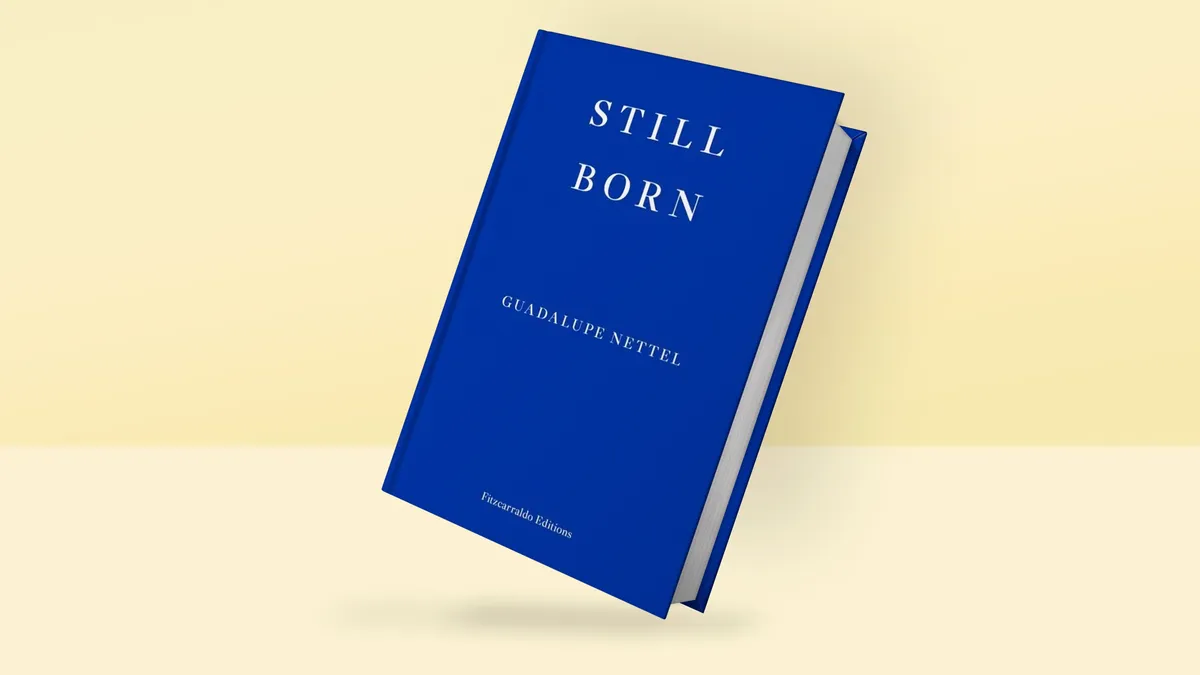
Laura is about thirty, and she is Childfrey. Her life takes place in Mexico City surrounded by people who do not quite understand her choice not to have children. It so happens that the familiar Laura named Alina accidentally becomes pregnant and will find out that the unborn child has an innate genetic disease.
Two extreme points of view of the characters help Netel to deeply investigate the topic of motherhood - and dissect it with a surgical cold that can push the reader, but will definitely amaze him with the honesty of the writer.