
Translated material
"Walked through the forest and was afraid of everything"
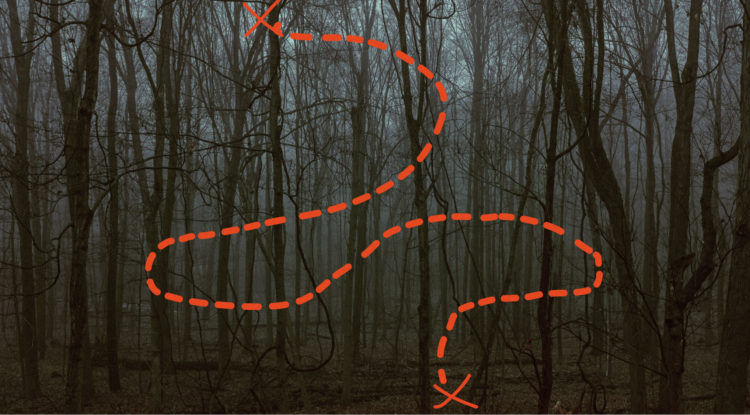
As a former engineer of the Russian defense enterprise, he escaped from the FSB to Europe
In Russia, they adopted a law on electronic summons: now the notification from the military registration and enlistment office even at the "public services" may simply not be released from the country. But you can leave illegally. "Cold" tells the story of a 39-year-old engineer who quit the defense enterprise and fled from Russia from the persecution of the security forces, illegally moving to Europe.
In order not to miss the main materials of the "cold", subscribe to our Instagram and telegram .
Could not work for the army
I have worked from Orenburg and for the past eight years as an engineer-designer in an industrial corporation that produces military equipment. After the start of the war, I realized that I could no longer stay in this industry: I consulted with my wife, I submitted an application with a request to dismiss me in an accelerated procedure, signed an agreement on non -disclosure and left.
A week later, a friend from his former work gave me my photos from the Board of Honor and said that employees of the first department approached the workplace. They sorted out magazines for participation in especially responsible operations, rummaged in copyright supervision, official notes and letters that I wrote, checked something on the computer and in every possible way brought vanity.
What is the department?
The first department is in Soviet and Russian companies a unit that monitors compliance with the secrecy regime and the safety of documents containing a secret. Since 2004, the official name “Mino-Secret Department” (North Ossetia) has been used to name such departments.
Even before the dismissal, in the early days of the war, I regularly led political debate with the head of the sector. He, like many at work, loved to admire the next “high -precision blow”, and I objected to him. In response, he suggested that I "go to fight for Bandera." I also placed an anti-war petition from Yabloko on my VKontakte page and even accompanied with some kind of text from myself. Then it seemed completely harmless.
Soon, the former boss called me and suddenly asked where I was now. It seemed strange to me, but I answered. On the same day, the FSB officers came to us with a search.
I talked with the FSB earlier: at our enterprise there was a special employee who conducted conversations after foreign business trips. In our last meeting in 2021, he mentioned that he knew about my participation in rallies, and said: “You can think anything, have your own opinion, this is not prohibited until you call for anything.” He also offered to cooperate and share information with him. I refused, but he called me twice more (the editors cannot confirm this story. - Approx. "Cold") .
At one time, several more people left me from our enterprise, but no one openly criticized the war - apparently, so they were not pressed on them.
The passport was canceled at the request of the "competent authorities"
After the search, I realized that they wanted to blame me for the disclosure of GOSTaina, and my wife and I began to think about leaving Russia. At work, I had access to GOSTYAN of the second degree, but I was not forbidden to travel abroad. From the document that I signed before leaving, it followed that the secret information that I had did not provide for such restrictions, because the information has expired. However, three days after the search, they called me from the first department of our enterprise and said that I had to appear and pass the passport.
I promised to come in the morning, and that evening I myself sat with my wife in a taxi before Moscow. From there we went to Minsk. Employees of the Russian FSB checked our documents on the border with Belarus, entered our data into their electronic database and calmly missed. Apparently, they still did not know that restrictions were imposed on me.
The path from Moscow to Minsk on a minibus took a day. The next day, we had to fly to Tbilisi, but the flight was first delayed for a long time, and then we completely canceled due to technical faults. Everyone was planted from the plane and taken to the hotel. That same evening, my comrade in the former job wrote to me that the FSB major and the deputy chief of the design bureau were locked in the office and discussed my situation. My comrade found out about this, because at some point he was invited there and began to ask about me.
The next evening we were brought to the airport for our flight. But oddities began already at passport control. While we were standing in line, an employee of the Belarusian border service approached us, asked to show our passports and landing coupons. He asked if my wife and I had different surnames, although it was clear from his passports that yes, he gave us documents and began to look into the cabins of his colleagues with the words: “They had different surnames.”
When our turn came up, they missed my wife, and I was asked to go aside. They called the guard and the senior shift. This boss of them took my passport and said that he would be canceled. An hour later, they issued a protocol on the removal of a passport. It wrote that it was canceled "at the request of the competent authorities" - apparently Russian. At first, the border guards refused to put my wife back, they say, she had already passed passport control and could not return, but after an hour of persuasion they still released her to me, and we returned to the city.
Very scary, but there were no other options
For another three days we were in Minsk, lived in various rented apartments and thought how to continue to be. I talked with lawyers and understood that they could easily detain me in the fabricated case about the disclosure of GOSTain as soon as I return to Russia. It seemed too risky to try to fly to Armenia only with the Russian passport, because in a few days a more uncompromising decision on my detention could come from the Russian bodies. But I decided to consider the option with illegal crossing the border of the European Union in more detail.
We decided that I would cross the border, so my wife went back to Orenburg, and I stayed in Minsk for another three weeks: I explored the situation and prepared.
All this time I was in despair: there were no guarantees that I would succeed, I was very scared, but there were no other options either. I was helped out by the Belarusian family, whom I met in Minsk: they helped me arrange a SIM card and buy a cheap phone, bought me a dozen chocolate bars, gave woolen socks so that I did not freeze on the road, and on the appointed day they took me to the border area.
On the way, border guards stopped us, asked the documents. We pretended to be hoses - we said that we came to watch the cottage and did not think to take a passport with them. They showed them pre -prepared photos of ads for the sale of houses in this area. They believed and missed us, asked the next time not to forget the documents when we are heading to the border zone.
The car landed me in front of the second post of border guards. The guys drove on, and I ran through the forest plantations towards the border. Later they told me that I went out so early in vain: where we expected the post, there was no one, but it cost me ten hours on the most difficult section of the route.
I thought the border guards. I did not breathe
I walked through the forest and was afraid of everything. In the village near the border, dogs barked, I thought it was following me. He was guided by the sun, but more from memory. Before leaving, I studied the map and remembered that I needed to reach the edge of the swamp. Then the open area began, along which it was dangerous to go during the day.
I reached the edge of the swamp, hid under the trees, lay down and lay there until nine in the evening. At some point, an armored personnel carrier or a tractor-some kind of caterpillar equipment drove along the edge of the forest. Someone jumped from her, but, to my happiness, he did not go to the forest. And I climbed deeper into the trees.
When it got dark, I began to carefully make my way to the trail through the swamp. This path lit by lanterns is the only way to cross it. At the very beginning, a hundred meters from the place where I was hiding, the radio played quietly. I realized that the border guard was sitting there, watching the passage. I hoped that it would be possible to pass it if you approach the trail from the other side, but still rested on it.
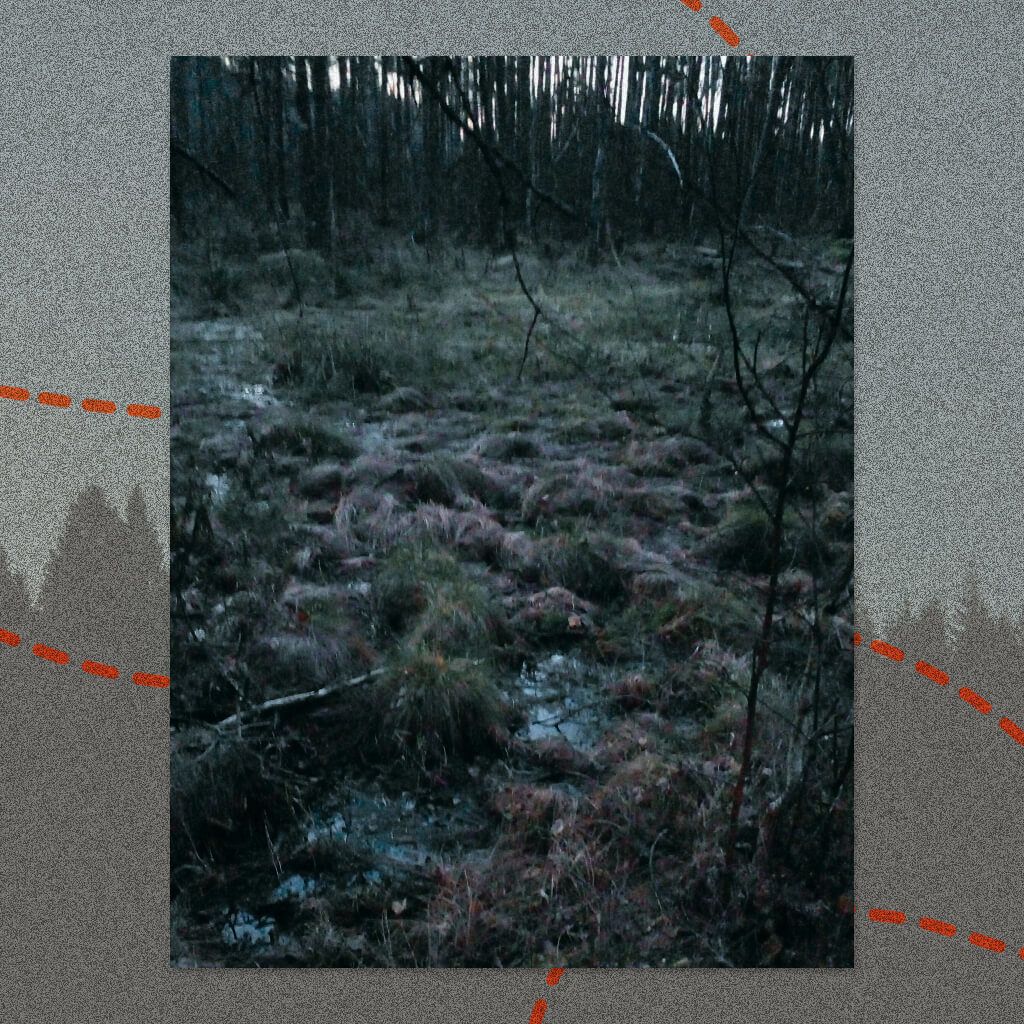
I had to go around the swamp, making a big hook by rail, open and viewed from all sides. I got to her and lay down nearby to wait for the deep night-some kind of light was a little at a distance in the forest. When it became completely dark, I climbed onto the railway tracks and very carefully, bending low, went along them. Judging by the map, this site was only 600 meters, but because I walked very slowly, the path took the way for an hour.
Behind the railway there was a village. Before I went into her, I heard something wagged through the forest to meet me. I was frightened that these were border guards, laying into a ditch and did not breathe, and it turned out to be a moose. Before that, on the way, I came across the roe deer twice, which rushed and roared loudly: spring. I waited for the moose to leave, and went to the village. She was lit by lanterns, and to go, bending and running out of the fence to the fence, it seemed stupid to me, so I went a cheerful step, not hiding. He hoped that at four in the morning no one would notice me.
I was lucky, no one met me, I went through the village and turned onto the next forest road. Then I had to open navigation on the phone - before that I did not risk it. The GPS signal receiver on the phone worked weakly, but I was able to make sure that I was going correctly. Near the Lithuanian border - a swamp, and I had to go very carefully, because there were places where you can drown.
Even in Minsk, I specifically remembered how many hundred steps should be passed in a certain direction so as not to fall into the swamp. This knowledge was very useful to me: although I lost my way several times and jumped along the bumps, in the end I nevertheless selected to the Lithuanian border post.
To get to him, it remained to overcome the last obstacle - to cross the moat with water. The moat was shallow. It was obvious that I needed to remove shoes and jeans and cross it. It was not difficult, but I froze and stood in a stupor for several minutes, thinking what I was doing and whether to undress. I don’t know what happened to me at that moment, but I managed to overpower myself, and I was in Lithuania.
"What prompted you to illegally cross the border?"
By early morning, I got to the village closest to the border. Many were still sleeping, I did not want to wake anyone, so I knocked out the window of the house where the light was burning. I was opened by a man who knew Russian: he listened to me, at my request he called the border service and explained my situation to them in great detail. After 15 minutes, three border guards came to us. I was searched, interrogated and taken to a border post, where I requested a refuge.
I crossed the border on April 17, on the day of Catholic Easter, on this and next day there were holidays in Lithuania. Therefore, the border guards seized my things and copies of the documents that I took with me, set me in a room on a border station with two mattresses, a blanket and a separate toilet and asked to wait until the end of the holidays. They brought me a large bag with hygienic supplies, olives, cookies and other dry meals and told me to turn to them for hot water. In these two days I slept a lot and recovered. All this time I asked the border guards to lend my phone to write to my wife, but they refused.
To inform her that everything is in order with me, I was only able to April 19, when an employee of the migration department came to the border post in my case. He interviewed me in more detail, recorded my testimony and allowed my wife to write from his phone. During the interrogation, they did not ask me about my work, it was important for them to understand why I was seized with a passport, what prompted me to illegally cross the border of Lithuania, and why I needed a shelter.
After that, I was taken to the police department, removed fingerprints and asked to fill out several forms with an explanation of the circumstances. The process was long: the documents were drawn up, transferred them into Russian, then I signed them. All this took about five hours. Then, in the presence of a translator and a lawyer, they explained to me that they were opening a criminal case against the illegal crossing of the border, which is then almost immediately annulled by a court decision after a petition for asylum.
By evening, I was taken to a refugee camp 50 kilometers from Vilnius, where I lived the next five months.
Time to leave the camp
At first I was placed on seven -day quarantine - in a separate large room. So that I do not go crazy, I was released for walks in a small courtyard. Then they transferred to the rest of the guys to one of the wagons in which other people who got into the camp live.
These wagons stood in rows and formed a whole small city: inside there are two bunk beds, and the toilet, shower, washing machines and the kitchen were equipped in neighboring wagons. But living was still comfortable. First, breakfasts, dinners and dinners in containers brought us, then, after a few months, they built a common dining room. On the territory there was also a football field and a sports ground with basketball rings, a table for a mini-tennis. In brick houses near the wagons, social workers - doctors and psychologists took. There was a library there.
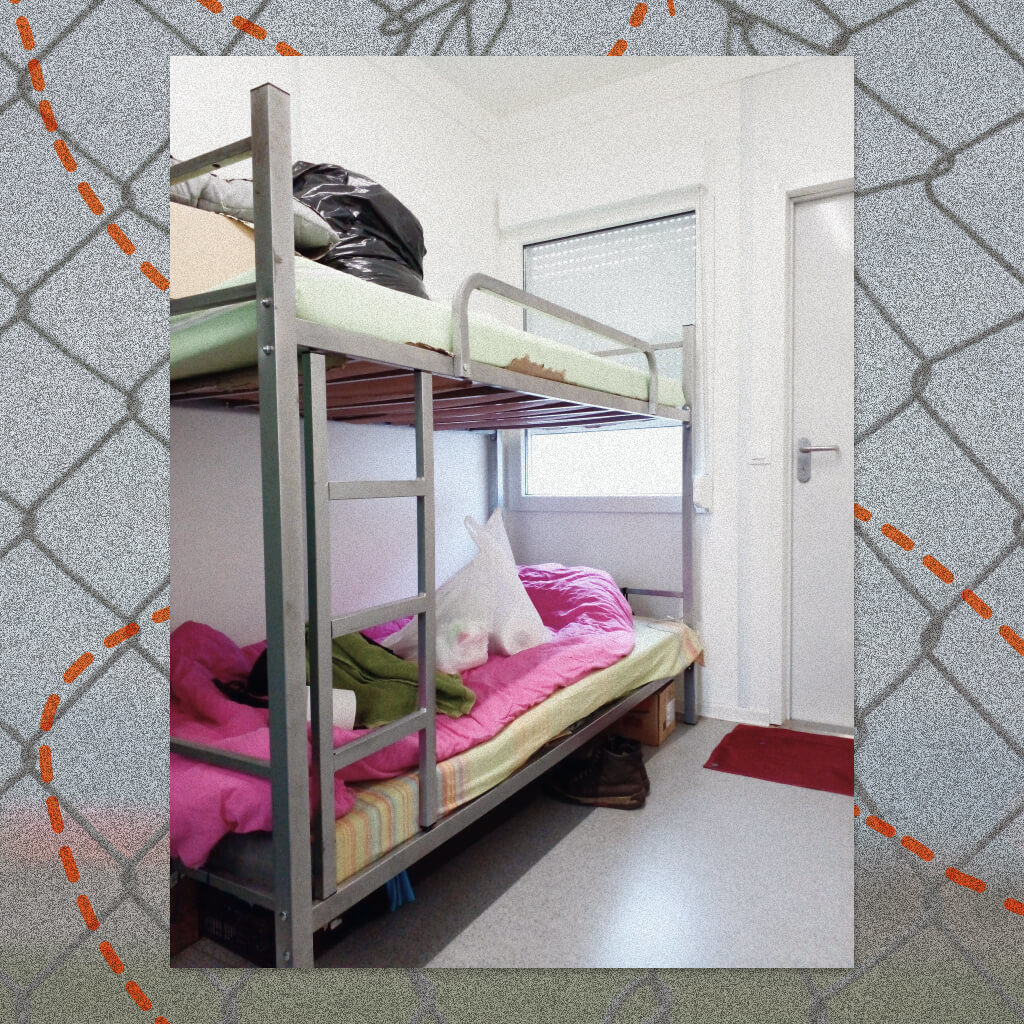
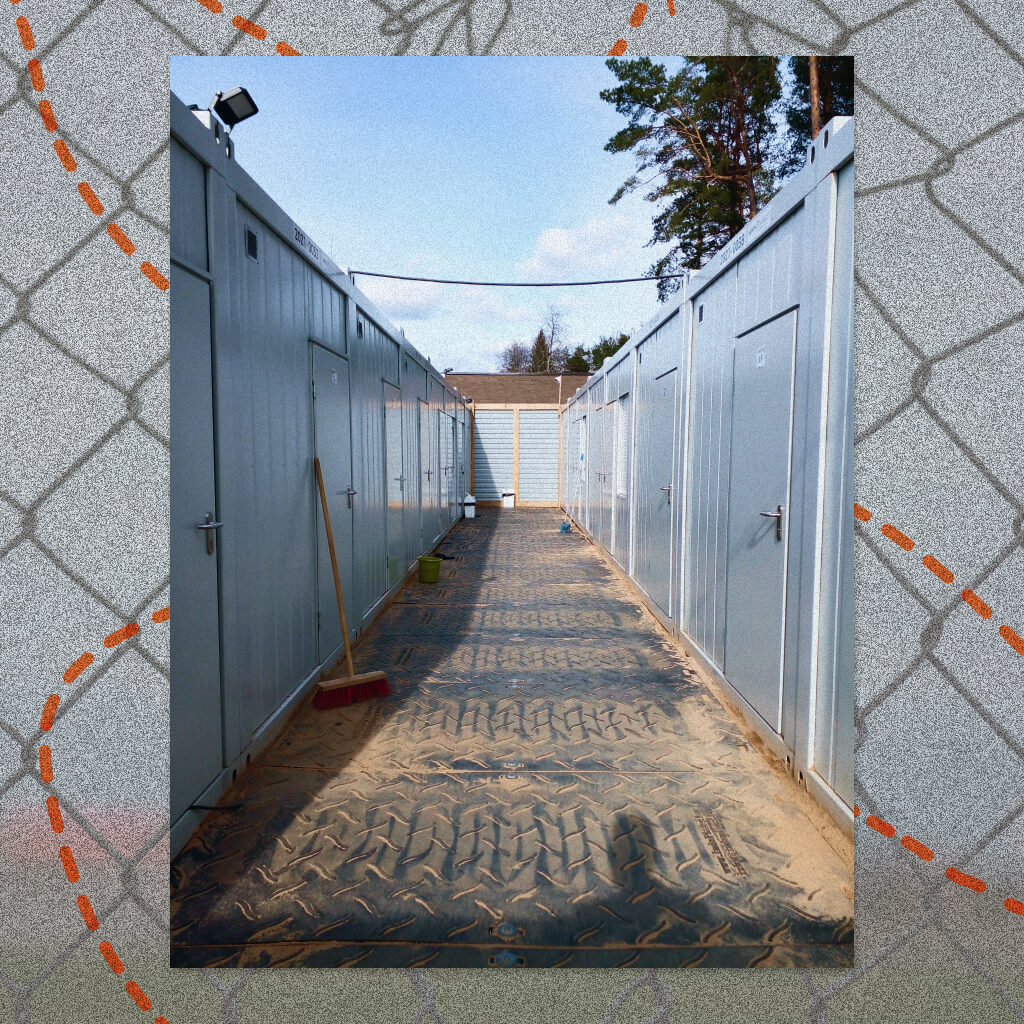
First, I shared a trailer with a Belarusian, then with a Chechen. Basically, we lived together, if we were hooked on us, then for a short while. In our sector there were most Belarusians and guys from Syria, Iraq and Afghanistan with whom I made friends. The neighboring sectors contained Africans. Everyone had similar conditions of detention, except that in the Arabic corps lived more closely, because it grew faster than the rest. Each time a social worker came and announced new settlements, people were indignant that they had so little space in the wagons, but many later ran away towards Germany, and the places were again freed.
I did not ask the guys how they got to Lithuania, because I assumed that this happened with the support of the Belarusian authorities, at the moment when the borders were not very guarded and it was relatively easy to do. The employees of the camp, with whom I maintained contact, told me that this winter the Egyptian came to them, who had to amputate the foot. On the way to Lithuania, he froze his legs greatly.
And there were also a few closed sectors. Of these, people were not even allowed to take a walk in the total territory of the camp. I don’t know, however, why - for disciplinary reasons or because their cases could not be verified. When a friend and I from Senegal brought them food purchased in the city, they interrupted the game in volleyball and became at the fence. It looked sad.
We could go beyond the camp. For example, I went to Vilnius to earn extra money at construction sites. Even when I worked at old work in Russia, I studied at the Institute for Psychotherapy on a Consultant Psychologist and opened practice in winter. In the summer in the camp, I continued to study the materials on psychotherapy and advised customers online. Since August, I also went to an unpaid work by a psychologist in the Fund for Assistance to the former Belarusian political prisoner and their relatives. It is difficult to retire to the camp to conduct a consultation, but I went into the gazebo or sat down in the field under a tree.
In September, I wrote an official petition to provide me with an office in the camp, explained that I work as a psychologist and I need space to advise customers. They seemed to be considered my request, but at the same time it became known that people from our sector are going to reject to another camp near the border with the Kaliningrad region. Before that, the Syrians have already been taken there. They sent us a video about terrible conditions: they were settled there in an unreasoned building of the former prison.
I decided that it was time for me to leave the camp, and asked my friend, from whom I worked as an auxiliary worker, to draw up a lease agreement for me in order to show him the camp administration as evidence that I could live on my own. The administration promptly gave the go -ahead for my departure, I collected things and moved. At first I had no housing and had to spend the night with a friend. It was difficult to find an apartment in Vilnius. Due to Belarusians and Russians arrived, housing prices rose, and no one was eager to rent an apartment to a foreigner without a working contract and legal status.
You won't be back - it will be worse
I received the status of a political refugee recently, March 9, three more weeks later - a card - a certificate of residence for five years. With its help, I received a bank card and now I can officially get a job and arrange insurance. As soon as I received the status of a political refugee, they immediately called me from the labor and social protection service, they invited me to come and fill out several statements to come to financial assistance as part of a refugee integration program. They explained that during the first six months they would transfer monthly payments to me, and then they will issue a one -time assistance of 500 euros. They also helped to arrange insurance and explained how to look for work and what rights I have.
Now I work where and how I have to, develop practice and continue to help refugees, former political prisoners and their relatives. I also try to transport my wife and two cats to myself - I persuade her to go on a residence permit to reunite. Поддерживать отношения на расстоянии очень сложно — многие пары не выходят из такого опыта благополучно. Нам лишь остается надеяться, что удастся сохранить отношения после всего, что нам пришлось пережить. У нас общее прошлое и настоящее. С будущим сложнее. Но мы над этим работаем. Ведь самое главное — иметь рядом близких, жить в согласии со своими ценностями. Ради этого интересно стараться, работать и развиваться.
Фээсбэшников сейчас не видно и не слышно, лишь однажды маму и жену пригласили на прием в городскую администрацию, где стали уговаривать, чтобы я вернулся. Якобы мы на ровном месте решили поиграть в шпиономанию, а мне нужно было лишь с бумажкой ознакомиться. И если я вернусь сейчас, то все решат, а если нет — мне же будет хуже.