
Translated material
“Many did not understand that 30 years were not a term, that the empire has not yet broken up”: an interview with historian Andrei Zorin
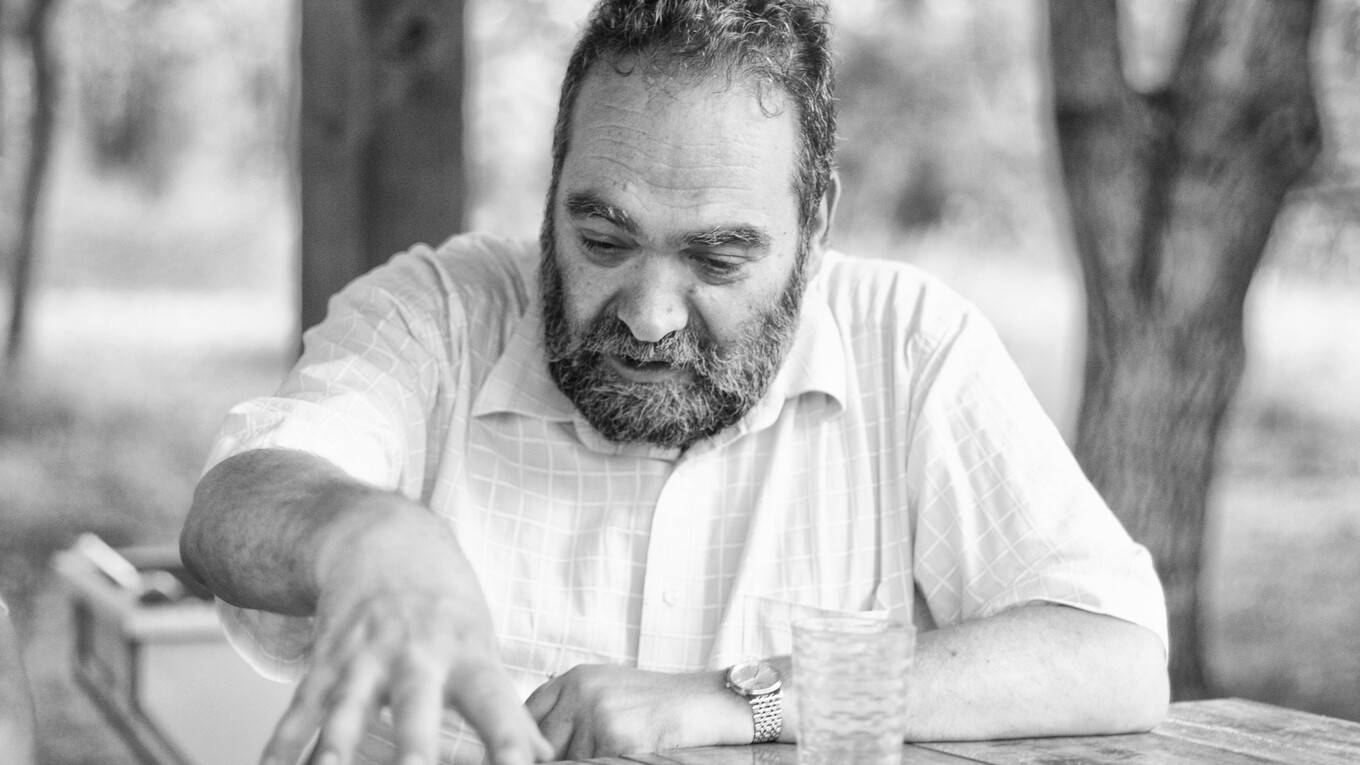
A specialist in the state ideology of the Russian Empire - on the cult of war as a public consensus.
Is there a holistic ideology in modern Russia? What is the difference between a colonial war and the split of the metropolis? What role does Crimea play in the imperial myth and what is political mythology? Yegor Sennikov talked about this and much more with the historian and literary critic Andrei Zorin, a professor at the University of Oxford, the author of the books “Law of the Two -headed eagle” and “Life of Leo Tolstoy. Read experience. "
In order not to miss the new Perito texts, subscribe to our telegram channel and Instagram .
Are you close to those who believe that movement from two sides went to this conflict? Most often, in such cases, they indicate the expansion of NATO and the problems that it introduced into Russian-American relations.
This question, in general, should be asked to political scientists. I am quite skeptical about such conversations. It is quite obvious that the expansion of NATO did not create any military threats to Russia. Another question is that this policy partly fuel the very myths of the historical confrontation of Russia and the West.
I am convinced that the policy of the West as a whole could be more reasonable. But to blame the responsibility or even a significant share of responsibility for what is happening on NATO or to someone else out of the way is to deprive Russia of subjectivity. And with this approach, I categorically disagree.
We recommend that Last War, Next War bookmarks . A special Perito project on how Putin built and restored the national military idea Russia Monuments 2023 Date of publication 03/20/2023Let's talk about subjectivity then. In the last decade, Russia has come to the creation of some new national pantheon with a large number of monuments dedicated to the war. Is it possible to say that this is the result of a combination of circumstances or is it the result of the actions of specific ideologists?
I would not absolutize the role of ideologists and propagandists. Of course, the propaganda machine acts, it would be ridiculous to deny it. But some propaganda stamps, ideological models, types of brainwashing the population are very effective, and some are completely gone.
An ideological design is an articulated and conscious thing, this is what intellectuals come up with. But something is successful, but there is nothing to success. And this is determined not so much by the intellectual level of a particular structure as the hit or the non -use of ideological models they created to the beat, in resonance with the ideas that most of the population shares.
Some ideological models remain dead, do not find resonance at the audience, and some find and “shoot”. Successful are those that are based on fundamental historical mythology. But the reasons for such a grand event as war, of course, cannot lie exclusively in the field of ideology or mythology.
If we talk about the cult of war, which has long been planted in Russia from above and the significance of which many observers, including me, have viewed, then it did not arise from scratch. Throughout the second half of the 20th century, the victory was the only zone of national consensus. For almost any other reason, there could be terrible disagreements, but there was complete consent here. And a successful ideology was supposed to stuck there.
And everyone understood this?
At one time, I was invited to give lectures on the basics of Russian culture to American entrepreneurs who came to Russia to do business. I always said the same thing for them: when you talk to local people, you can say a lot, you can feel almost completely free. Well, you say that the government in Russia is lousy. They will answer you: “Oh, Lord, it is even worse than you think, you still have no idea how lousy it is!” You say: "Russian people work poorly." They will answer: "Oh, of course, we are like that." But only I beg you, do not say that the Americans won the war.
All the next I came across a surprised question of the audience: “Why?” And here, some subject of my reflection was my own reaction: when I heard this question, “why?”, I just began to climb the wall. Well, why? Because we won her, not you! Do you understand? And no my ideological orientation, liberal views, something else ...
... did not save.
Yes, they did not help academically move away from the subject. If the ideologist beats this point, it will work.
Russia also went through the Afghan and Chechen wars, which created a large layer of people with military experience and at the same time disoriented, who did not have a place in a peaceful life. For them, the propaganda of the war was an important semantic support. The events of the late 1980s-early 1990s completely knocked out the country out of hinges, and many people lost the meaning of life.
In this situation, the cult of war has blossomed, actively planted from above. And not a specific war, but war in general: the cult of the military past, the cult of victory, the cult of power. In addition, he resonated with a loyal attitude to the criminal culture and the poetization of desperate courage and cruelty characteristic of it. The cult of the war was resonant with the ideas of a significant part of the population about himself, which in no way relieves responsibility from ideologists who created this cult, and its propagandists. They knew what they were doing, they are completely responsible for the affairs of the hands or, rather, their languages.
Is it logical that the ideology used to support the war is non -intended, unconscious? She operates with various myths: imperial pre-revolutionary, and Soviet, and some kind of Russian-nationalist, and at the same time seems to be Soviet-international. Is this natural?
Yes. Ideology is an unconsient thing in nature, and making such requirements is strange for it. As a rule, prominent ideologists were not serious philosophers, and the analysis of ideological models from the point of view of their sequence and depth is an unproductive matter.
For understanding ideology, it is important not production, but consumption. This is a product of mass consumption, and the essence is not in the engineering solution that the ideologist found, and why it is sold and what needs it meets.
People are unchanged on their own. We have different needs, different behaviors, different ideas. And successful ideological models appeal to different values at the same time, smoothing and obscuring the contradictions between them.
Already from the end of the 1990s, work began on the creation of a consistent ideological narrative, which would unite the Kievan Rus, the Moscow Principality, the Moscow kingdom, the St. Petersburg Empire, the Soviet Union and the post-Soviet Russia in a single line. This narrative was worked out for a long time. The links were thrown out of it, found solutions that allowed Nicholas II to explain, and the Bolsheviks who shot him were also beautiful, why the Moscow kingdom was wonderful, and Peter who hated him was also deeply right.
It was required to remove from the Soviet myth its semantic center - a revolution. The revolution in the new ideological system is bad, because the power cannot be overthrown. And the system that this revolution created is excellent because a strong state arose.
You said that many, including you, looked at the war. At the same time, you can retrospectively see that many trends and factors led to it. Why do you think she seemed unrealistic even to experts?
There are a lot of reasons. Some of the city intelligentsia, to which I belong, was a purely peaceful generation. We did not have this experience, and it seemed to us that the war was unrealistic, while the country was a huge number of people who were waiting and preparing. Veterans of Afghanistan and Chechnya, who went to school, told the children: "Each generation has its own war." Between these two poles there was a completely common slogan “we can repeat”, which, of course, gave rise to the question: what to repeat? Do you want another 29 million killed?
Many were glad when the USSR collapsed almost bloodlessly, unlike most empires in world history. Of course, there was blood in the late 1980s-early 90s, but mainly in the territories that seemed peripheral. And we were proud of this, it seemed to us that it did that the empire was already peacefully dissolved and this page was turned upside down.
In addition, I have not seen masses revenge. It was evident that somehow the Crimea was “accelerated” by many, in this place there were phantom pains, although they could also resolve over time. After 2014, it became impossible to talk about this topic, but before that they sometimes told me: “But still Crimea should be ours.” I answered: “What difference does it make to you? What do you need Crimea? Did you go there before? Well, here go. Only cheaper. What is the problem? "
Back in the 1990s, I wrote an article that in the imperial myth the Russian Crimea was the most important topos, but I thought it was gradually forgotten. And then suddenly in 2014 they began to call me from everywhere, ask to perform. Suddenly this myth coated with a patina came to life. But the feeling that this approach will be extended to other parts of the former empire, of course, I did not have. Many of us did not understand that 30 years were not a term, that in fact the empire had not yet broken up, and that these screams of the type “we can repeat” are the reality of the resentment that arose after the collapse.
In the long list of provinces that disappeared in 1991, Crimea remains almost the only one, the loss of which, it seems, is still saddened by Russian public consciousness. Typically, the explanations of this acute nostalgia come down either to the household "nowhere to go to rest", or to the Militarist "Sevastopol - the city of Russian Glory." Meanwhile, for relaxation, Crimea is now available much more than the Abkhazia or even the Baltic states, which was equally mastered by Soviet vacationers destroyed by the war. As for “Russian glory”, Sevastopol, of course, cannot compete here, for example, with Poltava. However, all these places do not cause such emotions.
It can be assumed that behind all these explanations are deep, but that is why little reflected ideas that the possession of the Crimea is the crown of the historical mission of Russia, its civilizational purpose. It is worth considering how cultural and symbolic concepts come to life in the minds of today's person literally "the times of Ochakov and the submissions of Crimea."
Without applying for an exhaustive answer to the most difficult question about the mechanisms of retrandation of cultural memory, we still risk expressing one assumption. The decisive factor in preserving in the mass consciousness of the memory of Potemkin projects is, in our opinion, the architecture of the Crimean sanatorium and the pioneer camp. The world of white houses by the sea, the engraving paths between the bushes of the laurels, cypress alleys with gypsum vases and statues, the males in the scarlet ties on the artican ruler, walking spa resort in bright pajamas - this is our ancient Greece, our paradise, albeit cleansed after the war, by the will of the father of the peoples from excessive ethnic diversity, but accessible by the way a trade union ticket or the direction of a pioneer organization for the person of the empire. He can relax calmly, because on the raid in the Sevastopol Bays there is a red-banned Black Sea Fleet with white and blue sailors in the dishevefers, along which girls in distant Russian villages dry in vain. It is here that the domestic and militaristic interpretations of Russian thrust to Crimea merge to indistinguishability.
Andrey Zorin“Horming a double -headed eagle: Russian literature and state ideology in the last third of the XVIII first third of the XIX century”, M.: UFO , 2001
They did not believe.
Yes. To imagine that against the backdrop of endless propaganda about the single people, the mother of the cities of Russians will begin to bomb Kyiv, it was unthinkable. But it turned out that this mythology of the “single people” was the most dangerous, especially in the interpretation of official propaganda, which claimed that there was a single folk body, which includes Russians, Ukrainians and Belarusians, who were cut into three parts. Generally speaking, a real story for such mythology is not the most important thing, but it is still curious that the idea that Russians and Ukrainians are one people, very late and, as the outstanding historian Sergius showed , rather Ukrainian than Russian origin.
We recommend that “Independence is one of the main words for understanding Ukraine”: Dmitry Denisenko’s column on Russian-Ukrainian identity Ukraine identity date of publication 07.07From the point of view of cultural and political mythology, Ukrainian and Russian narratives about themselves and their history are not just different, but opposite. But for imperial consciousness, this difference is not obvious. It was difficult for the majority to even understand the problem. Ukrainians somehow, they say, discriminated. But how were they discriminated? In all the highest echelons of power, the majority of Ukraine. Even now, during the war, if you look at the names of representatives of the highest Russian elite, then many of them are obvious to Ukrainian origin. A native of Ukraine could really make an arbitrarily phenomenal career in Moscow, but for this it was necessary to abandon his Ukrainian identity and agree that we are the same. Imperial logic demands: “Well, yes, please advance up, but just admit that you are the same as we are.” And, of course, there were always a lot of people who, having learned the language, accepted the rules of the game and parted with identity, threw it away from themselves. There have always been a lot of such people, but the whole people cannot do it.
Even if you read the memoirs of large Ukrainian party functionaries like Shelest and Kravchuk , then it is clear that they thought how to slightly “divide” from the older brother. My father told me how, having drunk a lot, a very high -ranking Ukrainian Soviet official told him about a curse lying on this beautiful country, which is forced to feed his whole history to anyone.
In an interview with Ilya Krasilshchik, you said that, in fact, the war between Russia and Ukraine is not colonial, it is a split in the metropolis. Did I understand you correctly? And is it possible to expand your thesis a little?
From the point of view of narratives, this war is asymmetric. From the Ukrainian side, this is a completely classic national liberation war in which Ukraine is fighting for independence. This is an anti -colonial war in its pure form.
For Russia, the war (at least it has begun so, now the horizons are changing) went to restore the integrity of the metropolis, the unity of the folk body. There is a modern narrative about the people, according to which people are citizens with suffrage. And there is an old romantic model of the people, representing it as an organic unity, such a collective person. The state independence of Ukraine was perceived by a significant part of the Russian population not as the loss of the province, as it was, for example, with Central Asia and the Baltic countries.
And the Chechen war was therefore perceived differently?
Yes. And the war in Ukraine is partly perceived in Russia as a battle for the restoration of popular unity.
Another thing is that such narratives are changing. For a very long time, such a narrative spread, for example, to Poland: we are the Slav brothers, we must be together. And, of course, the unwillingness to be together causes special rage. How do you not want to be the same as we?
There are three phases here. First love, like in Carmen: “Do not love me? But I love. So beware of my love! " That is, I love you, so you must be mine, and if you do not want to be mine, I will cut you. Then this ardent love turns into hatred and an attempt to actually be cut. And then indifference occurs. Nobody remembers about the Poles. Another country on the map of Europe. We forgot them. They are strangers.
The same thing with Ukraine. Why do they refuse us? We are the same as them, we are exactly the same! In Russian folk tales, when the hero is chopped, he is first watered with dead water, then his members are growing up, and then watered with live water, and he gets up. The dead water of the war is the fusion of members of this chopped folk body. When strangers are fighting, then the world can be concluded with the enemy. And what can the world be with the traitor?
And what has changed during the war, why are horizons change?
The fact that the Ukrainian people do not want and are not going to merge with his older brother has already become obvious to so many in Russia. In addition, the role of the language factor was immensely exaggerated in a characteristic way of nationalist ideology. Well, yes, in the east of Ukraine the majority spoke Russian. And in Austria, almost the entire population speaks German. What of this? Language plays a role in constructing identity. This is an important factor, but it is far from the only one and not defining.
The course of events forces to pierce the basic narrative on the go, shift accents in it, change goals. This shift is already felt, the war for the restoration of the folk body is gradually turning into war over the territory.
The war, among other things, revived the conversations about postcolonialism in Russia, which, of course, did not appear last year, but they had never before been so mainstream. It seems to you that post -colonial optics are the right tool for understanding modern Russia and what will happen to it? Is this approach fair?
The use of a post -colonial approach to the decay of the empire looks completely natural. Another question is that you need to pay attention to the differences. Locke also said that seeing the similarity is wit, and seeing the differences is reasonableness. The differences are more significant than similarities, which is important to remember when we construct historical parallels. Of course, the similarities must also be seen, because the differences are visible only against their background.
Therefore, it is necessary to understand the difference between empires with overseas possessions and continental empires, and even more between the central empires and peripheral. If we put Russia in a number of peripheral empires, then we can compare, for example, how westernization processes took place in them. In Japan, Westernization was incredibly successful, in Persia it failed, and in the Russian and Ottoman empires it was partially successful. But in any case, in this series, the Russian Empire stands out very much, because the Ottoman or Japanese empire still had the task of learning to do everything as Europeans. The task of the Russian Empire was to become Europeans. This is a completely different scale.
In this sense, Russian imperiality is deeply connected with Russian Westernism and Russian Europeanism. And here we are facing the most difficult task of understanding the constellation of imperiality, national circanism, Westernity, consciousness of their own peripherality and resentification in relation to the West. If we simply adapt to the Russian experience of Said or Fanon, we will not understand anything. The post-colonial optics can be useful, but it must be adjusted in accordance with the object, and not to adjust the history or socio-political practice under the models developed on a completely different material.
I am not discussing now how good these models are on their own, they argue about it. But in principle, the meaning of the theory is to understand the situation.
What do you think of those movements or even individual activists who operate in Russia and outside - Buryat, Kalmyk, Yakut and many others? Как вам кажется, у них есть шанс на успех, на политическое будущее?
Когда восточным мудрецам задавали такие вопросы, у них был стандартный ответ, которым они пользовались. Они говорили: «Я хотел бы это знать». Не знаю, у меня нет ответа на этот вопрос.
Война, которая имеет в себе черты имперской, с одной стороны, и антиколониальной — с другой, неизбежно стимулирует антиколониальные настроения. При этом в России много меньшинств, и каждый случай абсолютно специфичен. В одних республиках русское большинство, в других в большинстве титульный этнос, где-то этносов много. Есть языковые коллизии. Я говорил, что это не решающий фактор, но он значим. Economic situation. Наличие исторических нарративов, значимых для того или иного меньшинства, и характер этих нарративов, парадигм, которые можно перестроить, перейти на них. Наличие своей государственности в прошлом или по крайней мере способность успешно ее придумать. Это сложнейшая констелляция факторов, которые надо принимать во внимание в каждом конкретном случае. Говорить об этом, вообще, по-моему, занятие довольно бессмысленное.
У нас есть опыт Российской империи. В ней большинство населения было православным, но были и большие исламские меньшинства. С одной стороны, один из самых удачных опытов вообще в мировой истории — в Татарстане. Конечно, сосуществование было полно проблем и конфликтов, но в целом было успешным. С другой стороны, сплошная катастрофа на Северном Кавказе. Одна и та же империя с двумя крупными мусульманскими меньшинствами в одном случае катастрофически проваливается, в другом достигает довольно серьезного успеха. Поэтому каждый случай надо рассматривать отдельно.
Россия не в первый раз оказывается в ситуации противостояния большому числу стран. Есть очевидные примеры с Крымской войной и революцией, но они не единственные. Что отличает нынешнюю ситуацию от предыдущих веков, когда Россия явно себя противопоставляла всему остальному миру, показывая, что у нее свой путь?
В 1917 году Россия предложила новую программу для всего человечества. Ничего национального или сугубо русского в ней не было. Бóльшая часть первого советского политбюро вообще считала, что цель русской революции — спровоцировать революцию в Германии, а затем и в других развитых странах. Только потом родилась сталинская модель построения социализма в одной отдельно взятой стране, она привела к советским моделям. Советская республика противостояла капиталистическому миру, как авангард всего человечества — проклятому прошлому.
Нынешняя война, как и Крымская, начиналась как локальная, но постепенно, по мере военных неудач переосмысляется как война с Западом в целом. Произошла апроприация антиколониального дискурса: мы против западной доминации, против навязывания единых ценностей Запада всему миру. Речь пошла о глобальном мировом переустройстве, Николай I на такой уровень не поднялся. Ну, он и умер быстро.
Но гигантская разница между этой войной и всеми предыдущими — в наличии оружия массового уничтожения и самой возможности уничтожить все человечество. This has never happened.
Когда мы с вами разговаривали пять лет назад, в 2018 году, я в конце просил вас парой слов описать современную Россию. И вы сказали, что «отсутствие будущего» — это такая фраза, которая вам кажется важной и страшной. Сейчас будущее стало более осязаемым?
Будущее, действительно, стало предметом разговора, потому что возникло ощущение надвигающейся катастрофы, которого прежде не было. Апокалипсис приблизился, и многие пытаются вообразить, как он будет происходить и как может выглядеть постапокалиптическая реальность.
Но пять лет назад, говоря об утрате будущего, я имел в виду психологическое ощущение, которое не позволяет осмысленно планировать собственную жизнь и деятельность. Ожидание апокалипсиса, мягко говоря, тоже не очень этому способствует.