
Translated material
The case of Lenin
The political heritage of the first Bolshevik remains the inescapable curse of Russia. Part 1. Violence and robbery
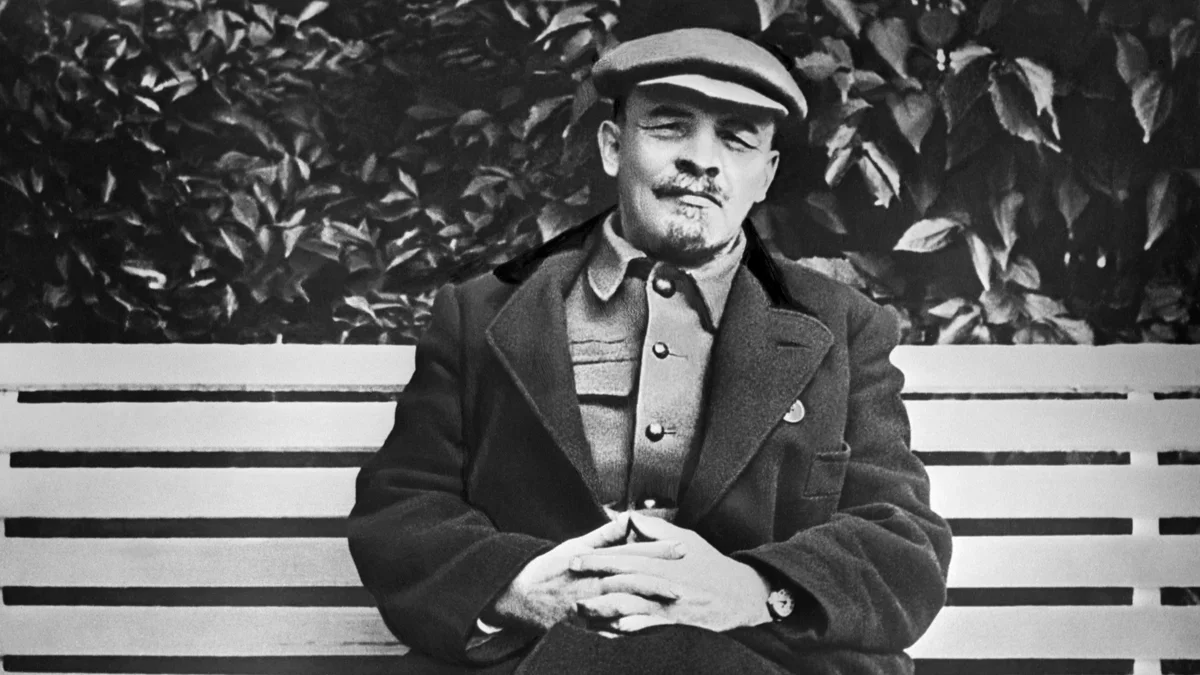
Vladimir Ulyanov (Lenin). TASS reproduction
The next anniversary of the birth of Vladimir Ulyanov (Lenin), the leader of the political party, who in 1917 in Russia in Russia, the coup d'etat and seized state power will definitely not cause great resonance in Russian society. Meanwhile, it was the political heritage of Lenin as the organizer of terror - both before and after 1917 - deeply absorbed into the building of the Russian state and into the public consciousness of millions of people in Russia. And while this legacy is not obsolete, the probability of the very fatal development of the situation in the country remains not just probable, but completely real.
Vladimir Ulyanov ( Lenin ) considered violence the main way to struggle for public reconstruction.
He proved this belief with fanatical constancy until the very last days. He always followed this conviction. For this, his belief and the “practical actions” based on him paid tens of millions of lives. And still pays.
The biological, moral and political wound inflicted on the country is still bleeding, while a huge number of people do not allow the thought that the cause of national suffering is the Leninist “teaching” and its devilish fruits.
The state power that came to the leadership of the country on total violence has become the power of violence.
"Dozens of victims will pay off with more than
The Russian Social-Democratic Workers Party (from which the Bolshevik party, the forerunner of the Communist Party grew up) declared terror (that is, politically motivated murders) with its practical instrument during the Russian Revolution of 1905, when the task of not only the head of the people's protest, but also to displace from the political scene of the Socialist Revolutionaries, “glorified” by their activities, “glorified” Combat organization, to defeat them in competition in the field of extremist revolutionary activity ( see footnote 1 ).
Blood 1
In the first and second section of the article, the materials of the study of Anna Gamfman “Revolutionary Terror in Russia. 1894-1917 ". 1993, Princeton University Press / Per. from English. E. Dorman. -M.: Kron-Press. The work of A. Gaifman is based on documents located in the largest archival meetings of Russian revolutionary materials: the International Institute of Public History in Amsterdam (Netherlands), the Giverovsky Institute of War, Revolution and the World at the University of Stanford, the USA (the private archive of Boris Ivanovich Nikolaevsky, as well as the archive of the foreign agent of the Department, is stored at the Guver Institute. The police, otherwise called the archive of the secret police, the royal secret police), in addition, on the stenographic notes of the meetings of the first and second State Duma and the releases of the cadet daily newspaper Speech, unpublished materials of the State Archive of the Russian Federation.
Until this time, in words, Lenin condemned terrorist methods of political work.
As soon as the situation reached real political actions, which suggested benefits for his political party, he radically changed his point of view.
Lenin was an absolutely unprincipled person.
His position has repeatedly changed depending on changes in his political goals and priority tasks. In 1902, he fell upon the Socialist -Revolutionaries for their protection of terrorism, "the futility of which was clearly proved by the experience of the Russian revolutionary movement," while a year before he stated that "in principle we never refused and cannot abandon the terror."
In the conditions of 1905, when the anarchy quickly replaced the order and when neither the government nor the leaders of the revolutionaries (many of whom were abroad) could control the actions of their supporters in the field, Lenin called for the use of acts of the “inevitable partisan war” in the Russian Empire in the interests of his party and the revolution.
As soon as the right moment came, Lenin called for “the most radical means and measures as the most appropriate”, not excluding decentralized terrorist activities, for which he proposed to create
“The detachments of the revolutionary army ... of all sizes starting from two or three people, [who] must arm themselves with what (gun, revolver, bomb, knife, brass knife, stick, rag with kerosene for arson ...)."
The Bolsheviks created their combat organization (known as the "Battle Technical Group", "Technical Group at the Central Committee", "Military-Technical Group").
Lenin was ready to go much further than the Socialist -Revolutionaries, and claimed: "Combat detachments should use any opportunity for active work, without postponing their actions before the beginning of a general uprising." They must “immediately start military training in immediate operations, immediately!”
Lenin gave an order to prepare terrorist acts, calling for hopeless attacks on city and government spies, whose destruction, in his opinion, was now “the debt of every decent person”.
He was definitely disturbed by the anarchist nature of such actions, and he urged his supporters not to be afraid of these “trial attacks”: “They can, of course, degenerate to the extreme, but this is a misfortune of tomorrow ... Dozens of victims will pay off with more than.”
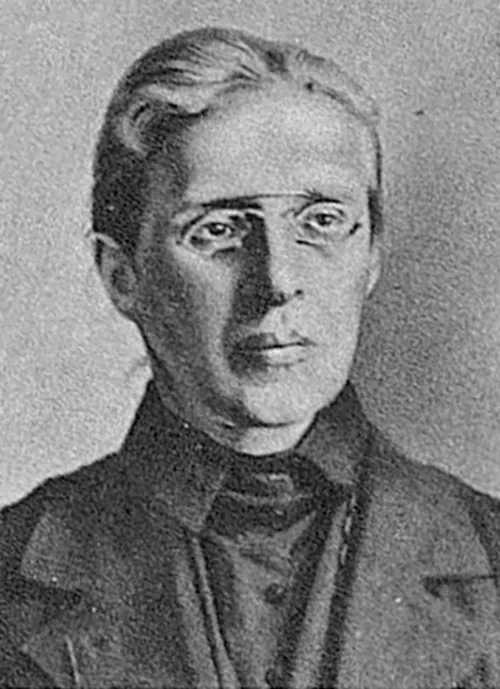
According to one of the closest colleagues of Lenin, Elena Stasova , he turned into a "fierce supporter of terror." Already in October 1905, he openly called his followers
To kill spies, policemen, gendarmes, Cossacks and Black Socialists, blowing up police sections, pouring a soldier with boiling water, and police officers with sulfuric acid.
Not satisfied with the scale of the terrorist activity of his party, he complained in a letter to the St. Petersburg Committee: “I, with horror, by golly,, with horror, see that [revolutionaries] have been talking about bombs for more than six months and have not done a single one!”
Lenin even defended his comrades, social democrats, quite anarchist methods: “When I see the Social Democrats, proudly and smugly declared: “ We are not anarchists, not thieves, not robbers, we reject a partisan war, ”then I ask ourselves: do these people understand?”
In August 1906, the official position of the Bolshevik faction of the RSDLP was announced publicly when its printed authority “Proletarian” called on the battle groups “to stop its inactivity and take a number of partisan actions ...”.
The terrorists got rid of the suspected “enemies of the people” quickly and often with animal cruelty.
Among several categories of people who became targets for the Bolsheviks, most often there were people who were suspected of the fact that they were police informants, provocateurs and traitors. But no one sought to organize a fair court, and any revolutionary, suspected by his comrades, could become a victim of retaliation leading to death. Even the most respected party members were not insured against such an approach on the principle of "guilty, until innocence."
As a matter of fact, the recognition of terror as an acceptable method of political action immediately caused the forerunner of future intra -party repressions, which are completely unfairly associated in public opinion only with Joseph Dzhugashvili ( Stalin ).
The founder of the intra -party of reprisals in the Bolshevik party was Lenin.
One Bolshevik recalled how several of his comrades, suspecting him of treason, surrounded him and instructed him in the face of pistols, and he, by naive, suspecting anything, took it as a friendly joke.
Placed by Lenin as a permissible means of political work, terror very quickly became a self-sufficient process and came out of the real control of his political fathers.
Some Bolsheviks already recognized the destructive effect of violence for the sake of violence:
“In 1907, in the fall ... Combat youth lost their leadership and began to deviate into anarchism ... arranged several expropriations, then the murder of guards, city and gendarmes ... They were infected and believed that it was just necessary to act.”
Two such terrorist-Bolsheviks “from nothing to do” pursued the Cossacks, waiting for a convenient moment to simply throw them with bombs.
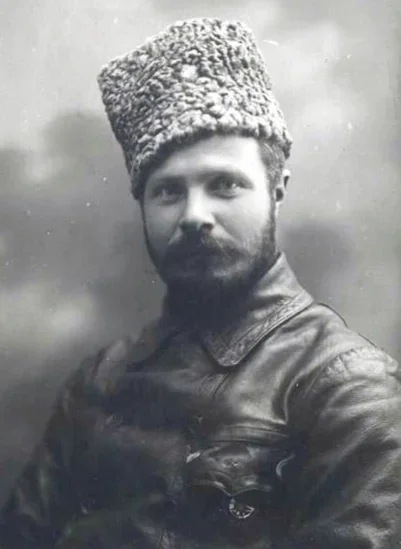
At the same time, the Bolsheviks made many attacks on government officials not only without the official resolution of the central party organizations, but also without the consent of the heads of local cells. The decision to commit a murder often spontaneously arose at some party member, who carried him out immediately.
Such was, for example, the murder of the officer of Nikita Perelov near the village of Dmitrievka on February 21, 1907. He was committed by two Bolsheviks - Pavel Gusev ( North ) and Mikhail Frunze ( Arseny ):
“The attempt on Perelov was not an organized conspiracy, a decision of the party organization. It was the result of the impulsive impulsive of Mikhail Vasilievich [Frunze] ... During the meeting of the propagandists ... Someone looked out the window and noticed Perelov, who had just approached ... Frunze jumped up ... He called Gusev with him and, despite the protests of those present, ran out. A few minutes later, shots rang out ... Frunze seemed a convenient opportunity, circumstances favored the attack, and the decision was made instantly. ”
The Bolshevik performances, which at first could be part of the revolutionary struggle of the proletariat, in practice quickly turned into individual acts of violence. Illegal delivery of weapons to Russia and the production of explosives - actions taken, according to the assumptions of the party, solely in order to prepare mass uprisings - in fact contributed to individual terrorist attacks.
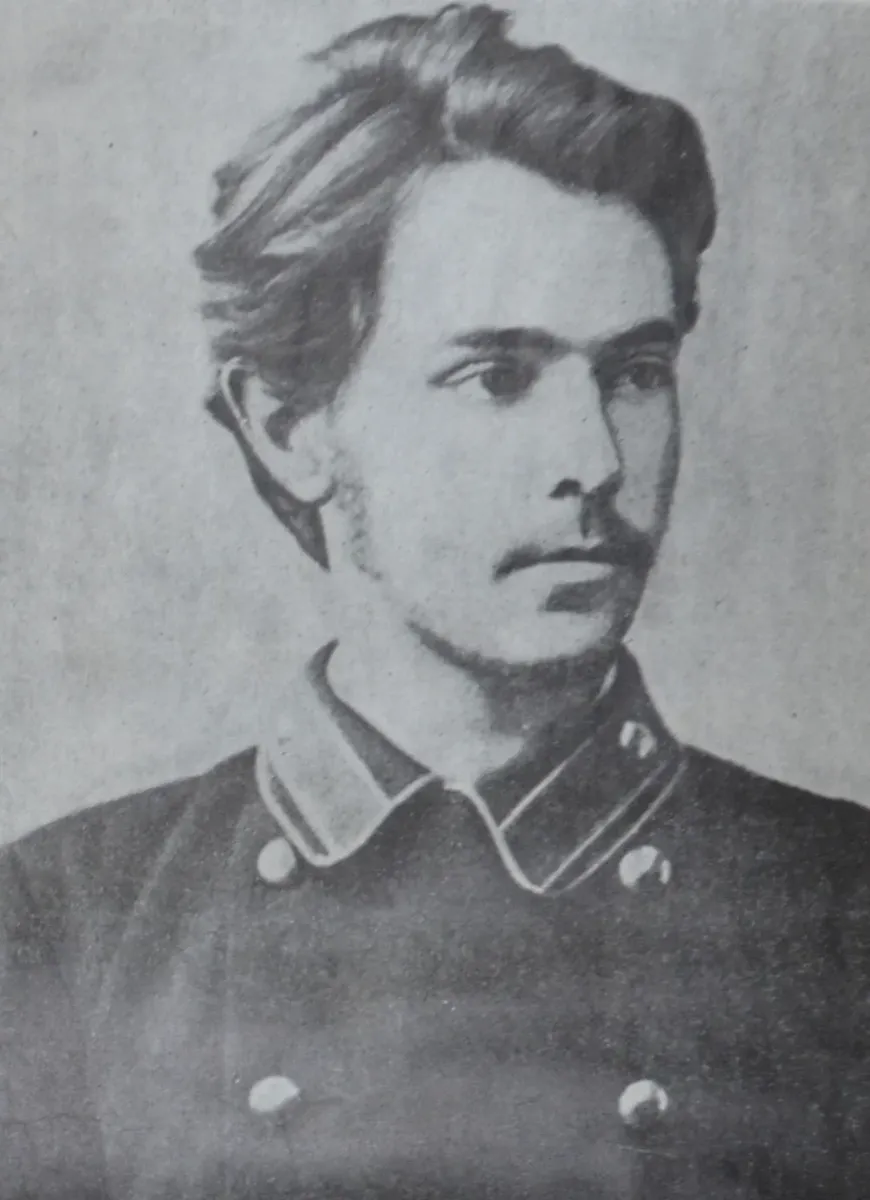
In St. Petersburg, Leonid Krasin ( Nikitich ), a member of the Central Committee and the head of his combat technical group, the main organizer of all the main hostilities of the Bolsheviks at that time, one of the closest associates of Lenin, personally participated in the manufacture of bombs for terrorist acts.
Abroad, Maxim Litvinov ( points ), one of the most active figures of the Leninist faction, was engaged in the smuggling of weapons in the Caucasus, where, as he knew, it was used almost exclusively for the purpose of terrorist activities.
Thus, terrorist acts became the norm not only for ordinary, but also for the most prominent leaders of the party who gave orders for murders when they were considered appropriate. Bolshevik leaders saw in the murder a means of resolving problems and in their own circle.
The leadership of the Bolsheviks, led by Lenin, initially acted as a gang.
Completely deprived of ideas about humanism, the Bolsheviks attracted minors to the terrorist activity: extremists used children to perform various combat missions.
Children helped the militants make and hide explosive devices and even took part directly in the terrorist attacks themselves. Many fighting squads, especially the Bolsheviks and Socialist -Revolutionaries, trained and recruited minors, combining future young terrorists into special youth cells.
The terrorists conveyed experience to their fourteen -year -old brothers and other children, gave them dangerous illegal tasks. The youngest assistant to the terrorists was a four -year -old girl Lisa , daughter F.I. Drakkina , known as "Comrade Natasha." This crazy Bolshevichka took her child to cover when she transported explosive mercury ( see footnote 2) .
Blood 2
The daughter of F. I. Dragkina Elizabeth became a member of the CPSU (b) at the age of 16 and took a direct part in the hostilities of the civil war.
For the Bolsheviks, terrorism turned out to be an effective and often used tool at different levels of the revolutionary hierarchy. The terrorist activity of the Bolsheviks (as, indeed, both the Socialist -Revolutionaries and other supporters of terrorism) had practically nothing to do with ideological principles. The Bolshevik terror became just another “useful tool” in the combat arsenal: in the revolutionary struggle, all means seemed good. The Bolsheviks had enough reason to say that they "would not stop at anything."
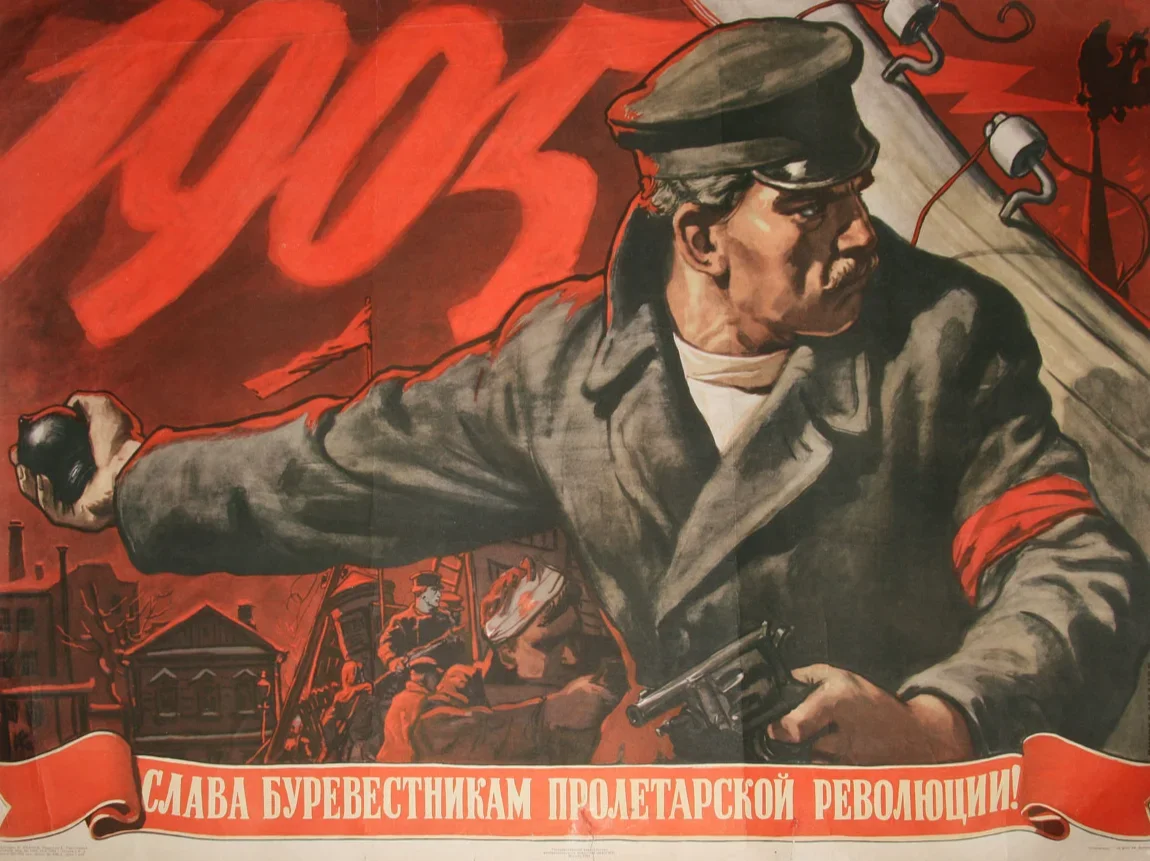
"Not from X, but from ex -exes!"
Lenin was the only leader of the Social Democratic faction, who publicly declared robbery a permissible means of revolutionary struggle. And although representatives of all social democratic forces in the Russian Empire were engaged in expropriations without the formal approval of their leadership, the Bolsheviks were the only social-democratic organization that resorted to this mining systematically and organized.
Already in October 1905, Lenin announced the need to confiscate state funds and soon began to resort to exes (this was a common expression) in practice.
Together with his two closest associates, Leonid Krasin and Alexander Bogdanov ( Malinovsky ), he secretly organized a small group, which became known as the “Bolshevik Center”, especially for making money for the Leninist faction, secretly organized inside the Central Committee of the RSDLP.
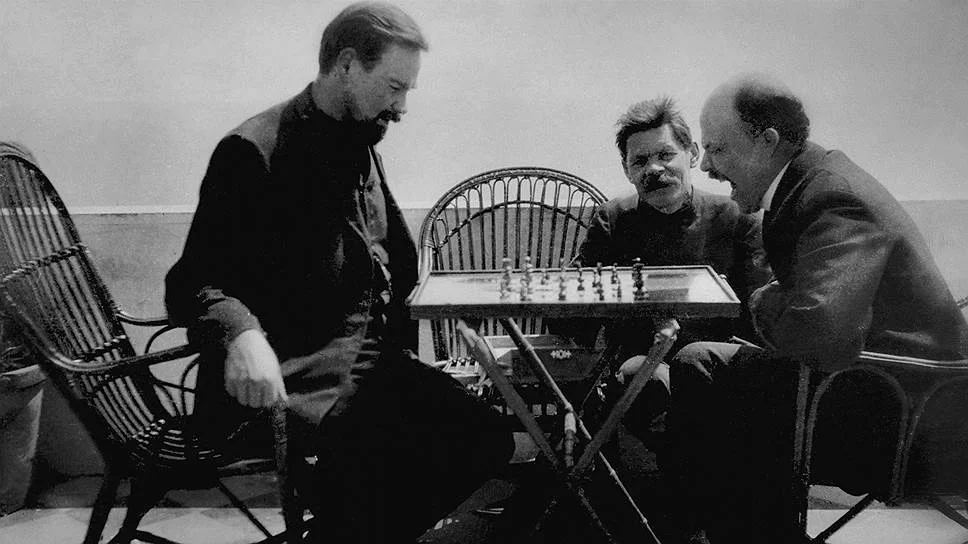
The existence of this group "was hidden not only from the eyes of the tsarist police, but also from other party members." In practice, this meant that the “Bolshevik center” was an underground body inside the party, organizing and controlling expropriation and various forms of extortion. It is interesting that the name “Bolshevik Center” itself was known only to the elected members of the faction, in the press it was called “the expanded editorial board of the newspaper“ Proletariat ”.
From 1906 to 1910, the council of three, or a small Trinity (it is difficult not to recall in this place about future “special triples”, making decisions on executions during the period of repression. - L. Sh. ) , As the leaders of the “Bolshevik Center” organized many expropriations. The executors of these acts were recruited among the uncultured, but eager for revolutionary youth, ready for almost everything.
Throughout the empire, they robbed post offices, ticket offices at railway stations, sometimes robbed trains, arranging their crashes.
The Caucasus, due to its special instability, was the most suitable region for such activities. The Bolshevik Center received a constant influx of necessary funds from the Caucasus thanks to one of the most faithful to Lenin throughout life- Semen Ter-Petrosyan ( Petrosyans ), a person with an unstable psyche known as Kamo -the Caucasian robber (as Lenin himself called him).
Since 1905, Kamo, with the support of Krasin (which carried out general control and supplied bombs collected in his St. Petersburg laboratory) organized a series of expropriation in Baku, Kutaisi and Tiflis (Tbilisi). His first predatory attack occurred in a classic gangster route - on the Codzhor Road near Tiflis in February 1906, then from seven to eight thousand rubles fell into the hands of expropriators.
In early March of the same year, the Kamo group attacked a banking carriage right on one of the crowded streets of Kutaisi, killed a coachman, wounded a cashier and disappeared from 15,000 rubles, which they sent the Bolsheviks to the capital in wine bottles.
The most famous of Kamo brought the expropriation on June 12, 1907, the so -called “Tiflis ex”: in the central square of the Georgian capital, the Bolsheviks threw bombs into two postal carriages that transported the money of the Tiflis city bank; Having killed and injured dozens of passers -by. Kamo and his detachment disappeared from the scene of the crime, shooting out of revolvers and taking with him 250,000 rubles, intended for the "Bolshevik center" abroad.
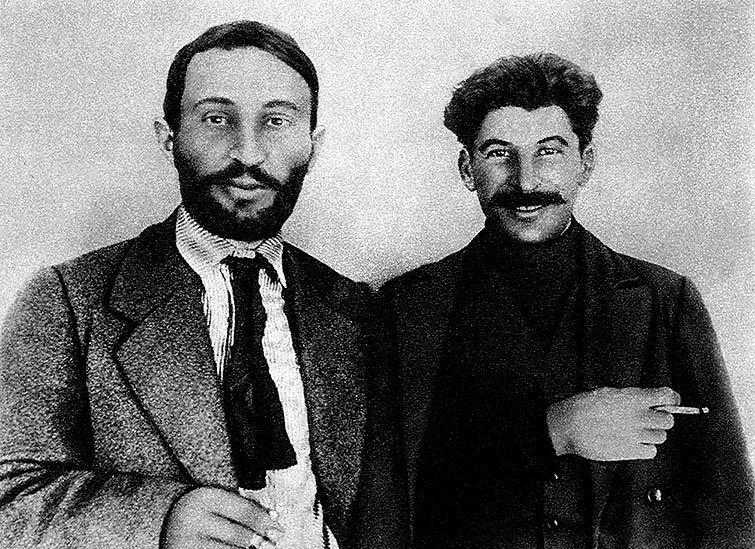
Kamo was the heart of the Caucasian combat, or, as it was also called, “technical”, a group of Bolsheviks, organized specifically for expropriations. Nevertheless, according to Tatyana Wulikh’s information, a revolutionary, closely related to Georgian terrorists,
The main leader of the combat organization was Joseph Stalin. He himself did not take part in her acts, but nothing happened without his knowledge.
Kamo gained personnel mainly among local bandits, who "had no principles and were a thunderstorm of roads." The militants, including Kamo himself, possessed only elementary ideas about socialist teaching and were little interested in intra -party disagreements in the RSDLP. Once, Kamo was present with a busy dispute on the agrarian issue between the Menshevik and the Bolshevik and clearly did not understand the reason for their disagreement with each other: “What are you cursing with him? Let me cut him, ”he said calmly to his comrade-Bolshevik.
It is known that the endless disagreements between the Bolsheviks and the Mensheviks in emigration often did not affect theoretical issues; According to Boris Nikolaevsky , historian and participant in revolutionary events,
"Behind the raging disputes about the philosophy of Marxist materialism and empiric criticism, materialism of a different properties was: money."
Ленин и другие большевистские лидеры использовали экспроприированные фонды в первую очередь для поражения своих внутрипартийных противников в эмигрантских склоках или, по словам Николаевского, «для приобретения власти над партией».
Действительно, главной целью Ленина было усиление позиции его сторонников внутри РСДРП с помощью денег и, согласно Богданову, приведение определенных людей и даже целых организаций к финансовой зависимости от «Большевистского центра».
Лидеры фракции меньшевиков понимали, что Ленин оперирует огромными экспроприированными суммами, субсидируя контролируемые большевиками Петербургский и Московский комитеты, выдавая наличными первому по тысяче рублей в месяц и второму по пятьсот.
Это были полностью криминальные деньги.
В это же самое время относительно малая часть доходов от большевистских грабежей попадала в общепартийную кассу, и меньшевики были часто возмущены даже не тем, что экспроприации имели место, а тем, что им не удавалось заставить «Большевистский центр» предоставлять деньги в распоряжение Центрального комитета РСДРП, в котором меньшевики преобладали и чей бюджет в худшие времена не превышал ста рублей в месяц.
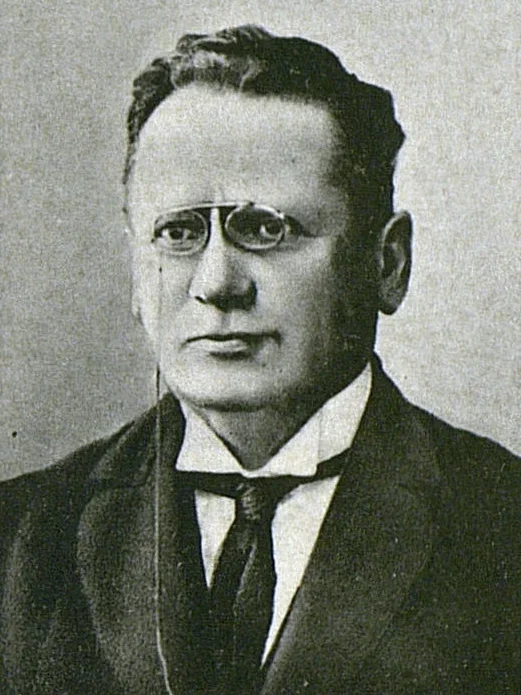
Улучшению отношений двух фракций не способствовали и такие случаи, как, например, история с видным большевиком Максимом Литвиновым , который послал двух грузинских террористов в штаб-квартиру РСДРП с требованием вернуть сорок тысяч рублей, полученных в результате экспроприации и уже потраченных Центральным комитетом, открыто угрожая тем, что в противном случае грузины «укокошат» одного из членов ЦК.
В 1906–1907 годах большевики использовали экспроприированные средства для создания контролировавшихся ими школы боевых инструкторов в Киеве и школы бомбистов во Львове. В 1910 году они создали на эти деньги социал-демократическую школу в Болонье (Италия), которая быстро превратилась в оплот террористической большевистской группы «Вперед».
Сторонники Ленина также использовали доходы от экспроприации для усиления своих рядов в преддверии партийных съездов. Их крепкая позиция накануне открытия V съезда РСДРП в Лондоне, например, была, по словам Бориса Суварина ,
«в большой степени следствием огромных ресурсов, полученных от эксов, которые позволяли им содержать легионы боевиков, посылать куда угодно представителей, издавать газеты, распространять памфлеты и организовывать более или менее представительные комитеты»
и все это с целью получения дополнительных мандатов делегатов на съезд.
Действия большевистских боевиков не остались незамеченными для руководства РСДРП. Юлий Мартов ( Цедербаум ) предложил исключить большевиков из партии за совершаемые ими незаконные экспроприации. Георгий Плеханов призывал бороться с «большевистским бакунинизмом», многие члены партии считали «Ленина и Ко» «обычными жуликами», а Федор Дан называл большевистских членов ЦК РСДРП «компанией уголовников».
Призывы Мартова на V съезде РСДРП к возрождению чистоты революционного сознания на Ленина не произвели никакого впечатления, большевистский лидер слушал их с неприкрытой иронией, а во время чтения финансового отчета, когда докладчик упомянул о поступившем партии крупном пожертвовании от «анонимного благодетеля», некоего Икса, Ленин саркастически заметил: «Не от икса, а от экса!»
Ленин и его соратники в «Большевистском центре» получали также деньги из таких сомнительных источников, как фиктивные браки и принудительные контрибуции.
При этом Ленин был чрезвычайно свободен в распоряжении финансами. Он считал именно себя хозяином этих денег, имеющим полное право их бесконтрольного использования.
Привычка Ленина не соблюдать денежных обязательств фракции возмущала даже его сторонников.
В конце 1916 года, когда волна революционного экстремизма почти угасла, Ленин утверждал в письме от 25 октября 1916 года, что большевики отнюдь не против политических убийств: в ответ на запрос большевиков из Петрограда об официальной позиции партии в вопросе о терроре Ленин высказался так: «В данный исторический момент террористические действия допускаются». Единственным условием Ленина было то, что в глазах общественности инициатива терактов должна исходить не от партии, а от отдельных ее членов или малых большевистских групп в России. Ленин прибавил также в том письме, что он надеется убедить весь Центральный комитет РСДРП в целесообразности своей позиции.
Совершенно не удивительно, что большое число террористов после прихода большевиков к власти в России участвовали в ленинской политике «Красного террора».