
Translated material
Summary of anti-war repressions. April 2023
Fourteen months ago, Russia launched a full-scale war against Ukraine. At the same time, a new round of repression against people inside Russia began. Almost 20 thousand were detained for their anti-war position, more than 500 persons involved in criminal cases, including minors and pensioners.
OVD-Info continues to collect and analyze data on political and anti-war repressions in Russia. You can support the project using this link .
Restrictions on the right to freedom of assembly
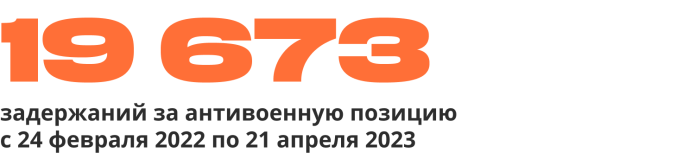
Violence during arrests is not uncommon. For example, during the detention of conscript Timur Dzhuraev, who refused to sign the summons, the security forces beat him. We also know about 565 cases of detention of minors.
From February 2022 to January 2023, police used violence against protesters at rallies 413 times.
Repression at the legislative level

Two of the five new repressive bills were passed this month. And one - in just two days.
This speedy adoption of laws is facilitated by the practice of introducing amendments immediately to the second reading. For example, legislators introduced amendments to life sentences for treason, increasing sentences for terrorism and a new article 284.3 of the Criminal Code to the State Duma back in November last year. Initially, only a slight expansion of Article 281 of the Criminal Code (“Diversion”) was intended. By the same logic, they adopted the law on electronic summonses and many other restrictions for conscripts and mobilized people - they were immediately introduced into the second reading into the law, which had been in the State Duma since 2018, and were carried through the entire legislative procedure in 4 days.
Other bills concern a significant simplification of the legislation on holding a referendum , allowing, if adopted, to poll the population at any time about extending the term of office of the president with much fewer procedural requirements, and a proposal to terminate criminal cases of minor or medium gravity if a person decides to volunteer for war.
In addition, a law has been introduced to expand the powers of the temporary detention center for minors to identify persons involved in committing crimes and socially dangerous acts (such acts can be understood as rallies, anti-war leaflets, and other actions objectionable to the authorities). They will also now be able to place minors who “have committed two or more offenses within one year that entail administrative liability with an encroachment on public order and public safety.”
 Airtable | Everyone's app platform Airtable is a low-code platform for building collaborative apps. Customize your workflow, collaborate, and achieve ambitious outcomes. Get started for free.
  Airtable
In addition to the new bills, legislators adopted two more, introduced earlier, on expanding administrative liability for “unauthorized entry” into the territory of military registration and enlistment offices and other administrative buildings (for example, for lawyers or relatives of mobilized people). They also changed the law on citizenship, which now provides for the deprivation of acquired citizenship for committing a number of crimes. This list includes crimes provided for in Articles 280.3, 207.3, 212.1 and many other articles of the Criminal Code used for repression.
In total, since the beginning of the war, legislators have introduced at least 38 repressive laws, 33 of which have already been passed in at least one reading.
Criminal cases

This month it became known that Nikolai Gutsenovich was charged with 18 reactions under anti-war posts on Odnoklassniki. Also this month, at least 32 defendants in the anti-war case were sentenced, more than half (19) of them received real sentences. The shortest actual sentence is 2 years in prison, the longest is 25 years.
Those involved in criminal cases are subject to violence, torture and other pressure from security forces. For example, this month it turned out that in September security forces tortured Oleg Vazhdaev, a defendant in the case of arson of the military registration and enlistment office, with electric shock. Kirill Butylin, sentenced to 13 years for attempting to set fire to a military registration and enlistment office, spoke about threats for refusing to say “Putin is handsome.” Artem Begoyan, accused of setting fire to a relay cabinet in Chuvashia, was forced to refuse the services of a lawyer, threatening to take him to the forest. They refuse to investigate torture and violence.
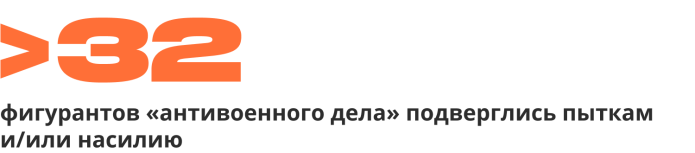
Among those persecuted, who are kept in custody and given real sentences, there are people with health problems. Thus, 62-year-old Evgeny Bestuzhev, who has serious health problems, was left in a pre-trial detention center - the man had already had several heart attacks in the detention center. Vladimir Kara-Murza was sentenced to 25 years in prison - while still in the pre-trial detention center, he began to lose sensitivity in his limbs and was diagnosed with polyneuropathy , which is on the list of diseases that prevent him from serving his sentence. Oleg Belousov was sentenced to 5 and a half years in prison - the prosecution requested 9 and a half years, but the court “took into account” that Oleg has a third group disability, and a disabled son, with whom the investigation forbade him to communicate.
In total, at least 25 people involved in the “anti-war case” have health problems. At least 12 of them are now imprisoned. Among them is Sasha Skochilenko, whose life is now under threat according to the cardiologist who examined her in the pre-trial detention center.
Recently, the number of cases under articles related to national security (high treason, espionage, confidential cooperation with a foreign state) has seriously increased. The human rights project “First Department” provides statistics - in 3.5 months of 2023, at least 21 new cases became known; for the whole of 2022, 25 were initiated.
Over the past month, Ilya Baburin was accused of treason for the failed arson of a military registration and enlistment office. In addition, at least 4 new cases of treason have appeared - in Sakhalin , Rostov-on-Don , Tver , Khabarovsk (this is at least the third of the known cases of treason initiated for money transfers to Ukraine). At least 2 new cases of espionage have appeared - in Moscow and Nizhny Tagil . Almost all of these cases are related to the war in Ukraine.
Over the course of a month, OVD-Info lawyers helped 60 defendants in 50 anti-war criminal cases in 30 cities, and also assisted in six searches.
Administrative Affairs

A young teacher from the Krasnoyarsk Territory was fined for chatting with students on the topic of Crimea and Donbass. There are 17 people in the chat; the teacher himself does not know how the security forces learned about the correspondence. At the trial, the assistant prosecutor stated that the teacher’s actions were of a public nature, “since an indefinite number of people have access to the phones of the students participating in the chat.” A man was detained in Sochi for sending a text from an FBK investigation about Vladimir Putin into a WhatsApp chat - and a report was drawn up under the article of “discredit,” and a resident of the Altai Territory was fined 30 thousand rubles because of a voice on WhatsApp.
Number of cases under Article 20.3.3 in the regions of Russia and in the territory of the annexed Republic of Crimea
In addition, this month pro-government actors were also persecuted for discrediting the Russian Armed Forces. Thus, a report of discredit was drawn up against “military doctor” Yuriy Evich, who had previously participated in the torture of Ukrainians, for his open lecture to doctors - later the court did not consider the case and returned him to the police. A protocol was also drawn up against Krasnoyarsk Communist Party member Igor Grinev - he condemned the surrender of Kherson.
During the month, OVD-Info defenders participated in 110 administrative cases in courts and helped 6 detainees. A lawyer collaborating with us, for example, helped a picketer detained in Samara with a poster “Hug if you are against the war.”
"Foreign agents" and "undesirable organizations"
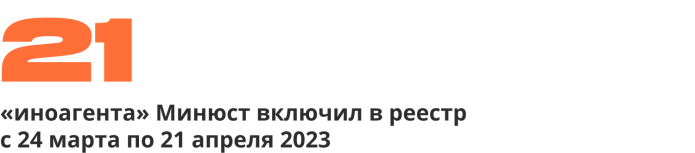
“Strange agent” is how the coordinator of the Ryazan “Voice” Sofia Ivanova called herself in the “foreign agent” label. Roskomnadzor considered this a lack of marking and drew up a protocol on violation of “foreign agency” legislation.
On March 28, a court in Yoshkar-Ola fined the human rights organization “Man and the Law” 150 thousand rubles because of the repost. Thus, “foreign agents” are actually prohibited from reposting in Telegram channels, since the messenger does not allow you to add appropriate markings when reposting, only if you write a separate message.
Let us remind you that the violation of the law following two fines under the “foreign agency” administration is grounds for initiating a criminal case. In total, over the past month, at least 6 cases of such fines have been brought to court.
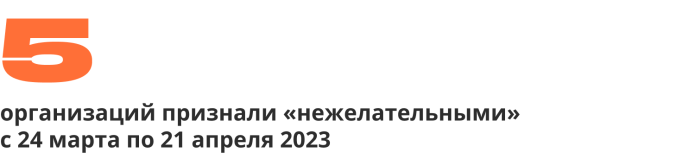
During this month, the Japanese organization “Union of Chishima and Habomai Islanders”, “Free University”, “Russia-EU Civil Society Forum”, the Bellona environmental foundation, and the human rights project “CrimeaSOS” received “undesirable” status.
Extrajudicial pressure
The father of 16-year-old Yegor Balazeikin was fired from his job due to a criminal case against his son. Egor is a defendant in the anti-war case, who is chronically ill, but despite this is in a pre-trial detention center as a suspect in the arson of two military registration and enlistment offices. This month, we have learned of 8 more people being harassed at work because of their anti-war stance - being fired, forced to resign, or not having their contracts renewed.
In annexed Crimea, Russian security forces force people who spoke out against the war to apologize on camera. At least 7 such videos have been published on the Internet over the past month.
People are persecuted for their anti-war position not only within the country, but also abroad. This is how Russian citizens who spoke out against the war are deported from Vietnam.
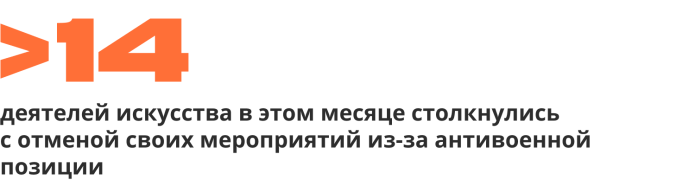
It is known that the group “Night Snipers” had their concerts canceled in six cities at once, and the group “Naiv” - in three . Other creative professionals are also experiencing difficulties. Thus, four students of the Yaroslavl State Theater Institute were forced to drop out due to their reluctance to speak at an event in support of the war.
In Ulan-Ude, actor Artur Shuvalov cut his wrists after a performance and accused the theater management of bullying. Before this, he refused to perform in front of the Russian military and tore down the flag with the letter Z, and before the performance he learned that his wife had been fired from the same theater. In March 2022, the artistic director of the same theater was fired for his anti-war position. After the situation with Shuvalov, the director quit the theater.
Blockings and censorship
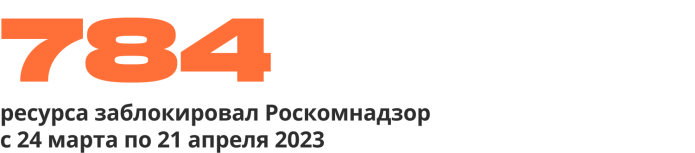
Roskomnadzor reported blocking almost three and a half thousand mirror links to media outlets recognized as “foreign agents.” Roskomnadzor employees claim that they can block “mirrors” within three hours from the moment they appear. The blocking also includes media whose access is limited under military censorship.
In turn, VKontakte and Odnoklassniki, at the request of the Prosecutor General’s Office of the Russian Federation, blocked videos of mobilized Siberians captured in Ukrainian captivity.
Pressure on independent media
Journalist Ela Znamenskaya was fined because of the stream “Your denunciation is very important for us.” She was found guilty under the article about discrediting the army because of the phrases “they will return with a feeling of complete impunity”, “they are sending the loot”, “because of some ambitions - hundreds of deaths - we are trying to denazify something there” and “I care that official Russian sources are fake.”
They are trying to recover funds from the editor of the independent newspaper “Bribe” Eduard Mochalov for a forensic examination of his statements, which became the basis for drawing up a protocol on discrediting the army (Part 1 of Article 20.3.3 of the Administrative Code).
In Buryatia, police detained journalist Ayuna Shagdurova - she is preparing a text about how the village of Khurtaga lives without a veterinarian, who was mobilized and died. They wrote a denunciation about her.
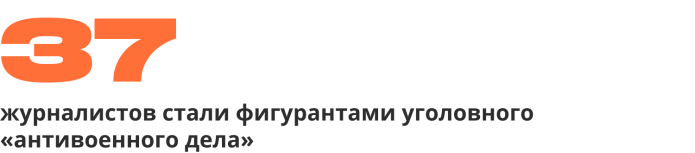
Criminal prosecution of journalists for publications and materials related to the war in Ukraine continues. Just this month, three cases of “fake news” were opened against RusNews journalist Roman Ivanov due to posts on his Telegram channel. A case of espionage was opened against The Wall Street Journal journalist Evan Gershkovich (Article 276 of the Criminal Code of the Russian Federation). Evan was preparing material about attitudes towards the war and the recruitment of residents of the Urals into the Wagner PMC. A criminal case was opened against DOXA journalist Maria Menshikova for calls for terrorism because of a post suggesting that she write letters in support of those detained for setting fire to military registration and enlistment offices.
Pressure on civil society
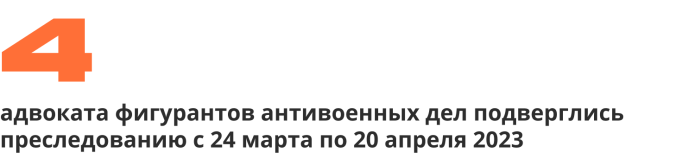
Several lawyers defending defendants in the anti-war case were subjected to various types of harassment. Thus, lawyer Maria Zyryanova, who defends Olga Smirnova, a defendant in the anti-war case, had her hand injured by a guard before the next trial in Olga’s case. Two disciplinary cases were opened against lawyer Yuri Novolodsky, who represents the interests of artist Sasha Skochilenko, after a denunciation by the vice-president of the St. Petersburg Bar Association - he faces deprivation of his lawyer status. In the Krasnodar Territory, a court fined lawyer Olesya Panyuzheva, who defends Alexander Nozdrinov, a defendant in the case of “fake news” about the Russian army. Lawyer Vadim Prokhorov, who defended politician Vladimir Kara-Murza, left Russia a few days before the verdict - he was threatened with criminal charges.
Links to other data and reports from OVD-Info:
- Summary of anti-war repressions. March 2023 , February 2023 , January 2023 , December 2022 , October 2022 , September 2022 , August 2022 , July 2022 , June 2022
- Summary of political repressions in Russia. 2022
- Report in Russian “ No to war. How Russian authorities are fighting anti-war protests ."
- The testimony of the Ukrainian “ No war. How the Russian government will fight against anti-war protests ."
- Guide " Anti-war cause ".
- Input for the report of the Special Rapporteur on the rights of freedom of peaceful assembly and association.
- " Report on Children's Civil Rights and Civil Liberties "
- Project on the law on “foreign agents” - “ Inoteka ”.
- Report “ How authorities use cameras and facial recognition against protesters .”
- Reports from OVD-Info and other organizations on the Russian Federation’s compliance with its international obligations in the field of human rights.
- Information on the human rights situation in Russia for the OSCE Moscow Mechanism.
Main photo: Elena Tarbaeva at a picket outside the Efremovsky court in the case of restricting the rights of Masha Moskaleva’s father, April 2023 / SOTA, Antonina Favorskaya