
Translated material
Constitutional coup of the 93rd
How 30 years ago parliamentarism was strangled in Russia
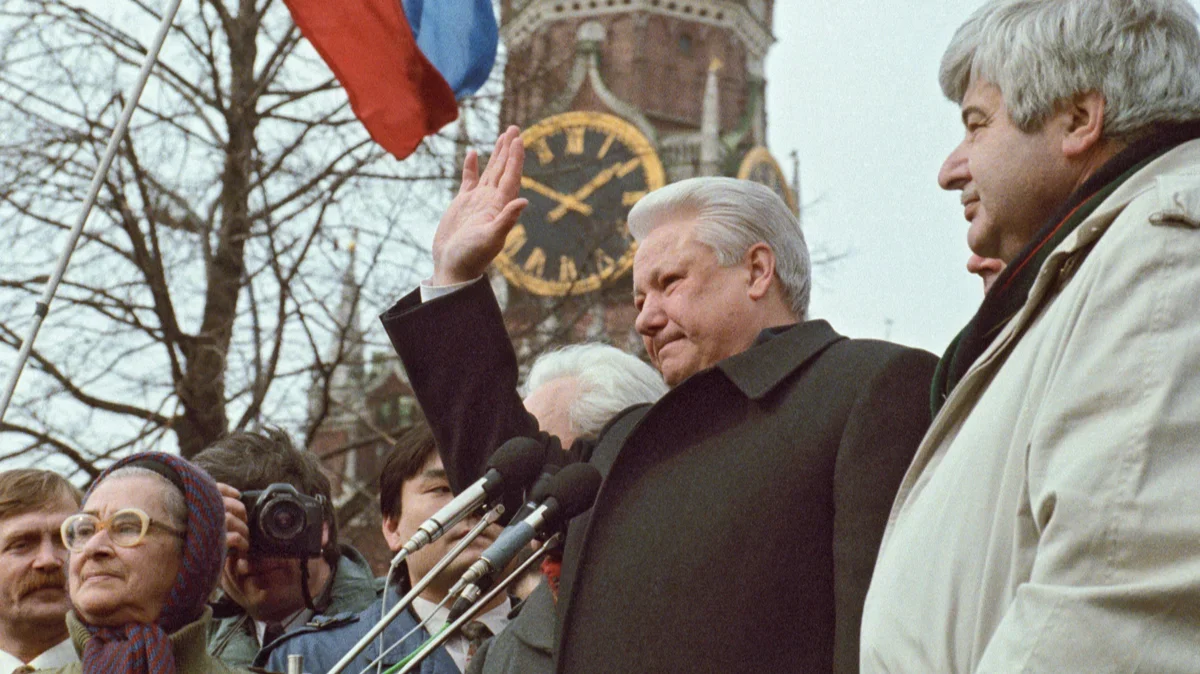
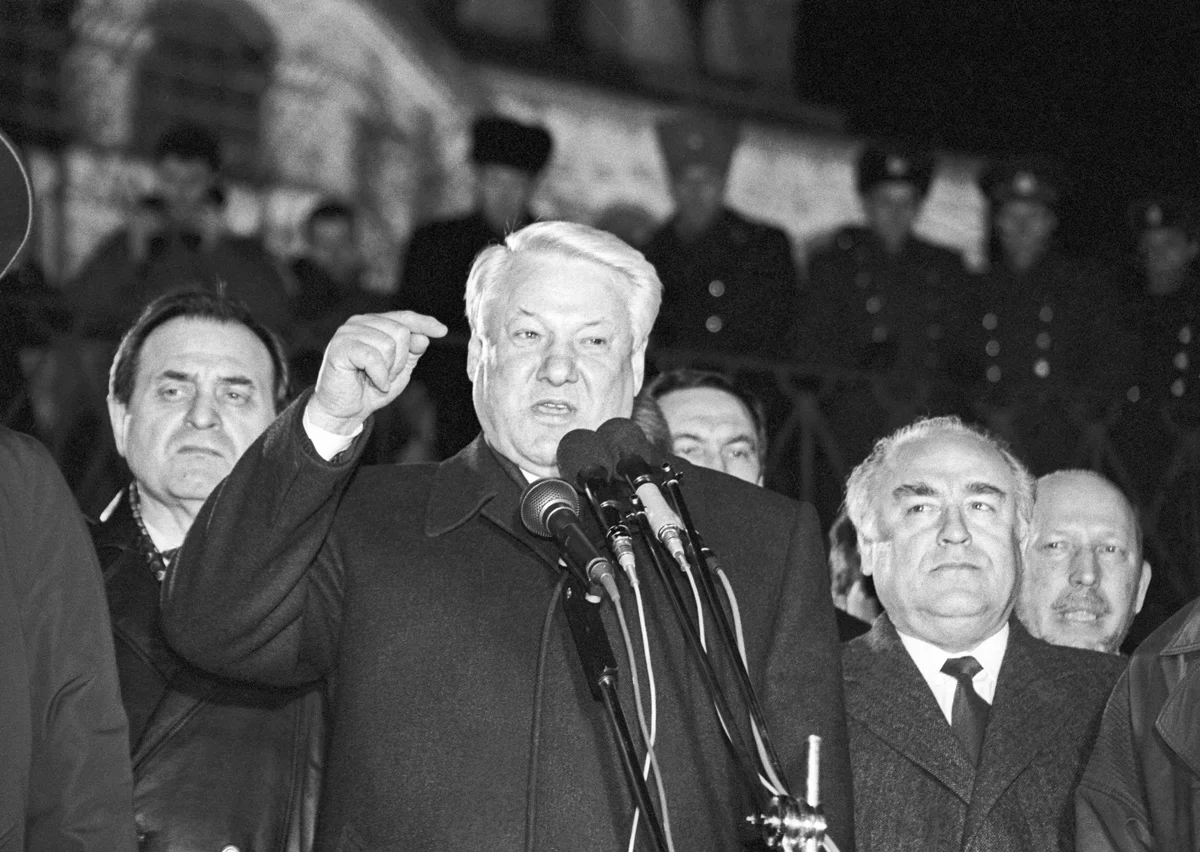
Boris Yeltsin. 1993. Photo: Kavashkin Boris / ITAR-TASS
30 years ago, on April 25, 1993, a referendum was held in Russia on trust in the president and parliament.
He could stop the “war of the branches of power” running in full swing - but did not stop. Instead, he paved the way to the events of the fall of 1993, when an armed attempt on the coup, and not only the parliament was made, but also the institution of parliamentarism itself very seriously “amazed in rights”.
It is useful to recall that what is traditionally called the “constitutional crisis of 1992–1993” was not at all the confrontation of the progressive President Boris Yeltsin and the reactionary majority at the congress of People's Deputies of the RSFSR, as to this day, many believe. Moreover, it was this congress in May 1990 that Yeltsin elected his chairman.
This was the confrontation between those who considered it necessary to carry out the economic reforms they planned at all costs - and those who believed that any price could not be, because no goal justifies the means.
Meanwhiles who called for limiting democratic mechanisms that do not allow reforms contrary to the will of the majority, and those who considered the rejection of democracy unacceptable, as unacceptable and a minority rate.
Meanwhiles who praised the authoritarian model, with the “untying of the hands” of the president and the government, and those who believed that such “untying hands” would only lead to arbitrariness and corruption.
Meanwhiles who believed that the president and the government “knowing as it should” should be withdrawn from public and parliamentary control, and those who believed that the government should be unurumitated and accountable to parliament.
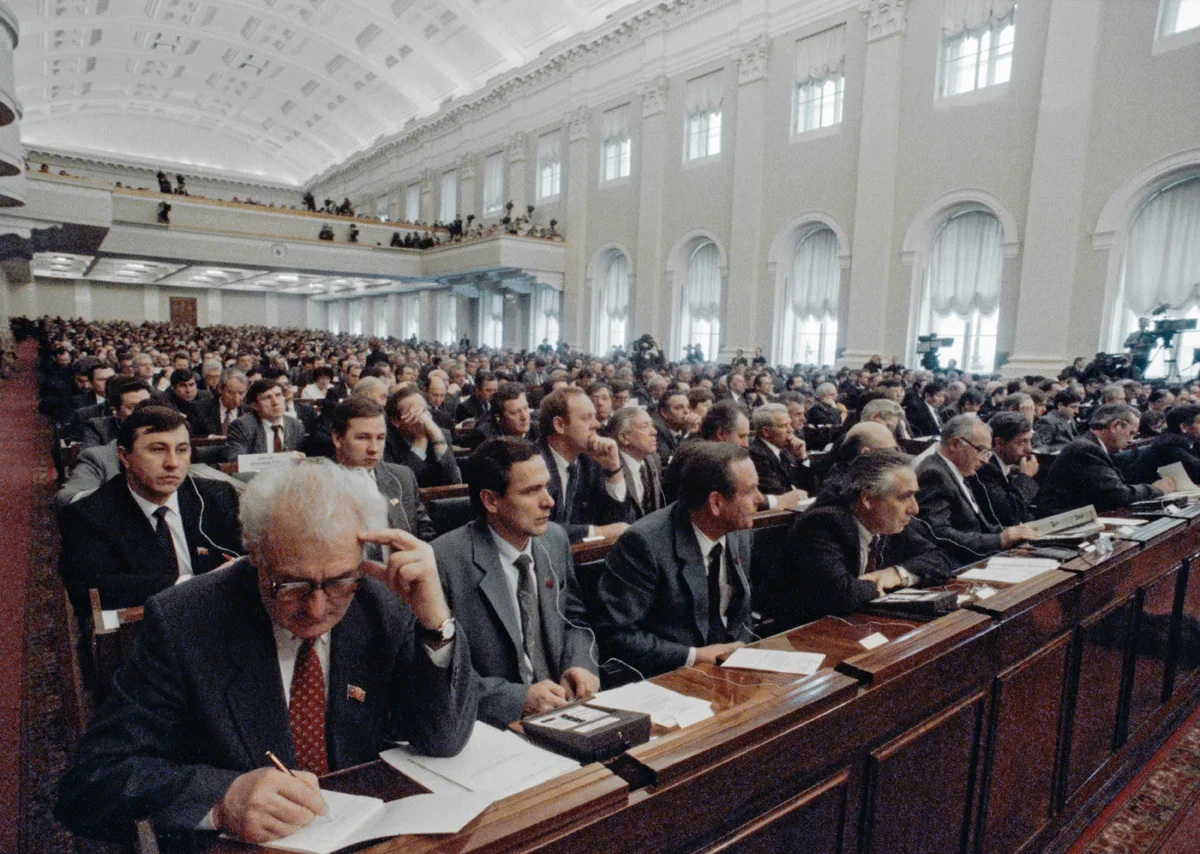
Special powers
The difference in these two approaches was very clearly manifested during the operation of the “special powers” of President Boris Yeltsin and the work of the government, headed by Yegor Gaidar.
In November 1991, the Congress of People's Deputies of the RSFSR adopted a resolution “On the Legal Support of Economic Reforms”, the essence of which was simple: in the most difficult, crisis conditions, give the president the opportunity to issue decrees that contradict Russian laws.
If during the week the Supreme Council did not reject the “illegal decree” - it entered into force.
Then it seemed to many that a successful compromise was found, allowing you to combine a high speed of economic transformations with the presence of a reliable parliamentary “brake”.
But the trouble consisted in the fact that the “brake” soon stopped working: the executive branch liked everything so much within the framework of the “Decree Law” that even if the parliament managed to cancel any illegal decree, it was immediately released by the president under a different number. And all this was combined with unprecedented hitherto (2600%) pace of inflation after the beginning of “radical economic reforms”, unemployment, falling standard of living, “burned down” savings, a breakdown of the system of social guarantees and the destruction of life plans of a huge number of citizens.
Such reforms, of course, caused a very negative reaction to many citizens-but the president and government categorically refused to change anything in these reforms, saying that the course is true and he could not and cannot be an alternative (we note: there were alternatives-but they refused to consider them).
In the democratic conditions of the president and the government that conducted such a course, or they would force him to change, or would be resigned. And he would have made this parliament - representing citizens, most of whom, as a result of the policy being carried out, began to live worse.
Actually, that is why the organizers and supporters of the reforms began and began the “war” with parliament as the main barrier in their path, not allowing acting “as it should”.
And with the help of sympathetic journalists and social activists, they began to portray parliament as the focus of reaction and obscurantism, preventing the president from conducting reforms.
The parliamentary majority, in turn, violently criticized the government as a whole, its economic course, individual ministers - but it did not go further: it did not make decisions on the resignation of the government, and did not even try.
Eternal acting
The first “thunder” thundered in December 1992, when at the VII Congress of People's Deputies of Russia, most parliamentarians refused to extend the “special powers” of President Boris Yeltsin and approve the candidacy of Yegor Gaidar as a full -fledged prime minister (before he was in the status of acting). And amendments were adopted to the Constitution that limit the powers of the president.
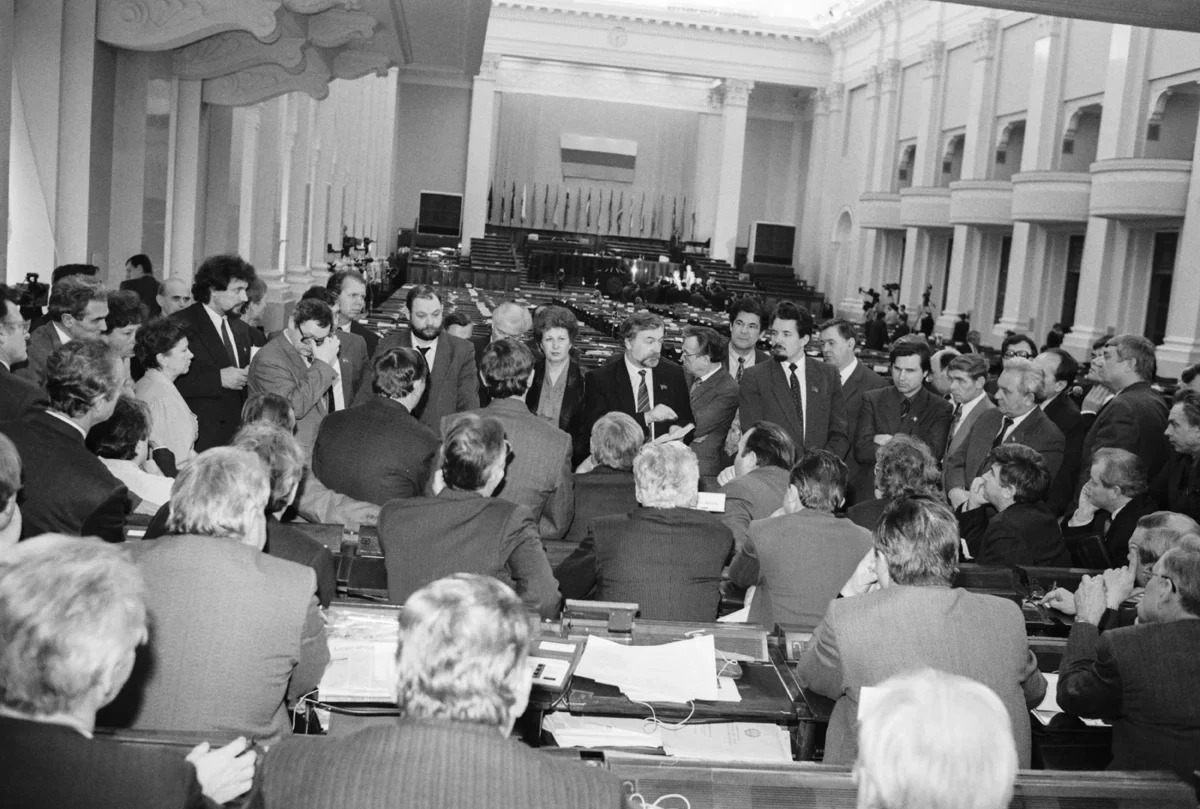
In particular, the constitution introduced the norms on the right of the congress to cancel or suspend the presidential decrees, and that the powers of the President cannot be used "for the dissolution of the activities of any legitimately elected state authorities, otherwise they stop immediately." It was on this article that the Constitution in September 1993 relied the Constitutional Court, making a decision on the termination of the powers of Yeltsin, which issued on September 21, 1993, Decree 1400 on the dissolution of the congress and the Supreme Council.
Yeltsin in response fell upon the deputies, threatening a referendum about the distrust of the congress, and led his supporters from the meeting room to disrupt the quorum (but unsuccessfully).
Nevertheless, the crisis - the efforts of the chairman of the Constitutional Court Valery Zorkin - then managed to resolve.
It was then that Zorkin, speaking from the rostrum of the congress, threatened to bring to constitutional responsibility “persons who lead the legislative and executive branches of the authorities”, and said: “You cannot agree on how to work together, and agree on how to leave together.”
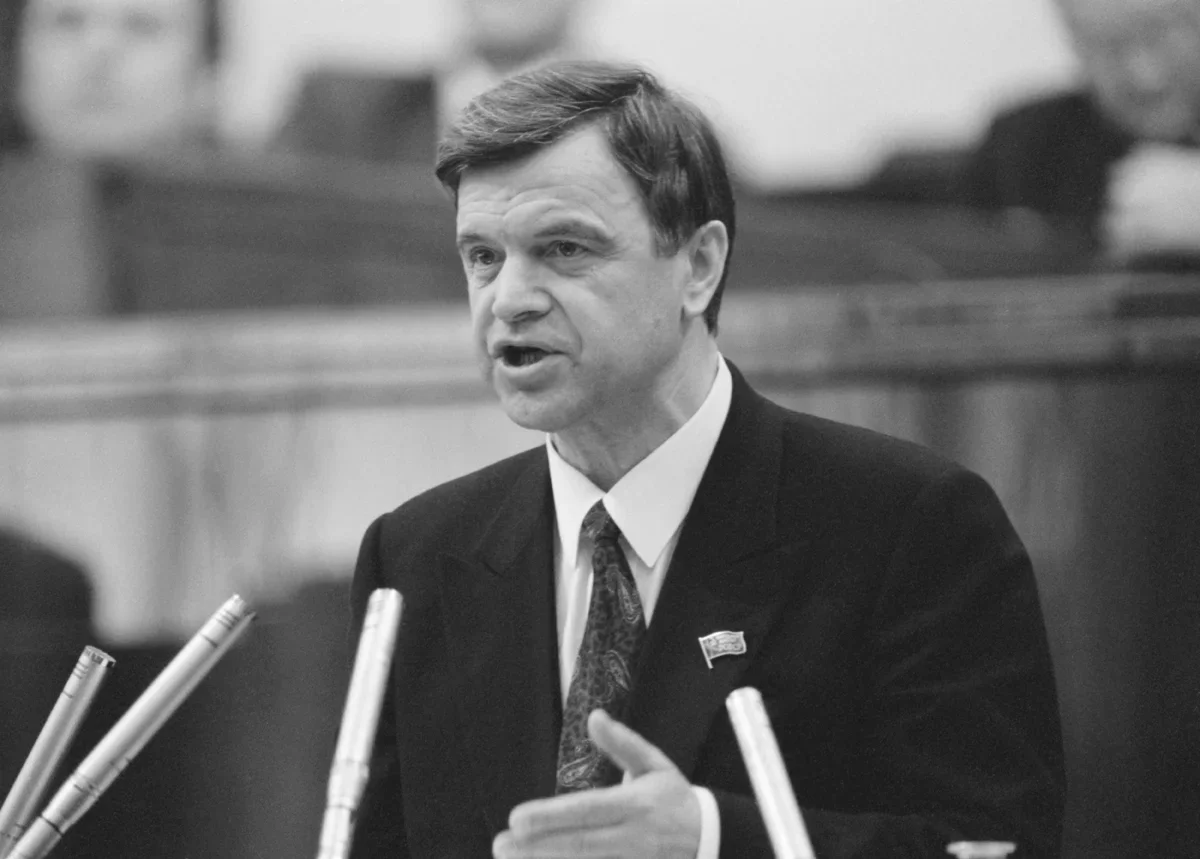
As a result of negotiations of Yeltsin and the chairman of the Supreme Council of Russia Ruslan Khasbulatov, the parties compromised.
The Decree “On Stabilization of the Constitutional Law in the Russian Federation” was adopted, according to which amendments to the Constitution were partially “frozen”, a referendum on the main provisions of the new constitution was planned on April 11, 1993, and a special multi -stage vote was proposed to appoint the prime minister (the congress “rating” voting determined three candidates, one of which the president was obliged to submit to the congress to approve Prime Minister). As a result, Viktor Chernomyrdin became the prime minister for this procedure.
VIII Congress
The fragile “world”, however, did not last long.
I have a very curious collection at home - materials of the VIII and IX congresses of people's deputies of Russia, held in March 1993. No matter how treated by deputies and the president, this is a real discussion and real policy, with a tough clash of various positions, with arguments and facts, without any look at the post. Unlike what we have seen in the last twenty years, when the act of unprecedented political courage is criticism of the government, and no one can even think about criticizing the president ...
On March 10, 1993, at the opening of the VIII Congress of People's Deputies, Ruslan Khasbulatov states that “possible potential for agreements ( reached at the previous congress. - B.V. ) could not be realized” that “there are no serious shifts in the economy” and that “citizens, republics, regions, regions, other subjects of the Federation, political forces, scientists express serious fears about our decisions about our decisions about our decisions about referendum on April 11 and its possible consequences. "
And then the deputy chairman of the Supreme Council, Nikolai Ryabov, calls the decree adopted at the VII Congress to stabilize the constitutional system with an error - "unilateral assignment from representative power in favor of the executive."
Ryabov speaks of the inadmissibility of “direct appeal to the people of those political forces that would like to destroy the existing constitutional system of Russia”, and about the inadmissibility of “attempts to use a referendum for artificial extension or strengthening the powers of certain structures of power, and even more so the figures leading them.” What is called for a referendum under the slogan “Changes in the omnipotence of the Soviets”, but it is precisely under the slogan “All power to the Soviets!” Democratic transformations in Russia in 1989–90 were held, and the inclusion in the Constitution of paragraph 2 of Art. 104 Articles on the supremacy of the congress, which is “authorized to accept to its consideration and resolve any issue under the jurisdiction of the Russian Federation” was considered while the victory of democratic forces. And what
“The possibility that the innocence of the status of the president and especially the government can be changed at the congress is pushing the president’s supporters to the requirements of the immediate change in this article.
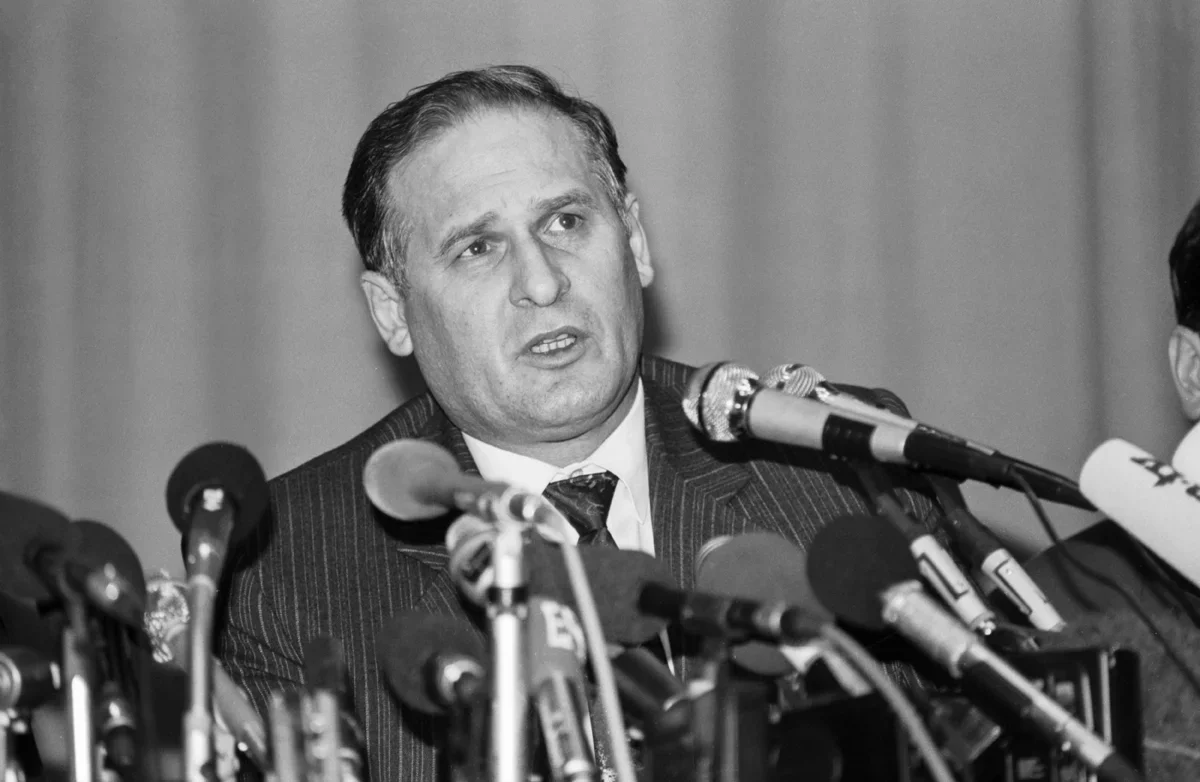
It is appropriate for a small but important retreat. On September 23, 1993 - two days after Decree 1400 - Nikolai Ryabov leaves the post of deputy chairman of the Supreme Council, passes to the side of his recent opponent, President Boris Yeltsin, and is immediately appointed by the chairman of the CEC - in which Duma elections of 1993 and 1995 and the 1996 presidential election. What is called, nothing personal - only a career ...
On March 11, the president performs at the congress. He claims that "he came to this congress with the hope that you have enough wisdom, courage and will for the sake of Russia, for the sake of our voters to gain consent and begin joint constructive work." But "yesterday brought a lot of disappointments: mutual alienation, misunderstanding is intensifying, there are fewer opportunities for consent."
Yeltsin states that “the struggle against the president is, first of all, the struggle against the power and independence of the government” and that “only a popular election, expressed by voters, allows the president, and no one else, to carry out tough but necessary measures,” without which “no reform can cost now”.
The deputies reproaches that "when the legislative power is trying to eliminate the presidential power, it destroys the constitutional system, encroaching on the will of the people, to the will of voters." He says that "if the conflict is not resolved by the existing institutions of the legislative and executive branch, not one of them will prevail, and the third force will destroy Russia." And that "if the congress will continue to stand in the positions of confrontation, then we must go to the referendum, it will remain the only means of resolving the conflict."
Nevertheless, on the same day - March 12, 1993 - the Congress adopts a decree “On measures to implement constitutional reform in the Russian Federation”, which cancels the Decree “On Stabilization of the Constitutional Original of the Russian Federation”, requires the constitutional reform “in the manner established by the Constitution of the Russian Federation”, and consider all agreements and regulatory acts of state bodies aimed at redistributing the powers between the Center and the authority of the authority and the authority of the authority and the authority regions.
The congress also prescribes to the president, the Supreme Council and the Constitutional Commission of the Congress to agree on each other and, within three months of time, send to the regions to agree on the draft main provisions of the new Constitution.
"Special management procedure"
Another week takes place - and the crisis goes to a new stage: on March 20, 1993, Boris Yeltsin performs with a television appeal to the people.
The President states that "the country cannot live in an environment of a constant crisis," that "the flywheel of the anti -constitutional coup is actually launched," and that in these conditions the president is forced to take responsibility for the fate of the country. " And announces the introduction of a certain “special procedure for managing the country”.
The main element of the “special order” is that “any decisions of bodies and officials who are aimed at canceling and suspension of decrees and orders of the president and government decisions do not have legal force.
It is stated that “the vertical of executive bodies has been restored” and that “the heads of the executive branch and government of the constituent entities of the Russian Federation are accountable directly by the President and the Russian government, their powers cannot be terminated without the decision of the President of the Russian Federation.”
The president also appoints a popular vote on April 25, 1993 with questions about trust in the president and vice president, about the draft new Constitution and the draft law on the election of the federal parliament. “According to the Constitution approved by you and the new election law, elections will be held, but not a congress, but a new parliament of Russia,” the president says.
On March 23, the Constitutional Court of the Russian Federation - however, without seeing the text of the signed decree on the “special management” - recognizes the actions of the president related to television appeal, unconstitutional and sees the presence of grounds for its rejection.
And on March 24, the Kremlin publishes a decree - seriously different from what Yeltsin said. There is already no “special management” there. It is neatly stated that "the decisions of state bodies and officials aimed at suspension of decrees and orders of the President of the Russian Federation without the decision of the Constitutional Court of the Russian Federation ( allocated by me. - B.V. ) must be recognized in the established manner without legal force and not subject to execution." The vote on April 25 is appointed only about the confidence of the president (without vice president), but also about the draft new Constitution and the draft law on parliamentary elections.
An extraordinary congress
On March 26, IX gathering, an extraordinary congress of people's deputies of Russia, and works for three days.
Opening the congress, Ruslan Khasbulatov says: “We are faced with an emergency: the desire to monopolize all power - legislative and executive - in one branch. At first they talk about indisputable - the country needs order, and then it all comes down to the need to establish a regime of strong power, otherwise, they say, these deputies, standing at the microphones, will only "spin" the country. "
Valery Zorkin responds to those who reproached the Constitutional Court in a hasty assessment of Yeltsin’s television appeal about “special management”:
“If this is just an appeal about intent, then what do the words“ I decided ”,“ I signed a decree ”mean? Then explain: what is preparation for an anti -constitutional change in the state system? "
Boris Yeltsin acts with a conciliatory speech, saying: “It is pointless to conflict further,” but insists: “The radical way to get out of the constitutional crisis remains the same - this is the adoption of a new constitution.”
He calls on the deputies: "Let's not allow himself to push himself to the actions of a dubious both from the point of view of politics and from the point of view of morality." And he proposes to bring to a popular vote not only the issue of trust in the president, but also the question of trusting the congress.
On March 27, Yeltsin, Khasbulatov and Chernomyrdin submit to the congress a draft resolution "On overcoming the crisis of power and preserving the constitutional system of the Russian Federation." The key position: on November 21, 1993, simultaneous early elections of the president are appointed to the “bicameral higher legislative body of state power - the Supreme Council of the Russian Federation”, which in February 15, 1994 begin their work. However, on March 28, the congress rejects this project.
Then, at the suggestion of the deputy Vladimir Isakov, questions were raised to the vote about the abandonment of Yeltsin from the post of president and the dismissal of Khasbulatov from the post of chairman of the Supreme Council.
But here, the votes are not enough: for the renunciation of Yeltsin (at least two -thirds of the deputies it was necessary), 617 deputies vote instead of the necessary 689 out of 1033, for the resignation of Khasbulatov - 339 deputies instead of the necessary 517.
And, finally, after violent discussions with the speeches of representatives of all factions and deputy groups, on March 29, 1993, the congress appoints a referendum with four issues on April 25, 1993:
Do you trust the President of the Russian Federation B.N. Yeltsin?
Do you approve of a socio-economic policy pursued by the President of the Russian Federation and the Government of the Russian Federation since 1992?
Do you consider it necessary to hold early elections of the President of the Russian Federation?
Do you consider it necessary to hold early elections of people's deputies of the Russian Federation?
The question of trusting the congress to voting voters is not issued - both President Yeltsin and his supporters consider this a mistake, believing that only questions about trust in the president and the congress, and nothing more.
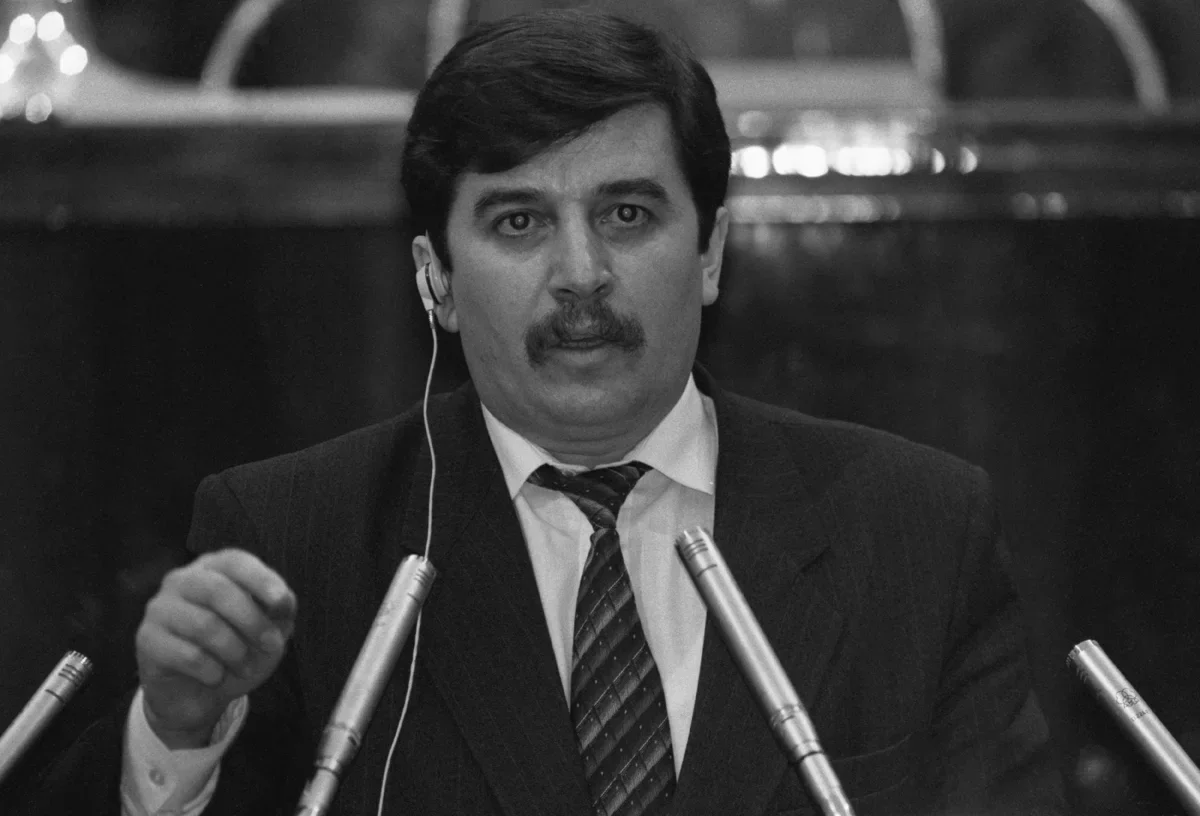
Deputy Prime Minister Sergei Shakhrai, presenting the position of the president, performs at the congress and says: “The president gave his fate to the people of the people so as not to take people to the streets, and suggests the same to do the congress. Why put up the issue of early elections to a referendum? Who will then interpret the results? Кто будет определять, по каким законам, и главное, в какой орган будут проводиться выборы? Есть элементарные правила.
Выражено недоверие президенту — он уходит в отставку и через три месяца новые выборы. Выражено недоверие съезду — проводятся досрочные выборы народных депутатов. Выражено недоверие и тем и другим — проводятся одновременные выборы депутатов и президента.
Все остальное — это лукавые попытки уйти от честного ответа на поставленные президентом вопросы».
Звучит логично, но в чем-то Шахрай и сам лукавит — или как минимум противоречит сам себе. Потому что в случае выражения недоверия съезду (в том числе одновременно с недоверием президенту) повисает в воздухе обозначенный им же вопрос о том, как будет устроен следующий парламент и по каким законам его будут выбирать. Этот вопрос может быть решен или принятием новой Конституции — или подтверждением, что действует старая. Но конституционные вопросы, увы, вновь откладывают на будущее, хотя давно уже работает конституционная комиссия съезда, рассматривающая самые разные варианты будущего государственного устройства…
В постановлении съезда говорится, что решения по всем вопросам референдума считаются принятыми, если за них проголосовало более 50% от общего числа избирателей (а не от принявших участие в голосовании).
Это серьезно завышает «планку» — по сравнению с нормами, установленными законом «О референдуме РСФСР», принятым еще в октябре 1990 года.
В законе говорится, что более 50% от общего числа избирателей необходимо набрать только для принятия решения по вопросам, связанным с изменением и дополнением Конституции, а по остальным вопросам достаточно более 50% от участников голосования на референдуме.
Математика тут проста: при ожидавшейся явке на референдум около 60% избирателей (в реальности оказалось 64%), для принятия решения требовалось, чтобы за них проголосовали около 84% участников, чего достичь крайне трудно.
Referendum
21 апреля 1993 года Конституционный суд принимает постановление о порядке подсчета голосов на референдуме и снижает «планку» для принятия решений по первому и второму вопросам, имеющим «нравственно-оценочный и политический характер», не затрагивающим конституционные положения и не влекущим прямых правовых последствий. КС устанавливает, что для принятия этих решений достаточно, чтобы их поддержали более 50% от участников голосования.
Требование получения для принятия решения более 50% от общего числа избирателей сохраняется только для третьего и четвертого вопросов, связанных с досрочными выборами. Хотя оно, как уже сказано (и как подтвердилось потом), оказывается почти нереальным.
В этой ситуации очень многие — как на съезде, так и после него — говорили о том, что после «войны вопросов» на референдуме развернется «война интерпретаций» полученных ответов. И что каждая из противоборствующих сторон будет трактовать ответы в свою пользу. Тем более что ответы могут противоречить друг другу: что делать, если большинство избирателей проголосует и за доверие президенту, и за его досрочные выборы?
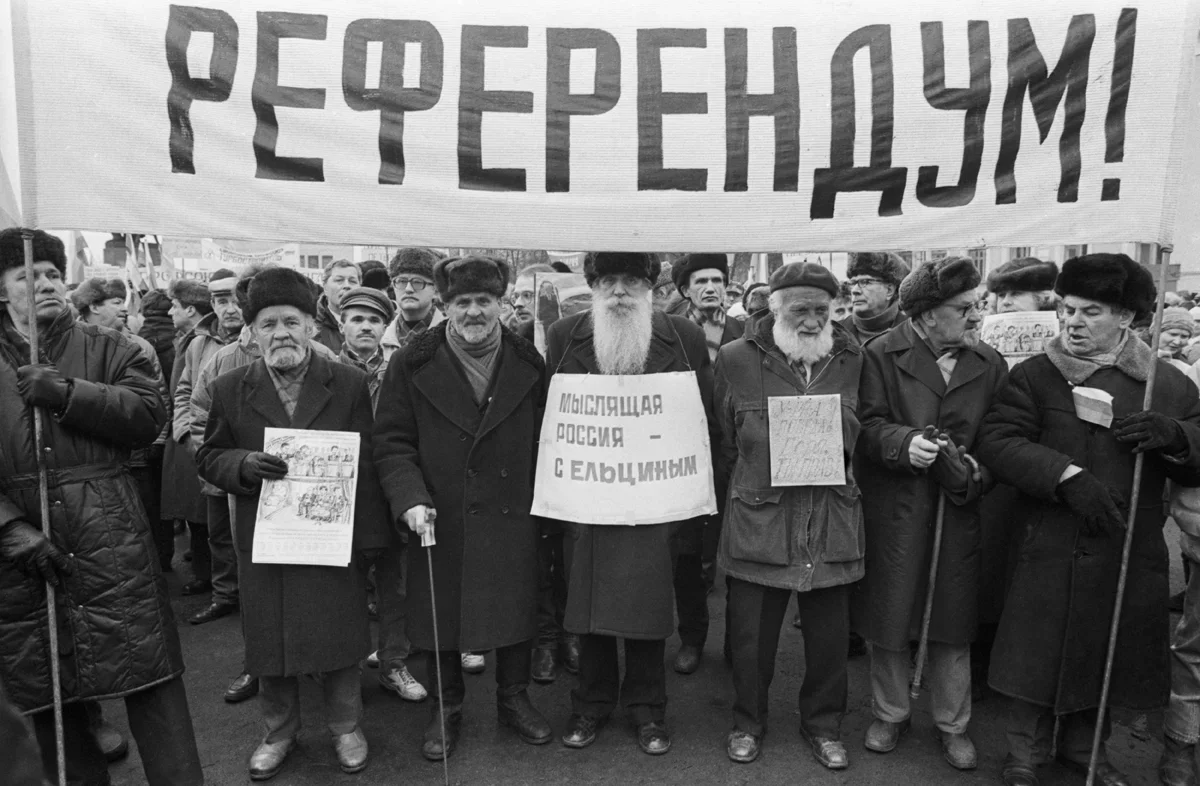
Тем временем в период между 29 марта и 25 апреля президентская команда разворачивает интенсивную агитацию в свою пользу — имея подавляющее информационное преимущество.
И потому, что Кремлем были приняты необходимые организационные меры, и потому, что журналистам тогда общество очень серьезно доверяло, а многие журналисты симпатизировали Ельцину в его противостоянии с парламентом.
Впервые в постсоветской истории (следующий пример мы увидим на президентских выборах 1996 года) в ход пускается пропагандистская, главным образом телевизионная «машина».
Для этого в первую очередь используется созданный еще в декабре 1992 года Федеральный информационный центр во главе с Михаилом Полтораниным в ранге первого вице-премьера. Центру передаются все телерадиокомпании, подведомственные Министерству печати и информации, в том числе главная из них — «Останкино», а также агентство ИТАР (будущее ИТАР-ТАСС), и его задачей объявляется «обеспечение через печать и средства массовой информации своевременного и широкого распространения точной и правдивой информации о ходе реформ в России и разъяснение государственной политики Российской Федерации».
Под «точной и правдивой» при этом, как быстро выяснилось, понимается исключительно информация, способствующая поддержке президента и проводимых под его руководством реформ.
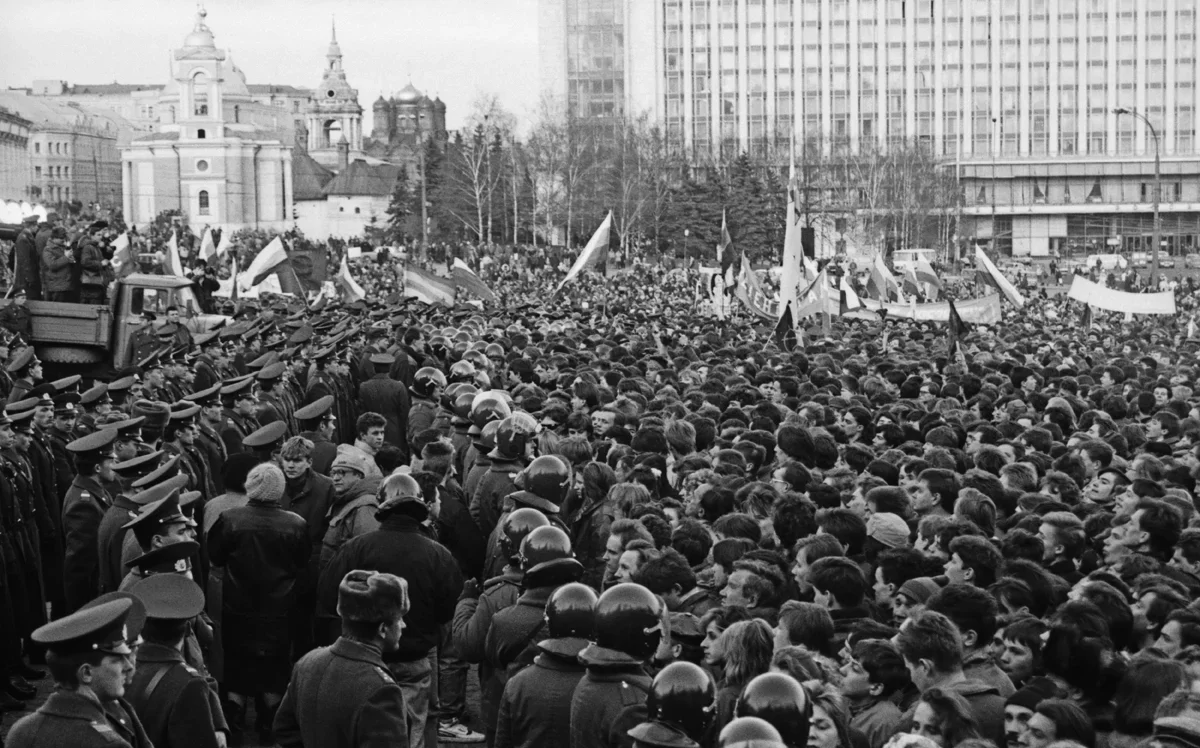
Съезд своим постановлением от 29 марта 1993 года упраздняет Федеральный информационный центр и отменяет указ президента о его создании — но ФИЦ продолжает работать, а государственное телевидение и зависящие от исполнительной власти газеты — представлять, за редчайшими исключениями, гражданам только точку зрения Ельцина и его сторонников. Вызывая к жизни, казалось бы, забытые воспоминания об агитпропе ЦК КПСС.
Так, «Известия» — в одном и том же номере на первой полосе в качестве доказательства вредоносности Советов сообщали, что на выборах в свободные округа где-то баллотировались бывшие номенклатурщики районного масштаба, а на четвертой со сдержанным оптимизмом писали, что на выборах губернатора Орловской области победил сторонник реформ и опытный хозяйственник Егор Строев, работавший ранее секретарем ЦК КПСС. А телевидение, подконтрольное президентской «вертикали», перешло в режим почти постоянного вещания «Президенту — да!», при этом совершенно не пытаясь сводить по-настоящему сторонников и противников президента в прямой дискуссии. Не потому ли, что открытого боя доводы сторонников просвещенного авторитаризма не выдерживали?
Через лояльные Кремлю СМИ граждан призывали ответить «да» на первый, второй и четвертый вопросы — о доверии президенту и его политике и о досрочных выборах съезда, и ответить «нет» на вопрос о досрочных выборах президента.
Именно тогда и появился знаменитый лозунг «Да-да-нет-да!», который использовала президентская команда и их сторонники и который не звучал только что из утюга.
Парламент в этой информационной схватке имел заведомо худшие позиции — практически не имея СМИ, на которые бы мог влиять, и практически не имея на своей стороне никого из известных журналистов. Да и давние традиции единоначалия играли свою роль — очень трудно было простыми словами объяснить, зачем нужны разделение властей и парламентский контроль над правительством и что такое правовое государство. Куда легче было объяснять, что всенародно избранному президенту мешают работать парламентские болтуны, ставя ему палки в колеса.
Формулируя вопросы, в парламенте полагали, что если даже президенту и будет оказано доверие, то уж его социально-экономический курс, который привел к гиперинфляции, «сгоранию» вкладов и потере работы, большинство избирателей точно не поддержит. Но расчет не сработал: во-первых, многие, поддерживая Ельцина, автоматически голосовали и за одобрение его курса, а во-вторых, как уже сказано, свою роль сыграла массированная пропагандистская обработка.
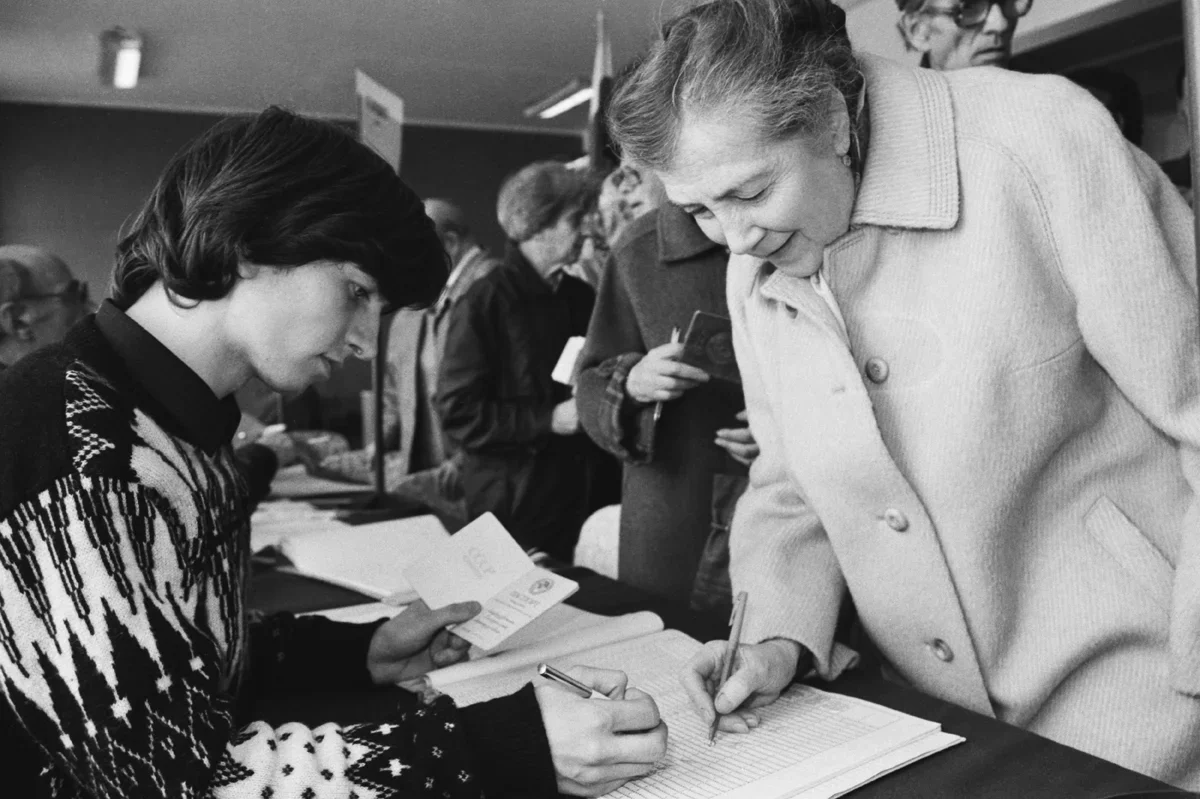
Референдум 25 апреля прошел при 64-процентной явке избирателей, и принес следующие результаты:
за доверие президенту Российской Федерации Б.Н. Ельцину проголосовали 58,7% пришедших избирателей;
за одобрение социально-экономической политику, осуществляемой президентом Российской Федерации и правительством Российской Федерации с 1992 года, проголосовали 53,0%;
за проведение досрочных выборов президента Российской Федерации проголосовали 49,5%;
за проведение досрочных выборов народных депутатов Российской Федерации проголосовали 67,2%.
Решения по двум первым вопросам были приняты — но, как уже было сказано, юридической силы не имели. Решения по третьему и четвертому вопросам не были приняты, так как за них проголосовало менее 50% от общего числа избирателей (соответственно, 31,7% и 43,0%).
Эти результаты, как и предсказывалось, не остановили «войну властей» — потому что не устранили ее причины.
«Механизм референдума не являлся средством разрешения политического конфликта — он не создавал условий для выбора в пользу демократического правления и верховенства права, напротив, массовая поддержка лишь провоцировала президента к единоличному правлению», — напишет потом политолог, профессор Владимир Гельман.
Поскольку на референдуме не были приняты решения о досрочных выборах ни одной из ветвей власти, он, казалось бы, обязывал их продолжать работать вместе — независимо от личных отношений. Искать компромиссы и согласие, с, как говорят, «равномерным распределением разочарований». Тем более что при таких результатах (лишь немногим более половины участников голосования поддерживали политику президента, и почти половина их выступала за досрочные президентские выборы) было понятно, что общество в отношении к самому президенту и его политике расколото почти поровну.
Но этого не случилось: президент и его сторонники интерпретировали результаты референдума как свою победу (наиболее радикальные представители этого лагеря начали требовать от президента «решительных мер», без всякой оглядки на парламент), а парламент считал, что он в этой борьбе вовсе не проиграл, и продолжал действовать, как если бы ничего не случилось.
В истории, конечно, нет сослагательного наклонения, но если бы (как планировалось) в ноябре 1993 года и прошли досрочные выборы и президента и съезда — скорее всего, они бы воспроизвели примерно тот же расклад сил.
Вряд ли кто-то смог бы тогда реально соперничать с Ельциным за место президента, и вряд ли существенно в «президентскую» сторону — с учетом экономического положения, которое оставалось весьма сложным — изменился бы состав депутатов. И все началось бы по новой — потому что ключевым вопросом были, как уже сказано, не личности, а политическая система, которую одни стремились изменить в сторону авторитарной, а другие — в главном сохранить…
Конституционное совещание и «указ 1400»
Вскоре после референдума, в июне 1993 года, Ельцин созовет «конституционное совещание», которое, в пику конституционной комиссии съезда, под руководством Сергея Алексеева, Анатолия Собчака и Сергея Шахрая начнет готовить «президентский» вариант новой Конституции, предусматривающий переход от парламентско-президентской — к суперпрезидентской республике.
После этого обе группы (заметим, что при этом Ельцин формально оставался председателем конституционной комиссии съезда, а его первым заместителем был Хасбулатов) вели параллельную работу. В конце июля разработанные ими проекты были направлены в регионы для согласования — и большая часть регионов поддержала «парламентский проект», сохранявший парламентско-президентскую республику (при этом в нем был сделан ряд уступок и компромиссов, усиливавших роль президента и ослаблявших влияние парламента на правительство).
Если бы тогда был принят этот проект — возможно, ситуация пошла бы по другому пути. Но Борис Ельцин не был настроен ни на какие компромиссы.
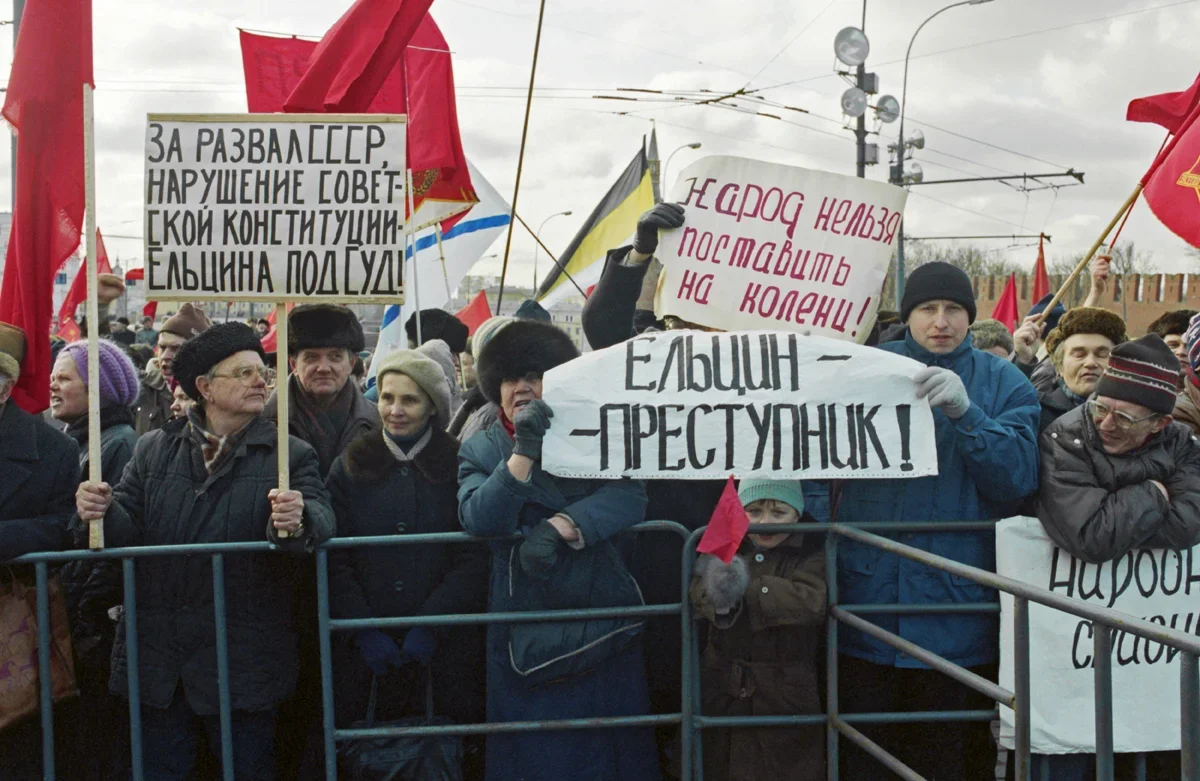
15 сентября 1993 года рабочая группа конституционной комиссии завершила разработку своей версии согласованного проекта Конституции РФ.
Но более парламент сделать уже ничего не успел: указом президента от 21 сентября 1993 года № 1400 съезд и Верховный Совет были распущены.
Вариант конституционного совещания был доработан и в декабре 1993 года вынесен на всенародное голосование по новой Конституции. При этом сам «указ 1400», как известно, Борис Ельцин будет издавать, «основываясь на итогах референдума», хотя никаких оснований для этого указа эти итоги не давали.
С этого момента в России вновь (после недолгого перерыва) будут считать, что не сила в правде, а правда — в силе.
И что законом является воля того, на чьей стороне сила.
К правовому государству, о котором мечтали во время «демократической весны» 1989‒90 годов, это уже не будет иметь никакого отношения.