
Translated material
Street people. Comic
Irina Kravtsova - about how the comic book book was born about homeless

Irina Kravtsova, artist:
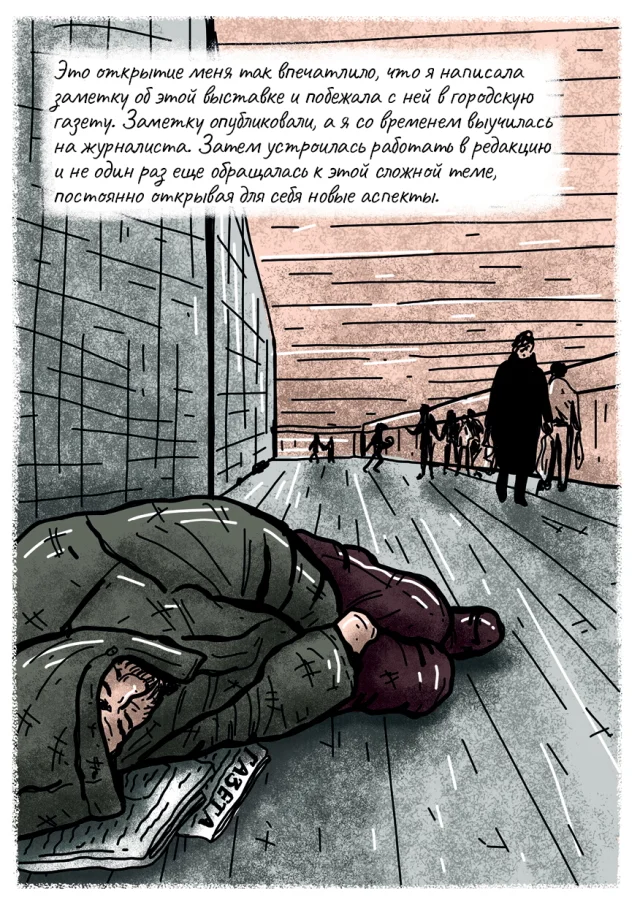
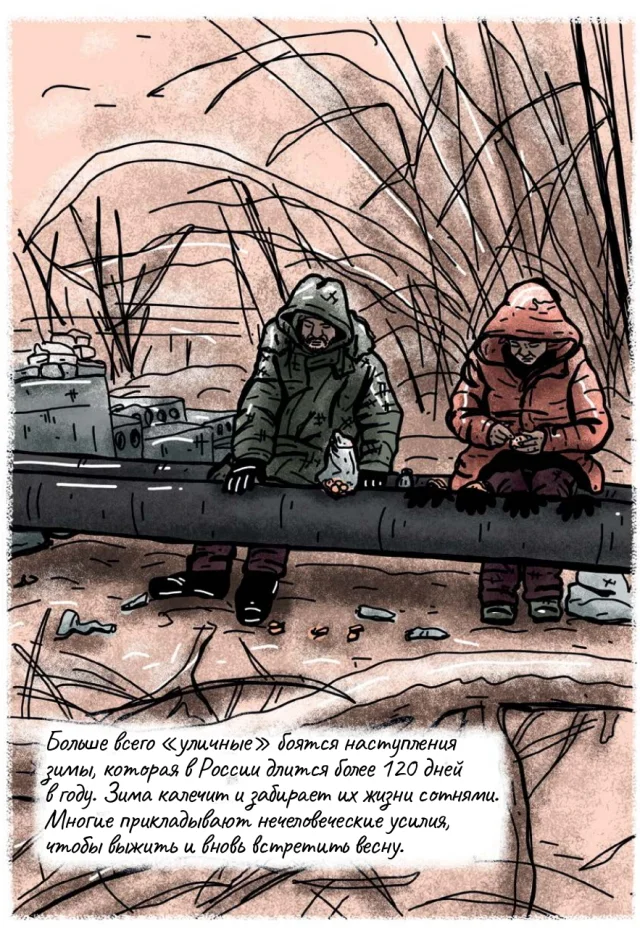
-In February 2021, severe frosts stood in Moscow-something about minus twenty degrees. I moved around the city with clicks: to the street, to the store, to the street, to work, to the street - and rather home. During one of these fractures from heat to heat, I thought: "Lord, how do the homeless survive in such frosts?" So I had an idea to talk to them and write a report on how they live in the cold.
I went to St. Petersburg, talked a lot with different people. One married couple showed me how he lives in a tarpaulin tent. The owner of this dwelling said that he and his wife were so insulated that in minus 25 they sleep there "in a T -shirt and panties."
Another man also showed me his house, in which he has been living for 11 years - two blankets turned out to be this house: he laid one right over the snowdrift, and the other took refuge. This is despite the fact that the 19-degree frost at a moisture content of 80% in St. Petersburg feels like all minus 35.
“In the evening I go here, shock for 15–20 minutes and fall asleep,” he said.
Another heroine of my text, Jeanne, said that when she had to spend the night on the street in winter, she tries to stand under someone's balcony to create the illusion that she was indoors. She said that "when at least some walls surround, calmer."
All of them suffered humiliation and all kinds of hardships every minute of their life.
That time was far from the first when I wrote about the homeless, but then the more I listened to them, the more I became interested in:
Why cannot people who put such inhuman efforts to survive on the street in severe cold, cannot make the same efforts in order to get out of the street and never experience these torment again?
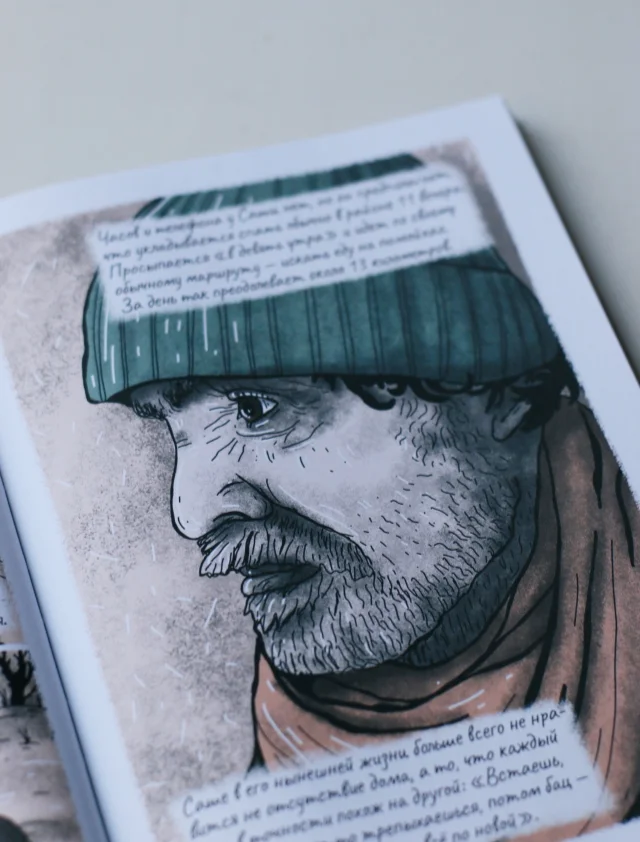
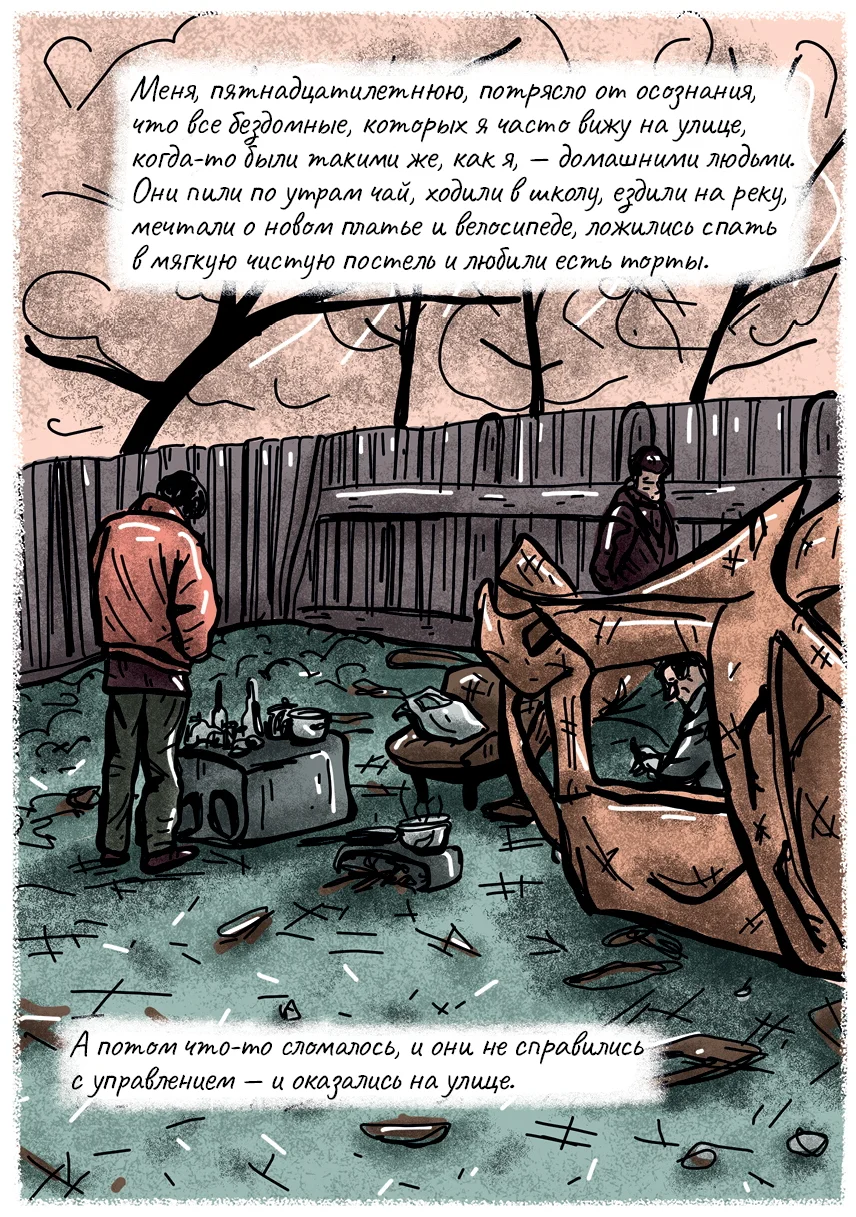
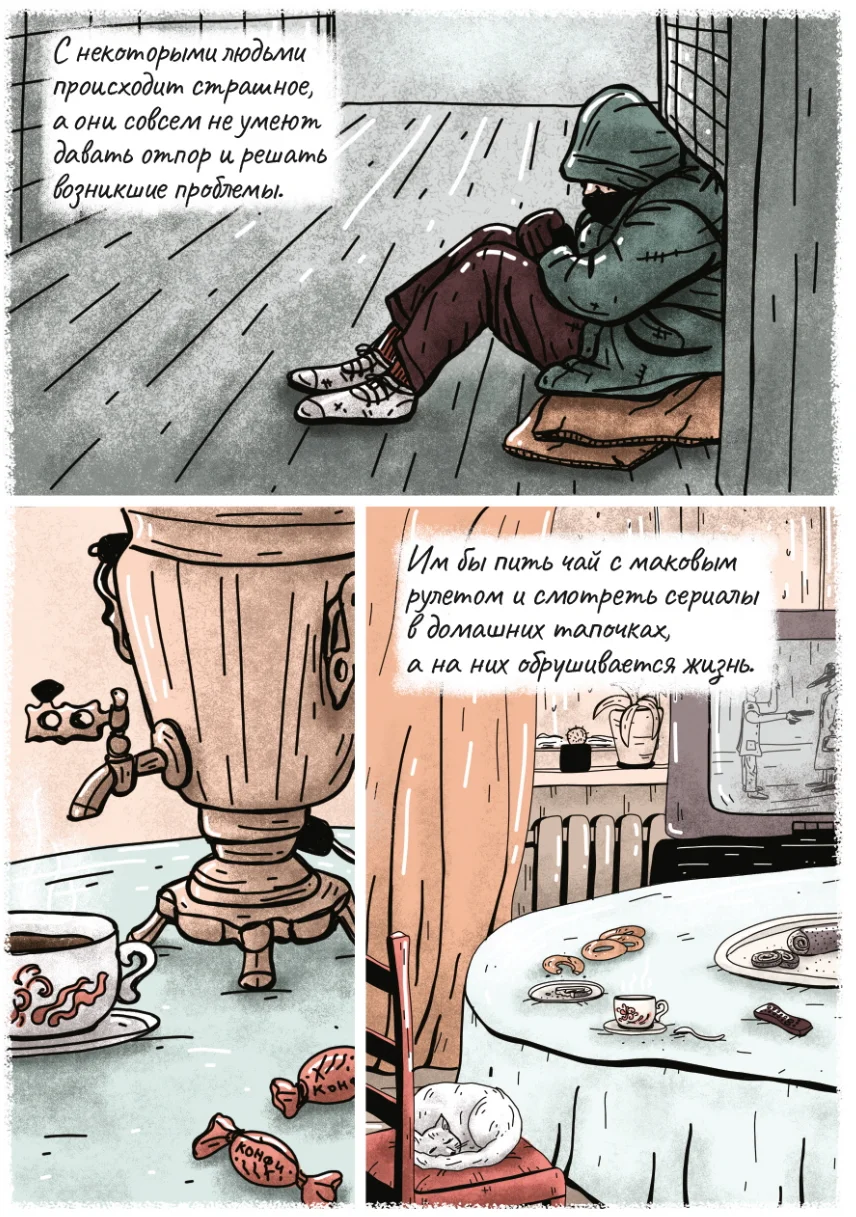
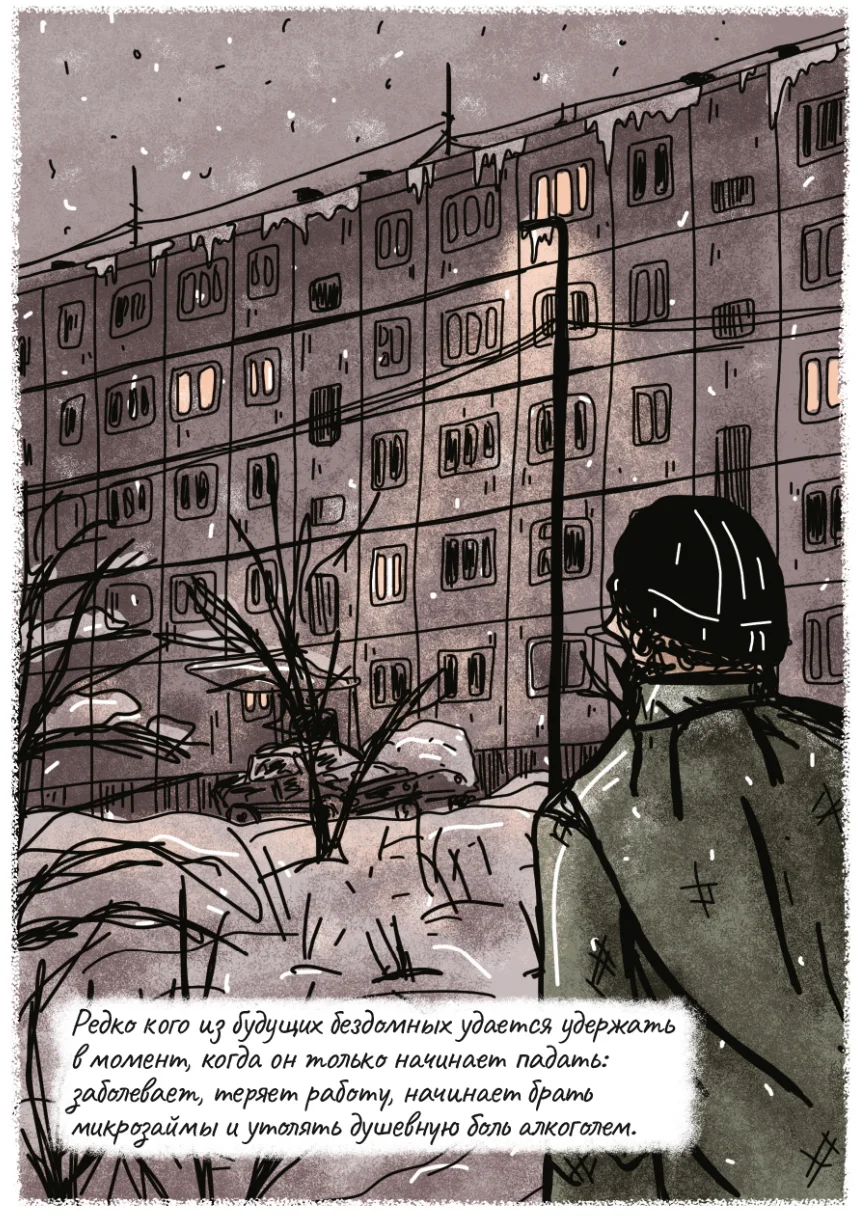
While I was looking for an answer to this question, I learned a lot of things that changed my idea of homelessness. And, it seems to me, I found the answer. In short, then I really liked how this answer was formulated by the Overnight volunteer Igor Antonov. He said that “rarely someone manages to catch the scroll at the moment when he is just starting to slide: he gets sick, loses his job, begins to take microloans and thicken mental pain with alcohol. And it is extremely difficult to help the one who has already lived on the street for a long time. The person changes a lot there. But we do not see this and continue to approach these people with our usual "domestic" standards of normality. "
So the report was born, he went out at Medusa* (recognized in Russia as an unwanted organization - ed. ). Soon, an illustrator from Kazan Albina Shaikhutdinova wrote to me. She said that the stories of people from my report were hooked so much that, being on maternity leave, she sat down in the evenings and painted the heroes of the report and their stories as a comic. Albine managed to do this very talentedly: in the comics of the history of my heroes, it became even deeper.
Medusa also published a comic.
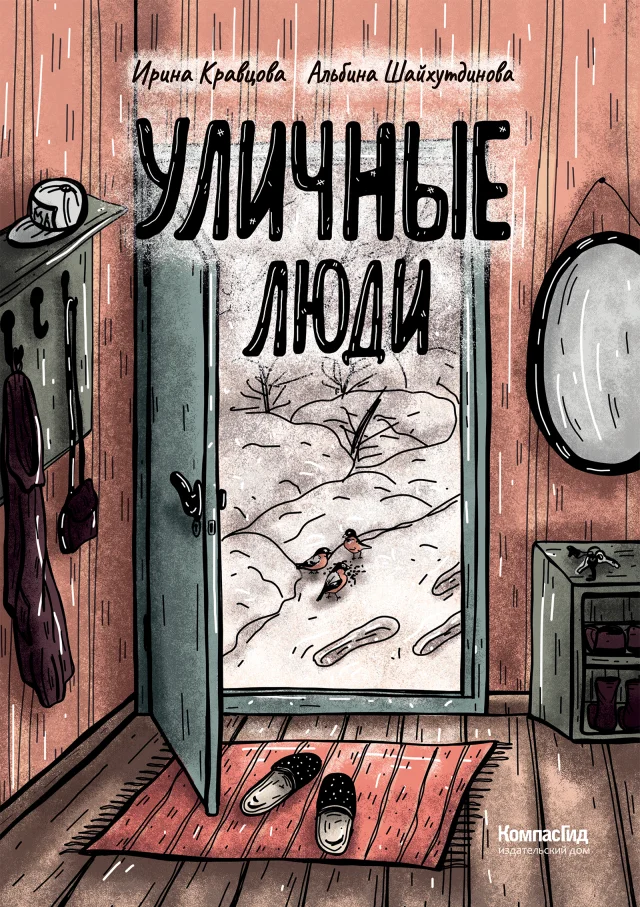
Soon, Albina and Komspapasgid, and suggested, suggested that we release a graphic report based on my materials about the homeless and its illustrations. The publishing house believes that our work will help to form a human attitude towards homeless in children who are just beginning to think about how everything is arranged in our world. Albina and I agreed. So our comic book “Street People” was born.
Look at him and you.
Comic
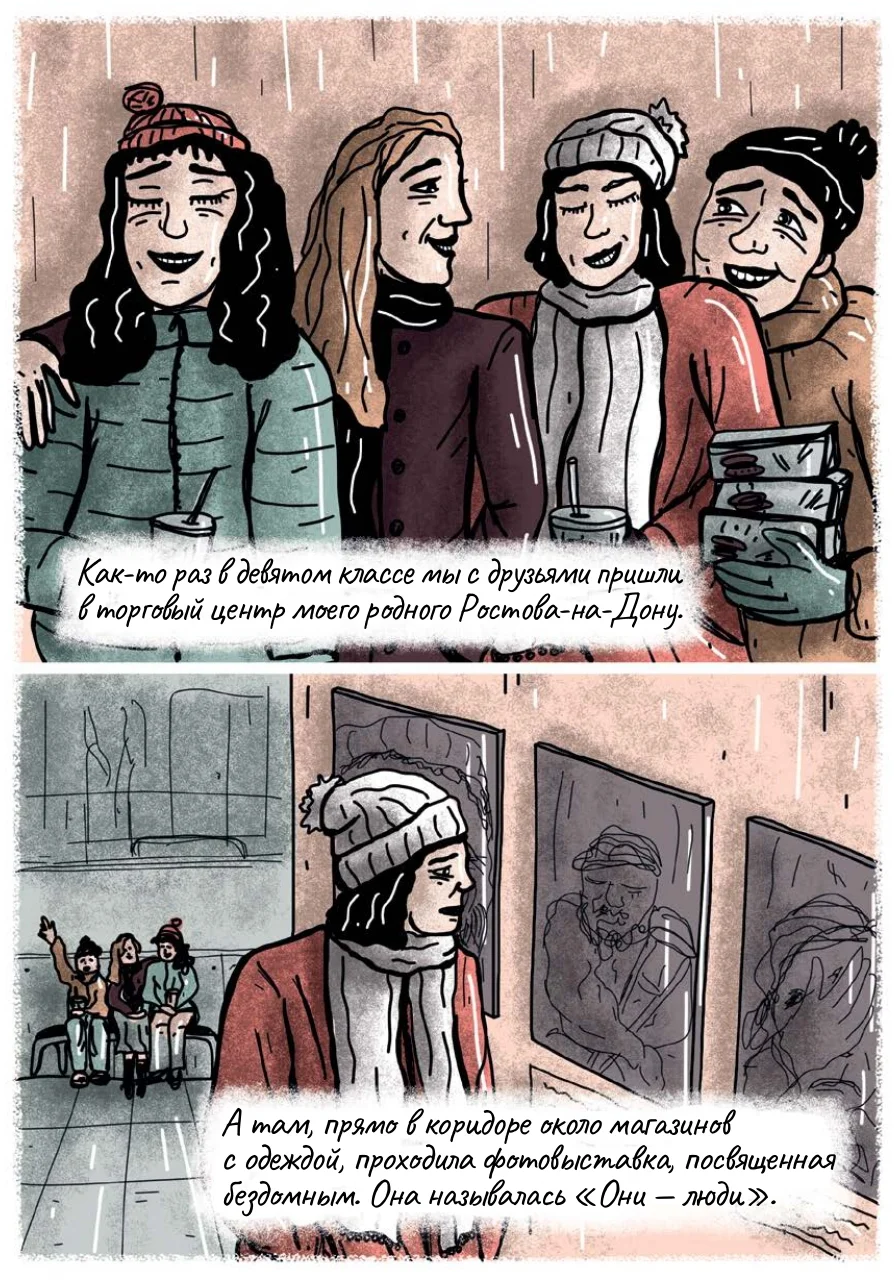
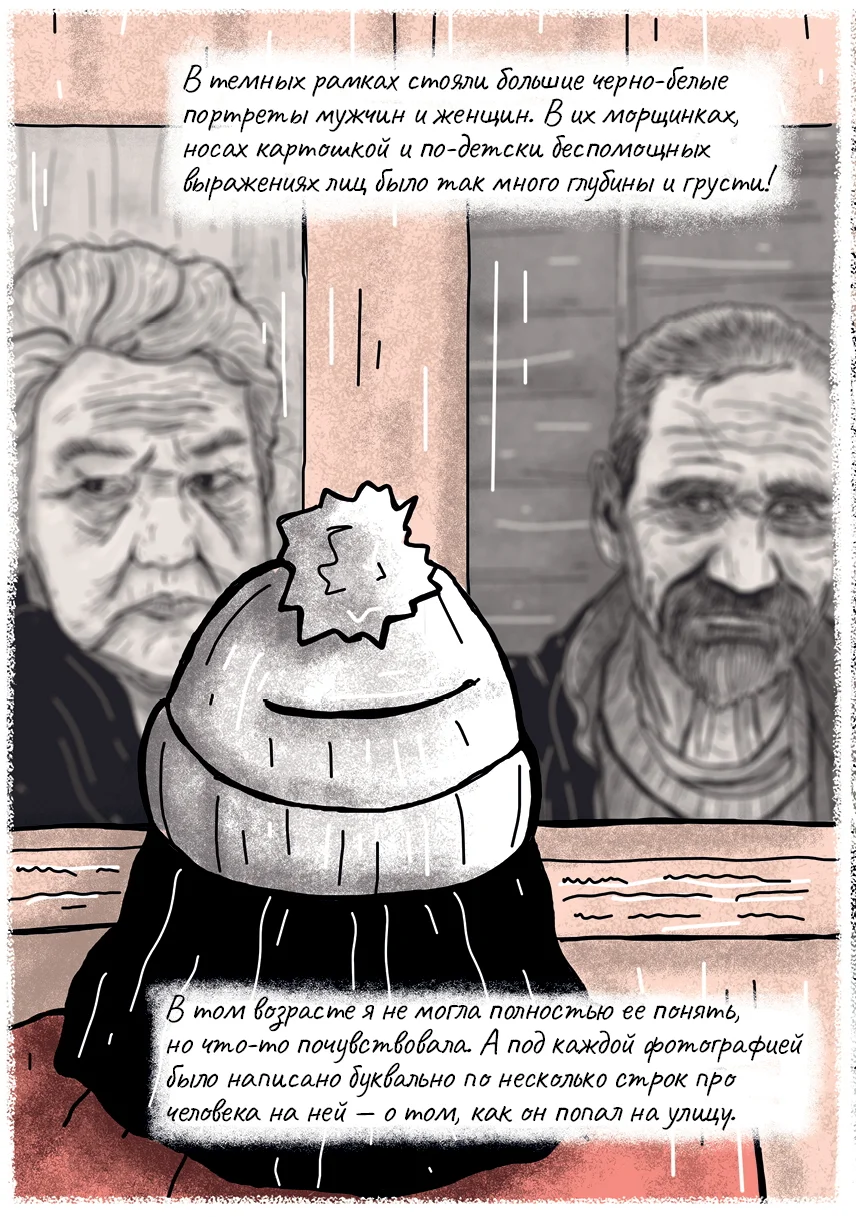
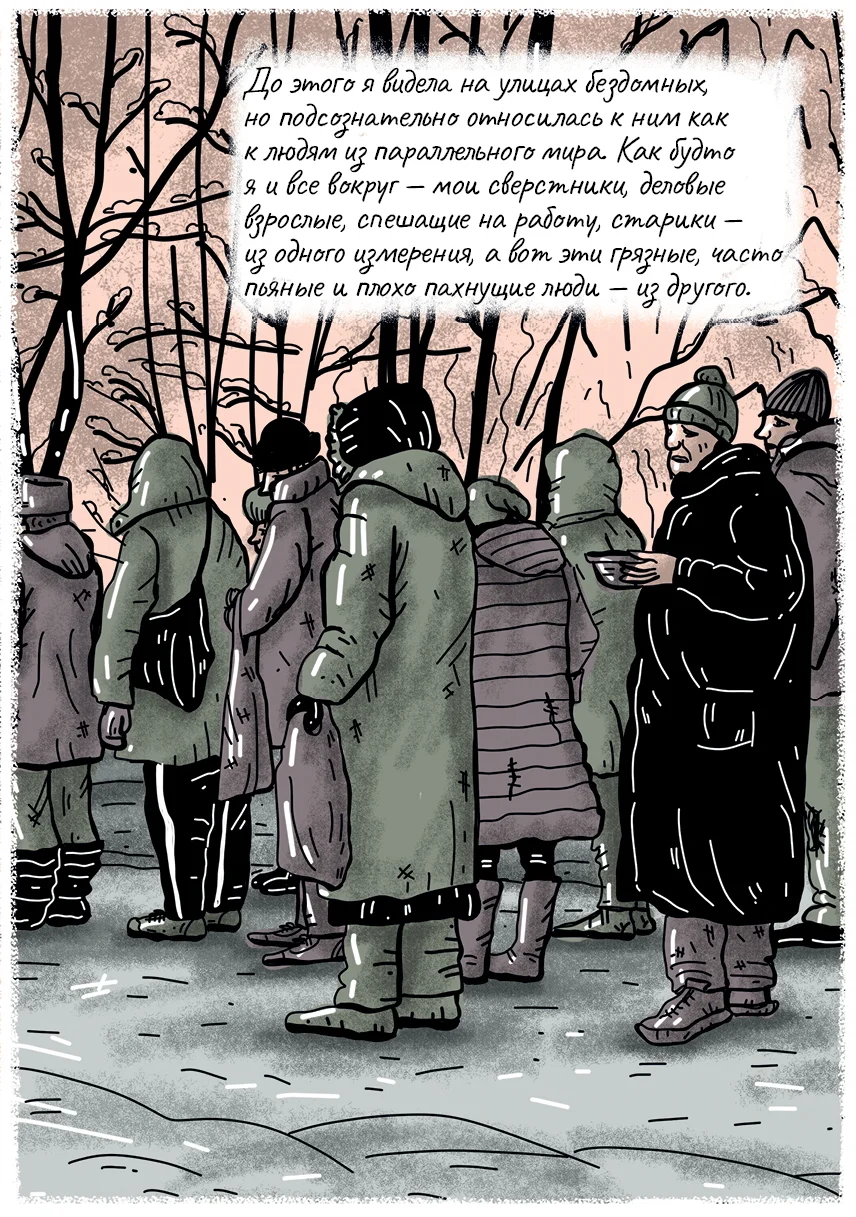
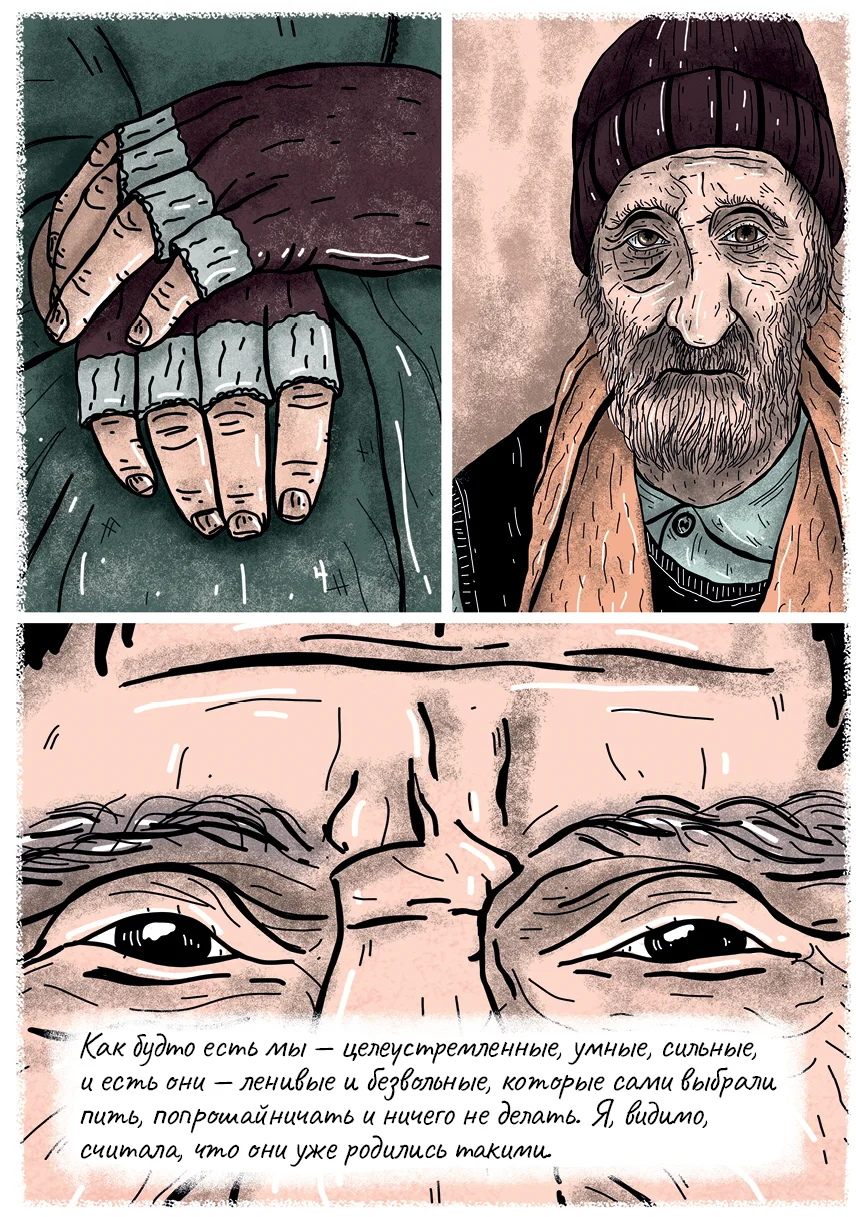
The text of Irina Kravtsova. Drawings by Albina Shaikhutdinova .
How to help
There are many ways to support the Overnight project and get to know what he does.