
Translated material
You will recognize them by fruit
The series "Related to death" breaks television standards, displaying the topic of female health, motherhood and sexuality to the most public level
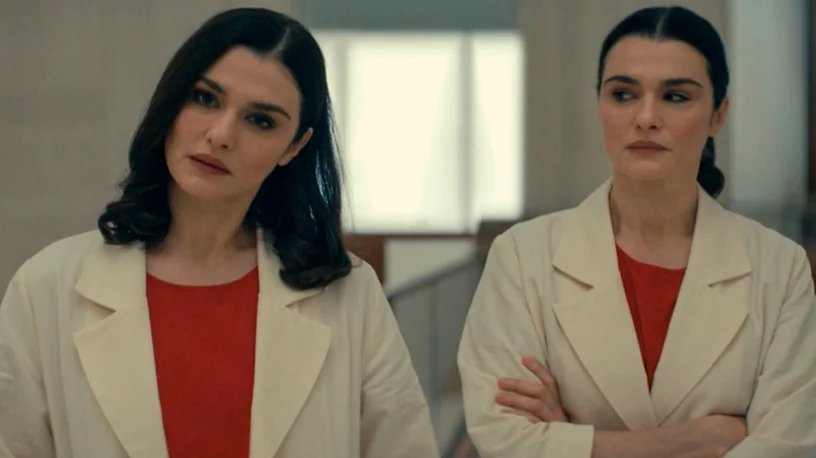
Frame from the series "Related to death"
At the streams, a mini-series “Related to death” with Rachel Weiss, a rome by a religious body triller of the eighties director David Kronenberg, was released. The new project is not a copy, but a modern rethinking of transgressive classics. Rachel Weiss, like Jeremy Irons, plays gynecologists at the forefront of medicine. Using biohaking and dangerous laboratory experiments, sisters study female health, childbirth and fertility and are preparing to make a coup in gynecology. But co -dependence, jealousy and competition between the Gemini create an invisible tension to others. The film critic Alice Taja tells why a six -hour daring project breaks the standards of modern television and intrigues all the audience, regardless of the gender.
The legacy of Kronenberg
David Kronenberg’s chamber thriller “connected to death” is one of his classical works: body mutations, gradual madness, bloodshed and passion on the verge of ill health are the constant topics of his filmography. The mini-series of Sean Durkin (the thrillers “Nest” and “Marti Marsi May Marlene”) respects the original source: it is more inspired by him than he reserves. The dramaturgy of the main characters has been preserved, but now they have a female gender: Beverly and Elliot Mantle plays the same actress, Rachel Weiss (and plays amazingly: in every scene of twins you can distinguish by facial expressions, speech and movements).
As in the original, the sisters devoted their whole lives to medicine and each other: over the years, together they did not part for more than a day. They receive a generous offer from an ambiguous investor, with the help of which their reproduction center can finally be made by an ethical project of the future. Like Kronenberg, the third person - actress Genevieve, who begins a stormy romance with Beverly, introduces a discord in the relationship. And, like Kronenberg, Mantle’s twins are an unstable pair, which is in dangerous co -dependence both in a career and in personal life. Their psychological and value differences with external identity introduce not only familiar sisters, but also themselves into a stupor. How can you be so similar, but so different, so freedom -loving and so needy in each other?
Bloody sisters
Replacing the male twins with women is a fundamental step for the new “related to death”. For heterosexual brothers Mantle, a woman is always different. For sisters Mantle (one of them is a lesbian, the other is a bisexual) women - these are they and their loved ones. They can identify themselves with patients and therefore make their work the help with infertility and obstetric care according to all the rules of feminist ethics.
The body of a woman is her business, “childbirth is not a disease”, a woman has the right to respect and respect for herself in the most vulnerable period of life.
The reproductive center of the sisters Mantle should become the space of hope, support and the desired motherhood, and not injuring the violent experience that he was for previous generations of women.
At the same time, Beverly and Elliot relate to work and life differently. The “excellent student” Beverly, more shy, responsible and soft, has long dreamed of getting pregnant and starting a family. Tearing an elliot, not disdaining drugs, alcohol and ties for one night, secretly from his sister conducts risky scientific experiments and fights people on the spot with shocking behavior, abuse and slander. The equally talented, evil and kind genius always act together, so everyone who contacts the Elliot will receive Beverly in addition, and vice versa. Many mutual claims have accumulated between the sisters, they often argue and swear, but they continue to call each other a “sister”. How many truths are in this affectionate appeal, and how many lies for survival will have to be found out.
Women and women's health
In the series of Sean Durkin, there are many cruel and bloody scenes that do not fit into vegetarian television canons - first of all, scenes of childbirth and operations shocking an unprepared viewer. This is also a fundamentally directorial move. Ultrasound of the pelvis, menopause, endometriosis, punitive gynecology, hormonal therapy, sterilization, premature babies: male audience awaits many details about the female body, which, unfortunately, are not included in the general educational program and are known only to doctors.
As long as female health is talked about a whisper and behind the closed curtains of the operating rooms, it remains a marginal theme. The task of “related to death” is to bring a conversation about women to a new level: the creators of the series reflect on this in one of the episodes. How many oppressed women have experienced violent experiments on themselves without anesthesia and proper medical care? How many female and children's lives could be saved if female bodies were not treated as a consumable? How many centuries did women's medicine lag behind the male? And when will equality arise in caring for the bodies of men and women? The heroines of Rachel Weiss are thinking about their patients, and anti -abortion laws, and aging, and about the autonomy of women in planning family and future. Because women are themselves.
Large capital and its lobby
Mantle sisters move their ambitions, but not only: starting capital is necessary to implement any ambitions. Science depends on large investments, and no one spends a lot of money from philanthropic reasons. “I am not charity to you,” says the potential investor of the Clinic of Mantle, the heiress of the medical empire, who earned billions on the wide sale of opiates from the threshold. The opioid epidemic that has covered the states in the last decade is a constant reference inside the series. “We just sell a good product that is in demand,” the numerous heirs of the empire grin at a family dinner, but they and the Mantle sisters understand that this is the money earned on deaths and suffering.
In this case, is it possible to take dirty money for a good business? What interests are pursued by billionaires, investing in medicine and science? And is there a quality medicine for the rich for the rich, while millions of Americans cannot afford to call an ambulance? Sisters Mantle know how the American medical system is conquered. They face thousands of crippled women and decide to build a new maternity center according to their feminist views. But sources of financing, like the people standing behind them, are able to change their innovative project beyond recognition.
Dependence and crimes
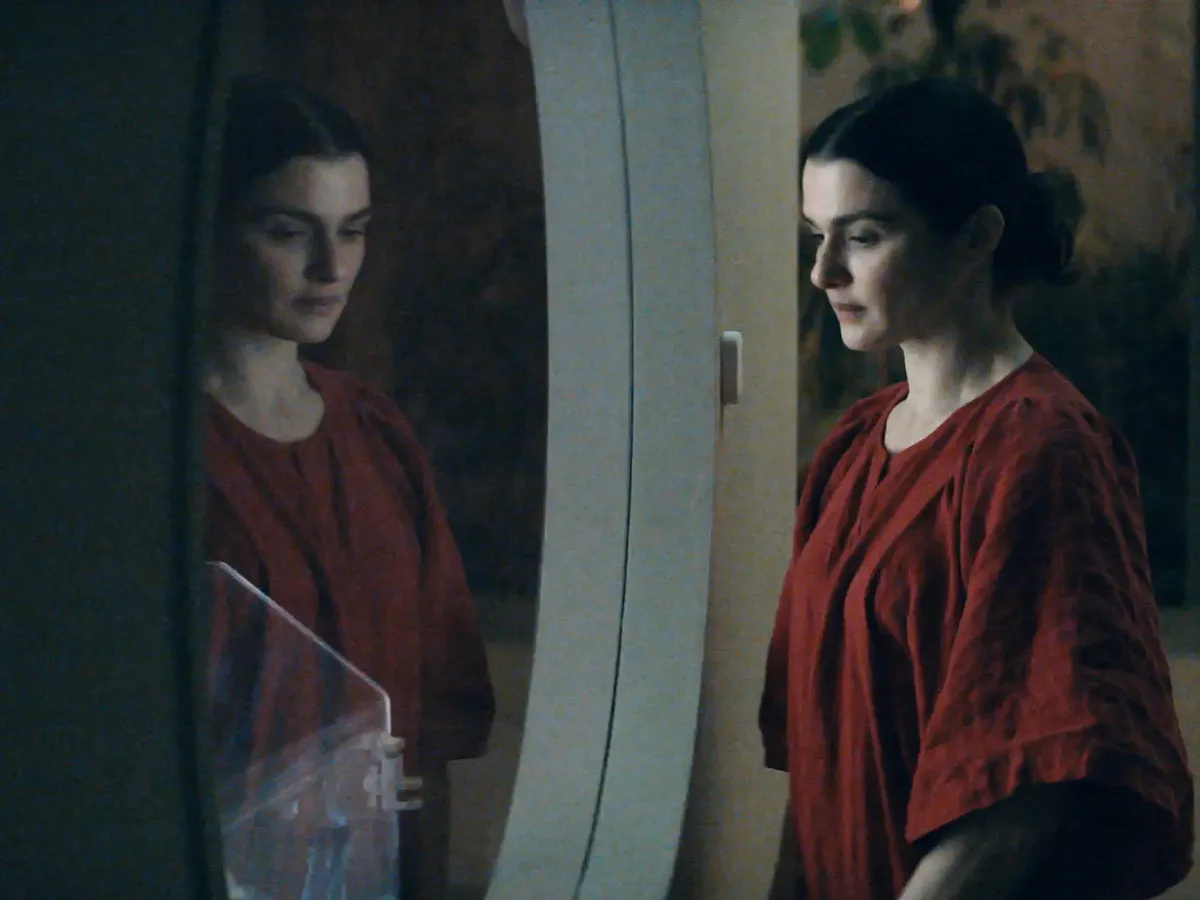
The topic of drug addiction is important for both the film and the television series. Both the brothers and the Mantle sisters have constant access to any medicine and are well aware of their purpose and side effects. For one of the Mantle sisters, drugs become a serious problem - with outbreaks of anger, hallucinations and nervous breakdowns. And the fact that the problem is for one sooner or later will become a problem for the other.
The series affects the topic of relations between doctors and their patients that has become important only in the last few years.
For many decades, such relations (as well as relations between bosses and subordinates, teachers and students) were perceived as the norm. In 2023, such relations can become a serious reputation loss and the basis for dismissal. Relations of the sisters Mantle with their patients and patients in current reality can threaten their career and future clinic. For each you can find incriminating evidence: everyone has skeletons in the closet, which in the era of digital transparency can destroy any career. So is it not worth it to always behave as if he is in a public field? Or is a private life worth protecting from prying eyes?
The future of science
Like the film of Kronenberg, the series of Sean Durkin is obsessed with questions about the body in the world of the future. From what moment can the embryo be considered a person? Is it possible to slow down aging? Is a woman capable of taking a child not in her body? Where does human life come from and is there a place in this place or divine craft? Where does the intervention of doctors turn into Eugenica? And will Eugenik help humanity?
“Related to the death” is a philosophical study of anti -utopia, which has already come, regardless of our desire. Perhaps human morality does not have time for scientific progress. Or maybe science is able to save people from centuries of suffering. Changing our nature, do we break it or correct it? And will the place of naturalness remain in the future? The Sisters Mantle, nor their modern scientists, nor theologians, nor politics probably know this. The ethical side of biological experiments on people is an obvious gray zone of the 21st century.