
Translated material
Just the end of April, and in Spain the temperature is already higher than 38 degrees
Meteorologists are surprised by what is happening, and the authorities are afraid of forest fires and water deficiency
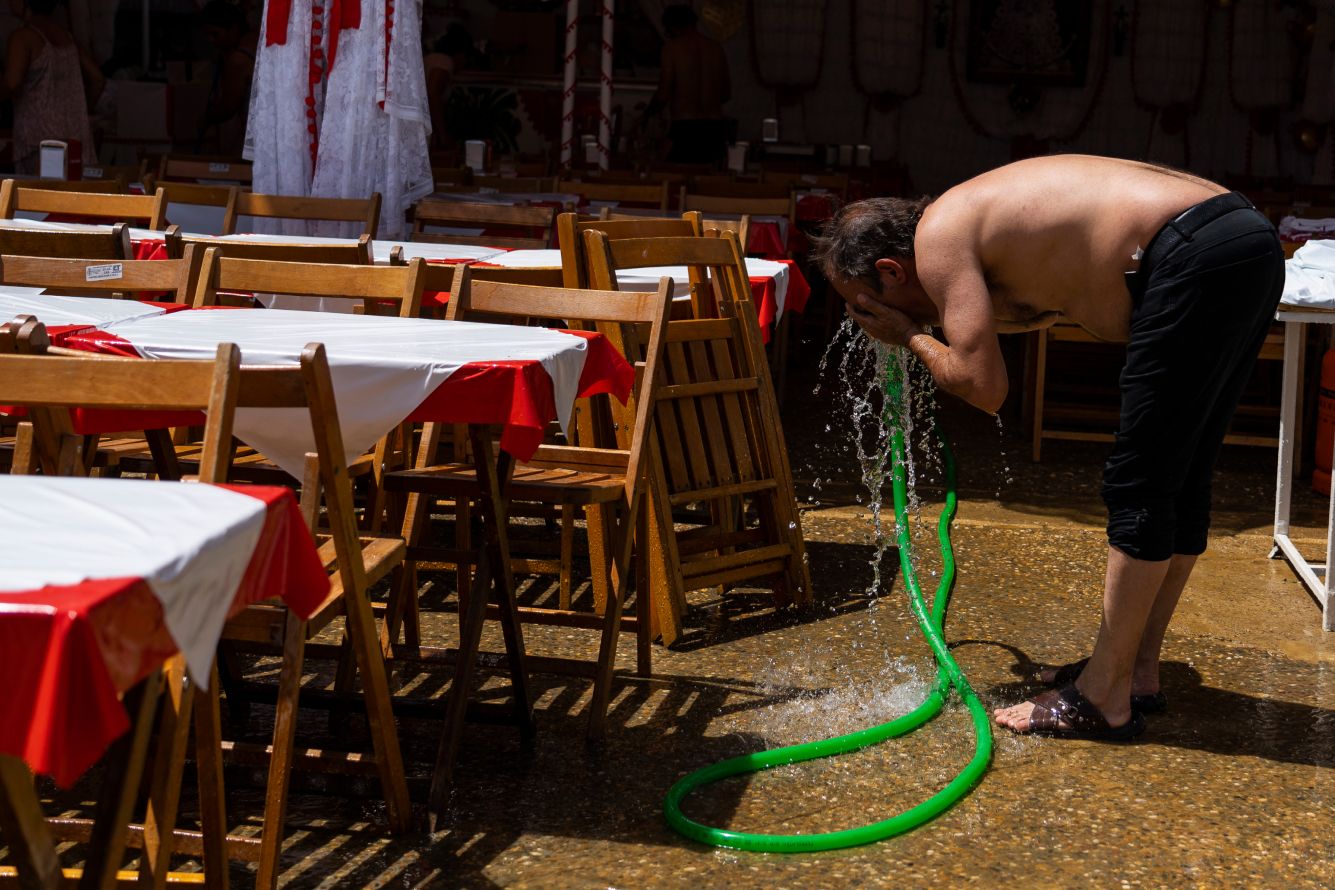
On Thursday, April 27, the Spanish State Meteorological Agency reported a historical temperature record for the second month of spring: in Cordob, the city in the Andalusia region in the south of the country, the air warmed up to 38.8 degrees Celsius.
Anomalous heat was established in other areas of Spain - 7-11 degrees Celsius above the climatic norm. In Madrid, where the temperature approached 38 degrees, schools were closed , in Catalonia, an irrigation canal blocked the irrigation channel due to the heat and the drought that began, on which the irrigation of 50–70 thousand hectares of agricultural land, in Seville, the police initiated an investigation of the death of a horse carrying tourists in the city, presumably due to a thermal strike.
“The situation is extraordinary. We ourselves are surprised at what is happening, ”the representative of the Meteorological Service Caetano Torres stated on the air of the Spanish television. The official report of the department noted that the cause of the anomaly was in the parish in Spain “very warm and dry air mass from North Africa”. The heat will last at least a few days, meteorologists warned.
“We expected that such a temperature would be set in late May or June. But now every year the heat comes earlier than the year before, ” said in an interview with The New York Times, a resident of Cordoba Manuel Suarez Fernandez, working in a pub on the embankment of the Guadalquivir River. According to him, none of the townspeople goes outside in the afternoon to avoid peak temperatures: "People close at home, stock up water and go out only closer to night."
In Madrid, local authorities focused on helping the heat to medical institutions and schools: officials are primarily monitored that air conditioning systems work out qualitatively and uninterruptedly. Also in the city of previously planned dates, open public pools earned (usually they begin to receive visitors in mid -May) and became more intense the movement of public transport - to avoid the clusters of people at the peak of hot weather. The city hall asks all Madrid to drink water abundantly and help vulnerable categories of the population - primarily for older people and children.
In Seville, one of the largest cities in the south of Spain, April heat coincided with the traditional local Feria de Abril fair - a major holiday, which begins two weeks after a passionate week and attracts hundreds of thousands of tourists. To cope with an increase in the number of potential patients, the Seville hospitals for this period brought to work additional personnel. Many guests, instead of participating in festive events, have to hide in the shade from the exhausting heat, should be from the report of local television.
Extreme heat in April 2023 affected not only Spain, but also neighboring Morocco, Algeria and Portugal. Clinical scientist Maximiliano Errera, who specializes in monitoring temperature peaks around the world, noted in a conversation with Ny Times: “This scale of anomaly is extremely rare for such a large space and such a long period. Hundreds of meteorological stations record records with excess of previous maximums by sometimes more than five degrees Celsius at once, some even records that hit all historical meanings recorded in traditionally warmer May. ” And although each specific temperature record can be a single anomaly, Herrera and his colleagues-scientists have no doubt that the waves of extremely warm weather throughout the planet are becoming increasingly hot, frequent and lengthy.
Spain is especially vulnerable to the threat of temperature. According to the fresh study of the Polytechnic University of Catalonia, the hot weather in the summer in the country in recent years has been set on average for a period of five weeks longer than in the early 1980s. And 2022 became the hottest in the history of Spanish meteorological observations ( since the 1950s ). Then a significant part of Europe also suffered from high temperatures with Spain - experts estimated the number of deaths directly or indirectly related to abnormal weather, in different countries of the region at 20 thousand.
The current anomaly can worsen already close to a critical situation with a lack of fresh water. The reservoirs with its reserves today are half filled with their volume - this is the result of 30 consecutive months with a precipitation level below normal (in April only 25% of precipitation from the norm fell at all). According to the Climatologist Herrera, this year this year can cause serious damage to the agriculture of Spain, and in the medium term - lead to interruptions in water supply throughout the country.
This year, arid weather has already led to the loss of grain crop in the territory of 3.5 million hectares, follows from a recent report of the industry organization of Spanish farmers. The Minister of Agriculture of the country Luis Planas has already requested financial support from the European Union for owners of local agricultural land, which suffered from the elements, citing “exceptional circumstances”.
Another dangerous consequence of drought and high temperature is the growing risk of forest fires. Last summer, the fire in Spain affected the record 303.5 thousand hectares and left thousands of people without housing. This year, the first major fires have already begun.
"Jellyfish"