
Translated material
Large -caliber zeros
The President of Uzbekistan Mirziyoyev rewritten the Constitution and can now rule until 2040. Did he learn from Putin like that? The expert of the center of Carnegie Temur Umarov answers
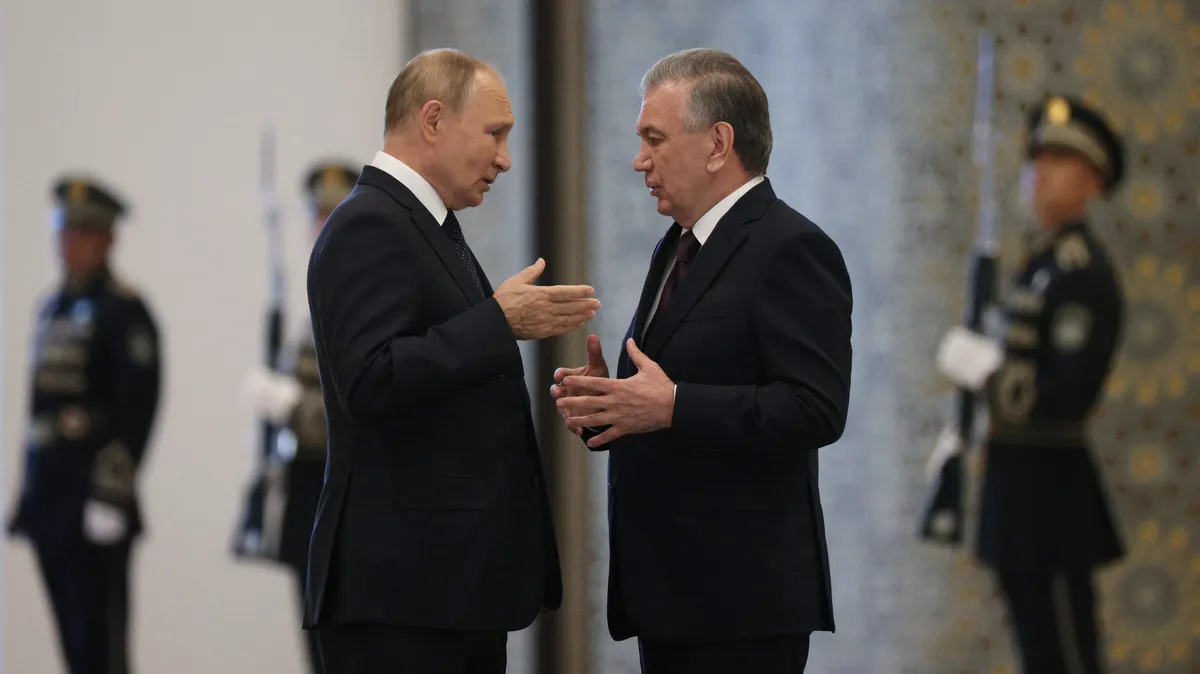
Vladimir Putin and Shavkat Mirziyoyev. Photo: EPA-EFE/Sergei Bobylev
On April 30, a referendum on amendments to the Constitution was held in Uzbekistan. As they reported to the CEC of the country, in favor of the reform, launched by the President of the country, Shavkat Mirziyoyev, 90.21%of the voting participants spoke, only 9.35%against, and the appearance for the referendum exceeded 84%. In the new version of the Constitution, the presidential term will be increased from five to seven years, the president can occupy his post no more than two in a row. Given this norm, the President of Uzbekistan Shavkat Mirziyoyev, who has ruled in 2016, resumes previous terms and can now remain the head of state until 2040. By this time he will be 83 years old.
The package of amendments, among other things, proclaims Uzbekistan by the “social state”, is also proposed to the abolition of the death penalty, a ban on forced child labor, the ban on the issuance of a citizen of the country to a foreign state. The new Constitution will also prescribe responsibility for interfering in the work of the media. In general, the main law of the country will be updated by 65%. Novye Europe spoke with a researcher at the Carnegie Berlin Center for the Study of Russia and Eurasia Temur Umarov about how much the continuity of the Russian “Khublings” and about who in authoritarianism went further-Mirziyev or Putin in the Uzbek experience.
Temur Umarov
Researcher at the Carnegie Berlin Center for the Study of Russia and Eurasia
- In recent years, the constitutions ruled in Russia, in Kazakhstan, now - in Uzbekistan. And if you read the opposition media of Uzbekistan or an independent analytics, it seems that the only goal of the referendum is to zero the terms of Mirziyoyev, like Putin, only cooler - until 2040. Is everything started for this or is there any other meaning in a referendum?
- Amendments to the Constitution in Uzbekistan is, first of all, the continuity of the system of itself. Under the first President of Islam Karimov, the Constitution regularly corresponded - mainly, with the help of this instrument, the first president was in power until his death. The question "Who was the first to start?" Open: Not that Uzbekistan is studying from Russia - Rather, Russia is studying from its colleagues from Central Asia.
Amendments to the Constitution and the past referendum have two goals: one published and officially declared, and the second real. The official goal is to continue reforms. The new constitution is submitted as the basic law that will contribute to the development of Uzbek reformation. The authorities say: given the changes and innovations that occur in the country, we need to rewrite the Constitution.
But the real goal is to extend the legal position of the president in power in Uzbekistan, since the second term of Mirziyoyev is coming to an end.
The only working scheme, many times tested and the most reliable is to rewrite the Constitution. This is not just a “zeroing” of the deadlines, but also their extension:
The presidential term is increasing from five to seven years with the possibility of the current leader to re -elect. Therefore, it is not worth saying that in Uzbekistan, the leadership in the next 10-14 years will change.
- Why do Mirziyoyev need a “lifelong” rule? He positioned himself “not like Karimov” when he came to power, but now he went in the footsteps in fact. Is this a tribute to the authoritarian eastern tradition?
- There is nothing especially in Uzbek, eastern or exotic. This is a problem that any authoritarian regime is faced with anywhere in the world, the problem of any system in which the process of transferring power is not institutionalized.
The system is trying to come up with something that will guarantee the existing head of state and people related to the highest leadership. Due to the fact that in Uzbekistan, as in many other authoritarian regimes, there is no experience of a person’s peaceful departure from power and the transfer of all power, this process is full of risks.
For example, in Kyrgyzstan, the process of transferring power each time is accompanied by huge risks and problems each time: the first president Askar Akayev left for Russia and until recently could not return to Kyrgyzstan for security reasons, the second President Kurmanbek Bakiev still cannot return, because several criminal cases have been instituted for him. Almazbek Atambayev served his term and was released just recently. We saw the same thing in Kazakhstan: by today Nursultan Nazarbayev and his family are almost completely separated from power and cannot influence anything. All other authoritarian leaders are afraid of these examples and therefore seek to have full access to power and to control everything that happens within the country.
- If we talk about the transfer of power, from the side it seems that in Uzbekistan it is not only opposition, but even a hypothetical successor. Is it so? In the Russian political language, "if not Mirziyoyev, then who?"
-There is no opposition, she has nowhere to appear even now, when some small window of opportunities appears conditionally. From the very beginning of the existence of independent Uzbekistan, the entire opposition was completely cleaned, squeezed out of the country, planted, killed.
People who were engaged in activism; who did not even declare their political ambitions, but simply criticized power-such people simply did not remain by the time when reforms began in 2016.
Therefore, today everyone is well aware that it is very dangerous to publicly declare the desire to receive at least some kind of power in the field. This is still not allowed to anyone. Unless you are a pro -government candidate who is involved in the elections just for the sake of checking. There is no opposition and in the near future it cannot appear.
- And there is no successor either?
-There is a certain game with the successors, which is conducted by the leadership and PR machine of the Uzbek state. In the news, in official statements, different people who conduct very active and violent activities appear more and more often. And due to the fact that there were much more, they began to talk about the fact that perhaps Mirziyoyev was thinking about the preparation of the successor for himself. This is, for example, about the head of the administration of the President of Uzbekistan Sardor Umurzakov - in general, a rather loyal person from the nearest circle of the president. We are also talking about the daughter of Mirziyev Saide, who is now working in the presidential administration, before that she headed the Fund for the Protection of the Rights of Journalists and Bloggers. It becomes a very public figure, acts at many conferences on behalf of Uzbekistan, travels as a representative of Uzbekistan to Western countries, including in the United States.
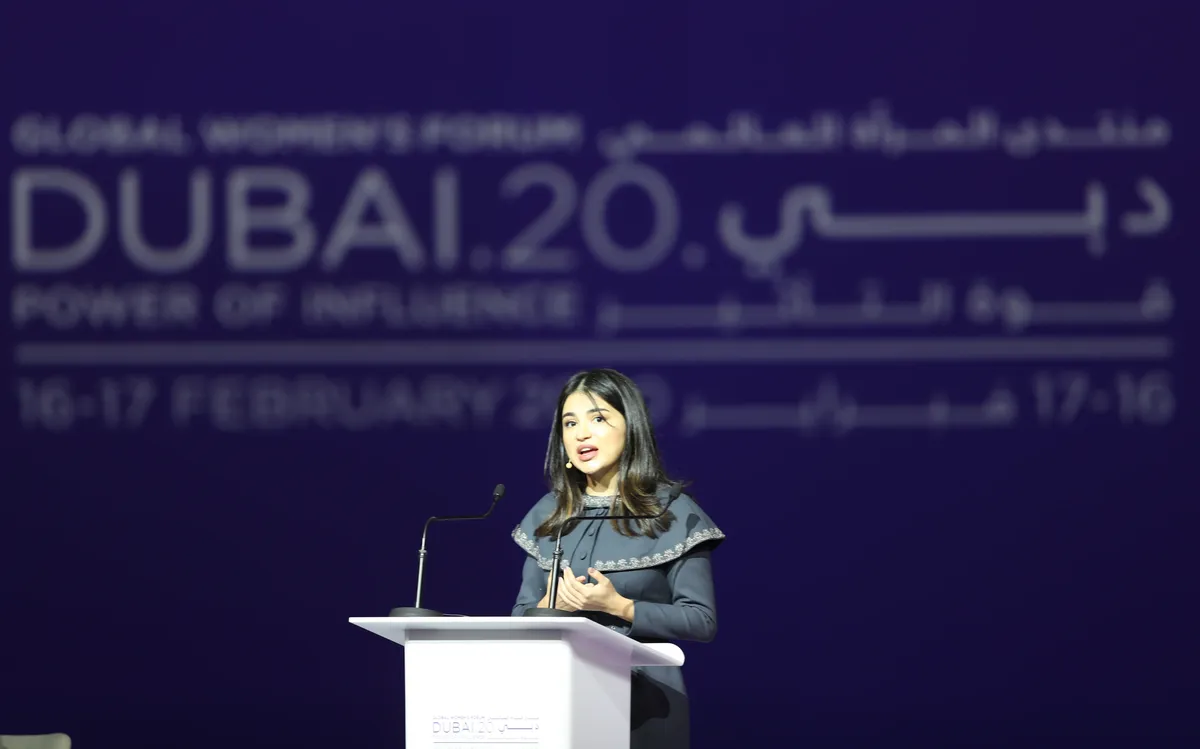
These people are monitored, they are shown in the news, that is, there is no monopoly of one person in the information space. And therefore there are rumors that successors are preparing. But the process of transferring power is very fragile and dangerous. Therefore, authoritarian regimes prefer to maintain power in the hands of one person, and not to transfer this power to even very loyal figures and even family members.
- If you look at Russian experience, “zeroing” is needed at the moment when the leader’s rating is weak and when his legitimacy must be strengthened by any means. Is there any need to look at the ratings in Uzbekistan now? Or does some other approach prevail?
- The ratings are also important. In Uzbekistan, the President’s popularity decreases. This is due to the fact that there is a contrast between the first and second presidential term of Mirziyoyev. His first presidential term was very successful, Mirziyoyev became a very popular president, because there was a huge contrast between how people lived under Karimov, and how they began to live under early Mirziyoyev. Economic reforms, liberalization, simplification of business, simplifying the foreign exchange and financial system-people have the opportunity to get rich, conducting small entrepreneurial activities. The first term set a very high bar for Mirziyoyev himself.
But now he was faced with the problem that all harmless reforms are almost over.
Further, in order to allow people to live better, you need to change the political system, you need to work on a system of checks and counterweights - so that too influential monopolies do not appear in the person of influential groups of elites,
Which continue to engage in corruption and draw resources from a public pocket. It is impossible to do all this without changing the system without democratizing the political regime. This will mean the end of the authoritarian regime, which Mirziyoyev himself does not want. Constitutional reform is one of the reforms that could support this popularity.
- You noted the reforms of the first term of Mirziyoyev. It turns out, from the point of view of a simple Uzbekistan, Mirziyoyev is a good president, “raised Uzbekistan from his knees”?
- Most likely, it is. If you travel to Uzbekistan and talk to people, they will be generally satisfied with what is happening. A very small group in society is poorly treated by the president, and these are mostly elderly people who found the Soviet Union and Karimov and who say that there was some stability under Karimov. But if you talk to young people - and this is the majority of the population, Uzbekistan is a very young country - then they understand that it has become easier to travel, it has become easier to earn in any field, from entrepreneurship, ending with tourism and education. It has become much easier to move within the country. State services have become easier and more accessible, including thanks to the development of the Internet and the expansion of access to the network. There are more products in stores, diversity has appeared. From the point of view of an ordinary Uzbekistan, it really has become easier to live. And, most likely, these people will voluntarily go to vote in the presidential election when they will be.
- That is, this result is 90% now - this is not that surprising?
- The only main elections in Uzbekistan are presidential, all the rest are side. People do not go to vote as massively as official statistics show us. Basically, people believe that nothing will change from their opinions, that this is all unwell, but it is important who at the head of the country. If there is a large percentage of turnout in the presidential election, I will really believe it, and the rest is not that a real picture.
- How will the problem of the territories of Karakalpastan be resolved in the new constitution? Last year there were protests, and it was precisely because of them that they postponed the constitutional reform.
- In the previous version of the Constitution, it was proposed to remove the autonomy of Karakalpakstan and the possibility of withdrawing Karakalpakstan from the Republic of Uzbekistan. This is a Soviet wording, which in reality means nothing. And the fact that it exists in the Constitution does not really mean that Karakalpakron can so easily leave the republic.
But for people in Karakalpakstan, this turned out to be a very important component of their identity, their thinking of themselves as part of Uzbekistan. Therefore, people went to the mass protest last year, and the reform of the Constitution was postponed for a long time.
The authorities did not want to step on the same rake for the second time. Therefore, the old proposed version of the Basic Law was radically revised, and now in the new Constitution there is an article that the Republic of Karakalpakstan is autonomous and has the right to withdraw from Uzbekistan based on the results of a referendum, which can be held in Karakalpastan. The protesters achieved their result, retained autonomy, but at the cost of their life.
- But, as I understand it, there really is no prospects for the exit.
- Of course not. The political elites of Karakalpakstan are quite very connected with the central authority of Uzbekistan, and it is simply unprofitable for them to leave Uzbekistan because of their personal goals.
- It is strange that with the general similar political maneuvers, Mirziyoyev is not very close to Putin. For example, Uzbekistan, even in the EAEU, still does not seek and tries to hold on to. What could be this explanation?
- Uzbekistan is in a slightly different position than other countries of Central Asia. He does not have a common border with Russia, there is no such need to maintain close ties with the Russian Federation, he has more maneuverability. He can enter the CSTO for one year, then go out (which he did). It can be part of the EAEU, and then get out of its composition, and thus balance between different and influential countries in the region.
Its maneuverability allows Uzbekistan allows its rather closed secure protectionist economy. This allows internal resources to develop.
When you close the boundaries, you get a very comfortable “bubble” inside Uzbekistan, in which your own manufacturers are grown, and you become independent of the external ones.
Uzbekistan can easily not formally enter into any organizations with Russia, because it is economically not dependent on it as much as Kazakhstan or Kyrgyzstan. But, on the other hand, there is an informal dependence and proximity of the Mirziyoyev regime and Putin's regime through certain persons. For example, in February, an investigation of the Uzbek branch of Radio Liberty was published, which stated that many rather important gas deposits in Uzbekistan were also controlled by Gazprom. It is known about the proximity of Mirziyoyev with the Russian oligarch of Uzbek origin by Alisher Usmanov. Formally, Uzbekistan can look like a country that does not depend on Russia at all. But in reality, this proximity can be much closer than we can imagine.
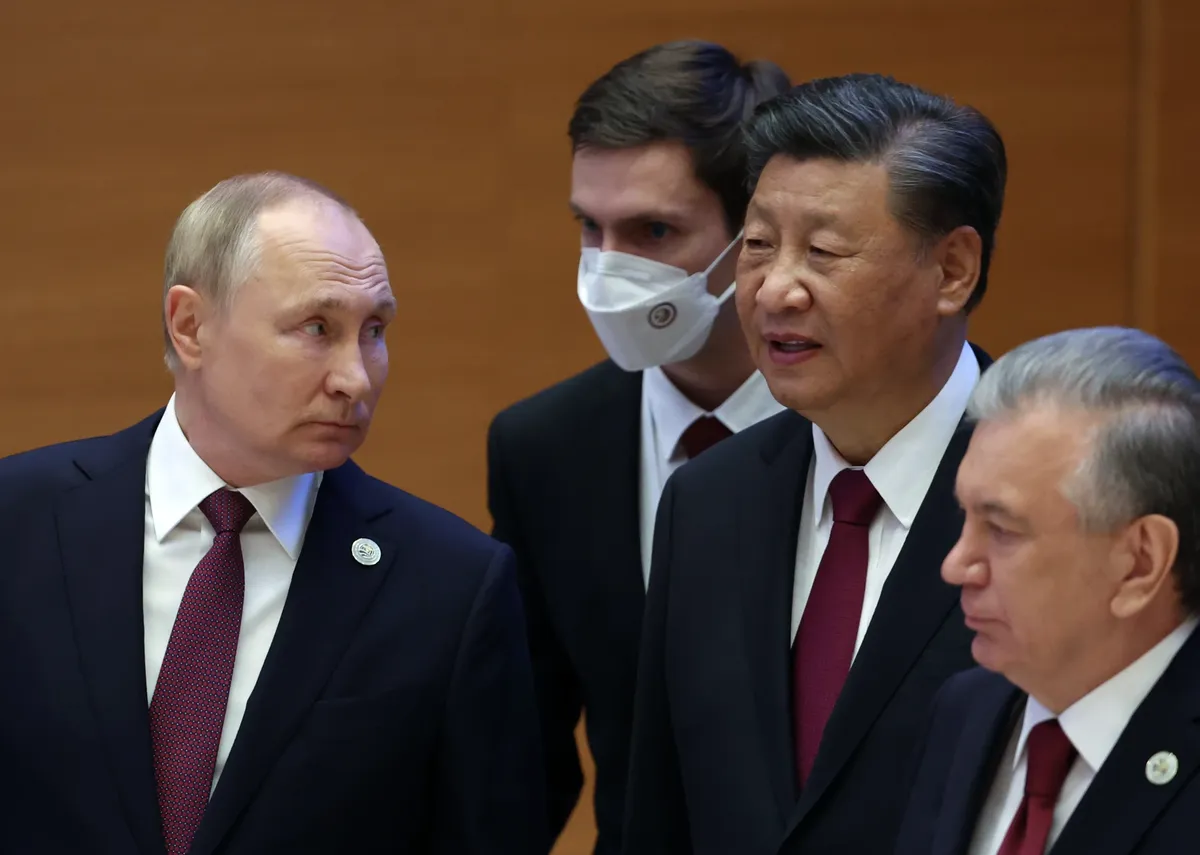
- If we talk about the connections of Uzbekistan with other countries, in the current conditions, who will most likely come closer to: with Russia, Turkey, China, the USA?
- First of all, Uzbekistan will come closer to other countries of Central Asia. This was in the priorities of his foreign policy. From the very beginning, as soon as Mirziyoyev came to power, he visited all the countries of Central Asia, launched the summit format at the highest level among the presidents of Central Asia and did a lot in order to ensure that Uzbekistan solve his problems with neighbors and begin to economically cooperate with them.
However, Russia should not be written off.
Russia is still an important country for Uzbekistan, first of all, due to the proximity of the interests of political elites.
The third important country is China, the main trading partner of Uzbekistan. In 2022, trade between countries reached an almost record mark of $ 10 billion in trade, investments from China to the Uzbek economy are also growing.
Other countries will go further. In particular, Türkiye, since the Turkish foreign policy in recent years has focus on the countries of the Turkic language and the countries of Central Asia. There are also other partners of Uzbekistan, ranging from South Korea, Japan to the countries of the West and the USA. In this regard, Uzbekistan will continue to pursue a multi-vector foreign policy in order not to depend on anyone too much and at the same time not to be left without external support.
- Summing up, who is the more dictator in the end: Mirziyoyev or Putin?
“I can’t answer you.” The political regimes of Uzbekistan and Russia are quite different to compare them. Russia is much more than Uzbekistan. In terms of the population, it is much more diverse, and because of its scale, it is quite difficult for the president to accumulate too much power in his hands, he has to give some things to lower levels. Naturally, there is a nearest circle that solves a large number of influential issues, and there are issues that simply do not reach Putin. Even if Putin wanted, he probably could not consolidate absolutely all power throughout the Russian Federation.
Mirziyoyev in this regard is much easier. Uzbekistan is also a large country, the most densely populated country in Central Asia (36 million people). But in comparison with Russia, it is not so diverse and not so large in the territory. Because of this, Mirziyoyev has great potential in order to concentrate more power in his hands. But I would not call it a dictator, because the dictatorship is something totalitarian, and Uzbekistan is still much more flexible. I would call Mirziyoyev an authoritarian leader, not a dictator. Uzbekistan pretends to be democracy, although it does not turn into it. And Mirziyoyev has to maneuver, in different situations to demonstrate a political regime from different angles. It is difficult to call dictatorship when the president has to play such cat mouse cats.