
Translated material
Great European wall
The EU is preparing to radically reconsider its own rules for migration. Show on the cards why reform is actively discussed right now
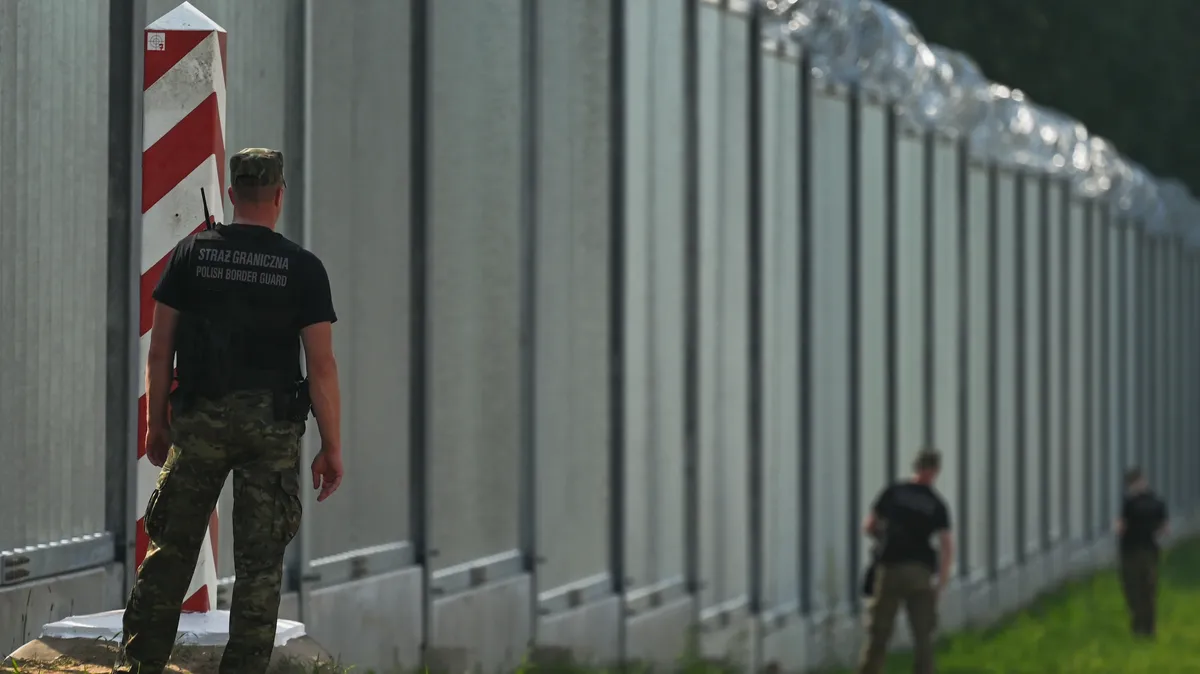
The border wall on the Polish-Belarusian border in the area of the village of Novodzel. Photo: Artur Widak/Reuters
A few years ago, Europe experienced an acute migration crisis: thousands of refugees from the Middle East tried to get in boats to Greece and Italy and died on the way. Then the problem was the focus of all the media, but in the end, at the level of European rules, it was never resolved. The pandemic and the war in Ukraine replaced the problem from the agenda and did not allow Brussels to raise the question that the Dublin regulations, on which migration law is based on the EU, should be revised.
According to this document, refugee status must be obtained in the country of the first entry. It is this rule that makes the border countries of the EU - Italy, Greece and Malta, where most migrants from the countries of Africa and the Middle East arrive - to take the main blow. Not seeing the way out, some countries began to build fences on their borders. Over the past ten years, the length of such fences has increased by 6 times and now is more than 2 thousand km. As a result, in April, the initiative of mass “fence” was almost adopted by the European Parliament, and only at the last moment did the option of more moderate reform still won. Novye Europe talked with experts and deputies of the European Parliament and figured out what the main idea of the EU migration reform was and why it caused such hot debates.
Even without special approval and financing at the EU level over the past ten years, European countries have intensively engaged in the construction of walls on their borders. If in 2014 the length of the fences on the borders of the EU was 315 km, then by 2022 it grew six times and reached 2048 km.
Since April 9, 2023, for three days, a fishing vessel, who was heading from Libya to Europe, had a disaster in the Mediterranean Sea near Malta. There were 400 refugees on board the ship.
All this time, the non -governmental organization of the Alarm Phone, which has been engaged in the help of refugees who fell into a distress in the Mediterranean since 2014, tried to get through to the Maltese authorities, and also sent 21 emails with a request to start a rescue operation. The fuel ended on the ship, and people from pitching and overwork began to lose consciousness. The Maltese authorities in response stated that they did not receive requests for a rescue operation. As a result, the Italian coast guard helped refugees, accompanying the ship to the coast of Italy and providing first aid.
From January to April 2023, 40 thousand migrants arrived in Italy - this is almost four times the same indicator over the past year. These are mainly refugees from the cat d'Ivoir, Guinea, Egypt and Pakistan. On April 11, 2023, Georgia Meloni Prime Minister announced a state of emergency in the country, which will last the next 6 months and allow the government to allocate 5 million euros to solve the problem of the growing tributary of migrants.
Against this background, the EU with renewed vigor flared up on the reform of migration legislation. Some countries insist on tightening control at the borders, up to the construction of fences and strengthening air and coastal measures. An alternative decisions package implies the creation of a refugee redistribution procedure from border countries to other EU states. Despite the fact that the second approach actually changes the fundamental principle of the EU migration system - the famous Dublin regulations - it is he who probably prevails.
Running to Europe
Migrants make up a noticeable and important part of the population of Europe. According to the International Migration Organization for 2021 (this is the last information available now), the most migrants among the EU countries live in Germany - 15.8 million people, France is in second place with a large margin, where 8.5 million migrants are registered. In relation to the number of local residents, the migrants are most noticeable in Malta (26% of the total population), in Sweden (they make up 19.8% of the population), Austria (19.3%) and Germany (18.8%). The UN migrants include foreign citizens who are legally staying in a particular state. This wide category includes foreign workers, students, non-citizens of the country with a residence permit, as well as refugees awaiting the provision of asylum in the country.
In 2022, 330 thousand illegal crossings of the EU border were recorded - this is the highest indicator since 2016. The most popular route for the illegal entrance was Western Balkans - almost half of the stream was included in them. Most often, citizens of Syria, Afghanistan and Tunisia illegally penetrated into Europe.
In addition, in 2022, the number of applications for asylum in the EU countries increased markedly. If in 2021 the number of primary applications amounted to 538 thousand, then in 2022 it increased one and a half times and reached 882 thousand. Almost a quarter of them (217 thousand) fell on Germany, in second place - France (137 thousand), in the third - Spain (116 thousand). Most often, the asylum applications came from Syria citizens (132 thousand), Afghanistan (113 thousand) and Venezuela (50 thousand).
To this increased stream, it is necessary to add 13 million Ukrainian refugees who entered the EU from Ukraine and Moldova since the beginning of a large -scale war in 2022. This was made possible thanks to the directive of temporary protection enforced on March 4, 2022. She allowed , on the one hand, to open additional border points and simplify the entry of Ukrainians into the EU, and on the other, to provide refugees with a set of necessary rights. Thus, the directive gives them the right to live in the EU during the year with the possibility of extending for another two years in case of continuation of the war and to access the social support and medical care system, to education and the labor market. During this time, 10 of these 13 million refugees left the EU countries.
Most of the remaining refugees from Ukraine settled in Poland (1.4 million), Germany (1 million) and the Czech Republic (0.43 million). At the same time, their presence was most noticeable in the Czech Republic and Estonia.
But if the EU managed to cope with the influx of Ukrainian refugees, quickly taking measures and ensuring the rights arriving with the necessary set, then in the case of migrants from other countries the situation is more problematic.
The burden of border countries
The fact that Europe remains generally poorly prepared for large -scale influx of migrants was clearly shown by the Autumn of 2021, initiated by the Belarusian authorities on the border with Poland. Then thousands of refugees and migrants from Iraq, Afghanistan and Syria sought to get from Belarus to Poland. Warsaw was not ready for such an influx of people, as a result of which the border forces had to stop people breaking through the cordons with the help of water furlines. Several migrants died on the border from the cold. In total, since 2014, when trying to get to Europe, at least 26 thousand migrants died .
Problems related to the inability of national migration and borderline bodies to take a large stream of people in a short period of time, can partially be explained by the existence of the so -called Dublin regulations in the EU. This system , adopted in 2013, establishes clear criteria for which country should consider the request for asylum. Most often this is a country of entry. Exceptions are cases when the refugee has relatives or actual documents for entering any of the EU countries-then this country should deal with this refugee.
However, this system, adopted even before the migration crisis of 2015-2016 and events on the Polish-Belarusian border of 2021, puts in the difficult position of the country, which are located on the southern borders of the EU. First of all, it is Italy, Spain, Greece and Bulgaria - it is through them that the main stream of refugees from the countries of the Middle East passes. As a result, in these countries, the EU accumulates a large number of migrants awaiting solutions on their applications, and an additional load is laid on national migration services and law enforcement agencies.
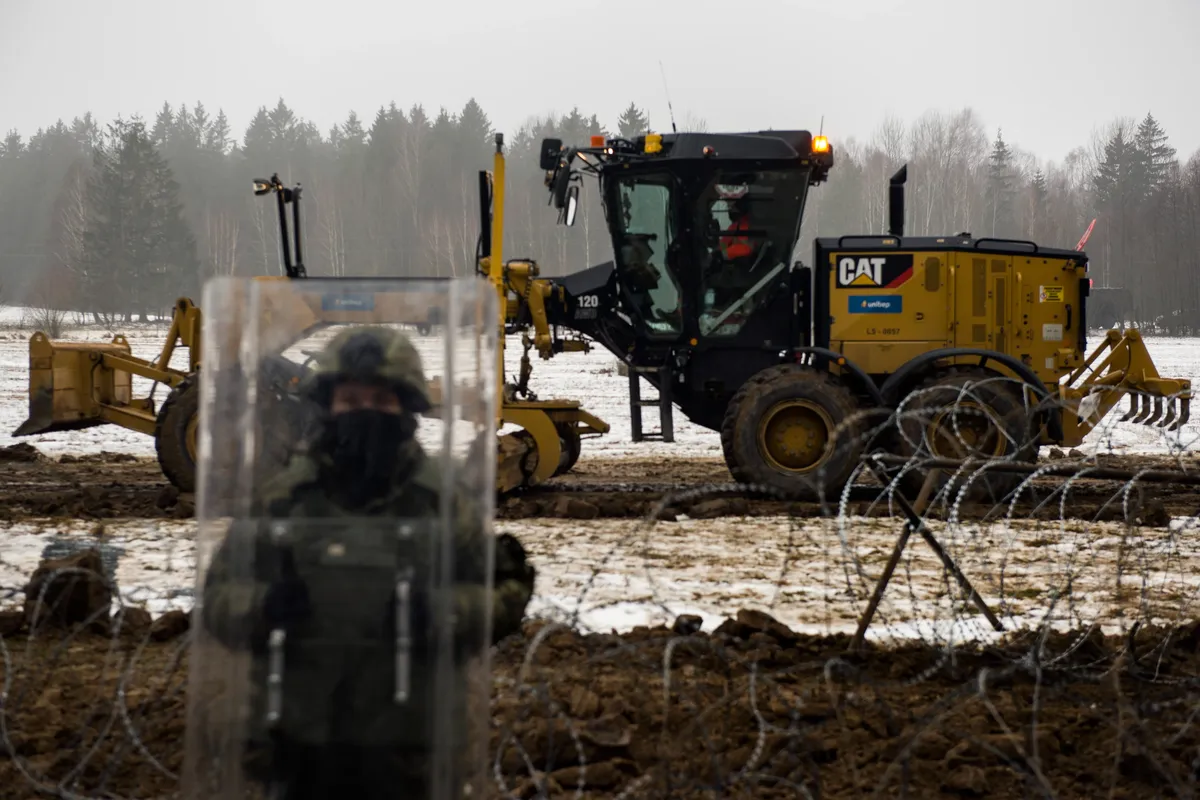
At the same time, the crisis on the Polish-Belarusian border clearly showed that not only the Mediterranean, but also other border states of the EU could face a similar situation. In the winter of 2021–2022, Warsaw began to independently build a two hundred -kilometer fence on the border with Belarus, which will pass through the protected Belovezhskaya Pushch.
No reform - there will be a fence
In order to somehow solve the problem of border countries at the pan-European level, in the summer of 2022 21 European countries signed a “ Declaration of Solidarity ”, according to which EU members can adopt refugees from the border country of arrival on a voluntary basis. However, despite the fact that 13 countries of the European Union agreed to participate in the procedure, and in September 2022 8000 relocations were already agreed , only 435 of them were carried out by February 2023. At the same time, it was initially assumed that for the effective operation of the mechanism it is necessary to provide 10,000 movements per year.
The initiative failed for the most part due to the voluntariness of the participation of countries in it and the lack of coordination of the process by Brussels. Against this background, an alternative approach began to gain popularity in the European Union, which focuses on increasing security on European borders, and not on facilitating the fate of migrants and refugees.
In early February 2023, before the next EU summit, Austria, Denmark, Hungary, Estonia, Lithuania, Latvia and Greece signed a collective letter demanding to strengthen border control and strengthen the boundaries. During the summit itself, many other countries supported this approach. And already before the next summit, the head of the European Commission Ursula von der Lyain called the strengthening of external borders a priority in the fight against illegal migration.
The construction of additional walls and fences on the boundaries of the EU is the extreme and most debatable manifestation of this approach. However, it received support for both national governments, such as the Austrian or Hungarian , and among the right -centric forces of the European Parliament. For example, the head of the European People’s Party (UNP) Manfred Weber said that the construction of fences in exceptional cases “is not a taboo” for his party. At the same time, during the migration crisis of 2015-2016, Weber considered the construction of additional fences on the border and completely necessary.
In April, the European Parliament adopted an amendment from the UNP, in which, in fact, the support of the most rigid scenario of the reform was expressed. It provides for the allocation of additional financing for "[strengthening] of the protection of borders and infrastructure, [procurement] of surveillance tools, including air observation, and equipment."
The amendment was adopted by 322 votes. 290 deputies opposed -mainly social democrats, green and extremely left. The voices of the liberals were divided. “If we want to show solidarity, then we must restore the order on our borders, if necessary to build fences where they are necessary,” commented on the adoption of the amendment member of the EP, the coordinator of the European Parliament for Civil Rights and Internal Affairs, Yorun Linars . The Leinars did not answer the request of Novy-Europe with a request to clarify the position.
However, despite the fact that in April the parliament approved a specific amendment, the next day the general bill on the budget for 2024, which this amendment belonged, could not gain the majority of votes. Suddenly, deputies from the main euroskeptic force in the European Parliament - the European alliance of conservatives and reformists, decided to refrain .
"No EU money will go to finance the EU walls!" -the Social Democrats celebrated the victory.
“The right to asylum should be respected, and the construction of walls is not a decision,” explains Zippel , a deputy of the European Parliament from the Social Democrats and a participant in the relevant civil law and internal affairs committee in a conversation with the New Evrop. Commenting on the position of his colleague and also a deputy from Germany, Manfred Weber from the UNP, Zippel advised him not to forget the historical experience of the construction of the wall, "which divided our country, our society and our families."
However, even without special approval and financing at the EU level over the past ten years, European countries have intensively engaged in the construction of walls on their borders. If in 2014 the length of the fences on the borders of the EU was 315 km, then by 2022 it grew six times and reached 2048 km.
Solidarity and acceptance
Despite the fate of the “fence initiative”, in April the European Parliament nevertheless laid the foundation for the reform of the EU migration legislation. The new regulatory package includes three key changes.
Firstly, the Rules of verification on the border for citizens from third countries who illegally entered the EU territory are introduced for all EU countries. They include identification, removal of fingerprints, safety testing and preliminary assessment of the state of health. And although identification and dactyloscoping are already implemented to one degree or another by EU member states on the basis of national legislation, the new rules unify the procedure for all countries. The procedures for checking health, as expected, should help provide refugees with operational medical care.
Based on the results of all these actions, the border services will be able to immediately determine whether refugees have the right to provide asylum or not.
Secondly, arriving migrants who requested refuge, will now not be required to remain in the country of the first entry. In the “crisis situations” similar to which, for example, in 2015–2016, during the previous migration crisis and on the Polish-Belarusian border in 2020–2021, Brussels will be able to redistribute the arrivals between other EU countries, which expressed a desire to participate in this mechanism. The “crisis” of the situation, in turn, will be determined by the European Commission.
Thirdly, an accelerated procedure for issuing long-term residence for legal migrants is introduced. Now the deadline for consideration of the application will be limited to 60 days, and upon receipt of residence in one state of the EU, citizens of third countries will be able to work legally, live and study in other EU countries without additional checks.
The approach proposed by the European Parliament, according to Birgit Zippel, is much more resistant to challenges and, unlike attempts to build more walls, corresponds to European values. On the one hand, these measures will help refugees more qualified assistance, and on the other hand, will facilitate the task in case of deportation. Zippel, which took part in the preparation of this part of the reform package, emphasizes: a deviation from these rules is possible in the case of the so -called "humanitarian entry." It is such a retreat that can be used in relation to Ukrainians running from the war.
Although the project has yet to overcome voting in the European Council, this reform has every chance of being carried out before the end of 2024. EURACTIV sources in the European Commission report that EU higher officials are positive in relation to the prospects for taking the Pact. First of all, because the final draft migration reform turned out to be very compromised and did not cancel the Dublin regulations completely, but only made it more efficient.
In addition, the project was supported by the system forces. The development of proposals was attended by both the representatives of the UNP and the Social Democrats, which allowed the deputies to the vast majority to accept each of them.
Only Euroskeptics and the extremely right from the group “Identity and Democracy” voted against. Moreover, the project was supported even by the EuroSceptics from the Italian ruling party “Brothers of Italy” - they are interested in the speedy resolution of the current crisis and moving part of refugees from Italy to other countries.
The package nature of the proposed reform is another important advantage of this initiative, in the commentary of Novo-Europe, Juan Ferno Lopez Agylar , a deputy of the European Parliament from the Social Democrats and the chairman of the relevant committee on civilian freedom and internal affairs, emphasizes. Unlike previous attempts, the politician explains, now the interconnected changes are proposed that can be implemented simultaneously.
However, in the European Council there are countries that may oppose reform.
“Some European leaders built their political platforms and won the elections thanks to the anti-immigrant agenda.”
- explains Lopez Agilar. This remark, in particular, may relate to the right governments of Poland and Hungary . Voting can also be delayed because of the domestic political situation in Sweden, which now presides in the EU. Крайне правые участники коалиции в Стокгольме выступают категорически против решений об обязательной релокации мигрантов и угрожают выходом из правительства в случае их принятия. В этой ситуации правящая коалиция в Швеции может распасться.
Но проект реформы и не требует единогласного решения в Евросовете, поэтому для его принятия будет достаточно заручиться поддержкой квалифицированного большинства. Такой подход возможен в случае, если предложение закона изначально исходит из Еврокомиссии. Для того чтобы реформа была принята, за нее должны проголосовать 55% стран ЕС в Совете, в которых проживает не менее 65% населения ЕС.
«Мы смогли достичь большинства в Европарламенте, значит, большинство сможет быть достигнуто и в Европейском Совете», — считает Лопес Агилар. Кроме того, подытоживает он, при должном лидерстве в Совете, особенно с началом председательства Испании, можно ожидать финализации проекта реформы и ее окончательного воплощения.