
Translated material
Against whom money will vote?
“Baydenomik” is an increase in taxes for the rich. But this may not be frightened before the presidential election. And Trump
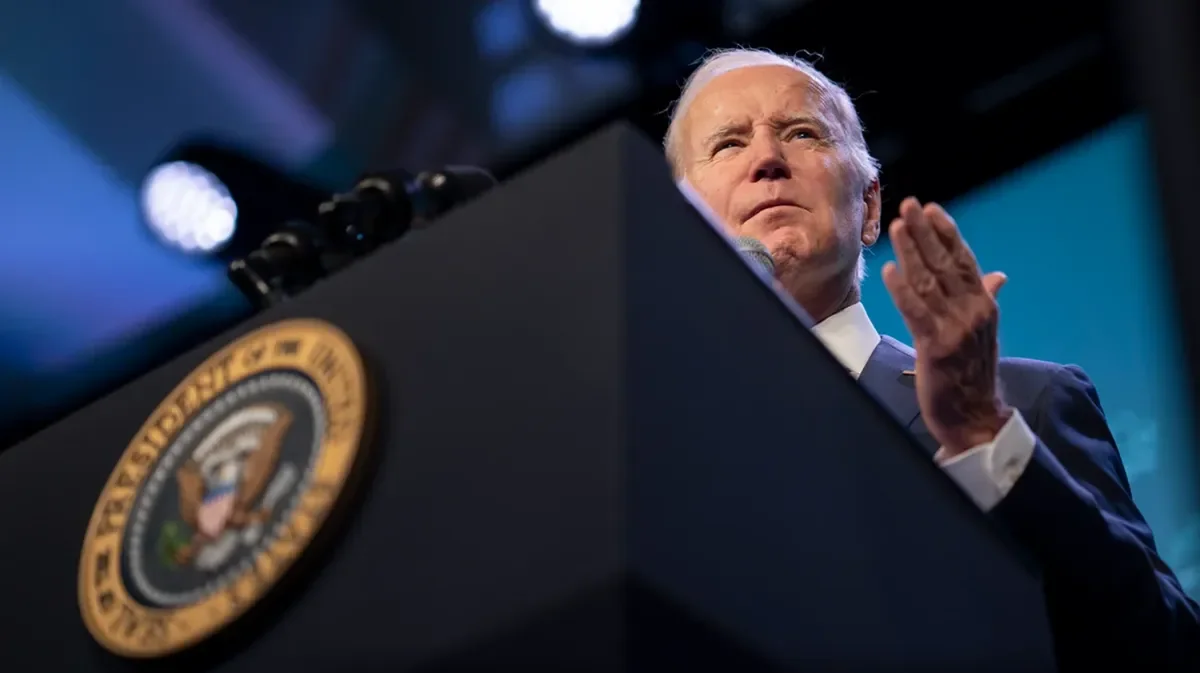
Joe Biden. Photo: Zuma TASS
On April 25, US President Joe Biden announced that he was going to run for a second term of the head of the United States. He began his new election campaign under the slogan "Let's finish work." What kind of work does Biden want to finish, which he managed to achieve in the first two years of his presidency and what the so-called Bidenomik is, says the political scientist and the author of the telegram channel about the American policy of One Big Union, Jan Veselov.
"Finish the work"
The announcement of the election campaign can hardly be called unexpected. The president and his wife Jill himself repeatedly told reporters in an interview that it was already made a decision on the nomination for a second term, it remained only to choose a date for the official announcement. And in general, after the first period, the current president usually expect an attempt to choose again. And although in the history of the United States there are a lot of presidents who, after the same period in the White House, lost the elections (or did not live until the end of their authority), only six decided not to re -elect. And the last such case occurred more than half a century ago, when Democrat Lindon Johnson, whose rating was negative due to the Vietnam War, won party primaries, but refused the nomination and supported his vice president.
Like Johnson, Biden cannot boast of high support: after the chaotic evacuation of American troops from Afghanistan in August 2021, his rating of approval by the Americans went into the minus and did not recover, remaining in the region of 40%.
In addition, Biden is the oldest president. Now he is 80, and in case of re -election by the end of the second term, he will reach an advanced age of 86 even by the standards of the United States.
Despite this, during his last appeal to Congress in February 2023, listing the successes and achievements of his administration, Bidensaid more than 10 times the phrase “finish work”, which many interpreted as the desire to go for a second term.
In 2020, Biden went to the elections with a large -scale reform program, which intended the development of American industry, a decrease in the level of economic and racial inequality, increasing taxes for corporations and richest Americans, the development of green energy and the withdrawal of an American economy from a crisis caused by an epidemic of coronavirus. Like many presidents before him, Biden could not fully realize his plans, but was able to achieve the adoption of a number of bills in the field of economics.
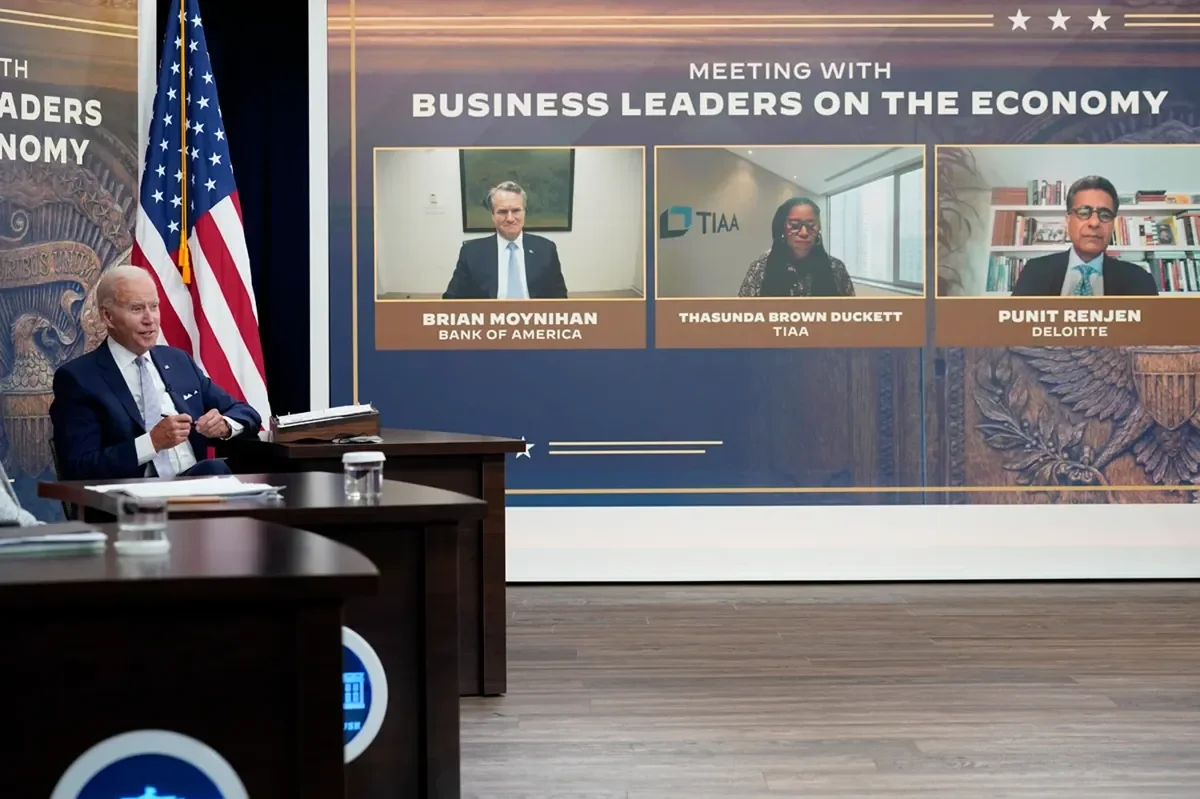
Money in hand - people and business
Biden's first major reform was the American Rescue Plan Act adopted in March 2021 in the amount of $ 1.9 trillion, which was supposed to support citizens and small businesses, accelerate the economy out of the recession and spur the pace of vaccination from coronavirus. Thanks to him, unconditional cash payments were made for most Americans in the amount of $ 1,400, unemployment benefits were raised, children's benefits and a moratorium on the eviction of residents with debts were introduced (which were also helped with payment of housing and communal services), the small business received preferential loans, and the states - financial grants from the budget. Due to this, the general poverty in the United States decreased by a third, and children's poverty - more than doubled. In addition, budget expenses supported the economy, the unemployed got the opportunity to spend more time on the search for a new place of work, and those who were dissatisfied with their workplace and the level of salary were able to quit, as tens of millions of Americans received .
Due to the temporary shortage of working hands, employers began to increase salaries, especially in a low-paid sector.
At the same time, the vast majority of the Americans did not leave the labor market, but really found more favorable conditions - as a result, unemployment reached the lowest mark of 3.4%over the past 50 years.
Another priority in Biden was the development of aging infrastructure, which was chronically unfinished . The Society of Civil Engineers of the United States, which annually puts on assessments of the state of various infrastructure systems of America and individual states on a five -point scale, have evaluated them for two or three points in recent years. This was recognized even by the Republicans, who under Trump regularly conducted “infrastructure weeks” with business representatives, but they quickly became a meme and did not lead to any tangible results. Bidden immediately proposed to actively invest both in repair and the construction of new roads and bridges, railway tracks, public transport, sea ports and airports, high -speed Internet, electric transport and chain of charging stations for it.
The bill worth $ 1.2 trillion was adopted in August 2021 with the support of both parties: 19 Republicans joined the democrats in the Senate. This is the largest package of investment in infrastructure over the past 70 years, and thanks to it, by 2024, an additional 2.3 million jobs will be created , although all funds will be spent only for eight years, and they will have to expect full return from them even longer.
Biden largely continued the course of Trump's Economic Nationalism with the support of local industry. But if under Trump this was mainly limited to rhetoric, then under the current president, investment in the construction of new industrial facilities reached a record amount, exceeding $ 100 billion. In the summer of 2022, Biden also achieved the adoption of Chips ACT , which provides for the allocation of 280 billion to support scientific research, of which 53 billion are associated with the development and production of semiconductors, the deficiency of which was greatly affected by the country during the coronavirus epidemic due to the gap of logistics chains.

Advance and debts
But Bidden wanted to develop not only technical, but also social infrastructure: schools, higher and technical education, the sphere of care for the elderly and disabled. However, the bill associated with this encountered the opposition from a number of conservative democrats, whose voices were necessary for its adoption. They were concerned that new expenses will spur the growth in inflation, which under Bayden reached unprecedented values over the past 40 years. As a result, after protracted negotiations, the amount of expenses was reduced from almost $ 737 billion, and the bill itself called the Inflation Reduction Act , although economists are still arguing whether it would really help reduce inflation. Within its framework, insulin prices and other medicines for millions of pensioners were reduced and numerous loopholes in tax legislation were closed. In addition, a record amount of almost 400 billion for the development of green energy and a decrease in greenhouse gas emissions was allocated. It is expected that various tax deductions for buying electric vehicles, increasing the energy efficiency of houses and installing solar batteries and winding power plants will reduce the share of CO2 emissions by 40% of the 2005 level, when they were at the peak.
Biden's final reform was a large -scale debit of debts on training loans at universities.
In the United States, more than 90% of such loans are issued by the federal government, and the total amount of debt for them exceeds 1.5 trillion dollars. Initially, the Biden administration was limited to small write -offs for the victims of fraud on the part of unscrupulous educational organizations and several times extended the moratorium on payments for everyone else. But in August 2022, the president announced that debtors from low -income segments of the population and middle class (with income of not more than 125 thousand) will reduce the amount of debt by 10–20 thousand dollars, as well as revise the payment program, limiting monthly deductions on loans to 5% of their income. But despite the relative popularity of the program, it was challenged in court, and now the Supreme Court (where the majority of judges appointed by the Republicans) must bear the verdict about the constitutionality of the program and can potentially cancel it.
Great hopes
In the November intermediate elections to Congress, the democrats performed much better than expected by restraining the “Red Wave of the Republicans” and retaining the majority in the Senate. But they nevertheless lost the House of Representatives to the Republicans, who received, albeit small, but the majority appointed their speaker. This means that over the remaining time of his first term, Biden is unlikely to be able to achieve any legislative achievements. But the Republicans will have little to boast, because the Democrats retain the upper house of the Congress, and Biden himself has the right to veto.
In the coming months, both parties will have to conduct complex negotiations first of the increase in the state debt limit, and then about the adoption of a new budget.
What can President Biden offer voters in 2024 in the field of economics? This will probably be a continuation of the current course, along with attempts to adopt part of the traditional republican promises - in particular, reduce budget deficit, reduce inflation and achieve a reduction in taxes for most Americans.
The priorities of the White House can be judged by the draft budget for 2024, which the Biden administration presented in March 2023. True, there is no chance that he will be unchanged through the Republican House of Representatives. The budget itself is designed for the amount of 6.8 trillion dollars and, on the one hand, involves an increase in the costs of defense and social expenses, and on the other, it is aimed at reducing the budget deficit. Biden wants to additionally spend 2 trillion on various measures within the country, and pay them at the expense of additional income in the amount of 4.5 trillion mainly due to taxation of corporations and the richest Americans. At the same time, the budget deficit should decrease by almost 3 trillion over 10 years.

What exactly does the Biden administration propose in its budget, not counting traditional expenses?
Restoring the system of children's aids in the amount of $ 3,600 to families with children to six years old and 3000 - over six years old, which were introduced in 2021, but only on a temporary basis.
The consolidation of the price of insulin at a mark of $ 35 for all Americans, as well as reducing prices for other medicines for pensioners. Earlier, as part of the Inflation Reduction ACT, the Congress set this price only for recipients of state medical insurance for Medicare pensioners.
Permanent status for expanded subsidies within the framework of Obamacare, which should expire by 2025. They increase the upper level of income with which you can get a state subsidy for medical insurance. The program will also work in the republican states that refused to expand the action of Medicare (despite the fact that the federal government took over all expenses).
15 billion for a program of free breakfast and lunch in schools that will allow you to feed 9 million children.
471 million for programs to reduce maternal mortality and the availability of obstetric care in rural areas. The state program for the poor Medicaid will provide women with medical insurance within 12 months after childbirth, and not 60 days, as it was before.
The demand for the Ministry of Health from private insurance companies, if the amount in the medical insurance package greatly exceeds the cost of medical services.
An increase in the maximum amount of subsidies for paying for higher education Pell Grants for low -income students and 500 million per programs for the provision of free two -year higher education.
A new program to promote the States in providing free universal preschool education.
A national system of hospital and family holidays for up to 12 weeks.
An increase in the Pentagon budget by 3.2%, including the allocation of an additional $ 6 billion in NATO European allies in NATO.
As often happens in the USA, any attempts to increase budget expenditures are stumbled upon an obvious question: what to pay for all this? In response, the Biden administration proposes to increase taxes for corporations and wealthy Americans. Among the measures:
The introduction of the so -called millionaire tax-a 25% income tax on Americans, the total condition of which exceeds $ 100 million (approximately 0.01% of US residents);
Increased income tax increased from 21 to 28%. There is also a decrease in incentives to register profits in low tax countries. Foreign income tax will increase from 10.5%to 21%, and the tax on purchase by companies of its own shares - from 1 to 4%;
The upper submissive bar for individuals with incomes above 400-450 thousand dollars will increase from 37 to 39.6%. Revenues from capital growth of more than 1 million will be taxed the same tax as labor revenues, and the tax loophole that allows investment managers to declare their compensation as interest on capital will be closed;
The Medicare hospital-path, known as Plan A, will receive additional funds due to the ability to negotiate the cost of drugs and new tax for Americans that earning more than 400 thousand dollars a year. There will also go from increasing tax on net investment income over 400 thousand US dollars from 3.8 to 5%. In addition, he will be charged with the owners of the so -called “Testy firms”, which include business income in their personal tax returns and are currently not taxed.
Can in 2024 Biden to convince the Americans to give him “finish the work” as president and return the majority in Congress to the Democrats or will they elect the Republican by considering Biden's term unsuccessful? This will largely depend on the state of the American economy (because even in the presidential election, Americans often vote with a wallet), and from the personality of a Republican candidate, whom the party will choose for primaries during February-June 2024.
Comment of the Department of Economics
Who does the money vote for?
On the eve of the 2020 election, the CNN Business editorial office conducted an experiment - it amounted to two conditional portfolios of the shares for Biden and Trump. The Republicans' portfolio included hydrocarbons, military industry and the leaders of Wall Stanley (Morgan Stanley, Bank of America), the democrats went to “chip manufacturers”, “renewable energy”, “medical insurance”, Tesla and the shares of European companies (since Biden promised to improve relations with the EU). As a result, it turned out that the stock market voted for Baydenomik even earlier - by the fall the “Biden portfolio” rose by 53.3%, the “Trump portfolio” fell 1.9%.
By the way, the stock market predicted not only Biden’s victory, but also the alignment of the votes. Biden defeated the 10 largest cities in the United States, where high-tech businesses are concentrated-robotics, genetics, thin chemistry, IT industry. From the top 10 innovative states of America (according to US Innovation Index, which is Bloomberg and the Massachusetts Institute of Massachusetts), only Texas voted for Trump (but Oil “voted” for the Republicans). In general, Biden won in districts that generate 70% of US GDP. That is, money - in the literal sense of the word - voted for the Democrats. It was not so before - Hillary Clinton “took” the districts generating 64% of GDP, and Democrat Albert Gore in 2000 won the districts that provided 54% of GDP. As a result, it turned out that the oldest president of the United States received the support of the “young economy”.
However, the American political scientist Maurice Duverzh explained in the middle of the twentieth century that voters vote not so much for the candidate in the USA against his opponent. So we can say that the leaders of the “new American economy” are not that Biden was supported, but rather refused to support Trump. And now the question is - to whom they will refuse to support next year.